


 Français
 Español
 العربية
 한국어
한국어Fruit juice blends are multi-fruit formulations created by combining juices, purees or concentrates to deliver a targeted flavor profile, color, mouthfeel and price point for retail-ready beverages. For private label brands, the right blend can differentiate your range, optimize costs and satisfy regulatory standards across markets.
This guide walks beverage buyers and brand owners through how to design, evaluate and commercialize fruit juice blends: from concept and sensory to process, stability, packaging and cost. We also flag key trade-offs such as 100% juice versus nectar or juice drink positioning, choice of NFC versus concentrate, and how formulation decisions ripple into labeling and shelf life.
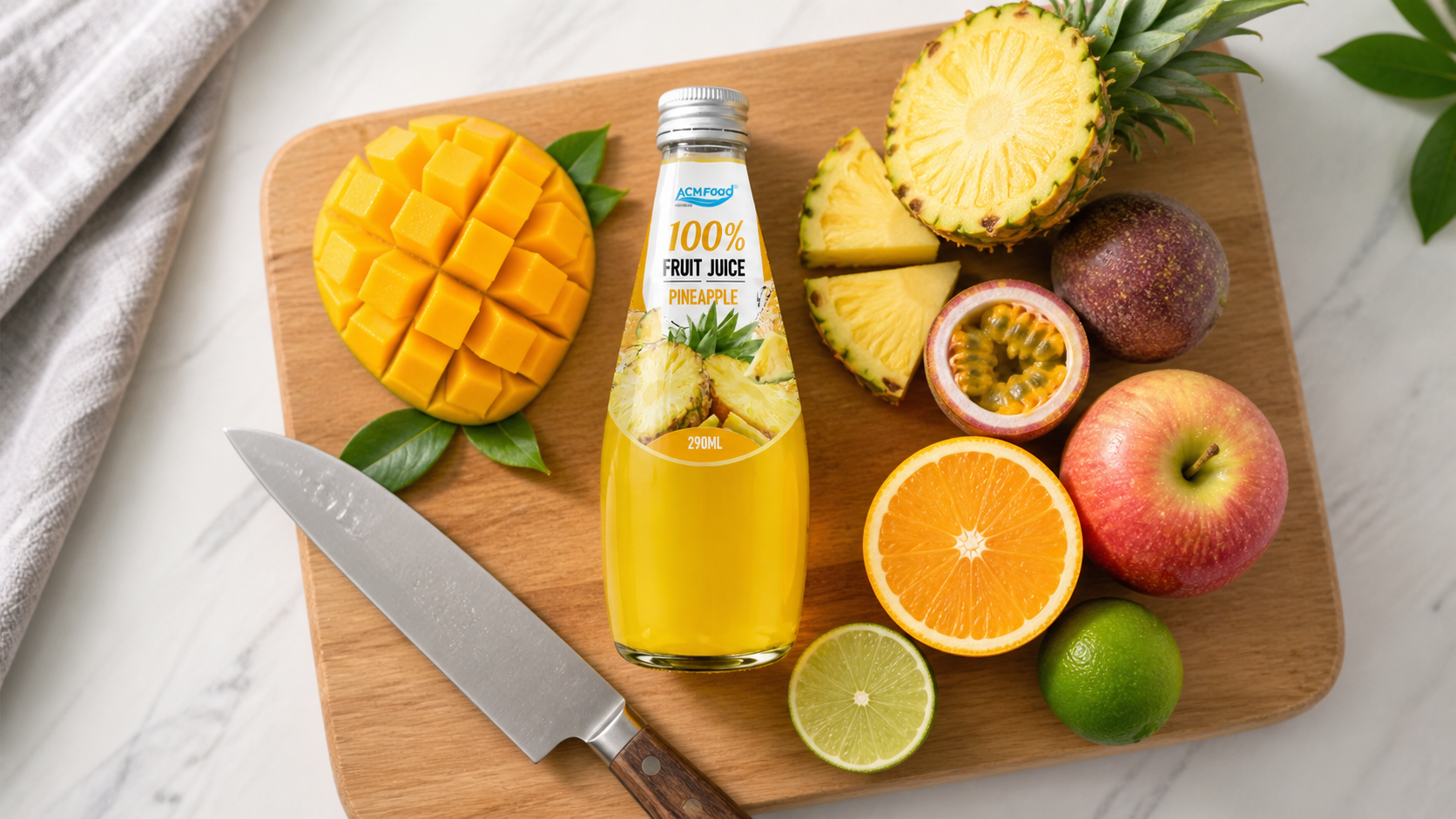
What are fruit juice blends for private label brands?
Fruit juice blends are beverages built by mixing two or more fruit juices and/or purees, often with water (where permitted), natural flavors, and acidity regulators, to achieve a consistent sensory profile and meet a defined standard of identity. They can be offered as 100% juice, nectar or juice drink depending on regulations and brand positioning.
In practice, a blend leverages complementary roles:
- Base juices (e.g., apple, grape, orange) provide volume, sweetness perception and color.
- Character juices (e.g., mango, pineapple, passion fruit, berry) shape signature aroma and flavor peaks.
- Balancers (e.g., lemon, lime) fine-tune acidity and lift top notes.
- Optional components may include natural flavors, botanicals, clouding agents, or stabilizers in line with market rules.
Before development, decide your commercial frame: see the comparison of 100% juice vs nectar vs juice drink to understand labeling, minimum juice content and pricing implications in your target markets.
Which mixed fruit juice combinations are most marketable?
Successful blends usually pair a friendly base with a distinctive hero fruit, then add a bright, acidic accent. Tropical, citrus-forward and berry-led profiles remain evergreen because they are intuitive to shoppers and versatile across formats.
- Tropical juice blends: Mango + pineapple + passion fruit (optional orange or apple base) for lush body and tangy lift.
- Citrus refresh: Orange anchored with lemon/lime or grapefruit for zesty refreshment and breakfast appeal.
- Berry-forward: Strawberry or blueberry over a clear apple or white grape base; optionally hint raspberry for complexity.
- Orchard & stone fruit: Apple/pear base layered with peach or apricot for soft sweetness and round mouthfeel.
- Spice or botanical twist (where allowed): Ginger, mint or basil can add a light culinary edge without overpowering fruit.
When you define combinations, consider your price target, color expectations, available harvest windows and supply risk. If a hero fruit is volatile, design fallback ratios early to maintain sensory consistency without disruptive reformulation.
| Blend archetype | Typical base | Accent fruits/botanicals | Sensory profile | Positioning & notes |
|---|---|---|---|---|
| Tropical Lush | Apple or orange | Mango, pineapple, passion fruit | Ripe, creamy, bright tang | Family-friendly; great color; suits ambient formats |
| Citrus Zest | Orange | Lemon, lime, grapefruit (to taste) | Refreshing, zippy, breakfast cue | Seasonal limited editions or all-year staple |
| Berry Burst | Apple or white grape | Strawberry, blueberry, raspberry (light) | Jammy top notes, ruby hues | Kids and teen appeal; watch astringency |
| Orchard Smooth | Apple, pear | Peach, apricot | Soft sweetness, rounded body | Value-engineered mid-tier; clear label |
| Herb Twist | Apple or citrus | Mint, basil, ginger whisper | Aromatic lift, modern culinary vibe | Trendy adult palate; use sparingly |
How do you design fruit juice blends from concept to pilot?
Start with a tight brief that fixes positioning, sensory targets and constraints, then iterate quickly from bench trials to pilot runs while validating quality, regulatory fit and cost-to-deliver. The steps below help keep projects on track.
- Define positioning: Choose between 100% juice, nectar or juice drink; map target consumers, usage occasions and price band.
- Set clear sensory targets: Describe aroma peaks, sweetness perception, acidity feel, viscosity and color reference.
- Regulatory & claims boundaries: Confirm standards of identity and any positive lists, additive limits or naming rules by market.
- Ingredient strategy: NFC versus concentrate (or a mix), varietal preferences, origin flexibility, and verified specifications.
- Brix/acid balance: Align degrees Brix and titratable acidity to your sensory target and local standards; see the fruit juice Brix guide for buyer considerations.
- Color & cloud: Decide if you want a clear, lightly cloudy or pulpy appearance; select process accordingly.
- Processing route: Choose hot-fill (HTST), aseptic, tunnel pasteurization or HPP (chilled), based on distribution and label strategy.
- Packaging: Shortlist containers (glass, PET hot-fill, aseptic carton, can, chilled PET) with caps/closures consistent with process.
- Costing: Model ingredient and conversion costs early; read about private label fruit juice cost to understand drivers.
- Pilot & shelf-life plan: Validate sensory, stability and microbiological criteria over intended shelf life under real distribution conditions.
- Commercial readiness: Artwork and claims checks, line trials, and contingency plans for fruit supply variability.
During sourcing, prepare comparable quotations to avoid surprises on transport, packaging extras or changeovers. Here is how to compare fruit juice supplier quotes so your unit economics reflect true landed cost.
Stability, color and mouthfeel in fruit juice blends
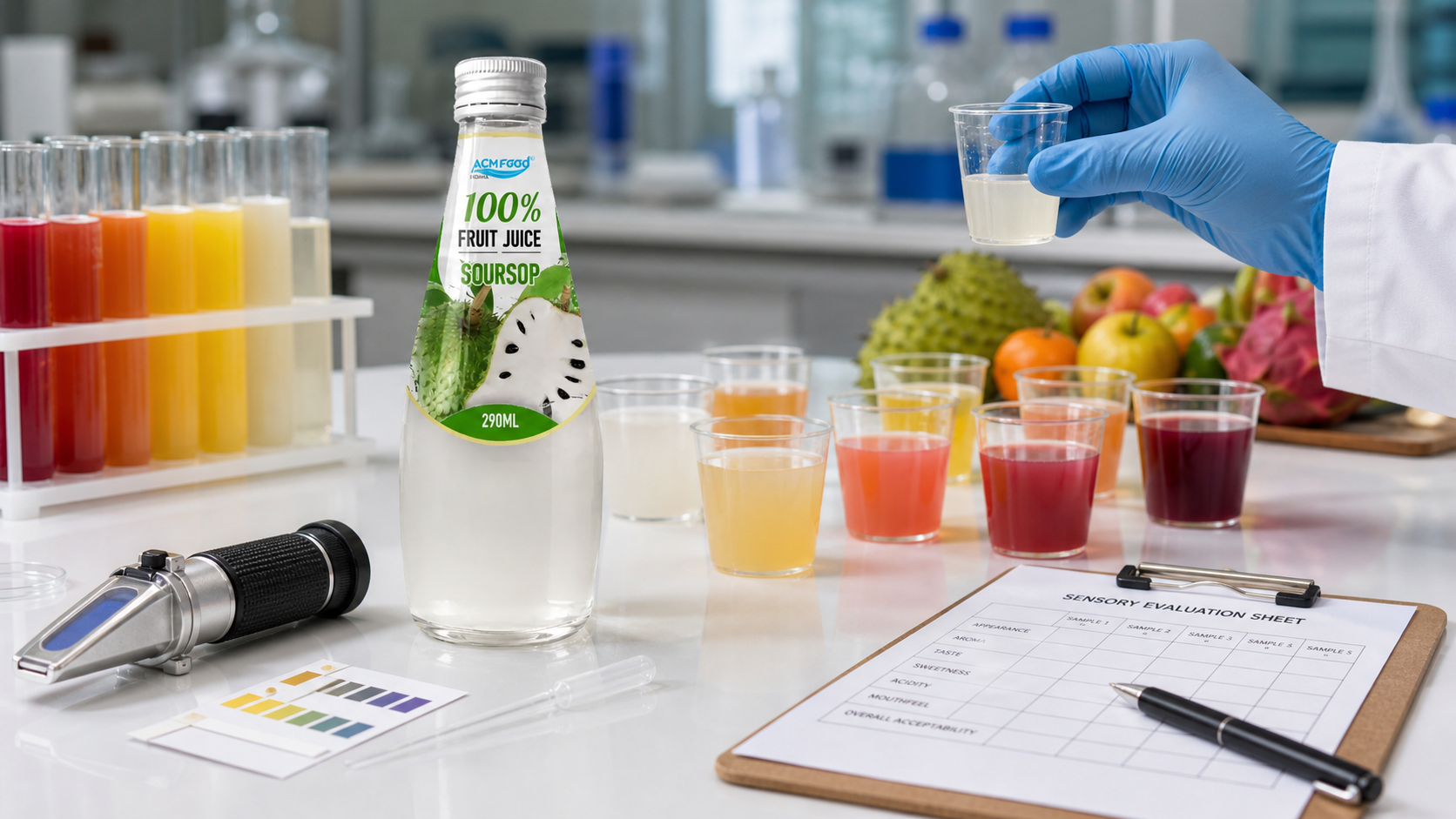
A great lab blend can fail commercially if color fades, cloud settles or mouthfeel thins after processing. Build stability into the formula and process from day one, and verify performance in pilot and aging studies.
- Cloud stability: Use compatible pulpy juices/purees, optimize homogenization, and consider permitted stabilizers where regulations allow. Overuse can dull flavor, so dose conservatively.
- Pectin and enzymes: Some fruits are rich in pectin. Decide whether to keep a natural body or clarify with enzyme treatment; both paths have sensory and label implications.
- Color management: Heat, oxygen and light can affect color-sensitive juices. Adjust processing conditions and oxygen pickup, and choose light-protective packaging if needed.
- Acid balance and flavor lift: Citrus accents can brighten aroma and support perceived freshness; retaste after heat steps to compensate for aroma losses.
- Mouthfeel: Balance puree levels and shear to achieve drinkability without sludge; small viscosity tweaks can transform acceptance.
- Sediment & ring control: Bench-top standing tests and centrifuge checks help predict settling; tweak particle size and density for uniformity.
What quality controls matter most for private label juice blends?
Focus QC on raw material identity, in-process consistency and finished product conformance to specification, backed by traceability and hygiene controls across the line.
- Incoming ingredients: Identity checks, sensory verification, conformity to agreed specifications (e.g., appearance, aroma), and contaminant risk assessment.
- In-process controls: Line Brix and acidity/pH checks, temperature/hold-time records, fill volume, oxygen pickup, and closure integrity.
- Finished product: Sensory approval, packaging integrity, shelf-life validation, and microbiological testing per your market category and process.
- Traceability & sanitation: Lot tracking, cleaning verification, and allergen risk controls (if applicable).
- Change management: Documented adjustments when fruit lots vary to maintain label claims and sensory targets.
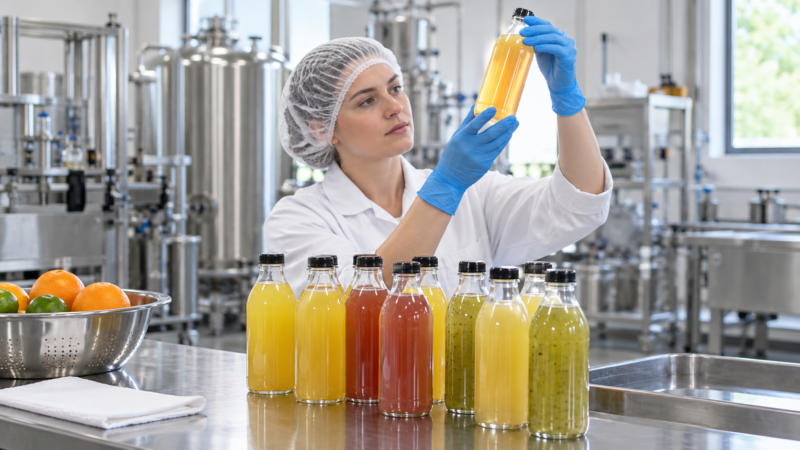
For a process-level walkthrough, see a beverage facility’s production process & QC systems for an example of how operations and checks fit together end-to-end.
Packaging choices and shelf life
Packaging is not just a marketing decision; it is a core part of product safety, sensory and cost. Choose the container that matches your process, distribution and brand message.
| Format | Process fit | Strengths | Watch-outs |
|---|---|---|---|
| Glass bottle | Hot-fill or tunnel pasteurized | Premium cues, good barrier, clarity | Heavier, breakable, higher freight |
| PET hot-fill | HTST/hot-fill | Lightweight, cost-effective, familiar | Heat panel aesthetics; oxygen ingress over time |
| Aseptic carton | Aseptic filling | Ambient shelf life, light protection | Artwork lead-times; shape constraints |
| Can | Retort or tunnel pasteurized | Robust, stackable, fast chilling | Opaque (no product visibility) |
| Chilled PET (HPP) | High pressure processed | Fresh-like sensory | Requires cold chain; shorter shelf life |
Decide early where and how the product will be sold (ambient shelf, chilled, on-the-go) and align process and packaging to that route. Validate closures, headspace and label adhesion under real storage and transport conditions.
Cost drivers and value-engineering for private label juice blends
Cost-to-deliver is shaped by juice content, fruit selection, process and packaging. Design with margins in mind from the first bench sample.
- Juice percentage & positioning: 100% juice generally requires more or costlier input versus nectar or juice drink formats; reformulate responsibly to hit targets.
- NFC vs concentrate: Concentrates can simplify logistics and cost; NFC may be preferred for specific sensory goals.
- Fruit mix: High-impact fruits at modest ratios can signal flavor while using cost-effective bases.
- Processing & packaging: Aseptic lines and certain packages may carry different conversion costs and MOQs; align with forecasted volumes.
- Supply variability: Seasonal price swings warrant dual-source or substitution plans within your sensory envelope.
- Waste & yield: Line losses, foaming and changeovers affect unit economics; address in pilot trials.
Build your model with transparent inputs and document assumptions. For budgeting benchmarks and line-item considerations, review private label fruit juice cost, and use that framework when you compare fruit juice supplier quotes.
Labeling, ingredient lists and claims
Names, percentage declarations and claims differ by market. Keep labeling conservative and ensure it follows the formula as made.
- Product name: Must reflect the fruit composition and category standard.
- Ingredient list: Order by proportion; describe each component appropriately (e.g., juice from concentrate, puree).
- Front-of-pack cues: Ensure images and descriptors are consistent with actual fruit content.
- Nutrient or content mentions: Any statements should reflect tested values, serving size and local rules.
- Market-by-market variation: The same formula may require different naming or statements between regions.
Claims and labeling ultimately depend on the final formula, verified test results, serving size and the regulations of the destination market. Plan artwork timelines to include legal review and pre-production sample checks.
Supplier selection and auditing
Choose partners who can meet your sensory brief, process needs and compliance requirements, reliably. Beyond price, evaluate technical fit and transparency.
- Capability match: Confirm the manufacturer’s lines, packaging compatibility and experience with your chosen blend style.
- Technical communication: Look for robust specifications, change-control discipline and clear deviation handling.
- Audit readiness: On-site or remote audits help verify hygiene, traceability and documentation practices.
- Continuity plans: Ask how they manage fruit variability, supply disruptions and finished-goods quality holds.
Use a structured approach like a fruit juice supplier audit checklist to capture findings consistently across facilities and regions.
FAQ
What percentage of juice should my blend have?
Align juice content with your positioning, price target and local standards of identity. Rules differ for 100% juice, nectar and juice drink categories, so start by mapping your markets and reviewing 100% juice vs nectar vs juice drink to set clear boundaries.
Can we reduce sugar without losing flavor?
Yes, within category rules you can rebalance fruit ratios toward more aromatic or higher-acid components, use permitted water where appropriate, and employ natural flavors for lift. Pilot taste after processing, as heat can mute top notes and change sweetness perception.
Do we need added flavors in fruit juice blends?
Not always. Many blends achieve their target profile with fruit alone, while others benefit from a small amount of natural flavor to restore aroma lost in processing. The decision depends on sensory targets, regulatory allowances and cost considerations.
How long does development take?
Timelines vary with formula complexity, packaging choice, artwork and regulatory checks. Bench work can be quick, but pilot scheduling, shelf-life verification and artwork approvals add time. Build buffers into launch plans for pilot learnings and supplier lead-times.
Can one SKU serve multiple markets?
Sometimes. However, naming, ingredient declarations and claims often vary by market. Many brands use a harmonized base formula with market-specific labels or small formulation tweaks to remain compliant while minimizing complexity.
Conclusion
Fruit juice blends let private label brands deliver distinctive flavor, color and value across a range of categories and price points. Effective projects start with a clear positioning, then balance Brix/acid, color, cloud and mouthfeel through the right process and packaging, validated by QC and shelf-life studies. As next steps, prepare a tight brief, shortlist manufacturing partners, align on your category (100% juice, nectar or juice drink), and plan pilots with a realistic cost model and audit checklist in hand.