


 Français
 Español
 العربية
 한국어
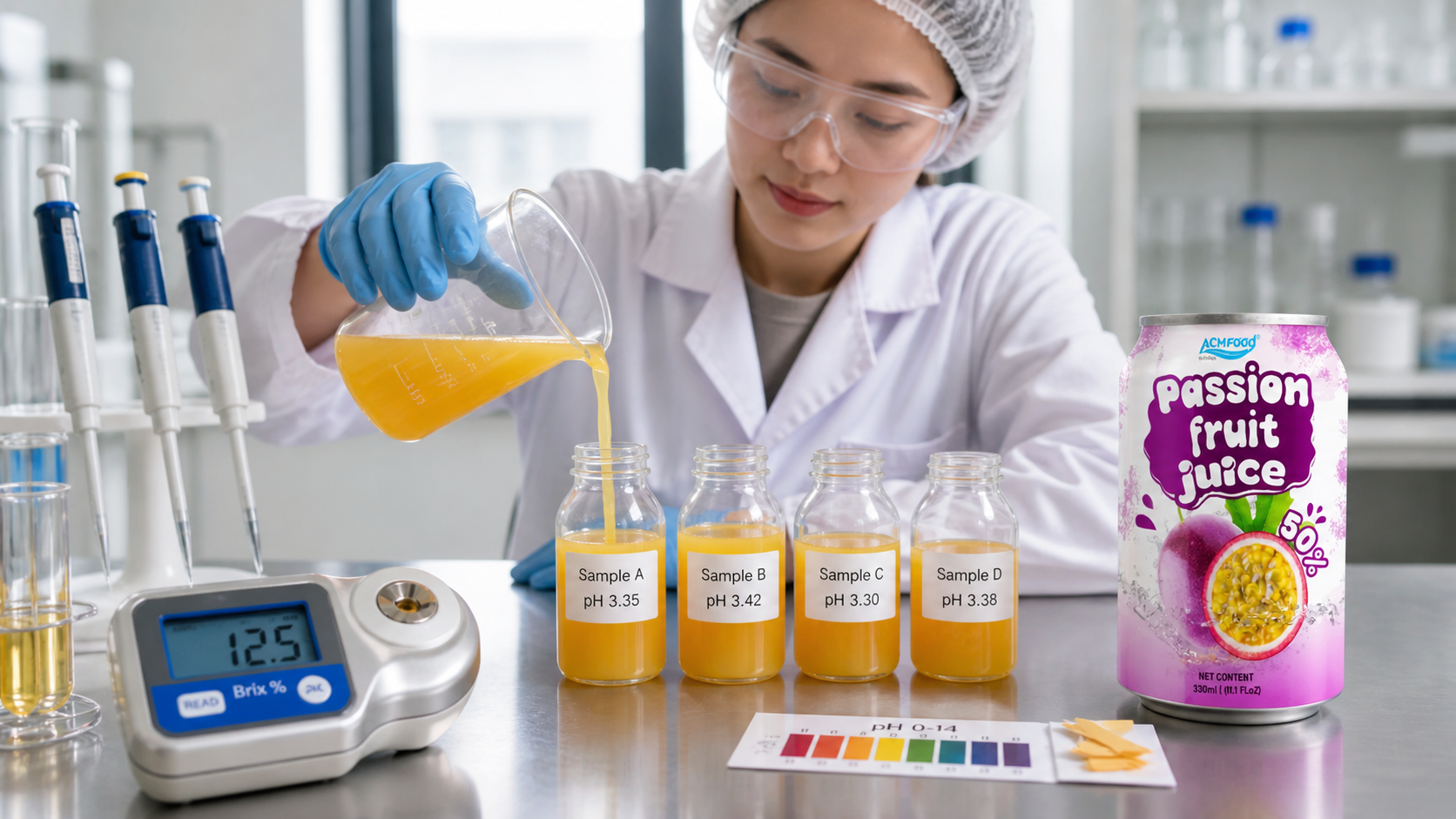
한국어Fruit juice sample development is the step-by-step R&D process that turns your product brief into bench samples and a final approved formula ready for production. Formula approval is the formal sign-off that locks the recipe, process parameters, and specifications so the first manufacturing run can proceed with confidence.
This guide explains how samples are created, shipped, evaluated, and iterated; what documents and decisions are involved; and how to manage timelines, costs, and quality. Use it to structure your brief, set expectations with your team, and align faster with your manufacturing partner.
What is fruit juice sample development and formula approval?
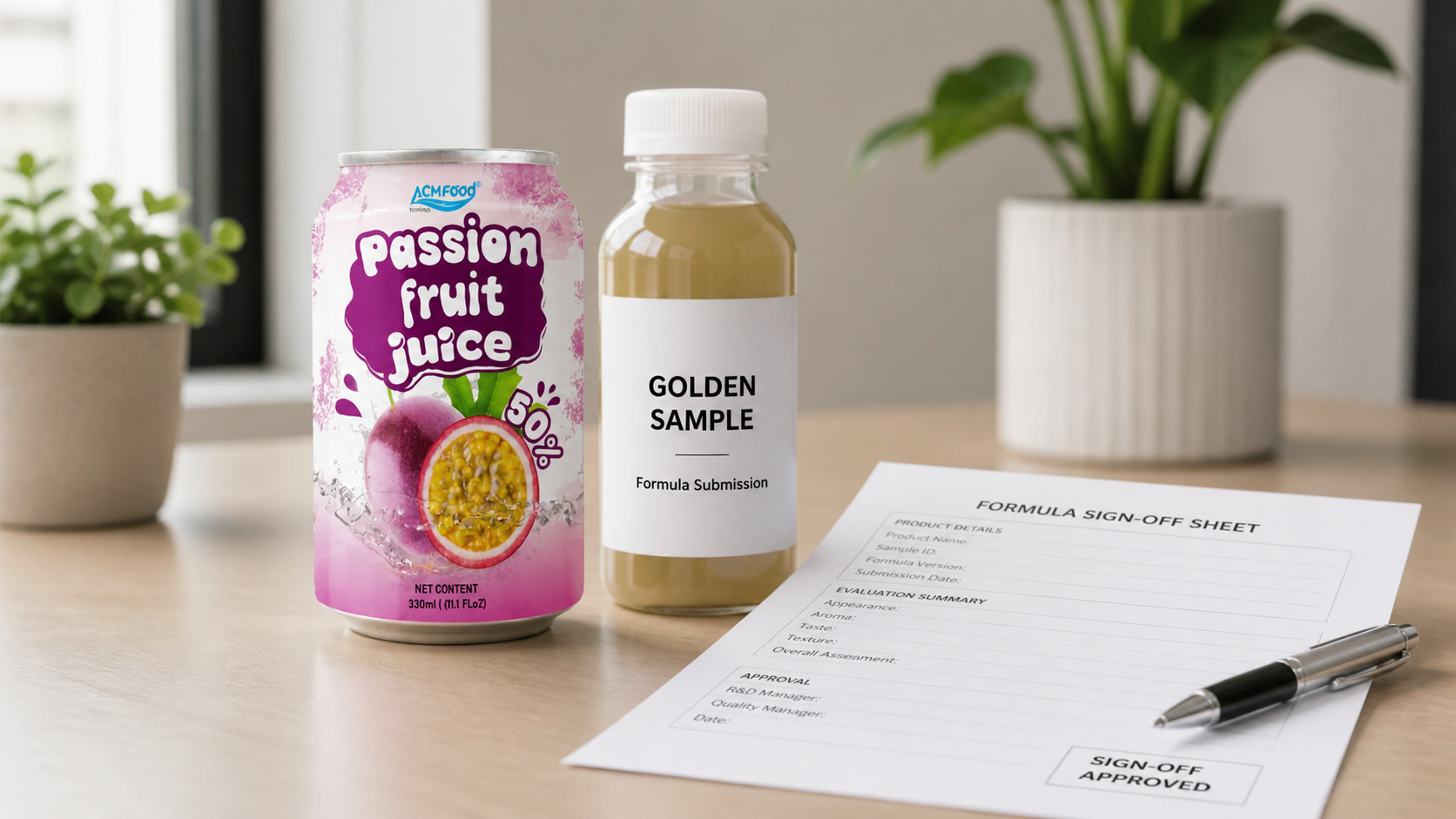
It is a collaborative workflow where your brief is translated into lab or pilot samples, refined through feedback, verified for stability and compliance, and then formally approved as a “golden” reference for production. Approval typically includes signed specifications and a retained sample used to verify the first batch.
Depending on scope, your samples may be made from juice concentrate or NFC (not-from-concentrate), with or without added sugar, natural flavors, or functional ingredients. Processing (e.g., pasteurization), filtration, and stabilizers influence color, mouthfeel, and cloud, so each round captures both recipe and process assumptions.
Two common sample types are used during development:
- Bench samples: Small-batch, lab-made prototypes for quick sensory direction and early formula alignment.
- Pilot samples: Larger batches using closer-to-plant parameters or equipment to validate heat treatment, cloud stability, and fill behavior before a production run.
What information should a strong product brief include?
A clear, specific brief shortens development time and reduces rework. It should define target sensory, positioning, and constraints the R&D team must respect.
- Product positioning: 100% juice, nectar, or juice drink, with intended juice content and sweetness direction (e.g., light, medium, bold).
- Nutrition & formulation boundaries: Policies on added sugar, high-intensity sweeteners, and permissible ingredient classes. See no added sugar vs reduced sugar for positioning implications.
- Sensory targets: Reference products, expected aroma notes, tartness/acidity range, mouthfeel, aftertaste, and color hue/clarity or cloudiness.
- Raw material preferences: Concentrate vs NFC, origin or variety if relevant, and any processing preferences (e.g., unfiltered/cloudy vs clarified).
- Stability expectations: Shelf-life target, ambient vs chilled distribution, light sensitivity, and expected behavior after pasteurization or UHT.
- Allergens & exclusions: Ingredients to avoid; vegan/vegetarian, halal, or other dietary requirements if applicable.
- Packaging format: Volume, material (PET, glass, can), closure type; headspace and fill-temperature constraints if any.
- Label & regulatory: Destination markets, language needs, and intended claims to explore (final claims depend on formula, serving size, lab tests, and local regulations).
- Commercial constraints: Target cost range (if available), forecast volumes, and private label MOQ tolerance to guide feasible ingredient selections and pack formats.
- Logistics: Required sample count per round, ship-to addresses, and any shipping temperature requirements.
What is the typical sample-to-approval workflow?
Most projects follow a staged path: align on a brief, receive Version 1 bench samples, provide structured feedback, iterate, validate stability and processing, confirm a pilot or preproduction sample, then lock the “golden” sample and signed specifications.
- Intake & feasibility: The manufacturer reviews your brief, flags risks, and confirms feasible directions (e.g., target Brix, acidity, and juice content).
- R&D plan: A sampling plan outlines how many versions per round, timing, and what questions each sample is meant to answer (sweetness, acid balance, flavor impact, cloud, color).
- Bench samples V1: Small prototypes demonstrate sensory directions. Labels note code, version, and date; a data sheet lists key parameters and ingredients.
- Feedback & iteration: Your team tastes, records structured notes, and ranks preferences. R&D then refines formula and process assumptions.
- Stability checks: Quick observations for color drift, sedimentation, phase separation, and flavor fade. Simple stress holds may be used to approximate heat exposure.
- Pilot or scale-simulated samples: Where needed, a closer-to-plant sample validates heat treatment impact on flavor, cloud, viscosity, and color.
- Regulatory & label review: Confirm ingredient statements, allergens, and any claim feasibility subject to testing and local rules.
- Golden sample & specs: You approve a final sample and sign a detailed spec covering recipe, parameters, sensory notes, packaging, and QC acceptance ranges.
- Preproduction alignment: The team aligns on first production controls, retention samples, and verification plan against the golden standard.
For scheduling context across concept, sampling, and scale-up, see the fruit juice development timeline.
| Stage | Purpose | Buyer decision | Typical sample format |
|---|---|---|---|
| Bench V1 | Set sensory direction | Pick best direction(s) | Small bottles, labeled codes |
| Bench V2/V3 | Refine sweetness/acid/flavor | Approve finalist | Small bottles, new version codes |
| Pilot/scale-simulated | Validate processing impact | Confirm process tolerance | Larger batch under near-plant conditions |
| Golden sample | Lock formula & specs | Sign specification | Retained reference bottle(s) with sign-off |
How are samples shipped, stored, and evaluated?
Samples are sent with version codes and basic documentation. Storage depends on formulation and processing: ambient for shelf-stable prototypes, chilled for heat-sensitive concepts. A short note may specify how to store before tasting and how long a sample remains representative.
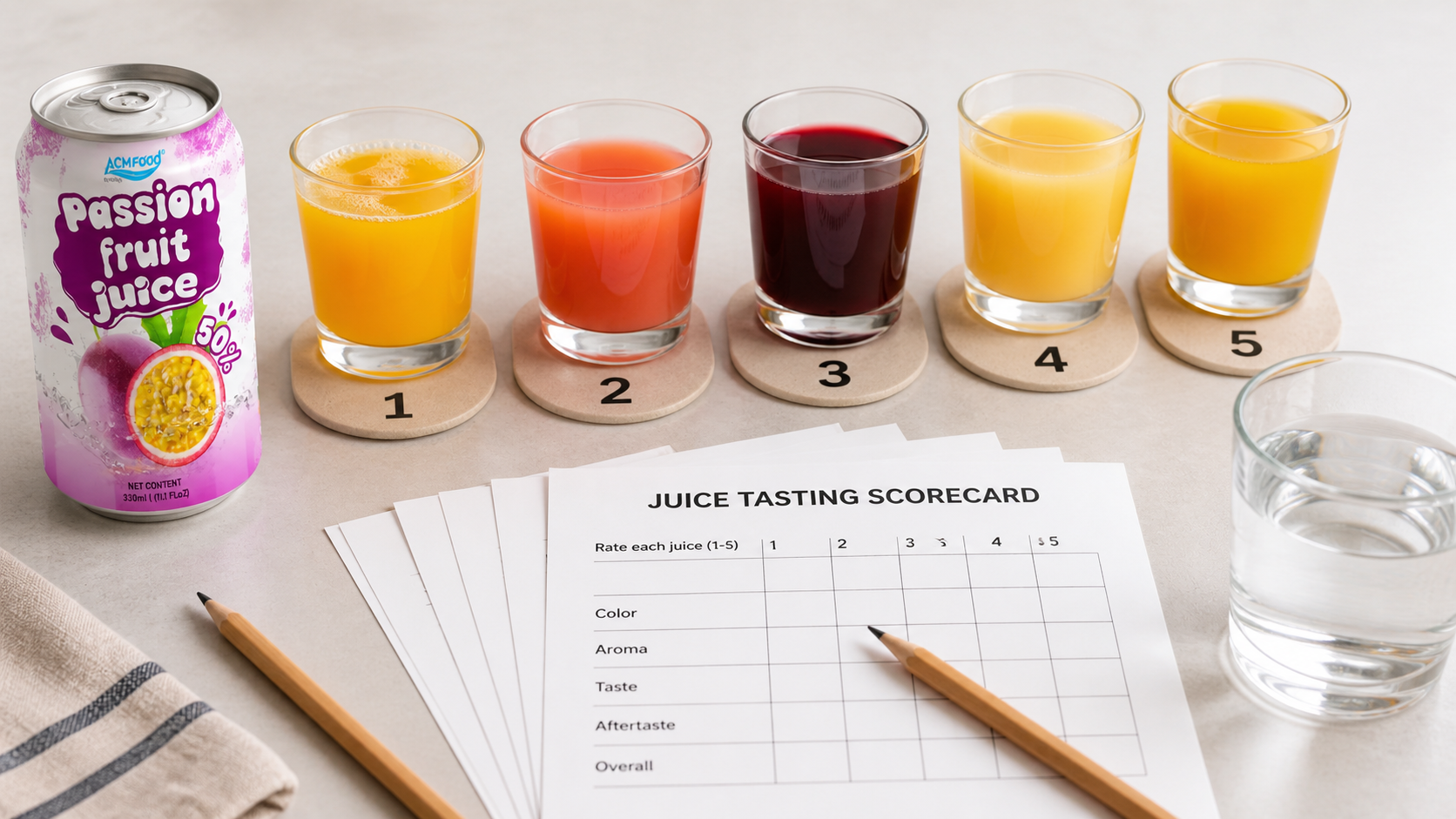
To run a fair evaluation, set up a neutral environment and taste in consistent order (from light to strong). Use identical glassware, rinse between samples, and record observations immediately.
- Shipping: Courier with tracking; use insulated packaging and cold packs if required by the formulation.
- Labeling: Ensure each bottle shows version code and date; keep any data sheets attached to that code.
- Storage: Follow the producer’s instruction (ambient vs chilled). Avoid extended light or heat exposure.
- Tasting protocol: Serve at the same temperature across samples; standardize pour size, order, and time between sips.
- Recording: Capture aroma, sweetness, acidity, mouthfeel/viscosity, color/cloud, aftertaste, and overall preference with concise comments.
How do you give actionable feedback on samples?
Be specific, measurable where practical, and anchored to the brief. Prioritize changes that align with positioning and regulatory boundaries, and identify any trade-offs you are willing to accept.
- Use structured attributes: For each sample, rate aroma intensity, sweetness, acidity/tartness, bitterness, mouthfeel/body, viscosity, color/cloud, and aftertaste, then add short justifications.
- Compare to references: State which market product or internal gold standard you want to be closer to, and in which attribute(s).
- Define direction and magnitude: Say “increase acidity slightly” or “reduce sweetness moderately,” rather than just “too sweet.”
- Flag constraints: If you must keep 100% juice or avoid certain sweeteners, repeat it so R&D only explores viable levers.
- Consolidate internal views: Send one aligned feedback document so the manufacturer is not reconciling conflicting instructions.
What determines timelines and the number of iterations?
Complexity, approvals, and ingredient lead times drive how many sample rounds you need. Concepts with narrow sweetness/acid windows, color-critical targets, or strict claim boundaries often require more fine-tuning. Availability of specific concentrates, flavors, or stabilizers can also influence scheduling.
Decision speed matters: the faster you provide consolidated, actionable feedback, the fewer rounds you typically need. Pilot validation is added when heat treatment or packaging could materially shift flavor, color, cloud, or viscosity compared to bench conditions. See the fruit juice development timeline for how sampling fits into the broader project.
From golden sample to first production: what may change?
Even with a locked formula, full-scale processing can subtly shift sensory. Thermal load, shear, hold time, fill temperature, and line-specific filtration can brighten or mute flavors, affect cloud stability, or slightly alter color. That is why the golden sample is paired with clear specifications and an acceptance window for key attributes.
- Line trials: Confirm fill behavior, foam control, and sediment/cloud stability through the chosen process.
- Hold & transport checks: Observe samples over time under expected storage and distribution conditions for color, cloud, and flavor changes.
- First production verification: Retain production samples and compare to the golden standard using the same structured attributes and any agreed rapid tests.
Cost, ownership, IP, and confidentiality
Commercial practices vary. Some projects absorb R&D costs into later orders; others charge sampling fees and courier at cost. Upfront clarity helps prevent friction. Formulation ownership, access to the exact recipe, and the status of any custom flavor systems should be discussed early and documented.
- Sampling fees: Agree what is covered (materials, bench time, courier) and when fees are offset against a purchase order, if at all.
- Intellectual property: Clarify whether you obtain the full formula, a make-to-order agreement, or a private-label supply arrangement without recipe disclosure.
- NDA & confidentiality: Use mutual NDAs to protect briefs, formulas, cost structures, and any proprietary processes.
- Quotation scope: Ensure quotes reflect the approved formula, packaging, QC scope, and logistics terms so comparisons are fair. See how to compare supplier quotations.
- Supplier diligence: Align on audit expectations, retained-sample practice, and documentation. Use this supplier audit checklist to structure questions.
FAQ
How many sample rounds are typical?
It depends on complexity and decision speed. Many projects align within a few bench iterations, while process-sensitive concepts may add a pilot step to verify heat treatment and stability before approval.
Who pays for sample shipping?
Practices vary by supplier and project. Some include local courier; others quote shipping separately. Clarify responsibilities in writing before sampling begins.
What if the plant run tastes different from the bench sample?
Use the golden sample plus signed specifications as your reference. Investigate processing differences (thermal load, filtration, hold time) and adjust within the approved acceptance ranges where needed.
Can I approve a formula without a pilot sample?
Yes, when risk is low and the process is well understood. For heat- or cloud-sensitive products, a pilot or close-to-plant simulation reduces surprises at scale.
How do 100% juice, nectar, and juice drinks differ in sampling?
R&D focuses on different levers. 100% juice often centers on variety and process impact; nectar balances juice content and sweetness; juice drinks consider flavor systems, sweeteners, and acid balance within the chosen positioning.
Key takeaways and next steps
Effective fruit juice sample development relies on a clear brief, structured feedback, and alignment on processing realities. Locking a golden sample with signed specifications gives both sides a stable reference for first production. Keep evaluations consistent, document decisions, and plan pilot validation whenever process could shift sensory or stability.
To plan resourcing and stakeholder approvals in parallel, review the fruit juice development timeline. If you are balancing sweetness and labeling strategies, read no added sugar vs reduced sugar. For purchasing hygiene, align on scope and T&Cs before you compare supplier quotations and set expectations around private label MOQ, then prepare a robust supplier audit checklist for onboarding.
With these steps, you can move from first bench concept to an approved formula and confident production start with fewer surprises and tighter control over quality, cost, and timelines.
Turning this into a product
For the formats, ingredients and processing routes the factory actually runs, see beverage product capabilities. How production is organised is set out in OEM beverage production; for launching under your own label, see private label beverages. Recipe development and sampling are described under formulation and R&D. To discuss a specification, request a quote.
Request a quote