


 Français
 Español
 العربية
 한국어
한국어To import beverages into Canada, you need an SFC (Safe Food for Canadians) licence, a written Preventive Control Plan (PCP), and to file an Integrated Import Declaration via CBSA’s Single Window. Two federal regulators—CFIA and Health Canada—set and enforce the food rules that apply to all drink imports.
This practical guide explains Canada beverage import requirements end to end, from licences and bilingual labels to border filings, inspections and post-market responsibilities.
What are the steps to import beverages into Canada?
In short: confirm your product type, register as an importer, create a Preventive Control Plan, obtain your SFC licence, prepare compliant bilingual labels, classify and declare the goods via CBSA’s Single Window, and be ready for CFIA oversight. The ordered checklist below maps the core actions most beverage importers follow.
- Confirm product scope & route-to-market. Decide whether you’re importing non-alcoholic drinks (e.g., juices, teas, flavored waters) as foods or products that may fall under special categories (e.g., caffeinated energy drinks or supplemented foods). Alcoholic beverages are regulated separately. Define the provinces you will sell in and any Quebec-specific French language requirements if you target QC.
- Obtain a Business Number (BN) import/export account with CRA. Before you can deal with customs, get a BN and add the RM (import/export) program with the Canada Revenue Agency. Your customs broker will use this to transact with the Canada Border Services Agency (CBSA).
- Build your Preventive Control Plan (PCP). Under the Safe Food for Canadians Regulations (SFCR), importers need a written PCP that covers hazard analysis, supplier approval, formulation controls (e.g., allergens, sweeteners, caffeine), transport conditions, traceability, and a recall procedure. Align your PCP to the specific beverage types you import.
- Apply for your SFC licence via the My CFIA portal. Select the activity that covers importing manufactured foods/beverages. Keep the licence number handy—CBSA/CFIA will use it on import declarations and inspections.
- Approve and document foreign suppliers. Collect specifications, process flow, HACCP or equivalent food safety evidence, Certificates of Analysis when applicable, and clear lot coding practices. Your PCP should describe how you verify supplier controls and handle non-conformances.
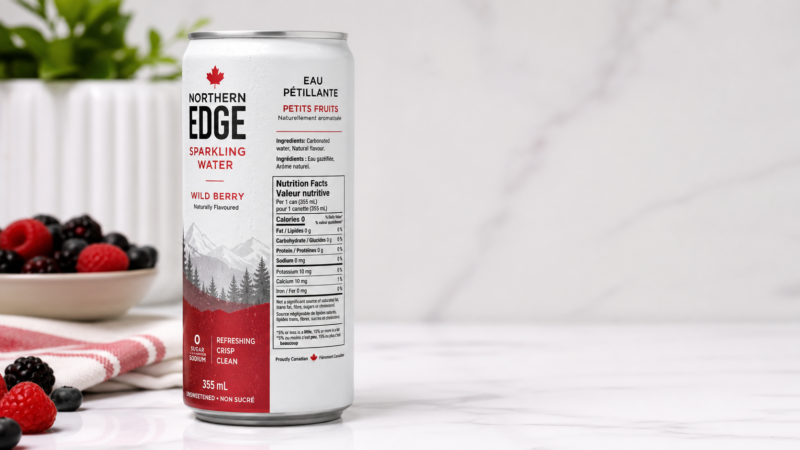
- Design compliant bilingual labels. Canada requires English and French for mandatory label content. Prepare Nutrition Facts (Canada format), ingredient and allergen declarations, sweetener statements (if used), caffeine or supplemented-food disclosures when applicable, metric net quantity, and name & principal place of business. Include date coding where required or expected by retailers.
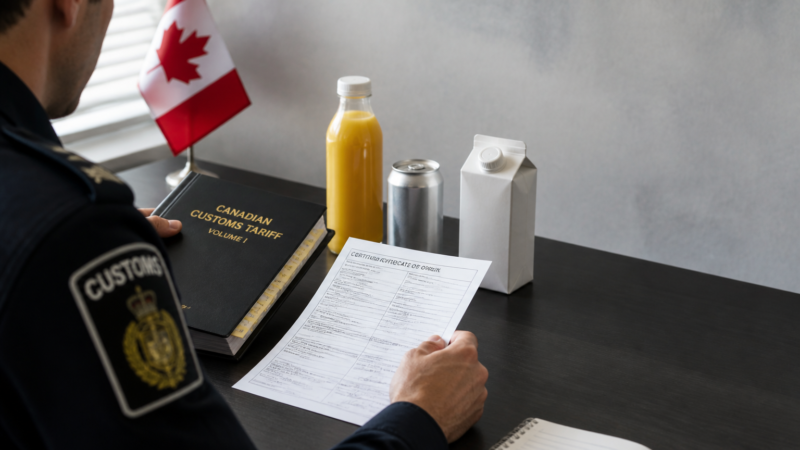
- Classify the goods and confirm admissibility. Determine HS classification with your broker, check CFIA’s Automated Import Reference System (AIRS) for specific admissibility rules, and confirm any additional documents needed (e.g., manufacturer’s declaration, product list). Many non-alcoholic beverages have no federal excise duty, but always verify tariff treatment and any provincial requirements.
- Prepare the customs & CFIA data set (IID via Single Window). Your broker files the Integrated Import Declaration (IID) to CBSA, transmitting CFIA data elements through the Single Window Initiative. Data typically includes your SFC licence number, product description, HS code, lot identifiers, and supporting documents.
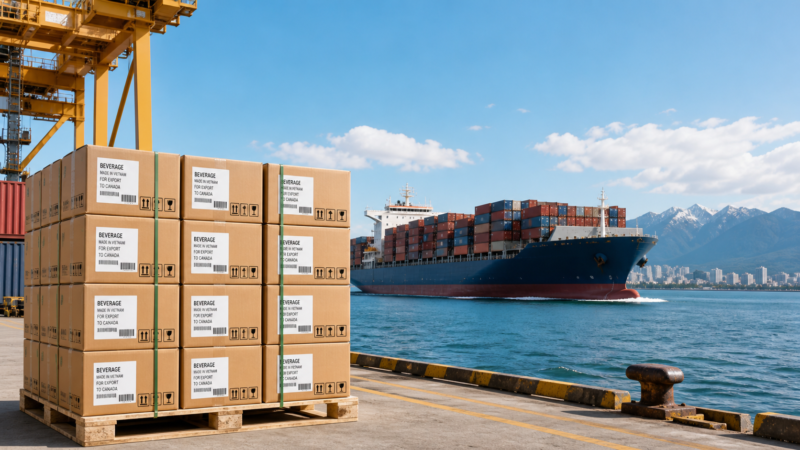
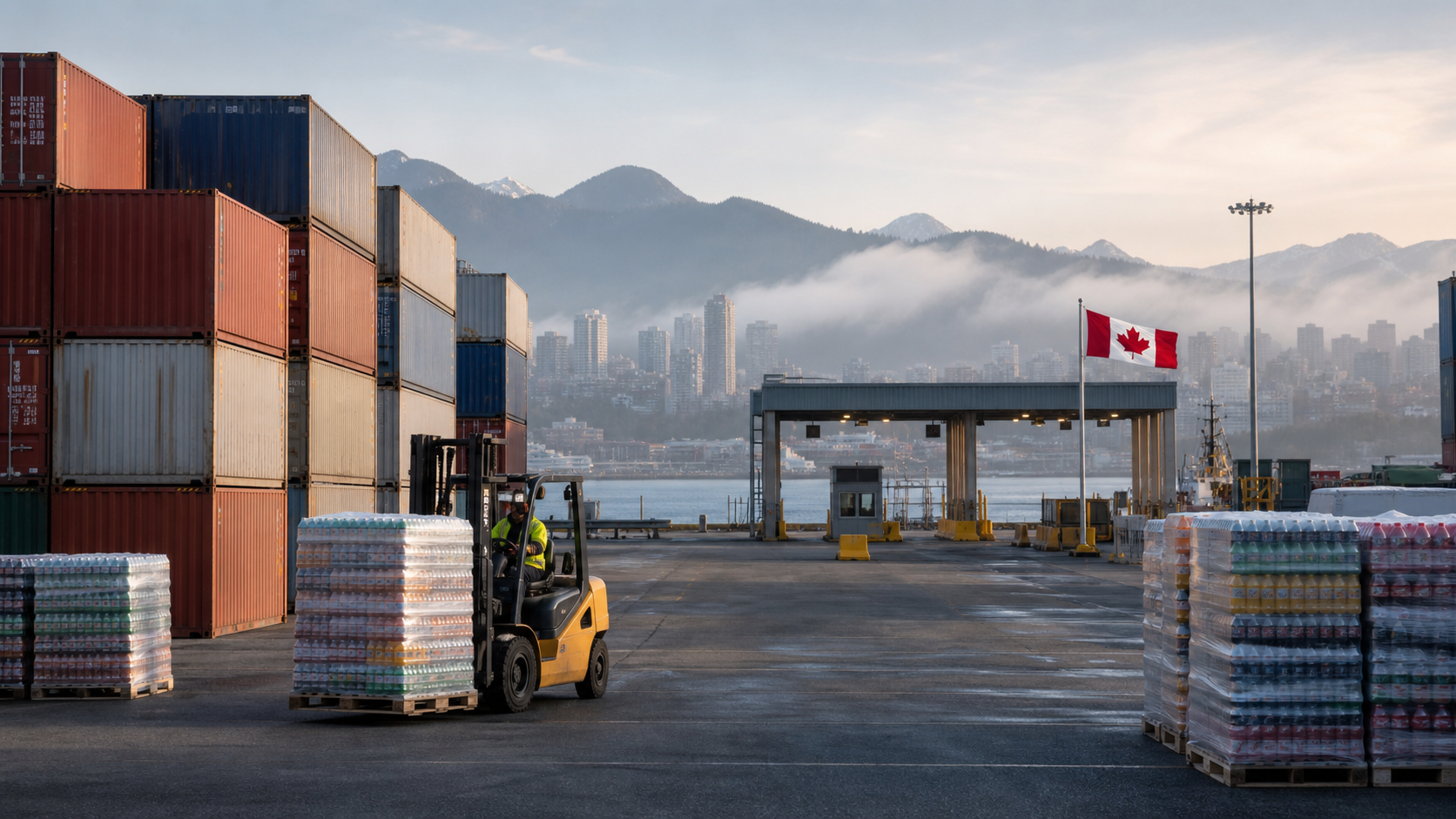
- Plan logistics and ports of entry. Choose a port or airport aligned with your lane—e.g., Port of Vancouver (BC), Port of Montreal (QC), Port of Halifax (NS), or Toronto Pearson (YYZ) for air. Align Incoterms with your customs strategy, ensure temperature control if needed, and coordinate inspection availability on arrival.
- Arrival, potential CFIA inspection, and release. CBSA/CFIA may target shipments for document review, visual inspection, or sampling. Ensure labels match the shipped goods, lot codes are traceable, and documents are ready. After release, move product to a suitable storage/distribution facility.
- Post-import compliance and market monitoring. Maintain traceability records, respond to any CFIA follow-ups, and execute your recall plan if needed. Manage provincial container deposit/EPR obligations and bilingual marketing materials for retail execution.
Which agencies and systems govern beverage imports into Canada?
CFIA (oversight and enforcement) and Health Canada (food safety standards) lead federally, with customs interfaces managed by CBSA. Importers use My CFIA for licensing and the IID through CBSA’s Single Window to transmit food data. The table below summarizes who does what.
| Agency / System | Role in beverage imports | Where it matters for you |
|---|---|---|
| Canadian Food Inspection Agency (CFIA) | Enforcement of SFCR, import controls, inspections, sampling | SFC licence, PCP oversight, inspection at entry or in-market |
| Health Canada | Sets food safety standards and compositional limits | Additives, sweeteners, caffeine, supplemented foods framework |
| Canada Border Services Agency (CBSA) | Customs clearance, tariffs, border processes | HS codes, IID filing, cargo examination, accounting |
| My CFIA | Industry portal for SFC licensing & services | Apply, maintain, and reference your SFC licence |
| Single Window / IID | Electronic submission of CFIA data with customs entry | Transmit food data elements and docs with your customs entry |
| AIRS (CFIA) | Automated Import Reference System | Check admissibility, documents, and any commodity triggers |
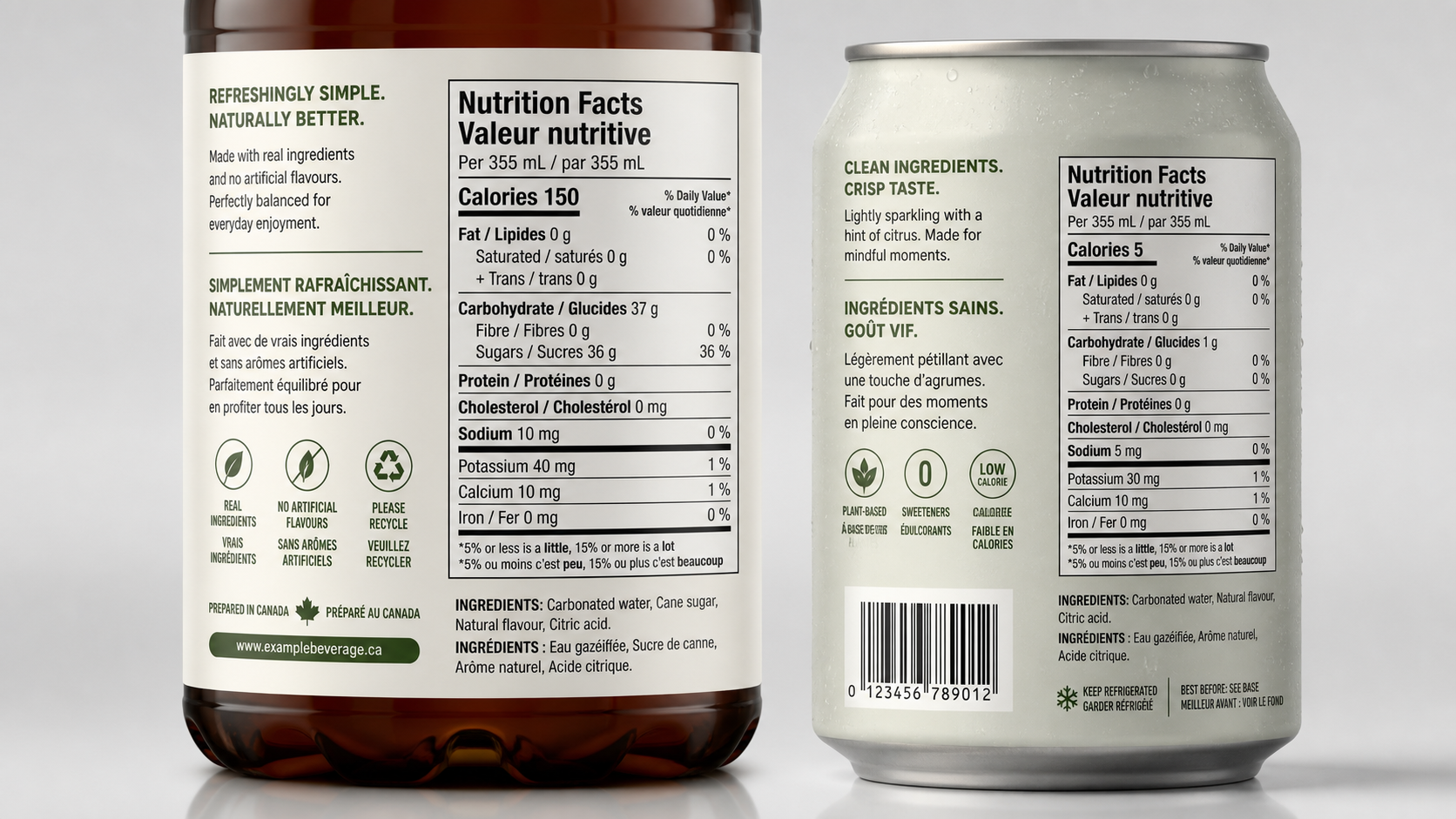
Labelling and formulation essentials for Canada
Canada food import regulations require that beverages meet composition and labelling rules before sale. While exact requirements depend on product type, the following elements are common for non-alcoholic drinks:
- Bilingual mandatory content: English and French for all required information, including common name, ingredient list, allergens, and net quantity.
- Nutrition Facts (Canada format): Use the Canadian Nutrition Facts table design and Daily Value system. Ensure serving size and nutrient rounding rules match Canadian standards.
- Ingredient & allergen declaration: List ingredients by weight, identify priority allergens and sulphites as required, and declare any aspartame/acesulfame-potassium/sucralose per rules if used.
- Sweeteners & caffeine: Follow Health Canada’s lists for permitted additives and conditions of use. Caffeinated energy drinks and other supplemented foods may need specific cautionary statements and quantitative caffeine disclosure.
- Net quantity & units: Declare metric net contents (mL/L for liquids); follow type size and placement requirements.
- Dealer name & principal place of business: Include the responsible company name and address as required.
- Date coding and storage: “Best before” is mandatory for foods with a durable life of 90 days or less; many shelf-stable drinks exceed this, but retailers often expect clear date coding and storage instructions.
- Quebec considerations: If selling in Quebec, ensure French prominence and any additional provincial language requirements beyond federal bilingual rules.
What documents are typically required at the border?
Most non-alcoholic beverage shipments clear with a standard customs package plus CFIA data via IID. Your broker may ask for the following:
- Commercial invoice and packing list: Accurate product descriptions, quantities, and unit packaging (e.g., bottles, cans, cases).
- Bill of lading / air waybill: Transport document matching the entry.
- SFC licence number: Your active SFC number for the importer of record.
- Product specifications & label proofs: Final bilingual label artwork and ingredient specs to support CFIA queries.
- Certificates or attestations as applicable: Manufacturer’s declarations, Certificates of Analysis when requested, and any statements required by AIRS.
- HS code determination and country of origin: For tariff treatment and any trade program eligibility.
Canada-specific operational tips for beverage importers
Small process details can make the difference between a smooth release and costly delays. Consider these Canada-specific points:
- Ports & lanes: Ocean imports commonly route via Port of Vancouver (Pacific), Port of Montreal (Atlantic/St. Lawrence), or Port of Halifax (Atlantic); choose the gateway with the best sailing schedules and rail reach to your DCs.
- Single Window readiness: Make sure your broker can transmit a complete IID with CFIA data to minimize holds.
- Traceability and lot coding: Align foreign lot codes with your Canadian distribution plan and PCP recall procedures.
- Container deposits & EPR: Provinces operate deposit-return and extended producer responsibility programs; budget the fees and operational steps by province.
- Retail expectations: Major Canadian retailers scrutinize bilingual label quality, date codes, pallet configuration, and case markings—align early to their vendor guides.
Information for beverage brands and buyers
Regulatory work runs in parallel with commercial planning. If you are assessing market entry, you may find these resources helpful:
- Review channel and category dynamics in our Canada beverage market insights.
- See a realistic example of documents and shipping milestones in this guide to trade terms and logistics for coconut water from Vietnam.
- For flavor development and sourcing, explore how to source ginger lemongrass drink for OEM/private label.
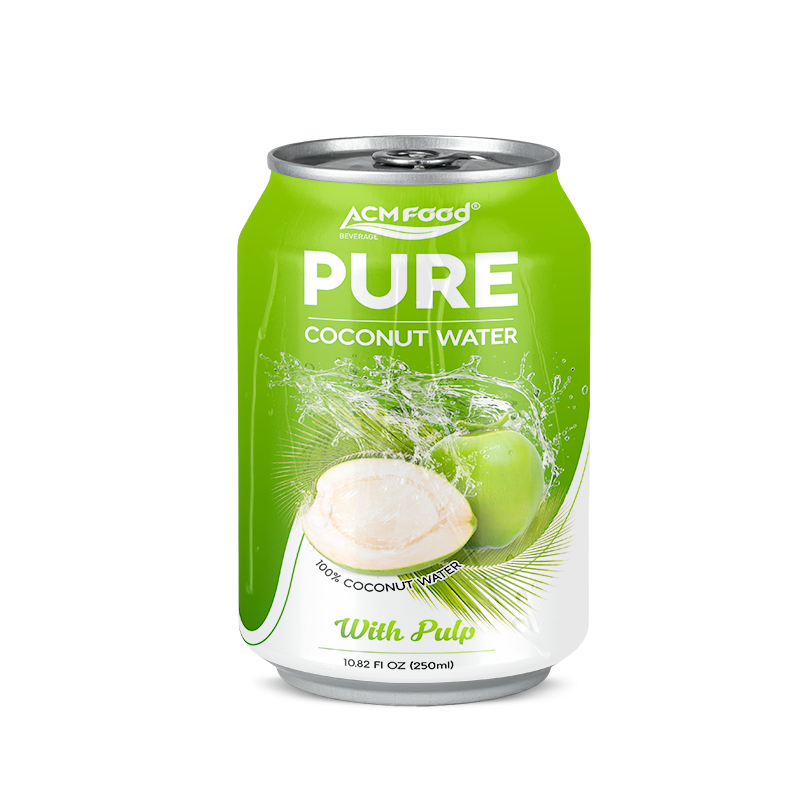
- Packaging decisions affect label real estate and deposits; see options for private label coconut juice cans.
Align your product brief with Canadian label panels, container sizes in metric, and ship dates that avoid port congestion peaks at major gateways.

FAQ: importing beverages into Canada
Do I need an SFC licence to import drinks into Canada?
Yes, if you import foods (including most non-alcoholic beverages) for commercial sale, you typically need an SFC licence and a written PCP under the SFCR. Alcoholic beverages follow different frameworks; confirm scope with your broker and regulators.
What is a Preventive Control Plan (PCP) in practice?
A PCP documents how you identify and control food safety hazards across your supply chain—supplier approval, formulation controls, transport conditions, traceability, and recall. It must reflect your actual beverages and processes, not a generic template.
How do I file the import with customs and CFIA?
Your customs broker submits an Integrated Import Declaration (IID) to CBSA through the Single Window, transmitting the CFIA data elements. Provide your SFC licence number, HS code, product details, and supporting documents.
Are English and French labels mandatory across Canada?
Yes, bilingual mandatory information is required federally. If you sell in Quebec, ensure French prominence and compliance with any additional provincial language rules.
Are there excise or special taxes on non-alcoholic beverages?
Many non-alcoholic beverages are not subject to federal excise duty, but always verify current tariff treatment and any provincial fees (e.g., deposits or EPR) with your broker and distributors.
Which ports are common for beverage imports?
Common ocean gateways include Port of Vancouver (BC), Port of Montreal (QC), and Port of Halifax (NS). For air freight, Toronto Pearson (YYZ) is a major entry point.
Conclusion
To import beverages into Canada, secure an SFC licence, maintain a robust PCP, design compliant bilingual labels, and submit a complete IID via CBSA’s Single Window for CFIA review. Align logistics to major Canadian ports and meet retailer expectations on labeling and coding. With those foundations in place, you can scale confidently into Canadian retail and foodservice.