


 Français
 Español
 العربية
 한국어
한국어Canada beverage label requirements mandate bilingual English–French for all mandatory information, a Canadian-format Nutrition Facts table, and compliance with federal food laws. If the durable life is 90 days or less, a bilingual Best before/Meilleur avant date is required. This guide condenses the rules into a practical, artwork-ready checklist.
Do not reuse a U.S. Nutrition Facts panel or English-only copy. Canada’s Food and Drug Regulations (FDR), the Consumer Packaging and Labelling Act/Regulations (CPLA/CPLR), and the Safe Food for Canadians Regulations (SFCR) govern beverage labeling and importing. Below is a question-led checklist for teams approving labels before print.
What are the core laws and who enforces beverage labels in Canada?
CFIA (Canadian Food Inspection Agency) enforces labeling under the Food and Drugs Act/Food and Drug Regulations (FDA/FDR), the Consumer Packaging and Labelling Act/Regulations (CPLA/CPLR), and the Safe Food for Canadians Regulations (SFCR). Health Canada sets nutrition labelling policy and compositional standards that CFIA applies at market.
- Primary authorities: CFIA (enforcement), Health Canada (policy & standards).
- Key instruments for beverages: FDA/FDR, CPLA/CPLR for label presentation, and SFCR for licensing/import controls.
- Canada’s official guidance is published via CFIA’s Industry Labelling Tool and Health Canada nutrition resources.
- If you are planning routes and timelines, see the overview of the Canada market and logistics notes in your import plan.
Do Canada beverage label requirements demand bilingual English–French?
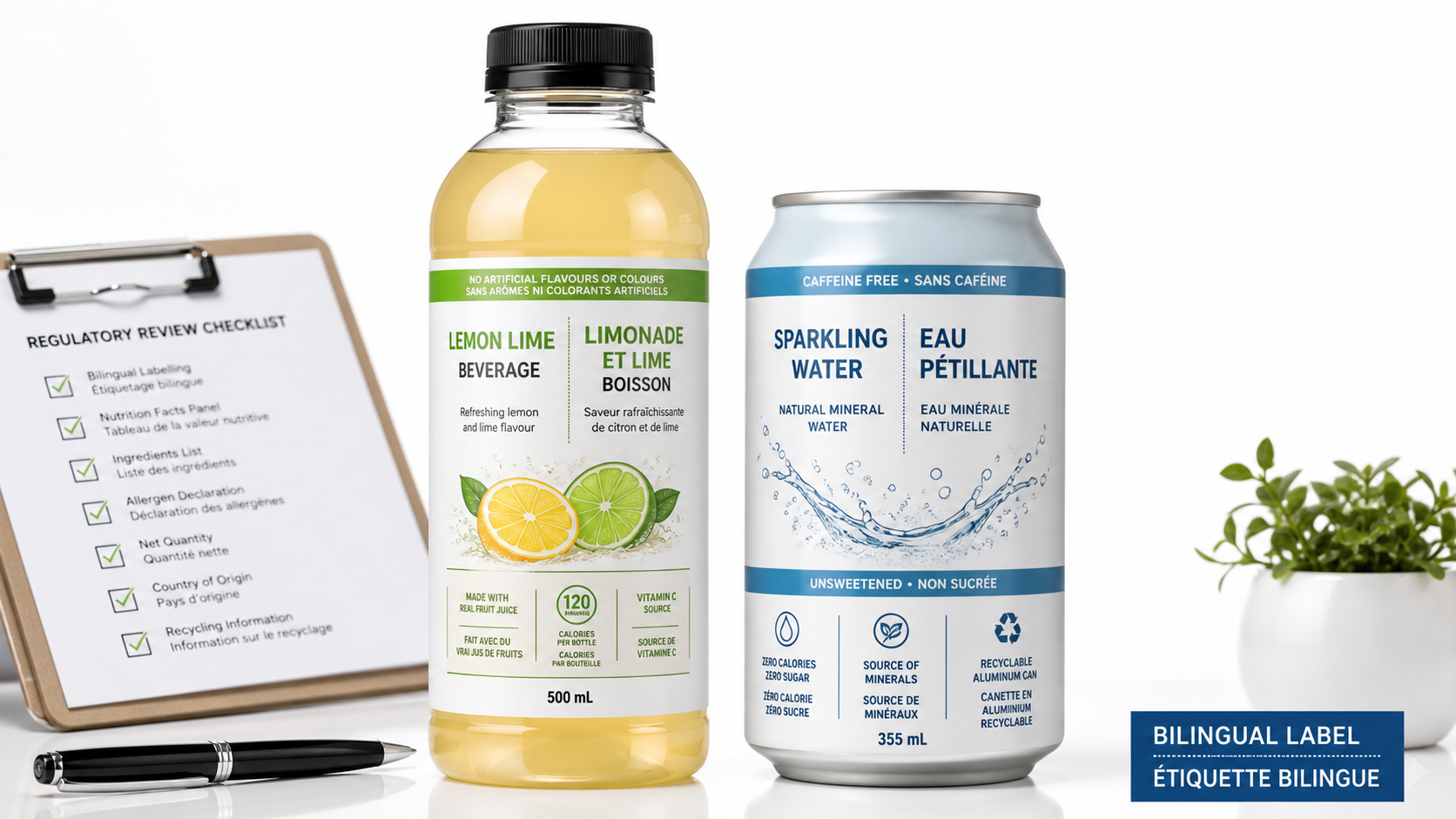
Yes. All mandatory information must appear in both English and French, with limited federal exceptions (for example, dealer name/address). Optional marketing copy may be one language, but in Québec the Charter of the French Language can require French predominance for non-mandatory text.
- Place bilingual content together or in mirrored panels that are easy to read.
- Maintain identical prominence for mandatory English and French statements.
- Use common names in both languages; avoid brand-invented names as a substitute for the legal common name.
What must be on the principal display panel (front)?
The front (principal display panel) needs the common name and the net quantity in metric units, both in English and French. Typography must be clear and meet minimum size rules that depend on the principal display surface area under the CPLR.
- Common name (EN/FR): e.g., “Apple juice / Jus de pomme,” truthful and not misleading.
- Net quantity (metric): mL or L with a capital “L” (e.g., 355 mL; 1 L) in bilingual context.
- Legibility: Contrasting type, sufficient x‑height per CPLR based on package surface area (avoid ultra‑condensed fonts).
How should the dealer name and Canadian address appear?
Show the name and Canadian postal address of the responsible dealer (manufacturer, importer, or distributor). Imported beverages can display the Canadian importer’s name and address to meet CPLA/CPLR requirements.
- Include legal name, municipality, province, and postal code in a single, continuous block.
- Keep it readable; do not bury in folds or under a seam.
- If you are organizing import steps and consignee details, align with your customs plan from import beverages into Canada.
What are the rules for the Nutrition Facts table in Canada?
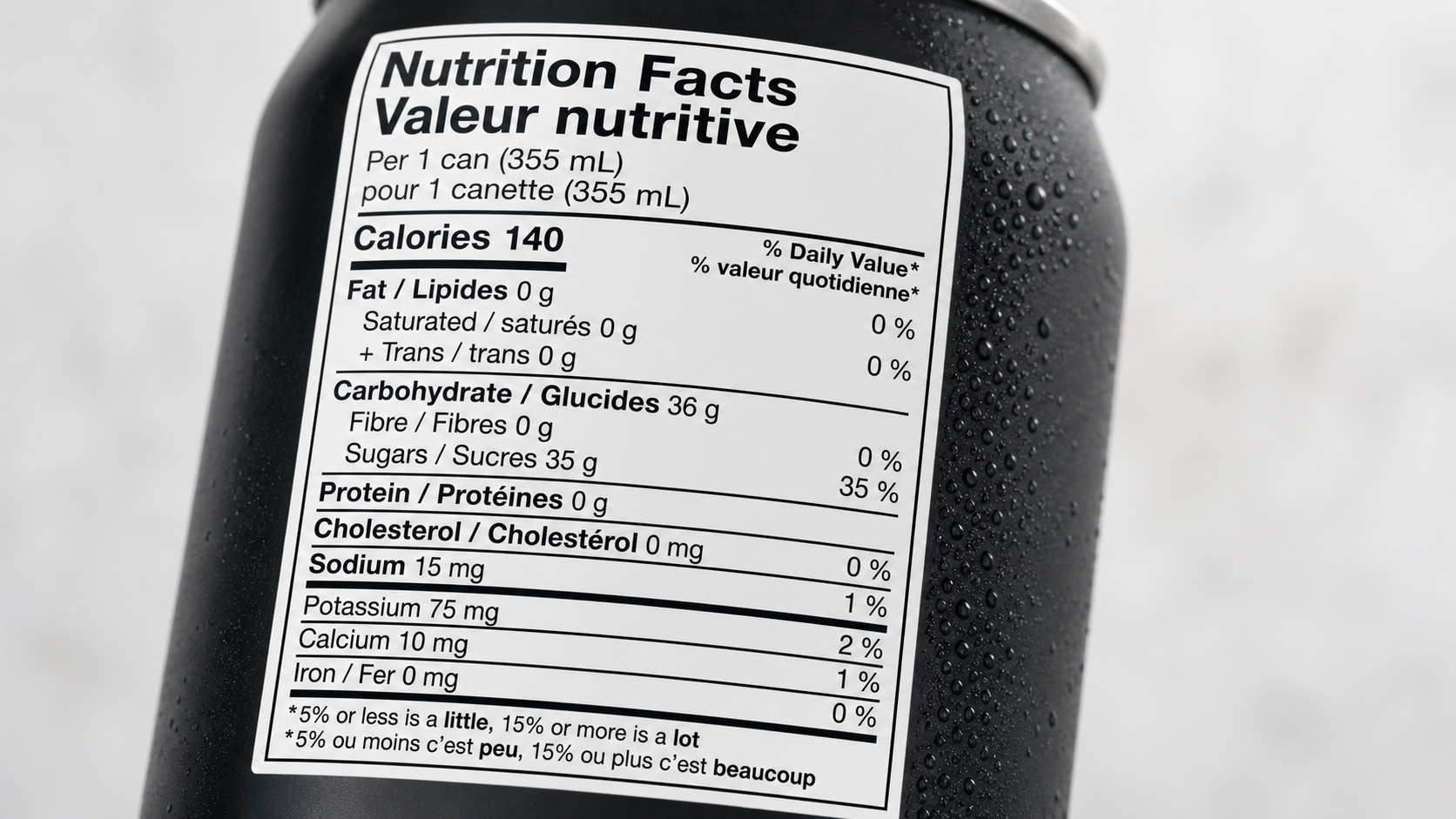
Use the Canadian Nutrition Facts table (NFT), not the U.S. version. The layout, line items, percent Daily Values, serving-size expression, and bilingual heading “Nutrition Facts / Valeur nutritive” follow Canadian formatting set by Health Canada.
- Format: Standard Canadian NFT template; a linear NFT is allowed only when space is restricted.
- Bilingual heading: “Nutrition Facts / Valeur nutritive.” Keep typography and contrast per spec.
- Serving size: Express in mL (and common household measure if appropriate).
- % Daily Value: Use Canadian reference values and rounding conventions.
- Placement: Group NFT, Ingredients/Ingédients, and allergen statements together where possible for clarity.
When is the Supplemented Food Facts table required?
If the beverage is a supplemented food (e.g., with added vitamins, minerals, amino acids, or caffeine beyond typical foods), use the Supplemented Food Facts table (SFFt) and include prescribed cautionary statements. Canada’s supplemented foods framework differs from ordinary foods and has specific labelling elements.
- Confirm whether your formula is a supplemented food under the FDR amendments.
- Use the SFFt template and required statements when applicable.
- Ensure any cautionary or quantitative declarations follow Canadian wording and bilingual rules.
How should ingredients and allergens be declared?
List ingredients in descending order by weight using Canadian common names in English and French. Declare priority allergens, gluten sources, and sulphites in plain language per FDR, often introduced by a clear “Contains / Contient” statement near the ingredient list.
- Ingredients/Ingédients: Use simple, recognizable names; group sub‑ingredients in parentheses.
- Allergens/Gluten/Sulphites: Plain‑language declaration in EN/FR; keep conspicuous and near the ingredients panel.
- Flavours & colours: Use permitted common names; avoid non‑Canadian terms.
What are naming rules for juice, nectar, and drinks?
Names must be truthful and comply with standards of identity (where they exist) in the FDR. “100% juice,” “nectar,” and “juice drink” convey different compositions and must not mislead consumers.
| Product name on PDP | Typical composition | Canadian labelling notes |
|---|---|---|
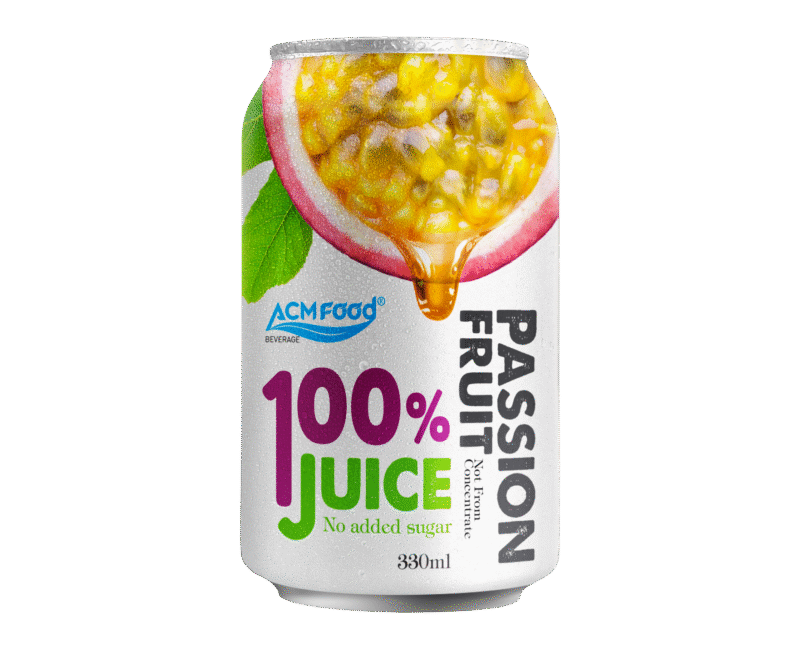
| 100% juice / Jus 100% | Juice only (from fruit/vegetable), not from concentrate or from concentrate reconstituted to standard | Claim must be accurate; meet any applicable FDR standard of identity; avoid sugar-added if claiming 100% juice |
| Nectar / Nectar | Juice plus water; may include sweeteners; common for pulpy or tart fruits | Do not imply 100% juice; common name should reflect the true nature (e.g., “Mango nectar”) |
| Juice drink / Boisson au jus | Lower juice content with water, flavours, sweeteners | Avoid misrepresentation; if flavour‑named (e.g., “Strawberry flavoured drink”), ensure flavour labeling meets FDR |
What about sweeteners and caffeine declarations?
Declare sweeteners by their Canadian common names in the ingredient list. Certain sweeteners and high-caffeine or supplemented beverages require specific statements and formatting. Keep all such declarations bilingual and consistent with the FDR and supplemented foods framework.
- Use recognized Canadian names (e.g., acesulfame-potassium) and place declarations clearly.
- For formulas with added caffeine or supplemental ingredients, verify whether SFFt and cautionary statements apply.
- Avoid U.S.-style front claims or formats; Canada has its own wording and placement conventions.
Are date markings and storage statements required?
Yes when applicable. For a durable life of 90 days or less, include a bilingual Best before/Meilleur avant date and any necessary storage instructions to maintain that life. Date presentation must follow Canadian format rules, with the month expressed in letters.
- Best before / Meilleur avant: Required at ≤90 days durable life; bilingual.
- Storage: Provide conditions (e.g., “Refrigerate after opening”) where relevant, EN/FR.
- Lot code: Add a traceability lot/batch code (good practice and supports SFCR traceability).
Which voluntary claims need extra proof (e.g., organic)?
All claims must be truthful, not misleading, and substantiated. For “organic,” follow the Canada Organic Regime (COR) and the CFIA rules on the Canada Organic logo. Ensure bilingual presentation and certification before placing the logo or claims.
- Organic: Certification under COR is required to use regulated organic claims or the logo.
- Other seals: Kosher, halal, non‑GMO, or sustainability logos require valid third‑party documentation and proper use.
- For positioning decisions, you can explore category options in organic vs regular coconut water as a case example.
What about barcodes, recycling cues, and container deposits?
Use a GS1‑issued UPC with adequate quiet zones for scanning. Recycling symbols and deposit messages vary by province/territory; avoid implying a uniform national deposit unless that applies to your SKU and province of sale.
- UPC: GS1-compliant size and quiet zones; do not crowd with graphics.
- Recycling/Deposit: Follow provincial programs; if adding deposit/refund text, tailor by province.
- Carton marks: Keep shipping marks on outer cartons, not the consumer label.
What import-pack specifics matter for Canada-bound artwork?
Artwork should be “Canada‑ready” before production: bilingual, metric-only net quantity, Canadian dealer address, and the correct NFT/SFFt. Align label content with customs documentation and distribution plans via major ports such as the Port of Vancouver or the Port of Montréal.
- Lock the bilingual content early to avoid late-stage font and spacing changes at press time.
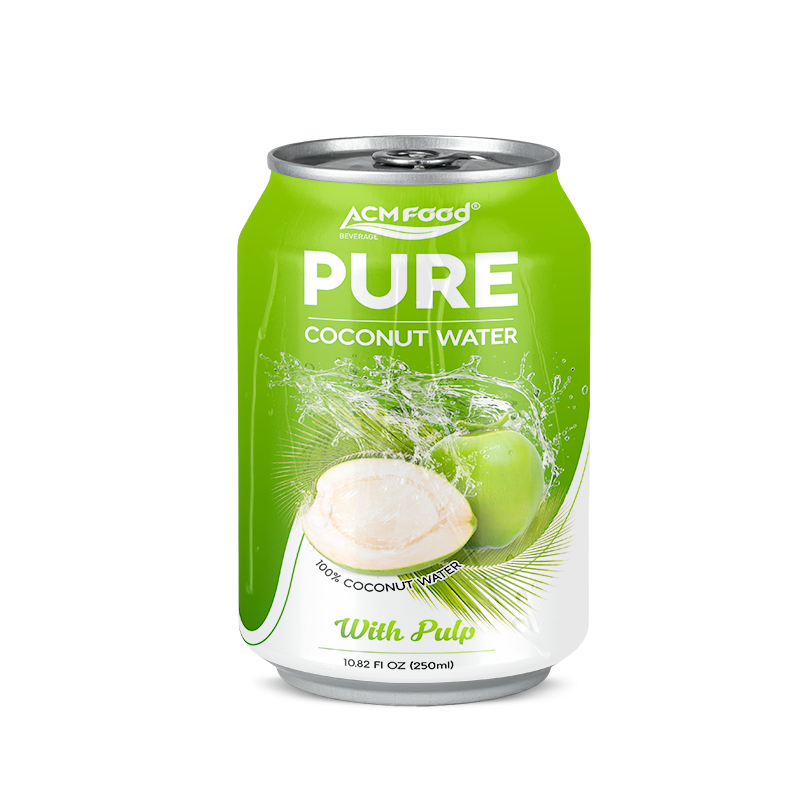
- Use packaging that suits the channel; explore can formats in coconut water can formats for retail reference.
- Coordinate HS classification, origin statements (if used), and label claims with your customs and QA teams. For broader context, see import beverages into Canada and route planning from the overview of the Canada market.
- If you export from Asia, the logistics primer in importing coconut water from Vietnam outlines trade terms and documents relevant to beverage SKUs.
Canada beverage label requirements: a ready-to-use artwork checklist
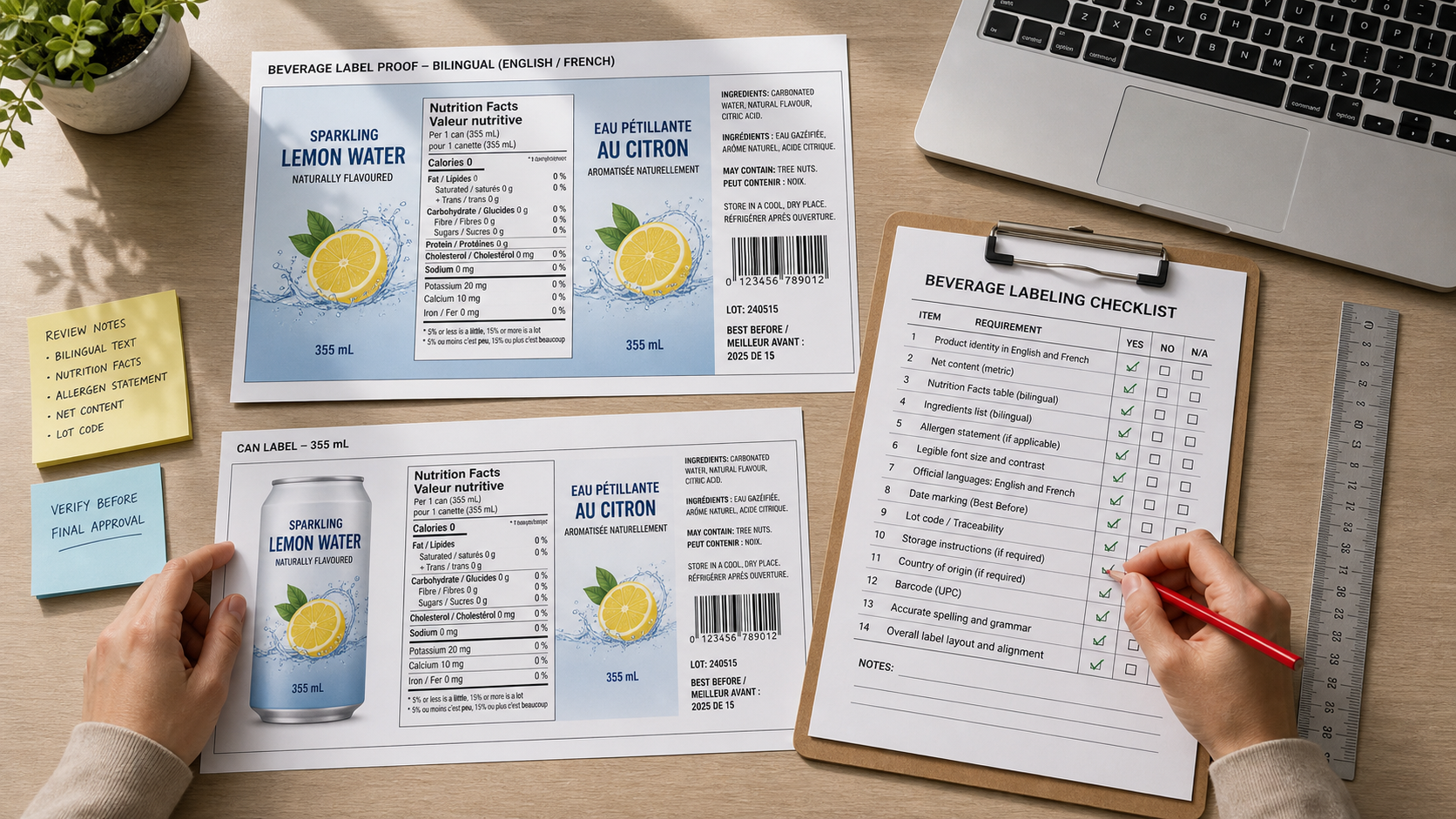
Use this checklist as you review proofs. Answer each item “Yes” before releasing to print.
- Common name appears on the PDP in EN/FR and truly describes the beverage (e.g., “Sparkling water / Eau pétillante”).
- Net quantity is metric (mL/L), bilingual context, correct type size based on principal display surface.
- Dealer name & Canadian address are complete, readable, and present.
- Language: All mandatory text is bilingual (EN/FR) with equal prominence.
- Nutrition panel: Canadian NFT used (not U.S.); correct serving size, %DV, and bilingual header.
- Supplemented foods: If applicable, SFFt replaces NFT and all required cautionary statements are present.
- Ingredients list: “Ingredients / Ingédients” heading; descending order by weight; sub‑ingredients in parentheses.
- Allergen statement: Plain language “Contains / Contient” near the ingredient list, bilingual.
- Flavour naming: Flavour claims and “with pulp / avec pulpe” or similar statements are truthful and compliant.
- Voluntary claims (organic, vegan, etc.) are substantiated and used per Canadian rules; logos authorized.
- Date markings: Best before/Meilleur avant shown if durable life ≤90 days; storage instructions included where needed.
- Lot code: Production lot/batch code appears and is traceable; location is consistent across SKUs.
- Caffeine/sweeteners: Any required statements present; sweeteners declared by Canadian common names.
- Barcodes: GS1 UPC sized correctly with quiet zones; scannability tested on curved surfaces.
- Contrast & legibility: Sufficient contrast and type size for all mandatory elements.
- Artwork integrity: No U.S.-only icons or legal statements; no country‑specific seals used without authorization.
- Origin statements: If used (“Product of…” or “Made in…”), they follow CFIA guidance and are not misleading.
- Panel grouping: NFT/SFFt, Ingredients, and allergen declarations grouped logically.
- Bilingual consistency: English and French versions match in meaning and units.
- Final prepress: Dielines, bleed, and trapping confirmed; no mandatory text in crease areas or under closures.
How do Canada and U.S. Nutrition Facts differ for beverages?
They are not interchangeable. Canada’s NFT has its own layout, bilingual header, line order, and %DV references. If you copy a U.S. panel, you will likely miss Canadian formatting, serving‑size expression in mL, and specific Canadian line items and footers.
- Always start from a Canadian NFT template.
- Verify Canadian rounding and %DV reference values.
- Keep the bilingual heading and typography consistent with Canadian specifications.
What prepress pitfalls cause most Canada label reprints?
The top causes are English‑only mandatory text, using a U.S. NFT, incorrect metric units, missing Canadian dealer address, and insufficient type size on the net quantity. A structured label review against Canadian rules avoids costly rework.
- Run a bilingual legal proofread at the same time as prepress checks.
- Test scannability of UPC on curved cans and PET bottles.
- Print a 100% scale mockup and verify x‑height with a typographic gauge.
FAQ
Is French only mandatory in Québec?
No. Bilingual English–French is required for mandatory information nationwide under federal law. Québec may add rules on the prominence of French for non‑mandatory text.
Can we use the U.S. Nutrition Facts panel in Canada?
No. Canada requires the Canadian Nutrition Facts table with its own format, bilingual heading, and Canadian %DV references.
Do we need a Canadian importer address on the label?
Yes, a Canadian dealer name and address must appear (manufacturer, importer, or distributor) to meet CPLA/CPLR requirements.
Should we use mL or ml?
Use metric units with a capital “L” (e.g., 250 mL; 1 L) and ensure the net quantity meets Canadian type‑size rules.
Which ports commonly handle beverage imports?
Major entries include the Port of Vancouver and the Port of Montréal. Coordinate artwork, packaging, and import docs well before shipment.
Conclusion
Canada beverage label requirements center on bilingual mandatory text, Canadian‑format Nutrition Facts, accurate ingredient and allergen declarations, and a compliant net quantity and dealer address. Confirm whether your beverage needs the standard NFT or the Supplemented Food Facts table, and validate any claims (like organic) against Canadian frameworks. Use the checklist above to lock compliance before press, then align with your distribution plan and customs documentation for a smooth launch.
Sources
Primary references (official, Canada): Safe Food for Canadians Regulations (CFIA); Food and Drugs Act & Food and Drug Regulations (Health Canada/CFIA); Consumer Packaging and Labelling Act & Regulations (Competition Bureau/CFIA); CFIA Industry Labelling Tool; Health Canada nutrition labelling resources.