


 Français
 Español
 العربية
 한국어
한국어Pineapple in coconut water is a packaged fruit product: pieces or spears of pineapple packed in coconut water instead of syrup or juice, sold in jars, cups or cans and eaten as fruit. A pineapple coconut water drink is something else entirely, a beverage in which coconut water is blended with pineapple juice or pineapple flavour and sold to drink. The names sound almost identical, so shoppers searching for one often land on the other.
This guide separates the two products, explains how each is made and labelled, and shows how to tell which one you are looking at on a shelf or a product listing. It also covers what the distinction means for retailers, importers and brand owners planning a pineapple and coconut range, since the two sit in different categories with different rules.
What is pineapple in coconut water?
Pineapple in coconut water is fruit, not a drink. Pineapple is peeled, cored and cut into chunks, slices or spears, then packed in coconut water as the packing liquid, sealed and treated so it keeps. You eat the fruit and can drink the liquid, but the product is sold and labelled as packaged fruit.
Coconut water replaces the traditional packing media used for canned fruit, such as heavy syrup, light syrup or fruit juice. Shoppers choose it because it gives the fruit a mild tropical taste without the added sugar of syrup, although the fruit and coconut water both still contain natural sugars. Product names you may see include pineapple spears in coconut water, pineapple chunks in coconut water and pineapple in coconut juice. Similar products exist with other fruit, such as peaches in coconut water or mango in coconut water.
Typical features of this product type:
- Format: glass jars, plastic fruit cups, cans or larger tubs, often kept in the chilled or ambient fruit aisle rather than the drinks aisle.
- Main ingredient by weight: the drained fruit. The ingredient list usually starts with pineapple, followed by coconut water.
- Use: eaten as a snack, added to breakfast bowls, desserts and salads, or used in recipes.
- Labelling: drained weight and net weight are common on fruit products, which is rarely the case for drinks.
What is a pineapple coconut water drink?
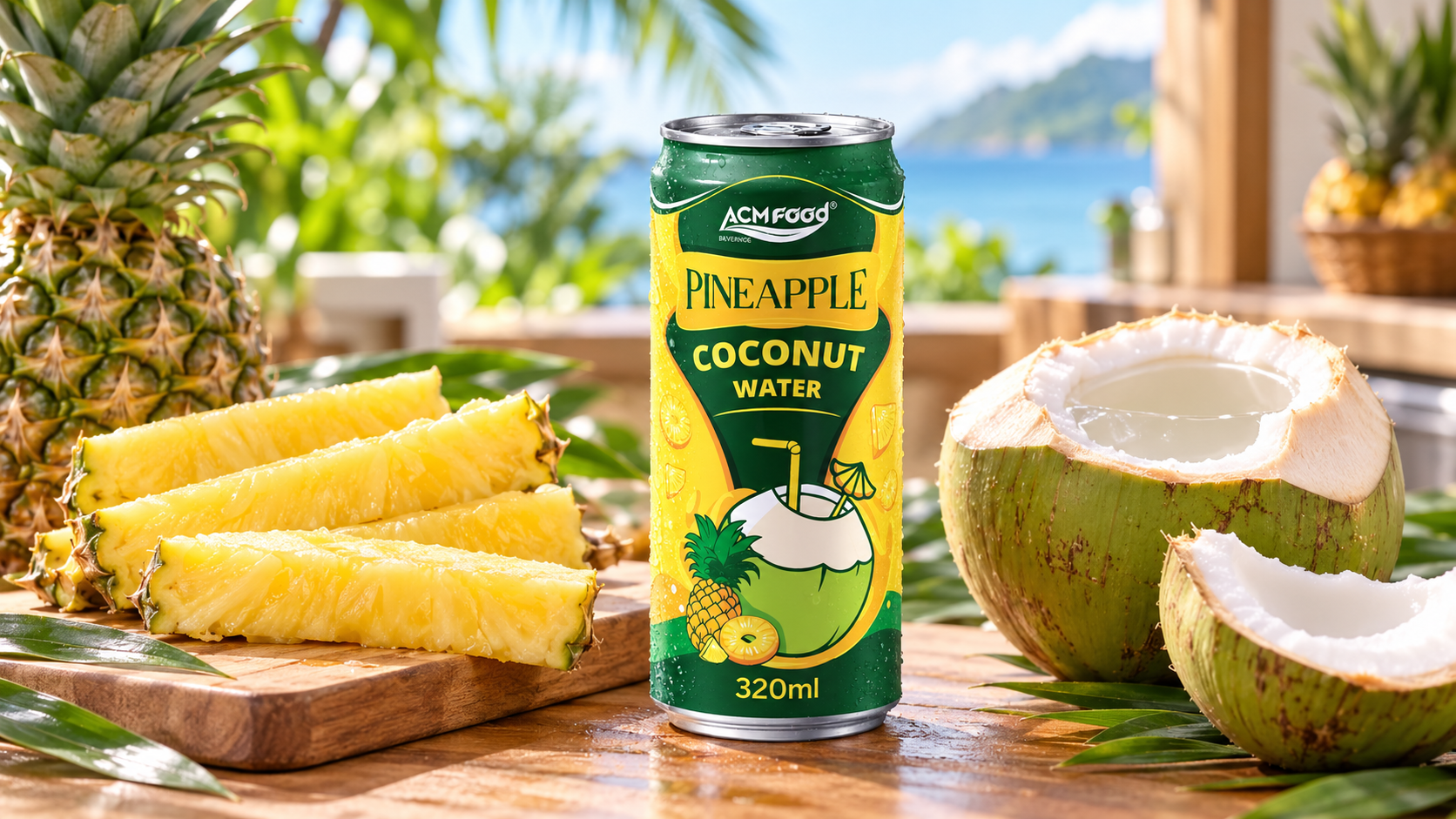
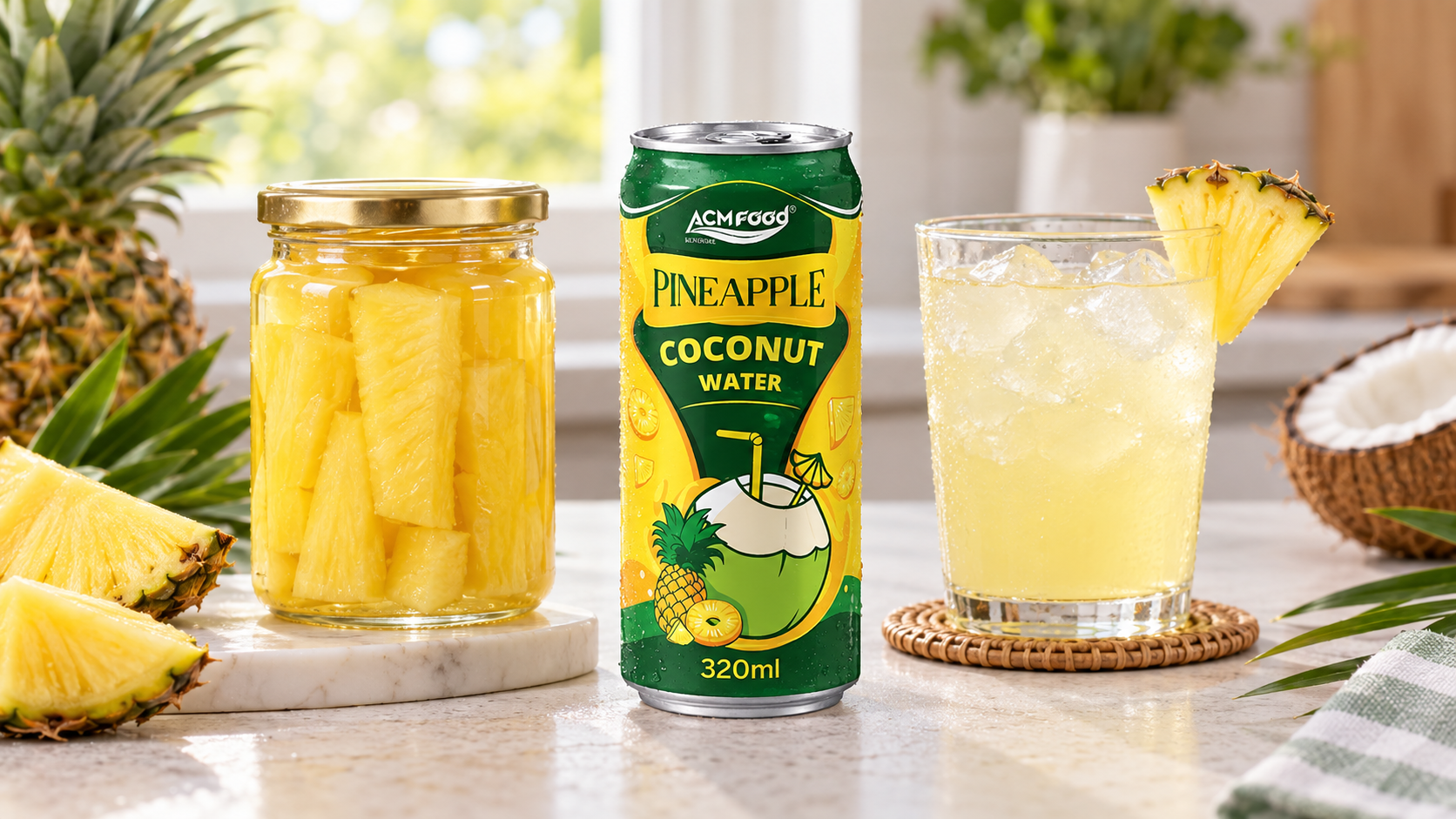
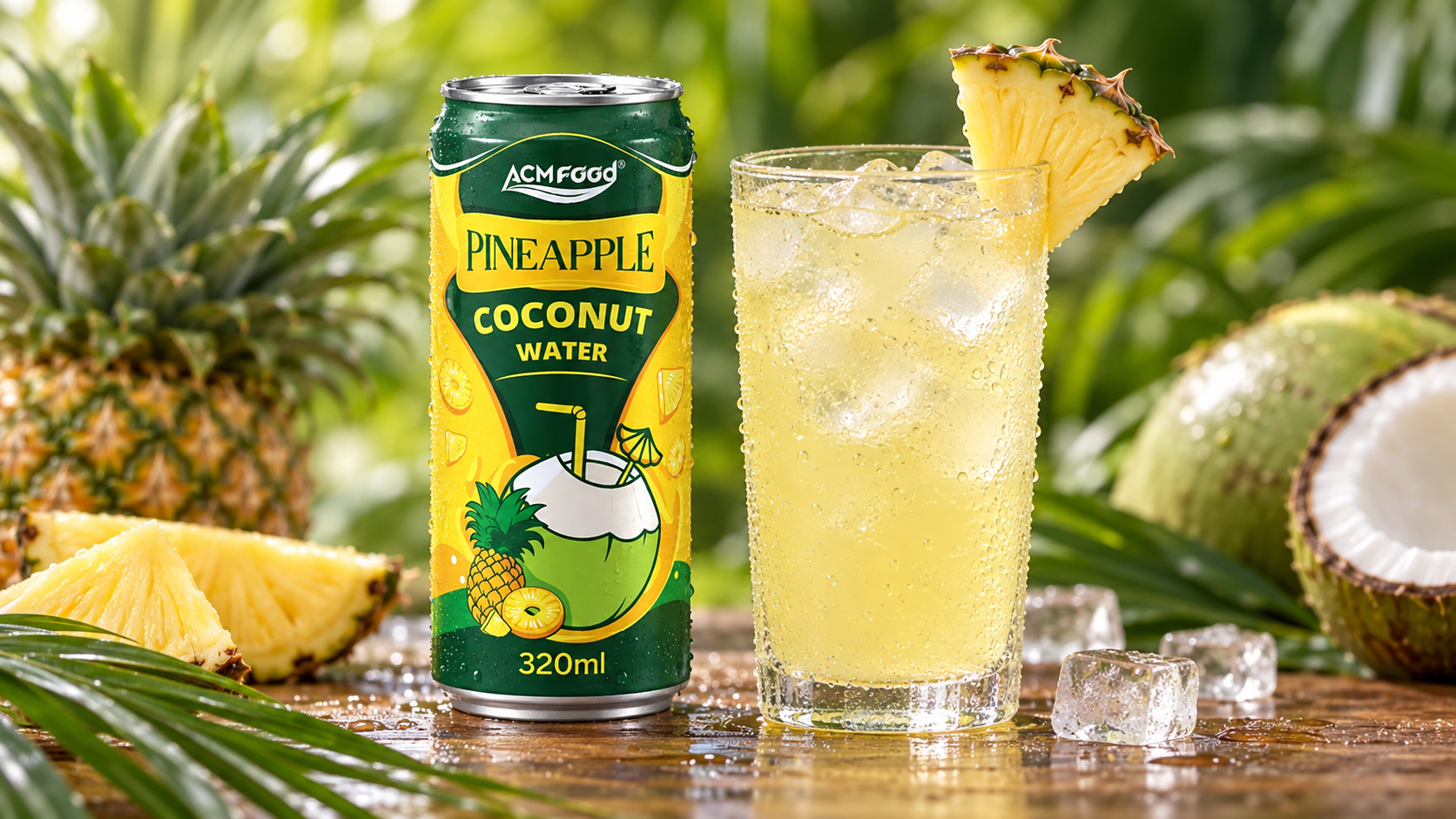
A pineapple coconut water drink is a ready-to-drink beverage made mainly from coconut water, with pineapple added as juice, purée or flavouring. It is sold by volume in cans, bottles or cartons and belongs to the beverage aisle, next to other coconut water and juice products.
Recipes vary a great deal. Some products are mostly coconut water with a small proportion of pineapple juice; others contain more pineapple and are closer to a juice blend; and some rely on natural flavour rather than fruit juice. There are also sparkling versions. You may see names such as pineapple coconut juice, coconut water with pineapple or pineapple coconut water drink, but the ingredient list is what tells you how much pineapple is really inside.
For a closer look at how this category developed, our article on coconut water pineapple juice and tropical drink innovation covers the beverage side in more detail.
Pineapple in coconut water vs pineapple coconut water drinks at a glance
The quickest way to understand the difference is to compare the two side by side.
| Point of comparison | Pineapple in coconut water | Pineapple coconut water drink |
|---|---|---|
| Product category | Packaged fruit | Ready-to-drink beverage |
| Main component | Pineapple pieces or spears | Coconut water |
| Role of coconut water | Packing liquid around the fruit | The base of the drink |
| Role of pineapple | The food you eat | Juice, purée or flavour that seasons the drink |
| How it is sold | By weight, often with drained weight declared | By volume (ml or fl oz) |
| Typical packaging | Jars, fruit cups, cans, tubs | Cans, PET bottles, cartons |
| Shelf location | Fruit aisle, chilled fruit or snacks | Beverage aisle or drinks fridge |
| How people use it | Snack, breakfast, dessert, recipes | Drink chilled, on the go or with meals |
How can you tell which product you are buying?
Check three things: the product name, the first ingredient and the way the quantity is declared. If pineapple comes first and the label shows a drained weight, it is fruit packed in coconut water. If coconut water comes first and the volume is in millilitres or fluid ounces, it is a drink.
Online listings make the confusion worse, because short titles often drop words like “spears” or “drink”. A few extra checks help:
- Look at the photo for visible fruit pieces through a jar or cup, which signals packaged fruit.
- Read the serving suggestion. “Serve chilled” with a glass suggests a drink; “great on yogurt” suggests fruit.
- Check where the store files the product. A listing under canned or jarred fruit is almost always the fruit product.
- For drinks, read how much pineapple is included. “With pineapple juice” and “pineapple flavour” are not the same thing.
If you were searching for pineapple in coconut water near you, the fruit product is usually stocked by supermarkets and warehouse clubs in the packaged fruit section, while pineapple coconut water drinks sit with other coconut waters.
Is pineapple in coconut water healthier than pineapple in syrup?
Pineapple in coconut water usually contains less added sugar than pineapple packed in heavy or light syrup, because coconut water replaces the sugar solution. It is not sugar-free, though. Pineapple and coconut water both contain natural sugars, so the total sugar depends on the recipe and portion size.
The fairest comparison is the nutrition panel of the exact products you are considering, per serving and per 100 g. A product packed in coconut water and one packed in unsweetened pineapple juice may be quite close, while one in heavy syrup will differ more. Whole fresh pineapple remains the simplest option where it is available, since packaged fruit may lose some texture and some heat-sensitive nutrients during processing.
The same caution applies to the drinks. A pineapple coconut water drink can be a lighter alternative to some soft drinks, but juice content and any added sugar vary by brand. Reading the label matters more than the product name.
How each product is made
The two products follow different processes, which is one reason they are rarely made on the same production line.
Pineapple in coconut water
- Pineapples are sorted for ripeness, then peeled, cored and cut into spears, chunks or rings.
- The fruit is filled into jars, cups or cans, and coconut water is added as the packing liquid.
- Containers are sealed and heat treated, or kept chilled for short-life products.
- Products are labelled with net and drained weight, ingredients and storage instructions.
Pineapple coconut water drinks
- Coconut water is extracted, filtered and standardised.
- Pineapple juice, purée or flavour is blended in according to the recipe, along with any other declared ingredients.
- The blend is heat treated for safety and stability, and carbonated for sparkling versions.
- The drink is filled into cans, bottles or cartons, sealed and coded.
How to store and use each product
Storage follows the label, and the two products are handled differently once opened. Unopened shelf-stable jars, cups and cans can be kept in a cool, dry cupboard until the date shown. Chilled versions must stay refrigerated. After opening, pineapple in coconut water should be covered, kept in the fridge and eaten within the period stated on the pack, because the fruit softens and the liquid can start to ferment.
Pineapple coconut water drinks are simpler: keep unopened cans and bottles according to the label, chill before serving and finish an opened bottle within a short time. Drinks are designed to be consumed in one sitting or soon after opening, so large packs suit households or foodservice rather than single servings.
Common ways people use each product:
- Pineapple spears in coconut water: eaten straight from the jar, added to yogurt or oats, layered into fruit salads, blended into smoothies or grilled for desserts.
- The leftover packing liquid: used as a base for smoothies or ice pops rather than poured away.
- Pineapple coconut water drinks: served cold as a refreshing drink, poured over ice, or used as a mixer in mocktails and summer punches.
Because they serve different occasions, the two products rarely compete directly. For a wider view of where coconut water drinks fit among other beverage categories, see our guide to popular types of beverages and drink categories.
What this means for retailers, importers and beverage brands
For trade buyers, the key point is that the two products sit in different categories. They fall under different product standards, may be classified under different customs codes, carry different labelling requirements and usually come from different suppliers. A buyer who lists “pineapple in coconut water” in a sourcing request should be specific about whether they want fruit or a beverage.
When the goal is a pineapple coconut water drink, a brief should cover:
- Pineapple level and form: a small juice percentage for a light coconut-forward taste, a higher share for a juice-like drink, or natural flavour for a cleaner sugar profile.
- Sweetness target: whether the product will rely only on natural sugars or include added sugar, and how that affects labelling in the destination market.
- Still or sparkling: carbonation changes the process, packaging and shelf presence. A sparkling option is shown in our piece on sparkling coconut water with pineapple flavour.
- Packaging and pack size: cans and PET bottles suit different channels and price points.
- Label wording: names such as “pineapple coconut water” or “coconut water with pineapple juice” must match the actual composition under local rules.
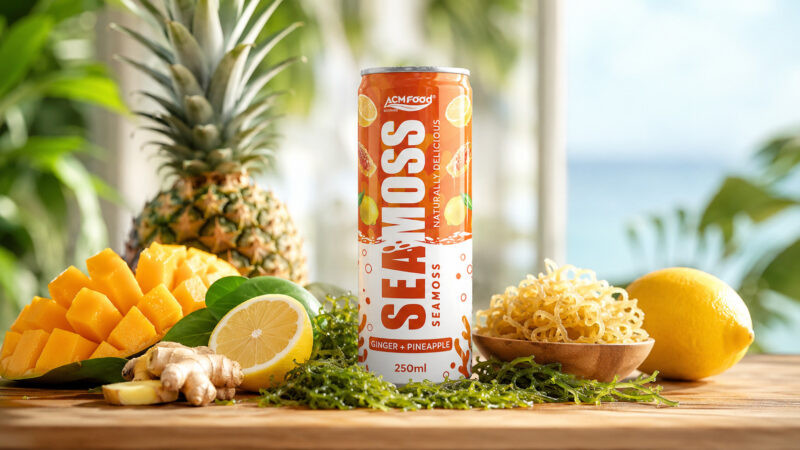
Brands that want a pineapple-only line can also consider straight juice; our overview of pineapple juice OEM for importers and private labels covers that route. ACMFOOD produces pineapple coconut water drinks in canned formats for brand owners and importers, with recipe, pack size and labelling confirmed during development. It does not produce packaged pineapple spears in coconut water.
FAQ about pineapple in coconut water
Is pineapple in coconut juice the same as pineapple in coconut water?
Usually yes. Both names describe pineapple packed in coconut liquid, but “coconut juice” is sometimes used loosely for coconut water, so check the ingredient list to confirm what the packing liquid contains.
Can you drink the coconut water from pineapple spears?
You can, as it is part of the food. It will taste of pineapple as well as coconut, because the fruit and liquid exchange flavour during storage.
Are peaches or mango in coconut water the same type of product?
Yes. Peaches in coconut water and mango in coconut water are packaged fruit products that use coconut water as the packing liquid, just like the pineapple version.
Does a pineapple coconut water drink contain real pineapple?
It depends on the recipe. Some drinks contain pineapple juice or purée, while others use pineapple flavour. The ingredient list shows which.
Conclusion
Pineapple in coconut water is fruit packed in coconut water, sold by weight and eaten as a snack or ingredient. A pineapple coconut water drink is a beverage built on coconut water and flavoured with pineapple, sold by volume and drunk chilled. Reading the first ingredient and the way quantity is declared is the fastest way to tell them apart, and both still contain natural sugars, so labels matter more than names.
If you are planning a pineapple coconut water drink for your market, ACMFOOD can review your brief on pineapple level, sweetness, still or sparkling format, packaging and labelling, and prepare samples for evaluation.