


 Français
 Español
 العربية
 한국어
한국어A noni juice manufacturer turns noni fruit (Morinda citrifolia) into a packaged, shelf-stable drink that a brand can sell under its own label. For buyers, the useful question is not who makes noni juice but which manufacturing model fits the project: OEM, ODM, private label or contract filling. This guide explains each route, what to prepare before contacting a factory and how ACMFOOD handles noni juice supply from Vietnam.
ACMFOOD supplies beverages made at facilities holding HACCP, ISO 22000 and FSSC 22000, with a standard minimum order of 500 cartons per SKU. Noni is a niche ingredient with a strong taste and tighter labelling rules in several markets, so the choice of manufacturer matters more than it does for a mainstream fruit juice.
What does a noni juice manufacturer actually do?
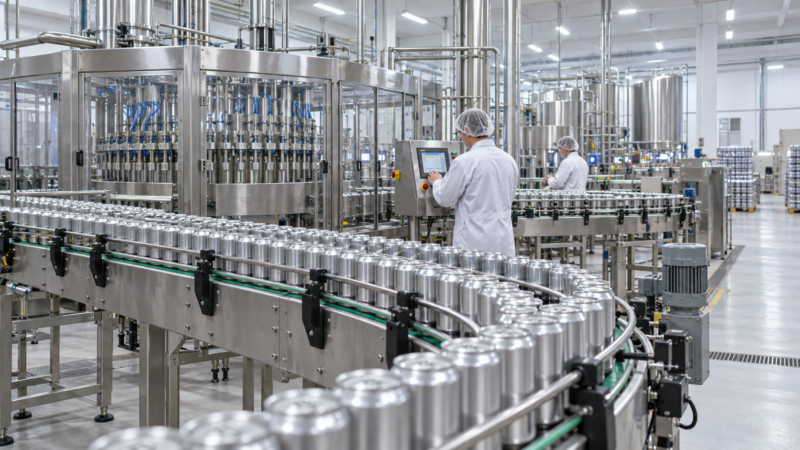
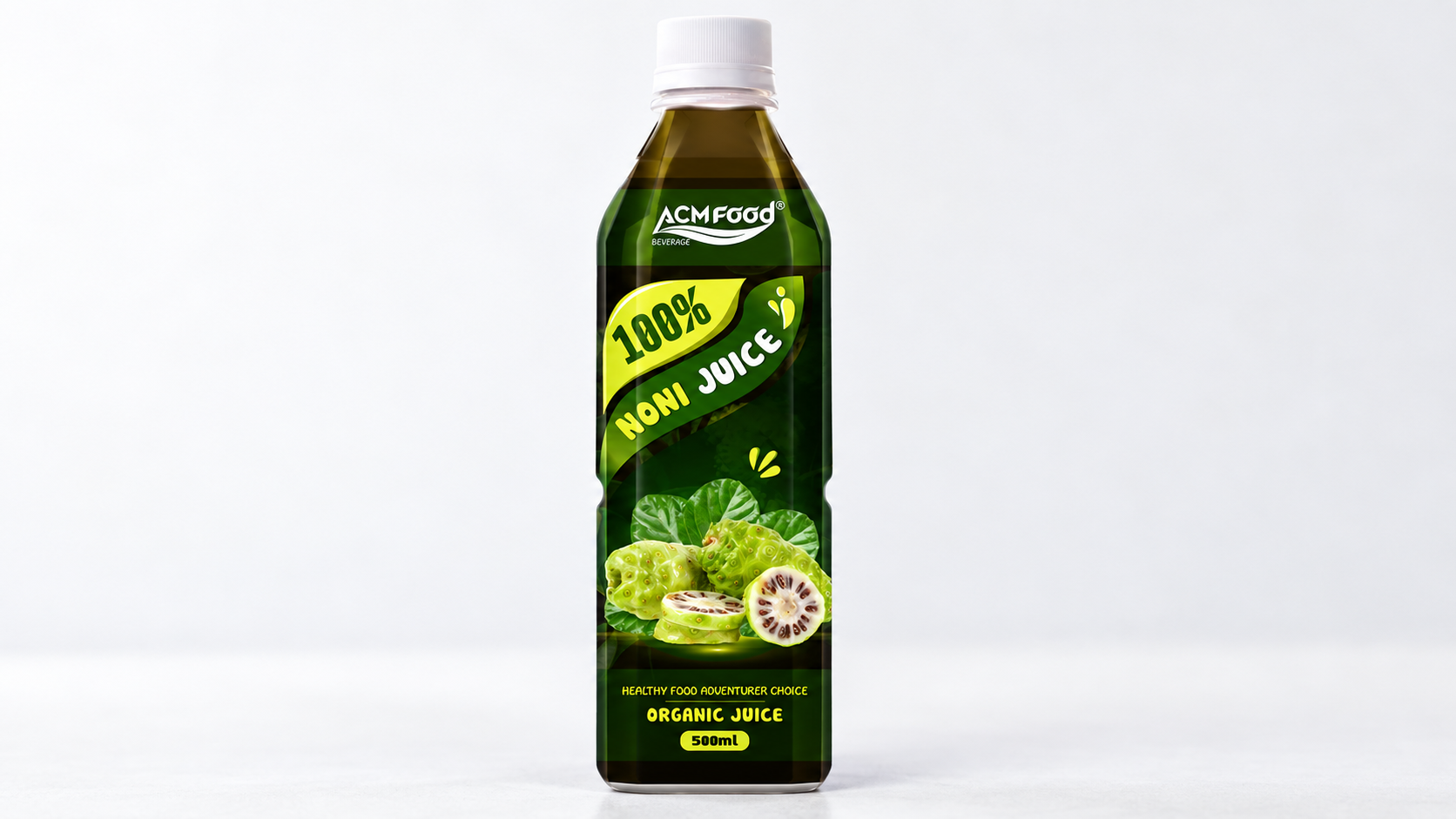
A noni juice manufacturer sources or processes noni fruit, blends it into a drink formula, fills it into cans or bottles, heat-treats it for shelf stability and ships it in export cartons. Some factories do every step in-house, while others fill a formula you supply. The scope of service should be written down before any sample is made.
Noni is unusual because the plain juice is bitter and pungent, so most commercial noni drinks are blended or sweetened. A manufacturer therefore does more than press fruit. It balances flavour, acidity and sweetness so the drink is acceptable to a mainstream consumer, then confirms that the recipe stays stable through the stated shelf life. Our separate guide on noni juice taste, safety notes and sourcing covers the ingredient itself, so this page focuses on the supply side.
Which manufacturing model fits your noni juice project?
The right model depends on who owns the formula and how much development you need. If you already have a recipe, OEM or contract filling fits. If you only have a concept, ODM fits. If you want to launch fast with an existing product, private label is the shortest path. The table compares the four routes.
| Model | Who owns the formula | Best for | Typical starting point |
|---|---|---|---|
| OEM | The buyer | Brands with a proven recipe and a reference sample | Specification and reference sample |
| ODM | Developed with the manufacturer | Brands with a concept but no formula | Flavour brief, target market and price positioning |
| Private label | The manufacturer’s existing formula | Fast launches using a product already in production | Choice of product, then your own artwork |
| Contract filling | The buyer | Brands that need filling capacity only | Formula, materials and filling specification |
How does OEM noni juice production work?
In OEM, you own the formula and specification and the manufacturer produces it to your standard under your brand. The factory matches your reference sample, trials adjustments and then runs production once you approve a pre-production sample.
ACMFOOD’s OEM beverage manufacturing service follows this pattern. A typical OEM noni project involves these steps:
- Specification review. You share the recipe or reference sample, target Brix and acidity, pack format and destination market.
- Sample matching. The factory reproduces the drink on its own equipment and adjusts until it matches your reference.
- Shelf-life and stability check. The sample is checked against the shelf life you need, which for noni drinks depends on formula and packaging.
- Artwork and label check. Mandatory declarations are checked against the printable area for your market.
- Production and documentation. Batches are produced, analysed and shipped with the export documents your market requires.
What does ODM add for noni juice brands?
ODM means the manufacturer develops the product with you. For noni, that usually means designing a blend that balances the fruit’s bitterness with other juices or sweeteners, choosing a pack size and proposing a formula you can then own or license under an agreed arrangement.
ODM suits new brands that know their audience but not their recipe. The ODM beverage manufacturing page describes how development projects run, and our guide to private label fruit juice development timelines shows how long concept-to-shipment projects commonly take. Before committing to an ODM route, agree in writing who owns the final formula and whether the manufacturer may sell it to others.
Is private label the fastest way to launch noni juice?
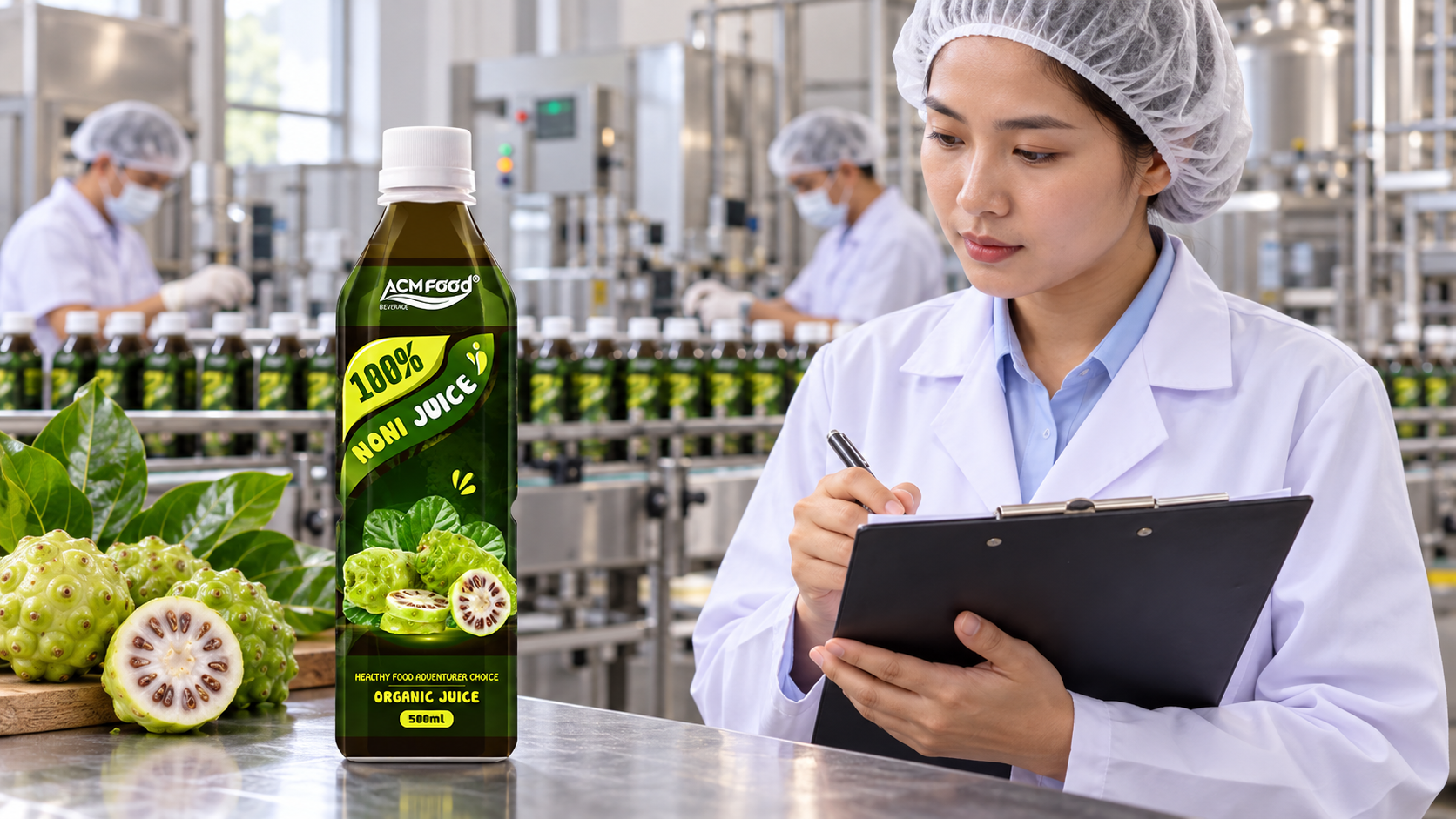
Private label is usually the fastest route because the formula already exists and the packaging is already tooled. You choose a product from the existing range, apply your own artwork and order from 500 cartons per SKU.
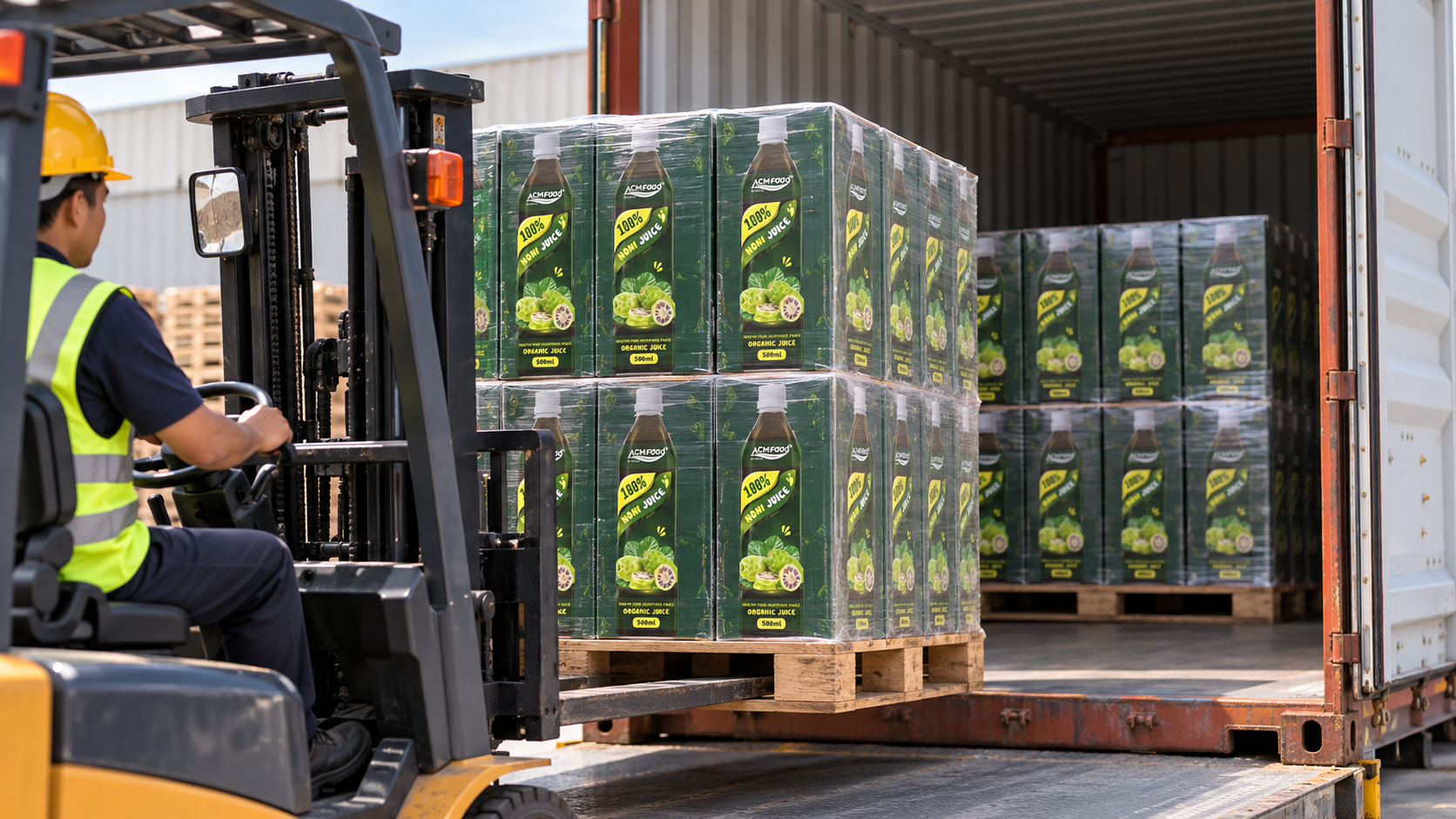
ACMFOOD currently lists one noni product on its site: a 500ml PET bottle noni juice drink. It is manufactured in Vietnam, carries an 18-month shelf life and ships from Ho Chi Minh City Port. Details are on the 500ml noni juice product page. If you want a different volume or a different flavour blend, that moves the project from private label towards OEM or ODM and is discussed case by case. The private label beverages page explains what is included in this route.
When does contract filling make sense?
Contract filling makes sense when you already own the formula and the ingredients and only need production capacity. The factory fills, seals, heat-treats, codes and packs your product, while you remain responsible for the formula and for supplying agreed materials.
Combined output across ACMFOOD’s partner lines is up to 20,000 cartons per day, with filling in aluminium cans, PET and glass. Because noni is a specialty ingredient, contract filling works best when the ingredient supply chain is already settled. Our comparison of co-packers and contract manufacturers explains the legal and operational differences. Details specific to this service are on the contract manufacturing page.
What certifications should a noni juice manufacturer hold?
At minimum, a buyer should expect HACCP, and many importers and retailers ask for a food safety management scheme such as ISO 22000 or FSSC 22000. Beverages produced for ACMFOOD are made at facilities holding all three, audited annually by accredited certification bodies.
These certificates cover the production facility, not the noni ingredient claims. They do not replace market-specific requirements such as labelling rules, import registrations or novel food assessments. Certificates, specification sheets and test reports are released on request for supplier qualification. If a retailer names a specific scheme, check the details on the certifications page and compare schemes using our guide to ISO 22000 versus FSSC 22000.
What should you check about noni regulation before ordering?
Noni juice is treated differently across markets. Some jurisdictions regulate noni products under novel food, supplement or conventional food rules, and labelling expectations vary. This is not a decision a manufacturer can make for you, so confirm the status in your destination market before you commit to a first order.
Three points are worth checking early:
- Product category. Whether noni juice is sold as a conventional beverage, a food supplement or an item requiring prior authorisation in your market.
- Labelling. Any mandatory warnings, permitted wording and ingredient declarations. Health claims on labels depend on the final formula, tested content, serving size and local rules, so they should not be copied from other markets.
- Documentation. Certificates, specification sheets and analysis reports your importer or customs broker will request.
Because noni is naturally high in potassium and is sometimes discussed in relation to liver health, it is sensible to keep marketing language factual and conservative. Avoid describing the drink as a treatment or remedy.
What formats and specifications can you plan around?
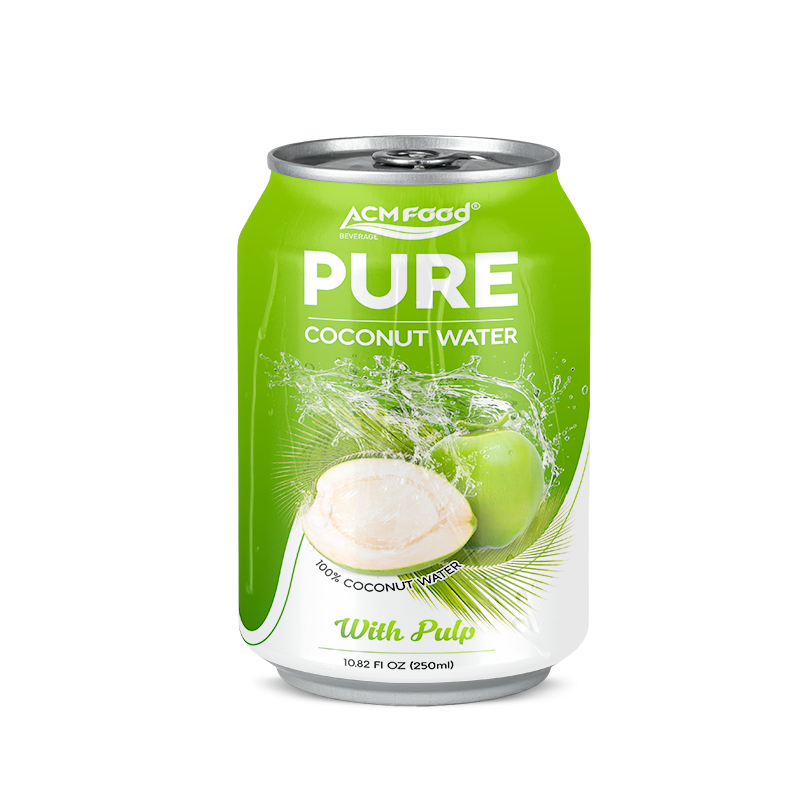
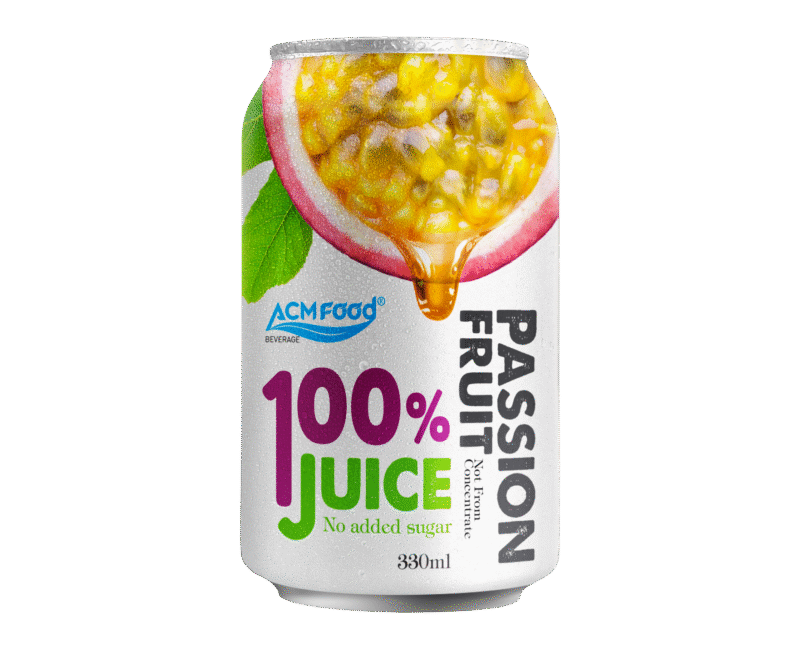
The one noni product currently listed on the site is a 500ml PET bottle. ACMFOOD fills aluminium cans in standard, slim and sleek profiles, PET and glass bottles, with fill volumes from 200ml to 1.5L, so other formats are possible but must be confirmed per project. The table summarises the published specification of the existing product.
| Item | 500ml noni juice drink |
|---|---|
| Packaging | PET bottle |
| Volume | 500ml |
| Shelf life | 18 months |
| Certifications | HACCP, ISO 22000, FSSC 22000 |
| Place of origin | Vietnam |
| Port of loading | Ho Chi Minh City Port |
| Payment terms | T/T |
| OEM services | Yes |
For format guidance across cans, PET and glass, the packaging options page lists what each format suits. PET suits larger fill volumes and products where the consumer sees the liquid, while cans offer better light and oxygen barriers.
What are the MOQ and lead time for noni juice?
The standard minimum is 500 cartons per SKU, and production lead time is 15 to 30 days after order confirmation. The minimum applies per SKU, not per order, so two noni blends in one launch mean two minimums.
Several factors move the number: the printing method, the packaging format, the ingredients, the number of SKUs and the destination market. Directly printed cans carry a higher minimum than shrink sleeves or applied labels. A custom formula that relies on a specialty ingredient inherits that ingredient’s own purchase minimum. The minimum order quantity page explains each factor, and our guide to low-MOQ first production runs shows how new brands start small.
How is a noni juice order shipped from Vietnam?
All ACMFOOD shipments depart from Ho Chi Minh City Port under T/T payment terms. Export documentation is prepared in-house and typically includes a commercial invoice, packing list, bill of lading, certificate of origin and certificate of analysis, with health and free sale certificates where your market requires them.
Mixed-SKU containers are common for first orders. If you are new to importing, the guide on how to import beverages from Vietnam walks through suppliers, documents and logistics, and the export and logistics page lists the standard paperwork.
How do you evaluate a noni juice supplier?
Compare suppliers on evidence, not claims. Ask for the documents and answers that show a supplier can deliver the same product repeatedly.
- Certificates and scope. Ask which facility holds each certificate and what the scope covers.
- Specification sheet. Request Brix, pH, ingredient list, shelf life and storage conditions for the exact product.
- Sample and batch consistency. Compare a pre-production sample with a production batch and the certificate of analysis.
- Packaging fit. Confirm the closure, bottle and label suit your climate and distribution time.
- Commercial terms. Clarify MOQ, lead time, payment terms and what happens if a batch fails specification.
Treat any supplier that quotes a price before understanding your format, quantity and destination with caution. Our guide to comparing fruit juice supplier quotations explains how to line up offers fairly.
How do you request a noni juice quote?
To receive a useful quotation, send five pieces of information: the beverage category, the packaging format, the fill volume, the target quantity and the destination market. With those, ACMFOOD can return matching products, indicative pricing at more than one quantity tier and the exact minimum for your project.
If you have a reference sample, an existing formula, artwork or a target shelf price, include them. They reduce the number of rounds needed to reach a workable offer.
Summary and next step
Choosing a noni juice manufacturer comes down to matching the model to your starting point. Use OEM if you own a recipe, ODM if you need development, private label to launch quickly with an existing product and contract filling if you only need capacity. Check regulation and labelling in your market early, because noni is treated differently from mainstream juices.
To discuss a project, send your product concept, format and target quantity through the request a quote page, and ACMFOOD will confirm the minimum, lead time and available options for your market.