


 Français
 Español
 العربية
 한국어
Organic beetroot juice is beetroot juice made from beets grown and processed under an organic standard, and it can only be sold as organic when every step of the supply chain is certified for the destination market. For an exporter or brand, the claim depends on paperwork and segregation as much as on the beets themselves.
This guide explains how organic certification applies to a packaged beetroot drink, what to check in sourcing, which documents buyers should ask for and which specification points to set before a project. ACMFOOD, a Vietnam beverage manufacturer, publishes HACCP, ISO 22000 and FSSC 22000 certificates. Organic status is not one of them, so any organic lot must be confirmed with the factory order by order.
What does organic mean for a beetroot juice product?
Organic means the beets were grown without synthetic pesticides and fertilisers according to a recognised standard, and that the juice was processed, filled and labelled by certified operators who keep organic and conventional material apart. A product without that full chain cannot carry organic wording.
Three layers sit behind the word:
- Farm certification. Growers are inspected against a standard and receive a certificate that lists the crops and the area they cover.
- Processor certification. The factory that presses, blends, fills and packs the juice must also be certified, because processing is part of the organic chain.
- Market recognition. Each destination has its own rules on which certificates it accepts, and some require import authorisation or an inspection certificate for each shipment.
The practical point for brand owners is that an organic claim cannot be added at the end of a project. It has to be planned at sourcing stage, because the beets, the line and the label all need to qualify.
Which certification schemes matter for export markets?
The relevant scheme depends on where the drink will be sold. The European Union, the United States, Japan, Canada and other markets each operate their own organic regulation, and some have equivalence arrangements that recognise one another’s certificates under conditions.
When a project starts, the buyer should name the target markets and ask the manufacturer which schemes the farm and the factory hold. Some points are common to all of them:
- The scope of the certificate must list the product category, such as vegetable juice, and the production site.
- The certificate must be valid on the date of production and shipping.
- The certifying body must be recognised by the importing country.
- Traceability from field to finished bottle or can must be documented by batch.
Certification schemes change from time to time, so buyers should check the current rules with the competent authority or a qualified consultant instead of relying on a general article. A certification list should never be assumed from a company’s general food safety certificates. HACCP, ISO 22000 and FSSC 22000 prove food safety management, not organic status.
How is organic beetroot sourced?
Organic beetroot is sourced from growers who hold organic certification for the crop and area, and the supply is planned around the harvest season. Yield, size and sugar content vary with variety, soil and weather, so volumes of organic beets are less flexible than conventional supply.
A sourcing plan normally covers:
- Grower list and certificates. Names, areas, crops and validity dates, kept up to date.
- Variety selection. Deep red varieties with good pigment content and moderate earthy notes are preferred for juice.
- Harvest and storage. Beets are harvested, cleaned and stored under conditions that limit sprouting, rot and loss of sugar.
- Delivery documents. Each delivery of beets is matched to a certificate and a lot number.
- Residue testing. Organic does not guarantee zero residues, since drift and soil history can leave traces. Testing against market limits is a standard control.
Because beetroot is seasonal, buyers should discuss how many batches can be planned per year and whether production will be concentrated after harvest. A long shelf life for the finished drink helps spread sales across the year, but the juice still has to be made from a certified lot.
How are organic and conventional runs kept separate?
They are kept separate through scheduled production, cleaning, labelled storage and batch records. Organic runs are normally placed first after a full clean, or after a validated cleaning procedure, so no conventional residue enters the organic juice.
Control points inside a certified factory include:
- Dedicated storage. Organic beets, bottles, cans and closures are stored in marked areas.
- Cleaning validation. Tanks, pipes, fillers and seamers are cleaned between runs with verification such as swab tests.
- Processing aids. Only aids and additives allowed in organic processing may be used, so acidulants or antioxidants must be checked against the scheme.
- Records. A mass balance compares the organic beets that came in with the juice and finished units that went out.
- Audit. Certification bodies audit the process at least annually, and often with unannounced visits.
Which documents should buyers request?
Buyers should request the organic certificates, a product specification, a certificate of analysis for the lot, and the transaction or inspection certificate required by the importing country. Having these documents ready before the shipment avoids delays at customs.
| Document | What it shows | When it is needed |
|---|---|---|
| Organic certificate of the factory | Scope, site and validity of the organic status | At supplier approval and each year |
| Organic certificates of growers | Crops and areas that supplied the beets | For each production campaign |
| Product specification | Recipe, Brix, pH, packaging and shelf life | Before the first production |
| Certificate of analysis | Lot test results and microbiology | With every shipment |
| Transaction or inspection certificate | Confirms the lot is organic for the importing market | Per shipment, where the market requires it |
| Food safety certificates | HACCP, ISO 22000 or FSSC 22000 system status | At supplier approval |
Requesting a sample set of documents from a previous organic shipment is a quick way to judge how well a supplier handles this process.
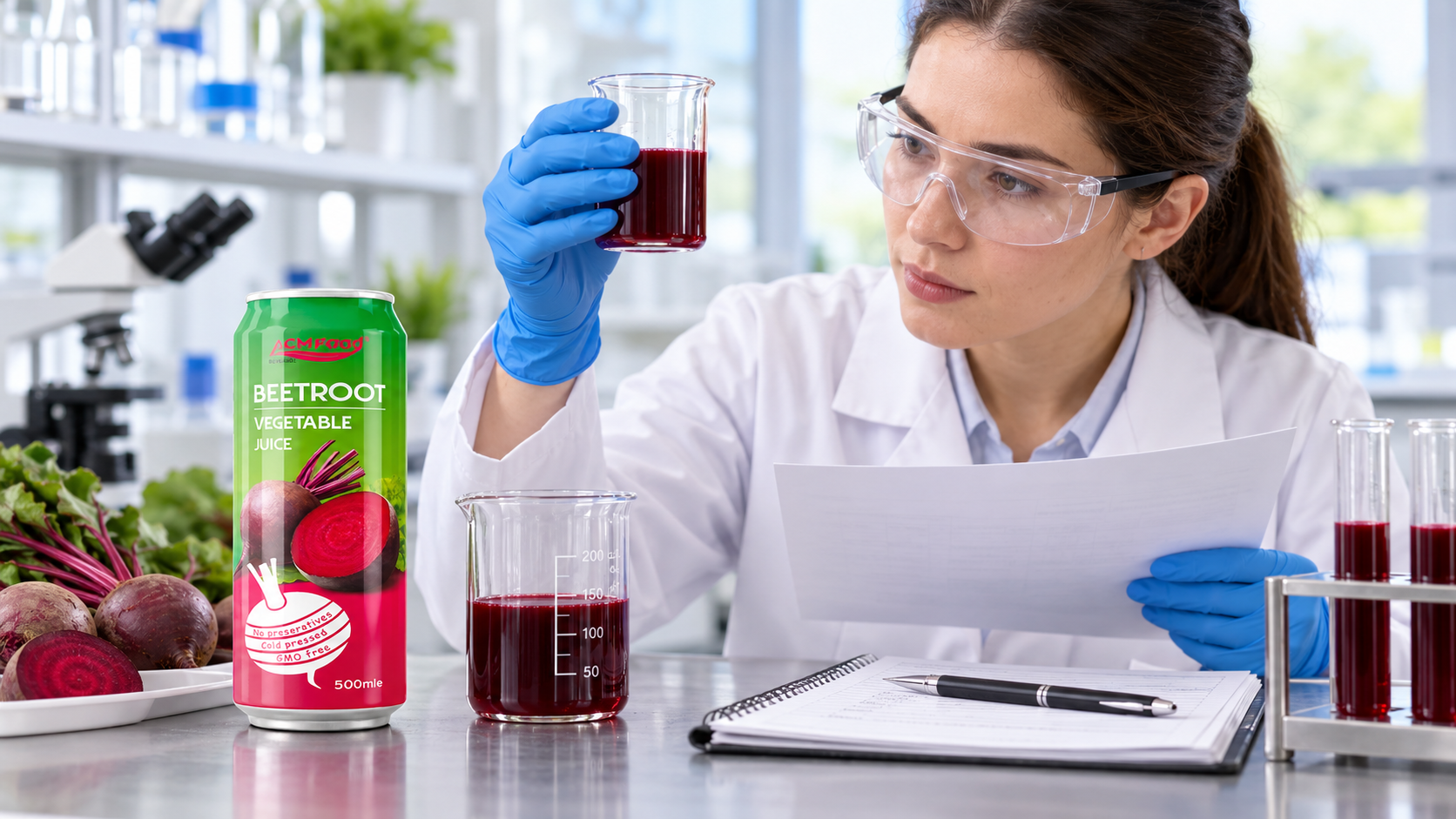
What specifications apply to organic beetroot juice?
The specification should cover composition, sensory targets, analytical limits and packaging. Organic status does not change basic juice parameters, but it limits the additives and processing aids that can be used.
- Composition. Juice percentage and any organic blending juices or acidulants, each of which must also qualify as organic or as an allowed ingredient.
- Brix and pH. Targets with a tolerance, since beet sugar content changes between lots.
- Colour. A measured colour range or a retained reference sample.
- Microbiology. Limits suited to the heat treatment and packaging.
- Heavy metals and residues. Limits at or below the destination market’s legal levels.
- Packaging. Can or bottle format, closure and label, consistent with the organic labelling rules.
Beetroot juice has a pH above 4.6, so a safe process for ambient storage needs either acidification or sterilisation. In an organic recipe the acidulant must be one allowed by the scheme, which narrows the choices, so this point should be raised early.
How is organic beetroot juice labelled?
Labelling follows the importing country’s organic regulation. It typically requires the organic wording, the certification body code or logo, the origin of the agricultural ingredients and, in some markets, the percentage of organic content.
A brand should avoid copying wording from a competitor’s pack, because organic logos and claim formats are tightly regulated. The supplier can provide the factory’s certification details, while the brand owner remains responsible for correct use of the label in its market. Related information on juice quality and consumer interest can be found in this article on organic juice types.
How does ACMFOOD handle organic requests?
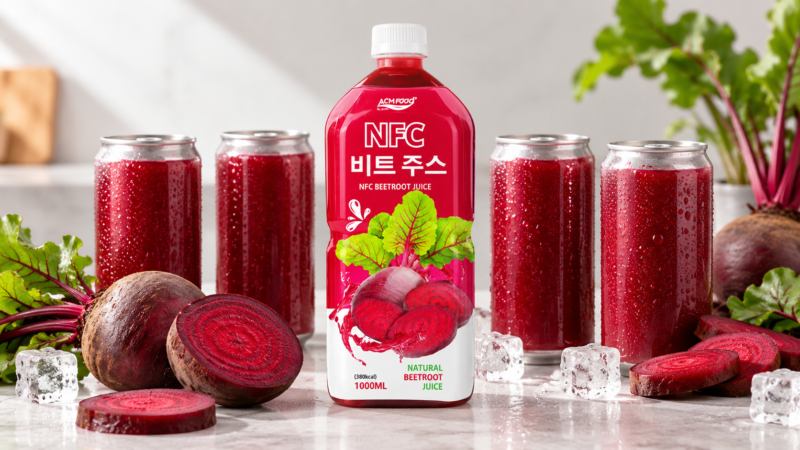
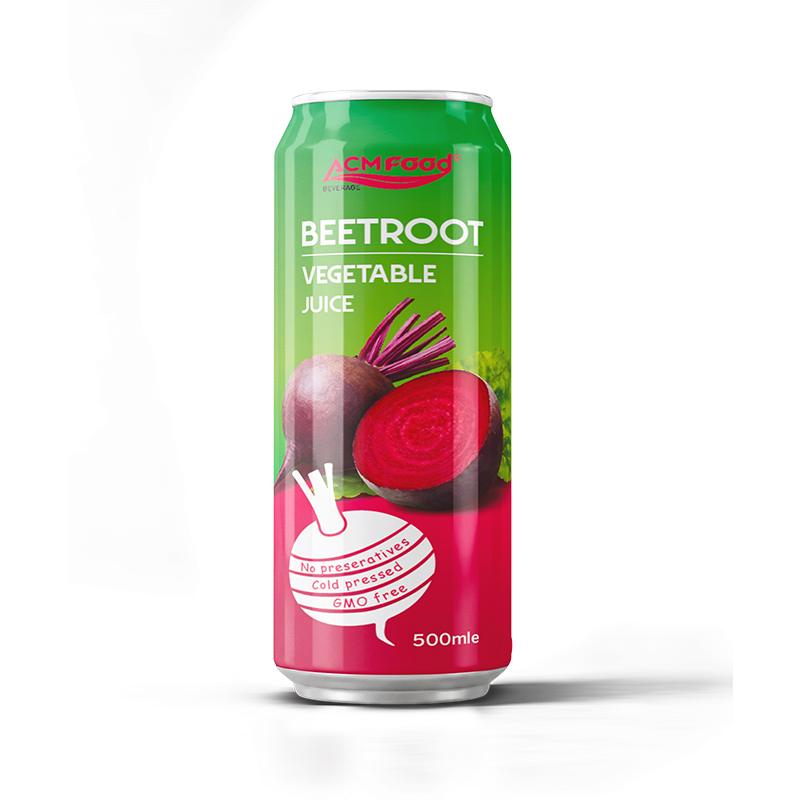
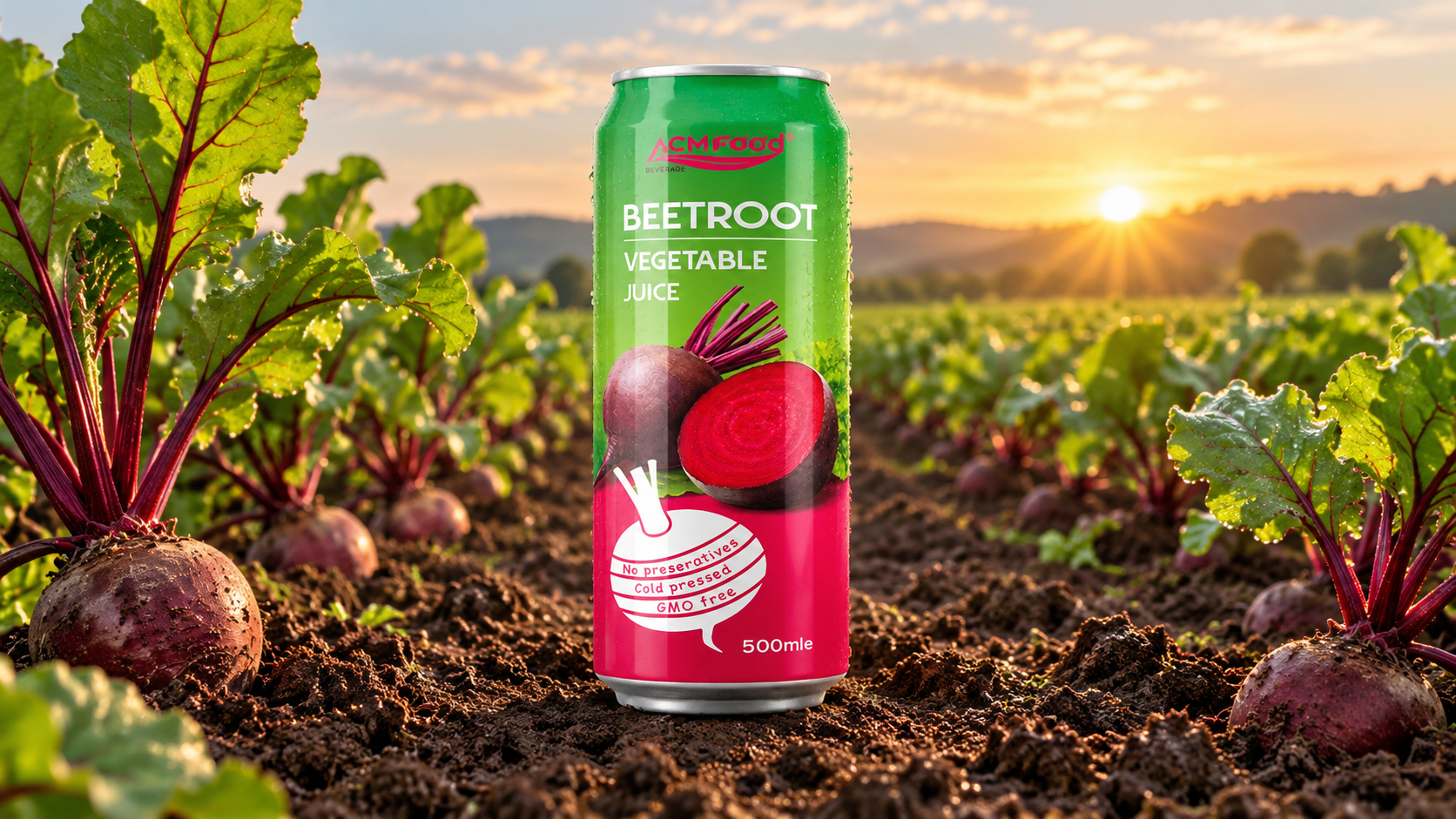
ACMFOOD produces finished drinks in cans and bottles under OEM, ODM and private label arrangements, and publishes HACCP, ISO 22000 and FSSC 22000 certificates. Its beetroot range is described in the beetroot juice category. Organic production is not part of its published certificates, so a buyer who needs organic beetroot juice should ask whether a specific lot can be arranged and request the supporting certificates before ordering.
The same approach is used for other vegetable drinks. For example, the carrot juice OEM guide shows how formulation, packaging and documents are agreed in a project, and organic requests would follow the same sequence plus the certificate checks above.
What are the common pitfalls in organic beetroot projects?
The most common pitfalls are late decisions, incomplete paperwork and mismatched ingredients. Each one can delay a shipment or force a label change, and each one is avoidable with a checklist agreed at the start.
- Assuming a certificate covers the product. A factory certificate may list fruit juices but not vegetable juices, or a different site. Always read the scope, not just the heading.
- Using a non-organic additive. A preservative, flavour or processing aid allowed in conventional juice may not be allowed in organic juice. Every ingredient needs checking.
- Mixing packaging approvals. Inks, linings and cleaning agents have to be suitable for organic production and for food contact in the target market.
- Ignoring season. Organic beets are available in limited windows, and a missed campaign can mean a gap of months.
- Weak traceability. Without a clear link between beet lots, juice batches and finished cartons, a certificate cannot be issued for the shipment.
How should an organic pilot batch be planned?
A pilot batch should confirm taste, colour, process and paperwork before a full-scale order. It is a small production run on the intended line, with the same beets, recipe, packaging and documents as the commercial product, so every step is tested once under real conditions.
A practical plan has five steps. First, agree the specification and the target market, including the label draft. Second, confirm that the beets, bottles or cans and the processing aids are certified or approved. Third, run the pilot on a cleaned line and collect samples for taste, colour and stability tests. Fourth, issue the full set of documents for the pilot shipment, as if it were commercial. Fifth, review the results with the buyer and decide whether to adjust the recipe, the acid system or the packaging before scaling.
The pilot also shows how much colour and flavour change after several weeks of storage, which is more informative than a laboratory result taken on the day of filling. Brands that treat the pilot as a dress rehearsal usually reach the first commercial order with fewer surprises.
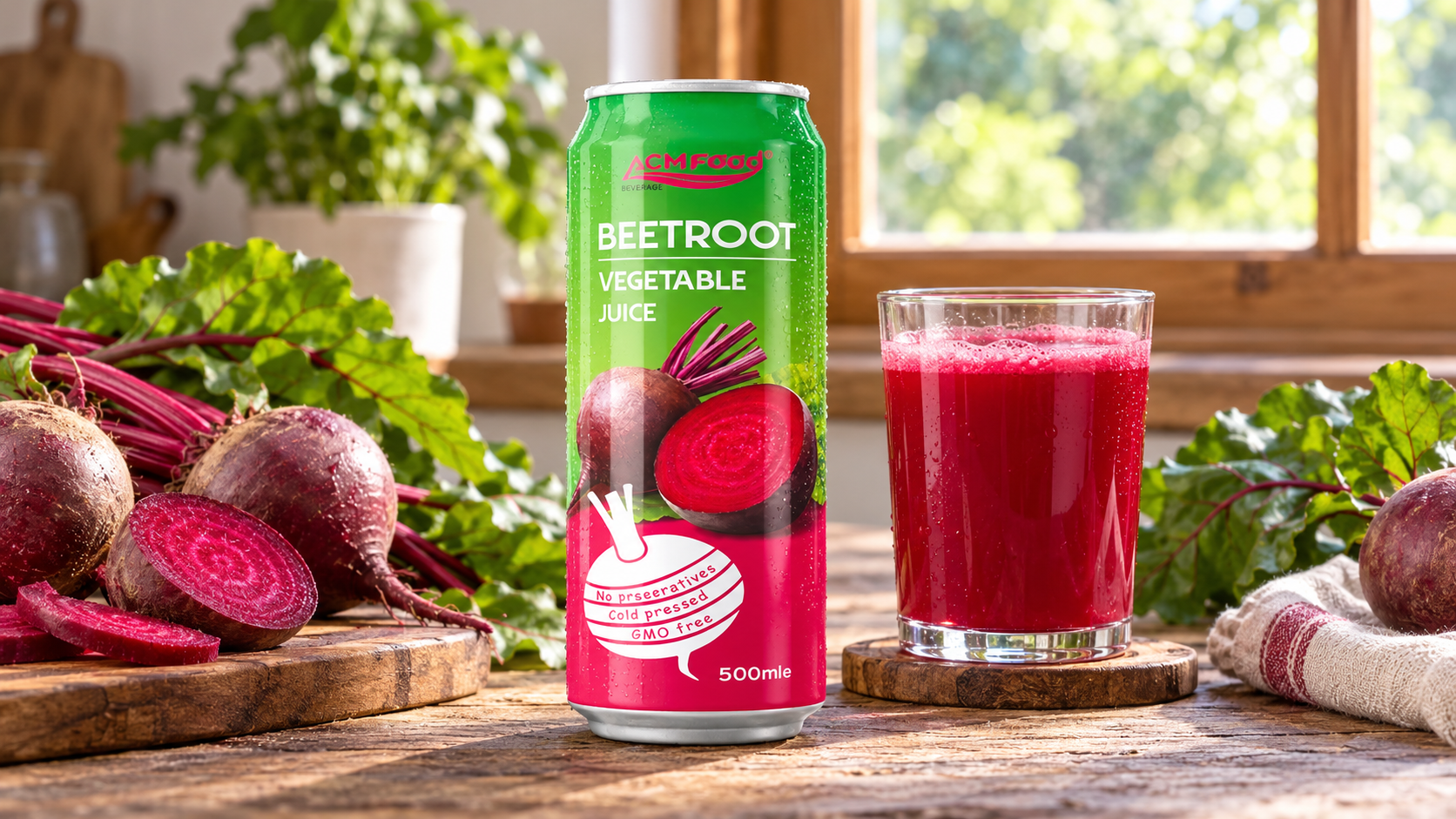
FAQ about organic beetroot juice
Can a factory without organic certification make organic juice?
No. In most markets the processor must hold its own organic certification, because processing, filling and packing are part of the organic chain. Farm certification alone is not sufficient.
Are HACCP or ISO 22000 certificates the same as organic certification?
No. They show that a food safety management system is in place. Organic certification confirms compliance with an organic production standard. A supplier may hold one without the other.
Does organic beetroot juice taste different?
Not necessarily. Taste varies more with variety, harvest time and processing than with organic status. Earthy notes and sweetness can differ between lots in both organic and conventional juice.
Can organic beetroot juice be sold in cans and bottles?
Yes. Organic juice can be filled in either format, provided the packaging components, cleaning aids and processing aids comply with the organic scheme of the destination market.
How early should a brand decide on organic?
Before sourcing starts. Certified beets, a qualified production slot and a compliant label all take time, so organic is part of the project brief from the first day.
Putting an organic beetroot juice plan together
Organic beetroot juice is built on a certified chain from the field to the sealed pack, with documents for every step. Brand owners should name the destination markets, ask for the factory and grower certificates, confirm the allowed acidulants and request the shipment-level paperwork before agreeing on a production date.
Teams that want to explore a beetroot drink in cans or bottles can share a brief with ACMFOOD, including whether organic status is a firm requirement. The factory can then confirm what is possible for that lot and what documents can be supplied.