Français
 Español
 العربية
 한국어
한국어Fermented cabbage juice is the sour, salty liquid obtained when cabbage is fermented by lactic acid bacteria, either by pressing the juice after fermentation or by fermenting cabbage juice directly. It follows the same basic biology as sauerkraut, and its safety and quality depend on salt, acidity, temperature, exclusion of air and good records.
This guide describes the production routes, the role of salt and starter cultures, the control points for safety and the stabilisation options for commercial drinks. It makes no health claims and does not describe live-culture benefits. ACMFOOD, a Vietnam beverage manufacturer, supplies finished drinks in cans and bottles under OEM, ODM and private label arrangements, and any fermented recipe would be developed and validated as a project.
How is fermented cabbage juice made?
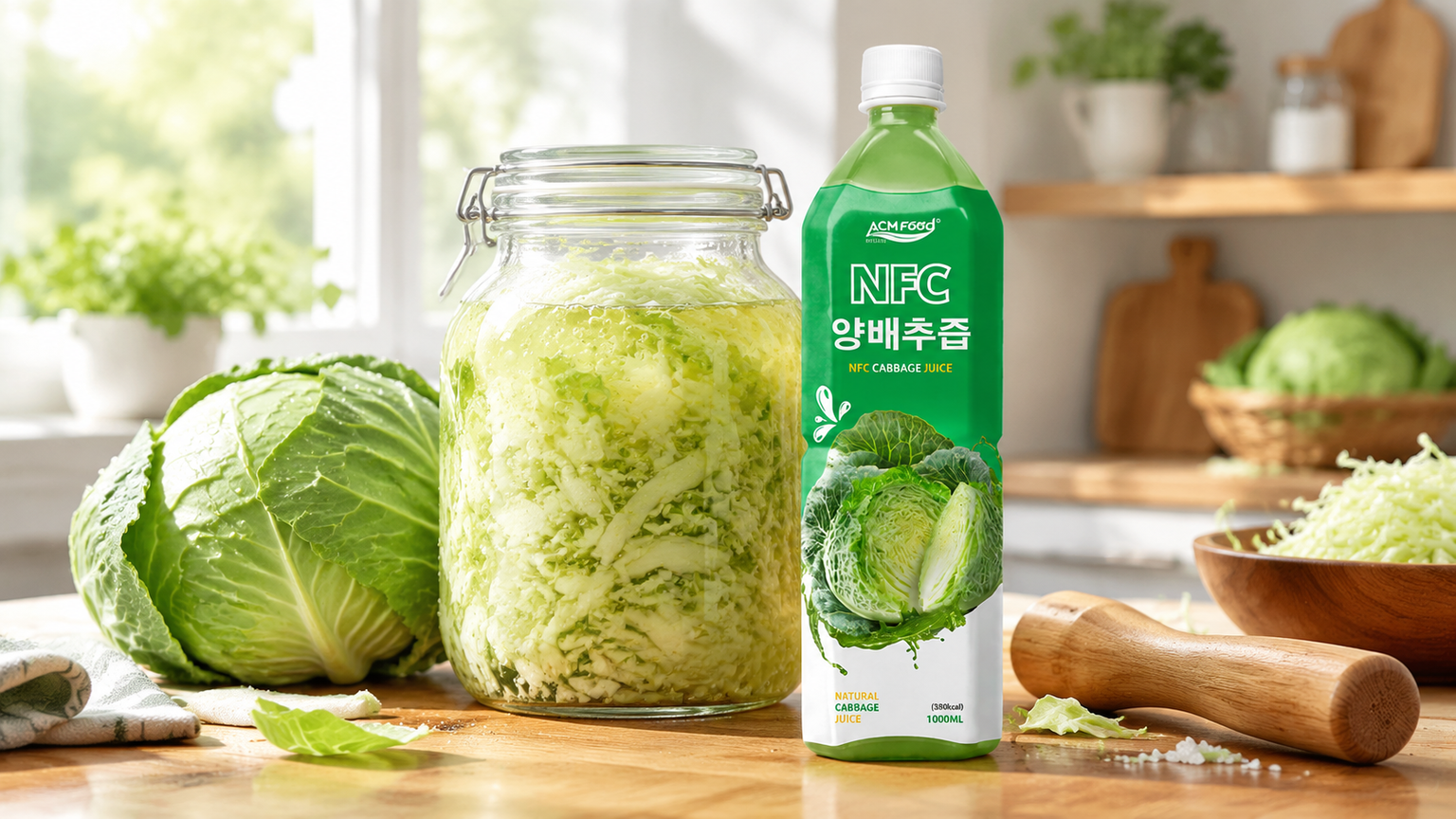
It is made by one of two routes: fermenting salted shredded cabbage in its own brine and then collecting the liquid, or fermenting pressed cabbage juice with added salt and starter. The first route resembles traditional sauerkraut and gives a rich flavour, and the second gives more control and a faster, more uniform process.
- Selection and trimming. Outer leaves and damaged parts are removed, and the cabbage is washed.
- Cutting or pressing. Cabbage is shredded for brine fermentation or pressed to obtain juice.
- Salting. Salt is added at a controlled dose. In the traditional route it draws water out of the cabbage to form brine.
- Packing and exclusion of air. The mixture is kept under the liquid surface, because oxygen allows yeasts and moulds to grow.
- Fermentation. The vessel is held at a set temperature for the planned time, while pH and acidity are monitored.
- Separation and filtration. The liquid is separated from the solids and filtered.
- Stabilisation and filling. Heat or another validated step is applied, and the drink is filled into bottles or cans.
Commercial producers often prefer the juice route with a defined starter culture, because the fermentation time and the flavour are easier to repeat.
What role does salt play?
Salt selects for lactic acid bacteria, draws liquid from the cabbage and shapes flavour. Lactic bacteria tolerate moderate salt, while many spoilage and pathogenic organisms are inhibited, so the salt level is a safety control as well as a seasoning.
- Dose. Traditional sauerkraut uses a salt level in the low single-digit percent range by weight. The exact value for a drink is validated for the recipe.
- Distribution. Uneven salting causes soft or off-tasting zones, so mixing is thorough.
- Sodium declaration. The finished drink contains a significant amount of sodium, which must appear on the nutrition panel and affects claims.
- Taste balance. The sourness and the saltiness need to be balanced, and some brands dilute the juice to reach a mainstream taste.
Which microorganisms drive the fermentation?
Fermentation starts with heterofermentative bacteria such as Leuconostoc mesenteroides, which produce acid and carbon dioxide and lower the pH quickly, and continues with more acid-tolerant lactobacilli such as Lactiplantibacillus plantarum, which finish the job. This succession explains the typical development of flavour in cabbage ferments.
Producers can rely on the natural flora of the cabbage or add a starter culture. Natural fermentation can give complex flavour but varies from batch to batch and carries a higher risk if acidification is slow. A starter gives a fast, predictable drop in pH, which is why it is common in controlled production. The choice of culture should be validated for the recipe and recorded in the batch sheet.
Which safety controls matter most?
The most important controls are fast acidification below pH 4.6, salt dose, temperature, exclusion of air and a validated stabilisation step. Cabbage is a low-acid vegetable and carries soil organisms, so the early stage of fermentation is the most critical period.
| Hazard or risk | Control | Record |
|---|---|---|
| Slow acidification allowing spoilage or pathogens | Starter culture, salt dose, temperature range, pH limit within a set time | pH readings with time stamps |
| Yeast and mould growth at the surface | Keeping material submerged, closed vessels, hygiene | Visual inspection log |
| Biogenic amines or off-flavours from uncontrolled flora | Raw material quality, starter use, limited fermentation time | Starter lot and batch duration |
| Foreign matter and soil residues | Washing, trimming, filtration, metal detection if used | Wash water and inspection records |
| Surviving microbes in the pack | Validated heat step or other stabilisation, seal control | Heat data and seal checks |
A HACCP plan identifies which of these are critical control points, and the limits and corrective actions are written down before production. A process authority should validate the recipe, especially when the product will be shelf stable.
How is the fermented juice stabilised?
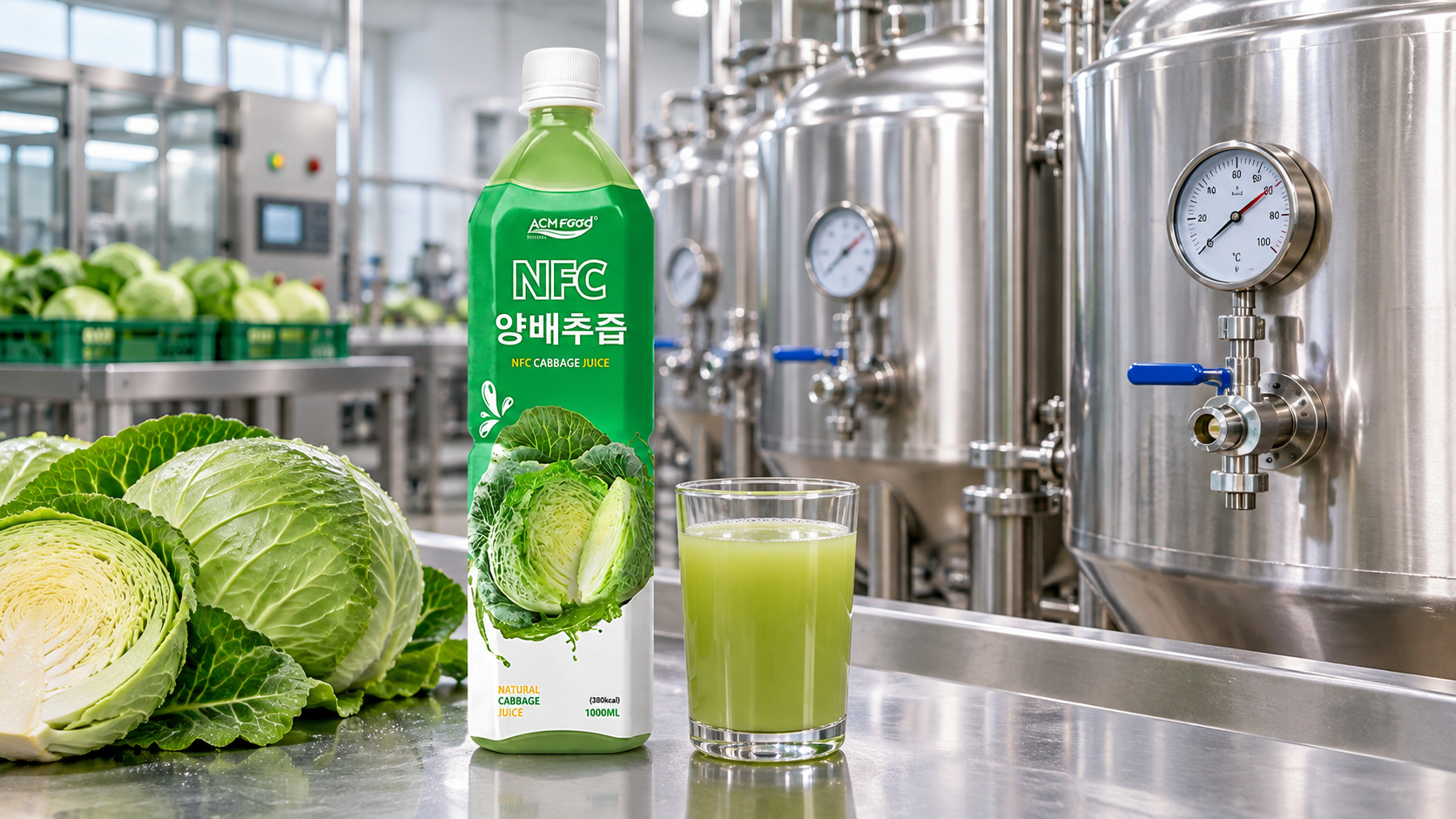
It is stabilised by a heat step that inactivates cultures and spoilage organisms, by filtration or by refrigeration for live products. Stabilisation fixes the flavour and prevents further acid and gas production, which is essential for sealed cans and bottles.
- Pasteurisation or hot-fill. The fermented juice is acid enough for acid-food processing, so tunnel pasteurisation or hot-fill is possible.
- Filtration. Fine filtration reduces microbial load and clears the juice.
- Refrigerated live product. Cultures stay active, so the pack needs pressure management and a cold chain.
For cans and rigid bottles, the usual choice is a stabilised product, because ongoing fermentation produces gas that can swell the pack.
What affects the flavour?
Flavour depends on the cabbage variety, salt, temperature, time and culture. A shorter, cooler fermentation gives a mild, clean acidity, and a longer, warmer one gives a stronger sour and more savoury, sulfur-influenced taste.
Developers should taste the drink at several points in the fermentation and choose the stage that fits the target consumer. Dilution with water or blending with apple or carrot can soften the sourness and salt. Heat stabilisation changes the flavour somewhat, so the tasting must use the stabilised sample.
How is the end point of fermentation decided?
The end point is decided by measured acidity, pH and taste, not by a fixed number of days. Temperature, salt, culture and the cabbage itself all change the speed, so the same recipe can finish a few days earlier or later from batch to batch.
- pH target. The batch is considered ready when pH falls into the specified window, which is chosen for both safety and flavour.
- Titratable acidity. A titration shows the total acid produced and supports the pH reading.
- Sugar consumption. A falling Brix shows that fermentation is progressing, and a stable value shows it has slowed.
- Sensory check. A tasting panel confirms that sourness, saltiness and aroma match the reference.
- Gas activity. Reduced bubbling indicates lower activity, though it should not be used alone.
Once the end point is reached, the juice must move promptly to cooling and stabilisation. Waiting allows over-souring and the growth of surface organisms, which spoils the flavour.
How are batches documented and traced?
Each fermentation batch has a record that links the cabbage lot, salt lot, starter culture, vessel, times, temperatures, pH readings and decisions to the finished pack codes. The record is the evidence that the process stayed within its validated limits.
- Raw material lots. Cabbage supplier and delivery date, salt lot and culture lot.
- Recipe sheet. Quantities of cabbage, salt, water and culture, with weighing records.
- Fermentation log. Start time, temperature readings and pH values at each check.
- Deviation notes. Any slow acidification, contamination sign or equipment failure, with the action taken.
- Stabilisation data. Heat step time and temperature, or filtration details.
- Filling record. Pack type, quantity, batch code and seal checks.
- Release decision. Laboratory results and the signature of the person who released the batch.
Buyers can ask to see an example record during supplier approval. It reveals whether the factory treats the fermentation as a controlled process or as a craft step with little documentation.
How does sodium influence claims and positioning?
Sodium is a defining feature of fermented cabbage juice, so positioning should accept it rather than hide it. A drink made with salted fermentation is not suitable for a low-sodium claim, but it can be positioned as a savoury, sour drink for adults and foodservice use.
Brands can reduce the sodium impression through dilution or blending, but the nutrition panel must still show the measured value, and any claim has to follow the rules of the market. Retailers sometimes apply sodium thresholds for front-of-pack labelling, so the brand should check them early. Because sodium level also contributes to safety in the early fermentation stage, the recipe should not be changed without revalidation.
Which hygiene steps protect a cabbage fermentation?
Hygiene protects the fermentation by lowering the starting load and preventing recontamination. A clean start gives lactic bacteria a head start over spoilage organisms, and clean equipment stops new contamination during transfers.
- Washing and trimming remove soil and damaged parts before cutting.
- Sanitised vessels and tools are cleaned and rinsed according to a written procedure, with verification.
- Controlled water from a potable source, tested regularly.
- Staff hygiene with hand washing, clean clothing and restricted access to fermentation rooms.
- Pest control to keep insects and rodents away from raw material and open vessels.
These measures belong to the prerequisite programme under HACCP, ISO 22000 or FSSC 22000, which ACMFOOD publishes as certificates for its factory. A fermented recipe still needs its own validation on top of general hygiene.
What should a fermented cabbage juice brief include?
- Style. Live or stabilised, sour level and salt level.
- Route. Brine fermentation or juice fermentation, and starter culture type.
- Safety targets. pH limit, time to reach it and maximum alcohol level.
- Stabilisation. Heat route and pack, confirmed by the factory.
- Nutrition and sodium. Intended sodium range and label approach.
- Pack and shelf life. Can or bottle, size, closure, shelf-life target.
- Documents. Specification, certificate of analysis and certificates such as HACCP, ISO 22000 and FSSC 22000.
The current cabbage-based products are described in the cabbage juice category, which helps buyers compare a fermented concept with a standard juice.
FAQ about fermented cabbage juice
Is fermented cabbage juice the same as sauerkraut brine?
They are closely related. Sauerkraut brine is the liquid from fermented cabbage, and a commercial fermented cabbage juice is a controlled version of it, sometimes made from pressed juice.
Why does the drink contain so much salt?
Salt supports the right bacteria and limits unwanted ones. It also adds to the flavour, and the level should be declared and balanced against taste.
Can the drink be sealed in a can?
Yes, if it has been stabilised by heat so that fermentation has stopped. A live, still-fermenting product should not be sealed in a standard can.
Does fermentation produce alcohol?
Traces can occur if yeast is present. The finished drink should be measured and compared with the limits of the destination market.
Does the colour change during fermentation?
Green cabbage turns from bright green to a pale yellow-green, and the juice may become cloudy. Light and oxygen exposure can darken it further.
Planning fermented cabbage production
Fermented cabbage juice is a controlled biological process in which salt, culture, temperature and speed of acidification determine safety and flavour. Stabilisation and the right pack allow the product to be sold in cans or bottles without ongoing fermentation.
Brands that want to explore a fermented cabbage drink can send ACMFOOD a brief with style, salt level, pack and markets. The team can discuss feasibility, propose a validation plan and prepare samples.