Français
 Español
 العربية
 한국어
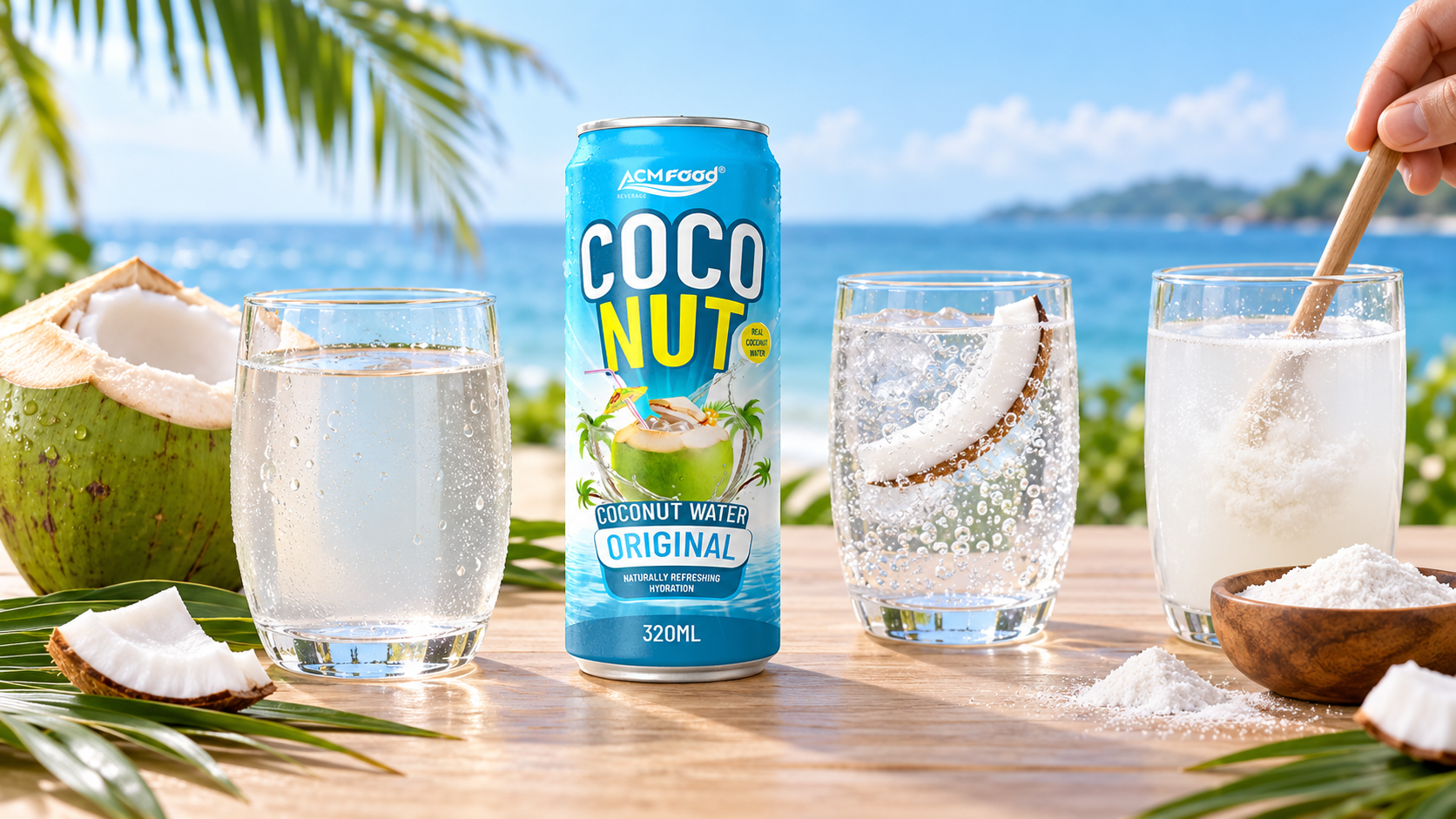
한국어Coconut infused water is plain or sparkling water flavoured with coconut, usually through natural flavouring or a small amount of coconut ingredient, rather than the liquid from inside a coconut. Coconut water is the natural liquid found inside young coconuts, sold fresh or packaged. Coconut powder drinks are dry mixes, made from dried coconut water, coconut milk or flavourings, that you stir into water. The three can look similar on a shelf, but they differ in what they contain, how they taste and how they are used.
This guide compares the three formats side by side, explains how to read their labels, and covers flavour packets and flavouring drops for water. It also looks at what each format means for beverage brands deciding which coconut product to develop. Because recipes vary widely between products, the comparisons describe general patterns; the label of each specific product is always the final reference.
What is coconut infused water?
Coconut infused water is water that has been given a coconut taste, not water taken from a coconut. Depending on the product, the coconut note may come from natural flavour, coconut extract, or pieces of coconut steeped in water, and the base may be still or sparkling.
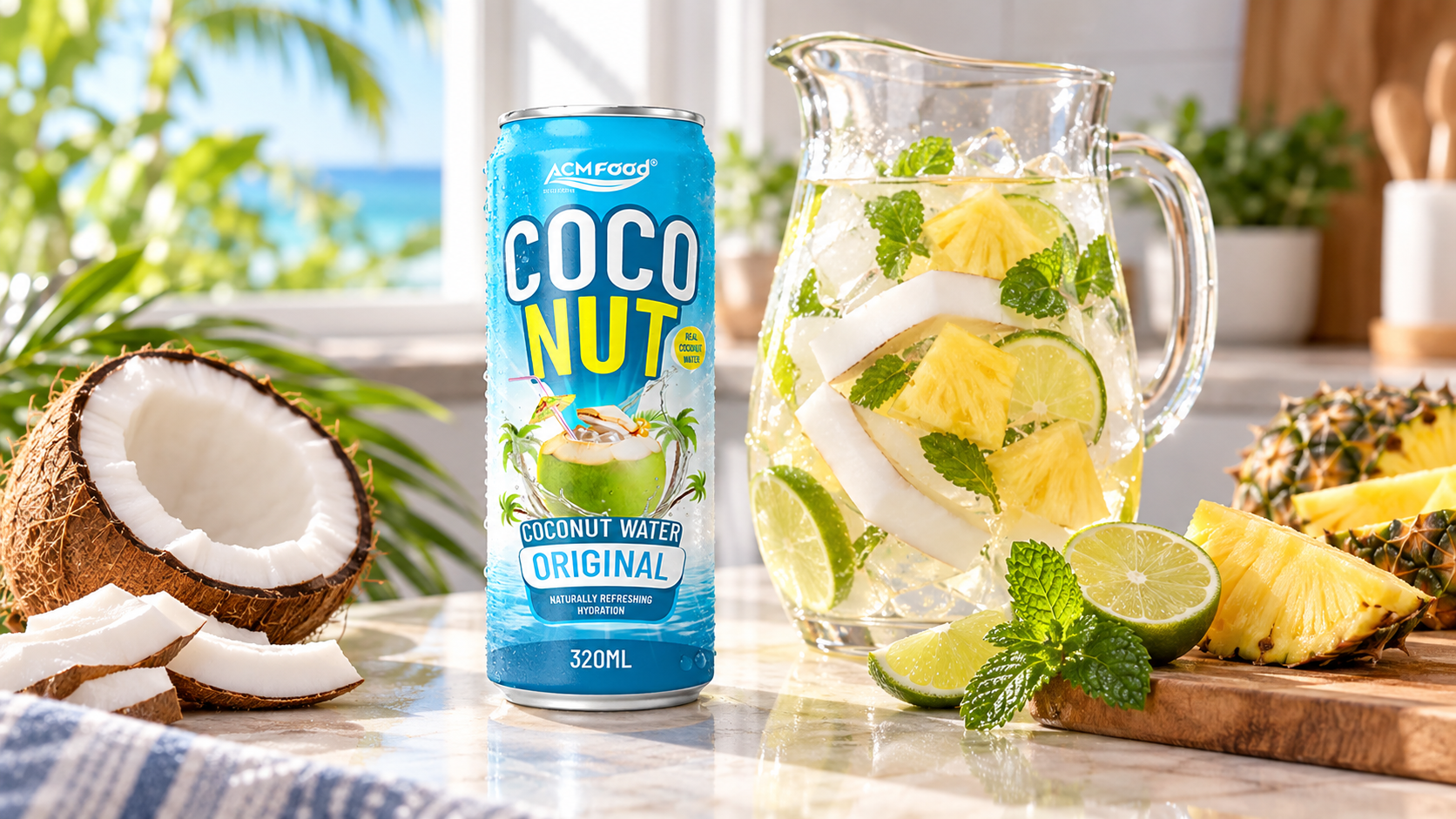
Most packaged coconut infused waters and coconut flavoured sparkling waters are designed to be light, low in sugar or unsweetened, with the coconut acting as an aroma rather than a main ingredient. Homemade infused water follows the same idea: slices of coconut, sometimes with pineapple or lime, are left in a jug of water in the fridge to add flavour.
Because the base is water, coconut infused water usually does not have the natural sugars and minerals found in coconut water, unless the label says otherwise. Its appeal is flavour with very little sweetness.
What is coconut water?
Coconut water is the clear liquid naturally present inside a coconut, especially a young green one. It is drunk straight from the nut or extracted, treated and packaged as a ready-to-drink beverage. Packaged versions range from 100% coconut water to drinks with added sugar, fruit, pulp or carbonation.
Unlike infused water, coconut water has its own natural sweetness and mineral profile, including potassium, because it comes from the fruit itself. Its flavour varies with coconut variety, maturity and processing. Flavoured coconut waters build on this base by adding fruit or botanical notes; an example of a botanical pairing is described in our article on lotus coconut water.
What is a coconut powder drink?
A coconut powder drink is a dry mix that becomes a beverage when stirred into water. The powder may be made from dehydrated coconut water, from coconut milk, or from a blend of sugar, flavourings and other ingredients, so products sold under similar names can be quite different.
Common types include:
- Coconut water powder: coconut water that has been dried, sometimes with carriers to help it dissolve. When mixed with water it gives a drink that resembles coconut water.
- Coconut milk powder: dried coconut milk, which makes a creamy drink or is used in cooking and coffee. It is a different product from coconut water.
- Flavoured drink mixes: powders with coconut flavour, sugar or sweeteners, and sometimes electrolytes or other additions. Coconut may be a minor ingredient.
Powders are light, compact and easy to store, which makes them convenient for travel and for places where shipping liquids is costly. The trade-off is that taste and texture depend heavily on the recipe and on how carefully the powder is mixed.
Coconut infused water vs coconut water vs coconut powder: comparison
The table summarises how the three formats usually differ. Individual products may not match every point, so check the label.
| Feature | Coconut infused water | Coconut water | Coconut powder drink |
|---|---|---|---|
| Base | Water, still or sparkling | Liquid from inside the coconut | Dry powder mixed with water |
| Source of coconut taste | Flavour, extract or steeped coconut | The coconut water itself | Dried coconut water, coconut milk or flavour |
| Natural sweetness | Usually little or none | Present from natural sugars | Depends entirely on the recipe |
| Minerals such as potassium | Usually minimal unless added | Naturally present | Depends on the powder type |
| Texture | Light, often fizzy | Light; pulp versions have body | Light to creamy, depending on type |
| Convenience | Ready to drink | Ready to drink | Needs mixing; very easy to store and carry |
| Typical use | Everyday low-sugar refreshment | Refreshing drink, cooking, smoothies | Travel, outdoor use, cooking, foodservice |
Which one should you choose?
Choose coconut water if you want the real taste of coconut and its natural profile, coconut infused water if you want a coconut aroma with very little sugar, and a coconut powder drink if storage space, weight or travel matters most. None is automatically better; they meet different needs.
- For flavour authenticity: coconut water, ideally 100% with no additives.
- For the lowest sugar: unsweetened coconut infused or flavoured sparkling water.
- For portability: coconut water powder or single-serve sachets.
- For cooking and creamy drinks: coconut milk powder rather than coconut water powder.
- For a fizzy treat with real coconut: sparkling coconut water, which keeps the coconut water base and adds carbonation. Our piece on sparkling coconut water shows how that format works.
What about coconut water flavour packets and flavouring drops?
Flavour packets and drops are a fourth option: they turn ordinary water into coconut-flavoured water at home. They are concentrated flavour products, not coconut water, and the result is closer to coconut infused water than to the liquid from a coconut.
These products come as powder sachets, liquid drops or syrups, and include combinations such as pineapple coconut or coconut lime. Some contain sugar, others use sweeteners, and some are unsweetened. When comparing them, look at:
- The first ingredients, to see whether coconut is present or whether the taste comes only from flavourings.
- The sweetening approach, since sugar, sweeteners and unsweetened versions taste and label differently.
- The serving instructions, because strength depends on how much water you add.
- Any added colours, acids or preservatives, which are common in concentrated products.
How to read labels on coconut drinks
The product name is often the least reliable guide. Names such as “coconut drink”, “coconut flavoured water” and “coconut beverage” can cover very different contents, so the ingredient list and quantity statements matter more.
- Order of ingredients: ingredients are usually listed by quantity. If water comes first and coconut appears near the end, it is an infused or flavoured water.
- Percentage declarations: some markets require the coconut water or juice content to be stated, which helps you compare products.
- Words like “flavour” or “flavoured”: these usually signal that the coconut taste comes from flavouring rather than from coconut water.
- Nutrition panel: compare sugar per serving and per 100 ml. This quickly separates unsweetened infused waters from coconut water and sweetened mixes.
- Preparation instructions: powders and concentrates list a dilution, which changes the final strength and sugar per glass.
How do storage and shelf life compare?
Storage is one of the clearest practical differences between the three formats. Unopened packaged coconut water and coconut infused water are kept according to the label, either chilled or at room temperature, and both should be refrigerated and finished soon after opening. Coconut water in particular changes quickly once exposed to air, because it contains natural sugars that can start to ferment.
Powders behave differently. As long as the pack stays dry and sealed, a powder is stable and takes up little space. The main risk is moisture: an opened tub or sachet that absorbs humidity can clump, lose flavour or spoil. Once a powder is mixed with water, the drink should be treated like any other fresh beverage and drunk the same day.
- Coconut water: chill before serving; once opened, refrigerate and drink within the time on the label.
- Coconut infused water: unsweetened products are often more forgiving after opening, but they should still be kept cold.
- Coconut powder: reseal tightly, store in a cool dry place and use a dry spoon.
- Homemade infused water: keep refrigerated and drink within a day.
Cost per serving also varies. Powders are usually cheapest to ship and store, while ready-to-drink coconut water costs more to transport because it is mostly liquid weight. Shoppers who prioritise taste tend to accept that cost, while those who value convenience or a long pantry life often choose powders.
What these formats mean for beverage brands
For a brand, the choice between infused water, coconut water and powder shapes the whole product: raw materials, process, packaging, shelf life, cost and the claims you can make on the label.
Points to consider in a product brief:
- Positioning: coconut water sells on natural origin and taste; infused water sells on lightness and low sugar; powders sell on convenience.
- Ingredient story: if “real coconut” is central to the brand, coconut water is the stronger base. Infused waters must avoid implying they contain more coconut than they do.
- Processing: liquid coconut water requires careful handling and heat treatment, while powders need drying, blending and moisture-protective packaging.
- Packaging and logistics: liquids need cans, bottles or cartons and take more space; powders ship compactly but need sachets or tubs that protect against moisture.
- Labelling: names, percentages and claims such as “no added sugar” must reflect the actual formula and the rules of each destination market.
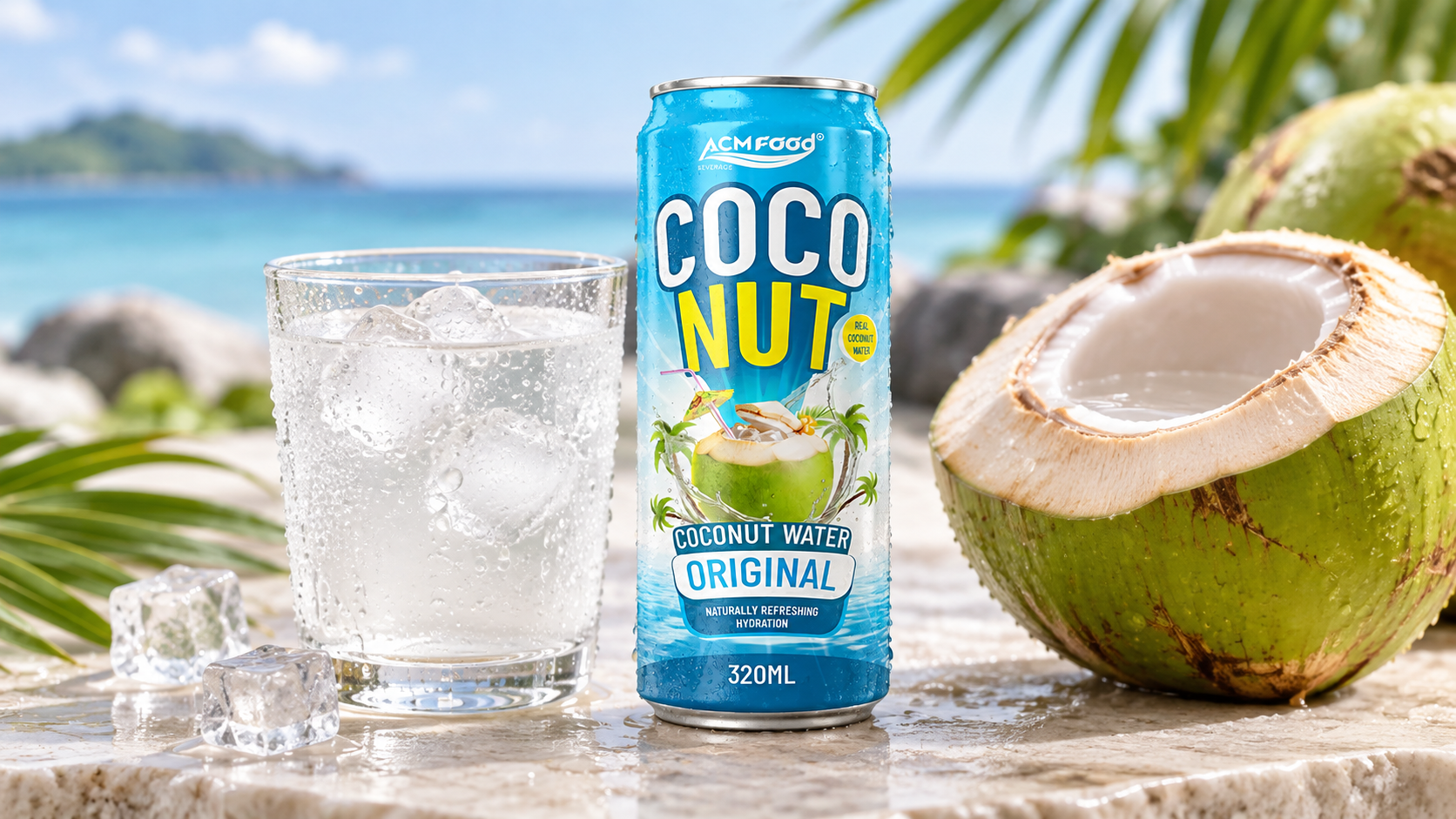
ACMFOOD produces ready-to-drink coconut water, including original, with pulp, flavoured and sparkling styles, for brand owners and importers. Powdered coconut products and flavoured infused waters fall outside this range, so brands focusing on those formats should work with suppliers specialised in drying or flavour concentrates.
FAQ about coconut infused water
Is coconut infused water the same as coconut water?
No. Coconut infused water is water flavoured with coconut, while coconut water is the natural liquid inside a coconut. They differ in taste, sugar and mineral content.
Can coconut water powder replace fresh coconut water?
It can make a convenient drink that resembles coconut water, but taste and texture usually differ from fresh or packaged liquid coconut water. Results depend on the powder and the dilution.
How do I make coconut infused water at home?
Add slices of fresh coconut meat, and optionally pineapple or lime, to a jug of cold water and leave it in the fridge for a few hours. Drink it within a day and discard the fruit.
Is pineapple coconut infused water sweet?
Homemade versions are only lightly sweet from the fruit. Packaged versions vary, so check the nutrition panel for sugar content.
Conclusion
Coconut infused water, coconut water and coconut powder drinks share a flavour but not a formula. Infused water uses coconut as a light aroma on a water base, coconut water is the natural liquid from the fruit with its own sweetness and minerals, and powders trade some taste for convenience. The ingredient list and nutrition panel reveal which one you are holding far better than the name on the front.
If you are developing a ready-to-drink coconut water, ACMFOOD can review your brief on style, flavour, packaging and labelling, and provide samples to compare against your target profile.