


 Français
 Español
 العربية
 한국어
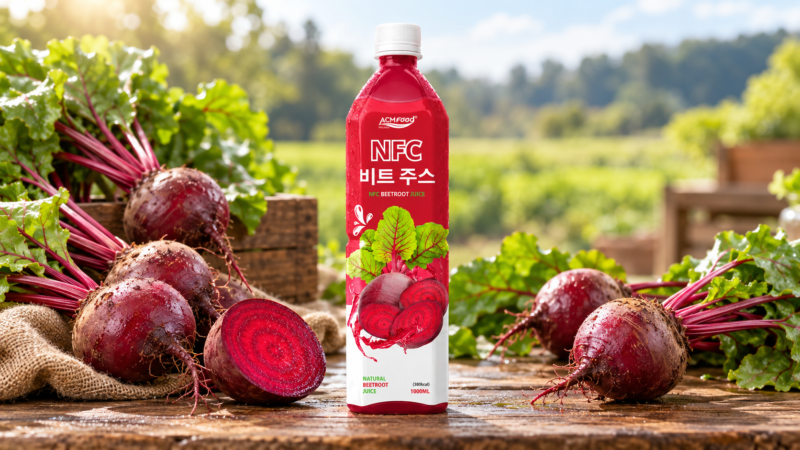
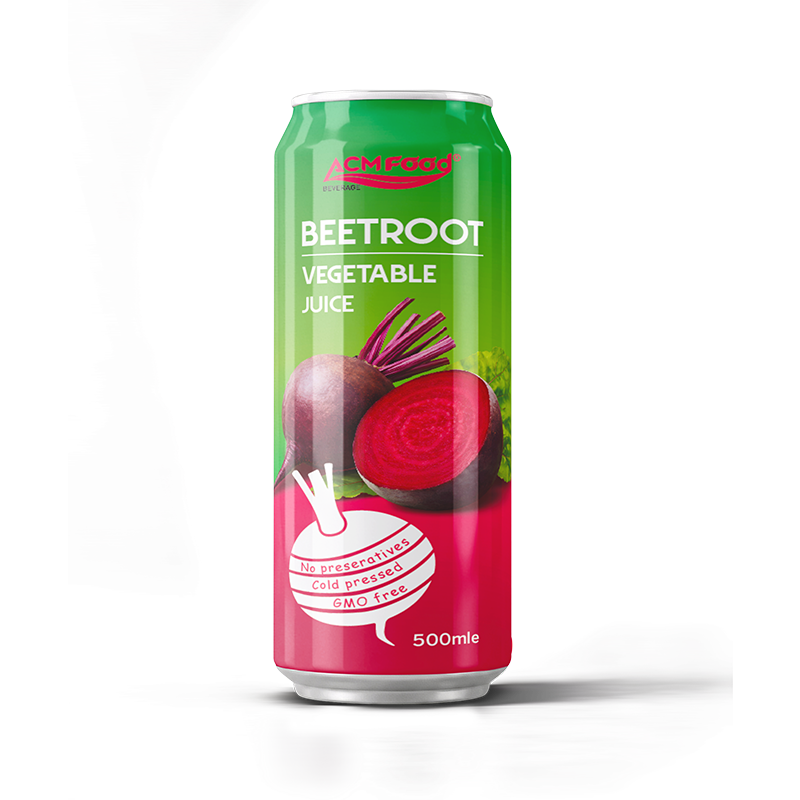
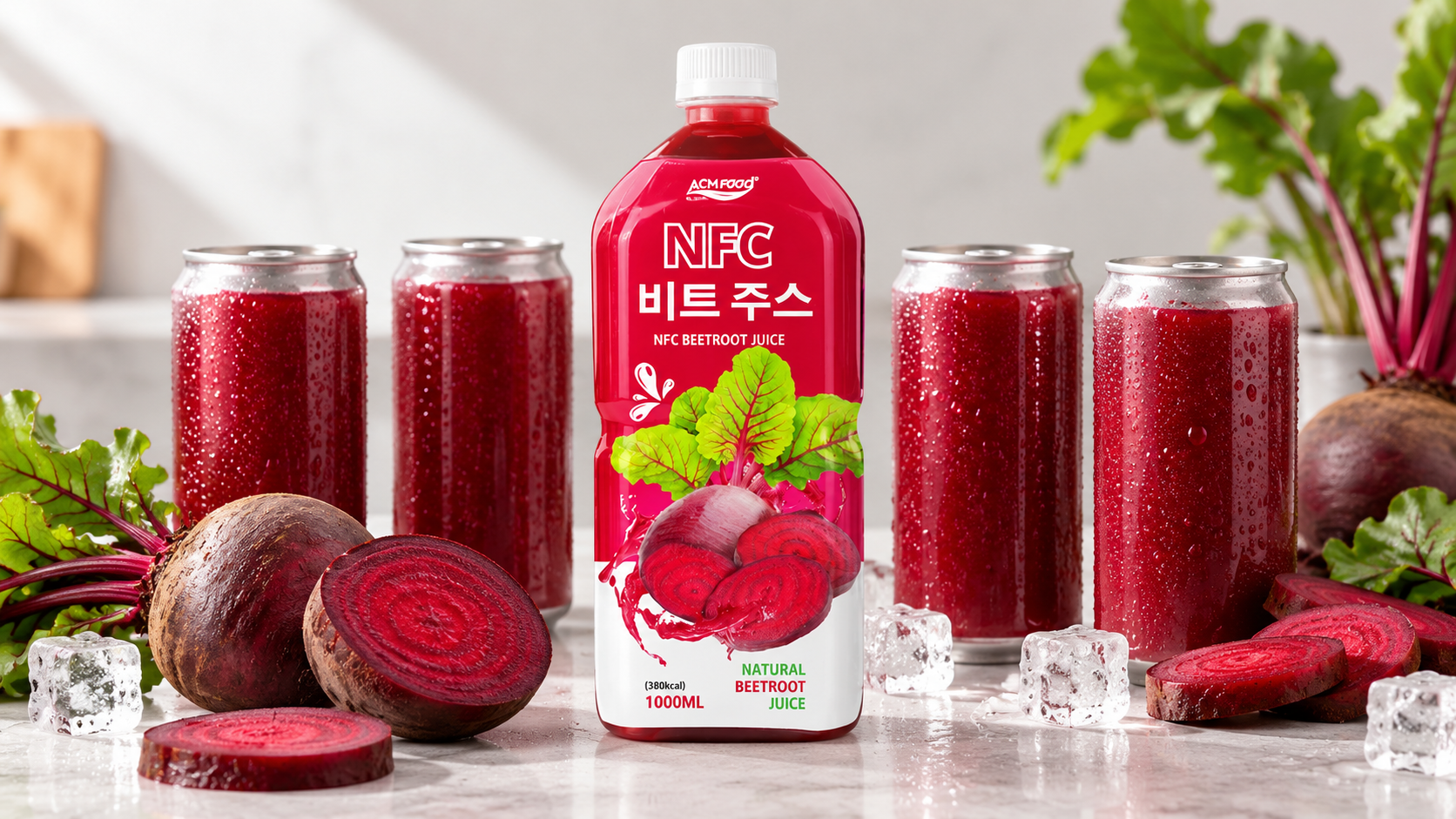
한국어Canned beetroot juice is beetroot juice packed in aluminium cans that are seamed shut and heat treated, so the drink can be stored, shipped and sold without a cold chain. The can blocks light and oxygen far better than most bottles, which suits a juice whose red colour fades easily.
The decisions that matter for a brand are can size, the filling and heat-treatment route, the can lining and the shelf-life target. This article walks through each one in practical terms for importers, distributors and drink brands that plan to launch a canned vegetable juice. ACMFOOD, a Vietnam beverage manufacturer, produces finished drinks in cans and bottles.
Why is aluminium a strong packaging choice for beetroot juice?
Aluminium is a strong choice because it is an almost complete barrier to light and oxygen, the two main enemies of beetroot pigment. A sealed can keeps the juice dark and protected, so colour and flavour stay closer to the day of filling than they would in a clear bottle.
Other practical advantages:
- Light protection. Betalains, the red pigments in beetroot, fade under light. In a can there is no light at all inside the pack.
- Heat tolerance. Cans withstand the temperatures of both hot filling and retort sterilisation when the process is designed for them.
- Stackability and freight. Cans pack tightly on pallets, which helps container planning.
- Recyclability. Aluminium is widely recycled, which retailers in many markets value.
The trade-offs are that consumers cannot see the juice, and that the inside of the can must be protected by a lining, because acidic or salty content can attack bare metal. The next sections cover how both points are handled.
Which can sizes are used for beetroot juice?
Beetroot juice is usually packed in small to medium cans because the taste is strong and many consumers prefer a moderate serving. Slim 250 ml cans, standard 330 ml cans and larger 500 ml cans cover most retail and foodservice needs.
| Can format | Typical use | Points to consider |
|---|---|---|
| 250 ml slim can | Single serving, premium and wellness positioning | Easy trial size, good for variety packs and chilled displays |
| 330 ml standard can | Mainstream retail and vending | Fits common vending and chiller equipment |
| 500 ml can | Sharing, sport and larger servings | Needs a clear label for opened-can storage |
Slim cans give a modern, health-oriented look and suit a vegetable juice that competes with cold-pressed bottles on shelf. Standard sizes are better when the drink must work with vending machines or café fridges. The final choice depends on can supplier availability, seaming equipment and the print method the brand prefers.
How is beetroot juice filled and sealed in a can?
Beetroot juice is filled into cans either hot or at ambient temperature, and then sealed by a double seam. The route depends on the recipe acidity and the heat treatment chosen for shelf stability.
The main steps in a typical line are:
- Juice preparation. Beets are washed, crushed or pressed and the juice is filtered. Acid or blending juice may be added to bring the pH to the target.
- Heating or deaeration. Removing dissolved air protects colour and reduces foaming at the filler.
- Filling. The juice is dosed into cans with a controlled fill level and low headspace.
- Nitrogen dosing where used. For still drinks in thin-wall cans, a small drop of liquid nitrogen is often added before seaming. It raises the internal pressure slightly, which keeps the can rigid for stacking and shipping.
- Seaming. The lid is double-seamed onto the can body. Seam dimensions are measured and teardown tests check the hook and overlap.
- Heat treatment and cooling. The sealed cans are heated by a process validated for the product, then cooled and dried.
- Coding and packing. Batch codes and dates are printed and cans are packed into trays and cartons.
Seam quality is the single most important mechanical control in a canning line. A faulty seam lets in air and microorganisms, so inspection frequency and records are a key point in any supplier audit.
Which heat treatment makes canned beetroot juice shelf stable?
Shelf stability comes from either acidifying the recipe and filling hot, or sterilising the sealed can. Beetroot is a low-acid vegetable with a pH above 4.6, so a plain pasteurisation step is not enough to keep an unacidified juice safe at room temperature.
- Acidified hot-fill. The recipe pH is lowered with an acidulant or a high-acid juice such as apple or lemon, the juice is filled hot and the can is sealed and held so the heat treats the lid area. This keeps colour better because heat exposure is short.
- Retort sterilisation. Sealed cans are heated under pressure in a retort so the whole content reaches commercial sterility. This suits unacidified juice, but longer heat can darken colour and flatten fresh flavour. Aluminium cans need overpressure control in the retort to keep their shape.
- Tunnel pasteurisation. Filled cans pass through a heated tunnel and then a cooling zone. This works for acid or acidified recipes.
The choice should be made together with the factory’s food-safety team or process authority. They set the minimum pH and heat values that guarantee safety, and these values are tied to the exact recipe, can size and filling temperature. A recipe change, even a small one, can require a new validation.
How does the can lining affect beetroot juice?
The lining is a thin polymer coating on the inside of the can that separates the juice from the metal. It prevents corrosion and metallic taste, and its quality is one of the biggest factors in long shelf life for any acidic or salty drink.
Points to ask the can supplier and the manufacturer:
- Which lining system is used and whether it meets the food-contact rules of the destination market.
- Whether the lining has been tested with a similar low-pH vegetable juice and with the planned heat treatment.
- How lining coverage and scratches are checked on the incoming cans.
- How the lid and the seam area are protected, since these are the most stressed areas.
Beetroot juice contains organic acids and naturally occurring nitrate, and its pH can change if acidified. Test packs stored at different temperatures reveal early signs of lining attack, such as off-notes or colour drift, well before commercial launch.
What affects the shelf life of canned beetroot juice?
Shelf life depends on the process validation, the integrity of the seal, the lining and the storage temperature. No single number applies to every product; each recipe and can combination needs its own stability study with retained samples.
The main influences are:
- Recipe and pH. Lower pH supports longer ambient stability but changes taste, so it is balanced with sweetness.
- Heat history. Gentle heat preserves colour, while stronger heat gives wider safety margins.
- Headspace oxygen. Lower headspace and nitrogen dosing slow oxidation.
- Storage temperature. Warm warehouses and transport containers speed up colour loss and flavour change, so shipping lanes matter.
- Lining and seam quality. These control metal contact and air ingress over time.
Buyers should request the shelf life in writing for the exact can, recipe and process, together with the storage conditions the figure relies on. For reference, ACMFOOD publishes shelf-life data on product pages for its own range, which can be checked in the beetroot juice category.
What should a brand specify when ordering canned beetroot juice?
A brand should specify the juice percentage, taste profile, can size, filling and heat route, shelf-life target and label requirements. A clear brief shortens sampling and prevents late changes that would require new stability tests.
- Product definition. Pure beetroot juice, a blend with apple, carrot or citrus, or a lighter drink.
- Taste and colour targets. Earthy intensity, sweetness level and the colour reference.
- Can specification. Size, printed or shrink-sleeved, lining and lid type.
- Process route. Acidified hot-fill, retort or tunnel, confirmed by the factory.
- Shelf life and storage. The target and the conditions it applies to.
- Market and label. Destination country, language, nutrition panel format and claim wording.
- Documents. Certificates, specification sheets and test reports to be supplied.
ACMFOOD works under OEM, ODM and private label arrangements and holds HACCP, ISO 22000 and FSSC 22000 certificates, as listed on its website. A broader overview of how vegetable drinks are developed is available in the vegetable juice manufacturing guide.
How are canned beetroot juice cans decorated and labelled?
Cans can be printed directly, wrapped in a shrink sleeve or fitted with a label. Each method suits a different order size, artwork complexity and delivery schedule, and the choice affects both cost and lead time.
- Direct printing. Artwork is printed on the can body at the can maker. It gives the sharpest finish and is usually chosen for large, stable runs.
- Shrink sleeve. A printed plastic sleeve is applied and shrunk onto a plain can. It allows full-body artwork on shorter runs and quick artwork changes between flavours.
- Paper or film label. Labels suit pilot batches and tests, although they are less common on retail cans.
On a beetroot can, dark red artwork can look flat, so many brands choose light backgrounds or contrasting colours to make the colour of the juice feel fresh. Whatever the method, the legal panel has to carry the ingredient list, volume, batch code and best-before date, and the code has to remain legible after cooling and handling. Because the bottom of the can is stamped or inkjet-coded, it is worth agreeing the code position early so the filling line can place it consistently.
How should canned beetroot juice be stored and shipped?
Canned beetroot juice should be kept cool, dry and out of direct sun, with pallets protected from condensation. Heat and moisture are the two main risks in storage and sea freight, because they speed up colour change and can corrode can ends if cartons stay wet.
Practical points for importers:
- Container temperature. Long voyages through hot ports raise the temperature inside the container. Choosing a shipping lane and season carefully, or using ventilated or insulated containers for sensitive loads, limits the effect.
- Carton and tray quality. Strong cartons and trays avoid dented can rims, which can break the seal over time.
- Stacking height. Nitrogen-dosed cans have a modest internal pressure, but pallet stacking heights should still follow the manufacturer’s guidance.
- Warehouse rotation. First-in-first-out handling and regular checks for dents, rust at the rim or bulging cans keep faulty units off the shelf.
A bulging can is a safety warning and should be withdrawn immediately. A written complaint and recall procedure, tied to batch codes, is a standard expectation in supplier audits and should be requested at the start of a project.
FAQ about canned beetroot juice
Is canned beetroot juice better than bottled?
Neither is better in every case. Cans protect against light and oxygen, which helps colour and flavour, while bottles let consumers see the juice and allow resealing. The choice depends on the market, the price tier and how the product is consumed.
Why do cans need nitrogen for still juice?
Thin aluminium cans without internal pressure can dent during stacking and transport. A drop of liquid nitrogen added before seaming gives the sealed can a small positive pressure, so it keeps its shape.
Can the colour of beetroot juice change in a can?
It can shift slowly. Heat, residual oxygen and warm storage all fade betalain pigments over time, and the change is gradual rather than sudden. Good formulation and cool storage keep the change small.
Does canned beetroot juice need refrigeration?
Not if the product is acidified or sterilised and sealed correctly. After opening, the juice should be refrigerated and consumed within the period stated on the label.
Which can size is most common for vegetable juice?
Slim 250 ml cans are common for premium vegetable juices, while 330 ml suits mainstream retail. The best size follows the retail channel and the brand positioning.
Planning a canned beetroot juice project
Canned beetroot juice works well when the can lining, seam quality and heat treatment are designed as one system. Aluminium protects the colour, but the low-acid nature of beetroot means the process route has to be validated, not assumed. Shelf life then follows from that validation and from storage conditions.
Brands that want to develop a canned beetroot drink can send ACMFOOD a brief with the juice content, can size, target markets and quality documents. The team can then propose a recipe and a can format from its production range and agree the sample plan.