Français
 Español
 العربية
 한국어
한국어Organic cucumber juice and cold-pressed cucumber juice are two different promises that are often combined on one label. Organic describes how the cucumbers were grown and certified, while cold-pressed describes how the juice was extracted and preserved, and each one changes sourcing, process, packaging and shelf life.
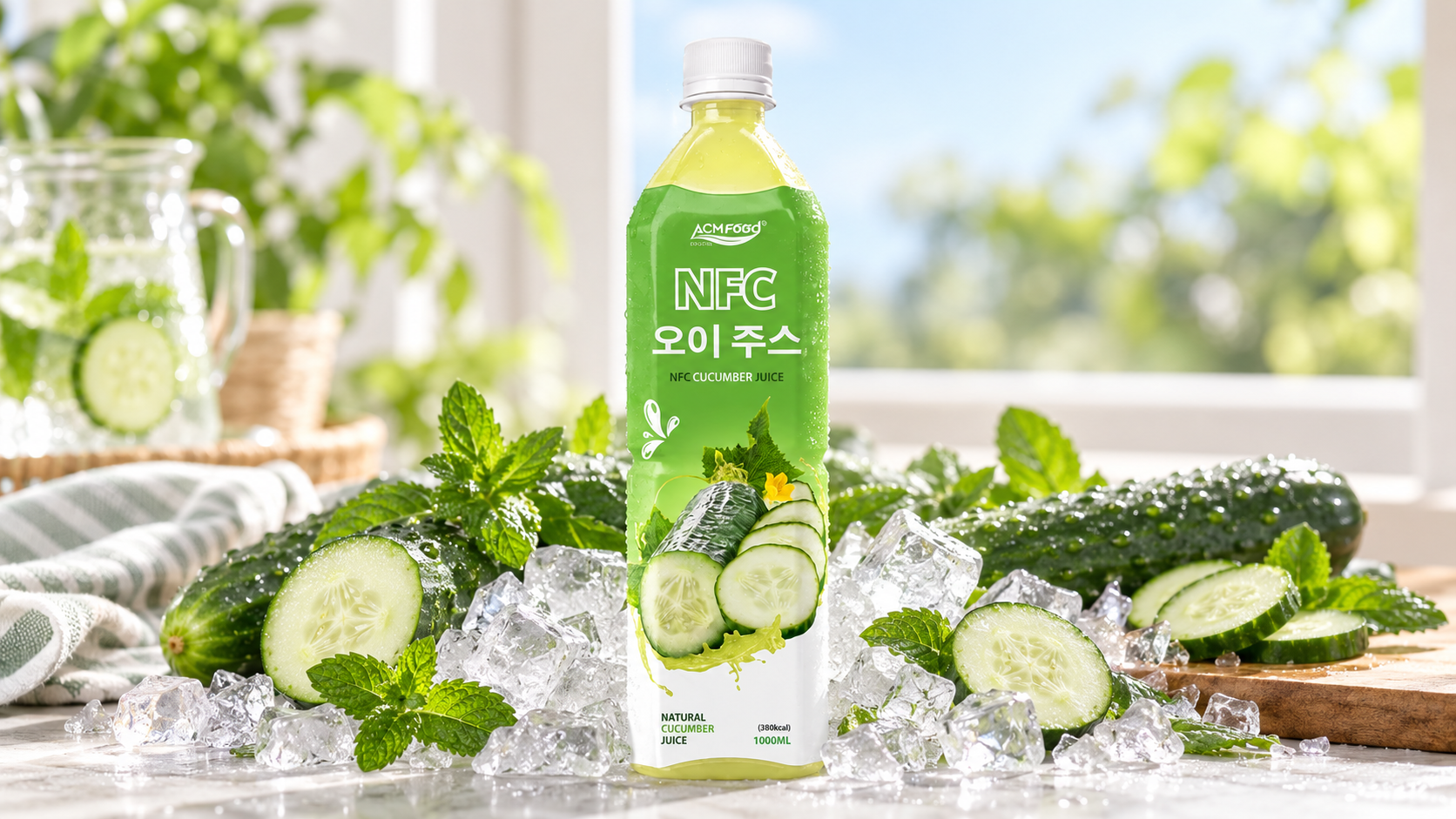
This guide explains what each term means, how organic sourcing works for a watery crop like cucumber, what high pressure processing (HPP) does and does not do, and how brands can decide between a shelf-stable product and a refrigerated one. ACMFOOD, a Vietnam beverage manufacturer, publishes HACCP, ISO 22000 and FSSC 22000 certificates and supplies shelf-stable finished drinks in cans and bottles. Organic production and cold-pressed or HPP juice are not part of its published capabilities, so both must be confirmed with the factory before any project.
What do organic and cold-pressed mean for cucumber juice?
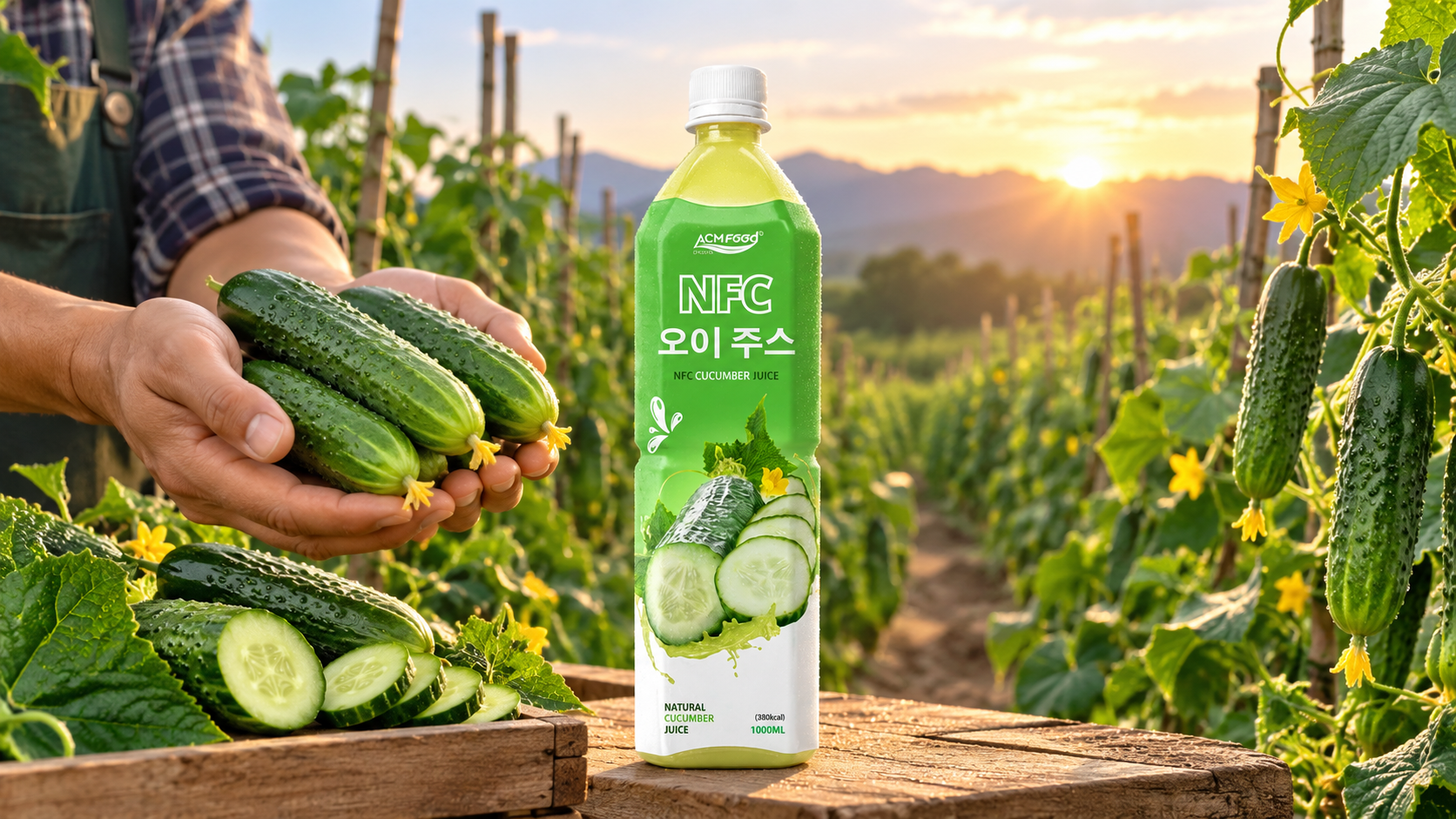
Organic means the cucumbers and the processing meet a recognised organic standard, backed by certificates. Cold-pressed means the juice was extracted by pressing without heating the fruit, and it is usually followed by a non-thermal treatment or refrigeration to protect freshness.
The two terms are independent:
- Organic, hot-fill. Certified cucumbers processed with a heat step into a shelf-stable bottle or can.
- Conventional, cold-pressed. Non-organic cucumbers pressed cold and distributed under refrigeration.
- Organic and cold-pressed. Both promises together. It needs a certified supply chain and a cold supply chain.
The term cold-pressed is not defined in the same way in every market. Brands should describe the process accurately on the label and avoid implying that no processing occurred when a preservation step was used. Readers who want a general overview of organic juices can start with the article on organic juice types.
How is organic cucumber sourced?
Organic cucumbers are sourced from certified farms and delivered with lot documents, and the plan has to account for the crop’s perishability and its sensitivity to pests and weather. Cucumber is a fast-growing, warm-season crop that is often grown under cover, and organic growers rely on rotation, resistant varieties and biological pest control.
- Grower certification. Each farm holds a certificate that lists the crop and area. Copies are kept by the processor.
- Variety and quality. Mild, low-bitterness varieties give a more pleasant juice, and weather stress raises bitterness.
- Harvest and cooling. Cucumbers are picked at the right maturity and cooled soon afterwards, because they soften and yellow quickly.
- Short transport. Processing close to the farm reduces losses and protects flavour.
- Residue and contaminant testing. Organic does not guarantee zero residues, so lots are tested against market limits.
Because cucumbers do not store for long, the factory must be ready to process each delivery quickly, and the schedule for organic runs should be agreed in advance, including cleaning of the line before the organic batch.
What is cold-pressed processing?
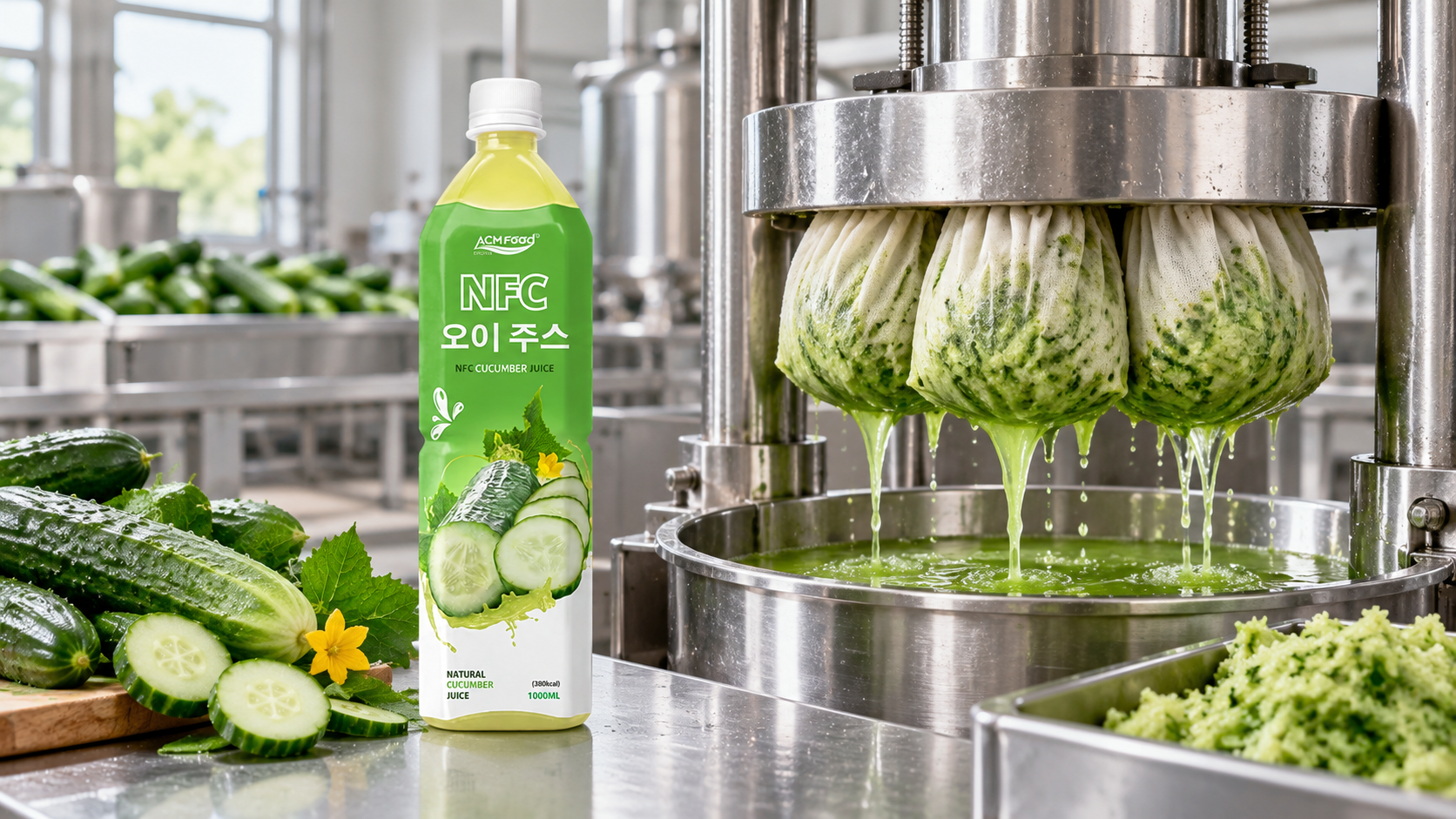
Cold-pressed processing extracts juice by mechanical pressing, often in two stages: grinding the cucumbers and then pressing the pulp in cloth bags or a hydraulic press. No heat is applied to the fruit, so aroma and colour are kept closer to the fresh state, though the juice remains perishable.
Key points about the method:
- Low heat exposure. Taste is fresher and the green is brighter than in heat-treated juice.
- Short life without preservation. Untreated cold-pressed juice may last only days under refrigeration.
- Hygiene dependence. Without a heat kill step, microbial control depends on clean raw material, washing and sanitation.
- Cold chain. The product must be refrigerated from the factory to the consumer.
Cold-pressing is a way to extract juice, not a preservation method. A preservation step, such as HPP or heat, is what determines how long the juice lasts.
What does HPP do for cucumber juice?
HPP, or high pressure processing, applies very high pressure to sealed bottles of juice for a short time, inactivating many microorganisms without raising the temperature much. It lets a cold-pressed juice keep its fresh character while extending refrigerated shelf life well beyond that of untreated juice.
- Pressure range. Commercial systems usually operate at several hundred megapascals, in the order of 400 to 600 MPa.
- Packaging requirement. The container must be flexible and sealed, which is why HPP juice is sold in PET bottles. Rigid cans and glass bottles cannot be used.
- Cold chain remains. HPP does not make a low-acid juice shelf stable at room temperature, so the product stays refrigerated.
- Colour and flavour. Fresh aroma is largely kept, though some colour and flavour change can still happen over the refrigerated life.
- Cost and capacity. HPP is often done by a specialised toll processor, which adds logistics and cost.
Cucumber juice is low in acid, so HPP does not remove the need for cold storage. A brand should be clear that HPP gives a longer chilled life, not an ambient one.
How do the options compare?
The table compares four routes for cucumber juice. It uses qualitative statements because actual shelf life depends on recipe, pH and packaging, and each product needs its own study.
| Route | Storage | Taste and colour | Pack | Main consideration |
|---|---|---|---|---|
| Cold-pressed, untreated | Refrigerated, very short life | Freshest | PET or glass | Strict hygiene, local distribution only |
| Cold-pressed with HPP | Refrigerated, longer life | Fresh, slight change over time | Flexible PET bottle | Toll processing, cold chain cost |
| Acidified hot-fill | Ambient | Cooked note, supported by lime or mint | Heat-set PET or glass | Recipe built around acid |
| Retort or aseptic | Ambient | More cooked, or gentler if aseptic | Cans, PET or glass | Process validation and equipment |
Export to distant markets generally favours ambient routes, which is why shelf-stable cans and bottles are the focus of ACMFOOD’s range. Refrigerated cold-pressed juice is more common in regional or domestic distribution. The current formats available are visible in the cucumber juice category.
What certification and documents are needed?
An organic claim needs organic certificates for the farm and the processor, a recognised certification body for the destination market and transaction documents for each shipment. A cold-pressed claim needs a process description, HPP or heat records where used and microbiological test results.
- Organic certificates. Farm and factory, with scope covering cucumbers and vegetable juice.
- Traceability records. A link from bottle code to cucumber lot and grower.
- Process records. Pressing, HPP or heat step data for the batch.
- Microbiological tests. Results for the batch and for retained samples at the end of shelf life.
- Food safety certificates. HACCP, ISO 22000 or FSSC 22000. They prove food safety management, not organic status.
Which markets and channels suit each route?
Chilled cold-pressed and HPP juice suit local and regional markets with reliable refrigeration, such as juice bars, cafes, premium grocery chillers and subscription delivery. Shelf-stable bottles and cans suit export, general retail, vending, foodservice and e-commerce where cold chain cannot be guaranteed.
- Local chilled channel. Short distances make fresh taste a selling point, and the price tier can support the cost of cold logistics.
- Regional chilled channel. HPP allows longer reach, but every handover in the chain needs temperature control and records.
- Export channel. Sea freight through warm ports favours ambient-stable products, since temperature abuse is a real risk.
- Online channel. Parcels travel for days, so shelf-stable products avoid the need for insulated packaging.
A brand with both ambitions can run two products under one name: a chilled cold-pressed line in the home market and a shelf-stable line for export. The recipes and claims differ, so each one should have its own specification and label.
What are the main risks in cold-pressed cucumber juice?
The main risks are microbial growth, temperature abuse, bitterness variation and over-promising on the label. Without a heat step, the juice relies on clean raw material, sanitation and the cold chain, so any weakness shows up as spoilage or complaints.
- Microbial risk. Cucumbers come from soil and water, so washing, sanitation and testing must be strict. HPP or another validated step reduces the risk.
- Temperature abuse. A few hours at room temperature during transport or display can shorten shelf life sharply.
- Bitterness. Stressed crops and stem ends add bitterness, so sensory checks on each lot are needed.
- Separation. Cucumber juice settles into layers. A shake instruction or light homogenisation is common.
- Label claims. Words such as raw, fresh or natural attract attention from regulators in some markets, and the claims need to match the real process.
How should a pilot compare chilled and shelf-stable versions?
A pilot should produce both versions from the same lot of cucumbers and compare them side by side in the real pack and the real storage condition. Direct comparison shows the trade-off between freshness and shelf life more clearly than any description.
A practical pilot has four parts. The first is a fresh tasting on the day of production, scoring aroma, bitterness, colour and body. The second is a storage study: the chilled sample is held at the intended cold temperature and the shelf-stable sample is held at ambient and warm conditions. The third is a re-tasting at set intervals, with colour measured by instrument. The fourth is a cost review that includes packaging, processing, logistics and the cold chain, since the cheapest juice recipe is not always the cheapest finished pack on the shelf.
The results guide the brand toward the right route for each channel. They also provide the evidence needed for the shelf-life claim, which must come from the actual product and not from a different recipe.
What should a brand ask the manufacturer?
- Which organic scheme and certification body cover the factory and the growers?
- Is cold-pressing or HPP available in-house or through a toll processor?
- What shelf life has been validated for the recipe, pack and storage condition?
- How are cucumbers kept cool and processed quickly after delivery?
- What bitterness control is in place for each lot?
- How are organic and conventional runs kept apart?
- Which documents accompany each shipment?
FAQ about organic and cold-pressed cucumber juice
Is cold-pressed juice raw?
It is pressed without heat, but it can still be treated afterwards, for example with HPP. The label should describe the process accurately.
Can cold-pressed cucumber juice be stored at room temperature?
Not safely, because cucumber is low in acid and cold-pressed juice has no heat kill step. It must stay refrigerated unless it is acidified and heat treated in a validated process.
Does HPP change the taste?
Less than heat treatment does. Fresh aroma is largely preserved, although some change over the refrigerated shelf life is normal.
Can HPP juice be filled in cans?
No. HPP needs a flexible sealed container, so it is used with PET bottles. Cans and glass bottles are not suitable for the process.
Does organic cucumber juice taste different?
Not necessarily. Taste depends on variety, maturity and processing more than on organic status alone.
Choosing between organic, cold-pressed and shelf-stable options
Organic and cold-pressed describe different parts of a cucumber juice, and each adds requirements for documents, process and logistics. A shelf-stable route fits export better, while a cold-pressed route fits fresh, chilled distribution.
Brands that want to explore these options can share a brief with ACMFOOD, stating whether organic status and a chilled format are firm requirements. The factory can confirm what is possible and propose a shelf-stable alternative for export markets.