Français
 Español
 العربية
 한국어
한국어Hot fill is a packaging process in which a beverage is heated, filled into its container at an elevated temperature, capped and then held so that the hot liquid sterilises the inside of the pack before cooling. It gives an ambient-stable drink without a sterile filling room, but it only suits products acidic enough for heat alone to control spoilage.
This guide follows the hot fill process from heating to cooling, explains which drinks fit, what heat does to flavour, colour and vitamins, which containers survive the process and where hot fill commonly fails. The aim is to help a brand owner or sourcing team decide whether hot fill is the right route before a recipe or a bottle is chosen.
What is the hot fill process?
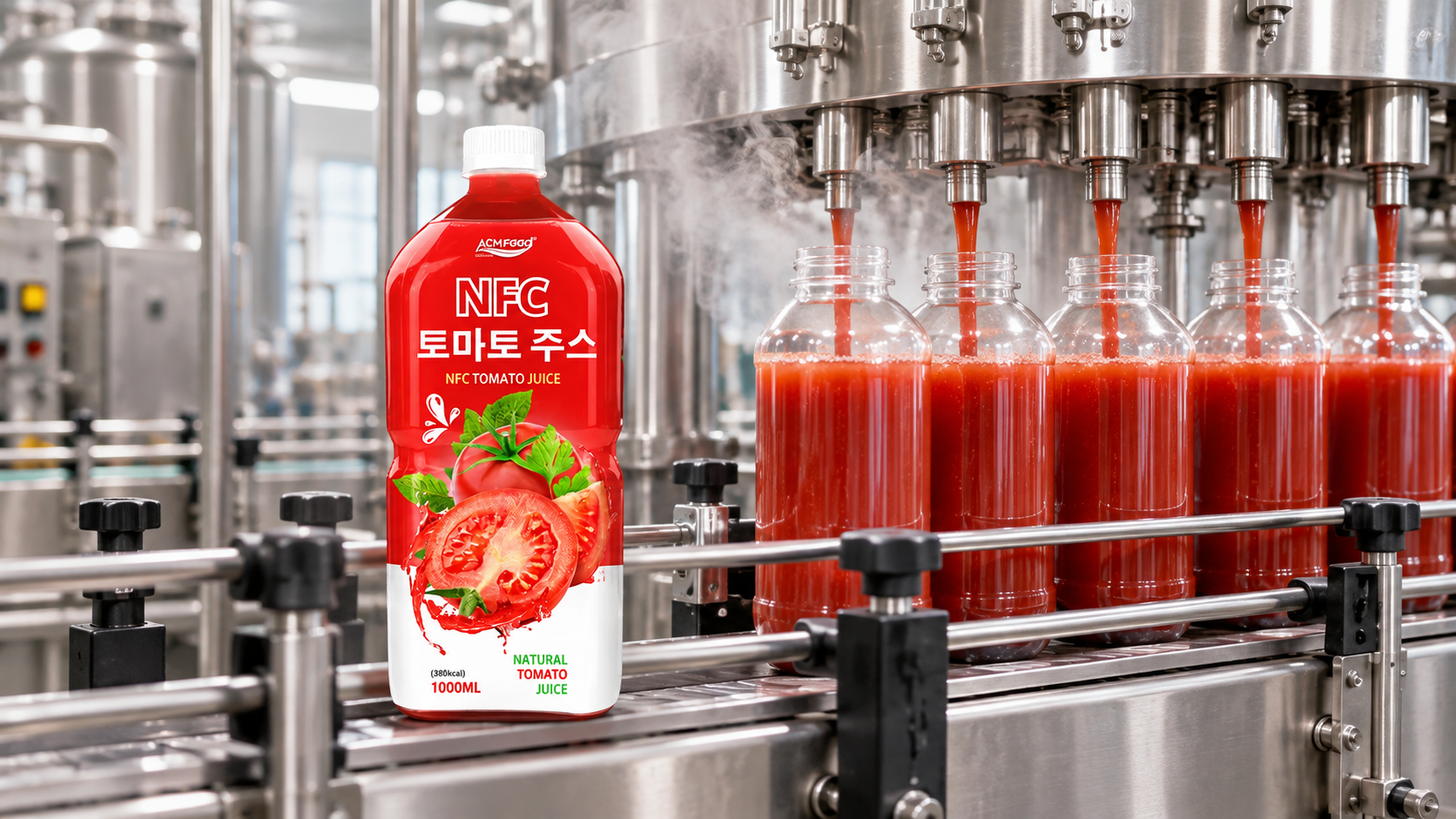
The hot fill process heats the drink to a validated temperature, fills it into the container while hot, closes the container immediately and keeps the hot product in contact with the closure for a set time. The heat of the liquid sterilises the container surface, so no separate sterilising step is needed for the pack.
Three ideas explain why the method works. First, the product is made microbiologically safe by heat before filling. Second, the container and cap are sanitised by the same hot liquid, which is why the fill temperature and the hold time are validated together instead of separately. Third, the drink is then cooled, which shrinks the liquid and creates a slight vacuum inside the sealed pack.
Hot fill is a thermal process, but it is not the same as pasteurising inside the finished pack. In a tunnel pasteuriser the filled pack travels through heated zones, while in hot fill the drink arrives at the filler already hot. Where each filling method sits in the wider range of heat treatments is shown on the page about beverage processing technology options.
How does hot fill work step by step?
Hot fill works in five steps: heat the drink, fill it hot, cap it at once, hold or invert the pack so the closure is also heated, then cool it. Each step has a set of conditions that the factory validates for the specific recipe and container.
- Heat. The drink is heated, usually in a plate or tubular heat exchanger placed just before the filler, to the fill temperature. Time at temperature before filling is kept short and controlled.
- Fill. The hot drink fills the container to the specified level. Fill height and headspace are important because the liquid will contract on cooling.
- Cap. The closure is applied immediately so that hot product and hot vapour reach the underside of the cap. A delay between filling and capping loses heat and cuts the sanitising effect.
- Hold or invert. The sealed pack is held for a defined time, often laid down or inverted so the hot liquid washes the cap and neck. The needed time depends on the validated temperature and on the pack.
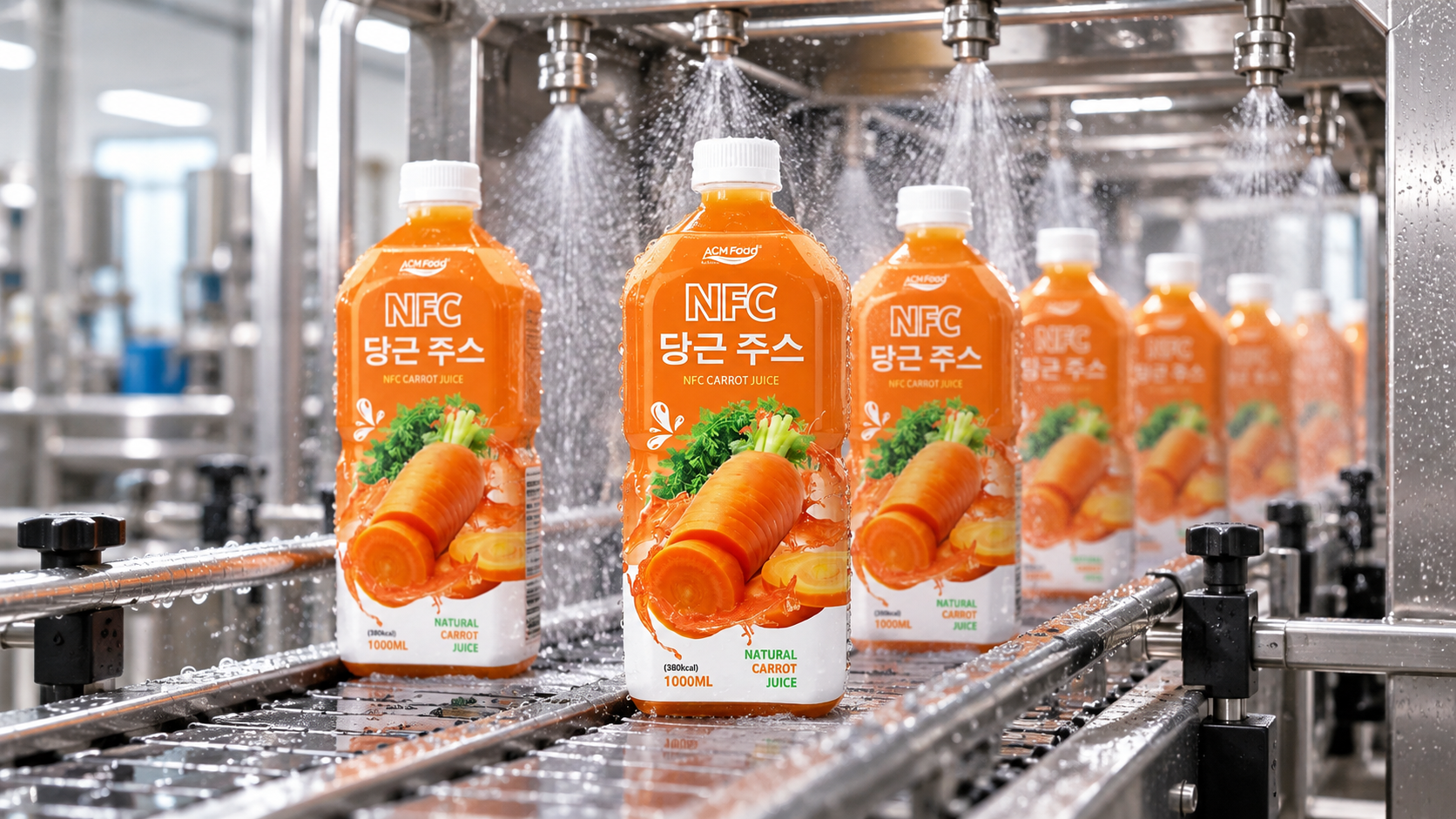
- Cool. The pack is cooled, usually with water sprays in a cooling tunnel, to a temperature at which flavour and colour are no longer damaged and the pack can be handled and labelled.
A short step called the hold is easy to overlook, yet it is the point where the closure is sanitised. The detail of that step is handled in a separate companion article, so this page stays focused on the whole sequence.
Which drinks are suitable for hot fill?
Hot fill suits acidic drinks, meaning products with a finished pH below 4.6, because at that acidity heat treatment can control the organisms of concern. Fruit juices, nectars, many tea drinks with added acid and isotonic sports drinks are common examples. Low-acid drinks need a different route.
The pH of 4.6 is the line used in United States food regulation to separate low-acid foods from acid foods. Under the federal definition, a low-acid food is one with a finished equilibrium pH above 4.6 and a water activity above 0.85, and those products are regulated differently from acid products. A drink that sits above that line cannot rely on hot fill alone.
| Drink type | Usual acidity position | Hot fill fit | Main point to check |
|---|---|---|---|
| Fruit juice and nectar | Naturally acidic in most cases | Good | Heat effect on fresh aroma and colour |
| Isotonic and sports drinks | Acidified by design | Good | Stability of added vitamins and colours |
| Ready-to-drink tea with added acid | Depends on the recipe | Good if pH is validated below 4.6 | Tea tannins and colour after heat |
| Plain tea or coffee | Above pH 4.6 (low-acid) | Not on its own | Needs a sterilising route such as retort or aseptic filling |
| Milk drinks and plant-based drinks | Close to neutral | Not suitable | Needs UHT with aseptic filling or retort |
| Carbonated drinks | Acidic | Usually filled cold | Gas loss makes hot filling impractical |
Because the pH decides the route, it is worth reading the guide to popular drink categories alongside the recipe. Juice-based products, a common hot fill category, are discussed on the page about private label fresh fruit juice.
What does heat do to flavour, colour and vitamins?
Heat can flatten fresh fruit aroma, deepen or dull colour and reduce heat-sensitive vitamins such as vitamin C. The size of the change depends on the temperature, the time before cooling and the recipe, so a hot fill product is usually tuned for stability rather than for a raw, fresh character.
- Flavour. Volatile aroma compounds are the first to suffer, which is why citrus and berry notes may taste cooked after a long hold. Short heating and rapid cooling help, and flavour can be rebalanced in the recipe.
- Colour. Pigments such as anthocyanins in red fruit are sensitive to heat and oxygen. Colour may shift during the hold and again over shelf life, so colour approval should use stored samples.
- Vitamins. Vitamin C is relatively heat and oxygen sensitive. If a vitamin claim is planned, the amount at the end of shelf life matters more than the amount at filling.
- Texture. Pulp, fibre and added pectin respond to heat. Viscosity can change between filling and cooling.
Hot fill is not a gentle process in the way that chilled or high pressure routes are, which is why brands that want a fresh character often compare it with cold-chain alternatives before deciding.
Which containers can be hot filled?
Hot fill containers must tolerate the fill temperature without softening or shrinking. Glass bottles, metal cans and heat-set PET bottles are used, while standard PET bottles distort and need to be replaced by a heat-resistant design. The closure and liner must withstand the heat too.
- Heat-set PET. Crystallised in the sidewall during blowing so it keeps its shape when filled hot. Many designs include vacuum panels that flex as the drink cools.
- Glass. Handles heat well but needs controlled temperature changes to avoid thermal shock, and is heavy to ship.
- Cans. Can be filled hot, although the can design and internal lacquer must suit the product and the process.
- Closures. Caps need a liner that seals under heat and does not release unwanted taste. Cap torque and seal checks are part of every run.
Packaging that suits export has to balance shelf life, freight weight and the heat tolerance of the pack, so the container choice is best made together with the process choice.
Where does hot fill commonly go wrong?
Hot fill commonly goes wrong when the temperature at the closure is too low, when the hold is too short, when the pH drifts above the validated limit or when heat-resistant spoilage organisms survive. Most failures can be traced to a process condition that was not controlled or not recorded.
- Under-heating at the closure. Temperature falls between the heat exchanger and the capper, for example after a line stop, and the cap is not properly sanitised.
- Short or missed hold. If the pack is not inverted or laid down for the validated time, the underside of the cap may never see hot product.
- pH above the limit. A batch with less acid than the validated recipe can move into the low-acid range, and heat alone will no longer control the risk.
- Panel or bottle deformation. A fill temperature that is too high or a cooling step that is too fast can distort the bottle.
- Heat-resistant spores. Some spore-forming bacteria and moulds survive typical juice heat treatment. Alicyclobacillus, for example, is described in the scientific literature as able to survive commercial pasteurisation of fruit juice and cause flat-sour spoilage.
- Cooling damage. Slow cooling extends the heat exposure and harms flavour, while too fast cooling can stress the container.
For juice sold in the United States, the juice HACCP rule also requires a process that achieves at least a 5-log reduction of the most resistant pertinent microorganism, unless the processor falls under an exemption, such as a single thermal step that achieves shelf stability. That wording is set out in the federal regulation and is the reason importers ask for written process records.
What should a hot fill specification contain?
A hot fill specification should name the product, its pH range, the fill temperature and hold time as validated by the process authority, the container and closure, the cooling method and the records that will accompany each batch. It should also state the shelf life that has been tested, not just claimed.
- Product and pH. Recipe, brix, finished pH and the tolerance accepted.
- Process conditions. Fill temperature, hold time or inversion step, and cooling target as validated.
- Container and closure. Material, weight, heat-set rating, liner and torque.
- Quality records. Temperature logs at the filler, pH check results and seal inspections for each batch.
- Shelf life evidence. Stored sample results for colour, flavour and microbiology at the end of the claimed period.
- Destination requirements. Labelling rules and any filing needed in the importing market.
FAQ about the hot fill process
Is hot fill the same as pasteurisation?
Not exactly. Hot fill heats the drink before filling, and the hot liquid sanitises the pack. Pasteurisation in the container heats the already filled pack. Both are thermal processes, but they differ in where the heat is applied.
Why must the pH be below 4.6?
At that acidity many harmful spore-forming bacteria cannot grow, so a heat treatment aimed at acid foods is enough. Above it, the product is a low-acid food and needs a stronger sterilising process.
Can I hot fill a drink with pulp or fibre?
Yes, if the recipe is acid and the filler is designed for particles. Particle size, viscosity and heat transfer should be reviewed in the trial run, because pulp can block nozzles or heat unevenly.
Does hot fill need preservatives?
Not always. Many hot fill drinks are made without preservatives because heat and acidity control spoilage. Whether a preservative is added is a recipe decision that depends on the market and the shelf life target.
How long can a hot filled drink last at room temperature?
The tested shelf life depends on the recipe, pack and storage conditions. It is confirmed with stored samples during development instead of being assumed from the process name.
Choosing the route for your drink
Hot fill is a practical route for acid drinks in glass, cans or heat-set PET, provided that the pH, the temperature at the closure and the hold are validated and recorded. For low-acid or very heat-sensitive products, another route is usually a better fit.
Brands and importers can send a drink specification with the target market, and ACMFOOD will confirm which processing route fits the product, the pack and the shelf life requirement.
Sources
- Cornell Law School (Legal Information Institute) — 21 CFR 113.3, definitions of low-acid foods and commercial sterility
- Cornell Law School (Legal Information Institute) — 21 CFR 120.24, process controls and the 5-log reduction for juice
- U.S. Food and Drug Administration — Juice HACCP
- Foods (2022) — Fruit Juice Spoilage by Alicyclobacillus: Detection and Control Methods, a comprehensive review (PubMed)