


 Français
 Español
 العربية
 한국어
한국어Coconut water in a coconut is the clear liquid sealed inside the cavity of a young coconut, drunk straight from the nut after it is opened. Packaged coconut water is that same liquid, extracted in a factory, treated to make it safe and stable, then filled into cans, bottles or cartons. The two start from the same raw material but end up as different products, because opening, heat, time and packaging all change what you taste.
This guide explains what actually changes between the whole nut and the packaged drink, which differences matter to a drinker, and which ones matter to a brand or importer deciding how to sell coconut water. It also covers the limits: taste and composition vary with coconut variety, maturity and handling, so no single packaged product represents “packaged coconut water” as a whole.
Key takeaways
- Both products start from the same liquid, but opening, heat, time and packaging change what you taste.
- Water in an intact nut is protected from air and microbes; once opened it should be chilled and drunk the same day.
- Packaged coconut water trades some delicate aroma for consistency, safety and global availability.
- Recipe matters more than the word “packaged”: a 100% coconut water product differs from one with added sugar, flavour or pulp.
What is coconut water in a coconut?
Coconut water in a coconut is the naturally sterile liquid endosperm of a young coconut, held inside the shell until the nut is opened. As long as the shell is intact, the liquid is protected from air and microbes, which is why it tastes fresh and delicate when drunk on the spot.
The liquid is most plentiful in young, green coconuts harvested before the flesh hardens. As the nut matures, part of the water is absorbed into the developing white meat, the volume drops and the flavour usually becomes less sweet and more nutty. That is why drinking coconuts sold whole are almost always young nuts, while mature brown coconuts are mainly used for meat, milk and oil.
Several factors shape what you find inside a whole coconut:
- Variety: aromatic and dwarf varieties are prized for drinking because their water tends to taste sweeter and more fragrant than tall varieties grown mainly for copra.
- Maturity at harvest: a few weeks’ difference changes sweetness, volume and the softness of the jelly-like meat.
- Time since harvest: a whole coconut keeps for a limited period, and quality slowly declines as the nut loses moisture, even before it is opened.
- Growing conditions: soil, rainfall and season all influence flavour, so two nuts from different farms can taste noticeably different.
What changes once the coconut is opened?
The moment a coconut is opened, its water is exposed to air and microorganisms, and it starts to change within hours. Opened coconut water needs refrigeration and is best drunk the same day, because its fresh aroma fades and it can begin to ferment or turn sour if left at room temperature.
This short life is the core reason packaged coconut water exists. A whole nut is heavy and bulky to ship, and the liquid it contains cannot be kept for long once it is out of the shell. Packaging solves the logistics problem, but every solution introduces some trade-off in flavour, texture or cost.
How is packaged coconut water made?
Packaged coconut water is made by opening coconuts, extracting and filtering the water, treating it to control microorganisms, and filling it into sealed containers. The exact process depends on the product type and the shelf life the brand needs, which is why two packaged products can taste quite different.
A typical production sequence includes these stages:
- Selection and opening: nuts are sorted by maturity and condition, then opened under controlled hygiene so the water is not contaminated at the source.
- Extraction and filtration: the water is drained and filtered to remove shell fragments and fibres. Some products keep or add coconut pulp for texture.
- Standardisation: depending on the recipe, the batch may be adjusted for sweetness or acidity, or blended with flavours. Products labelled 100% coconut water should not contain added sugar or other ingredients beyond what the label declares.
- Treatment for safety and stability: heat treatment such as pasteurisation or sterilisation is common for shelf-stable products. Some chilled products use other methods and have a much shorter shelf life.
- Filling and sealing: the water is filled into cans, PET bottles or cartons and sealed, then coded and packed for distribution.
Each step is a control point. If you want to see how a factory handles these stages, our overview of a coconut water manufacturer’s production and QC system walks through the process in more detail.
Does packaged coconut water taste different from fresh?
Yes, in most cases it does. Heat treatment and storage usually soften the bright, green aroma of freshly opened coconut water and can add a slightly cooked or nutty note. The difference is larger for products that are heated more intensively for a long ambient shelf life, and smaller for gently treated or chilled products.
Taste differences come from several sources, not heat alone:
- Raw material: the variety and maturity chosen by the factory set the baseline sweetness and aroma before any processing begins.
- Processing intensity: stronger or longer heat treatment improves stability but has more effect on delicate aromatic compounds.
- Time on shelf: flavour continues to evolve during storage, so a product tasted near the end of its shelf life may differ from one tasted soon after production.
- Recipe: added sugar, flavours, pulp or carbonation change the drink considerably, which is why reading the ingredient list matters.
None of this means packaged coconut water is “worse”. Many consumers never have access to a fresh young coconut, and a well-made packaged product offers consistent taste, safety and convenience that a whole nut cannot.
Coconut water in a coconut vs packaged: side-by-side comparison
The table below summarises the practical differences. It is qualitative on purpose, because composition and shelf life vary widely between coconuts and between packaged products.
| Factor | Coconut water in a coconut | Packaged coconut water |
|---|---|---|
| Flavour | Bright, delicate, varies nut to nut | More consistent; aroma may be softer after heat treatment |
| Freshness once opened | Best drunk immediately; short life even when chilled | Sealed product is stable until opened; then treat like a fresh drink |
| Safety control | Depends on how the nut is handled and opened | Controlled by processing, hygiene and packaging standards |
| Convenience | Needs tools to open; heavy and bulky | Ready to drink; easy to store, chill and carry |
| Ingredients | Only coconut water | From 100% coconut water to drinks with added sugar, flavours or pulp |
| Availability | Mostly in or near growing regions | Sold worldwide through retail and foodservice |
| Logistics | Perishable, high weight per serving | Efficient to ship and stack; suited to export |
Is packaged coconut water as nutritious as fresh?
Packaged coconut water can provide a similar overall profile to fresh coconut water, but values differ by product, and processing and storage can reduce some sensitive components. The most reliable way to compare is to read the nutrition panel of the specific product rather than assuming all coconut water is the same.
Coconut water naturally contains potassium and other minerals, along with natural sugars, and reference composition data is published in USDA FoodData Central. Fresh coconuts themselves vary, so even “fresh” coconut water does not have one fixed composition. In packaged products, the biggest nutritional differences usually come from the recipe: added sugar raises the sugar content, while a 100% coconut water product reflects the raw material and process. For a broader look at what coconut water contains and what the evidence says, see our guide to coconut water benefits, nutrition and hydration.
Coconut water is a beverage, not a medical product. It can be part of a varied diet, but it does not replace a balanced diet, and people who need to manage their sugar or potassium intake should check labels with that in mind.
How to choose between a whole coconut and packaged coconut water
For most people the choice comes down to where they are and how they plan to drink it. If you live near a growing region and can buy young coconuts that were harvested recently, drinking from the nut gives the freshest flavour. Elsewhere, packaged coconut water is usually the more practical and consistent option.
When choosing a packaged product, a few checks help you find one closer to the fresh experience:
- Read the ingredient list: “100% coconut water” with no added sugar is closest to the liquid in the nut; products with added sugar or flavours are a different style of drink.
- Look at the origin: origin affects variety and flavour. Our article on why Vietnamese coconut water stands out explains how growing region shapes taste.
- Check storage requirements: chilled products generally aim for a fresher taste with a shorter shelf life, while ambient products trade some aroma for convenience.
- Consider pulp: products with coconut pulp mimic the soft meat scooped from a young nut and add texture.
- Taste across sizes and packs: can, PET and carton formats can present the same liquid slightly differently, so sample before committing to a large purchase.
What the difference means for beverage brands and importers
For a brand, the gap between fresh and packaged coconut water is a product design question. The goal is to keep as much of the fresh character as possible while meeting the shelf life, safety and cost targets of the target market. That requires decisions well before production starts.
Points worth settling in a product brief include:
- Raw material origin and variety: sourcing region and coconut variety set the baseline flavour. Importers comparing origins can start with our comparison of Vietnam and Thailand coconut water sourcing.
- Product positioning: 100% coconut water, coconut water with pulp, flavoured coconut water and sparkling coconut water each need a different recipe and label.
- Shelf life and distribution: an ambient product for export follows a different process from a chilled product for a short local supply chain.
- Packaging format: cans, PET bottles and cartons differ in light and oxygen protection, cost and shelf presence.
- Labelling rules: claims such as “100%”, “no added sugar” or “natural” must match the final formula and the rules of the destination market.
Sensory testing of samples against a fresh reference is a practical way to judge how close a packaged product comes to the whole coconut. It also gives the brand a clear way to describe its product honestly, for example as “100% coconut water” rather than implying it is identical to drinking from the nut.
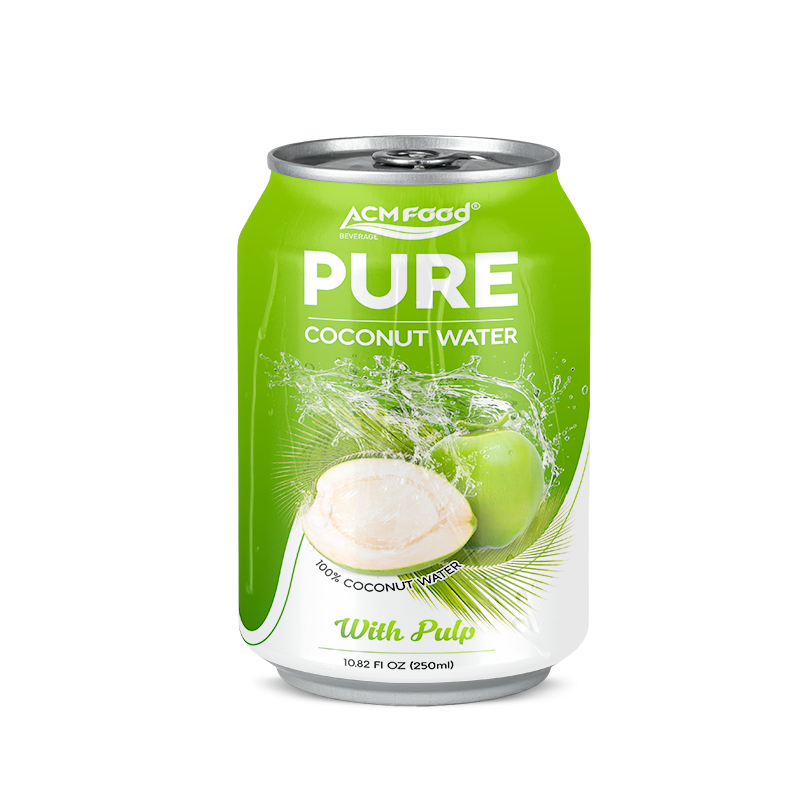
ACMFOOD produces packaged coconut water in several formats for brand owners and importers, including original, with pulp and flavoured styles. The current products are listed in the coconut water category. Specifications such as pack size, recipe and labelling are confirmed during product development for each project.
FAQ about coconut water in a coconut
How long does coconut water last in a coconut?
An unopened young coconut keeps for a limited time, and refrigeration slows the decline in quality. Once opened, the water should be chilled and drunk the same day, because its flavour changes quickly and it can start to ferment.
Is coconut water from a coconut better than packaged?
It usually tastes fresher, but “better” depends on access and use. Packaged coconut water offers consistency, convenience and controlled safety, which matters for people who cannot buy fresh young coconuts.
Why does some packaged coconut water taste different from a fresh coconut?
Variety, maturity, heat treatment, storage time and added ingredients all influence taste. Products with stronger heat treatment or added sugar tend to differ more from the fresh liquid.
Can I store leftover coconut water from a coconut?
You can keep it covered in the refrigerator for a short time, but it is best drunk soon after opening. If it smells sour or tastes fizzy when it should not, discard it.
Conclusion
Coconut water in a coconut and packaged coconut water share the same origin but serve different needs. The whole nut gives the freshest, most delicate taste for immediate drinking, while packaged coconut water brings consistency, safety and global availability, with some trade-off in aroma depending on how it is processed and stored. Reading the label, especially the ingredient list and storage instructions, is the simplest way to understand what a packaged product offers.
If you are developing a coconut water product, start with a clear brief covering origin, recipe style, packaging and target market. ACMFOOD can review that brief with you and discuss suitable formats, samples and labelling requirements for your market. Send it through the request a quote page with your target quantity and destination.
Sources
- USDA FoodData Central — reference composition data for coconut water, fruit and packaged beverages.
- Codex Alimentarius, General Standard for Fruit Juices and Nectars (CXS 247-2005) — how juice, concentrate, puree and nectar are defined internationally.
- European Commission, EU register of nutrition and health claims — which wording is authorised on a label and under what conditions.
Composition varies between coconuts and between packaged products, so read the nutrition panel of the specific product rather than a reference average.