


 Français
 Español
 العربية
 한국어
A private label energy drink is a caffeinated, usually carbonated beverage produced by a manufacturer and sold under the buyer’s own brand. The buyer decides the positioning, flavour, sugar level and can design; the manufacturer supplies or develops the formula, fills the cans and runs the quality checks. The route from first brief to a filled can follows a predictable sequence.
This guide walks through that sequence: choosing a base or custom formula, sugar-free versions, can formats from 250ml slim to 500ml standard, flavour range, artwork, sampling and commercial terms. It is written for brand owners, importers and distributors working with ACMFOOD or any energy drink co-packer, and it leaves ingredient limits and market rules to a separate page.
What does a private label energy drink project involve?
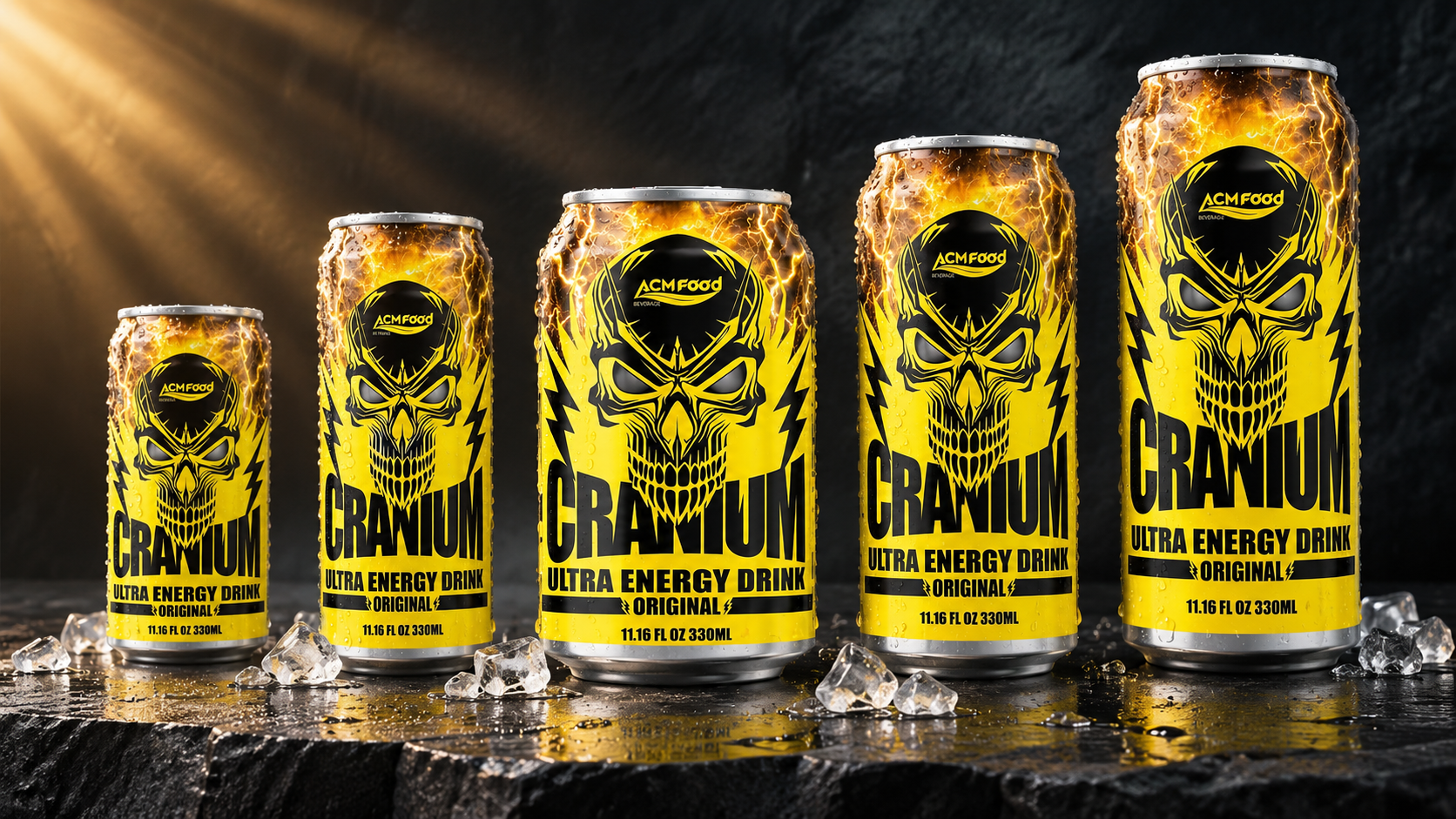
A private label energy drink project involves five decisions: formula route, sweetness, flavour, can format and artwork, followed by sampling, approval and production. The buyer owns the brand and the positioning; the manufacturer is responsible for producing the drink to the approved specification and supplying test results for each batch.
Unlike many fruit drinks, energy drinks are built around functional ingredients such as caffeine, and often taurine, B vitamins and other components. These are regulated differently in each market, which is why the formula is not just a matter of taste. Buyers who want the regulatory detail on caffeine and other ingredients can read our page on energy drink manufacturing; this guide focuses on the commercial path.
The project usually involves three parties on the buyer side: the brand owner, an importer or distributor, and often a regulatory advisor in the destination market. Bringing all three into the brief early avoids reworking a formula that tastes right but cannot be sold in the target country.
Should you choose a base formula or a custom formula?
Choose a base formula if speed to market and a lower development effort matter most; choose a custom formula if your brand needs a distinct taste, ingredient story or functional profile. A base formula is already developed and tested, so sampling is faster. A custom formula is built to your brief and takes more rounds.
| Point | Base formula | Custom formula |
|---|---|---|
| Development time | Short; existing recipe adjusted for flavour and sweetness | Longer; several sample rounds |
| Differentiation | Moderate; brand, design and flavour carry the difference | High; taste and ingredient story are unique |
| Regulatory review | Simpler if the base has been sold in similar markets | Every new ingredient and level must be checked |
| Formula ownership | Usually stays with the manufacturer | Agreed in contract; may belong to the buyer |
| Best for | First launches, distributors, test markets | Established brands, niche positioning |
Many buyers start on a base formula to prove demand, then develop a custom version once sales justify it. If the formula is to belong to the buyer, that should be written into the agreement before development begins. The broader choice between buyer-owned and manufacturer-owned recipes is explained in our overview of private label beverages.
How do sugar-free energy drinks differ in development?
Sugar-free energy drinks replace sugar with high-intensity sweeteners, which changes taste, mouthfeel and aftertaste. They usually need more development work than regular versions, because sugar also provides body and masks bitterness from functional ingredients. Most ranges include at least one sugar-free SKU alongside a regular one.
Points that come up during development:
- Sweetener blend. Blends of two or more sweeteners often give a more rounded taste than a single sweetener.
- Body. Without sugar, the drink can taste thin; acidity, carbonation and flavour are rebalanced to compensate.
- Bitterness. Caffeine and some other ingredients are bitter; sugar hides this, sweeteners less so.
- Label rules. Some markets require specific warnings or statements when certain sweeteners are used.
- Tax position. Sugar-free versions often fall outside sugar taxes, which can affect shelf price.
Reduced-sugar versions, which keep some sugar and add sweeteners, are a middle path that can taste closer to the regular drink.
Which can formats suit an energy drink?
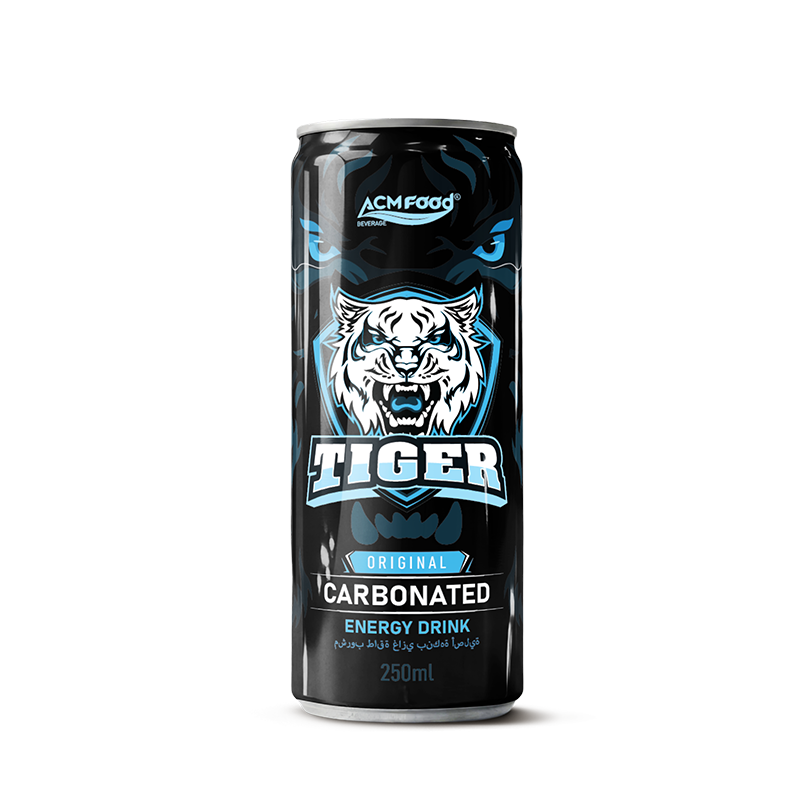
Energy drinks are sold almost entirely in aluminium cans, from 250ml slim cans to 500ml standard cans. The 250ml slim can is the classic format in many markets, while 330ml, 355ml and 500ml sizes suit value and “big can” positioning. Can size also sets the caffeine per can, which matters for labelling.
| Can size | Typical positioning | Notes |
|---|---|---|
| 250ml slim | Classic single serve, premium look | Familiar to consumers in many markets |
| 330ml sleek or standard | Mid size, often for lighter or sugar-free variants | Common in European and Asian retail |
| 355ml standard | North American single serve | Matches local multipack conventions |
| 500ml standard | Value or “big can” positioning | Higher caffeine per can; check limits and warnings |
A larger can with the same formula delivers more caffeine per serving. Before choosing a 500ml can, confirm that the per-can amount and the label statements meet the rules of each market. Can shapes are compared in our guide to sleek, slim and standard can formats.
How do you build a flavour range?
Most energy drink ranges start with an “original” flavour, often a tutti-frutti or berry profile, and add two or three fruit or tropical variants. A narrow first range keeps the minimum order manageable and lets sales data guide extensions.
- Original or classic: the reference flavour for the brand, often sweet-tart and fruity.
- Citrus: lemon, lime or orange; bright and widely accepted.
- Tropical: mango, passion fruit, pineapple or guava; a natural fit for a Vietnamese-made product.
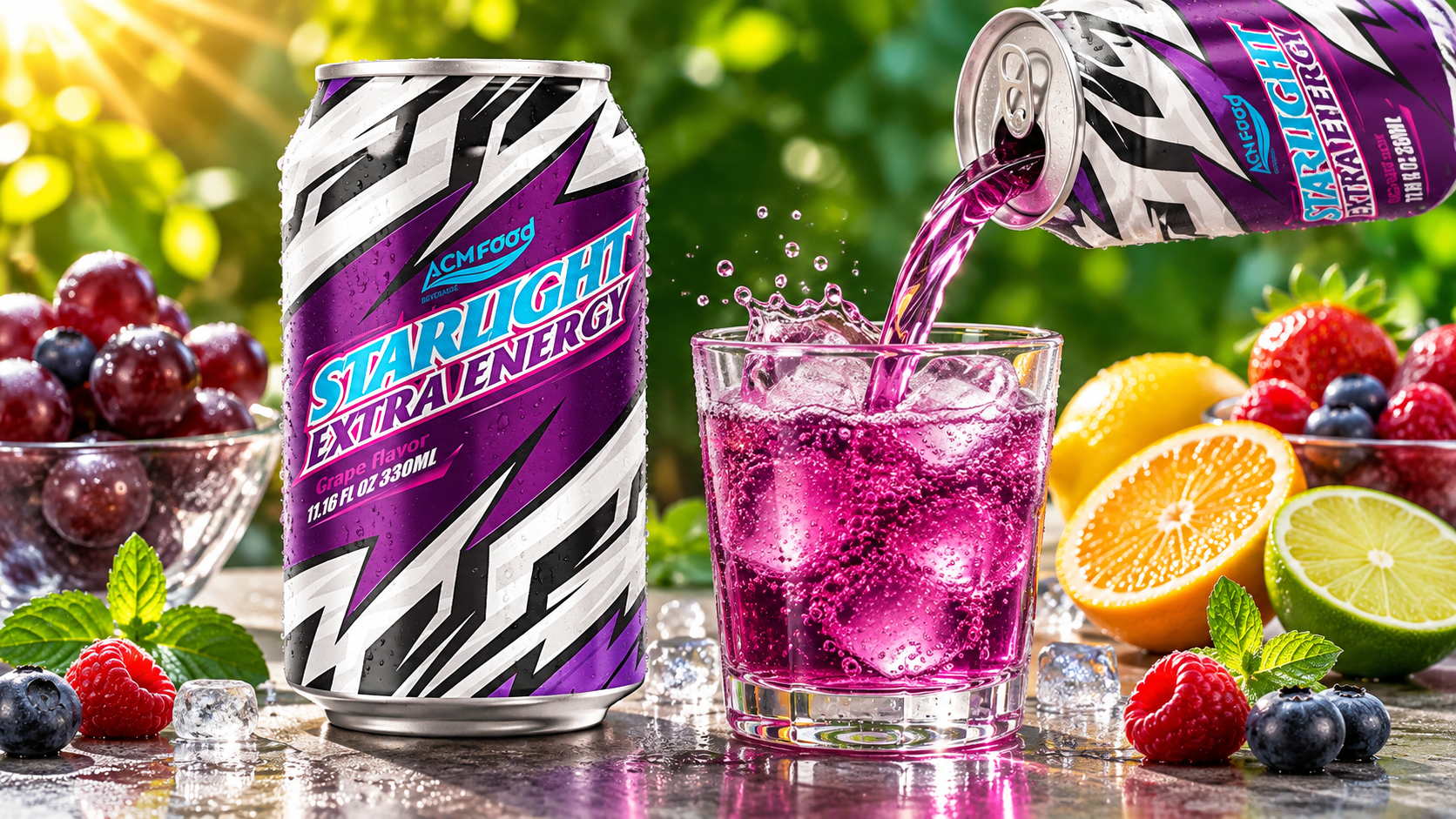
- Berry: mixed berry, blueberry or grape; popular in sugar-free lines.
- Cola or ginger notes: for brands that want a darker, spicier profile.
Colour is part of the flavour decision. Some brands prefer a clear drink; others use colour to signal flavour. Colour choices must also meet the rules of the destination market.
What should energy drink artwork include?
Energy drink artwork must carry the mandatory label elements of the destination market, which usually include the product name, ingredient list, nutrition information, net volume, caffeine statement where required, importer details and any warnings. The design gets attention; the technical content keeps the product legal.
Practical points for can artwork:
- Printed cans need artwork that fits the can’s dieline and print process, with colour proofs approved before printing.
- Shrink sleeves are an alternative for short runs or many designs, at a different cost and look.
- Nutrition and caffeine figures must come from the approved formula and test results, not from an early sample.
- Warnings for certain groups, where required, must appear in the wording and size the market sets.
- Barcodes are tested for scanning on the curved can surface.
Our checklist for US food labels on imported beverages shows the level of detail importers in one major market expect.
What happens during sampling and approval?
Sampling turns the brief into a product the buyer can taste. The manufacturer prepares lab samples for each flavour and sweetness version, the buyer tastes them chilled, ideally next to a reference brand, and feedback is turned into adjusted samples. Once approved, the sample becomes the standard that production is checked against.
- Brief review. The manufacturer confirms which ingredients and levels are possible for the target markets.
- First samples. One sample per flavour, with sugar and sugar-free versions if both are planned.
- Feedback and adjustment. Sweetness, acidity, flavour strength and carbonation are refined.
- Approval. The buyer signs off the sample and specification.
- Pre-production check. The first production batch is compared against the approved sample.
Clear, written feedback such as “10% less sweet, more lime aroma” speeds up rounds far more than general comments.
How do you choose an energy drink co-packer?
Choose an energy drink co-packer that can show certified food safety systems, a canning line suited to carbonated drinks, experience with functional ingredients and clear terms on formula ownership. A short trial order before a large commitment confirms that the co-packer’s daily output matches its samples.
Questions worth asking any custom energy drink manufacturer:
- Which can sizes can be filled, and are printed cans and sleeves both possible?
- How are functional ingredients weighed, dosed and verified in each batch?
- Which tests appear on the certificate of analysis, and is caffeine content included?
- Who owns a custom formula, and what happens to it if the relationship ends?
- Which markets has the co-packer already shipped energy drinks to, and which documents were needed?
- How long are retained samples kept from each batch?
Answers in writing, plus certificate copies, give the buyer a basis for comparing suppliers on more than price. For brands considering an energy drink copacker in Vietnam, a video tour of the canning and quality control areas is a practical first step when a visit is not possible.
MOQ, lead time and commercial terms
ACMFOOD’s terms for energy drinks are a minimum order of 500 cartons per SKU and a production lead time of 15–30 days after samples and artwork are approved. Production runs under HACCP, ISO 22000 and FSSC 22000 systems, and the available packs are aluminium cans, PET bottles and glass bottles, with cans the usual choice for this category.
A SKU is one flavour and sweetness version in one can size, so a regular and a sugar-free version of the same flavour count as two SKUs. Prices depend on formula, can size, print method and volume, and are quoted per project rather than published. Buyers often plan their first order around three or four SKUs to balance range and minimums.
Frequently asked questions
Can I launch a private label energy drink with one flavour?
Yes. One flavour is a valid test launch, provided it reaches the minimum order of 500 cartons. Many brands add flavours after the first sales results.
Who is responsible for checking caffeine limits in my market?
The buyer, usually with a regulatory advisor, confirms limits and label statements for the destination market. The manufacturer confirms that the formula is produced to the approved levels.
Is a sugar-free version a separate SKU?
Yes. A sugar-free version has its own formula, label and nutrition panel, so it is developed, approved and ordered as a separate SKU.
Do energy drinks need to be carbonated?
No, but most are. Still energy drinks exist and can suit certain positioning; they need their own sampling because taste and mouthfeel change without carbonation.
From brief to filled can
A private label energy drink comes together when the formula route, sweetness, flavours, can size and artwork are fixed and the samples are approved. Choosing a base formula shortens the route; a custom formula takes longer but offers more differentiation. In both cases, market rules on ingredients and labels should guide the brief from the start.
To start your project, send ACMFOOD your target market, preferred can size, flavour ideas and whether you need regular, sugar-free or both. We will reply with samples and a project plan for your first production run.