


 Français
 Español
 العربية
 한국어
한국어Buying lemongrass tea in bulk from Vietnam usually means working with an OEM or private label manufacturer that supplies ready-to-drink lemongrass tea in cans or PET bottles under your brand. Key decisions are sugar level, flavour blends such as lemongrass-ginger, pack size (often 250–330 ml), certifications and target-market labelling.
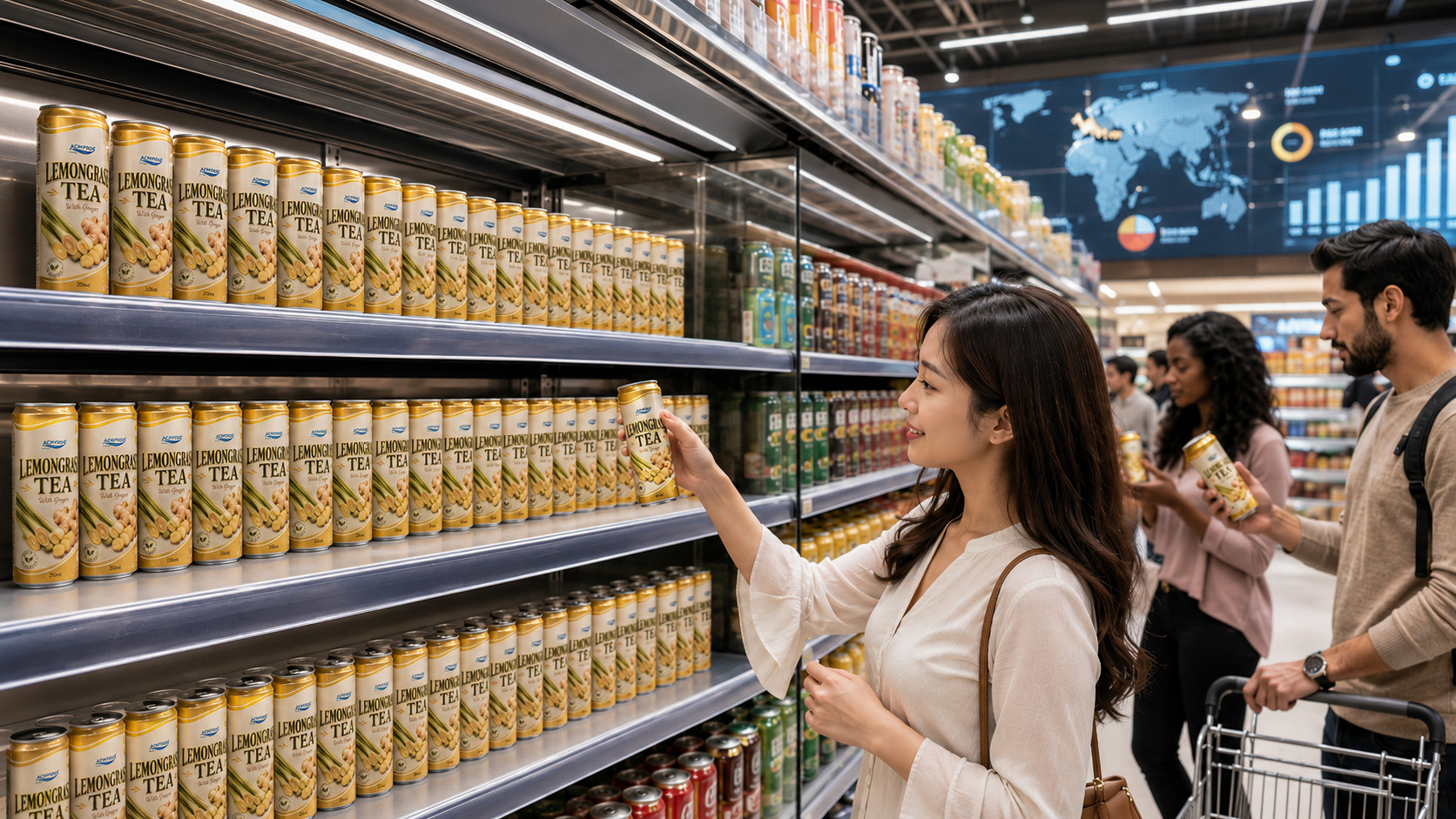
Lemongrass tea has moved far beyond traditional herbal tea shelves. Today, it appears in modern beverage portfolios, wellness product lines, functional drink collections, and premium private label offerings across many markets. From supermarkets in North America to convenience stores in Asia and health-focused retailers in Europe, demand continues to grow as consumers look for beverages made with recognizable ingredients.
For importers, distributors, beverage brands, and retail chains, the opportunity is clear. The challenge is finding a manufacturing partner that can consistently supply quality products while supporting OEM and private label development.
Vietnam has become one of the leading sourcing destinations for lemongrass tea thanks to its favorable growing conditions, established beverage manufacturing sector, and competitive production costs. Whether you are launching a new herbal tea brand or expanding an existing beverage portfolio, bulk sourcing from Vietnam can provide flexibility and scalability without compromising quality.
Why lemongrass tea continues to gain market demand
Consumer preferences have shifted noticeably during the past decade. Many shoppers now pay closer attention to ingredient lists than marketing claims. They want products that appear natural, simple, and easy to understand.
Lemongrass tea fits well within this trend.
Made from the leaves and stalks of lemongrass, the beverage offers a refreshing citrus-like aroma without containing actual citrus fruits. The flavor profile is light, clean, and suitable for a wide range of consumer preferences. It can be enjoyed hot or cold, making it adaptable across different regions and climates.
In many markets, herbal teas have become part of daily wellness routines. Consumers often seek alternatives to sugary carbonated beverages and highly caffeinated drinks. As a result, herbal tea categories have experienced consistent growth, particularly among adults aged 25 to 45 who prioritize healthier beverage choices.
For brands, this growing demand creates room for product innovation. Lemongrass tea can be marketed as a traditional herbal beverage, a premium wellness drink, or a functional refreshment depending on the target audience.
The business opportunities behind lemongrass tea
Many beverage categories face intense competition. Launching another black tea or fruit juice product often means competing with dozens of established brands.
Lemongrass tea offers a different path.
Because the category is still developing in many countries, brands have more opportunities to establish market positioning. Some companies focus on organic ingredients. Others highlight Vietnamese sourcing, wellness-oriented branding, or innovative flavor combinations.
I’ve seen distributors successfully introduce lemongrass tea by positioning it as an everyday relaxation beverage rather than a medicinal product. This approach often resonates with younger consumers who appreciate herbal ingredients but prefer approachable branding.
The versatility of lemongrass also allows manufacturers to create multiple stock-keeping units from a single ingredient base. This can simplify inventory management while expanding product offerings.
Popular lemongrass tea formats for private label brands
Different markets often prefer different packaging formats. Understanding these preferences can help buyers choose the right product strategy.
Tea bags remain one of the most widely distributed formats. They are convenient, cost-effective, and familiar to consumers worldwide. Private label tea bags are commonly sold through supermarkets, specialty tea retailers, and online marketplaces.
Loose leaf lemongrass tea appeals to premium tea enthusiasts who value customization and brewing flexibility. This format often commands higher retail pricing and can help brands position themselves in the premium segment.
Ready-to-drink lemongrass tea has also gained traction. Packaged in cans, bottles, or aseptic cartons, these products target consumers seeking convenience without sacrificing natural ingredients.
Powdered and instant tea formats serve another growing segment. These products are especially attractive for foodservice operators, hospitality businesses, and export markets where transportation efficiency matters.
Selecting the appropriate format depends largely on distribution channels, target consumers, and local market behavior.
Why Vietnam is a strong sourcing destination
Vietnam’s agricultural environment provides excellent conditions for cultivating lemongrass. The tropical climate supports year-round production, helping ensure a stable supply of raw materials.
Several regions across the country cultivate lemongrass commercially. This reduces dependence on a single growing area and helps maintain production continuity even during seasonal fluctuations.
Beyond agriculture, Vietnam has invested heavily in beverage manufacturing infrastructure. Many factories operate under internationally recognized food safety systems and have experience serving export markets across Asia, Europe, North America, and the Middle East.
Cost efficiency is another advantage.
Compared with some competing manufacturing locations, Vietnam often offers favorable production economics while maintaining quality standards required by international buyers. For brands seeking to balance product quality and profitability, this can make a meaningful difference.
In addition, Vietnam’s extensive export experience simplifies many aspects of international trade, including documentation, logistics coordination, and compliance support.
Understanding OEM lemongrass tea manufacturing
OEM manufacturing allows buyers to source products produced according to their specifications while relying on an established factory’s production capabilities.
This model works particularly well for companies that want to enter the market quickly without investing in manufacturing facilities.
A typical OEM project begins with product development discussions. Buyers define product characteristics such as ingredient composition, sweetness level, flavor profile, packaging format, and labeling requirements.
The manufacturer then develops samples for evaluation.
Once formulations are approved, commercial production begins according to agreed specifications. This process enables businesses to focus on branding, marketing, and distribution while manufacturing remains in the hands of experienced specialists.
For growing brands, OEM partnerships often reduce operational complexity and accelerate product launches.
Private label lemongrass tea: a faster route to market
Private label manufacturing follows a slightly different approach.
Instead of creating a product from scratch, buyers select from existing formulations that have already been developed and tested. Packaging and branding are then customized to create a unique market identity.
This approach can significantly shorten product development timelines.
For example, a retailer planning to launch a wellness beverage collection may choose an existing lemongrass tea formula, apply custom packaging, and move into production much faster than a fully customized OEM project.
Private label solutions are particularly attractive for:
- Supermarket chains
- Beverage distributors
- Health food retailers
- E-commerce brands
- Hospitality groups
- Corporate gifting programs
Many buyers start with private label products before transitioning to fully customized OEM formulations as their business grows.
Customization options that help brands stand out
One question often comes up during sourcing discussions: how can a lemongrass tea product be differentiated from competitors?
The answer lies in customization.
Manufacturers can develop various flavor combinations that build upon the natural character of lemongrass. Popular options include ginger, honey, pandan, mint, jasmine, green tea, hibiscus, and citrus-inspired blends.
Packaging also plays a major role.
Some brands prefer minimalist wellness-focused designs. Others choose vibrant packaging that targets younger consumers. The same formulation can serve very different audiences depending on branding strategy.
Customization can extend to package size, serving format, ingredient sourcing claims, and certification requirements.
These details may seem small individually, but together they can significantly influence consumer perception and purchasing behavior.
Quality standards international buyers should evaluate
When sourcing bulk lemongrass tea, quality assurance should never be treated as an afterthought.
Buyers should carefully review manufacturing certifications, food safety systems, and testing procedures before selecting a supplier.
Common certifications may include:
- HACCP
- ISO 22000
- GMP
- FDA registration for relevant markets
- Organic certifications where applicable
- Halal certification
- Kosher certification
Laboratory testing is equally important.
Reliable manufacturers typically conduct microbiological testing, pesticide residue screening, heavy metal analysis, and product stability evaluations. These measures help ensure consistency across production batches.
Requesting product specifications, certificates of analysis, and sample evaluations before placing large orders can help reduce sourcing risks.
Packaging options for export markets
Packaging requirements vary significantly between countries and distribution channels.
Retail-focused products often prioritize shelf appeal and consumer convenience. Common formats include tea bags packed in cartons, aluminum cans, PET bottles, glass bottles, and aseptic cartons.
Foodservice clients may prefer larger packaging formats that improve operational efficiency.
Export packaging must also withstand international transportation conditions. Proper carton design, palletization methods, and moisture protection contribute to maintaining product quality throughout the supply chain.
Many experienced Vietnamese manufacturers provide packaging development support to help buyers meet both regulatory and commercial requirements.
Factors that influence bulk pricing
Buyers frequently ask about pricing before discussing product specifications. In reality, several factors determine the final cost.
Raw material quality is one major variable. Organic lemongrass, specialty ingredients, and certified sourcing programs generally increase production costs.
Packaging choices also matter. Premium packaging materials, specialty printing, and custom structural designs typically cost more than standard solutions.
Order volume can have a substantial impact as well. Larger production runs often improve manufacturing efficiency, resulting in more competitive unit pricing.
Shipping destination, certification requirements, and product customization levels further influence overall project costs.
For this reason, accurate quotations usually require detailed project information rather than broad category estimates.
How to choose the right Vietnamese manufacturing partner
Selecting a supplier involves more than comparing prices.
The most successful sourcing relationships are built on communication, transparency, and consistent execution.
When evaluating potential manufacturers, buyers should assess production capacity, export experience, certification status, product development capabilities, and responsiveness during the inquiry process.
Ask questions about lead times. Review available certifications. Request product samples. Discuss packaging options in detail.
A manufacturer that provides clear answers early in the process often proves easier to work with during commercial production.
Long-term partnerships typically generate better results than constantly switching suppliers in search of marginal cost savings.
The future outlook for lemongrass tea brands
Consumer interest in herbal beverages shows little sign of slowing down. As wellness-focused purchasing habits continue to influence beverage categories, products made with recognizable ingredients are likely to remain attractive.
Lemongrass tea occupies an interesting position within this landscape. It combines traditional heritage with modern consumer preferences. It offers flexibility for product innovation while maintaining broad market appeal.
For importers, distributors, and beverage entrepreneurs, this creates a valuable opportunity.
Working with an experienced Vietnamese OEM or private label manufacturer can help accelerate product launches, reduce operational complexity, and support long-term growth. Whether your goal is to introduce a premium tea collection, expand a wellness beverage portfolio, or develop a unique private label brand, bulk lemongrass tea sourcing from Vietnam deserves serious consideration.
The market is growing. Consumer awareness is increasing. The right manufacturing partner can help transform that demand into a scalable business opportunity.