Français
 Español
 العربية
 한국어
한국어Tamarind (Tamarindus indica) is a tropical fruit whose sweet-and-sour pulp is a good source of fibre, potassium, magnesium and iron, with about 239 kcal per 100 g, according to USDA FoodData Central. Its main benefits are nutritional, and it is widely used in soups, sauces, snacks and drinks across Southeast Asia, South Asia, Africa and Latin America.
In Vietnam, tamarind is a familiar flavour in sour soups, pickled snacks, jams and cooling drinks. This article covers what tamarind is, what it contains, its realistic benefits, how it is used and who should be careful with it.
What is tamarind?
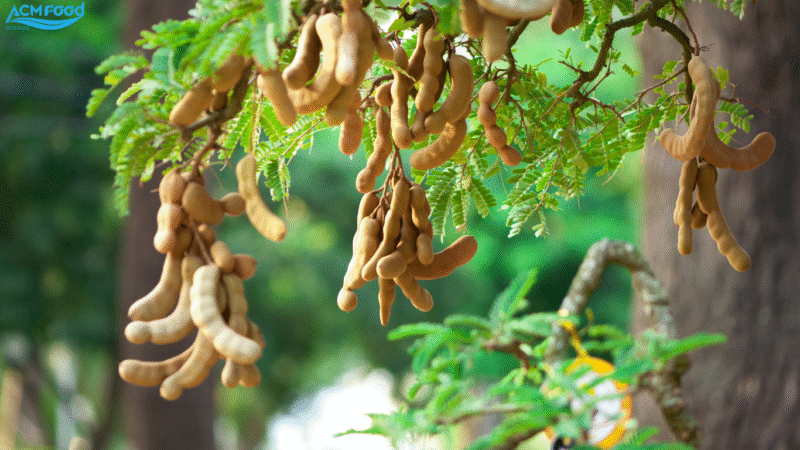
Tamarind is a tropical tree native to Africa and widely grown in Asia, including Vietnam, Thailand and India. It produces curved brown pods containing a sticky, sweet-sour pulp around hard seeds.
- Sour tamarind: used in sour soups, sauces and preserved fruit.
- Sweet tamarind: eaten fresh when ripe or made into jam; Thai sweet tamarind is well known.
- Fresh and dried: dried pulp keeps well and is convenient for cooking.
What nutrients does tamarind contain?
Tamarind pulp is energy-dense and rich in minerals. Values per 100 g of raw pulp from USDA FoodData Central:
| Nutrient | Per 100 g (raw pulp) |
|---|---|
| Energy | 239 kcal |
| Carbohydrates | 62.5 g |
| Fibre | 5.1 g |
| Protein | 2.8 g |
| Potassium | 628 mg |
| Magnesium | 92 mg |
| Calcium | 74 mg |
| Iron | 2.8 mg |
| Thiamine (vitamin B1) | 0.43 mg |
| Vitamin C | 3.5 mg |
Tamarind is eaten in small amounts, so a typical serving provides a fraction of these values. It also contains polyphenols and tartaric acid, which gives its sour taste.
What are the health benefits of tamarind?
The realistic benefits of tamarind come from its nutrients as part of a varied diet. Many popular claims, such as detox, fat burning or lowering cholesterol, are based on laboratory or animal studies of extracts and are not established for eating tamarind.
- A source of fibre: 5.1 g per 100 g of pulp contributes to daily fibre intake.
- Rich in potassium and magnesium: tamarind is one of the more mineral-dense fruits by weight.
- Contains iron and thiamine: useful contributions in a varied diet.
- Contains polyphenols: plant compounds with antioxidant activity in laboratory tests.
- Adds flavour with little fat: tamarind gives sourness and depth to dishes without added fat.
Tamarind is also high in natural sugar and calories, so sweetened tamarind snacks and jams are best eaten in moderation.
How is tamarind used in food and drinks?
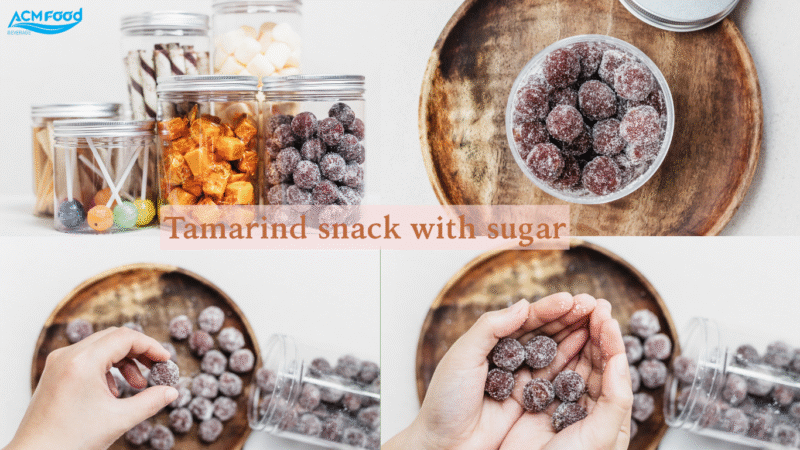
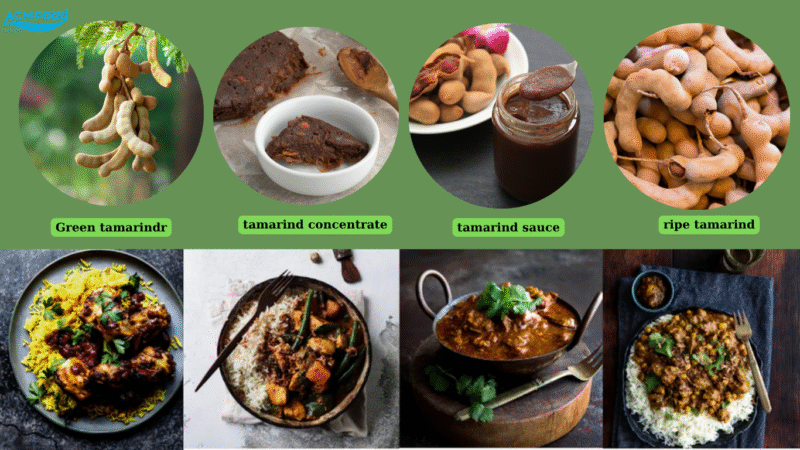
- Pickled or candied tamarind: a sweet-sour snack.
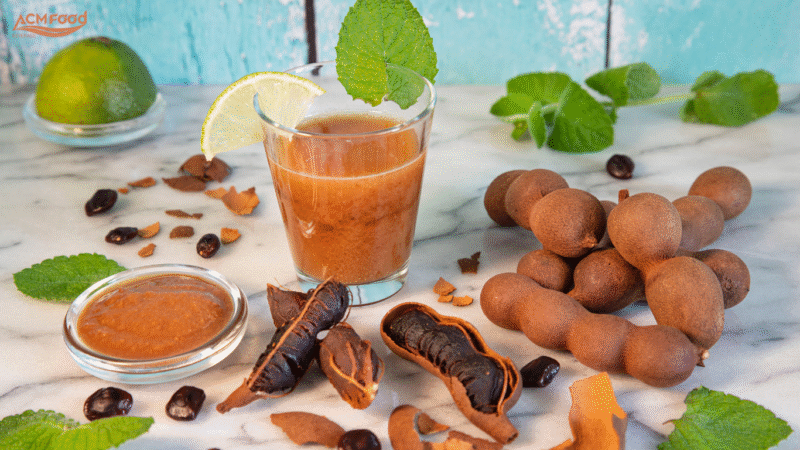
- Tamarind juice: a refreshing drink served with ice, often with ginger; see our 330 ml NFC tamarind juice.
- Tamarind jam: a traditional snack during Tết.
- Tamarind sauce: a seasoning for stir-fries and grilled dishes.
- Home drinks: tamarind with ginger, honey and mint for a lighter, less sweet drink.
Who should be careful with tamarind?
- Sensitive stomachs: tamarind is acidic and may cause discomfort in large amounts, especially on an empty stomach.
- People on medication: tamarind may interact with some medicines, including blood thinners; ask your doctor if you eat it often.
- People watching sugar: sweetened tamarind products are high in sugar.
- Food safety: choose clean, properly stored tamarind.
Frequently asked questions
Is tamarind good for you?
In moderate amounts, yes. It provides fibre, potassium, magnesium and iron, but it is also high in natural sugar and calories.
Does tamarind help with weight loss or detox?
There is no good evidence that eating tamarind causes weight loss or “detoxes” the body. Treat it as a flavourful food, not a remedy.
How many calories are in tamarind?
About 239 kcal per 100 g of raw pulp, according to USDA data.
Conclusion
Tamarind is a sweet-sour tropical fruit that adds flavour to many dishes and drinks and provides fibre and minerals such as potassium, magnesium and iron. Enjoy it as part of a varied diet, go easy on sweetened versions, and check with a doctor if you take medicines that may interact with it.
For brands, importers or retailers looking to put a tamarind drink on shelf, see beverage product capabilities, private label beverages and manufacturing to your own specification. To discuss a specification, request a quote.
Request a quote