


 Français
 Español
 العربية
 한국어
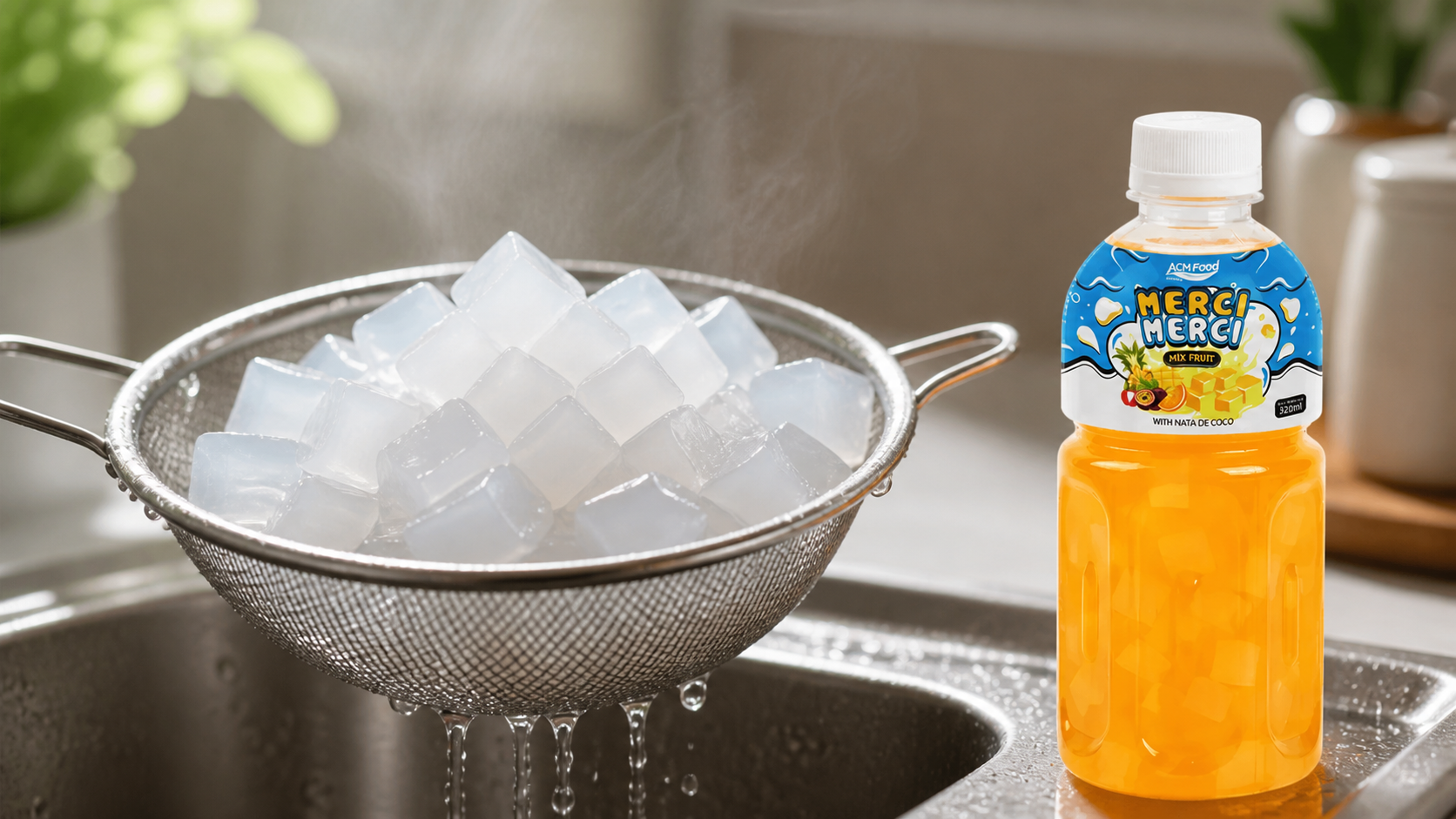
한국어A drink with nata de coco is not a drink plus a topping. It is a single packed product in which chewy cellulose pieces sit suspended in juice, coconut milk or a sparkling base, filled and sealed in one operation and expected to look and behave the same when the can is opened months later on the other side of the world.
That distinction matters commercially. Buying bulk nata in pails to add at a bubble tea counter is a foodservice decision. Buying a finished ready-to-drink product with the pieces already inside is a retail and distribution decision — different pack, different shelf life, different questions. This page is about the second one: what ACMFOOD produces, what makes inclusions difficult to manufacture well, and what to fix in a specification before ordering.
Why nata de coco earns its place in a canned drink
Plain juice is close to commoditised in most export markets. An inclusion changes the proposition in three ways that matter on a shelf.
It is visible through the pour. A shopper can see they are getting something more than liquid, which supports a higher price point without a claim that needs substantiating.
It changes the occasion. A drink you chew is consumed more slowly and reads as a snack as much as a beverage — useful in convenience and impulse channels where a plain juice competes on price alone.
It is hard to price-compare. There is no like-for-like national brand to be measured against, which protects margin better than undercutting a mainstream juice by a few percent.
Nata de coco specifically brings a neutral flavour, a translucent appearance that does not muddy the drink colour, and a firm bite that survives thermal processing better than most soft jellies.
What ACMFOOD produces
The inclusion is not the product — the finished drink is. The range covers three bases:
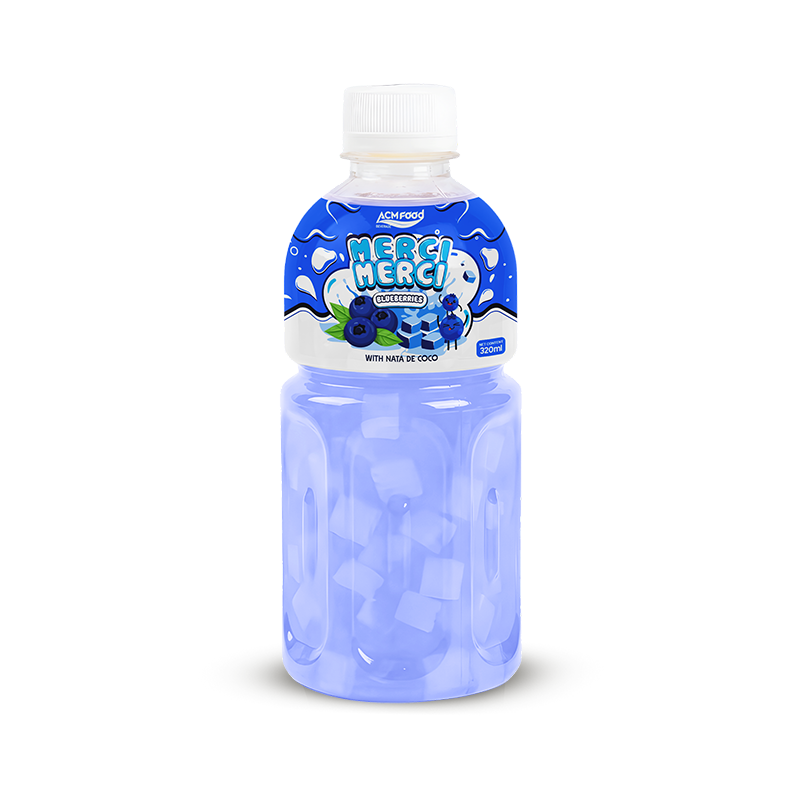
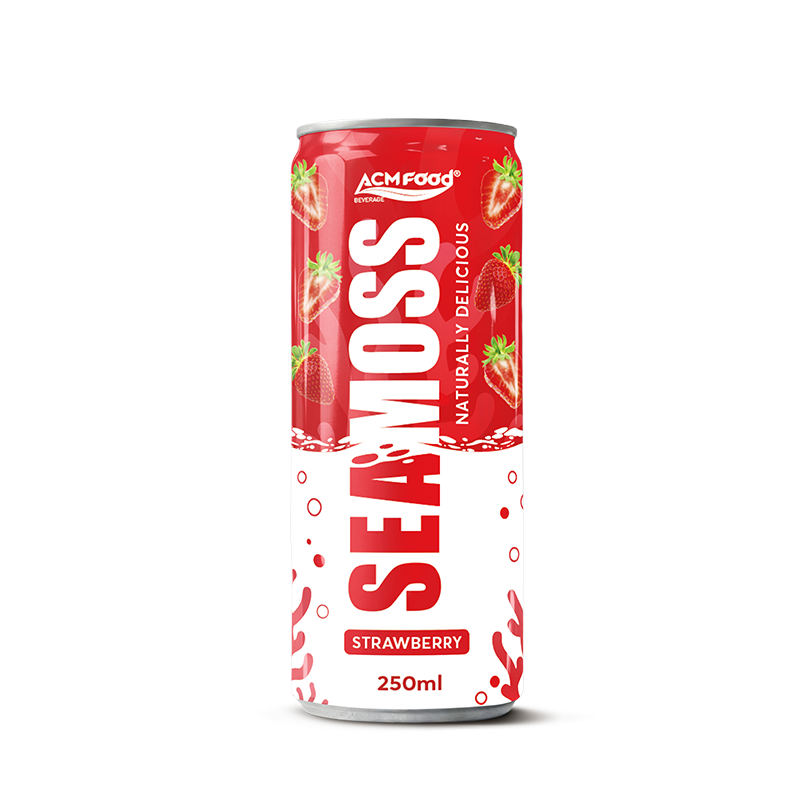
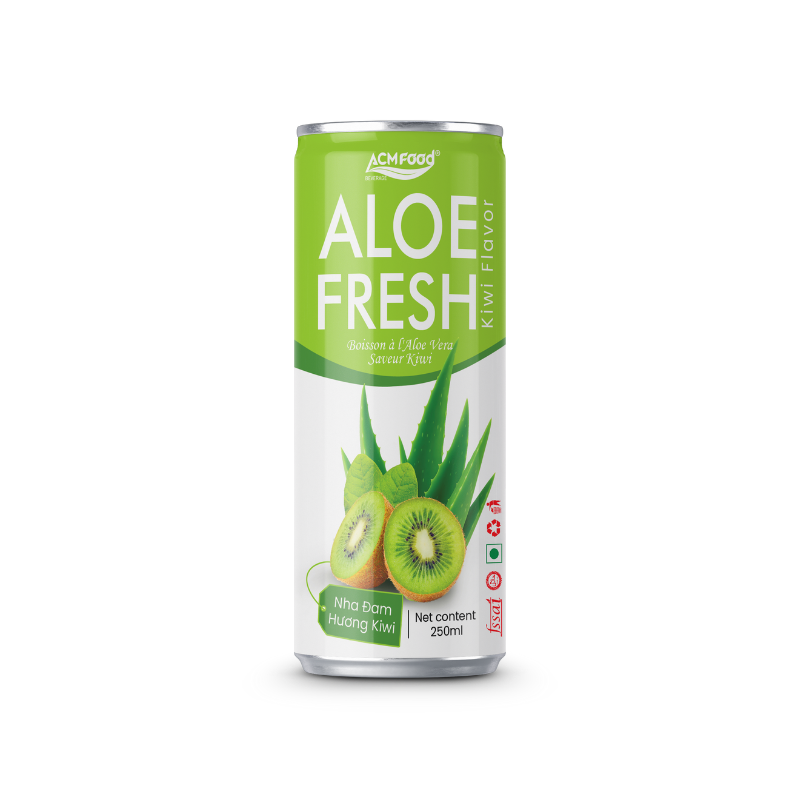
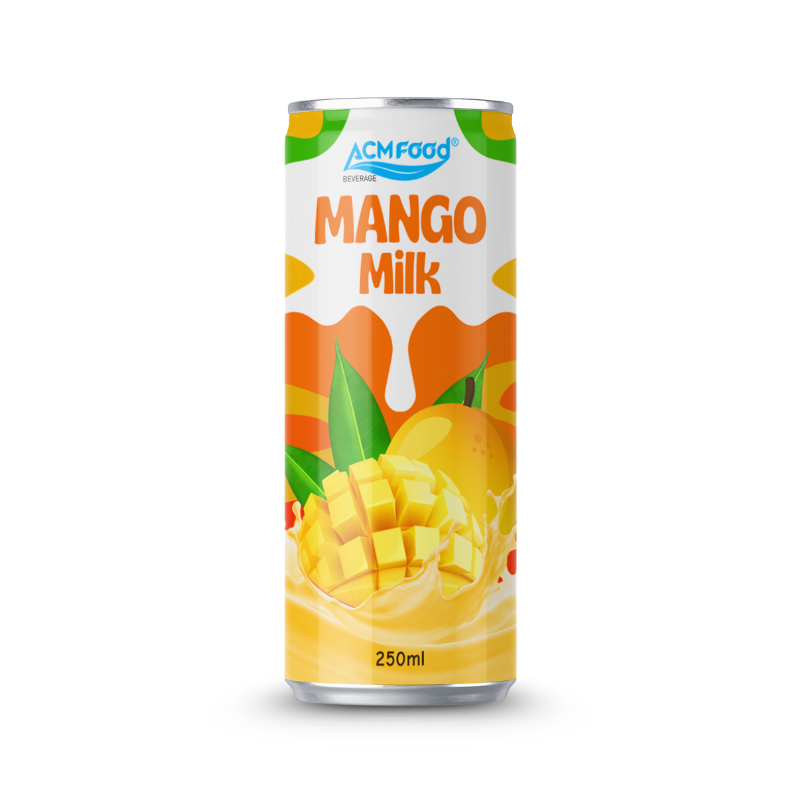
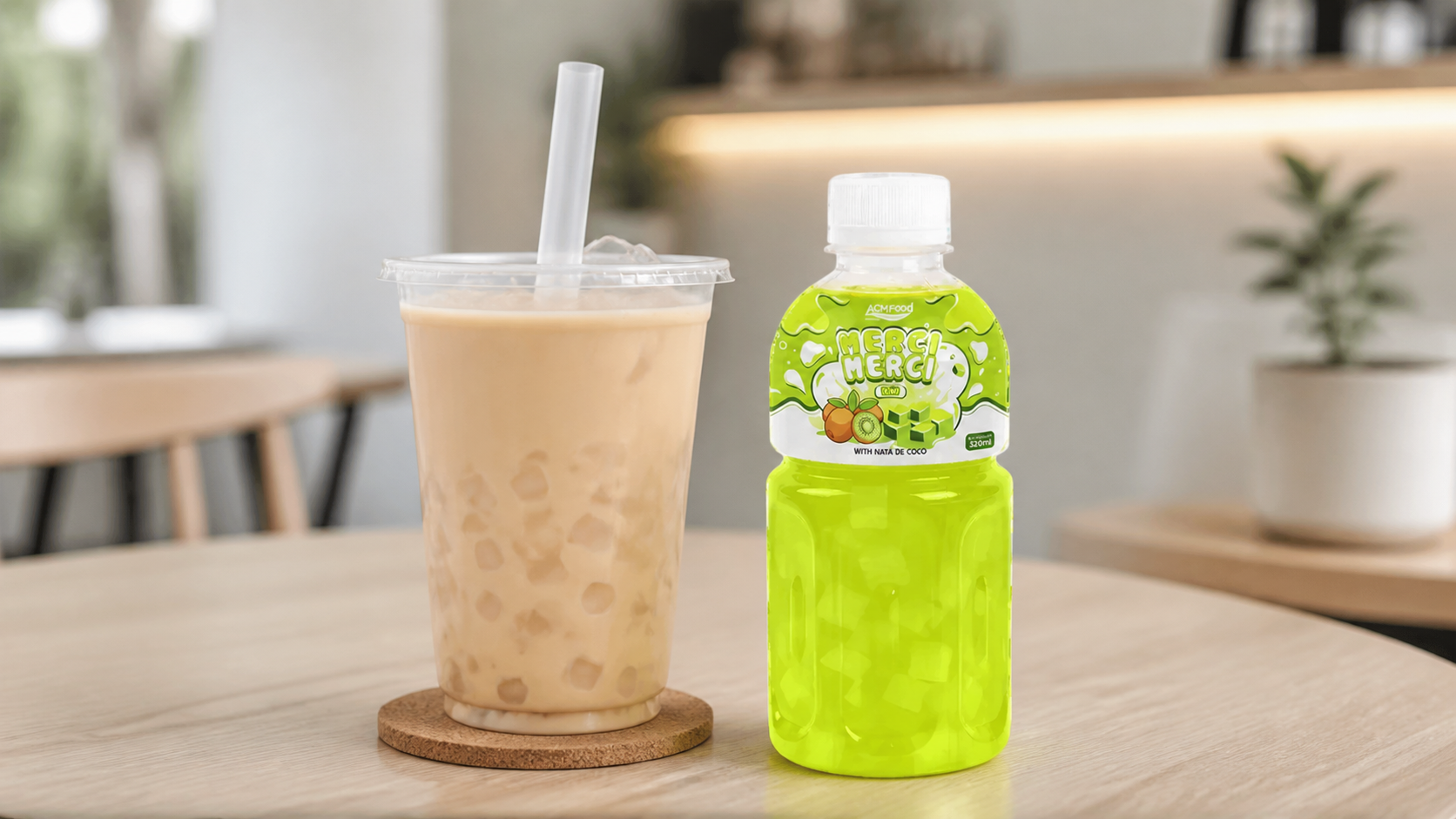
- Fruit juice drinks with nata de coco — mango, grape, pineapple, orange, peach, strawberry, passion fruit, kiwi, blueberry and watermelon among others, in sleek cans.
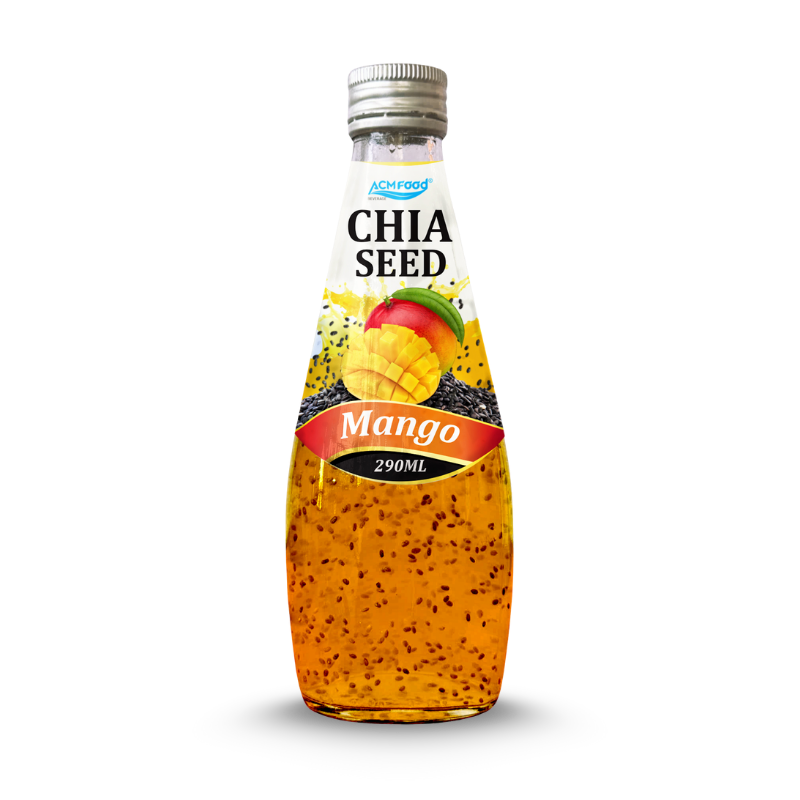
- Coconut milk drinks with nata de coco — in glass bottles, with and without the inclusion as separate SKUs so a range can cover both preferences.
- Coconut water and sparkling bases with nata de coco — for brands positioning on hydration rather than dessert.
For the full list of categories, formats and ingredients the factory runs, see beverage product capabilities.
The real manufacturing problem: suspension and fill
This is where a drink with inclusions is genuinely harder to make than the same drink without them, and it is the part most briefs ignore.
Pieces settle. Nata is denser than the liquid around it. Without a viscosity strategy the pieces form a plug at the bottom of the can, and the first mouthful is liquid while the last is solid. The fix sits in the formulation — the base has to carry the pieces — not in a label instruction telling the shopper to shake.
Fill weight has to be controlled twice. A filler handling solids must deliver a consistent piece count as well as a consistent liquid volume. Two cans off the same line should not differ visibly when poured side by side. Ask any supplier how piece weight is checked in-process, not just at the end.
Heat changes the bite. Nata firms or softens depending on the thermal load, so the texture you approve in a bench sample is not the texture that leaves the line. Only judge a sample that has been through the real commercial process in the intended container.
The opening has to pass the pieces. Piece size is constrained by the can end or bottle neck. A dice that clears a wide-mouth glass bottle can jam a standard can opening — which is why piece size belongs in the specification alongside Brix and pH, not left to the production floor.
What to fix in the specification
These belong in a contract annex with tolerances stated, not in an email thread.
- Piece size and cut — dimension with a tolerance band, checked against the pack opening.
- Inclusion content — how much nata per unit, and how it is verified per batch.
- Suspension behaviour — whether pieces stay distributed through declared shelf life, and what pack wording follows from the answer.
- Brix and pH of the liquid phase — as bands, not points; the fruit component varies with season.
- Texture at end of life — sensory criteria that define when the product is no longer acceptable, not only at filling.
- Declaration — whether the product is a juice, a juice drink or a nectar changes with the inclusion and added sugar, and that changes the legal name on the label.
- Change control — written approval required before inclusion level, cut or base formulation moves.
How that specification becomes a produced batch is set out in our production process.
Pack formats
Format is constrained by the inclusion more than by marketing preference.
- Sleek and standard aluminium cans — the core of the range. Ambient, no cold chain, complete light and oxygen barrier, and the pieces are invisible until poured.
- Glass bottles — wide neck passes larger pieces and shows the inclusion on shelf, at higher freight cost and damage risk.
- PET — visible inclusion at lower weight, with the caveat that light exposure over a long ambient life affects colour more than an aluminium pack does.
The trade-offs across every container we run are compared in beverage packaging options.
How to evaluate samples properly
Tasting one chilled can tells you very little about a product with solids in it. Three checks are worth insisting on before sign-off.
Pour it into a glass. Judge piece count, size consistency and distribution in the glass, not from the can. This is also how a shopper first sees it.
Take samples from different production dates. Inclusion level is harder to hold steady than a liquid specification, so consistency across runs is what you are actually buying.
Open one late in shelf life. Hold cans at ambient temperature and taste well into the declared life. Piece integrity at month ten matters more than at the filler, because that is when your customer opens it.
Common questions
Is this the same as buying nata de coco in pails? No. Bulk nata is an ingredient a bubble tea bar adds by hand. This is a sealed, shelf-stable finished drink with the pieces already inside — different channel, different pack, different shelf life.
Can we specify our own piece size and inclusion level? Yes, within what the filler and pack opening allow. Bring the target to the brief rather than after samples, because it constrains the container choice.
Does the drink need shaking before opening? That depends on whether the base is formulated to carry the pieces. Treat a “shake well” instruction as a signal that suspension was not solved in formulation.
How is nata de coco different from konjac jelly? Nata is bacterial cellulose grown from coconut water; konjac is a glucomannan gel. They differ in bite, clarity and how they behave through heat. Test both if texture is central to the concept.
Is it suitable for vegan positioning? Nata itself is fermented from coconut water, but the finished recipe includes the base, flavours and colours. Confirm the full declaration against the definition used in your destination market.
Briefing a project
Send the base drink, the inclusion level and piece size you want, the pack format, the destination market, and your first-order volume. What comes back is feasibility, the units per container for that format, MOQ per SKU and lead time — enough to complete a landed cost model.
For how contract production is structured, see OEM beverage manufacturing; to launch under your own brand, see private label beverages. Minimums are set per SKU — see minimum order quantity. When the brief is ready, request a quote.
Request a quote