


 Français
 Español
 العربية
 한국어
한국어Fruit puree in beverages is a minimally processed fruit ingredient that keeps fine pulp and cell tissues, giving drinks natural thickness, visible body and pronounced fruit identity. When used well, a fruit puree beverage can outperform juice or concentrate on mouthfeel, flavor authenticity and product differentiation.
Juice (including not-from-concentrate) and concentrate each play crucial roles, but this article focuses on puree only—how it behaves, when it wins, and what it means for processing. For fundamentals on juice formats, see Fruit Juice Processing Methods for Commercial Production and labeling basics in Fruit Content in Juice: 100%, Nectar and Juice Drink Explained.
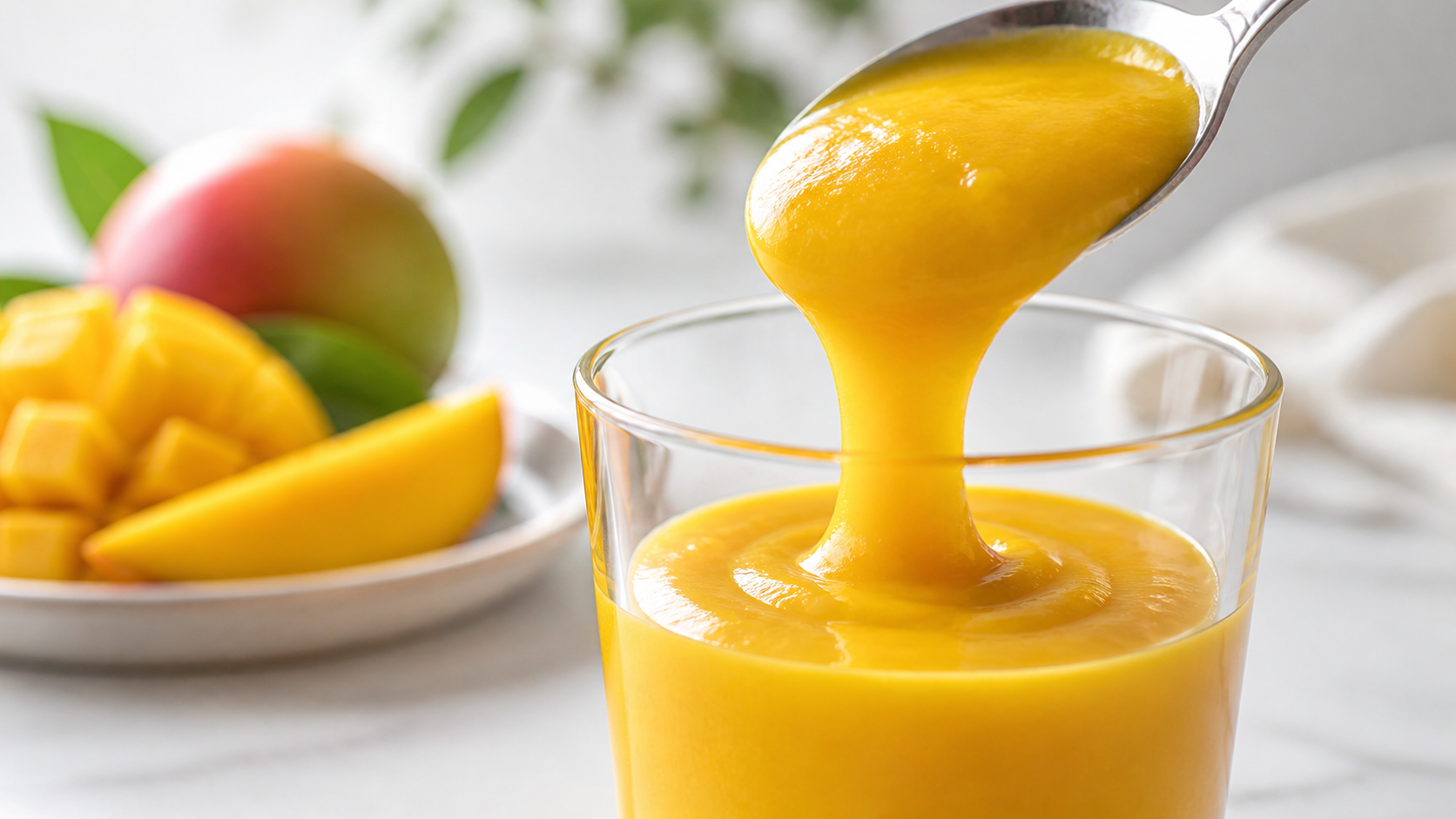
What is fruit puree for beverages?
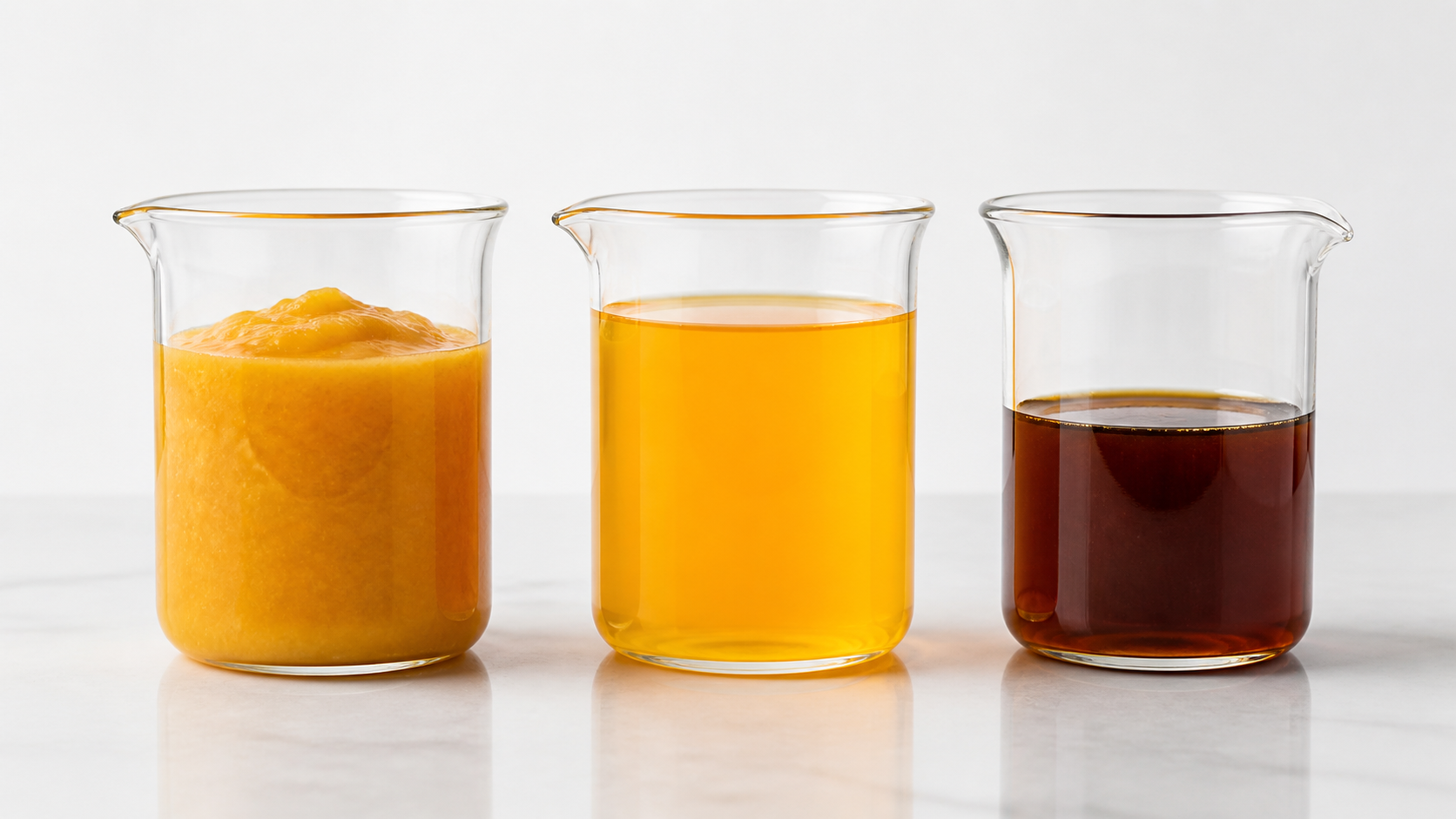
Fruit puree is fruit that has been crushed, milled and screened to a smooth consistency while retaining fine pulp and some insoluble solids; this creates a thicker, more opaque liquid than clarified or cloudy juices. In beverage development, puree is chosen to deliver richer texture, fuller flavor and visible fruit cues.
Unlike juice, which is primarily expressed liquid, puree intentionally keeps micro-to-millimeter pulp particles and natural cell wall components that build mouthfeel. Puree can be single-strength or concentrated, and is commonly supplied aseptically or frozen to protect quality.
When does puree beat juice or concentrate?
Purée stands out when a drink needs natural body, visible pulp or a signature fruit character that feels close to fresh. It shines in smoothie-style drinks, premium nectars, and concepts where texture and authenticity matter as much as taste.
- Texture-first concepts: Smoothies, nectars and thick fruit refreshers benefit from puree’s inherent viscosity and creamy mouthfeel—attributes hard to mimic with juice plus gums alone.
- Authentic fruit identity: Puree carries aromatic volatiles and micro-pulp that communicate “real fruit” more strongly than clarified juice.
- Color & visual appeal: Opaque, saturated colors from puree create an artisanal look and help mask light oxidation compared with clear juices.
- Flavor rounding: The insoluble matrix in puree can soften sharp acidity and create a rounder flavor curve, reducing reliance on flavor add-backs.
- Plant-based pairings: In dairy-alternative shakes or yogurt-style drinks, puree integrates smoothly, helping suspension and creaminess.
- Reduced-formula complexity: In some cases, puree lets you cut back on added stabilizers or flavors to meet a tighter ingredient list (final feasibility depends on fruit, shelf life and the market’s clean label rules).
Puree vs concentrate: what changes in product development?
Compared with concentrate, puree offers thicker body, more visual pulp and a fresher fruit impression, while concentrate is typically chosen to optimize logistics, cost per fruit solids and precise Brix standardization. Your choice depends on target sensory, process, and commercial constraints.
| Attribute | Fruit puree | NFC juice | Concentrate |
|---|---|---|---|
| Pulp & insoluble solids | High, visible micro-pulp | Low to medium (cloudy) or very low (clarified) | Low; reconstituted body depends on formula |
| Viscosity | Medium to high; naturally thick | Low to medium | High as concentrate; low after reconstitution |
| Mouthfeel | Creamy, rounded, rich | Lighter, cleaner | Depends on reconstitution and hydrocolloids |
| Flavor expression | Full fruit character, fresh-like | Bright, direct | Intense pre-reconstitution; may need flavor balancing |
| Color/opacity | Opaque, saturated | Cloudy to clear | Variable; depends on final blend |
| Separation tendency | Possible pulp settling; manageable by process | Lower in clarified, moderate in cloudy | Depends on final blend and stabilizers |
| Process sensitivity | Needs attention to shear, heat, and screens | Generally easier to pump/filter | Excellent for storage & transport; formula sets body |
| Typical applications | Smoothies, nectars, premium blends | Juices, spritzers, lighter drinks | Economical fruit bases, RTD blends, syrups |
| Cost drivers | High fruit load, shipping water | Moderate | Efficient logistics per fruit solids |
| Supply format | Aseptic or frozen | Chilled/aseptic | Ambient, concentrated |
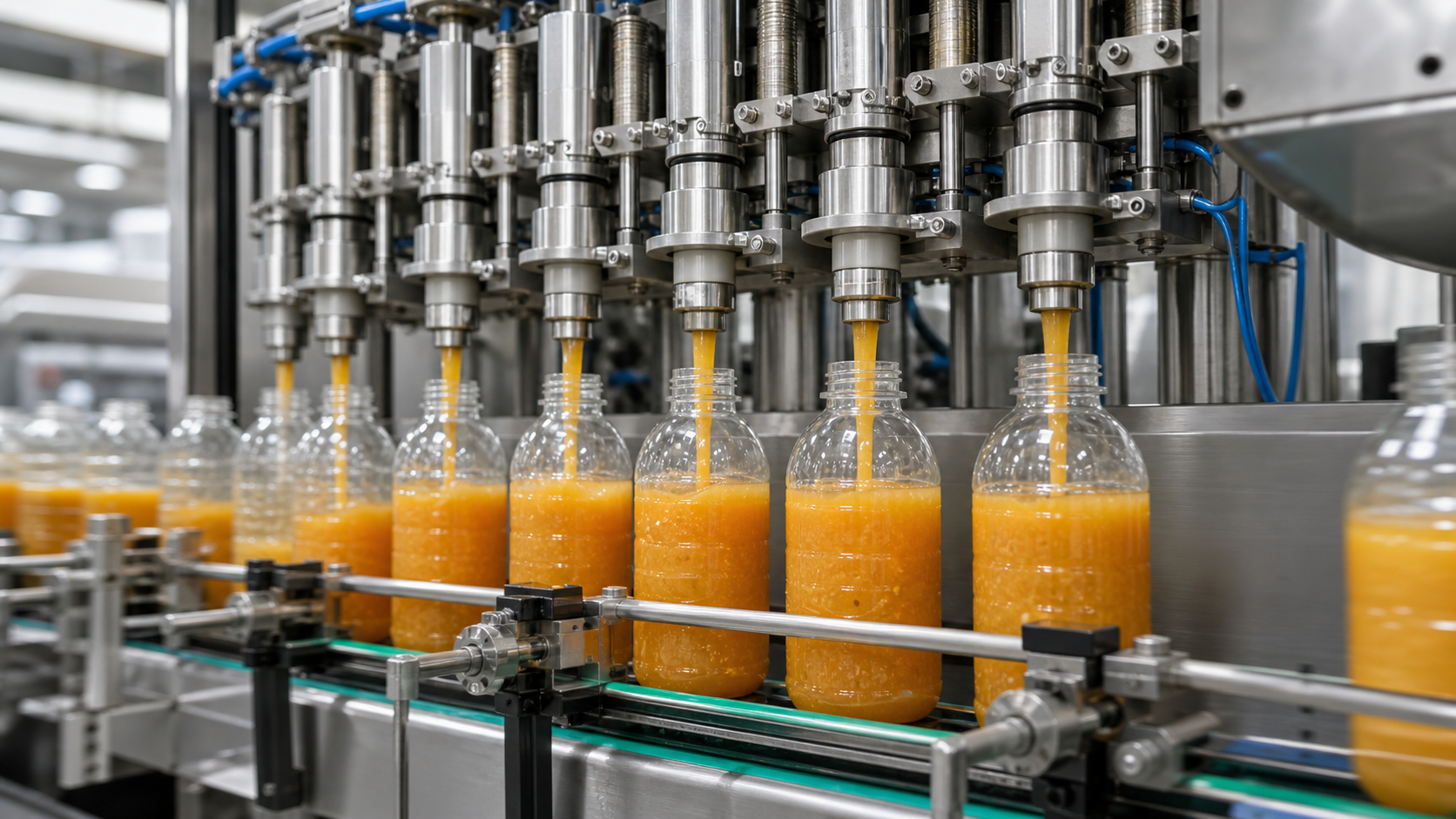
How does viscosity and pulp affect processing and filling?
Higher viscosity and pulp content change how you pump, heat, homogenize and fill the beverage. Expect larger flow passages, positive-displacement pumps, and filling heads designed for particulates to prevent clogging and maintain throughput.
- Pumping: Use positive-displacement or progressive cavity pumps for thick puree blends; centrifugal pumps may shear or stall on highly viscous slurries.
- Mixing & dispersion: Pre-mix puree with part of the liquid phase using a high-shear mixer before adding powders or hydrocolloids to avoid lumps.
- Screening/finishing: Pass through an appropriate finisher or sieve to standardize particle size; this reduces unexpected clogs and stabilizes mouthfeel.
- Homogenization: Light-to-moderate homogenization can tighten the particle size distribution and slow separation; excessive shear may thin body or alter flavor.
- Thermal treatment: Use heat exchangers with larger channels (e.g., tubular) to accommodate pulp. Balance pasteurization for safety with flavor and color retention.
- Deaeration: Puree carries entrained air that can cause foaming and oxidation; vacuum deaeration improves fill accuracy and shelf life appearance.
- Filling equipment: Piston or mass-flow fillers with wide nozzles handle viscosity and pulp better than narrow gravity fillers. Choose closures that allow a smooth flow path.
- Container & geometry: Wide-neck bottles and pouches suit thicker drinks; long, narrow necks increase backpressure and can streak pulp on walls.
How do you manage sedimentation and phase separation?
Control separation by standardizing particle size, optimizing soluble solids and, where allowed, using minimal stabilizers. Process choices—like deaeration and light homogenization—also slow settling without over-thickening.
- Particle size tuning: Finer, uniform pulp suspends more readily; too fine can feel pasty, too coarse settles faster.
- Soluble-solids balance: Slightly higher soluble solids in the serum phase can reduce density differences between pulp and liquid.
- Hydrocolloids (if permitted): Pectin, guar or xanthan can create a weak gel network to suspend pulp at low usage; match to your clean label goals.
- Light homogenization: Reduces large pulp clusters that settle quickly, while preserving a natural texture.
- Packaging cues: Transparent bottles invite visual appeal but may highlight settling; “shake well” is common for pulp-forward styles.
Pulp content and fruit content: labeling considerations
Pulp-forward drinks feel more “fruity,” but declared fruit content and naming must follow market-specific rules. Many countries define 100% juice, nectar and juice drinks differently. If water or other ingredients are present, classifications can change.
Align your formulation, sensory targets and claims with the destination market’s regulations. For a structured overview, see fruit content categories and naming. Final labeling always depends on the complete recipe, serving size and local legislation.
Selecting the right puree: a spec checklist
Choosing puree is a sourcing decision as much as a formulation one. Lock specifications early and validate with pilot trials before scaling.
- Fruit variety & origin: Flavor, color and texture vary by cultivar and harvest conditions.
- Physical form: Aseptic vs frozen, single-strength vs concentrated puree; confirm handling and storage needs.
- Screen size/finisher level: Defines pulp particle size and seed/skin removal; set targets for your mouthfeel brief.
- Color & browning behavior: Some fruits brown easily; oxidation control and processing speed matter.
- pH and acidity profile: Influences thermal process and flavor balance; verify on each lot.
- Viscosity target: Agree on measurement method and temperature; viscosity controls drinkability and filling speed.
- Micro & shelf-life parameters: Request supplier COAs and stability data aligned with your process.
- Allergen & cross-contact controls: Confirm supplier controls if your brand requires specific declarations.
- Supply continuity: Discuss seasonal availability and second-source options during ingredients and sourcing planning.
Processing with puree: a developer’s view
While every line is different, a common sequence includes: thaw/temper (if frozen), pre-mix with part of water, high-shear dispersion, in-line screening, deaeration, light homogenization, thermal processing, then filling and cooling. Build in sensory and stability checks at each step.
For context on core unit operations (filtration, heat exchange, homogenization), see Fruit Juice Processing Methods for Commercial Production. To align plant steps from intake to finished goods, refer to Fruit Juice Manufacturing Process: From Raw Material to Finished Product.
Applications where puree shines
Puree-heavy concepts succeed when consumers expect a thicker, fruit-forward experience and are comfortable with natural settling and “shake well” cues.
- Bottled smoothies & fruit shakes: Primary use case for heavy body, layered fruit flavors and premium cues.
- Premium nectars: Opaque, juicy drinks with recognizable fruit identity and moderate drinkability.
- Plant-based blends: Puree integrates with oat, almond or coconut bases to add body and flavor.
- Dessert-style refreshers: Tropical or stone-fruit concepts where thickness adds indulgence.
- Cocktail mixers & culinary RTDs: Rich fruit base supporting herbs, spices or tea infusions.
Cost and supply implications
Puree often moves more water and insoluble solids than concentrates, which can raise freight, storage and per-unit costs. However, it may lower flavor add-back or stabilizer needs, and it can justify a premium price point through sensory differentiation. Balance total delivered cost (ingredient, processing complexity, yield, inventory) against positioning and margin expectations.
Clean label and sweetness strategy with puree
Puree’s natural body and aromatic intensity can reduce formula complexity. That said, sugars naturally present in fruit still count toward nutrition; “no added sugar” or “reduced sugar” is determined by the full recipe and local rules. For strategy trade-offs, see No Added Sugar vs Reduced Sugar Fruit Juice Formulations.
What to include in your product brief
A concise brief helps your development partner design and scale a fruit puree beverage efficiently:
- Target drink style: Smoothie-like, nectar, or lighter puree-forward refreshment.
- Fruit scope: Primary fruit(s), expected fruit content range, pulp preference.
- Sensory targets: Mouthfeel keywords (thick/creamy/drinkable), sweetness/acid balance, aroma profile, color expectations.
- Process assumptions: Available mixing, homogenization, thermal method, and filling type; desired pack format and size.
- Stability goals: Acceptable settling, need for minimal stabilizers, “shake well” tolerance.
- Regulatory & claims: Markets of sale, naming constraints, and claim aspirations subject to regulations.
- Nutrition & sugar strategy: Baseline expectations in line with market rules.
- Shelf-life target and storage: Ambient/chilled, expected distribution conditions.
- Cost & positioning: Premium vs mainstream, indicative ingredient budget bands.
- Pilot plan: Bench-to-pilot milestones, sample volumes, and evaluation criteria.
FAQ
Is fruit puree the same as smoothie base?
No. Puree is a fruit ingredient; a smoothie base is a finished or semi-finished blend that may include puree plus water, sweeteners, stabilizers, flavors or dairy-alternative components.
Can I carbonate a puree-forward drink?
Yes, but proceed carefully. Pulp increases nucleation, foaming and filling loss. Lower pulp levels, tighter filtration and specialized valves may be required, and the drinking experience will still feel thicker.
Do puree beverages always need stabilizers?
Not always. Some fruits suspend well with process optimization (screening, light homogenization, deaeration). Others benefit from minimal pectin or gums, balanced against clean label goals and shelf-life needs.
What filling method suits puree drinks?
Hot-fill, aseptic or high-pressure processing can all be used depending on the recipe, pack and desired shelf life. Choose fillers and closures designed for viscosity and particulates for consistent accuracy.
How much puree should I use?
It depends on target style, fruit identity, drinkability and the fruit content rules in your destination market. Run bench and pilot trials to validate sensory and processing performance before scale-up.
Closing thoughts
When texture, visual pulp and a fresh-like fruit character are core to your concept, a fruit puree beverage is often the right call. Success hinges on matching puree specifications to process capabilities, planning for separation control, and selecting fillers that respect viscosity and particulates. For broader context on unit operations, see the end-to-end manufacturing process and key processing methods. Align sourcing early via robust ingredient specifications and confirm labeling pathways with fruit content categories before committing to scale.