



 Français
 Español
 العربية
 한국어
한국어Vietnam fruit harvest season refers to the typical months when key Vietnamese fruits reach peak availability and consistent quality, which directly affects price, capacity and your purchase lead time. Understanding this seasonality helps importers plan product development, secure raw materials and schedule production without last-minute surprises.
This guide summarizes common crop calendar patterns for five major fruits used in beverages—mango, pineapple, passion fruit, coconut and guava—and explains what they mean for forecasting, specs, packaging choices and logistics. Exact windows vary by province, altitude and cultivar, so treat the calendar as a practical planning baseline and confirm dates with your supplier each quarter.
What does the Vietnam fruit harvest season mean for buyers?
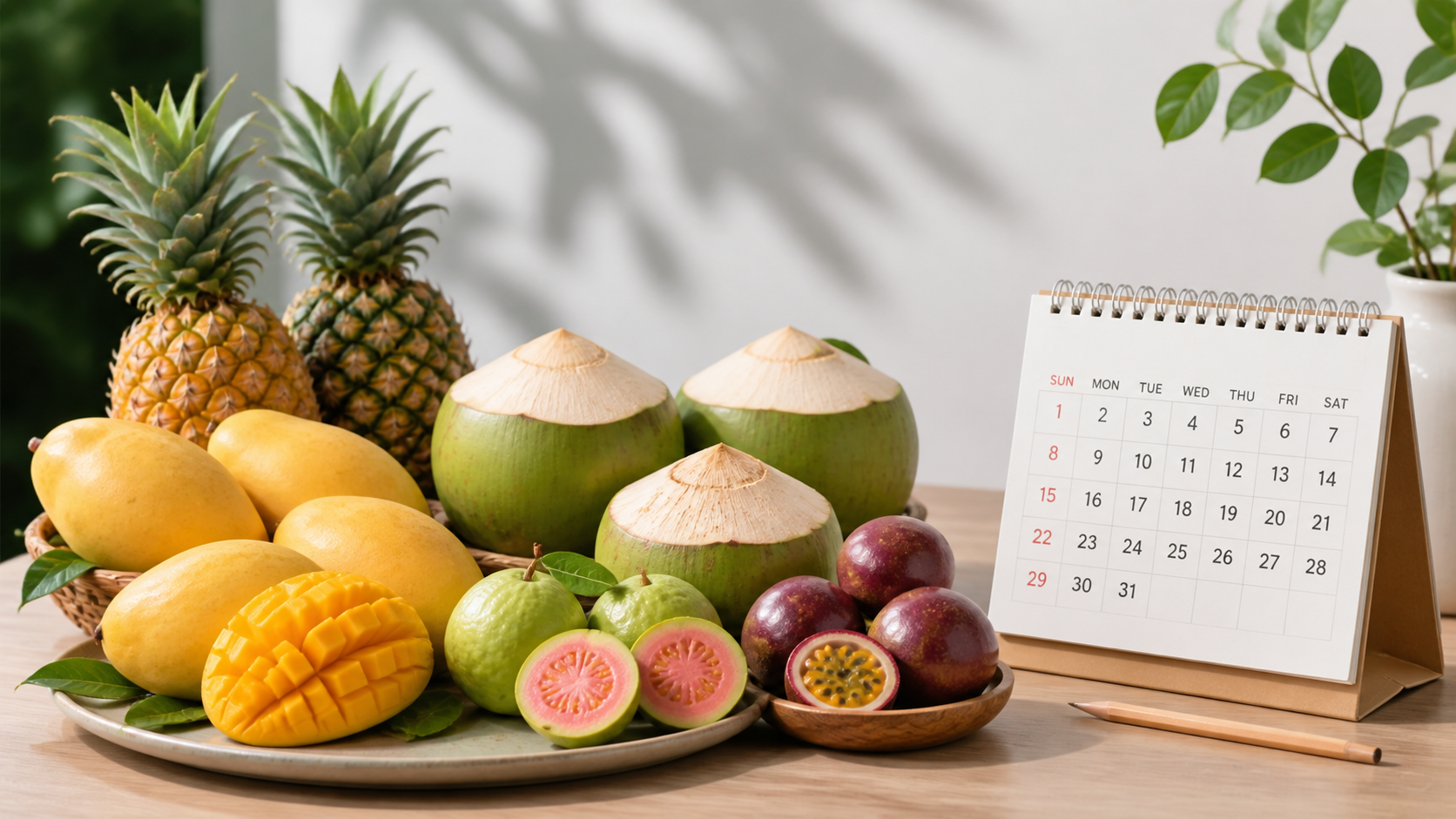
In short: harvest peaks usually deliver the best availability and more stable pricing, while off-season sourcing can face tighter supply, higher costs and longer lead times. Because fruit is agricultural, windows shift with rainfall, temperature, flowering and local farm practices; align purchase plans and promotions with typical peaks, and build buffers for shoulder months.
Vietnam’s north, central highlands and south have different microclimates. Some fruits (like coconut) are relatively steady year-round with small peaks; others (like mango and passion fruit) can show distinct main and secondary harvests. Growers may also use pruning or off-season flowering techniques to extend supply, but consistency, volumes and costs can differ outside peak months.
Month-by-month crop calendar at a glance
The table below summarizes typical windows seen by processors and exporters. Always verify the latest calendar by region and variety before you book production.
| Fruit | Typical main harvest window | Secondary / off-season supply | Positioning & notes |
|---|---|---|---|
| Mango | Mar–Jun (peak) | Aug–Oct (lighter) | Strong for NFC juice, puree; varieties differ in aroma and color. |
| Pineapple | Apr–Jun (peak) | Dec–Jan (smaller peak) | Used for NFC, concentrate, blends; sensory depends on ripeness and cultivar. |
| Passion fruit | May–Aug (peak) | Nov–Jan (secondary) | Central Highlands supply; bright acidity; common in purees and NFC. |
| Coconut | Year-round (steady) | Minor local peaks by province | Typically stable; verify maturity for Brix and flavor targets. |
| Guava | Aug–Nov (peak) | Feb–Apr (lighter) | Used for NFC, puree; pruning cycles affect timing and size. |
These windows are planning aids, not fixed rules. Rain patterns, heat waves, storms and on-farm practices can shift the curve by several weeks. For confirmed orders, ask your supplier to share a current month-by-month view by origin province and varietal before you finalize your production slot.
How do harvest peaks translate into pricing and lead times?
At peak harvest, processors can aggregate fruit more efficiently, which often supports more stable prices and smoother scheduling. Off-season windows may involve longer raw-material collection, higher inbound transport costs and tighter grading yields, which can lengthen lead times and pressure costs.
Lead time is the sum of raw-material booking, packaging readiness, production scheduling, finished-goods QA/QC release and ocean freight. If you plan launches for shoulder or off-season, consider building more time for raw material and packaging coordination, plus a contingency for weather-related delays.
- Peak season: best availability, more predictable quality, typically easier to confirm slots.
- Shoulder months: workable with flexibility on dates/specs; monitor weather and inbound volumes closely.
- Off-season: feasible for some items, but expect tighter specs, higher costs and firming lead times.
For broader context on supply choices, see ingredients & sourcing guidance in Ingredients and Sourcing, and align your build-up with the private label development timeline.
Fruit-by-fruit planning notes
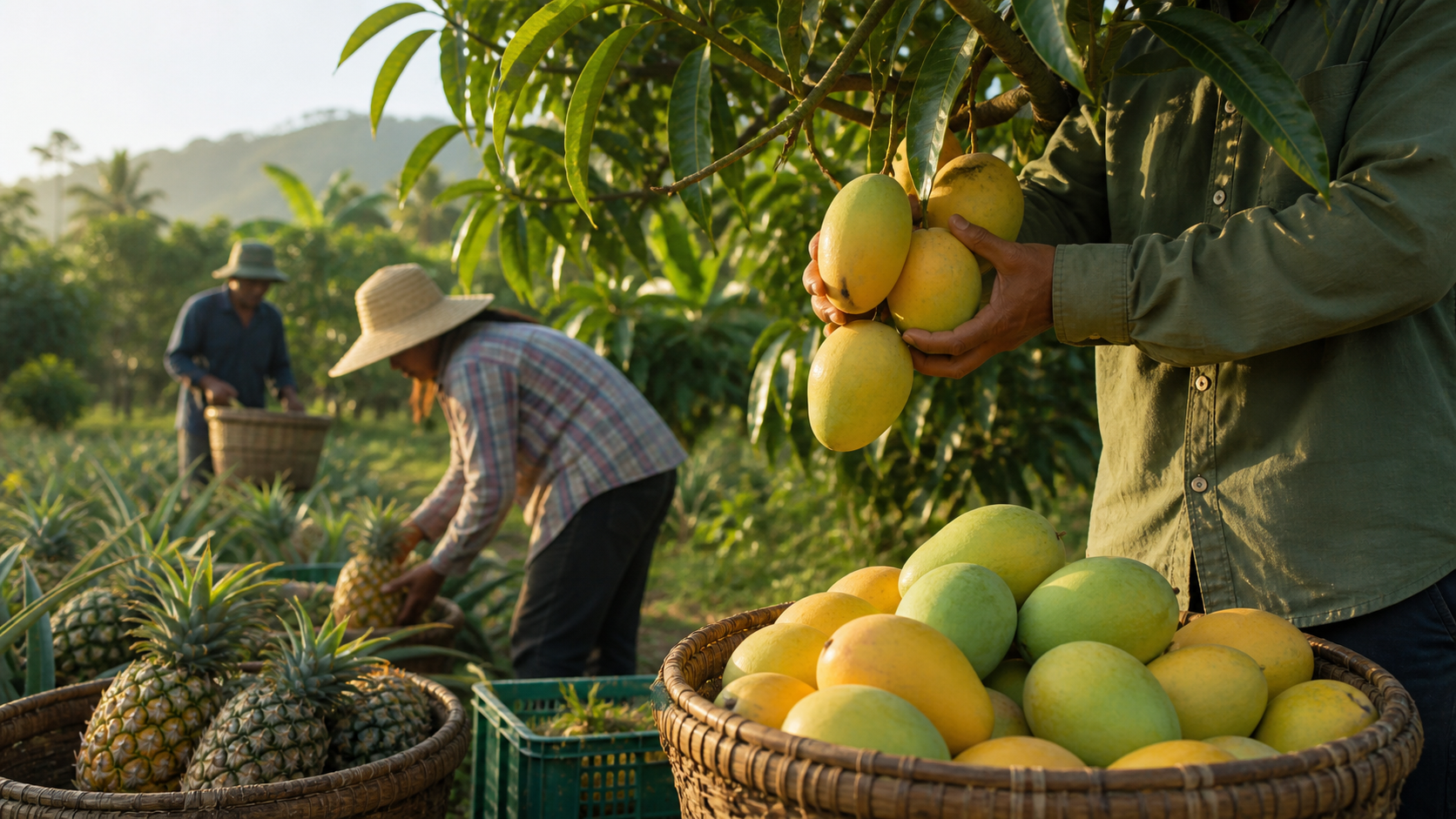
The notes below translate seasonality into practical sourcing and formulation considerations for beverage brands.
Mango
Mango is a flagship fruit for Vietnamese juice and puree thanks to its tropical aroma and color. The main window typically runs in the early dry season, with a lighter secondary window later in the year. Varietal selection (fiber content, color intensity, sweetness) affects processing yield and sensory. If you target a vibrant hue and thicker mouthfeel, brief the processor on preferred varieties and desired Brix/acidity to guide sourcing.
- Formats: NFC juice, puree and concentrate used for single-fruit SKUs and blends.
- Spec planning: define target Brix/acidity band, pulp level and color grade; request retain samples across seasons to see variation.
- Seasonality tip: secure peak-season lots for flagship SKUs; for off-season, allow acceptable tolerance bands in your spec.
Pineapple
Pineapple supply in Vietnam is relatively broad, with a strong mid-year peak. Ripeness at processing impacts aroma and acidity balance. Core removal, sieving and clarification choices affect fiber and haze in the final beverage, which is important for brands targeting a clear, bright appearance.
- Formats: NFC, concentrate, clarified juice; common as a brightness booster in blends.
- Spec planning: haze/clarity, color, Brix-to-acid balance, and off-flavor thresholds.
- Seasonality tip: plan promotional volumes in the main window; during secondary peaks, confirm cut size and maturity to maintain flavor.
Passion fruit
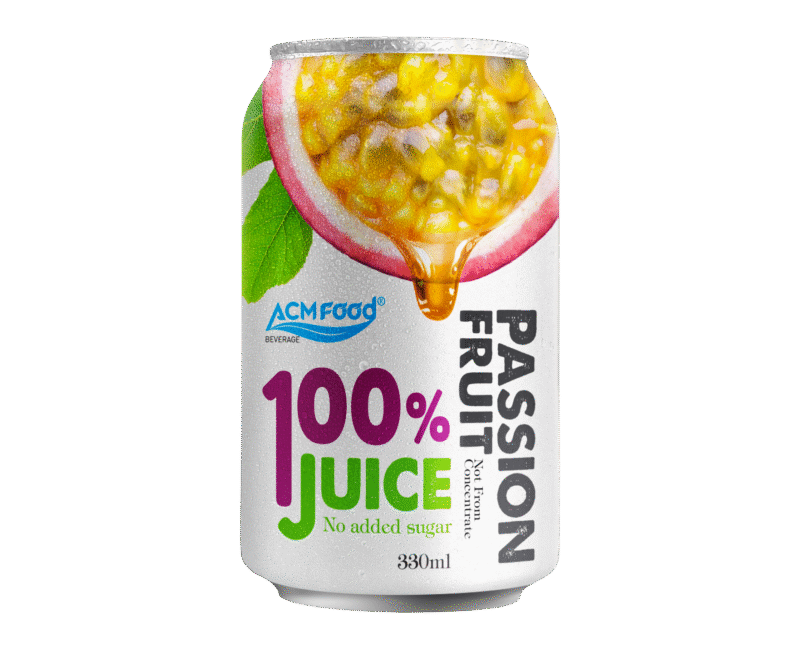
Vietnam’s Central Highlands support passion fruit with notable peaks and a secondary window. The fruit’s high acidity and strong aroma are excellent for refreshment cues and sugar reduction strategies in blends. Seed handling (screen size, deseeding) strongly influences texture and consumer perception.
- Formats: NFC, puree, aroma fractions; often paired with mango or pineapple.
- Spec planning: acidity range, seed inclusion/absence, color intensity, and microbiological standards.
- Seasonality tip: align flavor-critical SKUs with the main peak; keep a tolerance range on acidity for off-peak lots.
Coconut
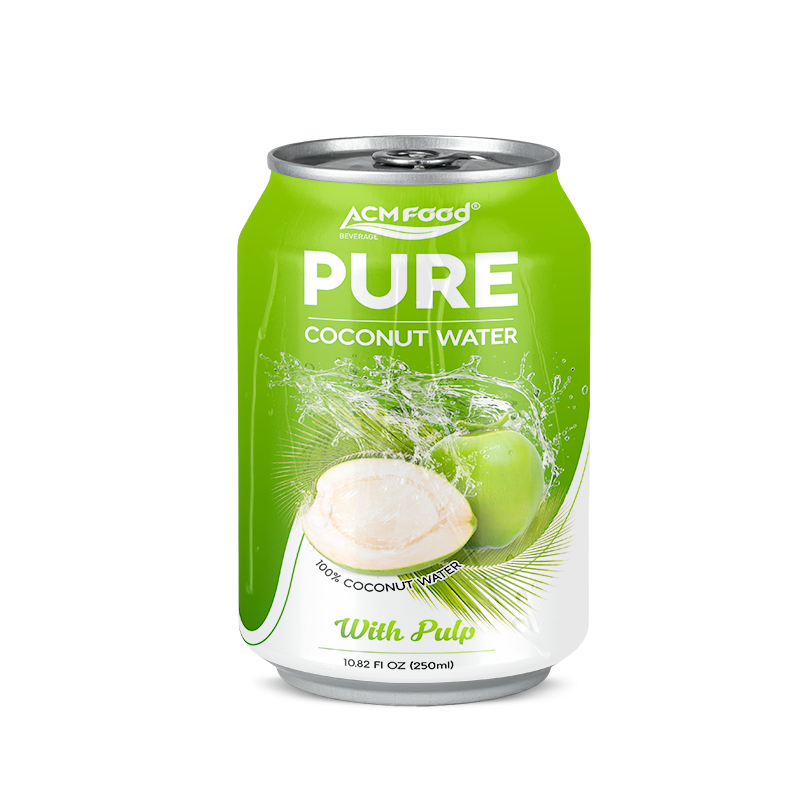
Coconut in Vietnam is comparatively steady year-round. That said, maturity and sourcing area influence Brix, mineral profile and flavor notes. Confirm the raw water type (NFC vs from concentrate) and maturity targeting to match your sensory brief.
- Formats: coconut water (NFC or from concentrate), blends, and flavored coconut water.
- Spec planning: Brix, clarity, color, mineral taste perception and off-note guardrails.
- Seasonality tip: even with stable supply, agree on maturity bands and origin zones to maintain flavor consistency across lots.
If coconut water is in your roadmap, review critical checks in NFC vs from concentrate coconut water and evaluate options with a coconut water supplier in Vietnam.
Guava
Guava availability is supported by pruning cycles that can bring a long season with clear peaks. White and pink guava differ in aroma, color and seed size; this affects processing choices and product positioning. Haze management and pulp level are key specification items for guava-based beverages.
- Formats: NFC juice, puree; white vs pink variants for different visual cues.
- Spec planning: pulp level, color grade, seed handling and aroma retention targets.
- Seasonality tip: lock core volumes for the main peak; for shoulder months, confirm tolerance on color/pulp to protect label claims and sensory.
How to connect seasonality, crop calendar and raw material planning
Think of seasonality as the foundation of your raw-material strategy. Your crop calendar indicates when to buy, while your product brief defines what to buy. Planning ties them together:
- Translate marketing demand into monthly volume forecasts aligned with peak and shoulder months.
- Sequence SKUs: prioritize single-fruit or high-fruit-content SKUs in peak; run more blends or complementary flavors in shoulder months.
- Set tolerance bands (Brix, acid, color, pulp) to keep procurement viable outside peak while staying on-label.
- Reserve production slots ahead of main peaks; for shoulders, add contingency windows.
- Coordinate packaging lead times so materials arrive before the raw-material peak.
Building a 12-month supply plan
Use the steps below to move from insights to execution.
- Map demand: lay out monthly volumes per SKU and pack size; highlight critical launch and promo months.
- Overlay the crop calendar: mark main and secondary windows for each fruit input.
- Define specs by season: set in-spec ranges for peak vs shoulder to protect quality and cost.
- Align packaging: confirm artwork, printing and inbound dates before the first peak shipment.
- Book capacity: reserve processing slots that coincide with optimal fruit supply.
- QA/QC alignment: lock sampling, retention and COA review steps; compare peak vs shoulder retains.
- Logistics: coordinate container bookings early in peak months; build a few extra days into cut-off and sailing plans.
- Risk buffer: plan a safety stock or flexible production window for weather-driven shifts.
For launch scheduling and cross-functional checkpoints, consult the private label development timeline.
Packaging and production scheduling across peaks
Seasonality affects more than fruit pickup; it also drives packaging readiness and line time.
- Artwork and compliance: finalize labels before crop peaks to avoid missing raw-material windows.
- Material availability: cans, bottles, closures and cartons can tighten during peak export months; place POs early.
- Run order: schedule flavor profiles that need freshest fruit early in the peak; run blends or clarified SKUs later if needed.
- Changeovers: group similar SKUs to reduce downtime during high-demand weeks.
Regional differences that shift harvest windows
Vietnam’s geography stretches from the northern provinces to the Mekong Delta and Central Highlands, creating meaningful timing differences.
- North: cooler winters and later flowering can push harvest slightly later than the south.
- Central Highlands: elevation moderates temperature; passion fruit supply is often coordinated from these zones.
- South (including the Mekong Delta): generally earlier and more stable timing for some fruits, with strong logistics connectivity.
When you request a seasonality update, ask for a province-level view plus any new farm practices (e.g., pruning schedules) that might extend or shift availability.
Commercial implications: availability, cost and negotiation
Peak-season purchasing can help with availability and pricing discipline, but it also increases competition for packaging and vessel space. In shoulders and off-season, flexibility on spec bands and production dates improves the odds of confirming supply without cost shocks.
- Pricing: discuss provisional price bands for peak vs shoulder months, with a mechanism to revisit after major weather events.
- Quality: agree on objective COA metrics that reflect seasonal variation without compromising brand standards.
- Contracts: consider volume blocks or rolling forecasts to secure capacity during main harvests.
If coconut water is a key SKU, coordinate process specifics with a coconut water manufacturer and study market routes in Importing Coconut Water from Vietnam.
Logistics and lead-time planning around peaks
Logistics constraints often appear precisely when fruit is most available. Booking space early for peak months, setting realistic factory cut-offs and maintaining a buffer for port congestion can keep your shipments on track.
- Ocean freight: secure bookings earlier during high-export months; consider alternate ports if feasible.
- Documentation: pre-align certificates, ingredient statements and labels to avoid hold-ups.
- IncoTerms and risk: choose terms that match your logistics capability; discuss contingency plans for weather or port delays.
Frequently asked questions
Can I source Vietnamese fruit year-round?
For some fruits (e.g., coconut), yes; for others, supply is strongest in defined peaks with workable shoulders. Outside the peak, expect tighter specs, firmer pricing and longer lead times.
How far in advance should I book production?
Book earlier for peak months so packaging and fruit can converge on time, and add a contingency for weather shifts. Your supplier can advise a suitable window based on your SKUs.
Is off-season fruit lower in quality?
Not necessarily, but maturity, color and acid/sugar balance can vary more. Define tolerance ranges in your spec and request retains to monitor sensory across seasons.
How can I reduce seasonality risk in my lineup?
Balance peak-aligned single-fruit SKUs with blends, plan inventory buffers, and align tolerance bands on Brix/acid/color so procurement remains viable in shoulder months.
Which specs most affect cost during off-peak?
Tight color, pulp and Brix targets, plus rare varietal requirements, can raise costs when supply is thin. Discuss practical ranges with your supplier before confirming volumes.
Conclusion
Planning around the Vietnam fruit harvest season gives you a clearer path to stable pricing, dependable quality and confident launch dates. Use the crop calendar to schedule volume blocks in main peaks, set realistic tolerance bands for shoulder months and coordinate packaging and freight early. For deeper context on procurement structure, see Ingredients and Sourcing, and sequence milestones with the private label development timeline to keep development and supply in sync throughout the year.