


 Français
 Español
 العربية
 한국어
LACF process filing is the submission that the United States Food and Drug Administration requires from a commercial processor of low-acid foods in hermetically sealed containers, describing the scheduled process used for each product and container size after the plant has been registered. LACF stands for low-acid canned foods, a term that also covers bottles and pouches.
This guide explains which beverages fall under the rules, how registration with a Food Canning Establishment number differs from a process filing with a Submission Identifier, what a process authority does and what retort and aseptic filings contain. It is an overview of an industry requirement for importers and brand owners, and it does not claim that any particular supplier holds a registration or a filing, which must be checked supplier by supplier.

Which beverages fall under the LACF rules?
Beverages fall under the LACF rules when they are low-acid foods packed in hermetically sealed containers and thermally processed. A low-acid food has a finished equilibrium pH above 4.6 and a water activity above 0.85, so drinks such as milk-based, plant-based, coffee, plain tea and many vegetable drinks are candidates.
A hermetically sealed container is defined in the regulation as one designed and intended to be secure against the entry of microorganisms, so that the commercial sterility of its contents is kept after processing. FDA guidance notes that pouches and glass bottles are included, even though they are not cans. The dividing line is acidity, not the type of pack.
| Drink type | Usual acidity position | LACF process filing |
|---|---|---|
| Fruit juice or nectar below pH 4.6 | Acid food | Generally outside the low-acid rules; juice HACCP applies instead |
| Acidified drink, where acid is added to bring a low-acid food to pH 4.6 or below | Acidified food | Covered by the acidified food rules, with their own filing form |
| Milk drink or plant-based drink, retort or aseptic | Low-acid | Required |
| Coffee or plain tea, retort or aseptic | Low-acid | Required |
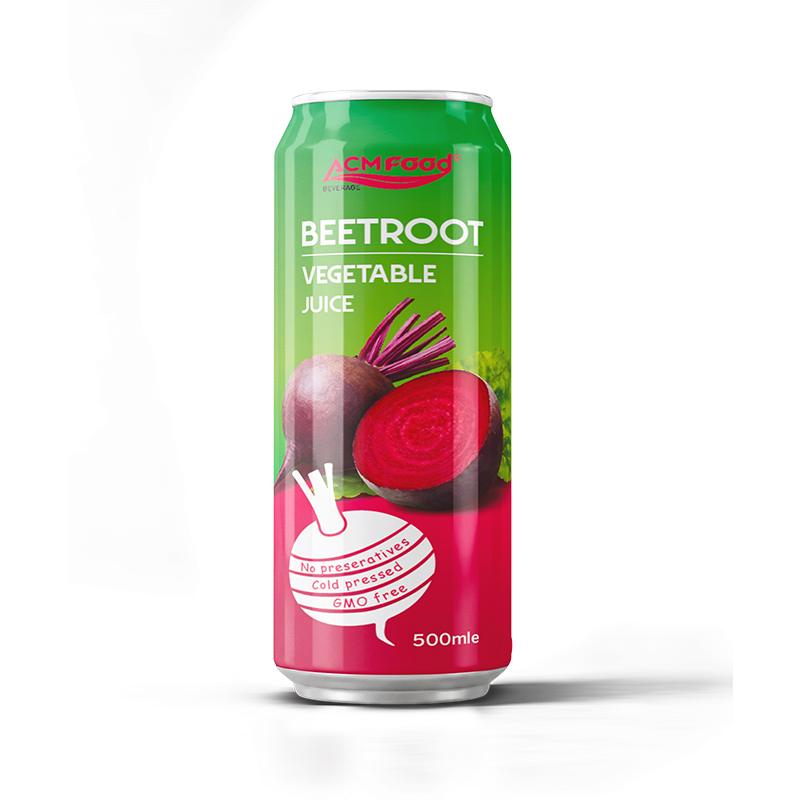
| Vegetable juice above pH 4.6 | Low-acid | Required unless acidified |
| Chilled, frozen or not hermetically sealed products | Not shelf stable by heat in the pack | Outside these rules |
Because the pH decides which rules apply, the final recipe needs a measured equilibrium pH, not an expected one. Where the product ends up is also relevant to market planning, as shown on the page about how to import beverages into the United States.
What is the difference between FCE registration and SID process filing?
Registration identifies the plant and filing identifies the product process. After a plant registers on Form FDA 2541, FDA assigns a Food Canning Establishment number. Each process filing then receives a Submission Identifier made from the filing date and a sequence number, and the two together identify one filing.
- Registration. A commercial processor registers on Form FDA 2541 within 10 days of first engaging in processing low-acid foods in hermetically sealed containers. The form lists the plant, its location, the processing method and the low-acid foods processed.
- FCE number. FDA assigns one Food Canning Establishment number for each physical processing plant. A processor with two plants files two registrations.
- Process filing. The processor provides the scheduled process for each low-acid food in each container size no later than 60 days after registration and before packing a new product.
- Form by method. FDA uses separate forms: 2541d for retorted low-acid products, 2541f for water activity or formulation control, and 2541g for low-acid aseptic systems.
- Submission Identifier. The SID identifies each filing and consists of the date the form was created and a sequence number for multiple forms on the same date.
A filing is not an approval. The regulation states that filing the information does not constitute approval by FDA, so a registration and an SID show that a process was filed, not that the agency has judged it adequate.
A process authority establishes the scheduled process for a low-acid product, meaning the heat treatment and critical conditions that make it commercially sterile. The regulation requires scheduled processes to be set by qualified persons with expert knowledge of thermal processing and with adequate facilities to make the determination.
- It reviews the recipe, pH, particle size, viscosity and container to find the slowest-heating point and the critical factors.
- It uses recognised methods such as heat penetration studies and microbial thermal death time data, and calculates the process using procedures accepted by competent processing authorities.
- It allows for the normal range of variation in production, including seasonal differences in raw materials.
- It may require incubation tests for process confirmation, using containers from test trials and from actual commercial runs.
- It issues a written scheduled process which the factory must follow and record.
The process authority is separate from the person who fills in the form. A filing built on an informal or outdated process letter may be consistent on paper but still wrong for the pack that ships, which is why the letter should be requested.
What do retort and aseptic filings contain?
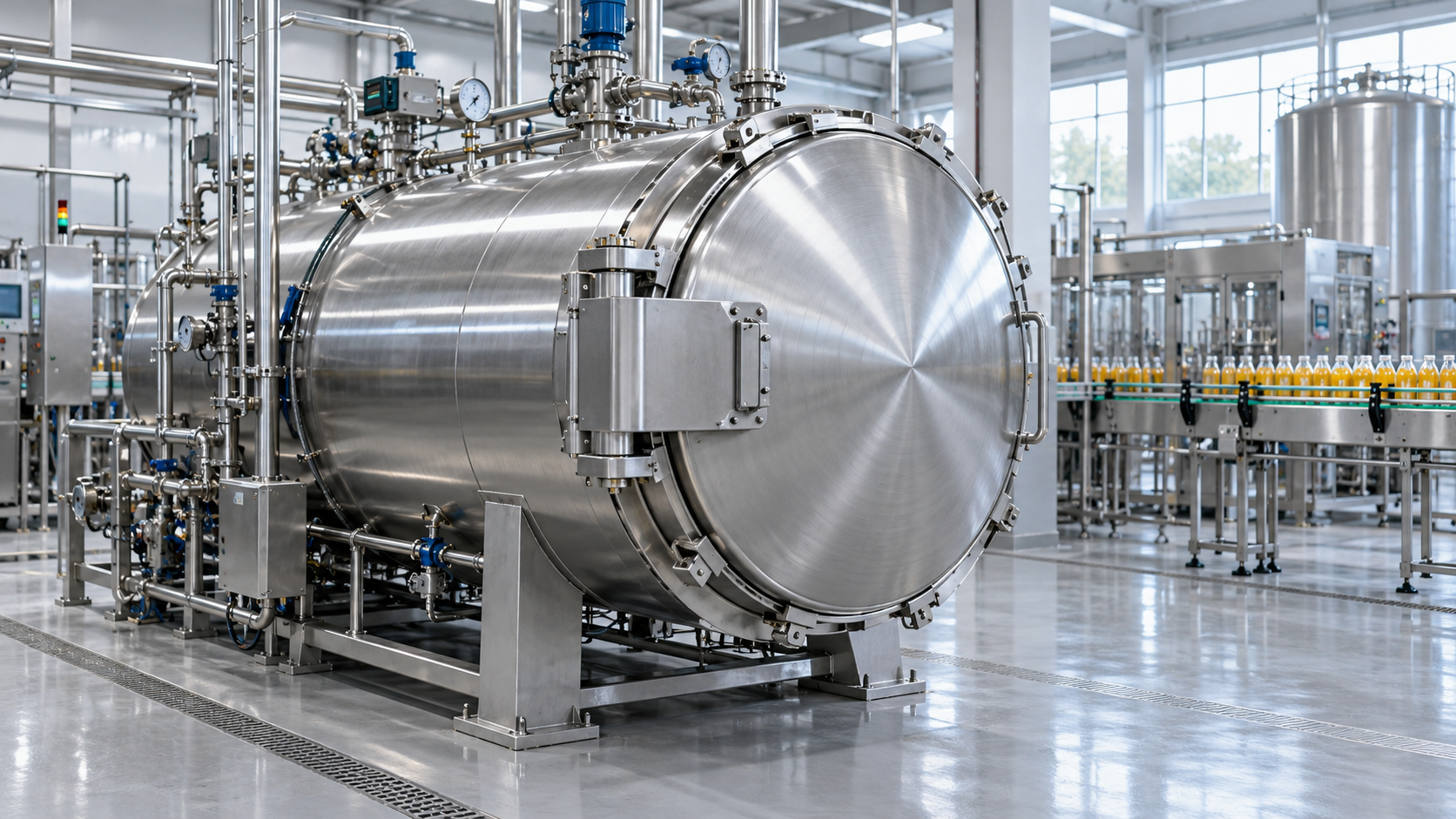
Retort and aseptic filings both describe the scheduled process for each product and container size. The regulation lists the processing method, the equipment, minimum initial temperature, times and temperatures, sterilising value and critical control factors, and the source and date of the process.
| Filing element | Retorted product (Form 2541d) | Aseptic system (Form 2541g) |
|---|---|---|
| Processing method | Heat treatment of the sealed pack in a retort | Product sterilised first, then filled into a sterilised pack |
| Equipment described | Type of retort and its operation | Product sterilizer and the aseptic packaging system |
| Process values | Temperatures, times, minimum initial temperature, sterilising value | Temperatures, hold time and flow conditions for the sterilised product |
| Critical factors | Container size, fill, headspace, product viscosity and loading pattern | Flow rate, holding tube conditions and product characteristics |
| Source of process | Process authority and date | Process authority and date |
The wording in the table is summarised from the regulation and the FDA forms, and the exact data requested depends on the current form versions. Anyone preparing a filing should work from the live FDA instructions and the process authority letter.
How do the LACF rules relate to juice HACCP and acidified food rules?
The three systems divide products by acidity and by process. Low-acid foods in hermetically sealed containers follow the LACF rules, acidified foods follow their own rules, and juice follows juice HACCP. A juice processor already subject to the low-acid or acidified rules is exempt from the juice 5-log requirement.
That exemption is written into the juice HACCP regulation, which exempts a juice processor subject to the low-acid or acidified food rules, as well as a processor using a single thermal step sufficient to achieve shelf stability. In practice, a shelf-stable vegetable juice above pH 4.6 is therefore handled through the low-acid route, while a fruit juice below pH 4.6 is handled through juice HACCP. A blend can move from one system to the other if the final pH crosses the 4.6 line, so a recipe change should always trigger a regulatory re-check.
What commonly delays a process filing?
Delays usually come from incomplete or inconsistent data, such as a pH or container size that differs between the form and the real product, a missing process authority letter, or a new recipe being packed before its filing exists. Each new product and container size needs its own filing before packing.
- A new flavour, a new pH range or a different container size is treated as a new product or size, so it needs its own filing.
- The process in the filing must match the process actually run, including equipment and critical factors.
- Production trials for a new recipe are often scheduled before the filing is complete, which can leave the first commercial run waiting.
- Staff changes at the processor or at the process authority can leave contact details and access to the electronic system out of date.
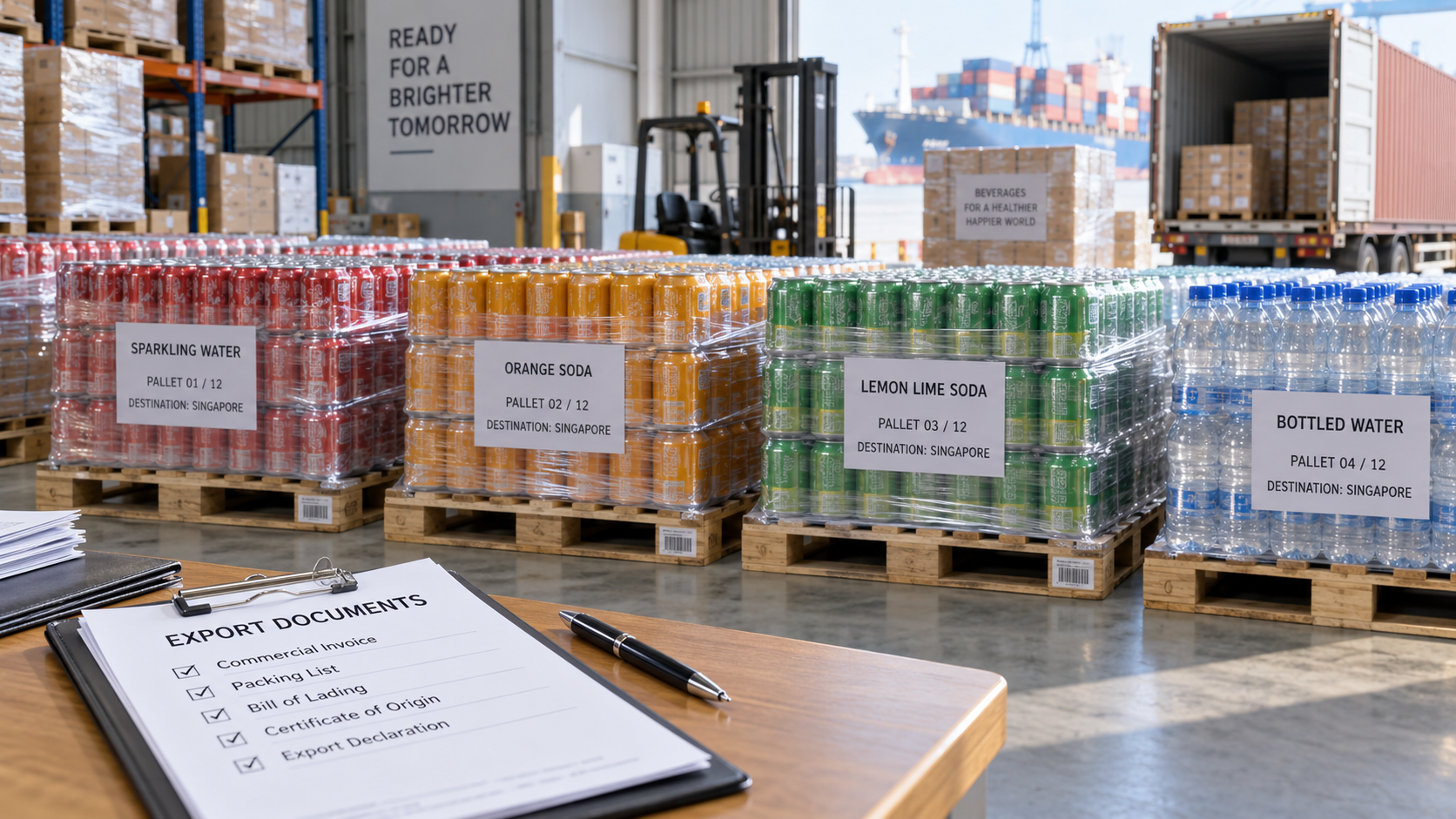
Timing also affects shipping plans, because product cannot be packed for the market before the filing is in place. Shipping lanes, container booking and lead times are outlined on the page about shipping beverages from Vietnam to the United States.
What should an importer ask a supplier for?
An importer should ask for the supplier plant’s FCE number, the SID of each product and container size, the process authority letter and evidence that the filed process matches the pack ordered. These items allow the importer to compare what was filed with what is shipped.
- FCE number of the plant where the product is made and packed.
- SID for each recipe and container size on the order.
- Process authority letter with date, process values and critical factors.
- Batch records showing temperatures, times and container checks for recent runs.
- Incubation and release results for recent batches.
- Process change procedure, so that a change to recipe, pH or container is checked against the filing.
FDA guidance also says the results of its evaluations can be used when food is offered for import, which is one reason importers and customs brokers ask for these identifiers before a shipment moves.
FAQ about LACF process filing
Does a juice below pH 4.6 need an LACF filing?
No, an acid juice below pH 4.6 is generally outside the low-acid rules. It may still be covered by juice HACCP, and an acidified drink falls under the acidified food rules.
Is an SID the same as FDA approval?
No. An SID identifies a process filing. The regulation states that filing does not constitute approval by FDA, so it should be read as evidence of filing only.
Does the same filing cover every flavour?
Not automatically. Filings are made for each product in each container size, so a new flavour or container normally needs its own.
Are glass bottles and pouches included?
Yes. FDA guidance notes that pouches and glass bottles used to package thermally processed low-acid foods are included, even though they are not cans.
Who writes the scheduled process?
A qualified person with expert knowledge of thermal processing for low-acid foods, usually a process authority. The factory then follows and records it.
Confirming the route before you commit
The route decides the paperwork. A low-acid drink in a retort or aseptic line needs registration, a filed process and a process authority, while an acid drink may need none of them. Settling pH, pack and market early avoids filing delays after the first trial.
Brands and importers can send a drink specification with the target market, and ACMFOOD will confirm which processing route fits the product, the pack and the shelf life requirement.
Sources
- Cornell Law School (Legal Information Institute) — 21 CFR 108.35, thermal processing of low-acid foods packaged in hermetically sealed containers: registration and process filing
- Cornell Law School (Legal Information Institute) — 21 CFR 113.3, definitions of low-acid foods and hermetically sealed container
- Cornell Law School (Legal Information Institute) — 21 CFR 120.24, juice processing controls and exemptions
- Cornell Law School (Legal Information Institute) — 21 CFR 113.83, establishing scheduled processes
- U.S. Food and Drug Administration — Establishment Registration and Process Filing for Acidified and Low-Acid Canned Foods: Electronic Submissions