


 Français
 Español
 العربية
 한국어
한국어Pomegranate juice OEM is contract manufacturing in which a beverage factory produces pomegranate juice to your recipe or specification and packs it under your brand. It is an attractive category for private label because pomegranate juice has a premium image, a striking colour and naturally occurring polyphenols, and OEM lets brands launch without building a plant.
This guide covers the trends shaping pomegranate juice, the business opportunity for private label brands, and what to look for in an OEM partner.
Why is demand for pomegranate juice growing?
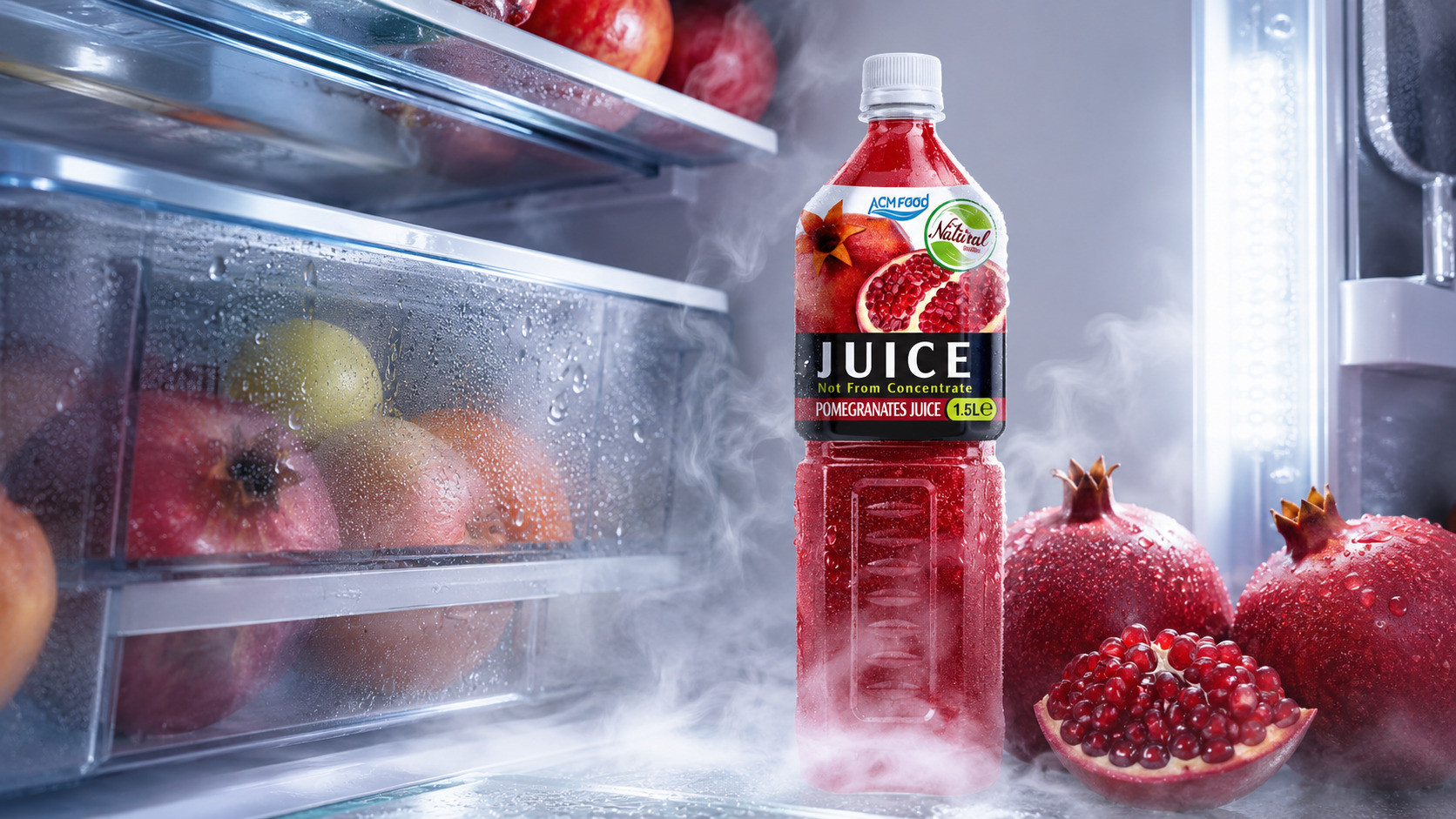
Pomegranate juice fits several buying trends at once: natural fruit ingredients, fewer artificial additives, a premium position and interest in polyphenol-rich foods. Retailers are giving more space to premium juices, and shoppers are often willing to pay more for juices seen as natural and traceable, which supports better margins than standard juice.
Which trends are shaping pomegranate juice OEM?
- Premium ingredients: 100% juice, no artificial colours and little added sugar; OEM options include NFC juice, concentrate blends, organic and fortified recipes.
- Smaller packs: 250–330 ml cans and 300–500 ml PET for convenience stores, gyms, airports and offices, plus 6- and 12-packs.
- Clean labels and certification: short ingredient lists and recognised food safety certification such as HACCP, ISO 22000, BRCGS or FDA registration where required.
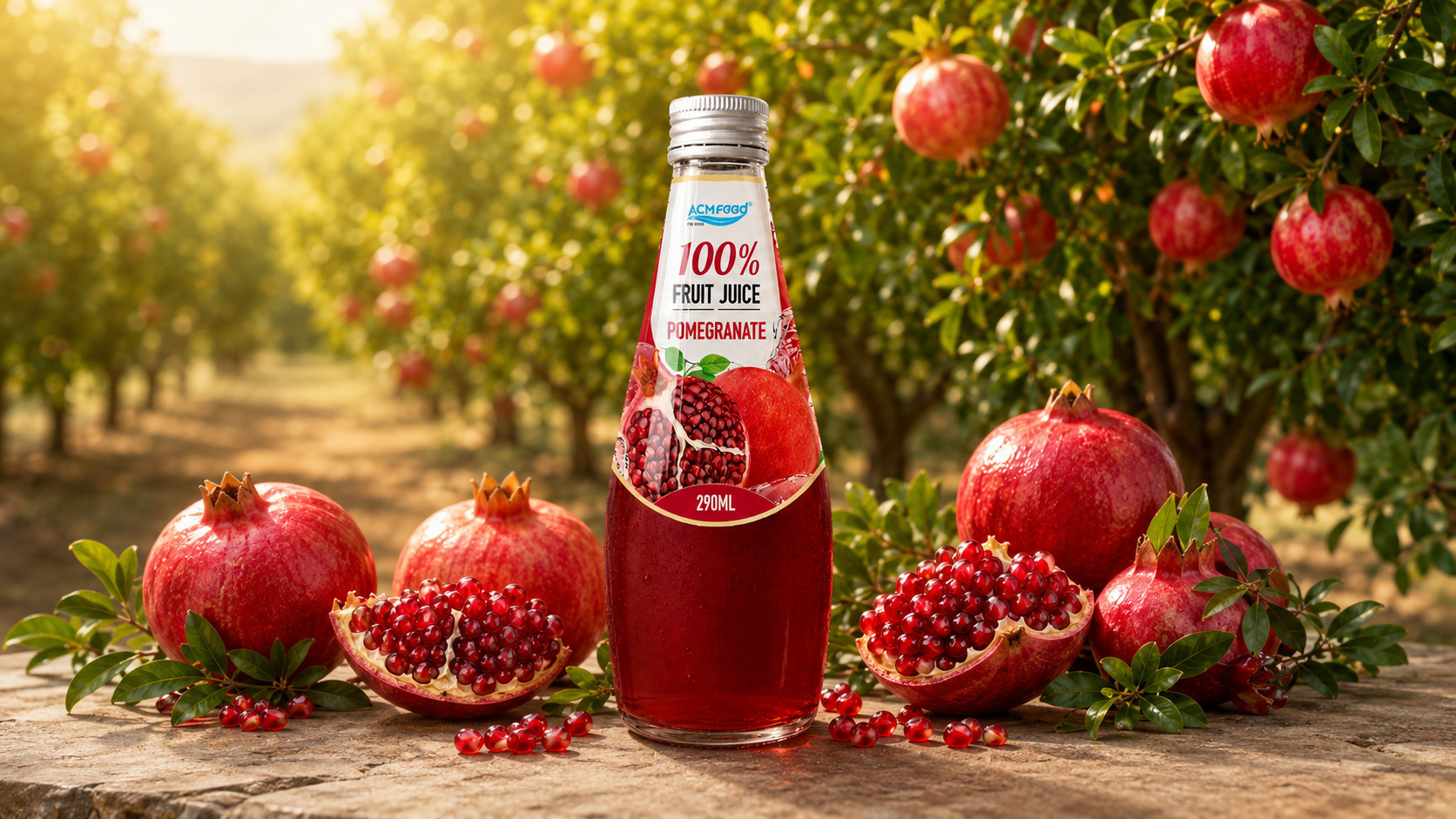
- Packaging design: sleek cans, lightweight PET, recyclable glass, and QR codes that share origin and nutrition information.
What opportunities does OEM create for private label brands?
- Start-ups: launch with a modest first run to validate demand before expanding distribution.
- Retailers: add exclusive own-label juices with better margins than third-party brands.
- E-commerce: premium juices sell well online when packaging and quality are consistent.
- Export markets: North America and Europe remain key, with demand growing in Southeast Asia, the Middle East and parts of Africa.
How does OEM reduce business risk?
A beverage plant is a large capital investment. OEM gives access to existing lines, quality systems and export experience, so brand owners can spend on product development, marketing and distribution instead. Timing depends on recipe complexity, packaging and regulatory approvals; a new recipe needs development and sample approval before the first commercial run.
How do you choose a pomegranate juice OEM partner?
| Criterion | What to look for |
|---|---|
| Full-service support | Recipe development, sourcing, pack selection, label compliance, lab testing, pilot runs and export documents |
| Capacity | Room to grow as you add markets |
| Raw material traceability | Documented sourcing of pomegranate juice or concentrate, inspections and micro testing per batch |
| Certification | Food safety schemes recognised in your target market |
| Export experience | Knowledge of labelling, language rules, shelf-life validation and customs documents |
Frequently asked questions
Can I launch pomegranate juice without my own factory?
Yes. An OEM manufacturer handles production, packaging and quality control under your brand.
Which packaging suits pomegranate juice?
Cans and PET for convenience and on-the-go; glass for premium positioning. Choose by channel and market.
What is the minimum order?
It depends on the manufacturer and pack. At ACMFOOD, minimums are set per SKU; see the link below.
Conclusion
Pomegranate juice OEM offers brands a lower-risk route into a premium juice category. Success depends on clean ingredients, the right pack for the channel, credible certification and a manufacturer with traceable sourcing and export experience.
See our OEM manufacturing programme, private label beverages, product capabilities and minimum order quantity. When you have a specification, request a quote.
Request a quote