


 Français
 Español
 العربية
 한국어
한국어Sparkling beverage manufacturing covers the carbonation process and the can or bottle specification decisions that determine whether a finished drink holds its fizz from the filling line to the point it is opened by a consumer. Getting carbonation level and can specification wrong at the same time is one of the more common causes of flat or over-pressurized product complaints in a new sparkling launch.
This guide explains how carbonation is measured and controlled, how can specification interacts with carbonation retention, and what an OEM or private label brand should confirm before locking a formulation for a sparkling water, soda, or sparkling functional drink.
How carbonation is typically added during production
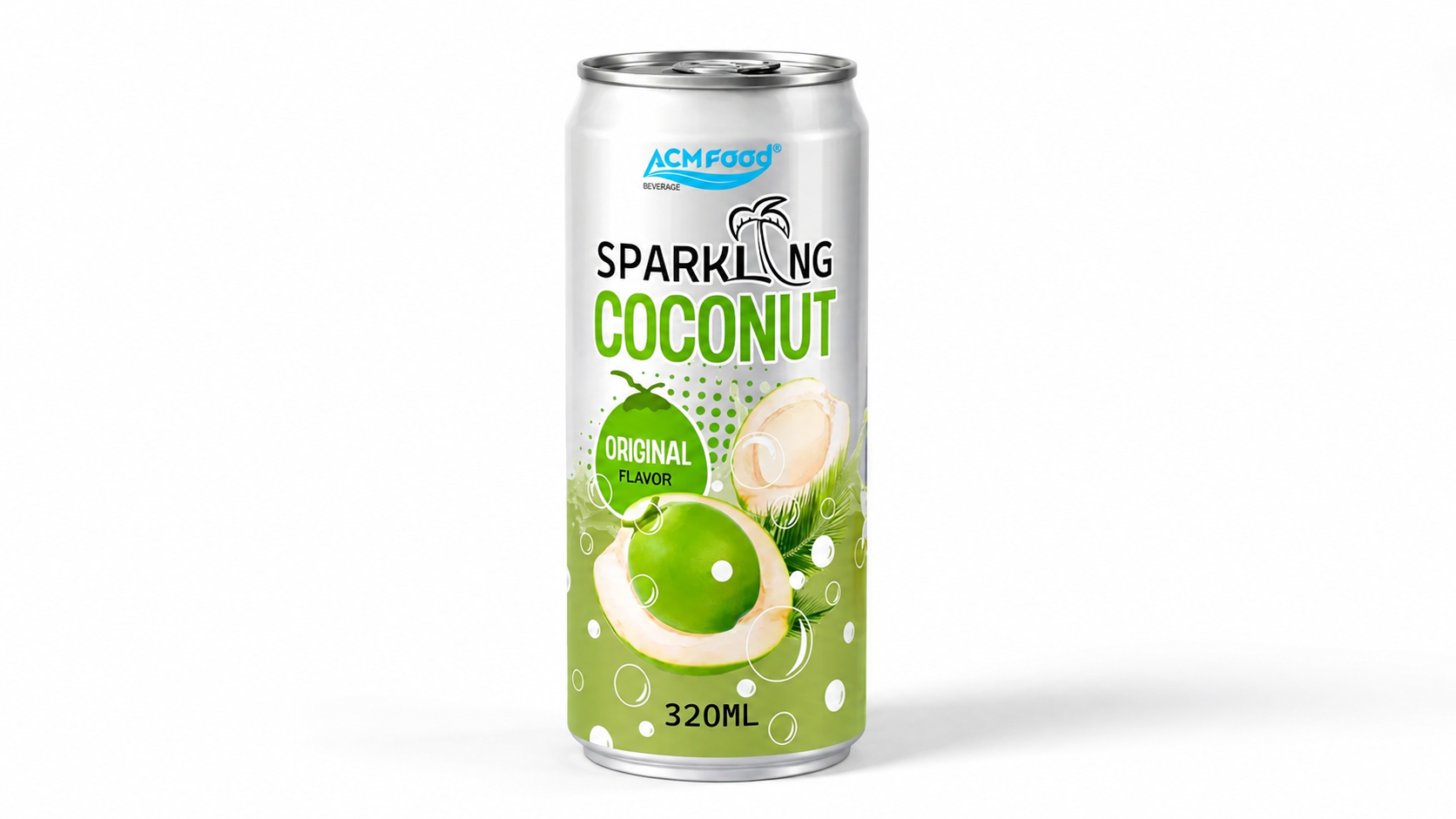
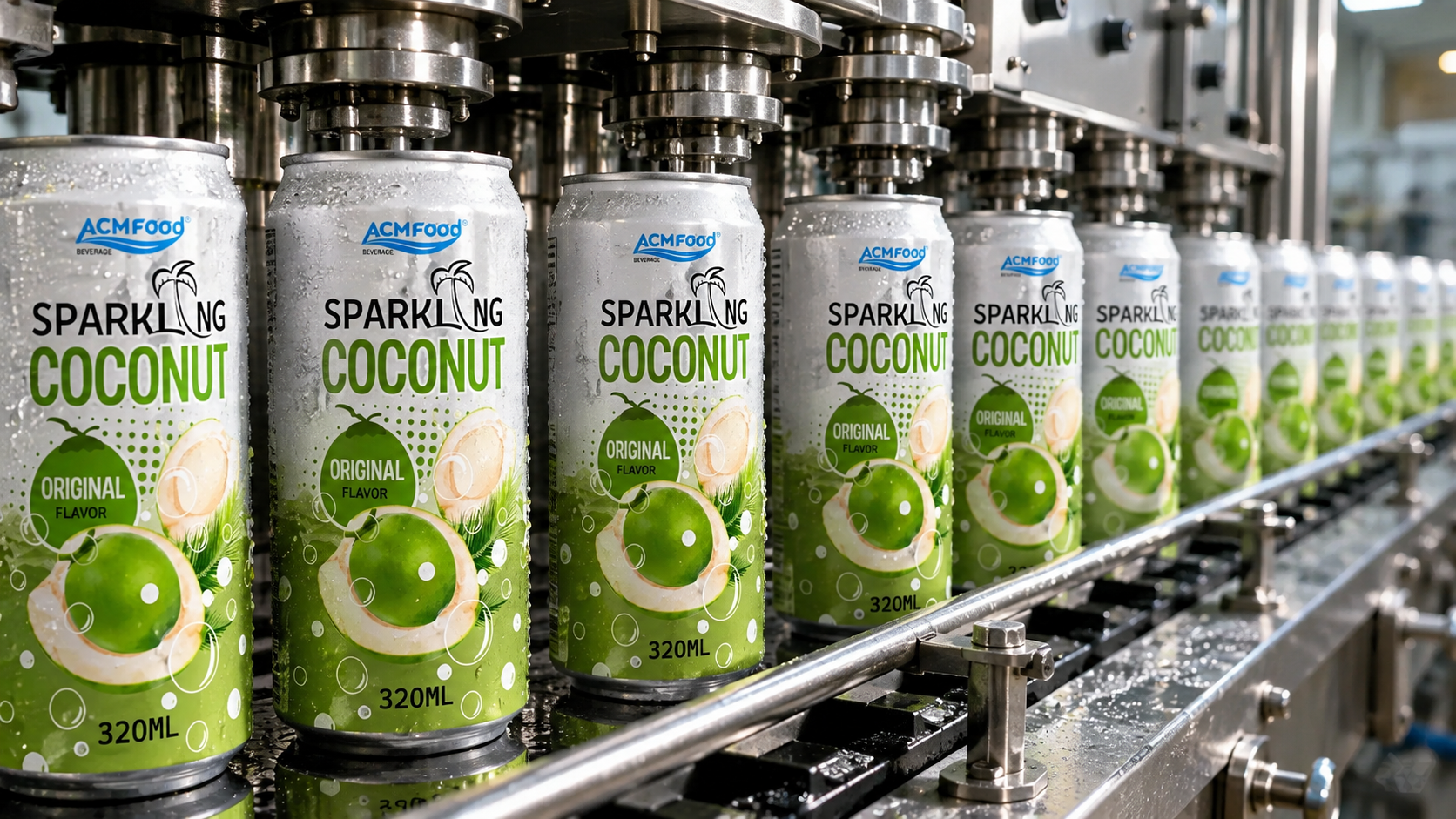
Two general approaches are used to get CO2 into a beverage before it reaches the can or bottle: in-line carbonation, where a metered stream of CO2 is dissolved into the liquid continuously as it moves toward the filler, and batch carbonation, where a full tank of product is carbonated to target before being sent to fill. In-line systems tend to suit high-volume, continuous production, while batch carbonation can offer more control for smaller or more delicate formulations.
Whichever method is used, carbonation is checked against target before filling begins, and again periodically during a run, since drift in temperature or pressure at the carbonator can shift the dissolved CO2 level even when the recipe upstream has not changed.
How is carbonation level measured in a sparkling beverage?
Carbonation is typically expressed in volumes of CO2, a measure of how many volumes of gas are dissolved in one volume of liquid at a given temperature and pressure. A higher volumes-of-CO2 target produces a sharper, more aggressive carbonation bite, while a lower target gives a softer, rounder mouthfeel.
Target carbonation is set at the recipe stage and then has to be achieved consistently on the filling line, since temperature, pressure, and fill speed all affect how much CO2 actually stays in solution by the time the can or bottle is sealed.
What factors affect how much carbonation survives to the finished pack?
- Fill temperature: Colder liquid holds more dissolved CO2 at a given pressure, so fill temperature is one of the first parameters checked when carbonation reads low.
- Counter-pressure filling: Filling under CO2 counter-pressure reduces the agitation that would otherwise cause gas to break out of solution during filling.
- Headspace and seaming: Excess headspace or an inconsistent can seam can allow gas loss during storage, even if the fill itself was on target.
- Closure integrity (bottles): A cap or crown with inconsistent torque or seal pressure lets carbonation escape slowly over shelf life.
How does can specification affect carbonation retention?
Can gauge, seam profile, and liner compatibility all influence how well a can holds pressure over its intended shelf life, independent of how well carbonation was controlled at the point of fill. A thinner-gauge can built for a still beverage is not automatically suitable for a highly carbonated product without confirming it can hold the internal pressure the recipe generates.
Can format choice also matters for the filling process itself. See how sleek, slim, and standard can formats compare for how can diameter and height affect fill speed and, in turn, how consistently a line can hit target carbonation across a full run.
How temperature and pressure interact during carbonation
Colder liquid dissolves more CO2 at a given pressure, which is why chilling ahead of the carbonator is standard practice rather than an optional step. If incoming product temperature drifts warmer during a long run, the carbonator either has to raise pressure to compensate or accept a lower final carbonation reading, and neither adjustment should happen without a documented reason and a check against your acceptance range.
Comparing carbonation approaches for common sparkling formats
| Format | Typical carbonation target | Key specification consideration |
|---|---|---|
| Sparkling water | Higher volumes of CO2 for a sharp, cleansing profile | Can or bottle must hold higher internal pressure without seam or seal failure |
| Carbonated soft drink | Moderate to high, balanced against sweetness and flavor intensity | Consistent fill temperature across a longer, syrup-based process |
| Sparkling functional drink (RTD tea, juice-based) | Lower to moderate, to avoid masking delicate flavor or botanical notes | Gentler carbonation and filling to protect flavor-sensitive ingredients |
Carbonation and labeling: what to check for your target market
Some markets have specific labeling or classification rules that apply once a beverage is carbonated, particularly where carbonation affects how a product is categorized for tax, tariff, or nutrition-labeling purposes. These rules vary by market and by product category, so it is worth confirming with a regulatory contact for your specific destination rather than assuming carbonation is treated the same way everywhere. For beverages exported to the United States, see the U.S. food label checklist for how labeling requirements apply to imported drinks generally, and confirm any carbonation-specific points separately.
Formulation considerations specific to carbonated drinks
Carbonation interacts with a beverage’s acidity, sweetness, and flavor volatiles, so a formulation cannot simply be carbonated at the end without checking how gas affects perceived taste. A recipe balanced for a still version of the same flavor profile often needs adjustment once carbonation is added, because dissolved CO2 changes both perceived acidity and mouthfeel.
For fruit-forward or botanical sparkling drinks, flavor volatiles can also be more sensitive to the agitation involved in carbonation and filling than in a still product, which is one reason gentler counter-pressure filling is often specified for these formats.
Equipment differences between still and sparkling production lines
A filling line built for still beverages is not automatically suitable for a carbonated product, because sparkling filling typically requires counter-pressure equipment to control foaming and gas loss during fill, along with can or bottle handling that can withstand internal pressure through seaming, capping, and downstream conveying. Confirming this equipment is in place, rather than assuming a general-purpose line can be adapted on request, is one of the first checks worth making when evaluating a manufacturing partner for a sparkling product.
Buffer tanks and piping upstream of the filler also need to be designed to hold carbonated product without significant gas loss between the carbonation step and the point of fill, since any transfer step that agitates the liquid is an opportunity for dissolved CO2 to escape before it is locked into a sealed pack.
Cost implications of higher carbonation targets
Beyond the CO2 itself, a higher carbonation target can raise cost in less obvious ways: it may require a heavier-gauge can or a bottle and closure rated for higher internal pressure, and it can slow fill speed if the filler needs a longer counter-pressure cycle to fill cleanly without excessive foaming. These factors are usually more significant to overall cost than the price of the gas itself, so they are worth discussing with your manufacturer at the formulation stage rather than after packaging has already been specified.
OEM process for developing a sparkling beverage
Development for a sparkling product typically follows the same broad stages as a still beverage — formulation, bench sample, pilot trial, stability testing — with carbonation and can specification checked at each stage rather than only at the end.
- Bench formulation: Flavor, acid, and sweetness balance are set on a still or lightly carbonated bench sample first.
- Pilot carbonation trial: The target volumes-of-CO2 level is tested on pilot equipment to confirm the flavor profile still reads correctly once carbonated.
- Can or bottle specification confirmation: Gauge, seam, or closure specification is confirmed against the pressure the finished recipe will generate.
- Stability testing: Carbonation retention is tracked over the intended shelf life under realistic storage conditions, not just at the point of fill.
Testing and verifying carbonation on the production floor
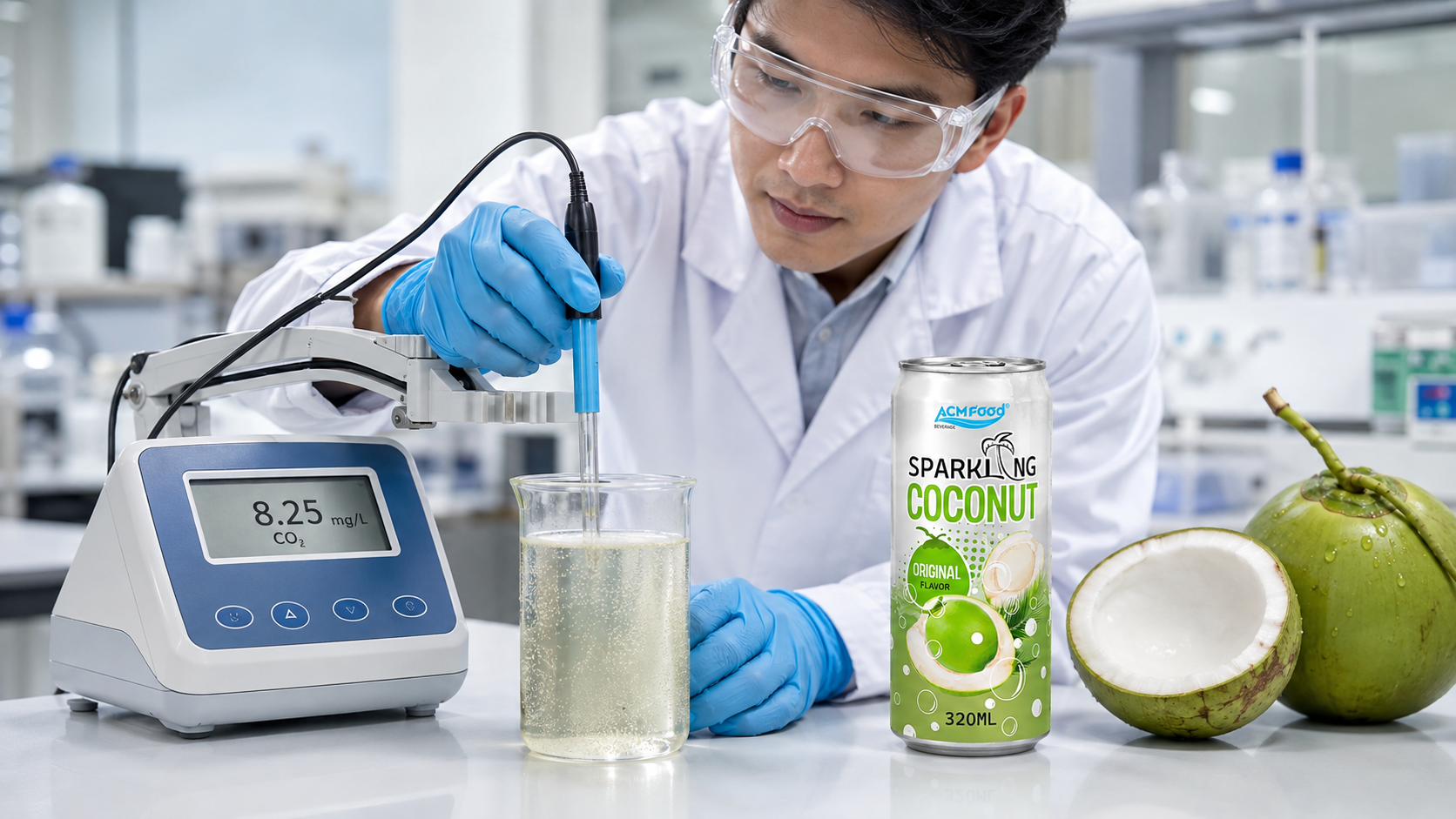
Most plants verify carbonation with a handheld or benchtop CO2 tester that punctures the sealed pack and reads dissolved gas volumes directly, alongside periodic checks of internal pressure. Testing frequency typically increases at the start of a run and after any change in fill temperature or line speed, since these are the points where carbonation is most likely to drift away from target.
Results are usually logged against a defined acceptance range rather than a single fixed number, since some variation around target is normal and expected across a commercial run. A result outside the acceptance range should trigger a documented investigation into fill temperature, carbonator performance, or seaming before the affected product is released.
Common mistakes in sparkling beverage development
- Finalizing flavor on a still bench sample without checking how the profile reads once carbonated.
- Assuming an existing can specification will hold a higher carbonation target without confirming seam and gauge suitability.
- Skipping real-time carbonation retention testing over the full shelf life, relying only on a fill-point reading.
- Underestimating how much fill-line temperature control affects carbonation consistency across a full production run.
Information for beverage brands planning a sparkling launch
Share your target carbonation level, preferred can or bottle format, and any flavor-sensitivity concerns as early as possible in the product brief, since these three factors are evaluated together rather than in sequence. A packaging options review alongside formulation development helps confirm that your intended can or bottle can hold the pressure your recipe will generate before samples are produced.
If you are moving an existing sparkling recipe to a new manufacturing partner, carbonation retention is one of the parameters most likely to shift on new equipment, so it is worth reviewing as part of any beverage technology transfer plan rather than assuming it will transfer unchanged. Development is typically run as part of a broader OEM beverage manufacturing programme rather than as a standalone carbonation project.
FAQ: sparkling beverage manufacturing
What is a typical carbonation level for sparkling water?
Carbonation targets vary by intended mouthfeel and brand positioning, and should be set and confirmed with your formulation team rather than assumed from a competitor product, since can and closure specification need to match whatever target is chosen.
Can any beverage be made sparkling?
Most still beverages can be carbonated, but flavor balance often needs rework once gas is added, and some delicate botanical or dairy-adjacent formulations carbonate less predictably than simple fruit or water-based drinks.
Why does my sparkling product go flat before its shelf-life date?
This is usually traced to can seam integrity, closure torque, headspace, or a fill-temperature issue rather than the recipe itself, and is best diagnosed with a stability review against your specific packaging format.
Does can format affect how carbonated a drink tastes?
Indirectly, yes. Can diameter and fill speed affect how consistently a line hits target carbonation, and opening format can affect how quickly gas is perceived once poured or sipped.
Conclusion
Sparkling beverage manufacturing depends on carbonation level and can specification being planned together rather than as separate decisions made at different stages of development. Confirm your target volumes of CO2, check that your chosen can or bottle can hold the resulting pressure, and build carbonation retention testing into your stability plan before committing to commercial production.