


 Français
 Español
 العربية
 한국어
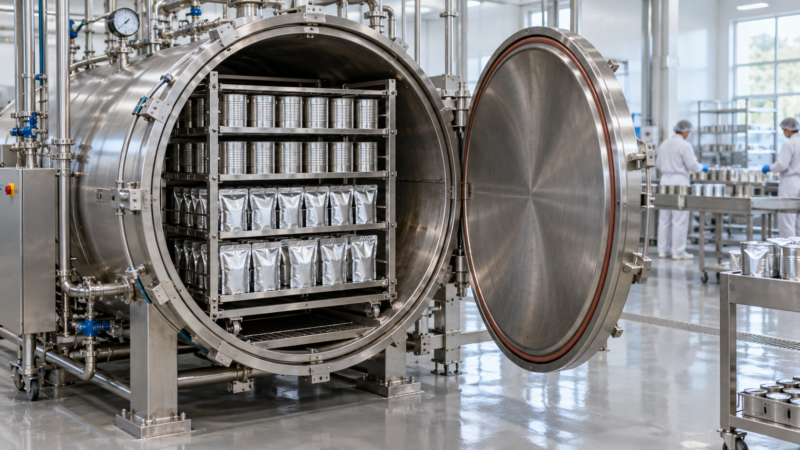
Exporting high pressure processing (HPP) drinks is a cold-chain business: the product is not shelf-stable, so its chilled shelf life has to outlast production, loading, ocean transit, customs and distribution. Where that chain breaks, the shelf life on arrival shrinks, and sometimes the product cannot be sold at all.
This article sets out the realities of long-distance HPP export, using coconut water as the working example. It covers shelf life against transit time, reefer requirements, the economics of air freight and the cases where a buyer is better off treating the product in the destination market. The process itself is described in our guide to what HPP can and cannot do for beverages.
What does HPP shelf life actually mean for exporters?
HPP shelf life is a chilled shelf life, counted from production under refrigeration. Brands often quote ranges such as 30 to 90 days for HPP juices and coconut water, but the figure depends on the product, its acidity, the starting microbial load, the pack and how well the cold chain is held.
The quoted range is an input to planning, not a guarantee. Shelf life is set by testing the specific recipe in its specific pack at its storage temperature, and the number printed on the label should come from that work. Because HPP does not sterilise in the way heat sterilisation does, spoilage organisms that survive or enter later can grow if the product warms up. A shipment that sits too long above chilled temperature loses days of life that cannot be recovered.
Why is sea freight a problem for a 30 to 90 day product?
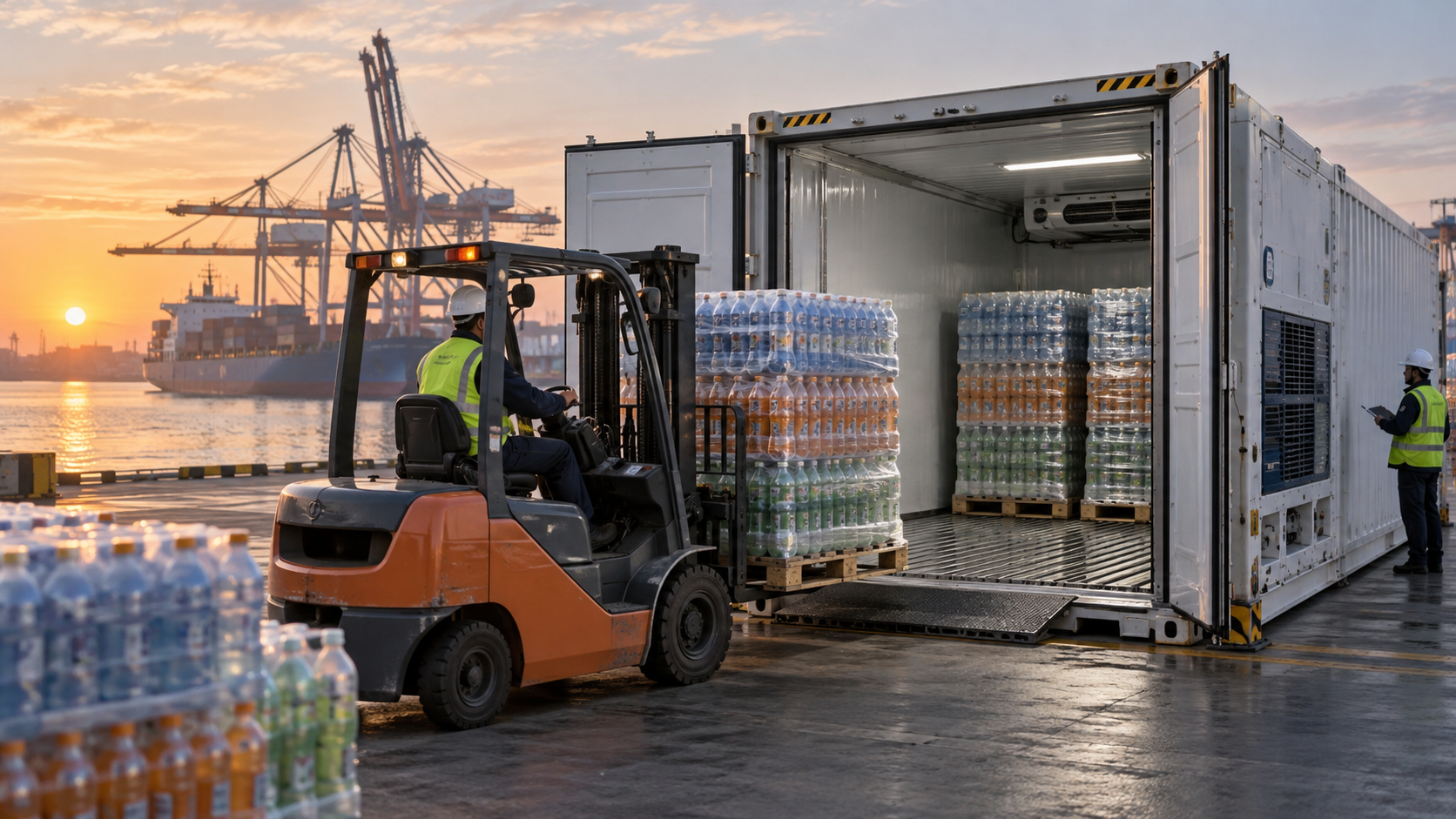
Sea freight consumes shelf life before the product reaches the buyer. Transit takes weeks, and there is also time at the origin port, in customs and in the importer’s warehouse, all of which count against the days printed on the pack.
Add the typical stages of an export lot: production and chilling, waiting for a container to fill, trucking to port, port dwell, ocean voyage, clearance, trucking to a cold store and distribution to retailers. A product with a shelf life of 30 days may have few days left on arrival, while a product with 90 days has more room but still faces retail requirements for minimum remaining life. Retailers and distributors usually set their own minimum remaining shelf life on delivery, so ask the importer for that number early.
What does a reefer container have to do?
A refrigerated container, or reefer, must hold the product at its specified chilled temperature from loading to unloading and prove it with records. The unit keeps temperature, but it does not cool warm product quickly, so the cargo must be pre-chilled before it goes in.
Points to specify with the forwarder:
- Set-point and tolerance: the temperature the product requires, and what deviation is acceptable.
- Pre-cooling: loading product that is already at temperature, since reefers are designed to maintain, not to chill.
- Airflow: pallet patterns that allow cold air to circulate, without blocking vents.
- Data logging: temperature loggers inside the cargo or container, with data available on arrival.
- Power continuity: plugs and monitoring at port, on the vessel and during transfers.
A break in power at any stage can warm a load, which is why monitoring and a claims plan matter as much as the equipment.
When does air freight make sense?
Air freight shortens transit to days, which protects shelf life, but it costs far more per unit of weight and suits limited quantities of premium products. For heavy liquid cargo, the freight cost often exceeds the value of the product unless the price point is high.
Drinks are mostly water, so they are heavy for their value. Air freight is therefore used for launches, samples, trial shipments or seasonal peaks rather than for regular volume. It also needs cold handling at both airports, and delays at airport hubs can erase part of the time advantage. A useful exercise is to compare the landed cost per bottle for air with the landed cost for sea and ask whether the extra shelf life justifies the difference.
How do sea freight and air freight compare for HPP drinks?
The table below shows qualitative trade-offs. Real costs and transit times depend on lane, season and carrier, and should be quoted for each shipment.
| Factor | Sea freight (reefer) | Air freight |
|---|---|---|
| Transit time | Weeks, plus port and customs dwell | Days |
| Shelf life remaining on arrival | Reduced substantially | Close to production shelf life |
| Cost per unit of product | Lower | Much higher |
| Typical use | Regular volume, longer-life HPP products | Launches, samples, premium low-volume lines |
| Main risk | Temperature excursions and port delays | Cold-handling gaps at airports |
| Documentation | Reefer logs, bill of lading, certificates | Air waybill, cold-chain handling records |
Can coconut water be exported as an HPP product?
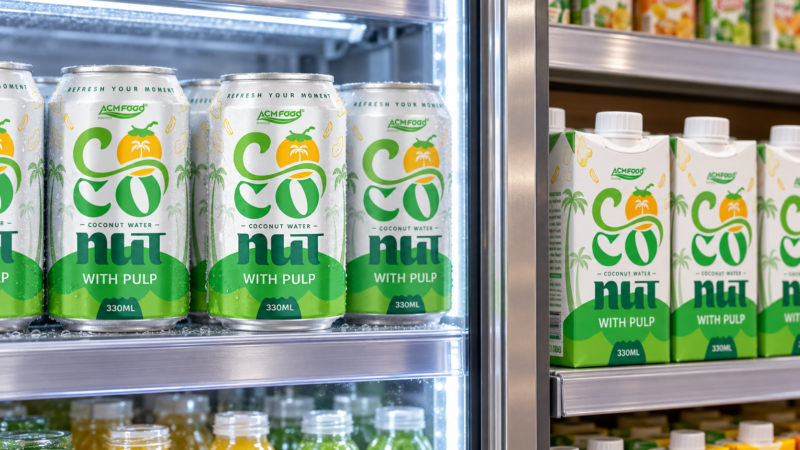
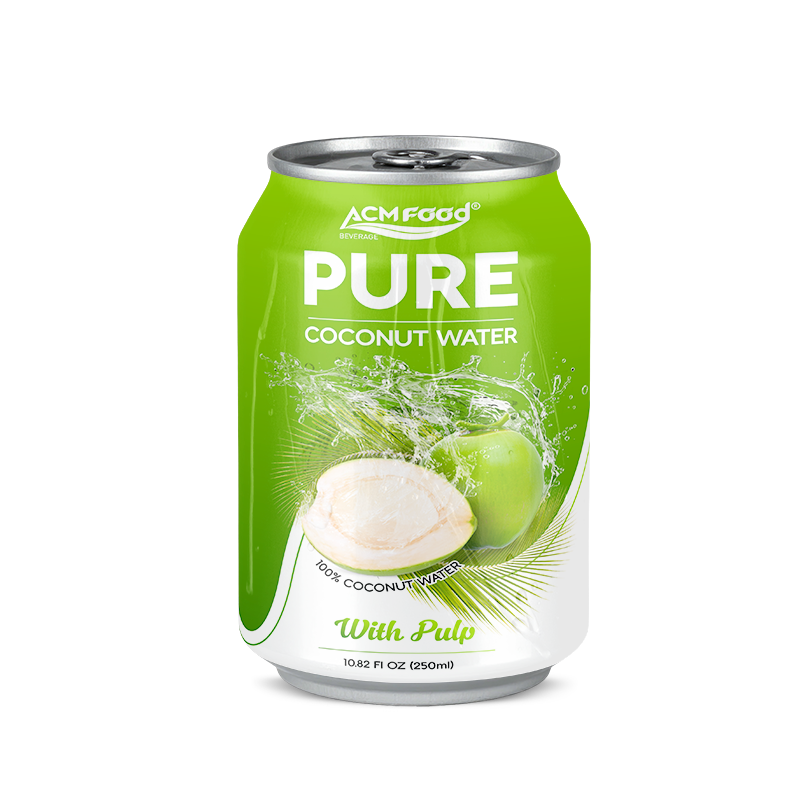
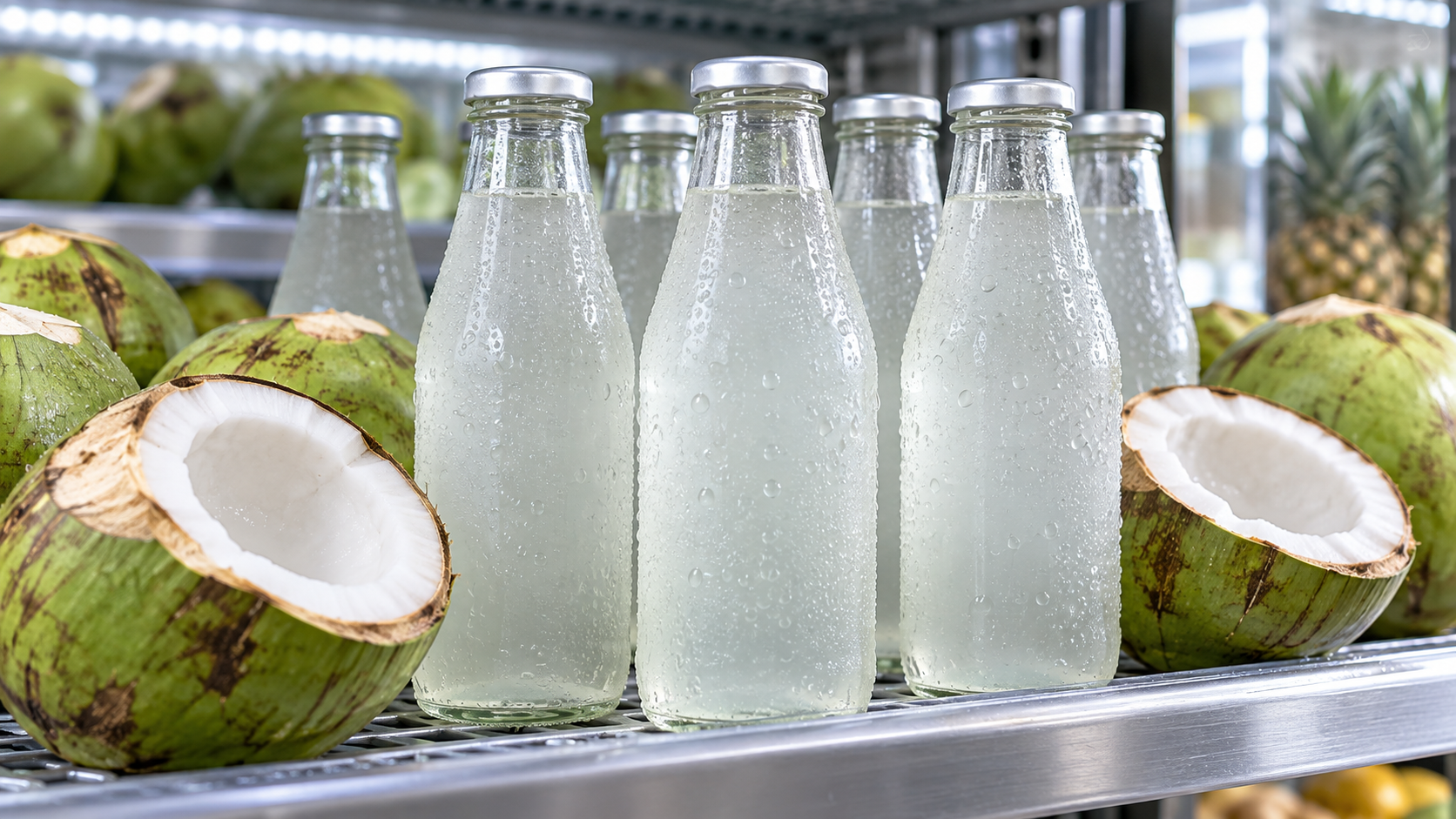
Yes, coconut water is one of the drinks commonly sold as HPP, because heat can change its delicate flavour. Export is feasible when the importer accepts the cold-chain requirements and the shelf life on arrival is enough for the destination market.
Coconut water is low in fat and relatively mild in flavour, so cold processing preserves a fresh taste that some buyers value. The trade-off is the chilled supply chain. Many exporters therefore offer coconut water in several forms, including heat-treated shelf-stable versions, and the choice depends on the positioning of the buyer’s brand. For the sourcing and supply side, see our pages on coconut water supply from Vietnam and the production process and quality systems for coconut water.

When should a buyer HPP in the destination market instead?
A buyer should consider HPP in-market when transit time would consume too much shelf life, or when the cold chain risk is high. Shipping the unprocessed or lightly processed liquid in a different form and treating it near the market preserves more of the chilled window.
Options include shipping frozen or concentrated product to be processed and packed locally, or contracting a local HPP toll processor. These approaches change the economics: freight volume may drop, but the buyer takes on local packing, labelling and quality responsibility. The right balance depends on volume, the regulatory position of the product class and the buyer’s own capabilities.
What should be in a cold-chain export plan?
A cold-chain export plan sets out the temperature requirement at every stage, who is responsible for it and what evidence will be collected. Without it, disputes about spoiled cargo are hard to resolve.
- Shelf life file: test results supporting the stated shelf life at the stated storage temperature.
- Minimum remaining life: the number of days the importer needs at delivery.
- Transit schedule: expected days per stage, with allowances for delay.
- Temperature specification: set-point, tolerance and logger placement.
- Responsibility: who owns the cargo and the risk at each stage under the agreed trade terms.
- Contingency: what happens if a reefer fails or a shipment is held.
Lead times and slots interact with this plan; see booking production capacity: lead times, slots and seasonality. Sampling and trial shipments are discussed in beverage sample costs and timelines.
What temperature records should travel with the shipment?
A chilled shipment should carry temperature records from production to delivery: cold store logs, loading temperature, reefer set-point and logger data. These records show whether the cold chain held and support any claim if it did not.
Data loggers placed inside the cargo give a more accurate picture than the reefer display alone, because the display reflects air temperature in one place. Agree in advance who downloads the data, who can see it and what temperature excursions trigger a claim or a quarantine. Without agreed rules, an arrival temperature dispute is difficult to settle.
How do trade terms change who carries the risk?
The agreed trade term decides when the risk of loss passes from seller to buyer, and for a perishable shipment that matters. Under many common terms, risk passes at loading or at the port, long before the product reaches the buyer’s cold store.
That means a buyer may carry the risk of a reefer failure at sea even though the product is still in transit. Insurance, packing-list details and the choice of forwarder then become important. Both sides should confirm in writing who arranges the reefer, who pays for monitoring and who handles claims.
What alternatives exist to shipping chilled HPP?
Alternatives include heat-treated shelf-stable versions, frozen shipment for in-market processing, concentrate shipped for local reconstitution and local HPP tolling. Each trades freshness positioning against logistics risk.
- Shelf-stable heat treatment: removes the cold chain but changes flavour, depending on the product. See UHT processing for beverages.
- Frozen shipment: extends the window but needs frozen storage at destination.
- Concentrate: reduces freight volume, with reconstitution done locally.
- In-market HPP: restores the chilled shelf life at the destination.
How should a buyer calculate usable shelf life on arrival?
Usable shelf life is the labelled shelf life minus every day the product spends between production and the point of sale, then compared with the distributor’s minimum. Calculating it for each lane before the first order avoids discovering a gap at the port.
Build the calculation as a simple timeline. Start with the day of production, then add the days waiting for container consolidation, the trucking to port, the port dwell, the sailing time, the arrival and clearance time, the transport to the cold store and the time in the importer’s warehouse. Subtract the total from the labelled shelf life, and compare the remainder with what the retailer requires on delivery. Add a safety margin for delays, because ocean schedules change, and ask the forwarder for realistic rather than best-case transit estimates.
If the result is thin, the options are a longer validated shelf life, a faster freight mode, a different product format or processing in the destination market. The calculation should be part of the contract discussion, not an afterthought.
Frequently asked questions
Is HPP the same as pasteurisation?
No. HPP uses very high pressure, usually without heat, in the sealed container, while pasteurisation uses heat. Both aim at microbial reduction, but they differ in effect on flavour, shelf life and regulatory treatment.
Does HPP juice need to stay refrigerated all the way?
Yes, for products sold as chilled HPP, the cold chain is part of the safety and quality concept. Once the product warms, shelf life shortens and the risk of spoilage increases.
Can an HPP drink be sold as shelf-stable?
Only if the product has been demonstrated to be stable at ambient temperature, which usually involves other controls such as low pH or additional preservation steps. It should not be assumed from the HPP step alone.
Conclusion
HPP export works when shelf life, transit time and cold-chain control add up on paper before the first shipment. Work backwards from the importer’s minimum remaining life, then choose the freight mode, or the in-market option, that protects it.
Next step: send us your spec and target market, and we confirm the route, including whether HPP, heat treatment or in-market processing fits your lane.