


 Français
 Español
 العربية
 한국어
한국어Watermelon juice is pressed from the flesh of Citrullus lanatus, a fruit that is roughly nine-tenths water. That single fact explains almost everything about the product: it is light and refreshing to drink, but it is one of the harder juices to turn into a stable packaged beverage, because there is very little sugar, acid or pulp to hold flavour and colour together once the juice leaves the fruit.
This guide covers what watermelon juice actually contains, why its low acidity changes the processing route, how its colour behaves, and what a brand should confirm before committing to a watermelon SKU.
What is watermelon juice made of?
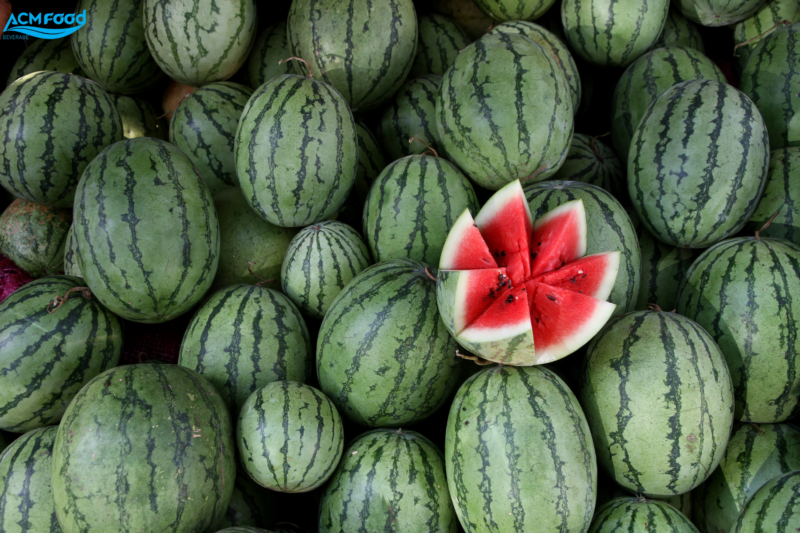
Watermelon juice is simply the liquid fraction of watermelon flesh, with seeds and rind removed. Because the fruit is around ninety percent water by weight, the juice is naturally low in soluble solids compared with apple, grape or mango juice. It carries a mild sweetness, a very delicate aroma, and its characteristic pink-to-red colour comes from lycopene, a carotenoid pigment.
Watermelon is also a low-acid fruit. Most fruit juices used in ambient beverages sit comfortably on the acidic side, which suppresses microbial growth. Watermelon does not, and that difference drives most of the manufacturing decisions below.
Why is watermelon juice harder to produce than most fruit juices?
Three properties work against it at the same time: low acidity, low soluble solids, and a heat-sensitive aroma. A juice that is low in acid needs a more demanding preservation route; a juice that is low in soluble solids has little natural body to carry flavour; and an aroma that disappears under heat leaves a product that tastes flat after pasteurisation.
| Factor | Watermelon juice | Typical citrus or berry juice | Why it matters |
|---|---|---|---|
| Acidity | Low — generally sits above the pH 4.6 threshold | Acidic — comfortably below pH 4.6 | Decides whether the product is treated as an acid or low-acid food |
| Soluble solids | Low | Moderate to high | Affects mouthfeel, sweetness and how well flavour carries |
| Pigment | Lycopene (carotenoid) | Anthocyanins or carotenoids | Determines how colour behaves under heat, light and oxygen |
| Aroma | Very delicate, easily lost | More robust | Influences how gentle the thermal step has to be |
How does low acidity change the processing route?
The pH 4.6 line is the single most important number in juice processing. Above it, the food is classified as low-acid in most regulatory frameworks, which generally calls for a more severe thermal process or a different preservation strategy than a simple hot-fill. Below it, acidity itself does part of the preservation work.
Watermelon juice on its own usually sits above that line, so a brand has three realistic paths: acidify the formulation until it is reliably below the threshold, blend watermelon with a more acidic juice, or accept a more demanding aseptic or retort process. Which one suits your product depends on the taste you want and the shelf life you need. See how filling technology is chosen by beverage pH for how that decision is usually made.
Blending: the most common commercial answer
Most watermelon products on the market are not one hundred percent watermelon. Blending with a more acidic fruit brings the pH down, adds soluble solids, and gives the aroma something to sit against. Common partners include lime, lemon, strawberry, apple and passion fruit.
- Citrus partners drop pH quickly and add lift to the aroma, but can dominate if overdosed.
- Berry partners reinforce the pink colour, which helps mask any pigment loss during processing.
- Apple or pear raise soluble solids and body without adding a competing flavour note.
A blend also changes what you can put on the label, since juice content and the order of ingredients both shift. Confirm the declaration rules for your destination market before the recipe is locked.
Why does watermelon juice lose its colour?
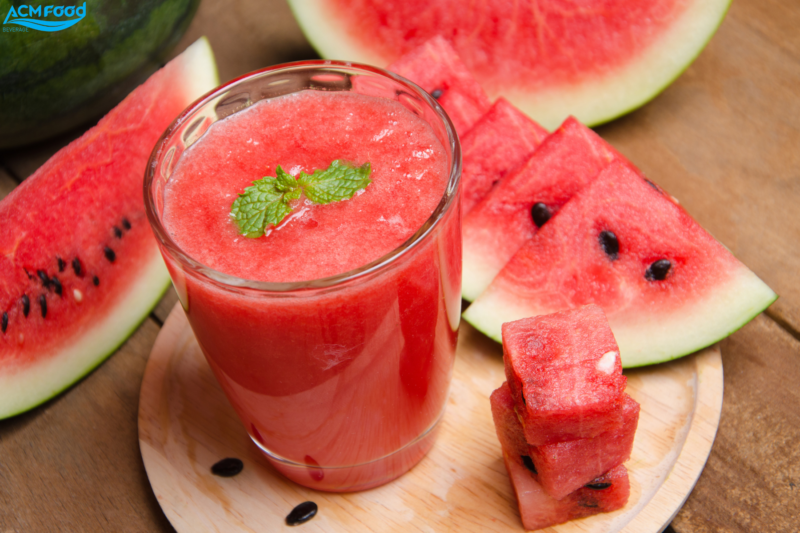
The pink colour comes from lycopene, which is sensitive to heat, light and oxygen. Under a harsh thermal step the juice can shift from bright pink toward a duller orange-brown, and continued light exposure on shelf pushes it further. This is why watermelon products are more often seen in cans, opaque cartons or coloured sleeves than in clear glass sitting under retail lighting.
Colour is not only cosmetic here. For a fruit whose main selling point is freshness, a dull colour reads to the shopper as an old product, whichever date is printed on the pack. Controlling oxygen pickup during filling and choosing a light barrier are usually more effective than trying to add colour back.
Fresh, NFC or from concentrate?
Watermelon is rarely handled as a shelf-stable single-strength juice straight from the press, because the volume of water involved makes it expensive to ship and store. Three routes are common, and each changes the cost model:
- Not from concentrate (NFC): the juice is pressed, treated and packed without removing water. It gives the closest flavour to fresh fruit and the shortest ingredient declaration, at the highest raw-material and freight cost.
- From concentrate: water is removed near the growing region, the concentrate is shipped, and water is added back at the beverage plant. Far cheaper to move and store, and available year-round, but the aroma is thinner and the label must say so.
- Purée or pulp base: used where a fuller body is wanted, often in blends rather than as a stand-alone juice.
For a fruit as delicate as watermelon, the gap between NFC and from-concentrate is more noticeable than it is for apple or grape, because there is less sugar and acid to mask the difference. If the brand promise leans on freshness, that gap is worth paying for; if the product is a value-tier blend, it usually is not.
Sweetness, acidity and how the drink is balanced
Because watermelon brings little of either, the balance has to be built. Acidity is normally adjusted with a food-grade acid or an acidic juice, which serves two purposes at once: it moves the pH toward a safer processing range and it stops the drink tasting flat. Sweetness is set either by the fruit blend itself or by an added sweetener system, depending on the sugar target and the market’s labelling rules.
These two levers interact. Raising acidity makes a given sugar level taste less sweet, so the two are usually tuned together on the bench rather than one after the other. Getting the ratio right is what separates a watermelon drink that tastes like the fruit from one that tastes like generic pink sugar water.
Which packaging formats suit watermelon juice?
- Aluminium can — full light barrier, good oxygen control, and the format most forgiving of pigment sensitivity.
- Aseptic carton — light barrier plus ambient stability, well suited to blends aimed at family or take-home formats.
- PET bottle — clear and attractive on shelf, but leaves the pigment exposed unless the label or sleeve provides cover.
- Glass bottle — premium presentation, though the same light exposure applies and freight weight is higher.
For a broader comparison of the formats and what each does to cost and shelf life, see the packaging options overview.
Watermelon juice as a seasonal or year-round product
Watermelon is a seasonal crop, and fresh fruit supply varies through the year. For a packaged product that has to be available continuously, this usually means working from concentrate or purée for part of the year, or planning production runs around the harvest window and holding finished stock. Either approach affects cost and lead time, so it should be raised at the brief stage rather than discovered during scheduling.
What should a brand confirm before committing to a watermelon SKU?
- Target juice content, and whether the product will be single-fruit or a blend.
- The pH the finished formulation will reach, since it decides the processing route.
- Colour expectation at the end of shelf life, not only at the point of filling.
- Packaging format and its light barrier.
- Whether fruit supply is seasonal in your intended production window.
Frequently asked questions about watermelon juice
Is watermelon juice the same as watermelon water?
Not necessarily. Product names vary by market, and a drink labelled watermelon water is often a diluted or blended product with a lower juice content than a product labelled juice. What matters commercially is the declared juice percentage and how your destination market defines each term.
Why do most watermelon drinks contain other fruits?
Because watermelon is low in acid and low in soluble solids on its own. Blending brings the pH down toward a more manageable range, adds body, and stabilises the flavour through processing.
Can watermelon juice be made shelf stable at ambient temperature?
Yes, but the route depends on the finished pH. An acidified or blended formulation can often use a simpler thermal process, while a product that stays above pH 4.6 needs a more demanding one. This should be confirmed with the manufacturer against your specific recipe.
Does watermelon juice keep its colour through shelf life?
Lycopene is sensitive to heat, light and oxygen, so some colour change over shelf life is normal. How much depends on the thermal process, oxygen pickup at filling, and whether the pack provides a light barrier.
Information for beverage brands
Watermelon is an attractive flavour for a summer or hydration-positioned range, but it is not a drop-in replacement for a citrus or tropical SKU. Bring the target juice content, the flavour direction and the intended pack format to the first conversation, and expect the pH question to shape the answer more than anything else. ACMFOOD produces fruit juice drinks in cans, PET and glass under OEM and private label programmes, with a minimum of 500 cartons per SKU.
Conclusion
Watermelon juice is easy to enjoy and difficult to package. Its low acidity decides the processing route, its lycopene pigment decides the packaging, and its seasonality decides the production calendar. Settle those three points early and the rest of the development runs like any other fruit drink.