


 Français
 Español
 العربية
 한국어
한국어Choosing the right filling technology for a beverage starts with product pH. The regulatory and microbiological threshold at pH 4.6 divides acid foods from low-acid foods, and that single boundary largely determines whether you can use hot fill, cold fill, ultra-clean/ESL, aseptic, retort, or alternative methods like HPP. Treat pH as your first sorting criterion; everything else follows.
This guide uses pH as the decision axis, not a one-to-one technology comparison. You will find a practical map from pH to feasible processes, plus trade-offs in packaging, shelf-life, cost, and speed to market. Regulations and validation steps vary by market, so treat the map as a framework and confirm details during trials and supplier qualification.
Why does beverage pH drive filling technology?
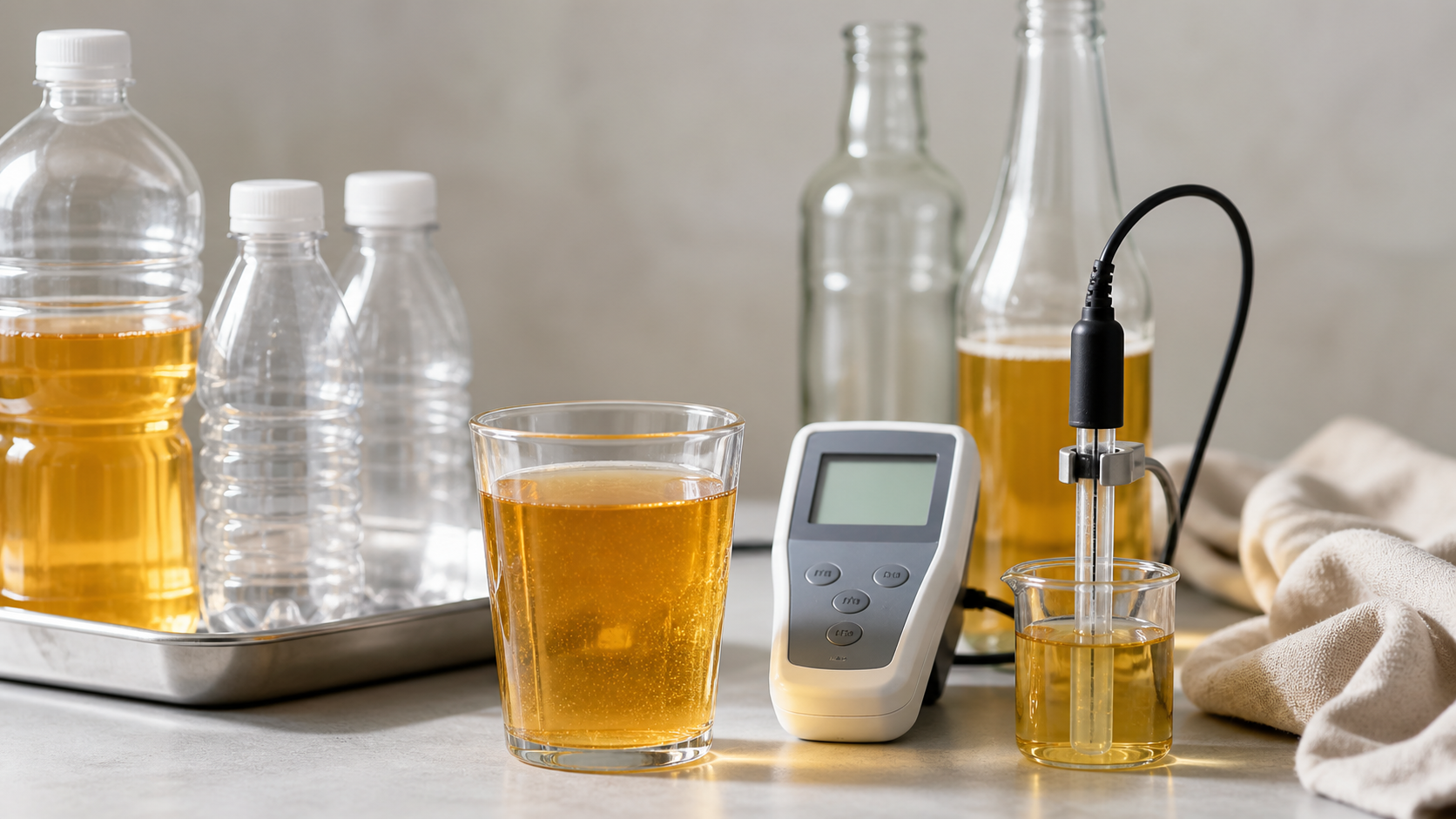
Beverage pH sets the baseline microbial risk: acid products (below pH 4.6) inherently inhibit some spore-forming pathogens, while low-acid products (pH 4.6 and above) require more stringent processing to achieve commercial sterility or safe refrigerated shelf-life. In short, lower pH allows simpler hurdles; higher pH demands stronger ones.
Because pH influences the kinds of microorganisms that can grow, it affects which lethal step and package-sterility strategy will be acceptable for your target market and shelf condition (ambient or chilled). Once you know the pH window, you can shortlist feasible options and then refine by heat sensitivity, particulates, viscosity, desired shelf-life, supply chain temperature, sustainability goals, cost, and package format.
What does pH 4.6 mean for acid vs low-acid beverages?
Below pH 4.6 (acid): You can often choose from cold-fill for carbonated beverages, hot fill for still beverages, or ultra-clean/ESL approaches for chilled distribution. Aseptic is also possible—often used when flavor, color, or nutrients are heat-sensitive and you still need ambient shelf-life.
At or above pH 4.6 (low-acid): You typically need aseptic processing, retort (in-pack thermal sterilization), or HPP (in-pack high-pressure) with refrigerated distribution. Hot fill alone is not sufficient for ambient stability in this category.
- Acid families may include many fruit drinks and most carbonated soft drinks (varies by recipe). See a survey of popular drink categories to understand where your concept might sit before deciding its process route.
- Low-acid families commonly include dairy and many plant-based protein beverages, vegetable-forward blends adjusted above pH 4.6, and many functional or nutritional shakes.
Technology map: choosing a filler by pH
If you start with pH and intended shelf condition (ambient vs refrigerated), the short list of viable processes becomes clearer. The table below summarizes typical options. Always confirm details with your supplier and local regulations.
| pH category | Primary options | Compatible packages | Positioning & notes |
|---|---|---|---|
| Acid (< 4.6) | Cold-fill carbonated (hygienic) | Glass, aluminum cans, PET | CO2 and acidity are key hurdles; widely used for ambient CSD and sparkling styles. |
| Acid (< 4.6) | Hot fill (still) | Hot-fill PET, glass | Enables ambient still beverages; containers must tolerate heat and vacuum. |
| Acid (< 4.6) | Ultra-clean/ESL cold fill | PET, HDPE, some cartons | Extended refrigerated shelf-life; not intended for ambient storage. |
| Acid (< 4.6) | Aseptic processing | Carton, PET, HDPE | Premium choice for heat-sensitive acid drinks needing ambient stability. |
| Low-acid (≥ 4.6) | Aseptic (UHT/HTST + sterile fill) | Carton, PET, HDPE | Primary route for ambient stability without retort; strict sterility controls. |
| Low-acid (≥ 4.6) | Retort (in-pack sterilization) | Cans, glass, retortable pouches | Robust lethality in sealed pack; affects sensory more than aseptic. |
| Low-acid (≥ 4.6) | HPP (in-pack, chilled) | Flexible plastics, some PET/HDPE | Refrigerated distribution; preserves fresh-like quality. |
| Low-acid (≥ 4.6) | Ultra-clean/ESL (refrigerated) | HDPE, PET | Extended refrigerated life; not for ambient storage. |
To see where each process sits in a typical plant and what upstream/downstream steps it requires, explore our Processing Technology overview.
Hot fill vs cold fill: how does pH change the choice?
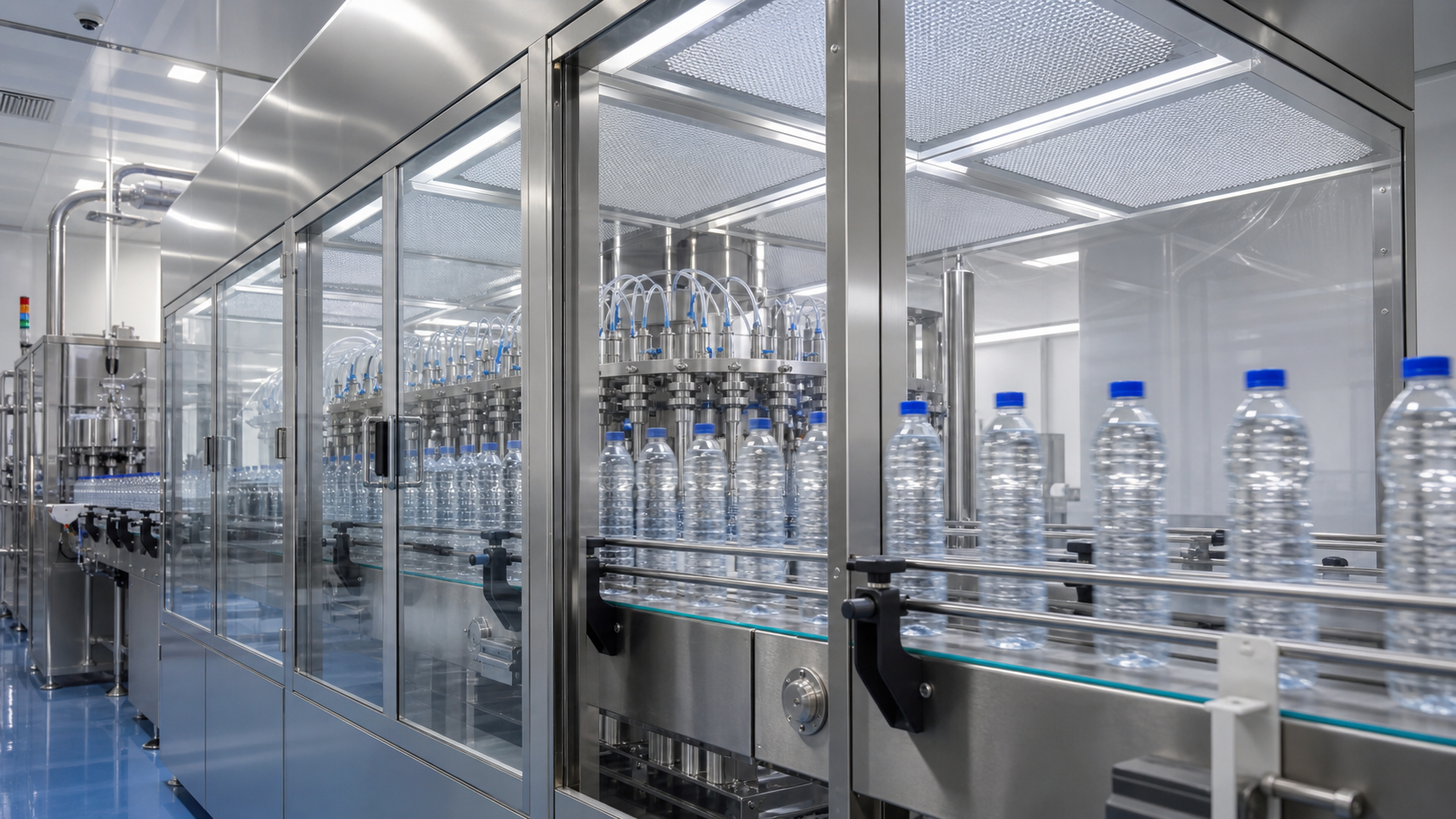
For acid beverages, both hot fill and cold fill are in play. Hot fill is common for ambient still drinks; cold fill is standard for carbonated drinks and for chilled, ultra-clean lines. For low-acid beverages, hot fill alone is not adequate for ambient shelf-life—aseptic, retort, or HPP are the typical routes.
- Cold-fill (acid beverages): The CO2 and low pH in carbonated products are major hurdles, enabling ambient distribution when processed and filled on hygienic lines. For still acid products, cold-fill can work with additional hurdles (e.g., preservatives where permitted) or as part of an ESL refrigerated program.
- Hot fill (acid beverages): The product is filled hot into a heat-resistant container, achieving in-bottle/pack pasteurization. It is a proven path to ambient shelf stability for many still acid beverages. Containers must withstand thermal load and vacuum (think glass or hot-fill-grade PET with vacuum panels).
- Low-acid beverages: Hot fill does not address the risk of spore-forming pathogens in low-acid systems for ambient stability. Use aseptic, retort, or HPP (with refrigeration) instead.
Aseptic, retort, ESL and HPP at a glance
A quick orientation helps align expectations and briefs with co-packers.
- Aseptic processing: The beverage receives a validated thermal treatment (commonly UHT/HTST) and is then filled into a pre-sterilized container in a sterile zone with filtered air and antimicrobial cap treatment. It supports ambient shelf-life for both acid and low-acid beverages, with strong flavor/color retention compared to retort. Requires stringent sterility assurance and operator expertise.
- Retort: The filled, hermetically sealed pack (e.g., can, glass, or retort pouch) is thermally sterilized in-pack. It is robust, equipment is widely available, and the process is well understood. Heat load can be higher than aseptic, so recipes often need sensory optimization for color, texture, and flavor stability.
- Ultra-clean/ESL: Designed for extended refrigerated shelf-life, ultra-clean lines minimize contamination in product and packaging. This is not a substitute for ambient commercial sterility but is effective when chilled distribution is acceptable (e.g., dairy-like products in markets that favor refrigerated placement).
- HPP (High Pressure Processing): In-pack, non-thermal pasteurization using high pressure. It preserves fresh-like profiles and can be excellent for premium low-acid juices and protein blends, but requires refrigerated distribution and compatible packages that can withstand pressure.
How packaging interacts with pH and filling
Container choice is never just a marketing decision; it must be compatible with your process and pH-driven risk profile.
- Hot fill: Requires heat-resistant containers and closures. Glass and hot-fill PET with vacuum panels are common. Torque, seal integrity, and panel performance are critical; thermal mapping validation is part of commissioning.
- Aseptic: Cartons, PET, and HDPE are typical. The container, closure, and liner must accept sterilants and drying, and the design must allow reliable decontamination and tight seals in a sterile environment. Labels, inks, and adhesives must also withstand the process.
- Retort: Cans, glass jars, and retortable pouches or trays are designed to handle in-pack heating and pressure differentials. Closures must be hermetic, and shape/size affect heat penetration and come-up/cool-down dynamics.
- Cold-fill carbonated: Glass, cans, and PET dominate. Bottle geometry influences CO2 retention, capping performance, and resistance to internal pressure. Line hygiene, rinser/filler/capper design, and dissolved oxygen control are central to consistency.
- HPP: Bottles and pouches must withstand pressurization without permanent deformation. Materials and closures are selected for seal integrity under pressure and for minimal oxygen ingress during refrigerated life.
When shifting to lighter bottles or recycled content, assess process compatibility, top-load performance, and heat or pressure tolerance. For background on material choices, see a packaging perspective in rPET for beverage bottles.
Product development and pH: formulation levers
pH is not only a constraint; it can be a tool. Adjusting pH—within sensory limits—can open simpler filling routes. Conversely, protecting delicate flavors, colors, and nutrients might steer you toward gentler thermal profiles or non-thermal approaches.
- Acidification: Bringing a formulation below pH 4.6 can unlock hot fill or hygienic cold-fill options for ambient or chilled distribution, depending on the full hurdle strategy. Balance sensory impact with shelf-life goals.
- Buffers and proteins: Dairy and many plant proteins naturally resist pH shifts or require narrow pH bands for stability and flavor. These drinks often remain low-acid and therefore require aseptic, retort, or HPP plus refrigeration.
- Preservation systems: Where permitted, preservative systems can contribute to safety and quality, particularly in acid drinks and ESL programs. They are not a universal substitute for lethality or sterility validation—regulatory acceptance and risk assessment are essential.
- Carbonation: For acid beverages, carbonation adds a hurdle and supports hygienic cold-fill with ambient distribution. For low-acid systems, carbonation alone is not enough for ambient stability.
- Particulates and viscosity: Large particulates, pulps, or high viscosity affect heat penetration, filler valve selection, and cleaning regimes. They can point you to specific aseptic or retort setups or require formulation changes (e.g., smaller particulates).
- Color and flavor stability: Sensitive natural colors and top-note aromas may degrade under higher heat load. Aseptic or HPP can protect sensory quality, while hot fill or retort may need flavor re-balancing.
- Oxygen management: Dissolved oxygen control, headspace optimization, and closure/barrier selection are essential quality levers across all processes—especially for natural colors, aromas, and oils.
Work through these trade-offs early with your technical team. Our Formulation and R&D guidance can help structure the decision-making around pH, hurdles, and sensory targets.
Cost, lead time, and supplier qualification
Generally, the stronger the microbial risk (i.e., at or above pH 4.6 for ambient distribution), the more capital- and validation-intensive the process. Acid products often have more co-packing options and faster speed to market; low-acid ambient products rely on fewer, specialized lines (aseptic or retort).
- Line availability: Many regions have abundant hot-fill and carbonated lines. Aseptic capacity is more specialized, often with longer booking lead times. Retort capacity is widely available but may require compromises in package form.
- Trials and validation: Expect pilot runs, thermal/pressure validation, microbiological testing, and shelf-life studies tailored to your process, package, and pH.
- MOQs and changeovers: More complex lines often have higher MOQs and longer changeovers—factor this into launch phasing and SKU counts.
- Supplier qualification: Request process SOPs, HACCP plans, cleaning and sterilization validation, environmental monitoring results, and packaging specifications. A structured approach like our reference list of supplier qualification documents can streamline review.
- Technology transfer: Moving from one manufacturer to another requires re-validating the critical controls around pH, heat load, and sterility. See practical checkpoints for moving a beverage recipe.
Before engaging lines, align stakeholders on the process family that pH implies, then refine by sensory priorities, pack format, sustainability targets, and route-to-market. For a process-level primer, visit the Processing Technology overview.
Frequently asked questions
Is pH 4.6 the only factor when choosing a filling process?
No. pH is the first filter, but not the last. Target shelf condition (ambient vs chilled), package and closure, particulates, viscosity, flavor/color sensitivity, oxygen and light exposure, preservatives (where permitted), and distribution realities all influence the final choice and validation steps.
Can preservatives let me use cold fill for a low-acid beverage?
Not for ambient commercial sterility. Preservatives can be part of a hurdle strategy in some acid beverages and in ESL refrigerated programs, but they are not a replacement for aseptic, retort, or HPP in low-acid ambient products. Regulatory acceptance and risk assessments are required.
Do carbonated beverages need hot fill?
Typically no. Carbonated acid beverages are generally cold-filled on hygienic lines because acidity and CO2 provide effective hurdles, combined with process controls that manage contamination and oxygen. This supports ambient distribution without subjecting the drink to hot-fill heat loads.
Can I hot-fill into PET bottles?
Yes, if you use hot-fill-grade PET designed for thermal loads and vacuum compensation (e.g., with appropriate paneling). Bottle design, preform selection, and closure/torque settings all need to be matched to your thermal profile and validated on line.
Where should I begin if I only know my beverage pH?
Start by deciding whether your target shelf condition is ambient or refrigerated. Use the pH 4.6 boundary to shortlist feasible processes (hot fill and hygienic cold-fill for acid; aseptic/retort/HPP for low-acid). Then engage potential co-packers and build a product brief covering formulation, packaging, and validation goals—see the Processing Technology overview to frame that brief.
Key takeaway: pH doesn’t answer everything, but it answers first. Use the pH 4.6 boundary to define your feasible filling families, then optimize for taste, cost, package, and route-to-market. For concept scoping and process trade-offs grounded in pH, review our Processing Technology overview, explore Formulation and R&D guidance, and structure supplier reviews with the right supplier qualification documents. That sequence keeps your filling technology beverage decision aligned with safety, shelf-life, and brand positioning.