Français
 Español
 العربية
 한국어
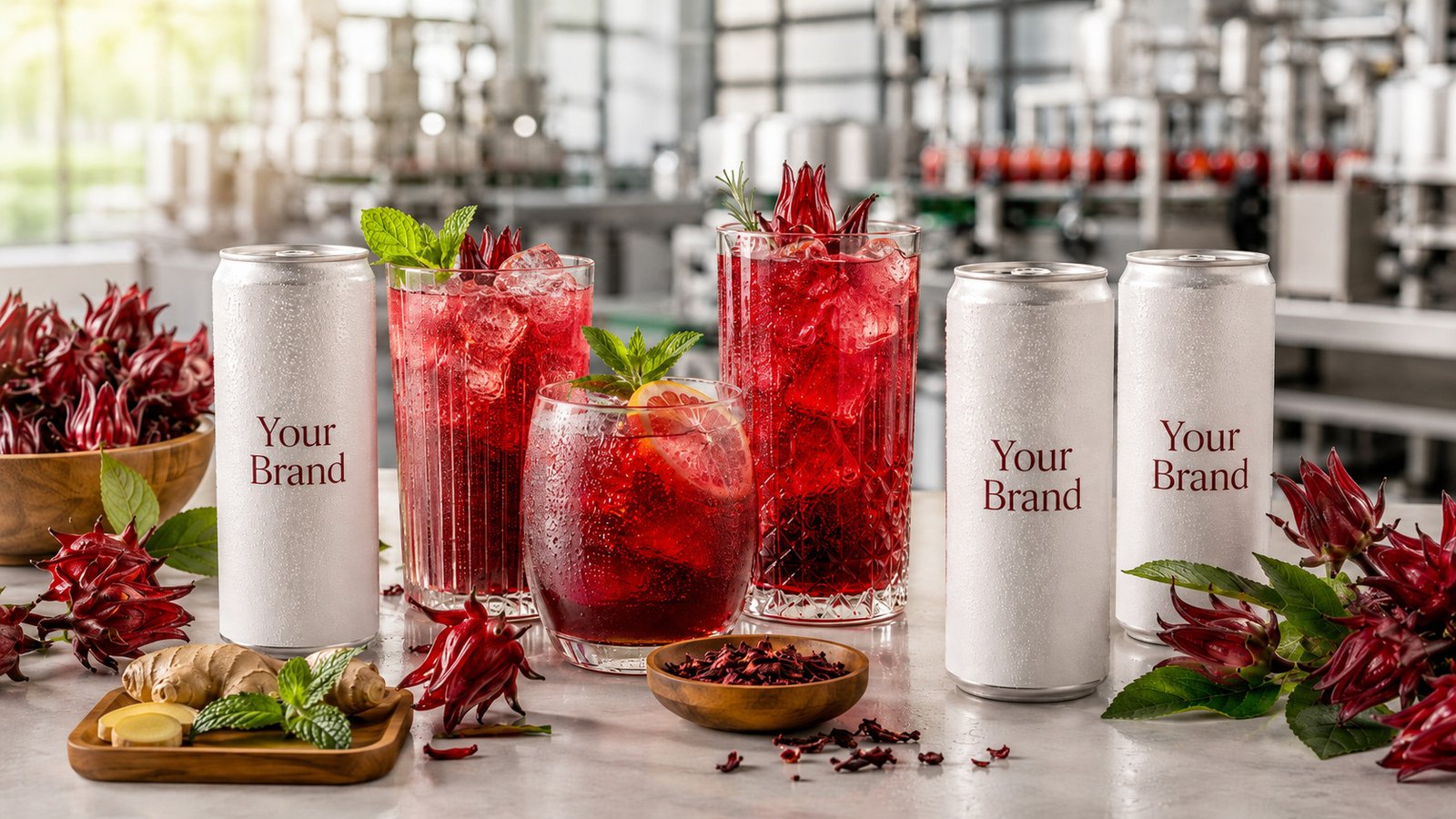
한국어Hibiscus flower tea is a caffeine-free herbal infusion made from the dried red calyces of Hibiscus sabdariffa. It is popular worldwide because of its striking ruby colour, its tart, cranberry-like taste, its long cultural history and its flexibility as an ingredient in hot tea, iced tea, ready-to-drink and sparkling drinks.
It now appears in tea aisles, cafés, wellness stores and private label ranges across North America, Europe, the Middle East and Asia. This guide explains what hibiscus flower tea is, why consumers choose it, and what importers and brands should know when sourcing it.
What is hibiscus flower tea?
Hibiscus tea is made by steeping the dried, fleshy calyces that surround the hibiscus flower in hot or cold water. It does not come from the tea plant Camellia sinensis, so it is naturally caffeine-free.
The taste is tart, fruity and refreshing, often compared with cranberry or pomegranate. It blends well with rosehip, lemongrass, ginger, mint, cinnamon and tropical fruits.
Where does hibiscus tea come from?
Hibiscus drinks have been part of food culture for centuries. In Egypt and Sudan it is known as karkadé; in Mexico, “agua de Jamaica” is a chilled hibiscus drink; and across West Africa hibiscus drinks such as bissap and zobo are widely consumed. That heritage gives brands an authentic story to tell on shelf.
Why is hibiscus flower tea so popular?
Hibiscus combines several qualities shoppers want at once:
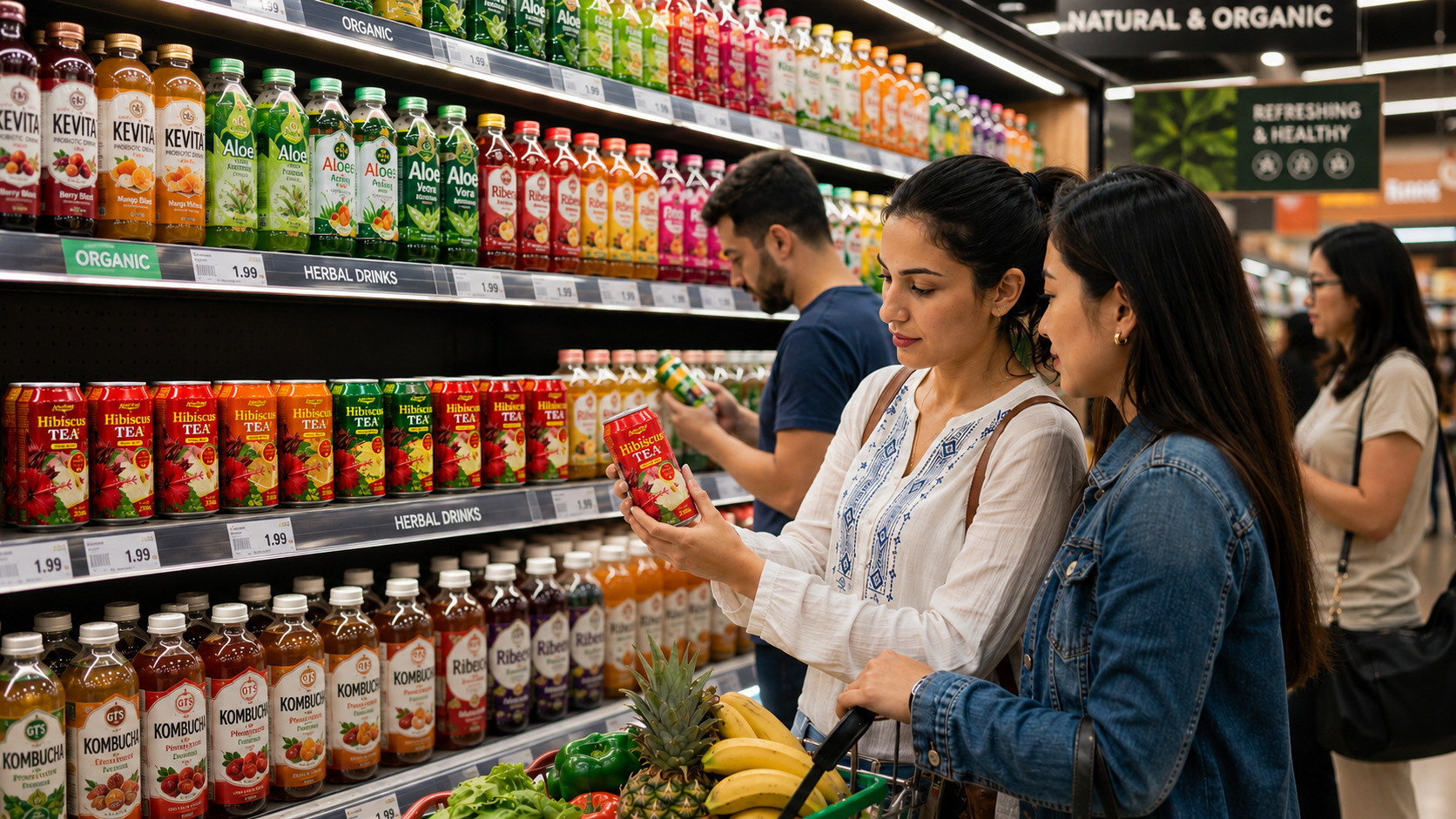
- Colour: a deep red that stands out on shelf and on social media.
- Bold natural flavour: tart and fruity without artificial flavouring.
- Caffeine-free: suitable any time of day, including evenings.
- Plant compounds: hibiscus naturally contains anthocyanins and other polyphenols, which give its colour.
- Lower-sugar appeal: its strong flavour works with little or no added sugar.
Brands should avoid unsupported health claims; any function claim must meet the rules of the target market.
Which product formats use hibiscus?
| Format | Typical positioning |
|---|---|
| Loose-leaf and tea bags | Premium and everyday herbal tea |
| Ready-to-drink iced tea | Convenience and retail chillers |
| Sparkling hibiscus drinks | Younger consumers, soda alternatives |
| Fruit and botanical blends | Flavour variety and wellness ranges |
| Powdered mixes and cold brew | Home and foodservice use |
Why does hibiscus work well for private label?
Hibiscus is recognised by consumers but far less crowded than black, green or chamomile tea, which leaves room to differentiate. Private label brands can combine it with regional fruits, herbs or functional ingredients and tailor packaging to each customer, from a premium organic line to larger value packs.
What should buyers look for when sourcing hibiscus?
- Colour: good calyces keep a rich red after drying.
- Aroma: clean and fruity, with no sign of moisture damage.
- Food safety: certificates, specifications and microbiological test results.
- Traceability and export experience: documents and packaging suitable for your market.
Why source hibiscus drinks from Vietnam?
Vietnamese manufacturers offer OEM and private label production of tea, herbal and botanical drinks with established export routes to North America, Europe, the Middle East and Asia. Buyers can often source several beverage lines from one supplier, which simplifies procurement for a wider herbal range.
Frequently asked questions
Does hibiscus tea contain caffeine?
No. Hibiscus is not made from the tea plant, so it is naturally caffeine-free unless blended with tea.
What does hibiscus tea taste like?
Tart and fruity, similar to cranberry or pomegranate.
Can hibiscus tea be served cold?
Yes. It is widely drunk iced, as in Mexico’s agua de Jamaica, and works well in ready-to-drink and sparkling formats.
Conclusion
Hibiscus flower tea is popular because it is colourful, naturally flavourful, caffeine-free and rooted in tradition. For importers and private label brands, it offers flexibility across tea, RTD and sparkling formats and fits long-term demand for botanical, lower-sugar drinks.
For formats and processing routes, see beverage product capabilities; for production, see contract beverage manufacturing; for your own label, see private label beverages. To discuss a specification, request a quote.
Request a quote