


 Français
 Español
 العربية
 한국어
한국어Short answer: there is no single best time. Coconut water is a hydrating drink with naturally occurring electrolytes, so the useful question is not when but what you want from it. The timing that helps most depends on whether you are replacing fluid after sweating, looking for a low-sugar alternative to soda, or simply drinking something with a meal.
What does coconut water actually contain?
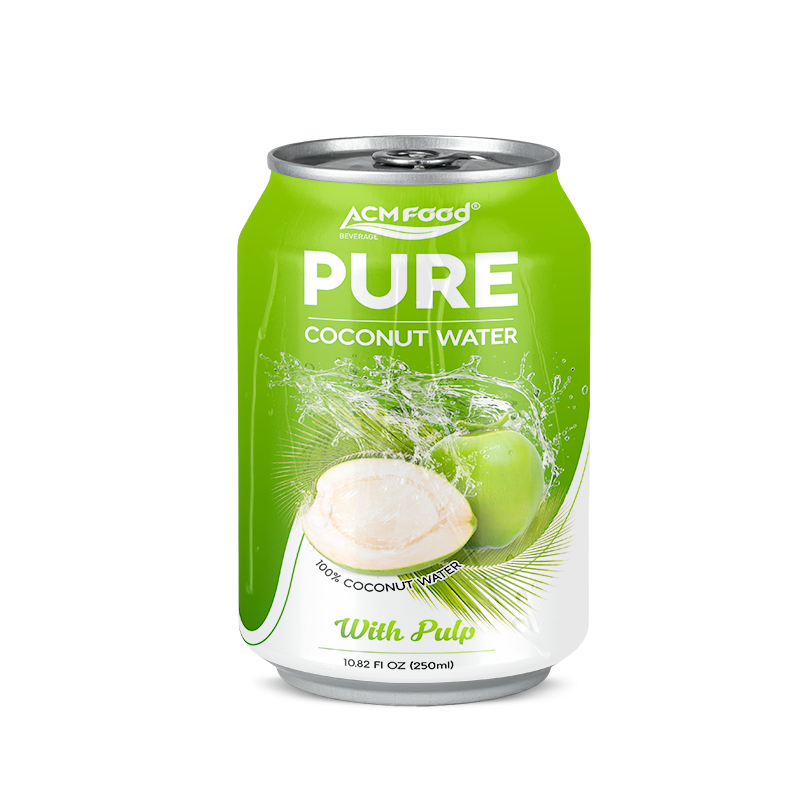
Coconut water is the clear liquid inside a young green coconut. In its pure form the ingredient list is one item. It is mostly water, with naturally occurring sugars and minerals — potassium is the one it is best known for, alongside smaller amounts of sodium, magnesium and calcium.
Two things follow from that composition, and they explain most of the timing advice you will read elsewhere. It contains real sugar, so it is a drink with calories rather than a zero-calorie water substitute. And its mineral profile is not identical to a formulated sports drink — notably, it is comparatively high in potassium and comparatively low in sodium, which is the mineral you lose most of in sweat.
Is coconut water good after exercise?
Yes, for ordinary training. After a normal workout the main thing you need is fluid, and coconut water delivers fluid with some carbohydrate and minerals alongside it, which many people find easier to drink in volume than plain water.
The honest caveat is at the extreme end. For long endurance efforts or heavy sweating in heat, sodium replacement matters, and coconut water is low in sodium relative to what you lose. In that situation it works better alongside a salty food or a formulated electrolyte drink than as the sole replacement.
Should you drink coconut water in the morning on an empty stomach?
You can, and many people like it, but the specific claims attached to this habit — that it detoxifies, kick-starts metabolism, or works better on an empty stomach — are not supported by good evidence. Your kidneys and liver handle detoxification regardless of what you drink first.
What is true is more mundane and more useful: most people wake mildly dehydrated after several hours without fluid, and drinking something in the morning helps. Coconut water does that job pleasantly. So does water.
Can you drink coconut water before bed?
There is nothing in coconut water that prevents sleep — it contains no caffeine. The practical limitation is volume rather than composition: a large drink close to bedtime tends to interrupt sleep for the obvious reason. A small serving is unlikely to cause a problem.
Is coconut water good for you if you are watching sugar?
Compared with a regular soft drink, pure coconut water is typically much lower in sugar and has nothing added. Compared with water, it is not sugar-free. Both statements are true and which one matters depends on what you are replacing.
Read the label rather than the front of the pack. Products described as coconut water drinks may contain added sugar or fruit juice, and coconut water made from concentrate is a different product from one filled at natural strength. If sugar intake is the reason you chose the drink, the ingredient list is where you check it.
Who should be careful with coconut water?
- People with kidney disease or anyone advised to limit potassium should ask their doctor first. Coconut water is a meaningful potassium source, and this is the one caution worth taking seriously.
- People taking medication that affects potassium — some blood pressure medicines do — should also check.
- Anyone managing blood sugar should count it as a drink with carbohydrate rather than as water.
This is general information, not medical advice. If any of the above applies to you, ask a healthcare professional about your own situation.
How much is reasonable in a day?
For most healthy adults, one to two servings a day fits comfortably into normal fluid intake. There is no established limit, but treating it as a pleasant part of your fluids rather than as a replacement for all of them is the sensible default — partly for the sugar, partly because plain water remains the cheapest and simplest way to stay hydrated.
Does chilled or room temperature matter?
Only for enjoyment. Temperature does not change the nutrition. Most people prefer it cold, and shelf-stable canned coconut water can be chilled before serving without any effect on what is inside.
Quick reference
| Situation | Does coconut water help? |
|---|---|
| After a normal workout | Yes — fluid plus some carbohydrate and minerals |
| After long endurance effort in heat | Partly — low in sodium, pair with a salt source |
| First thing in the morning | Fine, but no special “empty stomach” benefit |
| With a meal | Fine — treat as a drink with calories |
| Before bed | Fine in small amounts — no caffeine |
| Replacing soft drinks | Yes — typically much lower sugar, nothing added |
| Replacing all water intake | No — it still contains sugar |
Choosing a product worth drinking
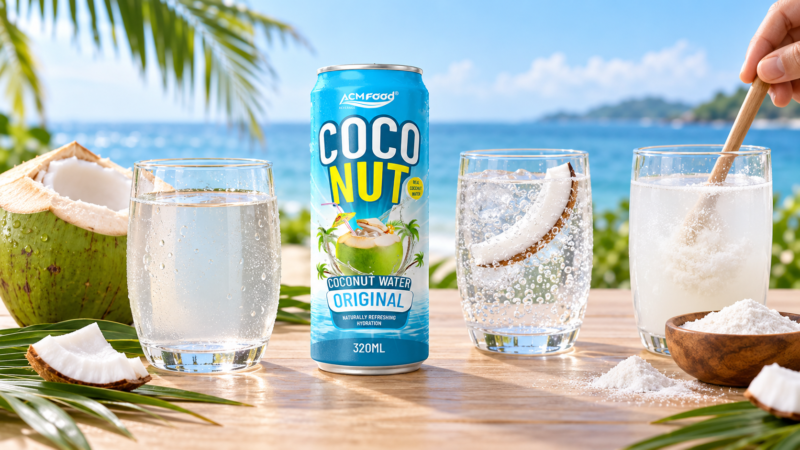
If you care about what is in the can, three things on the label tell you most of it: whether the declaration is coconut water alone or coconut water plus other ingredients, whether it is from concentrate or filled at natural strength, and the sugar figure per 100 ml. The differences between these product types are explained in canned coconut water: pure, pulp, sparkling and prebiotic compared, and the process distinction in NFC versus from concentrate.
For businesses rather than consumers: ACMFOOD produces canned coconut water in Vietnam for importers, distributors and private label brands — see the coconut water supply programme.
For beverage businesses
If you are sourcing coconut water rather than drinking it, the commercial side is covered separately: beverage product capabilities for what we produce, and private label beverage manufacturing for launching it under your own brand.