


 Français
 Español
 العربية
 한국어
한국어Ask ten importers why they moved their coconut water sourcing to Vietnam and a large share will give the same practical reason: access to not-from-concentrate production at a workable price. NFC is the single most consequential specification decision in this category, and also the one most often taken on trust rather than verified.
This article explains what the distinction actually is at a process level, what it does to taste, cost and claims, and — most importantly — how to confirm that what you are buying is what the specification says.
For the origin case more broadly, see Vietnamese coconut water. For preservation methods and what “fresh” can legitimately mean, see the freshness question. This page is about reconstitution specifically — a different axis from both.
What the two processes actually are
From concentrate. Coconut water is extracted, then most of its water is removed by evaporation to produce a concentrate of several times the original strength. The concentrate is stored and shipped — chilled or frozen, at a fraction of the original volume — and water is added back at the filling site to return it to single strength before packing.
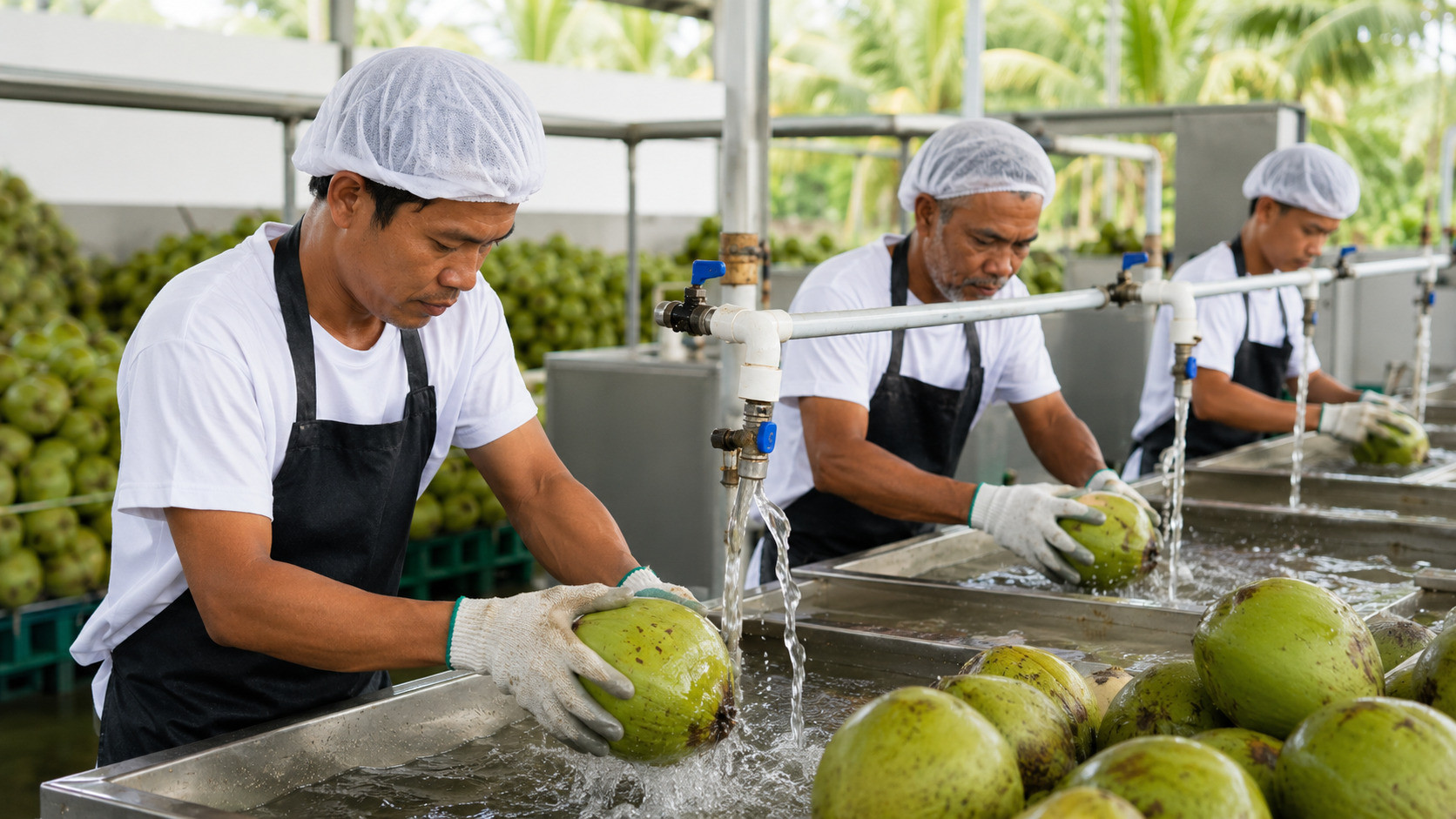
Not from concentrate. The coconut water is extracted, treated and filled at its natural strength. Water is never removed and never added back. Everything that ships is the full original volume, which is why NFC production is tied much more tightly to proximity between plantation and plant.
Neither process is inherently unsafe or dishonest. From-concentrate is a legitimate, widely used industrial route with real advantages in logistics and year-round supply. The problem arises only when a product made one way is sold as the other.
What each route does to the product
Aroma. Evaporation removes water, and it removes volatile aroma compounds with it. Some processes capture and add these back; the result is generally closer to but not identical with the original. Aroma loss is the main reason experienced tasters can often separate reconstituted from NFC product in a blind comparison.
Thermal history. A from-concentrate product has been heated to evaporate, then heated again for its final process. NFC carries one thermal step rather than two. Total heat exposure is what drives cooked notes, so this matters to the sensory result.
Consistency. Here from-concentrate has a genuine advantage. Concentrate can be blended across batches and seasons to hit a target every time. NFC follows the harvest, which means an NFC specification is realistically a band rather than a point — and any supplier promising both true NFC and an unusually tight tolerance is promising two things that pull against each other.
Cost structure. From-concentrate moves far less water and far less weight across the supply chain, and the intermediate stores for long periods. NFC ships the full volume of a mostly-water product. This is the whole economic argument, and it is why NFC is most competitive when the factory sits inside the growing region and exports finished product directly.
Shoppers rarely know what NFC stands for, but they respond to what it stands in for: less processing, closer to the original, fewer steps between the fruit and the pack. In premium and clean-label positioning, that is a meaningful and defensible differentiator — and unlike most marketing claims, it describes a real process difference rather than a subjective quality.
The commercial implication is that NFC only pays for itself where the channel can support the price. In a value tier competing purely on shelf price, the extra cost may not be recoverable. Decide this against your channel before you specify it.
Labelling: what you can say, and where
Declaration requirements differ by market and by how the destination classifies coconut water. In several major markets, reconstituted juice products must be declared as being from concentrate, and describing a reconstituted product without that declaration is a compliance problem, not a marketing choice.
Two rules keep you safe. Have the label reviewed against the regulations of each destination before artwork is finalised. And keep claims to what the process supports: “not from concentrate” and “never from concentrate” are factual process statements you can substantiate from your supplier’s records, whereas broader implications of freshness or purity invite scrutiny you may not want.
How to verify NFC — five checks
This is the part that matters, because NFC is invisible in the finished can. A specification sheet saying “NFC” is a claim, not evidence.
- Put it in the contract. Name “not from concentrate” in the specification annex, and add a change-control clause preventing a switch of process or raw material without your written approval. Without this, a mid-contract change to concentrate during a tight season is a commercial decision the manufacturer can make without telling you.
- Ask what happens in the lean season. This is the most revealing single question. Every origin has periods of tighter raw material supply. Ask directly what the factory does then — reduce output, extend lead times, or supplement with concentrate. An honest answer tells you a great deal; an evasive one tells you more.
- Check the plant for evaporation capability. A factory that produces NFC exclusively from local fruit has no reason to operate evaporation equipment or hold concentrate stocks. If concentrate is on site, ask what it is for and which products it goes into.
- Follow the mass balance. Ask how many coconuts were received against how many litres of finished product were produced for a given lot. The two figures should reconcile within normal losses. This is the same lot-level record set that supports traceability, and it is the most objective check available to a buyer.
- Use laboratory authenticity testing where the stakes justify it. Analytical methods used in juice authenticity work — including stable isotope techniques — can detect added water and added sugars, and specialist food authenticity laboratories offer testing relevant to coconut water. If NFC is central to your positioning and your price, commission an independent test on a commercial lot rather than a submitted sample.
Sensory checks you can run yourself
These do not prove anything on their own, but they are cheap and they generate the questions worth asking.
Taste candidate products blind alongside water from a nut opened that day. Reconstituted product often reads as flatter in aroma while similar in sweetness — the gap tends to be in the nose rather than on the palate. Then repeat the comparison across three different production dates. NFC from a genuine single-origin operation usually shows small seasonal variation; a product that is identical batch after batch across a whole year is worth a second look, because natural agricultural material does not normally behave that way.
Choosing between them honestly
NFC is the right specification when you are positioning in premium or clean-label, your channel supports the price, and you can source from a factory close to the growing region. From-concentrate is the rational choice when your priority is a tightly consistent product at a competitive price, year-round supply certainty matters more than aroma fidelity, or your filling operation is far from any coconut-growing area.
What is not defensible is specifying NFC because it sounds better, paying for it, and never verifying it. That is the failure mode this article exists to prevent.
How ACMFOOD produces
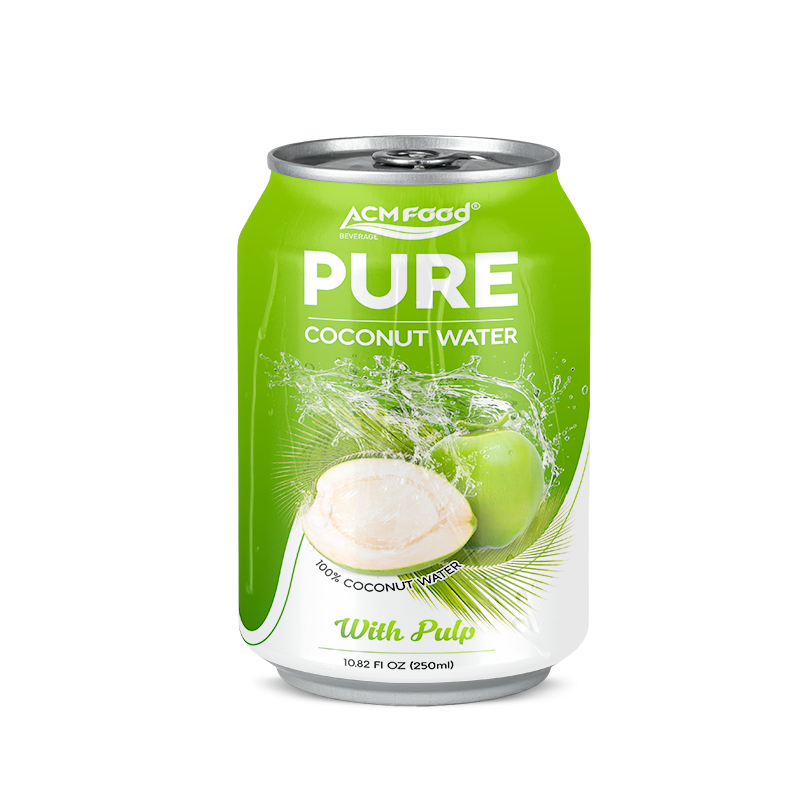
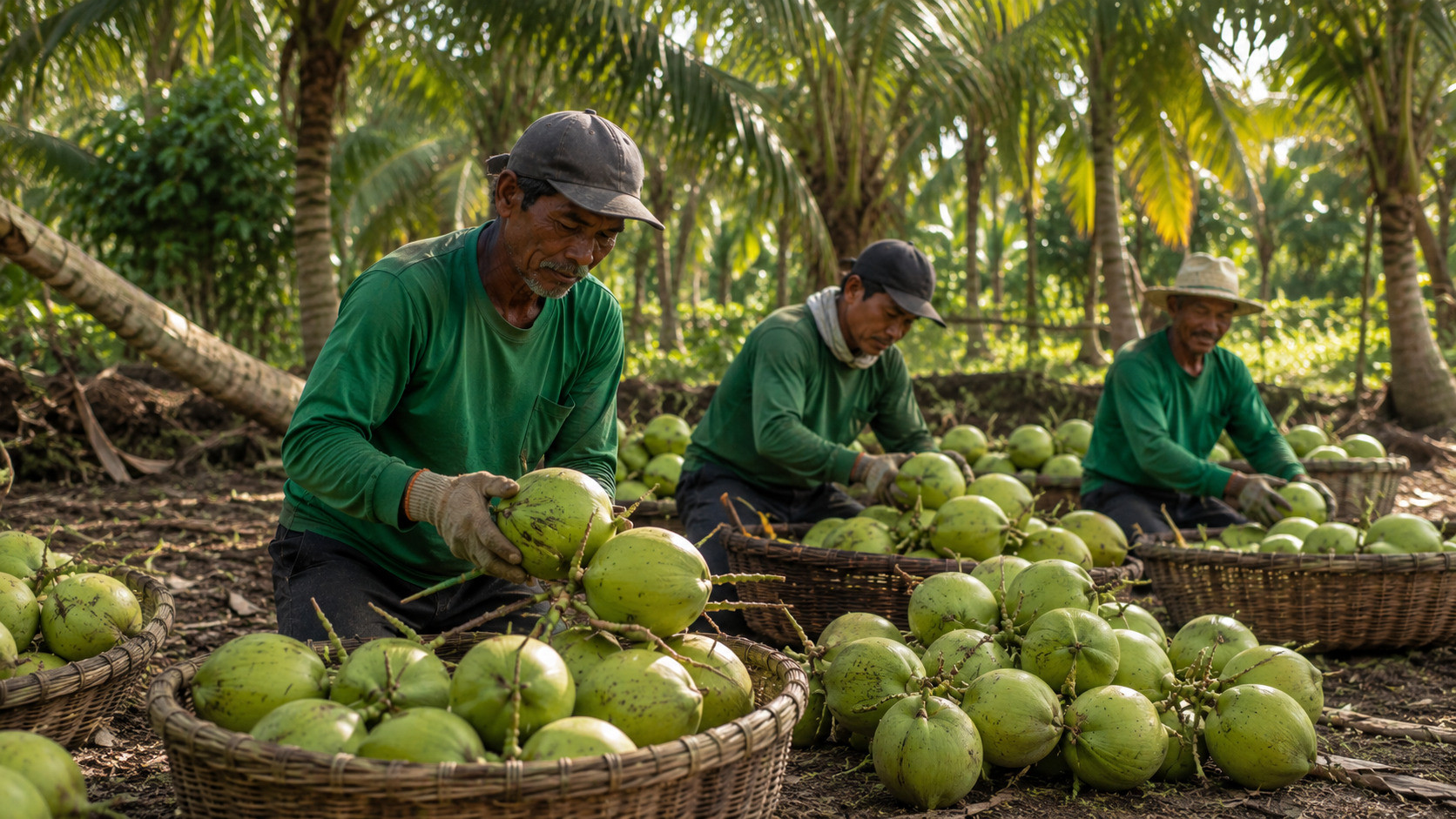
ACMFOOD Beverage Co., Ltd. produces canned coconut water in Vietnam from young coconuts sourced in the Mekong Delta growing region, filling at single strength rather than reconstituting from concentrate. Proximity to the plantations is what makes that economically workable — it is the structural reason NFC production concentrates in coconut-growing regions rather than near end markets.
Consistent with the argument above, the appropriate response is verification rather than assurance. The specification can be written into the supply agreement with change control attached, lot-level raw material and output records are available for review, and independent authenticity testing on a commercial lot is welcomed. Ask for those three things — of us and of every supplier on your shortlist.
Related capability pages
NFC is one of several process choices behind the range. For the formats, ingredients and processing routes available across the catalogue, see our beverage product capabilities. For how process claims are evidenced and audited, see certifications and food safety systems. To discuss an NFC specification, request a quote.
Request a quote