


 Français
 Español
 العربية
 한국어
한국어A cup of coffee is mostly water. What makes it coffee is the small fraction of soluble material pulled out of roasted beans during brewing: caffeine, chlorogenic acids, melanoidins formed during roasting, oils, and several hundred aroma compounds that give the drink its smell. Understanding that composition is what separates a good ready-to-drink coffee from one that tastes stale in the can.
This guide covers what is actually in brewed coffee, how roast level and extraction change it, and what shifts when the same drink has to survive months in a sealed pack instead of being served fresh.
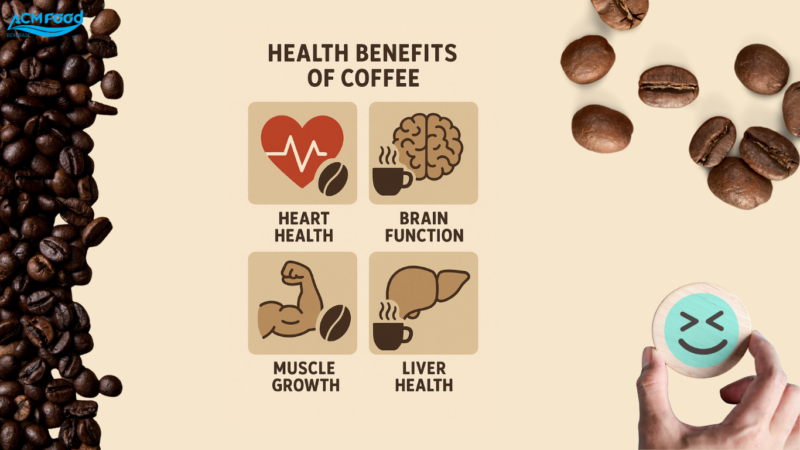
What is in a cup of coffee?
Brewed coffee is a water extract. The beans themselves are not consumed; only what dissolves into the water ends up in the cup. The main groups are:
- Caffeine — the compound the drink is best known for. Content varies widely with bean species, dose and brewing method.
- Chlorogenic acids — a family of plant acids that contribute much of the perceived acidity and bitterness. Roasting breaks them down, which is why darker roasts taste less bright.
- Melanoidins — brown compounds formed during roasting that carry body and colour.
- Aroma volatiles — several hundred compounds responsible for almost everything people describe as coffee flavour. They are also the first thing lost to heat and time.
- Oils and lipids — carried into the cup in varying amounts depending on the brewing method and whether a paper filter is used.
Arabica or robusta: what actually differs?
The two commercial species behave differently in the cup and in the factory. Arabica is generally lower in caffeine, higher in perceived acidity and more aromatic. Robusta carries more caffeine, more body and a heavier, more bitter profile, and it holds up better through processing.
For a ready-to-drink product this matters more than it does for fresh brewing. A blend that leans on delicate arabica aromatics can taste hollow after thermal processing, whereas a robusta component gives the finished drink something to hold on to. Most commercial RTD coffee uses a blend for exactly that reason.
How roast level changes the drink
| Roast level | Acidity | Body | Typical use in RTD |
|---|---|---|---|
| Light | Higher, brighter | Lighter | Cold brew and black coffee positioning; more fragile through heat |
| Medium | Balanced | Moderate | The most common base for milk coffee formats |
| Dark | Lower | Fuller, more bitter | Stands up to milk and sugar; more robust through processing |
Roasting is a trade-off rather than a scale from worse to better. A lighter roast preserves more of the origin character; a darker roast survives the can better and cuts through milk. Which one is right depends entirely on the product you are building.
Why does bottled coffee taste different from fresh?
Because the aroma compounds that define fresh coffee are volatile and heat-sensitive, and a shelf-stable product has to be heat-treated. Every RTD coffee is a compromise between microbiological safety and aroma retention.
There is a second complication. Coffee on its own is only mildly acidic, and once milk is added the pH rises further into low-acid territory. That pushes the product past the pH 4.6 threshold and into a more demanding thermal process — typically retort rather than a simple hot-fill. See how retort processing works for what that involves.
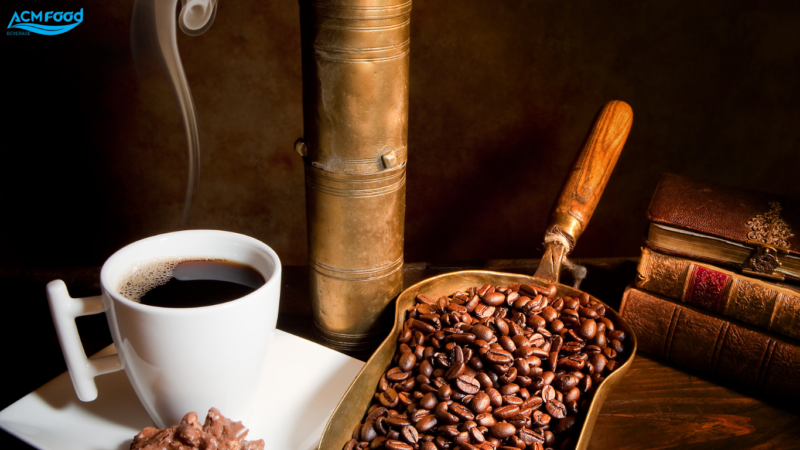
Milk coffee: the added stability problem
Adding milk or a dairy alternative introduces protein, and protein plus coffee acids plus heat is a combination that wants to separate. The visible failures are familiar: a sediment layer at the bottom, a fat ring at the neck, or a grainy mouthfeel after a few weeks on shelf.
- Emulsifier and stabiliser system — the main tool for keeping fat and protein evenly distributed through shelf life.
- Homogenisation — reduces fat globule size so the emulsion holds longer.
- pH control — small shifts have a large effect on protein stability in a coffee matrix.
- Heat treatment severity — enough for safety, restrained enough to avoid a cooked, caramelised note.
Cold brew, hot brew and concentrate
How the coffee is extracted before it ever reaches the filler changes the finished product as much as the roast does. Hot extraction is faster and pulls more soluble material, including more of the acids. Cold extraction takes far longer but produces a smoother, lower-acidity liquid, which is why cold brew is positioned the way it is.
Many RTD products are built from a coffee concentrate rather than freshly brewed liquid, because concentrate is cheaper to store and ship and gives more consistent dosing. The trade-off is aroma: the more the coffee is concentrated and re-diluted, the more of the top notes are lost along the way.
Formats used for ready-to-drink coffee
- Aluminium can — dominant in the category; full light barrier and suited to retort processing.
- Glass bottle — premium cold brew positioning, at higher freight weight and with light exposure to manage.
- PET bottle — convenient and resealable, though the format constrains which thermal processes are available.
- Aseptic carton — used mainly for milk coffee in take-home sizes.
Caffeine declaration and labelling
Several markets require caffeine content to be declared on pack for beverages above a certain level, and some require a statement aimed at sensitive groups. The exact threshold, wording and placement differ by market, so this has to be confirmed for each destination rather than assumed from another country’s label. It is worth settling before artwork, since a mandatory statement takes space that the design has to allow for.

Frequently asked questions about coffee in beverages
Does bottled coffee contain the same caffeine as a fresh cup?
Not necessarily. Caffeine in a packaged product is set by the formulation and the serving size, not by how a barista would brew it, so the figure on the label is the one that applies to that specific product.
Why does RTD coffee usually use a blend rather than single-origin beans?
Because a blend gives more consistent supply and a more robust flavour profile through thermal processing. Delicate single-origin character is largely lost in a shelf-stable product, so the cost rarely pays back.
Why is milk coffee harder to produce than black coffee?
Milk raises the pH into low-acid territory and adds protein and fat that can separate over shelf life. That combination calls for a more demanding thermal process and an emulsion system that black coffee does not need.
Can cold brew be made shelf stable?
Yes, though it requires a preservation step that inevitably moves the product away from the fresh-brewed profile that defines the category. How far is a formulation and process decision to settle early.
Information for beverage brands
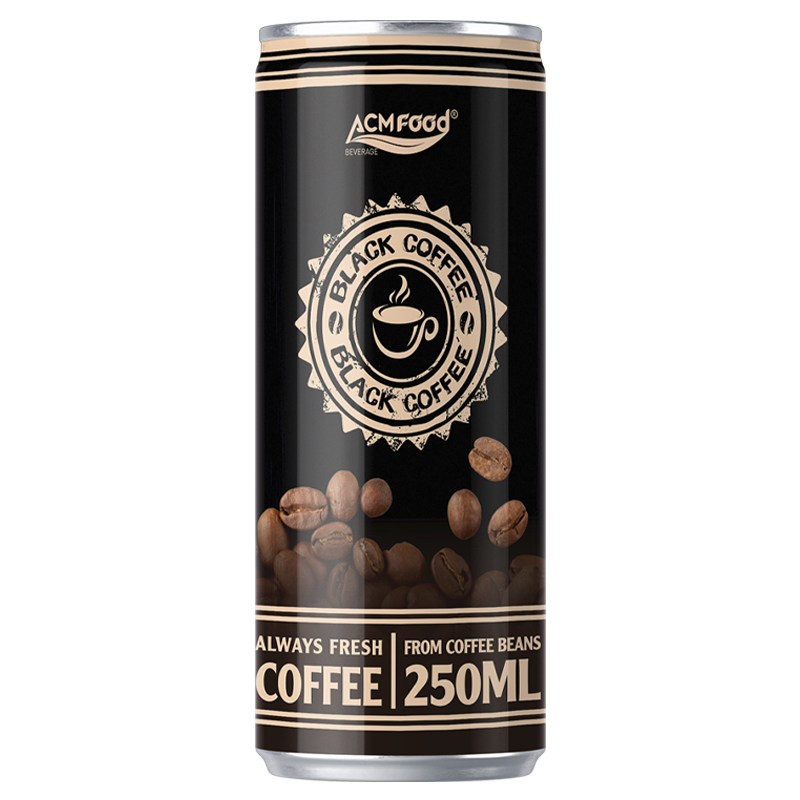
If you are developing an RTD coffee, the three decisions that shape everything else are the bean blend, whether the product contains milk, and the pack format. Those determine the thermal process, and the thermal process determines how much of the aroma survives. ACMFOOD produces coffee drinks in can and bottle formats under OEM and private label programmes, with a minimum of 500 cartons per SKU. For the tea equivalent of this category, see RTD tea manufacturing.
Conclusion
What is in a cup of coffee is a short list of soluble compounds and a long list of aromas, and it is the aromas that packaging is hardest on. Choose the blend and roast for the process you will actually run, decide early whether milk is in the formulation, and treat aroma retention as a design target rather than something to fix at the end.