


 Français
 Español
 العربية
 한국어
한국어To import beverages into Australia, you must ensure the product, labelling, documents and supply chain all comply with Australian border, biosecurity and food laws before shipment. This guide walks you through the practical steps, common pitfalls and how to build a compliant label and dossier so your goods clear quickly and land on shelf with confidence.
Because Australia applies a risk‑based approach at the border and strict rules for the sale of food, importers are responsible for verifying standards, preparing correct declarations, and being retail‑ready on day one. Below you will find a structured roadmap covering agencies, systems, labelling, costs, inspections, juice‑specific notes, and post‑clearance responsibilities.
What does it mean to import beverages into Australia?
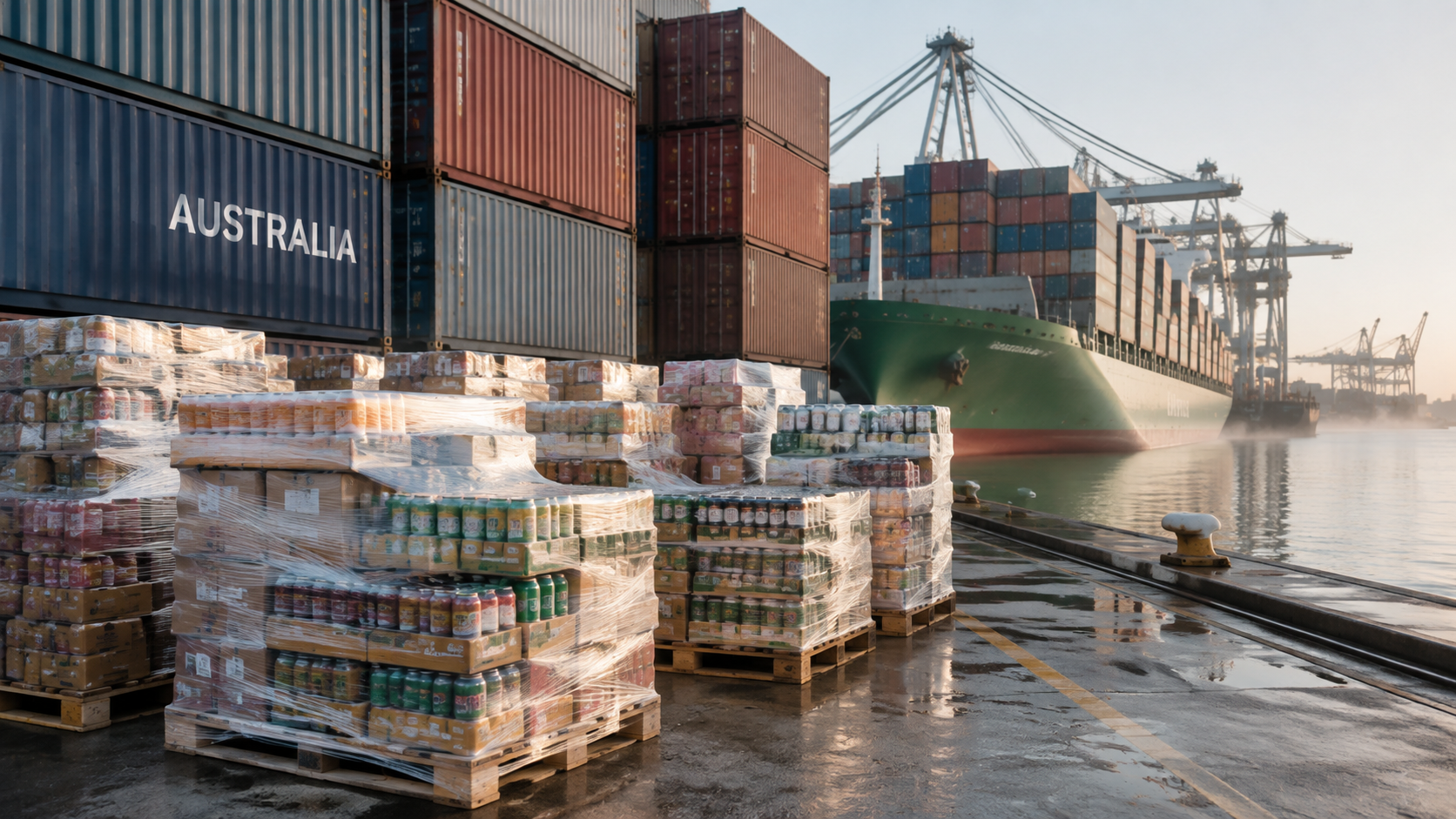
Importing beverages into Australia means bringing a food product under Australian customs and biosecurity control, and placing it on the market under the Australia New Zealand Food Standards Code (the Food Standards Code). The importer is legally responsible for ensuring the product is safe, correctly labelled in English, and compliant with all applicable rules before it is sold.
In practice, this requires you to classify the product for tariff purposes, assess biosecurity risk, verify formulation against the Food Standards Code, build a compliant label, prepare documents for border lodgement, and maintain traceability, records and a recall plan once the product is in commerce.
Who regulates beverage imports and which systems will you use?
Australia’s border and food system involves multiple agencies. You will use the Integrated Cargo System (ICS) for customs entries, work with biosecurity officers for risk‑based inspections, and ensure your labelling meets the Food Standards Code enforced in the marketplace.
Key players and systems include:
- Australian Border Force (ABF) and the Department of Home Affairs for tariff classification, customs entries via ICS, duty and GST assessment.
- Department of Agriculture, Fisheries and Forestry for biosecurity and the Imported Food Inspection Scheme (risk‑based inspections, documentary checks, sampling and testing).
- Food Standards Australia New Zealand (FSANZ) for the Food Standards Code (composition, additives, contaminants limits, labelling and claims framework).
- State and territory food regulators for retail and food business compliance (e.g., notification/registration, audits, and enforcement in the marketplace).
- Australian Competition and Consumer Commission (ACCC) for Australian Consumer Law, including country of origin and fair trading aspects of labelling.
- Australian Taxation Office (ATO) for GST and excise‑equivalent customs duty on relevant alcoholic beverages.
Step‑by‑step: how to import beverages into Australia
The cleanest path is to work from product definition to retail execution. Start with formulation and naming, move through standards and labelling, then prepare your import dossier and logistics plan before booking freight.
- Define the product precisely. Identify product type (e.g., still soft drink, sparkling drink, juice, juice drink, flavored water, energy drink, ready‑to‑drink tea/coffee, dairy alternative, functional beverage, or alcoholic beverage), packaging format, pack size, shelf life and storage conditions. Early clarity avoids naming or claims that breach the Food Standards Code.
- Determine tariff classification (HS code). Classify accurately based on composition, alcohol content, carbonation and packaging. HS codes drive duty rates, potential excise‑equivalent customs duty for alcohol, and documentary requirements. A licensed customs broker can help lock this down.
- Check biosecurity and import conditions. Confirm whether your ingredients or processing steps trigger documentary requirements or import permits. Shelf‑stable, commercially sterile beverages often move without a permit, while animal‑derived components or botanicals can attract specific conditions. Align supplier specs to the expected import pathway.
- Verify compliance with the Food Standards Code. Review composition (e.g., juice content if making a juice claim), permitted additives and processing aids, any applicable maximum levels for contaminants, and whether the product falls under specialised categories (e.g., formulated supplementary sports foods). Ensure any proposed nutrition or health claims are permitted for that product and meet eligibility criteria.
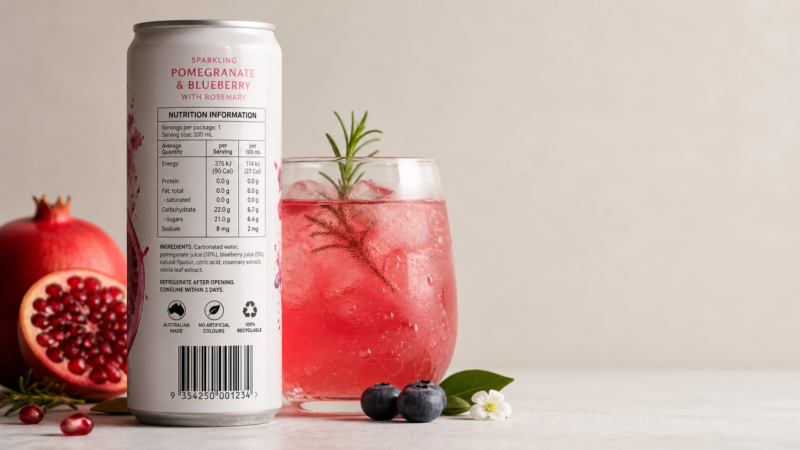
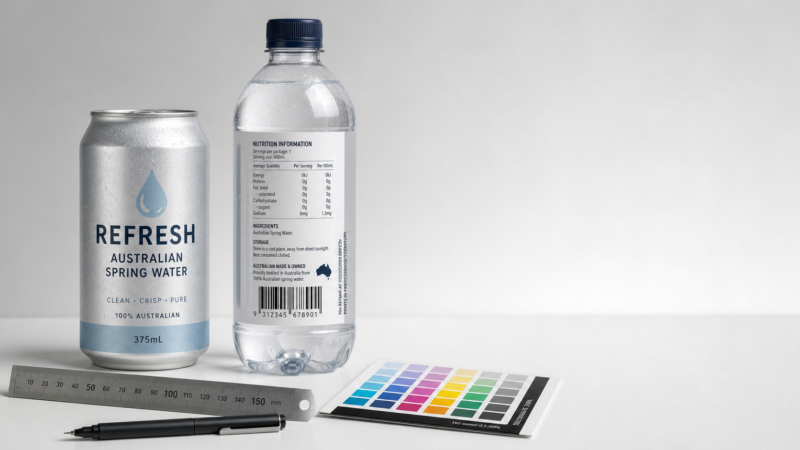
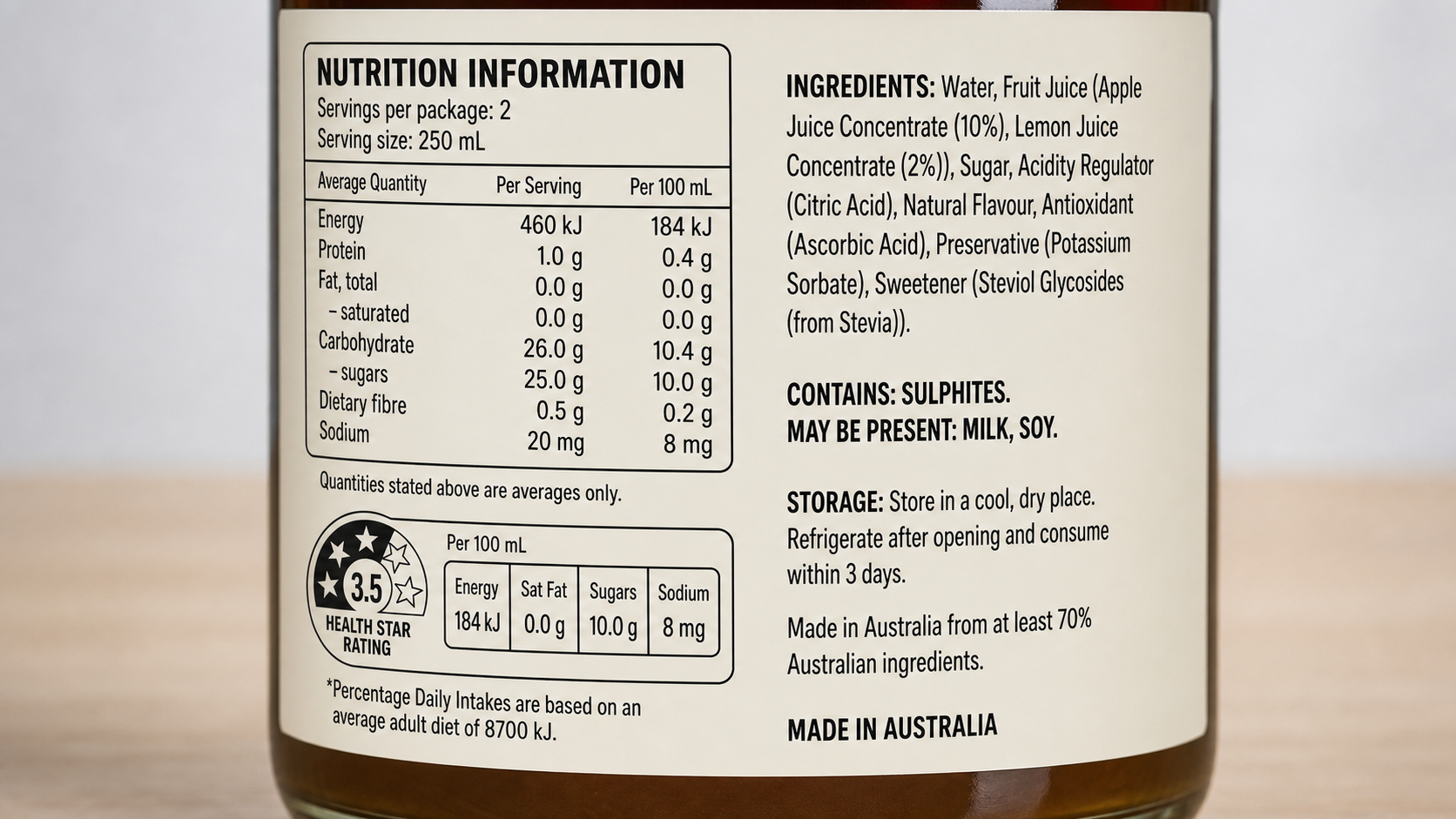
- Build a compliant label in English. Prepare your principal display panel, name of food, ingredient list in descending order, characterising ingredient percentages where required, allergen declarations using Plain English Allergen Labelling (PEAL), nutrition information panel (NIP) where required, date marking (Use By or Best Before), storage instructions, net quantity, importer name and street address in Australia, and a clear country of origin statement consistent with Australian Consumer Law. Keep print legibility and contrast in mind.
- Assemble your technical dossier. Collect finished‑product specifications, full ingredient breakdown with suppliers, additive permissions cross‑check, processing overview (e.g., pasteurisation), shelf‑life validation approach, microbiological criteria used by your supplier, and draft artwork. This set supports border officers, retailers and your own due diligence.
- Choose freight and Incoterms, plan cold chain. Agree Incoterms with your supplier, align insurance responsibilities, and specify container loading, temperature control and packaging protection. Confirm palletisation, carton labelling, and how date codes are presented for efficient receiving.
- Prepare the import entry in ICS. Your broker or in‑house team will lodge a Full Import Declaration with classification, customs value, origin, and documents (commercial invoice, packing list, bill of lading/air waybill, and supporting certificates as applicable). Ensure the description is specific and consistent with labels and specs.
- Respond to the Imported Food Inspection Scheme (IFIS). Depending on risk category and compliance history, your consignment may be subject to documentary assessment, label checks, sampling and testing. Plan for potential holds, storage charges and turnaround time in your costings and launch plan.
- Release, distribution and market surveillance. After clearance, maintain traceability, temperature control and product integrity through to retail. Keep your recall plan, complaints handling and corrective action process ready—Australian authorities expect a proactive food safety culture.
If you are still shaping your range or supply, you can explore a manufacturing or sourcing route that already considers Australian compliance. For example, see our pages on beverage supplier for Australian importers and beverage manufacturer for Australian brands to understand typical service scopes.
What are the core beverage import requirements in Australia?
In short: the product must meet composition and safety rules, labels must be accurate and in English, and documentation must support a risk‑based border assessment. The practical details below help you align formulation, pack and claims with Australian expectations.
Product identity and naming
Name the beverage so it correctly represents what is in the pack. For example, labelling a product as “juice” carries different expectations than calling it a “juice drink” or “nectar”. If water or sweeteners are added to fruit juice, choose a name that does not mislead. Use the appropriate name of food and avoid implying the product is 100% juice if it is diluted.
Additives, processing aids and contaminants
Only use additives and processing aids that are permitted for the relevant beverage category in the Food Standards Code schedules. Confirm flavouring rules and any category‑specific maximum levels. For contaminants and natural toxicants, check applicable limits and ensure supplier testing or certificates of analysis align with Australian expectations.
Allergen labelling (PEAL)
Declare allergens clearly and consistently using Plain English Allergen Labelling. Typical allergens that must be declared include gluten‑containing cereals, milk, egg, soy, peanuts, tree nuts, sesame, fish, crustacea, molluscs, lupin, and sulphites at relevant levels. Ensure allergen information is conspicuous and uses required plain‑English terms.
Nutrition information, ingredients and percentage labelling
Most packaged beverages require a Nutrition Information Panel (NIP) with serving size, servings per package, and the prescribed set of nutrients. List ingredients in descending order by weight. Where a characterising ingredient or component is highlighted (e.g., “mango” in a mango drink), percentage labelling will generally apply so consumers can see the proportion present.
Claims and marketing
Nutrition and health claims are tightly regulated. Only make claims that are permitted for the product, and ensure the product meets any eligibility criteria for the claim. Keep general wellness statements within what the Code allows, and avoid therapeutic or disease‑related claims. If you plan front‑of‑pack statements like “no added sugar”, verify they are accurate for the final recipe and comply with the Code.
Country of origin and fair trading
Imported foods typically must indicate country of origin in line with Australian Consumer Law. Ensure your origin statement matches supply chain facts and that any additional marketing statements are truthful and not misleading. Use a layout that remains readable after printing and pack conversion.
Date marking, storage and legibility
Use “Use By” where the food is unsafe after a certain date; otherwise use “Best Before”. Provide storage conditions necessary to achieve the shelf life (e.g., “store refrigerated below X°C after opening” or “store in a cool dry place”). Ensure text height, contrast and placement meet legibility expectations.
Packaging suitability
Use food‑contact materials suitable for the intended beverage, processing and shelf life. If using recycled content or new formats (e.g., bio‑based liners), be ready to show evidence that migration and overall safety are adequately controlled for the beverage type and processing conditions.
100% juice, nectar and juice drinks: naming and positioning
Accurate naming prevents misleading claims and helps consumers understand what they buy. The table below summarises common formats and typical labelling considerations that importers review before finalising artwork.
| Beverage format | Typical composition cues | Positioning & notes |
|---|---|---|
| 100% fruit juice | Only juice ingredients (from fresh or concentrate), no added water for the final product | Do not imply 100% if water, flavours or sweeteners are added; disclose if reconstituted |
| Juice from concentrate | Reconstituted to single‑strength from concentrate | Indicate it is made from concentrate; characterising fruit percentages may apply |
| Juice drink / nectar | Juice diluted with water and possibly sweeteners or flavours | Name must not mislead; avoid implying the product is pure juice |
| Flavoured beverage | Water base with flavours, acids, sweeteners; may have fruit flavour only | Use a name that reflects flavour rather than fruit content if minimal juice is present |
Importing juice into Australia: what to check
For juice, verify identity, additive permissions and labelling details upfront. Ensure the juice description (e.g., “orange juice”, “apple juice from concentrate”, or “mango juice drink”) matches formulation, and that any “reconstituted from concentrate” statements and characterising fruit percentages are applied consistently on pack.
- Fruit identity and percentages: Align naming with actual fruit content and disclose percentages where required.
- Additives and processing aids: Confirm preservatives, acidity regulators and antioxidants are permitted for juices and used within permitted conditions.
- Quality and contaminants: Ask suppliers about relevant quality markers and contaminant monitoring appropriate for juices, and hold certificates or test results that support your risk assessment.
- Thermal processing and shelf life: Make sure the processing method supports your claimed shelf life and distribution temperatures.
- Labelling clarity: Present NIP, ingredients, allergens, date codes and storage statements in English and in a legible format for the pack size.
If you are still scoping retail‑ready recipes for Australia, see options for OEM beverage manufacturing for Australian buyers or explore beverage manufacturing for Australian brands to align formulation and labelling with market expectations from the outset.
Documents you will typically need
Border officers and retailers expect a coherent dossier. Prepare these documents before booking freight so your broker can lodge quickly and respond to any queries.
- Commercial invoice and packing list: Clear product descriptions, item codes, net/gross weights, carton counts, Incoterms and currency.
- Bill of lading or air waybill: Accurate shipper/consignee details, ports and dates.
- Full ingredient breakdown: Ingredients in descending order with supplier names; identify allergens and any characterising ingredients.
- Finished‑product specification: Includes product type, processing overview, target shelf life and storage conditions.
- Draft or final artwork: English label panels showing name of food, NIP, ingredients, allergens (PEAL), date mark, importer address, and origin statement.
- Evidence of additive permissions: Cross‑check against the Food Standards Code schedules for your category.
- Certificates as applicable: Certificates of analysis, manufacturer declarations, or health certificates where required by import conditions.
- Country of origin evidence: For preferential duty claims under trade agreements, provide a suitable certificate or origin declaration.
- Biosecurity documentation (if relevant): Any required permits or treatment certificates for ingredients that attract import conditions.
How are duties, taxes and costs calculated?
Customs duty is calculated on the tariff classification and may be reduced under applicable trade agreements when supported by origin documentation. For alcoholic beverages, excise‑equivalent customs duty can apply based on alcohol type and strength. Goods and Services Tax (GST) is generally 10% and is assessed on the customs value plus duty and certain other costs (such as international freight and insurance). Work with your broker to model landed cost and cash flow, including potential inspection fees, storage and transport to distribution centres.
Do you need an import permit or prior approval?
Many shelf‑stable, commercially sterile beverages can be imported without a biosecurity import permit, but specific ingredients or processing methods may attract conditions. If your drink includes animal‑derived materials, botanicals, seeds or novel ingredients, check import conditions early. Additionally, products that straddle food and therapeutic spaces (e.g., certain sports supplements or products marketed with therapeutic claims) may engage other regulatory frameworks. Confirm your category and claims definitively before you print labels.
Common inspection outcomes and how to prepare
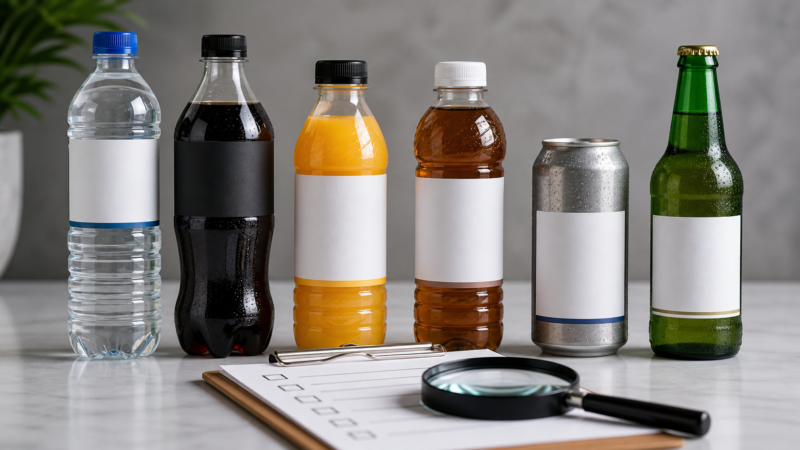
Imported Food Inspection Scheme outcomes range from documentary assessment to label checks and sampling. A well‑prepared dossier and accurate ICS entry reduce delays and follow‑up queries.
- Documentary assessment: Officers review invoices, labels and specifications to confirm consistency with declarations.
- Label examination: Checks focus on English labelling, mandatory particulars, allergen visibility and claims.
- Sampling and testing: Products can be sampled for microbiological or chemical analysis. Build this into timelines and costings.
- Corrective actions: If a label issue is identified, options may include controlled relabelling in suitable facilities or re‑export. Discuss feasibility with your broker before taking action.
Food importer responsibilities in Australia after clearance
Your role does not end at the port. As the entity placing food on the market, you are expected to maintain product safety and compliance throughout distribution and retail.
- Food business obligations: Depending on your state or territory, you may need to notify or register as a food business and be subject to audits or inspections.
- Recall and incident management: Maintain a tested recall plan, up‑to‑date contacts and batch traceability to act quickly if needed.
- Supplier assurance: Keep current supplier approvals, specifications and change‑control records. Re‑check labels after any formulation or process change.
- Storage and handling: Meet temperature control, stock rotation and hygiene expectations across warehouses and logistics partners.
- Market surveillance: Periodically review on‑shelf labelling and promotional claims for accuracy and consistency with the Code.
Building these practices into your operations also reduces border risk over time and supports smoother clearance as your compliance history matures.
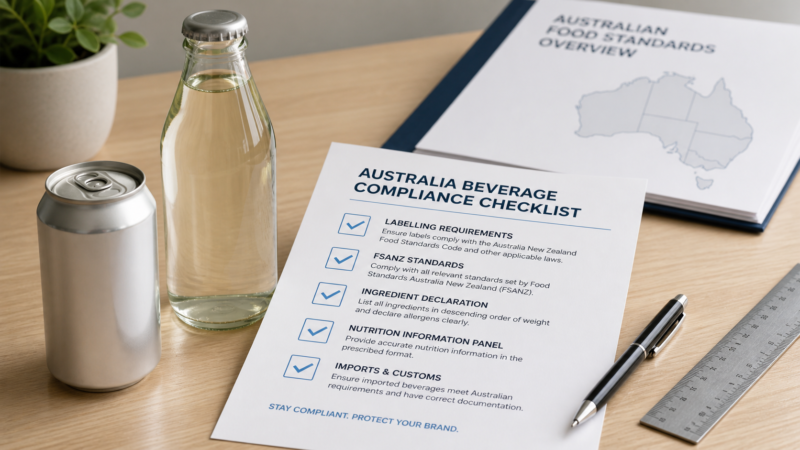
A practical pre‑shipment checklist and timeline
Use this high‑level checklist to structure your project from formulation to first order. Assign owners and due dates internally, and coordinate early with your broker and supplier.
- Confirm product category, naming, claims strategy and target pack formats.
- Cross‑check formulation against permitted additives, processing aids and any category‑specific rules.
- Draft English artwork covering name of food, NIP, ingredients, PEAL allergens, date mark, storage, importer address and origin statement.
- Compile the technical dossier: full ingredient list, specifications, processing summary, shelf‑life support, certificates where applicable.
- Align Incoterms, insurance, container loading plan, pallet pattern and carton labelling.
- Confirm HS classification, duty preferences and any excise‑equivalent customs duty for alcohol.
- Pre‑alert your broker with all documents for ICS lodgement and potential inspection pathways.
- Plan for contingencies: border holds, sampling time, relabelling options and storage costs.
- Prepare distribution and retail onboarding: GTINs, DC bookings, shipper and shelf labels, and retailer compliance documentation.
If you require contract production aligned to Australian labelling from day one, consider contract beverage manufacturing for Australian brands with a product brief that includes Australian market requirements.

FAQ: importing beverages into Australia
Quick answers to common questions that arise when teams plan to import drinks to Australia.
Do I need an Australian address on the label?
Yes. The label typically must show the name and street address of the Australian supplier (such as the importer or distributor) so consumers and regulators can contact a responsible party in Australia.
Is English mandatory on beverage labels?
Yes. Mandatory information must appear in English. You may include other languages in addition to English, provided the information is consistent and not misleading.
Can I claim “no added sugar” or “natural” on my drink?
Only if the claim is accurate for your final recipe and permitted under the Food Standards Code. Substantiate every claim and ensure the product meets any eligibility criteria before printing artwork.
Are non‑nutritive sweeteners allowed?
Some sweeteners are permitted in specific beverage categories under the Food Standards Code. Confirm your category, check permissions and conditions of use, and keep formulation records that match your label.
Will my shipment be sampled and tested?
It depends on product risk and compliance history. Be prepared for documentary checks, label examination and potential sampling under the Imported Food Inspection Scheme.
How much shelf life should remain at arrival?
There is no single number that fits all products and channels. Retailers often set their own minimums, so align shelf‑life expectations contractually with customers and plan transit to meet them.
Do I need a biosecurity import permit?
Many shelf‑stable beverages do not need a permit, but certain ingredients or product types can. Check import conditions early with your broker based on the exact formulation.
Can I relabel products in Australia if something is missing?
Options depend on the issue and regulatory direction at the time. In some cases, controlled relabelling may be possible in suitable facilities. Confirm feasibility with your broker and the relevant authorities before taking action.
Summary and next steps: To import beverages into Australia efficiently, lock down your product identity, verify compliance against the Food Standards Code, build a clear English label, and prepare a robust dossier for ICS lodgement and the Imported Food Inspection Scheme. Factor duties, GST, potential inspections and retail requirements into timelines and costings. If you prefer a sourcing or production path designed around Australian compliance from day one, explore a beverage supplier for Australia or coordinate with a beverage manufacturer for Australian brands to streamline development and import readiness.
Manufacturing for Australian brands
If you are sourcing for the Australian market, start with OEM beverage manufacturing services for how contract production is run, certifications and food safety systems for the evidence importers and retailers require, and export and logistics for shipping terms and documentation. To price a programme, request a quote.
Sources
Requirements on this page derive from the Australia New Zealand Food Standards Code, administered by FSANZ. Check the Code itself before finalising a label or an import plan.
- Food Standards Australia New Zealand — Australia New Zealand Food Standards Code
- FSANZ — Labelling requirements for business
Where to go next
Planning an Australian launch? The Australia beverage market page covers the full OEM and private label programme for Australian brands and importers: MOQ 500 cartons per SKU, 15-30 day production, HACCP / ISO 22000 / FSSC 22000, and shipping from Ho Chi Minh City. Request a quote and we reply within 24 hours.