


 Français
 Español
 العربية
 한국어
한국어Australian beverage regulations set the rules for how drinks are formulated, labelled, marketed and imported so they can be sold legally across Australia’s states and territories. This practical guide maps the core requirements, agencies and steps to help you plan compliant non-alcoholic and alcoholic beverages for the Australian market.
Because obligations vary by category (juice, soft drink, formulated caffeinated beverage, beer, wine, spirits, etc.) and by route to market (local manufacture vs. import), you should confirm details against the current Australia New Zealand Food Standards Code (the Food Standards Code) and relevant Australian Consumer Law instruments before final label sign‑off. This article offers an actionable overview—not legal advice—and highlights checkpoints for brand owners, importers and product developers.
What are the key Australian beverage regulations?
The Food Standards Code administered by Food Standards Australia New Zealand (FSANZ) sets national composition and labelling requirements. State and territory food authorities enforce these standards. The Australian Competition & Consumer Commission (ACCC) oversees consumer law including country of origin labelling for food. Imports are managed through a risk-based inspection framework by the Department of Agriculture, Fisheries and Forestry in coordination with Australian Border Force. Alcoholic beverages also intersect with excise or wine taxation administered by the Australian Taxation Office, and most states and territories operate 10‑cent Container Deposit Schemes that influence packaging and label marks.
Before you brief a formulation or design labels, it helps to scan local demand signals. For context on category momentum and consumer cues, see the roundup of beverage trends in Australia.
Who enforces beverage rules in Australia?
FSANZ develops food standards, but day-to-day compliance is primarily checked by state and territory authorities (e.g., NSW Food Authority, Health Victoria) at manufacture, distribution and retail. The ACCC monitors misleading claims and country of origin labels. For imports, the Department of Agriculture, Fisheries and Forestry runs risk-based inspections under imported food legislation. Customs and duty aspects are handled by Australian Border Force and the Australian Taxation Office for exciseable alcoholic products.
- Standards & definitions: Food Standards Code and Schedules.
- Labelling & claims: FSANZ standards; ACCC for consumer law aspects.
- Imports: Department of Agriculture, Fisheries and Forestry (risk-based inspection) and Australian Border Force (customs).
- Alcohol: FSANZ labelling rules plus excise/WET taxation frameworks.
- Packaging deposits: State/territory Container Deposit Schemes (10c refund marks, barcode registration and scheme registration processes may apply).
How the Food Standards Code applies to beverages
The Food Standards Code is structured into chapters and schedules. For beverages, you will typically consult:
- Chapter 1: General food labelling and composition (e.g., ingredient lists, allergen declarations, date marking, nutrition information, nutrition/health claims eligibility, characterising ingredients percentage labelling, advisory statements, novel foods, gene technology labelling).
- Chapter 2: Commodity standards (e.g., non-alcoholic beverages, formulated caffeinated beverages, alcoholic beverage categories such as beer, wine, cider, spirits).
- Schedules: Detailed lists for food additives, processing aids, identity and purity, contaminants and natural toxicants, nutrition claims criteria, and more.
Your beverage’s category determines which specific composition and advisory requirements apply. Marketing language and label presentation must also align with the general labelling rules in Chapter 1.
How are beverage categories defined for compliance?
Product category drives what you can add, what you must declare, and which advisory statements or claims are available. The table below summarises common beverage types and where you’ll likely find their core technical rules in the Code.
| Product type | Typical FSANZ standards | Highlights |
|---|---|---|
| Water-based soft drinks, cordials, brewed soft drinks | Chapter 2 (non-alcoholic beverage standards); Chapter 1 (labelling) | Additive permissions by food category; labelling, NIP, allergens, characterising ingredients percentage labelling when relevant. |
| Fruit & vegetable juices/nectars | Chapter 2 commodity standards; Chapter 1 labelling | Composition definitions for juice/nectar may apply; sugars are naturally present; NIP per 100 mL and per serving required in most cases. |
| Formulated caffeinated beverages (e.g., many energy drinks) | Specific standard for formulated caffeinated beverages plus Chapter 1 | Advisory statements about caffeine-sensitive groups; composition and additive settings differ from regular soft drinks. |
| Electrolyte/sports drinks | Relevant non-alcoholic beverage standards; Chapter 1 | Check additive permissions and claim conditions; special advisory statements may apply depending on composition. |
| Alcoholic beverages (beer, wine, spirits, cider) | Chapter 2 alcoholic beverage standards; Chapter 1 labelling | Standard drinks declaration and other mandatory elements; pregnancy warning mark rules apply to most alcoholic products. |
What must appear on Australian beverage labels?
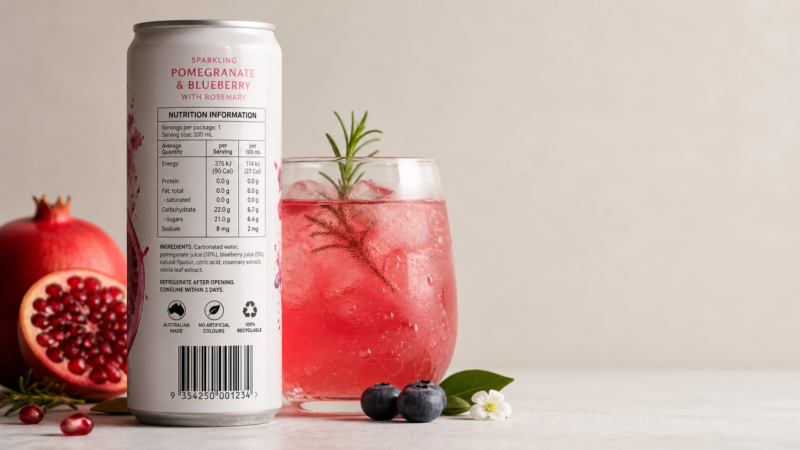
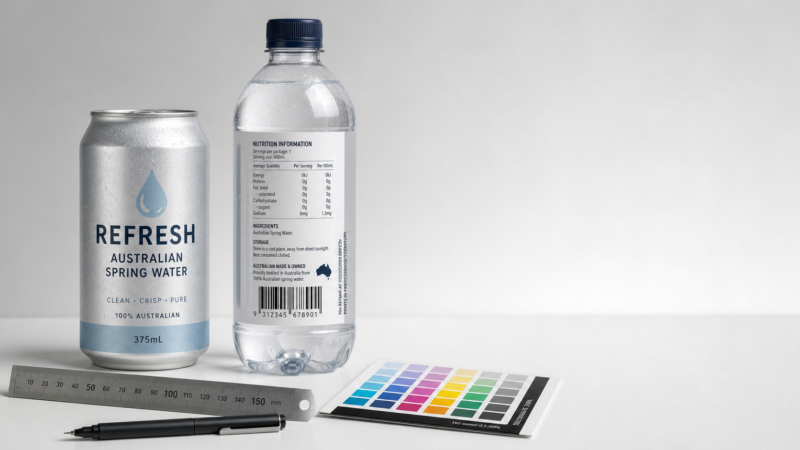
In short, most beverages require a name or description, lot identification, date marking, an ingredient list with allergens, a Nutrition Information Panel, net contents, storage/use directions where appropriate, supplier/importer details in Australia, and country of origin information. Alcoholic beverages add category‑specific items (e.g., standard drinks, pregnancy warning mark). Exact requirements vary by product type and packaging size.
- Name or description: A true-to-type name so consumers can identify the food.
- Lot identification: Code or batch to support traceability and recalls.
- Date marking: Best Before or Use By depending on safety and shelf life. Storage directions are often paired with date marking to preserve shelf life.
- Ingredient list: In descending order of ingoing weight at the time of manufacture, with compound ingredients broken out when required by the Code.
- Allergen declarations: Mandatory allergens must be declared using the prescribed names in the manner set by the Code. Recent plain English allergen labelling reforms set more detailed format rules; check current FSANZ transition timelines before printing.
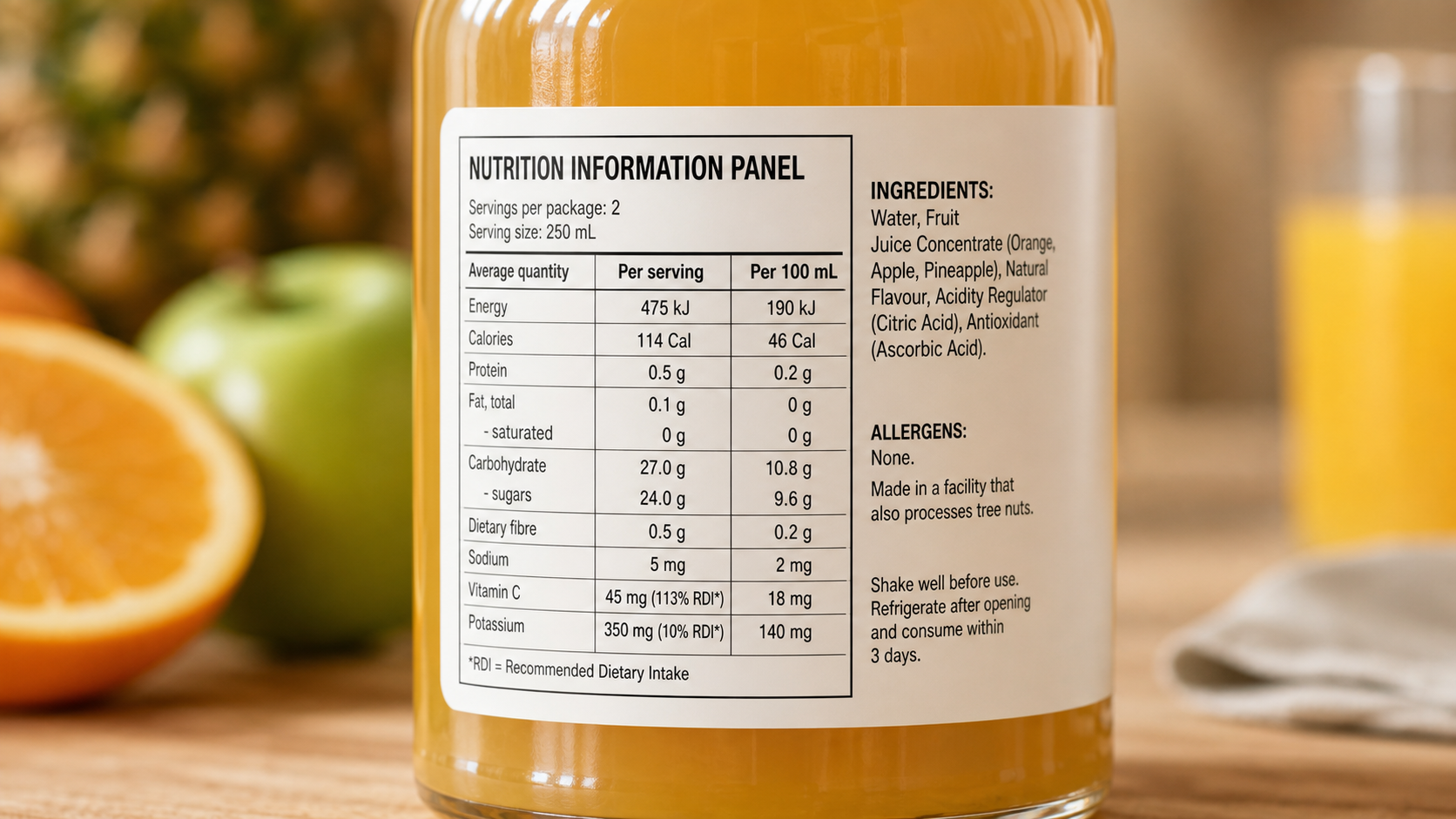
- Nutrition Information Panel (NIP): Typically required with energy (in kilojoules), protein, fat, saturated fat, carbohydrate, sugars, sodium; beverages generally present values per serving and per 100 mL.
- Characterising ingredients & percentage labelling: If your label or product name emphasises a particular ingredient or component (e.g., “mango”), you may need to show its percentage.
- Advisory/warning statements: Certain ingredients or categories (e.g., caffeine, certain sweeteners, alcoholic beverages) trigger specific label statements.
- Net contents: Volume in metric units.
- Supplier/importer details: Name and Australian or New Zealand business address; for imports, the Australian importer’s contact details are generally required.
- Country of origin: Most packaged foods that are “priority” foods must carry country of origin information under the relevant information standard. Imported foods use a text statement of origin; use of the kangaroo logo is restricted to qualifying Australian products.
FSANZ beverage labelling details that matter
Small format choices can make or break compliance. Keep these points in your art files and style guides:
- Energy in kJ: Australia expresses energy in kilojoules in the NIP. If you also use kilocalories in marketing text, avoid confusing consumers and ensure the NIP follows Code format.
- Per serving & per 100 mL: Beverages generally need both. Serving size must reflect realistic consumption and flow through all calculations.
- Rounding and presentation: The Code prescribes how to present numbers and units. Align your data tables and QA sign‑offs to those conventions.
- Nutrition content claims: Words like “low”, “source of” or “reduced” are controlled terms with criteria in the Code and Schedules. Only make a claim if your final, tested product meets the conditions.
- Health claims: General and high level health claims must follow Standard 1.2.7, use permitted food–health relationships or substantiation, and meet the nutrient profiling eligibility criteria. Claims must never appear as therapeutic promises.
- Allergen formatting: Australia prescribes plain English terminology and placement rules. Reformulation or supplier changes that affect allergens should trigger a label review and change control.
- Language: Required label information must appear in English.
Ingredients, additives and flavours: what is permitted?
Australia uses a positive-permissions approach. Food additives, processing aids and other inputs must be allowed for the relevant food category and used within the conditions set out in the Code and Schedules.
- Additives: Check the permitted additive lists for your beverage category. Declare additives using class names (e.g., preservative, colour) and identifiers as required.
- Flavours: Flavourings are allowed within the Code’s framework. If you emphasise a characterising flavour on pack, remember percentage labelling obligations where applicable.
- Botanicals & novel ingredients: Some botanicals may be considered novel foods if they lack a history of safe use in Australia/New Zealand. Novel foods require permission before sale.
- Processing aids: If used, ensure they are permitted for the purpose and category, and confirm any downstream labelling triggers.
- Genetically modified (GM) ingredients: Foods produced using gene technology may require specific labelling. Confirm your supply chain documentation and evaluate any GM declarations.
Caffeine and energy drinks: which rules apply?
Formulated caffeinated beverages (FCBs) are a distinct category with composition and advisory statement requirements different from regular soft drinks. If your product qualifies as an FCB, you should expect category-specific statements that caution certain groups and rules around permitted ingredients.
For products with added caffeine that are not FCBs, other advisory and additive rules may still apply. If you use botanical sources (e.g., guarana extracts), review how caffeine is declared and how claims are framed. Avoid implying therapeutic effects or enhanced performance unless permitted and substantiated under the claims standard.
Alcoholic beverages: additional labelling and category rules
Alcoholic drinks (beer, wine, cider, spirits and related products) must meet both the general labelling framework and the commodity standards for their category. Expect a standard drinks declaration and pregnancy warning requirements on most alcoholic beverages, in addition to ingredient and allergen rules where applicable. If you produce or import alcohol, consider taxation frameworks (excise or wine taxation) in your commercial planning alongside label compliance.
Mandatory label elements at a glance
The matrix below can guide quick checks for non‑alcoholic vs. alcoholic beverages. Always confirm details in the current Code and related instruments before sign‑off.
| Label element | Non‑alcoholic beverages | Alcoholic beverages | Positioning & notes |
|---|---|---|---|
| Name/description | Required | Required | Front of pack or principal display panel |
| Lot identification | Required | Required | Traceability and recalls |
| Date mark | Required (Best Before/Use By) | Required (Best Before/Use By) | With storage directions as needed |
| Ingredient list | Required | Often required | Descending order by ingoing weight |
| Allergens | Required | Required when present | Use prescribed names and format |
| Nutrition Information Panel | Generally required | Category-dependent | Per serving & per 100 mL for beverages |
| Advisory/warning statements | Category-dependent | Pregnancy warning mark plus others as applicable | Wording, size and format rules apply |
| Standard drinks | Not applicable | Required | Alcoholic beverages |
| Country of origin | Required for most packaged foods | Required | Imported foods use text origin statement |
| Supplier/importer details | Required | Required | Australian or New Zealand street address |
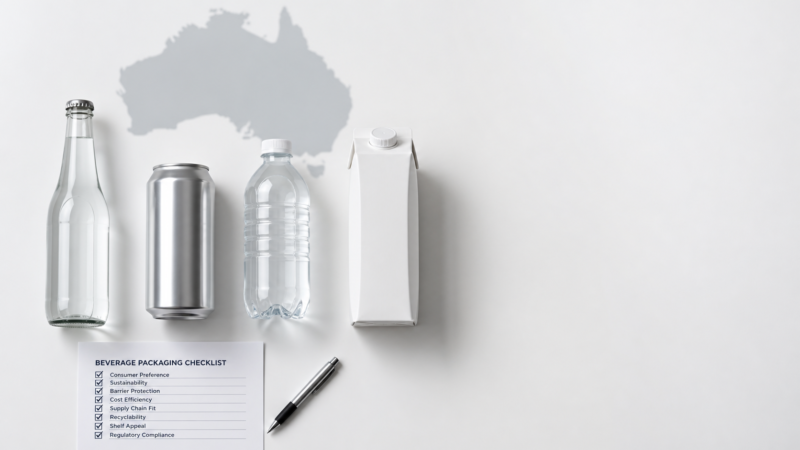
Packaging, deposits and environmental requirements
Most Australian states and territories operate a Container Deposit Scheme (CDS) offering a 10‑cent refund for eligible beverage containers. These schemes often require producer registration, barcode submissions, and specific label marks that identify refund eligibility. Because requirements and logos vary by jurisdiction, coordinate early with your packaging supplier and the relevant scheme coordinators before mass printing. Ensure your label artwork has space for the necessary marks without crowding mandatory FSANZ information.
Beyond deposits, many brands participate in voluntary packaging programs to support recyclability (e.g., using on-pack recycling guidance). While not a substitute for legal compliance, these programs influence consumer expectations and may appear in retailer requirements. Always separate voluntary marks from mandatory information to avoid confusing layout or hierarchy.
Imported drink compliance in Australia: what to prepare
Imported beverages must meet the same standards as locally produced products. Australia applies a risk-based imported food inspection framework. To streamline clearance and audit requests, prepare a documentation pack that aligns with the Code and supports your label statements.
- Final label in English: Ensure all required information appears and is durable. If you plan to over-sticker imported stock, the over-sticker must fully cover conflicting text and remain legible and durable for the product’s life.
- Ingredient & additive specifications: Technical data sheets showing that each additive or process aid is permitted for your beverage category.
- Certificates and test reports: Microbiological, chemical and shelf-life validation appropriate for the product and its intended distribution.
- Country of origin statement: For priority foods, use the required origin format for imported goods.
- Traceability records: One step back, one step forward documentation and lot coding to support potential recalls.
- Biosecurity aspects: Some ingredients are subject to biosecurity conditions. Check import conditions for your specific product and ingredients before shipping.
Food safety, shelf life and testing
Australian law expects safe food supported by appropriate process controls, testing and shelf-life validation. For shelf‑stable beverages, confirm your thermal process or equivalent ensures safety and quality. For chilled products, verify cold chain assumptions and storage directions. Microbiological limits for foods appear in the Code; align your specifications and release testing accordingly.
Ensure your shelf-life claims are backed by data. If you add nutrients (e.g., vitamins, minerals) to support a nutrition content claim, verify the content at end of shelf life, not just at time of pack. Maintain change control for any ingredient or process update that could affect safety, allergens, or claims.
Claims, marketing and online sales
All marketing—labels, websites, social posts, in-store displays—forms part of your product’s overall representation to the consumer. In Australia:
- Truthful & not misleading: Claims must be accurate and not create a false impression.
- Nutrition content and health claims: Follow the Code’s criteria and substantiation rules. Products must meet eligibility criteria before any health claim is made.
- Comparative statements: If you compare to a previous recipe or a competitor, ensure the basis is clear and the claim remains accurate throughout shelf life.
- Therapeutic claims: Avoid medical or therapeutic claims on foods and beverages. Do not imply disease prevention or treatment.
- Digital assets: Keep your online product pages consistent with on‑pack statements; discrepancies can prompt complaints or enforcement.
Step‑by‑step compliance checklist for launching a beverage
- Define your category: Map the beverage to the correct Code category (e.g., juice, soft drink, FCB, beer, wine).
- Screen ingredients: Confirm each ingredient/additive/processing aid is permitted for that category and intended function.
- Check advisory statements: Identify any caffeine, sweetener or category-specific statements and size/placement rules.
- Design label architecture: Reserve space for NIP, ingredient list with allergens, lot/date, net contents, supplier details, origin statement and any deposit marks.
- Claims strategy: Decide on nutrition content and health claims (if any), assess eligibility and plan substantiation files.
- Nutrition calculations: Build NIP values per serving and per 100 mL; apply rounding as required by the Code.
- Artwork development: Create bilingual variants only if needed for other markets; ensure the Australian label is fully compliant in English.
- Technical validation: Confirm microbiological limits, chemical specifications, process controls and shelf-life evidence align with your statements and storage directions.
- CDS planning: If selling in CDS jurisdictions, allocate space for refund marks, register barcodes and complete producer registration where required.
- Importer details: For imports, set the Australian business address for the local supplier/importer and prepare inspection documents.
- Pre‑compliance review: Conduct a formal label review against the latest Code and related instruments.
- Pilot & stability: Produce pilot batches to verify sensory, claims feasibility and label durability.
- Retailer requirements: Some retailers impose format rules (e.g., panel sizes or data disclosures). Incorporate those without undermining Code compliance.
- Release & monitor: Keep batch records, manage complaints and update labels promptly if regulations or formulations change.
Common pitfalls to avoid
- Using non‑prescribed allergen names or burying allergen information deep in the ingredient list formatting.
- Forgetting that energy must be stated in kilojoules in the NIP.
- Claiming “low”, “reduced” or “source” without verifying the Code’s criteria.
- Assuming a claim is allowed online if it is not allowed on pack—both are regulated representations.
- Printing container deposit marks without registering with the relevant scheme bodies.
- Over‑stickering imports with labels that do not fully cover conflicting text or that are prone to peeling.
- Underestimating the time to gather additive permissions and supplier declarations for a multi‑component flavour system.
How to plan formulations for Australia
Begin with the end in mind: which claims and pack sizes do you want, and what channel will you target? Backward‑plan your formulation and process from those constraints. For juices and juice drinks, align brix, acidity, colour and cloud stability with your sensory target, then ensure additives (e.g., acidity regulators, antioxidants, permitted preservatives) match the Code category. For flavoured waters and soft drinks, check sweetener permissions and declare class names and identifiers as required.
Heat treatment, filtration or carbonation choices can influence flavour and shelf life. Consider whether you need cold‑filled with preservatives, hot‑filled, tunnel pasteurised or aseptically packed. Your shelf‑life claim must match the validated process and distribution conditions.
Information for beverage brands and importers
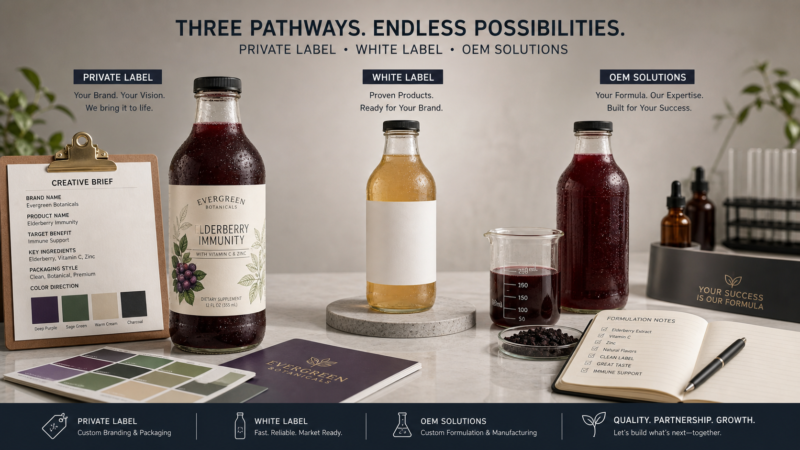
If you plan to develop a private label or OEM beverage for the Australian market, include compliance checkpoints in your product brief from day one. Capture category, intended claims, allergens, caffeine status, deposit‑scheme marks, and country of origin statement early so your designer can reserve space and your lab can build the right validation plan.
- For Australian go‑to‑market options and timelines, see OEM beverage manufacturing for Australian buyers.
- If you intend to dual‑source or fill locally, explore contract beverage manufacturing for Australian brands.
- Retailers with own‑brand ranges will expect full compliance files; review this guide alongside private label beverages for Australian brands.
Finally, trend alignment matters. Functional cues, sugar management and premium packaging all shape sell‑in conversations. Cross‑check your concept with current beverage trends in Australia to avoid rework during retailer reviews.
Country of origin: getting it right
Most packaged foods that are considered “priority” foods require a country of origin label under a dedicated information standard. Imported beverages typically carry a text origin statement and do not use the kangaroo logo. If you make “made in” or “packed in” claims, ensure they reflect production realities and comply with consumer law guidance. For multi‑ingredient drinks, be ready to substantiate your claim basis.
Data management and change control
Good recordkeeping underpins compliance. Keep master data for ingredients, additives, suppliers, and test results; version control your NIP calculations and claims substantiation; and record which label version is tied to each lot. If a supplier reformulates a flavour or colour, reassess additive permissions, allergen declarations and claims eligibility before releasing affected lots.
Retail, foodservice and e‑commerce nuances
While the Code sets baseline rules, channels add their own expectations. Retailers may specify minimum font sizes, barcoding standards and on‑pack data zones. Foodservice formats might rely on outer packaging for some information, but consumer‑facing packs still must meet labelling laws. E‑commerce listings should mirror on‑pack mandatory information so shoppers can make informed choices before buying.
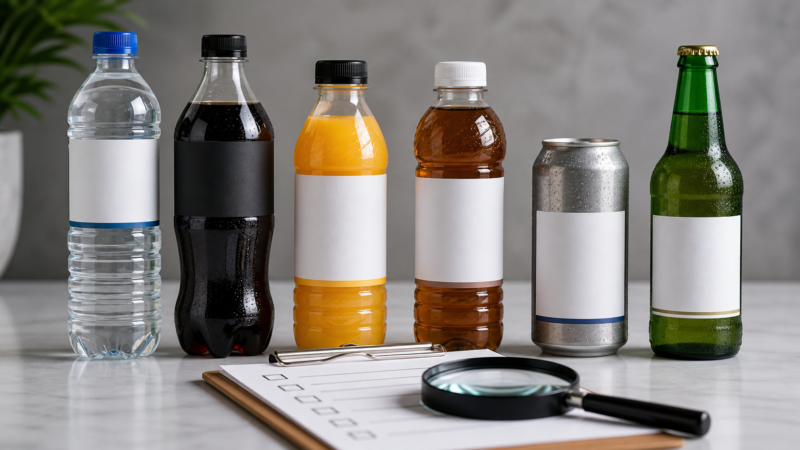
Pre‑launch label review toolkit
- Annotated artwork with callouts to each mandatory element and any CDS marks.
- NIP worksheet showing source data, conversions to kJ and per 100 mL/serving.
- Claims substantiation file (nutrition content and health claims, if used).
- Ingredient/additive permission matrix mapped to Code schedules and categories.
- Allergen risk assessment and supplier declarations.
- Shelf‑life protocol and supporting test results.
- Import inspection pack (for imports): certificates, product specs, invoices, shipping docs.
Governance, training and audits
Assign a compliance owner who can interpret Code updates, coordinate supplier changes and maintain the master label library. Train your design, QA/QC and marketing teams on the basics of Australian labelling and claims so they can spot issues early. Internal audits before print runs reduce downstream rework and risk during regulator or customer audits.
When to seek specialist advice
Consider external advice if you are introducing novel ingredients, planning a formulated caffeinated beverage, making health claims, selling across all states with deposit scheme nuances, or importing complex multi‑component drinks. A pre‑clearance review can be cost‑effective compared to relabelling or withdrawal.
FAQ
Do I need an Australian business address on the label?
Yes. The label typically needs a name and street address in Australia or New Zealand for the supplier, packer or importer. For imported drinks, the Australian importer’s details are generally required.
Can I over‑sticker imported beverages to comply?
Often yes, but only if the over‑sticker makes the label fully compliant, fully covers any conflicting text and remains legible and durable. Over‑stickers cannot hide essential information or become unreadable during distribution.
Are Nutrition Information Panels always required?
They are required in most cases for packaged foods and beverages, with limited exemptions. Beverages generally need NIP data per serving and per 100 mL. Confirm any exemption carefully before relying on it.
Can I make health claims on beverages?
Only if permitted by the Code and if your product meets eligibility criteria and you hold substantiation. Avoid therapeutic or disease-related claims. Keep claim wording consistent across pack and digital media.
What about container deposit marks?
Most states and territories require marks and producer registration for eligible beverages. Because marks and processes vary, plan space on labels early and register barcodes where needed.
Is there a sugar tax on soft drinks in Australia?
There is no national sugar tax scheme in force at the time of writing. Monitor government announcements and retailer requirements, which can change independently of tax policy.
Conclusion
Australian beverage regulations centre on the Food Standards Code for composition and labelling, backed by state enforcement, consumer law for country of origin and truthful claims, import inspections for overseas products, and container deposit schemes that affect packaging and marks. Build compliance into your brief from day one: choose the right category, confirm additive permissions, plan your label architecture, validate shelf life and prepare import documentation where relevant.
This practical approach reduces redesigns, avoids hold‑ups at inspection and supports clear consumer communication. If you are formulating or importing a new beverage for Australia, align your technical file, artwork and route‑to‑market plan early—then complete a formal label review against the current Code before you print.
Manufacturing for Australian brands
If you are sourcing for the Australian market, start with manufacturing to your own specification for what the production side covers, certifications and food safety systems for the evidence importers and retailers require, and export and logistics for shipping terms and documentation. To price a programme, request a quote.
Sources
Requirements on this page derive from the Australia New Zealand Food Standards Code, administered by FSANZ. Check the Code itself before finalising a label or an import plan.
- Food Standards Australia New Zealand — Australia New Zealand Food Standards Code
- FSANZ — Labelling requirements for business
Where to go next
Planning an Australian launch? The Australia beverage market page covers the full OEM and private label programme for Australian brands and importers: MOQ 500 cartons per SKU, 15-30 day production, HACCP / ISO 22000 / FSSC 22000, and shipping from Ho Chi Minh City. Request a quote and we reply within 24 hours.