


 Français
 Español
 العربية
 한국어
한국어Choosing an overseas beverage manufacturer for the Australian market starts with clarity: align your product brief, compliance requirements and commercial priorities, then validate factories with structured due diligence and audits. This guide shows how to choose beverage manufacturer Australia buyers can trust, from first screening through post-launch governance.
The right partner is not only cost-competitive. They must consistently meet Food Standards Australia New Zealand (FSANZ) regulations, deliver packaging suitable for Australian retail and e-commerce, withstand ocean transit conditions, and operate robust quality systems. Below is a practical, step-by-step framework you can apply to new builds and supplier transitions alike.
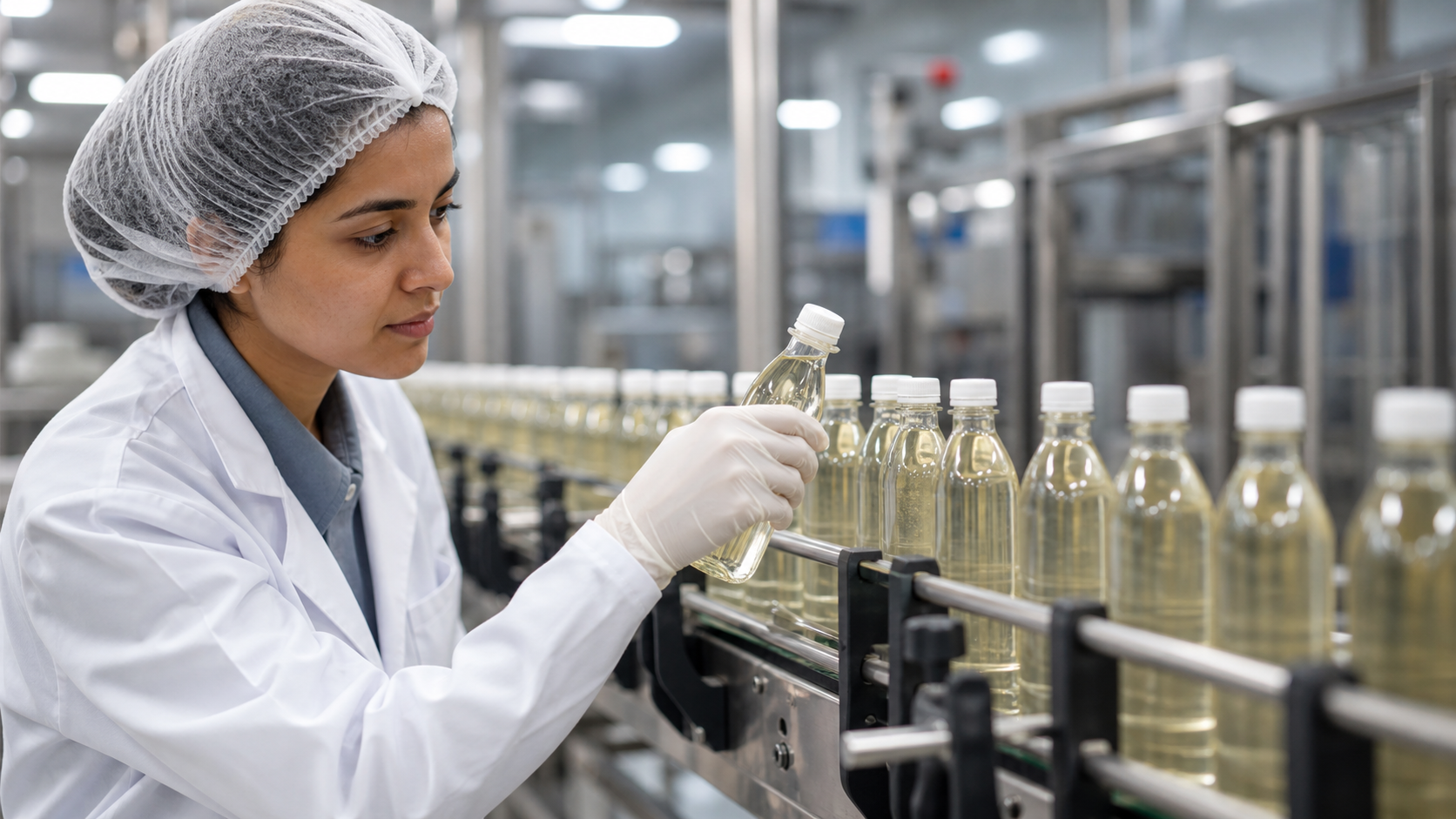
What does an “overseas beverage manufacturer” mean for Australian brands?
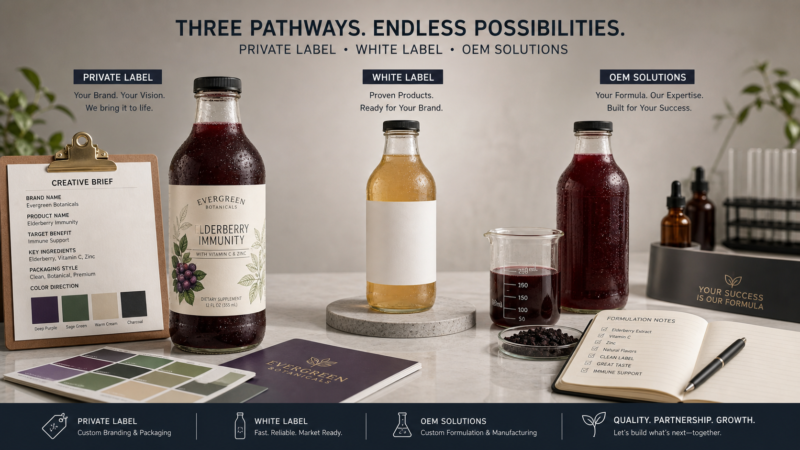
It typically refers to a third-party factory outside Australia that develops and/or produces your drink to a defined specification, then exports to Australia under agreed commercial and compliance terms. You might work in three common models: private label (your brand on an existing or lightly customized formula), white label (your brand on a standard spec), or OEM/contract manufacturing (a custom formula developed to your brief). For a concise comparison of these approaches, see Private Label, White Label and OEM Beverages Compared.
How should Australian buyers define the product brief?
Define your brief before contacting factories. A precise brief accelerates formulation alignment, reduces rework, and makes quotations comparable across suppliers.
- Target consumer & positioning: mainstream, better-for-you, premium craft, functional, value, kids, sports, etc.
- Format & base: still/Carbonated (CSD), juice content, dairy/non-dairy, tea/coffee infusion, botanical, energy/stimulant, hydration/electrolyte, protein, kombucha, isotonic, shots.
- Flavour system: single fruit, layered fruit, tea + fruit, spice/herbal, zero- or reduced-sugar, natural or nature-identical flavours.
- Sweetening approach: cane sugar, fruit sugars, honey, low-/no-calorie sweeteners. Confirm market acceptability and labelling implications.
- Acidulants & Brix–acid balance: set a sensory target (refreshing vs. rich), with indicative ranges to guide developers.
- Processing: hot-fill, retort, pasteurised, tunnel pasteurised, aseptic fill, cold-fill + preservatives (where permitted).
- Stability & shelf life: ambient/chilled, expected months on shelf, opened shelf life, light/oxygen sensitivity.
- Packaging: bottle/can/carton, volume (e.g., 250–500 ml), closures, secondary packing, pallet pattern, and labeling method (shrink sleeve, pressure-sensitive, direct print).
- Regulatory constraints: caffeine content, certain additives, allergen declaration, nutrition information, claims strategy (subject to regulations).
- Sensory benchmarks: 2–3 market examples that capture your desired sweetness, acidity, body, aroma and aftertaste.
- Commercial targets: indicative ex-works price band, initial MOQ, lead-time expectations, and margin model.
What product type are you building: 100% juice, nectar or juice drink?
Clarity on product type affects raw material costs, sensory, labeling and claims strategy. While definitions vary across markets, aligning on your intended style helps factories quote precisely and select appropriate concentrates, purees and processing.
| Product style | Typical intent | Implications for development |
|---|---|---|
| 100% juice | Fruit-only juice without added sugar/sweeteners (varies by market) | Higher juice solids; tighter control of origin, variety and seasonality; flavour standardisation across harvests |
| Nectar | Fruit base with water and permitted ingredients | Balance Brix/acid, mouthfeel and fruit identity; cost and sensory flexibility |
| Juice drink | Lower juice content with flavour system | Wider room for flavour architecture; price-sensitive; careful labelling to avoid consumer confusion |
Which Australian compliance and labelling rules should guide development?
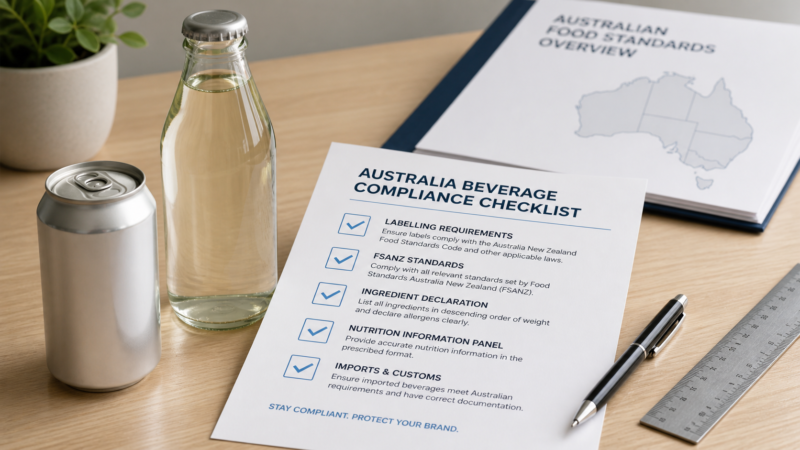
As you shape the brief, build in regulatory guardrails early. For beverages sold in Australia, the Food Standards Australia New Zealand (FSANZ) Food Standards Code and Australian Consumer Law inform ingredient use, labelling and representations. Work with qualified compliance professionals to review your specific formula and label for your target channels.
- Ingredient & additive permissions: confirm permitted sweeteners, colours, preservatives and functional ingredients within your beverage category.
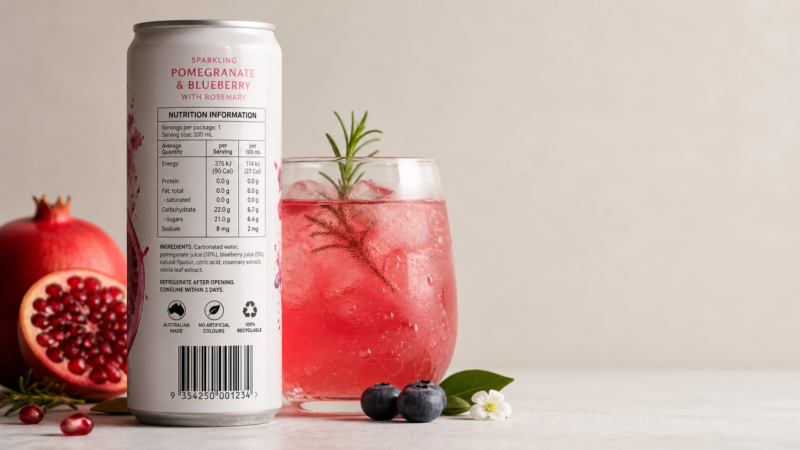
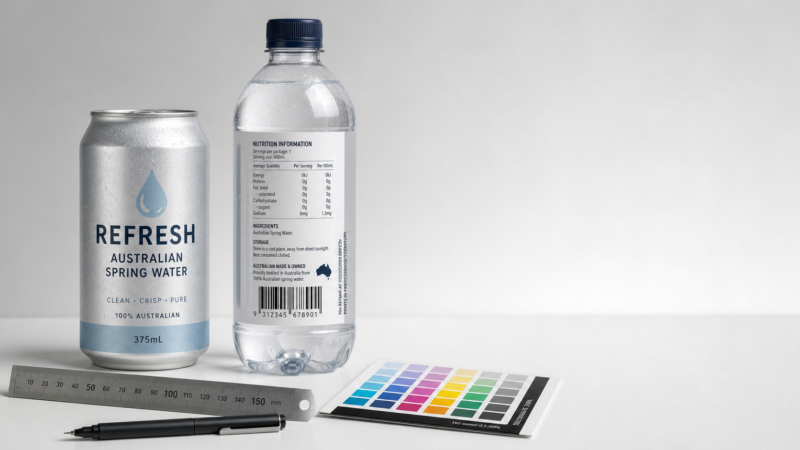
- Labelling fundamentals: nutrition information, ingredients list, allergen declaration, lot/batch coding, date marking, storage instructions and importer details where applicable.
- Representations & claims: ensure any nutrition or marketing statements are substantiated, appropriately worded and suitable for the category and serving size.
- Packaging: check marking requirements relevant to your pack type and any market-specific recycling or deposit system markings you intend to use.
For packaging nuances specific to the market, see Beverage Packaging Options for the Australian Market.
How do you shortlist an overseas drink manufacturer?
Start wide, then qualify fast. Build a longlist from industry referrals, trade shows, ingredient partners, and verified directories. Move candidates through structured screening to conserve sampling spend and compress timelines.
- Technical fit: category experience (e.g., cold-fill CSD vs. hot-fill juice), processing capabilities, pilot plant access, packaging formats, and ability to meet your sensory style.
- Quality systems: documented food safety program, internal audits, supplier approval program, traceability testing, corrective action procedures.
- Regulatory familiarity: demonstrated experience exporting to Australia or comparable markets with similar compliance expectations.
- Commercial readiness: indicative MOQ, capacity in your peak periods, tooling/artwork lead times, service levels for small changes.
- Communication: responsiveness, clarity, access to technical staff, and willingness to share evidence early under NDA.
What due diligence reduces risk before factory visits?
Run a desk-based beverage factory due diligence before committing to travel or extensive pilot runs. The goal is to filter mismatches and shape your on-site audit plan.
- Document pack: request quality manual contents page, sample SOPs, HACCP overview, key certificates, organogram, and sample batch record (redacted).
- Traceability test: ask how they perform mock recalls and typical time to complete a full backward/forward trace.
- Allergen & segregation: verify handling of cross-contact risks, line clearance procedures, and cleaning validation summaries.
- Utilities & environment: water treatment overview, compressed air quality control, pest control program, foreign body control.
- Past performance: export history, product categories, and a few anonymised examples of nonconformances and corrective actions.
What belongs in a beverage supplier audit checklist?
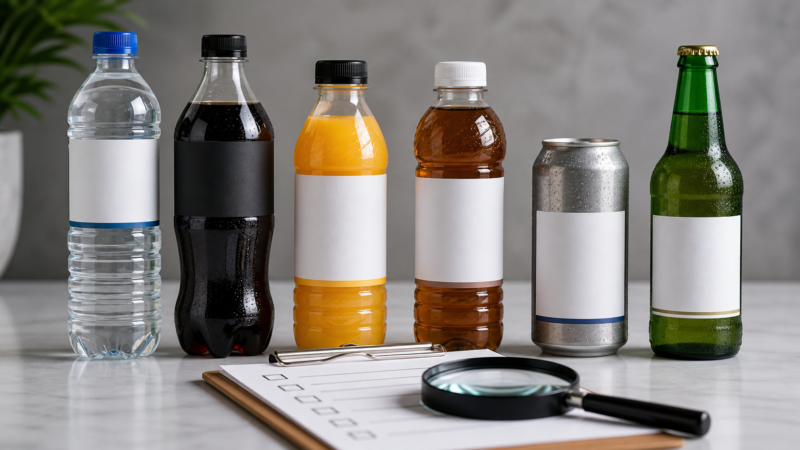
Use a structured beverage supplier audit checklist to drive consistency across site visits. Tailor depth by risk and product type.
- Governance & food safety: HACCP plan, hazard analysis, CCP monitoring, deviation handling, management review frequency.
- Prerequisite programs: sanitation, allergen control, water & air quality, glass/brittle plastic control, pest management.
- Documentation control: SOPs, version control, training records, batch records, change control, supplier approval files.
- Raw materials: COAs, vendor specs alignment, storage segregation, FIFO/FEFO, handling of high-risk ingredients.
- Production controls: formulation control and weigh-up verification, line clearance, in-process checks (Brix/acid, carbonation, torque, seam integrity), metal/foreign body controls.
- Packaging QA: incoming verification for bottles/cans/caps/labels, seam or torque checks, label application accuracy, code legibility.
- Testing & release: microbiological and physicochemical testing plans, environmental monitoring, shelf-life protocol, hold-and-release criteria.
- Facilities: zoning by hygiene risk, employee facilities, gowning, handwashing compliance, waste management.
- Calibration & maintenance: calibration schedule, tool verification, preventive maintenance, breakdown response logs.
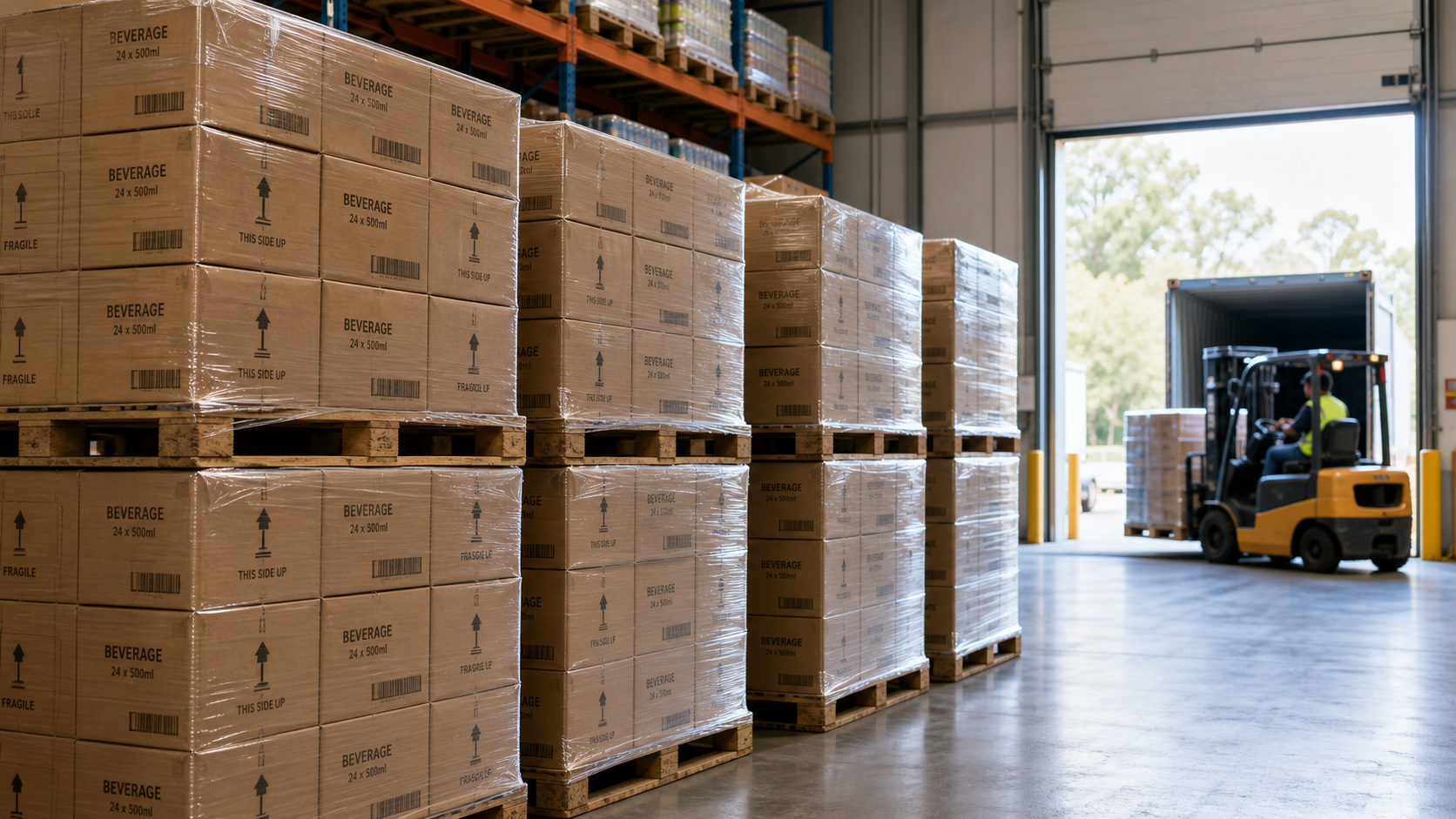
- Warehousing & dispatch: ambient temperature control if relevant, palletisation and stretch-wrap integrity, container loading practices, photo documentation of loads.
How should you evaluate lab samples and pilot runs?
Samples should be tested against your brief, not just for taste. Run sensory and technical checks that predict scale-up behaviour and export viability.
- Sensory panel: sweetness, acidity, body, aroma, aftertaste, flavour authenticity, with triangle tests vs. benchmarks where useful.
- Chemical & physical: Brix, acidity, pH, dissolved CO2 where relevant, colour consistency, clarity/haze, sediment expectations.
- Stability screen: temperature cycling, light exposure for clear packs, carbonation retention, precipitation risk in botanicals or dairy-alternatives.
- Packaging trials: seam integrity (cans), cap torque (bottles), label/sleeve scuffing, code permanence after abrasion.
- Transit simulation: vibration and compression testing approaches representative of sea freight and last-mile handling.
- Regulatory review: preliminary label compliance review aligned with FSANZ and Australian Consumer Law expectations.
Which commercial terms matter most to lock in early?
Agreeing key commercial parameters early prevents surprises after you invest in artwork and tooling.
- MOQ structure: per SKU, per flavour, per packaging component; tiered pricing by volume. See the Beverage MOQ Guide for Australian Buyers.
- Pricing basis: currency, raw material indexation approach, quote validity window, and components included (packaging, outer cartons, testing).
- Payment terms & instruments: deposit vs. balance, open account vs. standby instrument where appropriate, and credit insurance options.
- Lead times & capacity: standard lead time definition (artwork approved to ex-works), peak season constraints, ability to scale promotions.
- Artwork & tooling: who owns tooling, cost sharing for dies and plates, approval process and timelines.
- Change control: fees, minimum notice, and timelines for formula tweaks, pack changes or supplier substitutions.
- Claims & recalls: responsibilities, communication timelines, destruction vs. rework decisions, insurance coverage.
How do you manage packaging for the Australian market?
Packaging is more than aesthetics; it drives shelf presence, logistics cost and compliance. Plan early with your manufacturer and component vendors.
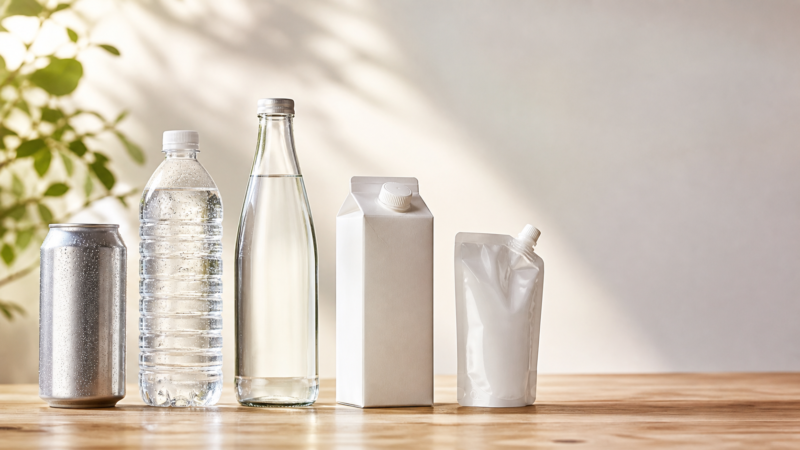
- Primary format: lightweight cans for CSD and energy; PET or glass for juices, teas and still drinks; cartons for aseptic juices.
- Barrier & closures: oxygen and light barriers, cap/closure choice for product style, tamper-evidence, and child-resistant closures where needed.
- Label & print: pressure-sensitive labels vs. sleeves vs. direct-to-can printing; colour-fastness and scuff resistance in transit.
- Secondary & tertiary: can carriers, trays, full cartons, pallet patterns, slip sheets, container loading patterns to reduce damage.
- Markings: batch codes and date markings placement and readability for retail and warehouse scanning.
For a deeper look at format trade-offs and retail norms, bookmark Beverage Packaging Options for the Australian Market.
| Packaging option | Best for | Positioning & notes |
|---|---|---|
| Aluminium can | Carbonated & energy | Cold, crisp perception; efficient palletisation; high-speed lines common |
| PET bottle | Still & CSD | Lightweight; shape flexibility; consider oxygen ingress for sensitive products |
| Glass bottle | Premium still & juices | Premium cues; heavier; manage breakage risk in freight |
| Aseptic carton | Juices & ambient dairy-alternatives | Ambient shelf life; large printing canvas; specific filling capability required |
How should logistics planning shape supplier selection?
Export viability depends on logistics as much as formulation. Consider transit time, temperature control and documentation during supplier selection, not after PO.
- Freight mode: sea freight for scale and cost; air for urgent launches. Assess shelf-life impact and stability under likely temperatures.
- Container choice: ambient vs. temperature-managed approaches depending on product sensitivity and season.
- Load integrity: pallets, stretch wrap, corner boards, and container stuffing SOPs with photo documentation of each load.
- Documentation: commercial invoice, packing list, product/ingredient specifications, batch test results and other certificates requested by your importer or broker.
- Importer role: align early on who acts as importer of record and how clearance responsibilities are split.
If your program includes Southeast Asia, see practical transit pointers in Shipping Beverages from Vietnam to Australia.
Where does Vietnam fit into beverage sourcing for Australia?
Vietnam is a growing hub for beverage sourcing with access to tropical fruit ingredients, diversified manufacturing ecosystems and established export lanes into Australia. When assessing factories in Vietnam (or any other origin), apply the same structured approach: technical fit, quality systems, regulatory readiness, and commercial capability. Mention your need for Australian market compliance from the first contact to shape formulation choices and labelling from day one.
How can you compare and prioritise suppliers objectively?
Use a simple multi-stage matrix to keep decisions transparent across teams.
| Stage | Focus | Key checks |
|---|---|---|
| Screening | Fit-for-purpose capability | Category experience, processing/packaging capability, certificates, sample lead-time, responsiveness |
| Validation | Evidence-based assurance | Document review, remote interviews, stability approach, preliminary label review, draft quality agreement |
| On-site audit | Operational reality | HACCP & prerequisite programs, line control, testing plans, maintenance, warehousing, dispatch |
| Pilot & pre-production | Scale-up confidence | Pilot run data, transit simulation, packaging QC, micro testing, spec sign-off |
What should your quality agreement include?
A quality agreement clarifies responsibilities and escalation paths, reducing ambiguity during incidents.
- Specifications: signed product spec, raw material specs, acceptance criteria, and COA requirements.
- Testing plan: micro and physicochemical testing frequency and methods; environmental monitoring scope.
- Deviations & CAPA: nonconformance definition, notification windows, investigation format, corrective/preventive actions, and closure timelines.
- Traceability & recall: mock recall cadence, notification trees, roles in potential withdrawals/recalls.
- Change control: definition of change, approval workflow, lead times, labelling/artwork impacts, and documentation.
- Audit rights: periodic and for-cause audits, remote/onsite scope, and access to records.
How do you negotiate artwork, labels and claims responsibly?
Align creative ambitions with regulatory and operational reality to avoid reprints and delays.
- Master data: SAP/PLU/SKU codes, GTIN allocation, pack dimensions and weights for retail systems and freight planning.
- Label content controls: version control, legal review sign-offs, printer proofs, and code placement verification.
- Claims: plan any nutrition or marketing statements with compliance advisors; allowable wording depends on final formula, serving size and target market rules.
- Print windows: define cutoffs for label release vs. production dates; specify proof of approval (e.g., signed PDF) as a release gate.
How should you structure post-launch oversight?
Treat launch as the start of a controlled cycle, not the end of development.
- Supplier reviews: quarterly reviews on OTIF, quality incidents, CAPA closure, and continuous improvement ideas.
- Verification: periodic re-audits, inbound inspections, and shelf checks in-market to confirm code legibility and pack condition.
- Data: temperature logger sampling in shipments where relevant; trend micro/physicochemical data over time.
- Pipeline: manage upcoming flavour rotations, seasonal packs and promotional volumes with long-lead packaging orders.
Commercial pitfalls and red flags to watch
Clear red flags help teams stop early and revisit assumptions before costs escalate.
- Vague or delayed documentation when asked for SOPs, HACCP overview or calibration logs.
- No demonstrable experience with your product style or target packaging format.
- Inflexible or unclear change control fees and timelines.
- Promises of fast turnarounds that don’t align with tooling or component lead times.
- Inconsistent batch coding, poor label application, or a lack of hold-and-release discipline.
- Reluctance to host audits or to share corrective action evidence from prior issues.
What about certifications and importer expectations?
Many Australian importers and retailers expect recognised food safety certifications and documented quality controls. Typical frameworks requested include HACCP-based programs and globally benchmarked schemes such as ISO 22000, BRCGS or IFS. Always request current certificates and scope statements, and confirm they cover your specific product category and processes. For a buyer’s view of common requirements, see Beverage Certifications for Australian Importers.
How to prepare your team for sampling and decision gates
Define decision gates with cross-functional inputs to avoid subjective choices.
- Gate 1 – Technical fit: approve factories for sample development based on capability and document review.
- Gate 2 – Sensory & stability: advance only those meeting sensory targets and initial stability checks.
- Gate 3 – Pilot & pre-prod: run line trials with packaging QC and micro plans in place.
- Gate 4 – Launch readiness: spec sign-off, labels legally reviewed, quality agreement executed, logistics plan locked.
Templates that keep projects moving
Your internal templates reduce ambiguity with suppliers and speed comparisons:
- Product brief template: covers positioning, formula constraints, processing, pack, compliance and commercial targets.
- Beverage supplier audit checklist: site-specific and risk-based, updated after each audit.
- Quality agreement template: aligned with your importer and retailer expectations.
- Artwork approval checklist: content, claims, codes and printer proofs with sign-off logs.
- Logistics SOP: pallet pattern, container loading, photo documentation, acceptance criteria at receiving.
When should you bring in external experts?
Consider external support when you need to compress timelines or add specialist oversight:
- Regulatory & labelling advisers for FSANZ and Australian Consumer Law alignment.
- Process engineers for new-to-you technologies (aseptic, retort, tunnel pasteurisation).
- Microbiologists for high-risk categories or extended shelf-life ambitions.
- Packaging technologists for barrier, seam/closure integrity and transit performance.
- Third-party inspectors for pre-shipment checks and loading supervision.
How to communicate with factories across time zones
Effective communication is a competitive advantage. Establish predictable cadences and clear artefacts.
- Weekly status calls with action logs; use concise agendas and record decisions in shared trackers.
- Change logs for formula and artwork; version numbers must match on all documents.
- Photo/video evidence for corrective actions, container loading, and batch code legibility.
- Escalation matrix with names, roles and response-time targets.
Case pathway: compressing timelines without cutting corners
When speed matters, remove idle time rather than process steps. Overlap activities where risk is acceptable: start preliminary label layouts while lab samples are in flight; request component lead times as you lock flavour direction; and prepare your importer documentation pack as your pilot run is scheduled. Keep your beverage supplier audit checklist open during these sprints so risk controls remain visible.
FAQ
How long does it take to move from samples to first production?
Timelines vary by category, packaging and artwork readiness. Projects often move faster when the brief is precise, decisions are made at defined gates, and component lead times are confirmed early. Building contingency for pilot re-runs and artwork tweaks reduces the chance of last-minute delays.
Do I need a specific food safety certification from the factory?
Many Australian importers prefer manufacturers operating under HACCP-based programs and globally recognised certifications (e.g., ISO 22000, BRCGS, IFS). Always verify certificate scope, validity and relevance to your beverage type and processes.
Which Incoterms are common for beverages?
Terms vary by buyer capability and risk appetite. Many buyers use ex-works or FCA when they manage freight, or FOB/CIF/CFR with agreed responsibilities. Select terms that align with your logistics control, insurance preferences and importer arrangements.
How can I protect my formulation and brand assets?
Use NDAs before exchanging sensitive information, restrict access to final formulas to need-to-know roles, and define IP ownership in your manufacturing and quality agreements. Control artwork files with versioning and documented approvals.
Can a single factory produce multiple beverage types for me?
Some can, but capability depends on processing lines, allergen risks and cleaning validation. It’s common to dual-source across factories for different categories or to mitigate capacity and risk constraints.
Where can I learn more about packaging specifics for Australia?
For market-oriented format guidance, review Beverage Packaging Options for the Australian Market, and coordinate with your factory on component availability and lead times.
Conclusion
To choose beverage manufacturer Australia buyers can rely on, anchor your project in a robust brief, compliance-by-design and disciplined due diligence. Validate factories with a tailored beverage supplier audit checklist, confirm logistics viability for your pack and route, and lock commercial terms—including MOQs, change control and artwork gates—before production. If you’re exploring beverage sourcing Vietnam or other regional hubs, apply the same structured approach and consult specialists as needed. You can also explore related frameworks for format selection, MOQs and compliance here:
- Private Label, White Label and OEM Beverages Compared
- Beverage Packaging Options for the Australian Market
- Beverage MOQ Guide for Australian Buyers
- Shipping Beverages from Vietnam to Australia
- Beverage Certifications for Australian Importers
Manufacturing for Australian brands
If you are sourcing for the Australian market, start with OEM beverage manufacturing for how contract production is structured, certifications and food safety systems for the evidence importers and retailers require, and export and logistics for shipping terms and documentation. To price a programme, request a quote.
Request a quoteWhere to go next
Planning an Australian launch? The Australia beverage market page covers the full OEM and private label programme for Australian brands and importers: MOQ 500 cartons per SKU, 15-30 day production, HACCP / ISO 22000 / FSSC 22000, and shipping from Ho Chi Minh City. Request a quote and we reply within 24 hours.