


 Français
 Español
 العربية
 한국어
한국어A fruit juice supplier quotation summarizes the commercial offer for your product: specification, pricing, terms and timelines. To compare quotes fairly, align the product spec first and translate every offer into a true total landed cost. Understanding how the private label juice development process shapes each quote will also help you judge feasibility and speed.
This guide shows a practical, step-by-step way to normalize competing quotations, highlight hidden costs, and evaluate trade-offs across formulation, packaging, quality, timelines and Incoterms. Use it to brief suppliers clearly, reduce surprises, and make side-by-side decisions based on comparable data.
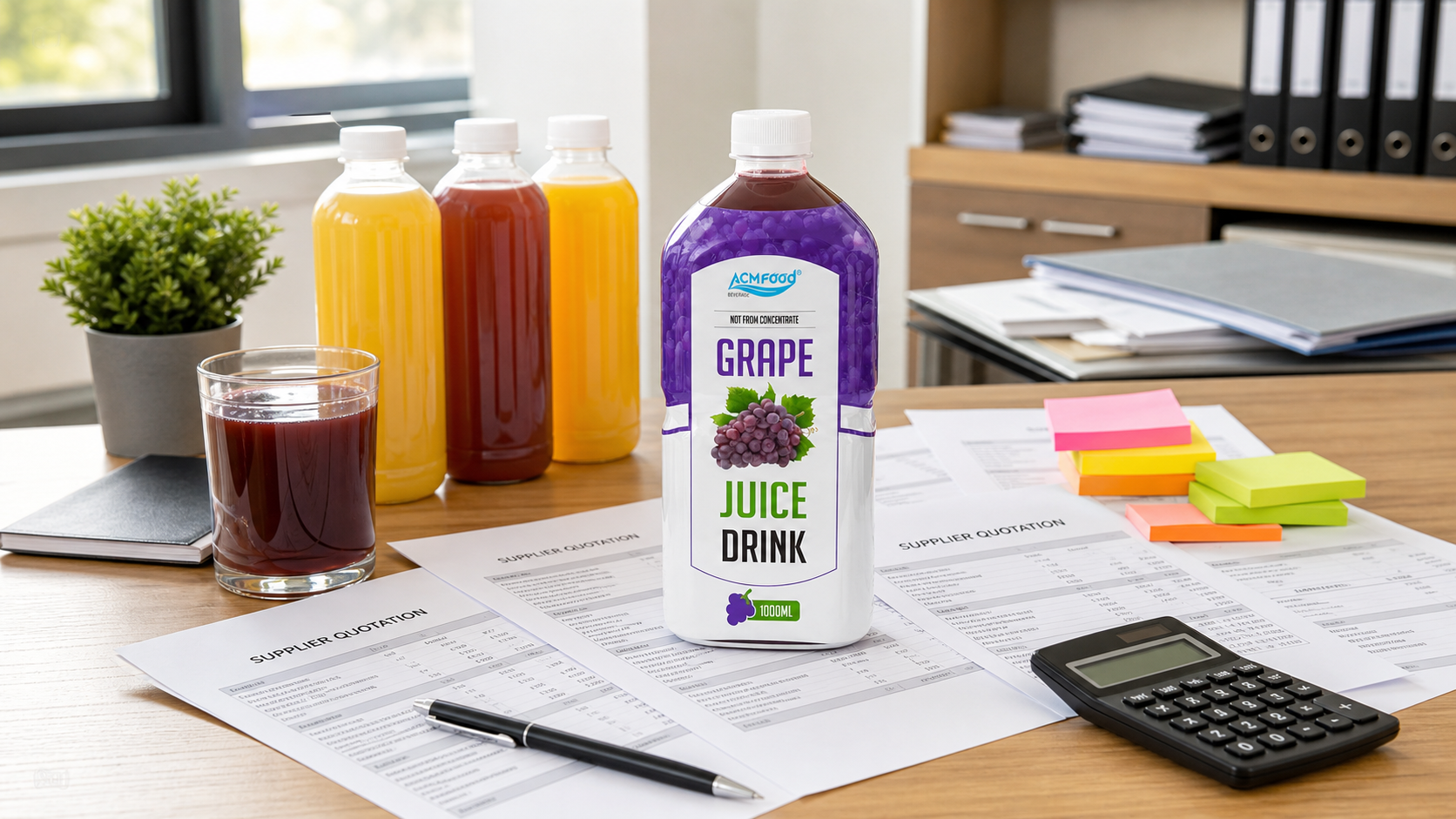
What should a fruit juice supplier quotation include?
A complete quote should state the exact product specification, price basis and commercial terms so you can calculate landed cost and delivery risk. If a line item or assumption is missing, request it in writing before comparing prices.
- Product specification: juice type (100% juice, nectar, juice drink), fruit varieties or blends, Brix/acidity target, pulp level, color and flavor profile.
- Ingredient basis: single-strength or concentrate, flavor/natural flavor use, added sugar or sweeteners (if permitted), functional ingredients, allergens.
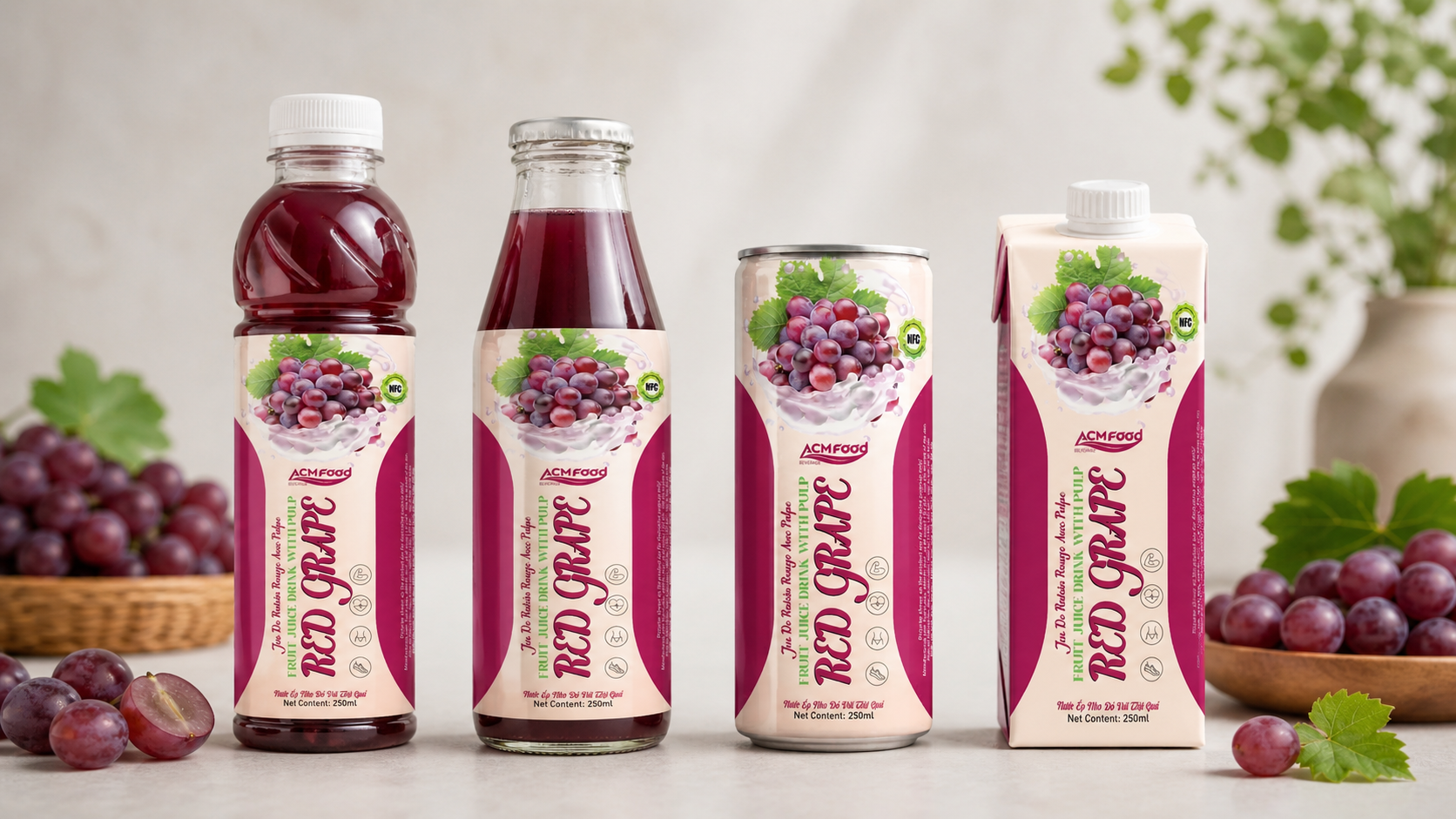
- Packaging: format (PET, glass, can, aseptic carton), closure, fill volume, label/sleeve type, secondary packaging (carton), palletization pattern.
- Quality: processing method (e.g., pasteurized), shelf-life target, storage conditions, testing scope (e.g., agreed microbiological parameters), release documents (e.g., batch certificate of analysis) and traceability details.
- Price: unit price per SKU and per case, currency, price breaks by MOQ and volume tiers, artwork/tooling fees, sample costs, and any development/R&D charges.
- Logistics & terms: Incoterms (EXW/FOB/CIF/DDP), port or address, estimated lead time, validity of quote, payment terms, and surcharges (e.g., pallet, documentation, peak season).
- Compliance: market(s) intended, labeling language scope, and any regulatory deliverables the supplier will support (e.g., ingredient statement template, allergen disclosure). Final labeling and claims depend on your recipe, serving size and destination regulations.
How do you normalize quotes before comparing prices?
Standardize the specification and terms across all suppliers, then re-map each quote to the same units, volumes, and Incoterms. Only then should you compare unit prices or landed costs.
- Lock the brief: circulate a single product brief containing formula targets, sensory cues, packaging, artwork scope, target markets, and expected volumes.
- Unify the units: convert all offers to a common per-case and per-liter basis, same pack size, same case count.
- Equalize terms: translate quotes to a common Incoterm (e.g., FOB) and then to landed cost for your warehouse.
- Match shelf-life & tests: ensure the same shelf-life, storage, and testing scope; different quality plans change cost and risk.
- Align MOQs: request equivalent MOQ tiers and annual forecasts so quotes reflect comparable scale.
- Separate one-off vs recurring: split artwork/tooling and development fees from unit cost to judge long-term economics.
| Specification element | Why it changes price | Typical options |
|---|---|---|
| Juice format | Ingredient content, sugar strategy, and regulatory positioning affect cost | 100% juice, nectar, juice drink |
| Brix & acidity | Higher solids and tighter tolerances increase ingredient use and controls | Set Brix range and acidification target |
| Packaging | Material, weight, and line speeds drive packaging and processing cost | PET, glass, can, aseptic carton |
| Shelf-life | Stability targets influence processing, testing, and warehousing | Ambient vs chilled; months-on-shelf target |
| Incoterms | Freight, insurance, and handling shift between parties | EXW, FOB, CIF, DDP |
| MOQ & tiers | Scale improves ingredient and packaging economics | Per-SKU, per-order, annual volumes |
100% juice, nectar and juice drink: why do quotes differ?
Quotes vary because composition, juice content and sweetening strategies drive ingredient cost and processing. Packaging and positioning then shape labeling, quality controls and shelf-life expectations.
| Format | Typical juice content | Positioning & notes | Pricing impact (qualitative) |
|---|---|---|---|
| 100% juice | High; made from single-strength or reconstituted concentrate | Ingredient-driven; label rules vary by market | Typically highest cost due to juice solids |
| Nectar | Moderate; often fruit plus water and sweetener (where permitted) | Texture and mouthfeel matter; sugar strategy affects positioning | Mid-range cost depending on fruit and Brix targets |
| Juice drink | Lower; juice plus water and sweetener/flavor | Broad flavor flexibility; may target value segments | Typically lowest cost per liter |
Which cost drivers matter most for private label juice?
Ingredient solids, packaging format, processing method, and logistics define most of the cost. One-off development and artwork fees affect launch economics, while MOQs and forecasting affect long-term unit cost.
- Ingredients: fruit variety, country/season, concentrate vs single-strength, sweeteners, flavors, color, and functional inclusions.
- Packaging: material (PET, glass, can, carton), closure and barriers, label vs sleeve, case design, palletization efficiency.
- Processing: thermal profile, filtration, deaeration, line efficiency, yield loss assumptions and hold-time constraints.
- Quality plan: sampling frequency, microbiological and physicochemical testing scope, batch documentation, and stability studies.
- Compliance tasks: artwork adaptation, ingredient statement, allergen disclosure and nutrition labeling for target markets.
- Logistics: inland haulage, port charges, ocean/air freight, insurance, duties/taxes, last-mile delivery, and storage conditions.
- Order size & cadence: higher volumes and steady call-offs can unlock better ingredient buys and line scheduling.
- Exchange & currency: currency of quote and exposure management can materially shift effective cost.
How does the private label juice development process affect quotations?
The development path determines sample work, testing, artwork and potential line trials—each with timing and cost. Clarify which tasks are included in the quote and which are billed separately.
- Product brief & targets: one consolidated brief reduces costly iterations.
- Benchtop samples: first sensory fit to targets; plan limited, purposeful rounds.
- Refinements: adjust Brix/acid balance, flavor top notes, color and mouthfeel to match the concept.
- Stability & shelf-life studies: protocol, duration and endpoints agreed in advance; may be billed separately.
- Pilot or line trial (if needed): verify scale-up, yields, and in-pack performance; can involve minimum run costs.
- Packaging & artwork: dielines, label copy, legal review for destination markets, and printer proofs.
- Pre-production approval: golden sample, specification sign-off, and change-control process.
If you are deciding between development routes, see how private label vs white label vs OEM affects scope, cost and speed. Also review expected volume tiers, since private label fruit juice MOQ directly shapes pricing and packaging choices.
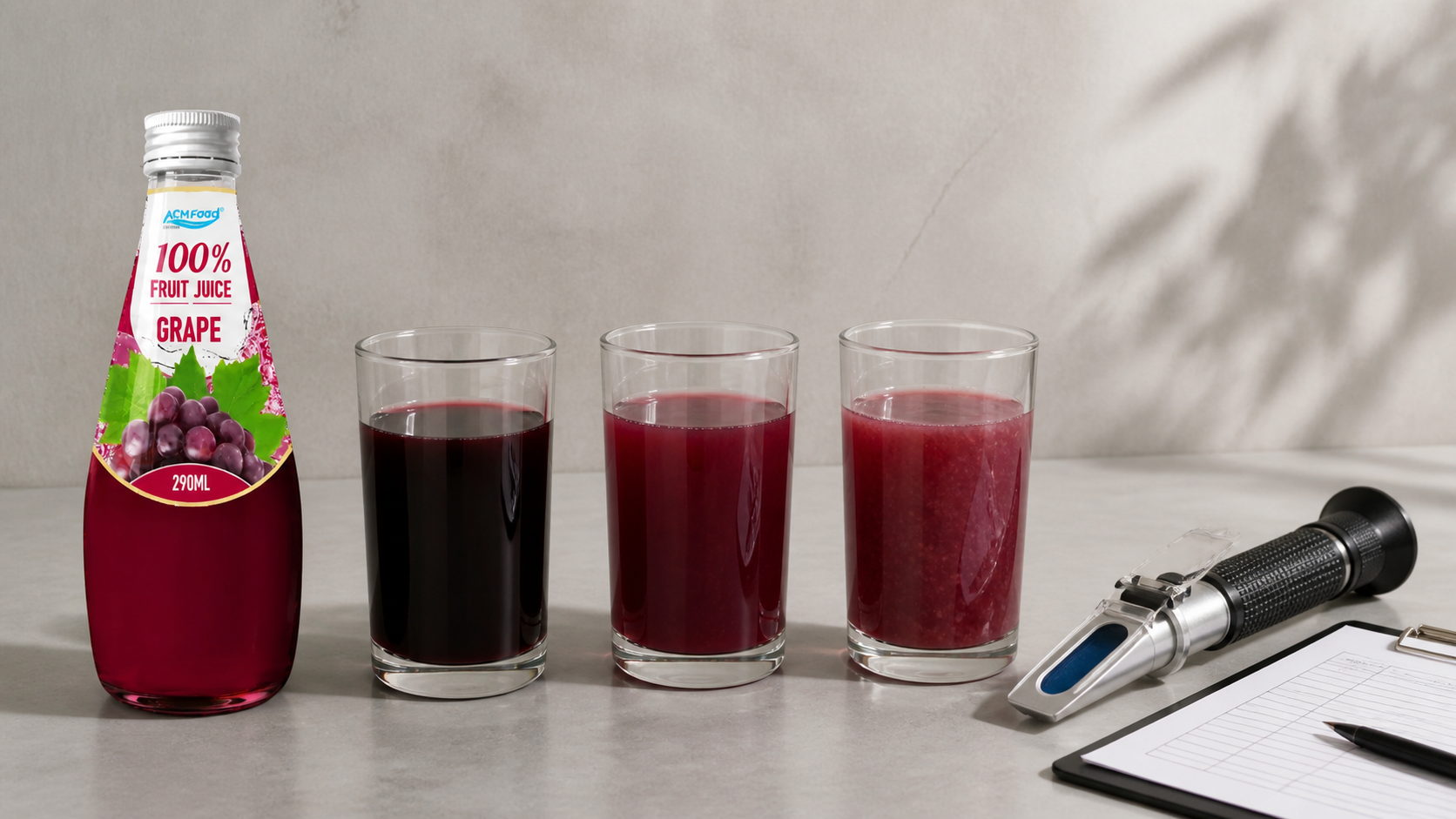
What timelines should you expect in an OEM juice project?
Timelines depend on formulation complexity, packaging availability, artwork readiness, stability evidence and regulatory checks. Plan the sequence, build buffers, and confirm which activities can run in parallel.
- Scoping: finalize brief, volume plan, destinations and intended launch date.
- Benchtop development: focused sampling rounds to reach sensory and analytical targets.
- Artwork creation & approvals: dielines, copy, compliance and printer lead times.
- Stability work: accelerated/real-time protocols as appropriate to your markets and shelf-life goals.
- Packaging procurement: lead times vary by material, decoration method and customization.
- Production slotting: align with factory calendars, seasonal fruit availability and shipping windows.
- Export & logistics: book freight early during peak seasons; validate Incoterms and documents.
How do you calculate landed cost from different Incoterms?
Translate all quotes to the same Incoterm baseline (e.g., FOB) and then add the downstream costs to your warehouse. Keep a worksheet for each route to capture variable surcharges.
- EXW to your warehouse: add inland pickup, export handling, terminal charges, ocean/air freight, insurance, destination terminal fees, customs brokerage, duties/taxes, delivery, and any storage or demurrage.
- FOB to your warehouse: add international freight, insurance, destination terminal fees, customs brokerage, duties/taxes and final delivery.
- CIF to your warehouse: validate what the seller’s freight/insurance covers; add destination terminal fees, customs, duties/taxes and delivery.
- DDP to your warehouse: confirm inclusions: duties/taxes, brokerage, last-mile, unloading, and any surcharges or accessorials.
When comparing routes, check currency, validity windows, peak season adjustments and palletization differences that affect freight density. Confirm whether temperature control or special handling is required and who bears the cost.
What quality & compliance items should appear in the quote?
Quality and compliance protect your brand and reduce rejections. Document deliverables and test plans in the quotation or its attachments.
- Quality system & testing: agreed microbiological and physicochemical tests, frequency, sampling plan, and acceptance criteria; batch documentation such as a certificate of analysis.
- Traceability & recall: lot coding approach, traceability documentation and roles in the event of a withdrawal.
- Shelf-life support: test protocol, endpoints and reporting format.
- Labeling inputs: ingredient list order, allergen statements, and nutrition labeling support as applicable to destination markets.
For an example of process discipline and testing frameworks, review a manufacturing overview like production process & QC systems. If you sell in the U.S., align copy and panels early using the Nutrition Facts label for beverages and this U.S. food label checklist. Labeling requirements vary by market and depend on your final formula, serving size and claims strategy.
How to request like-for-like revisions before final comparison
Once gaps are identified, ask every supplier for the same clarifications and updated pricing so the matrix stays comparable.
- Specification lock: confirm Brix range, acid targets, color and pulp with analytical tolerances.
- Packaging confirmation: exact material, weight/grammage, closure, decoration method and carton.
- Price structure: separate unit cost from one-off fees; add volume tiers tied to your forecast.
- Lead time: define the production window, packaging availability and logistics assumptions.
- Testing & documents: reconfirm deliverables per batch and per shipment.
Build a comparison matrix you can maintain
A simple but disciplined matrix prevents decision drift as new data arrives. Keep raw quotes intact, and work only on a normalized sheet for decisions.
- Columns: supplier, SKU, spec notes, per-liter, per-case, Incoterm, conversion to landed, MOQ tiers, one-off fees, lead time, testing scope.
- Flags: use conditional highlights for missing data, short validity, unusual surcharges or non-standard testing.
- Versioning: date-stamp each revision and capture what changed.
Risk checks before shortlisting
Beyond price, shortlist on execution risk and fit to your go-to-market. Verify production capacity against your forecast, change-control discipline, artwork readiness, and customer service responsiveness.
- Operational fit: can the supplier run your packaging format reliably at target yields and quality?
- Change control: how are specification changes approved and communicated?
- Forecast alignment: does the MOQ align with your working capital and shelf-life?
- Documentation: are test reports and shipping documents consistently provided and accurate?
- Regulatory support: can they supply inputs you need for each market’s label and import process? For Australia, see this Australian food label checklist for beverages.
Negotiation pointers without eroding quality
Negotiate structure, not just unit price. Aim to preserve sensory targets, stability and compliance while improving total economics.
- Volume leverage: exchange annual forecast visibility for tiered pricing and confirmed production slots.
- Spec trade-offs: minor adjustments to Brix range, color tolerance, or label decoration can reduce cost without changing positioning.
- Packaging harmonization: reuse common bottle/cap/label components across SKUs to consolidate buys.
- Artwork efficiency: provide print-ready files to avoid extra prepress charges and delays.
- Logistics optimization: redesign case/pallet patterns to maximize cube and reduce freight per liter.
FAQ
Is the cheapest quote always the best?
No. The lowest unit price can mask gaps in testing scope, shorter shelf-life, different packaging specs, or Incoterms that push freight and risk to you. Normalize the spec and compute landed cost before deciding.
Should I ask for toll packing as well as turnkey pricing?
It can help you understand cost structure. Toll packing (you supply ingredients/packaging) clarifies conversion cost, while turnkey shifts procurement to the supplier. Ensure you compare like-for-like responsibilities and risk.
How long should a supplier hold pricing?
Quotes include a validity period that reflects input cost volatility. Confirm the validity window in writing and agree on how updates will be communicated if markets move.
How many sample rounds are reasonable?
It depends on how precise your brief is and how novel the concept is. Focus each round on defined decisions (e.g., Brix/acid balance, flavor top notes) to minimize iterations.
Conclusion
Comparing fruit juice supplier quotations starts with a unified brief and ends with a landed-cost view that respects quality, compliance and timelines. Normalize specs, clarify Incoterms, separate one-off from recurring costs, and document testing and labeling responsibilities. Keep the private label juice development process transparent, with milestones that align to your launch date and budgets. With a disciplined matrix and consistent revision control, you can choose partners on capability and true total cost—not just headline price.
Turning this into a product
For the formats, ingredients and processing routes the factory actually runs, see beverage product capabilities. If you are producing to your own recipe, see OEM manufacturing in Vietnam; for launching under your own label, see private label beverages. Order minimums are set per SKU — see minimum order quantity. To discuss a specification, request a quote.
Request a quote