


 Français
 Español
 العربية
 한국어
한국어Beverage production traceability is the ability to track every ingredient, process step, and movement of a drink from incoming materials through manufacturing to finished goods and shipment, using documented identifiers such as batch and lot codes.
This article explains how batch traceability works in drinks, what effective lot coding looks like, why buyers test it through audits and mock recalls, and which records prove control. It focuses on practical, export-ready practices for beverage manufacturers and brand owners. Specifics can vary by product type, factory setup, and destination market rules.
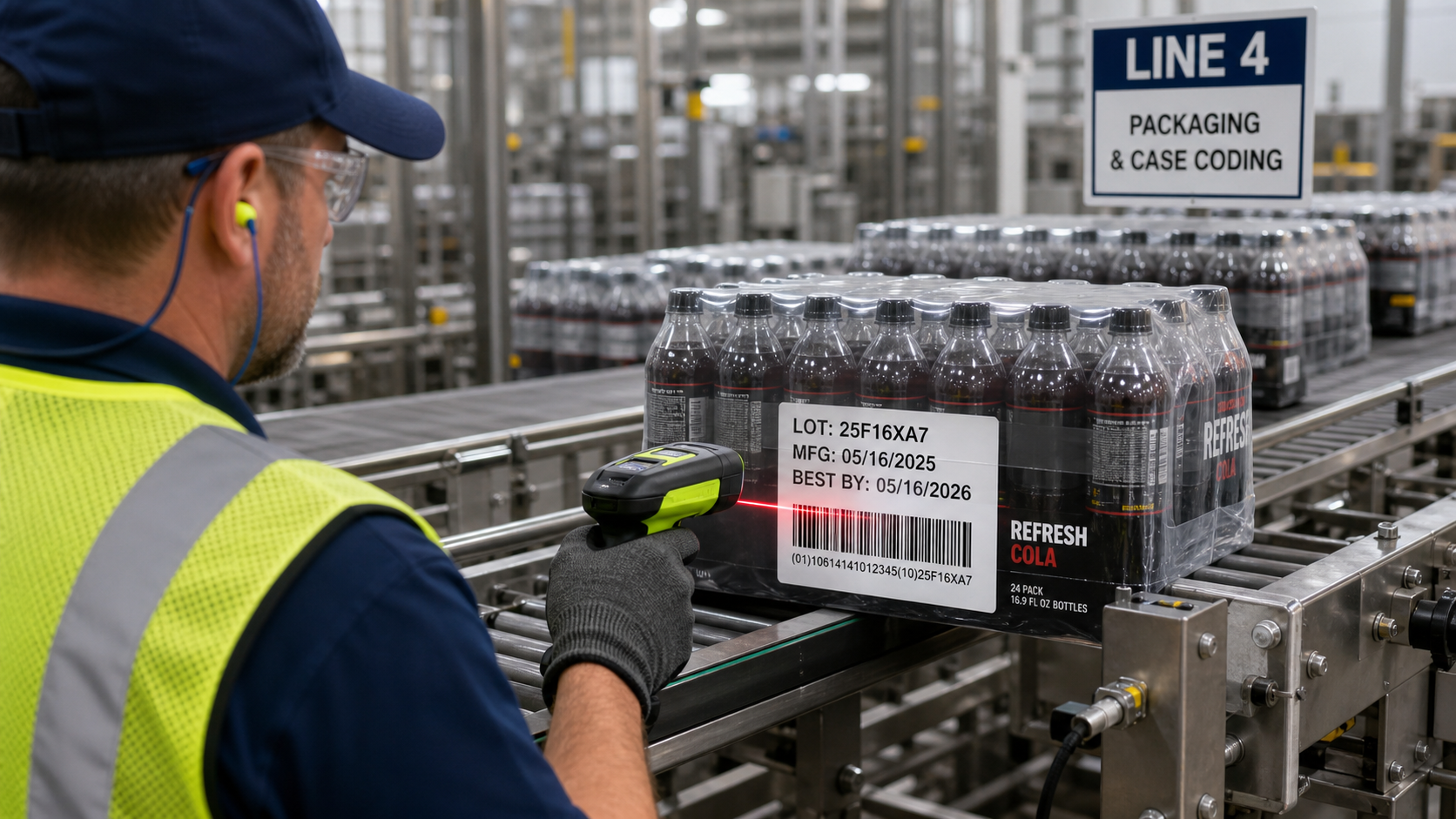
What is beverage production traceability?
Beverage production traceability links inputs to outputs in a verifiable chain. In practice, each production batch is assigned a unique identifier, and that ID connects raw material lots, processing conditions, packaging, warehousing, and customer shipments so you can trace one step back to suppliers and one step forward to customers quickly and accurately.
Traceability supports product quality, complaint handling, and recall readiness. It also underpins compliance with many certification schemes and retailer codes of practice. While formats differ by factory, the principle is consistent: consistent identifiers plus complete, timely records.
How does batch traceability work from farm to finished goods?
At a high level, batch traceability in drinks works by capturing the identity of everything that touches a batch, then preserving those links through to pallets and shipments. The core mechanism is a combination of material lot IDs, a unique batch number, and case/pallet labels tied back to that batch.
- Supplier and receiving: Record supplier name, material description, supplier lot, quantity, delivery date, temperature (where relevant), and acceptance status. Apply internal lot IDs if supplier coding is inconsistent.
- Storage: Track location, conditions (e.g., chilled), and status (released/hold). Use FIFO or FEFO where shelf life applies.
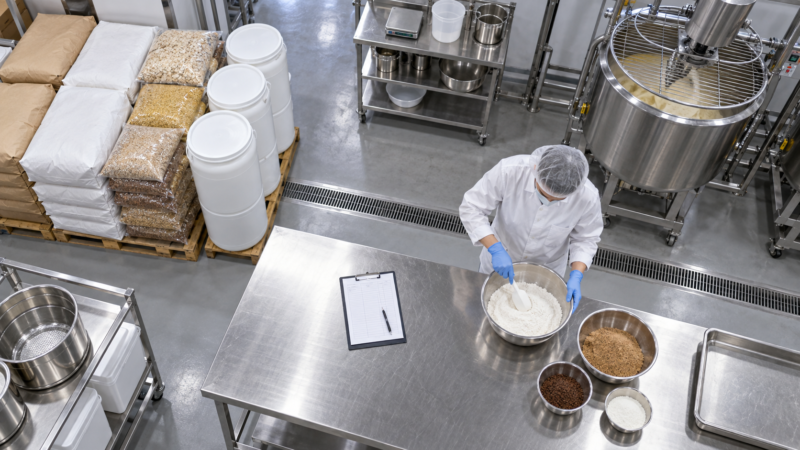
- Preparation and mixing: On the batch ticket, capture each ingredient lot, weigh/measure data, pre-mix tanks, CIP status, operator signatures, time stamps, and in-process checks (e.g., Brix, acidity).
- Filling and packaging: Assign a batch/lot code. Record filler line, shift, packaging components (bottle/cap/label/case lots), and coder settings. Print human-readable and scannable data on the primary or secondary pack as required.
- Quality release: Link lab results (micro, chemistry, sensory) and retain samples to the batch. Only release when specifications are met and records are complete.
- Warehousing: Generate pallet IDs (often with SSCC), record contents (batch, cases), storage conditions, and location moves.
- Dispatch: Tie customer orders, pallets, and transport documents to the batch. Keep bills of lading, packing lists, and export declarations.
With complete forward and backward links, you can execute targeted holds, market withdrawals, or recalls if needed.
Which identifiers enable lot coding in beverages?
Lot coding in beverages typically uses a structured, human-readable code printed on units and/or cases, often paired with machine-readable symbols. The right choice depends on your market, packaging format, and customer requirements, but a few elements are common.
- Batch/lot number: A unique ID for each production run; may encode line, shift, or sequence.
- Date code: Production date using Julian (DDD) or calendar (YYYYMMDD) formats, and where applicable, best-before or expiration date.
- Time stamp or shift code: Helps narrow investigations to a precise window on the line.
- Line/equipment ID: Useful when multiple fillers or coders operate in parallel.
- ERP/MES batch ID: The internal system reference that ties all digital records together.
- GS1 barcodes and AIs: Many buyers expect GTIN on trade units (AI 01), lot/batch (AI 10), and date (AI 17) on cases/pallets; formats vary by market and retailer programs.
- SSCC for pallets: Serialized Shipping Container Code supports logistics tracking and EDI.
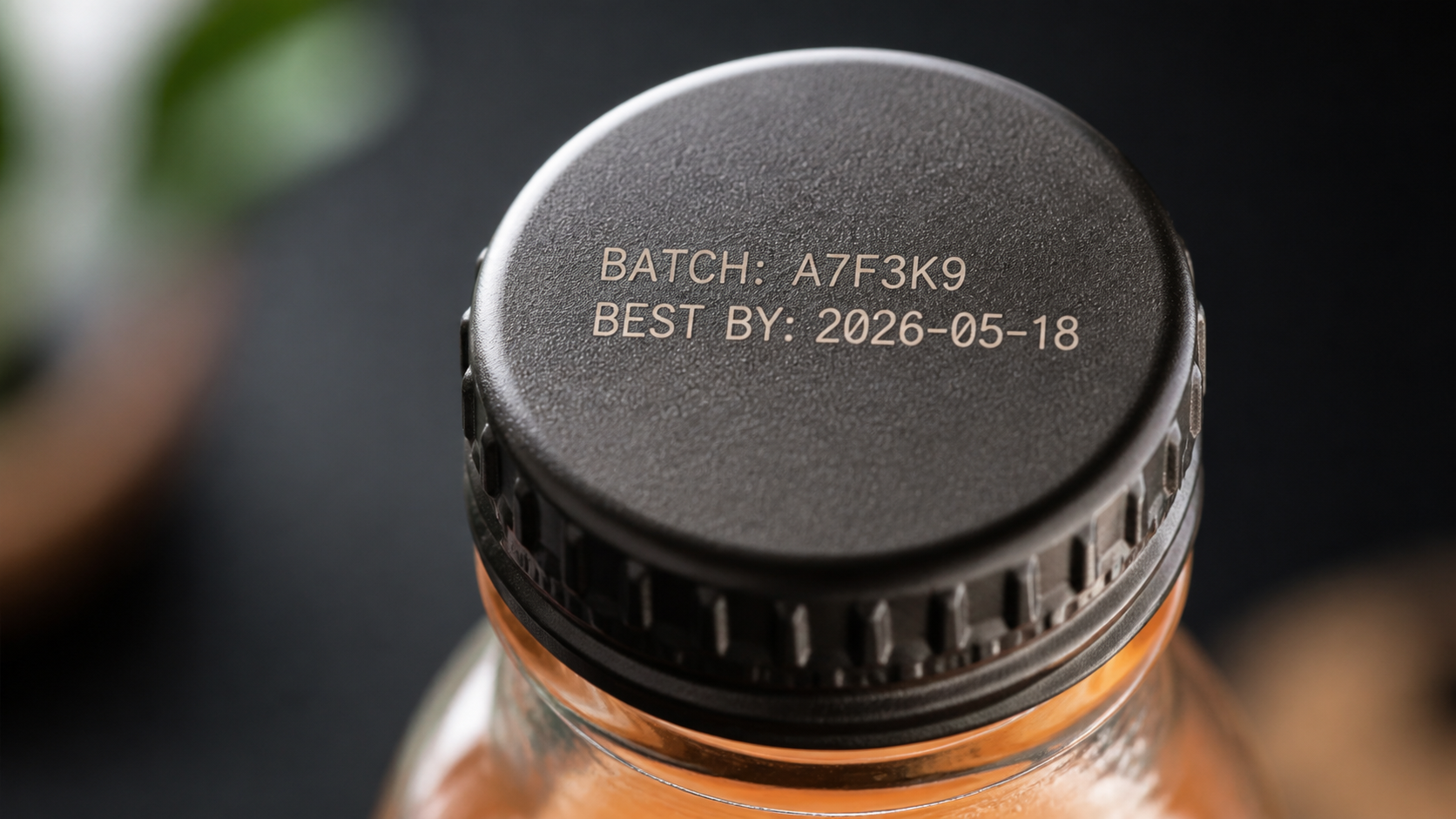
Best practice favors clear print locations (e.g., shoulder or neck for bottles; side panel for cases), adequate contrast, and permanence suitable for the distribution chain. Keep a controlled code standard in your SOPs, including character set, length, and examples for each pack size.
What do buyers test in a traceability audit or mock recall?
Buyers generally test whether your factory can quickly identify where a batch came from, where it went, and which inventory is still on site—using real records, not verbal explanations. They look for speed, completeness, and consistency across departments and systems.
- Backward tracing: From a finished case or bottle code, show all raw ingredient lots, packaging lots, and process steps used.
- Forward tracing: From a batch code, identify all customers, shipment dates, and pallets dispatched.
- Mass balance: Quantities of inputs roughly equal outputs plus waste/scrap within defined tolerances.
- Record integrity: Time-stamped, signed, legible, and stored so they can be retrieved within your SOP time window.
- Retention samples: Existence, labeling, storage conditions, and linkage to batch IDs.
- Hold & release: Evidence that product is only released after QC approval and that nonconforming goods are quarantined.
- Change control and CAPA: Deviations, investigations, and corrective actions tied to affected batches.
Auditors also check code legibility on packs, scanner readability, and alignment between digital systems and paper records. Many will ask about your certifications buyers expect that reference traceability.
What records should a beverage manufacturer keep?
Traceability depends on complete, linked records. While formats vary, the categories below are widely used in beverages and help demonstrate control without ambiguity.
| Stage | Key records | Traceable identifiers | Buyer verification focus |
|---|---|---|---|
| Receiving | Delivery notes, COA if applicable, temperature logs, inspection forms | Supplier lot, internal lot, PO number | Match supplier lot to internal lot; acceptance status documented |
| Storage | Location logs, inventory status, FEFO/FIFO records | Internal lot, location ID | Stock rotation and status control visible and current |
| Batch prep/mixing | Batch ticket, weigh sheets, CIP/cleaning records, in-process tests | Batch ID, ingredient lot IDs, tank ID | All inputs accounted; spec checks (e.g., Brix, acidity) recorded |
| Filling/packaging | Line log, coder checks, packaging issue logs | Batch/lot code, packaging component lots, line ID | Code legibility, reconciliation of components, shift/time trace |
| Quality release | Lab reports, sensory panel notes, release authorization | Batch ID, sample ID | Release after results; clear disposition of nonconformances |
| Warehousing | Palletization sheets, movement logs | Pallet ID/SSCC, batch ID | Pallet labels correct; inventory matches WMS/ERP |
| Dispatch/export | Packing list, BOL, export docs | Customer order, pallet IDs, batch ID | Shipments trace back to batches unambiguously |
Standardize document titles and IDs so different teams use the same language. For process context, see our overview of fruit juice processing methods.
How to design traceability for juice, nectar & flavored drinks
Multiplying ingredients and processing steps makes batch traceability in drinks more complex. A robust design records every lot that enters the mix, validates blend targets (e.g., Brix, acidity), and ties packaging and case labels back to the same batch ID.
- Formula/BOM control: Approved formulations with version history; change control for ingredient swaps and supplier changes.
- Batch tickets: Exact quantities, ingredient lots, and tank IDs; signatures and time stamps for critical steps.
- In-process verification: Link lab meters and results to the batch (Brix, pH/acidity, color). Record adjustments and authorizations.
- Rework handling: If permitted, record the rework batch ID, quantity, and proportion; update mass balance and labels accordingly.
- Packaging linkage: Bottle, cap, label, and case component lots tied to the same batch; coder checks at start-up and hourly or per SOP.
When outsourcing or co-packing, align coding standards and data fields with partners in advance so identifiers remain consistent across facilities.
Digital systems vs paper: choosing tools that scale
Both paper and digital records can work; the key is consistency and retrieval speed. Many beverage plants use a combination of ERP (materials, orders), MES (batch execution), WMS (pallet movements), and LIMS (lab results). Barcode or RFID scanning reduces manual entry and errors.
- Data model: Shared keys (batch ID, pallet ID/SSCC) across systems so queries join correctly.
- Time synchronization: Aligned clocks on printers, scanners, and servers prevent mismatched timestamps.
- Label governance: Controlled templates and verifiers check code quality; avoid uncontrolled operator edits.
- Document control: Versioned SOPs/forms and secure storage with access logs for audits.
Whatever the toolset, define how you will execute a mock recall, who runs it, and what evidence gets archived. For U.S.-bound products, your label and coding plans should align with the U.S. food label checklist.
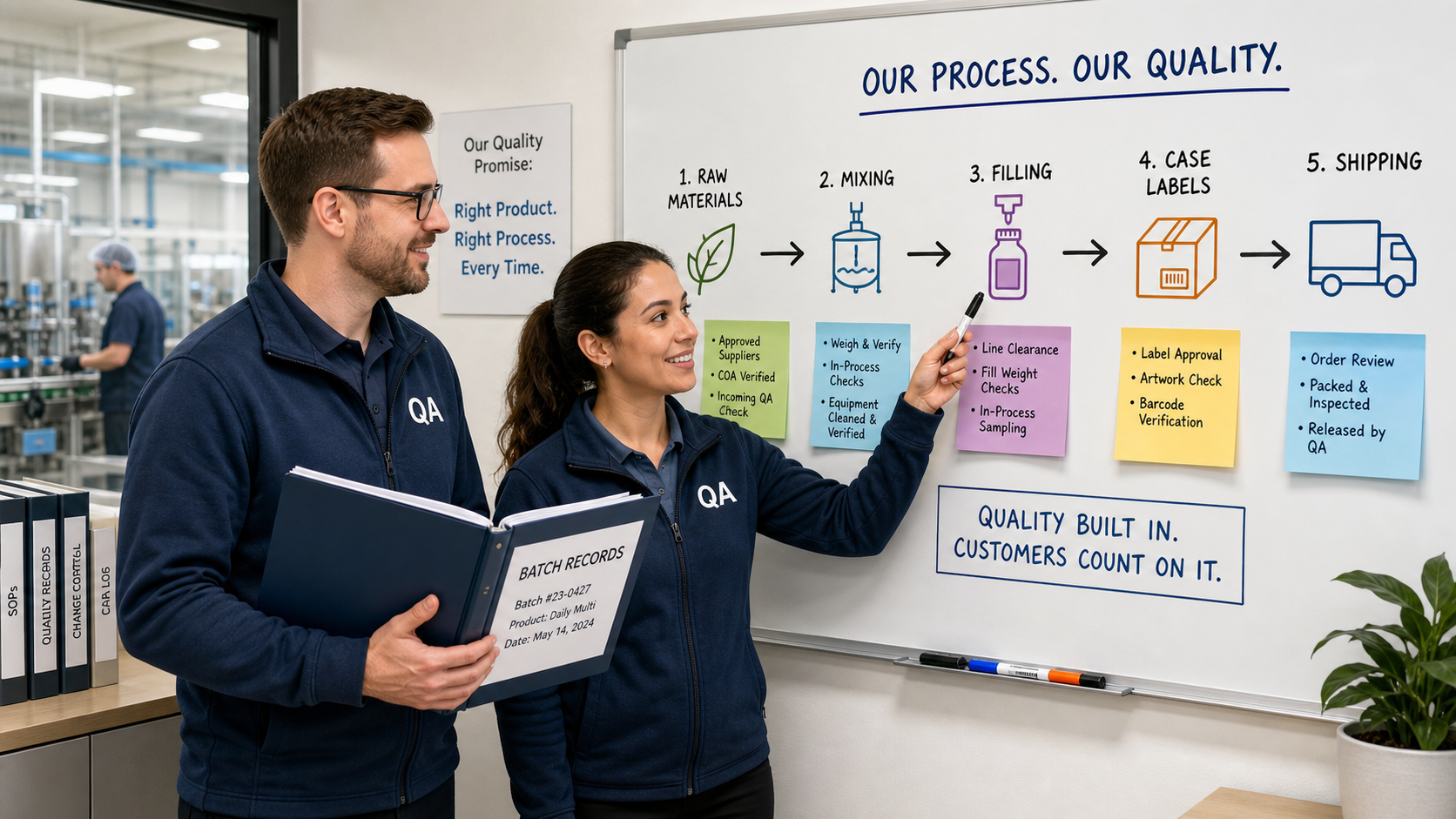
Recall readiness: building and proving capability
Recall readiness means you can isolate impacted stock, notify stakeholders, and document actions promptly using your traceability data. Buyers often request proof, so build repeatable routines that your team can demonstrate on demand.
- Mock recalls: Run realistic exercises from a chosen code to shipping lists and raw lots; record time taken, gaps found, and follow-up actions.
- Contact trees: Up-to-date contact lists for internal teams, customers, and regulators where applicable.
- Hold & quarantine: Physical and system controls to stop further movement; clear signage and status in WMS/ERP.
- Disposition workflows: Predefined decision trees for rework, destruction, or return, with approvals recorded.
- Communications templates: Draft notices and instructions ready to customize.
- Post-incident review: Structured CAPA that feeds back into coding, records, and training.
Retailers and importers see recall readiness as a business continuity issue. Some align their audits with recognized schemes; see how these map to your program on our certifications buyers expect page.
How should buyers evaluate beverage production traceability?
Effective buyer evaluation goes beyond a checklist. Ask the factory to show how a real code on the line links to raw lots, lab data, pallets, and a shipment—and how quickly they can retrieve evidence.
- Request anonymized examples: batch ticket, receiving log, coder verification sheet, lab report, palletization sheet, and dispatch document for the same batch.
- Observe a start-up: see coder set-up, first-off checks, and where code verifications are recorded.
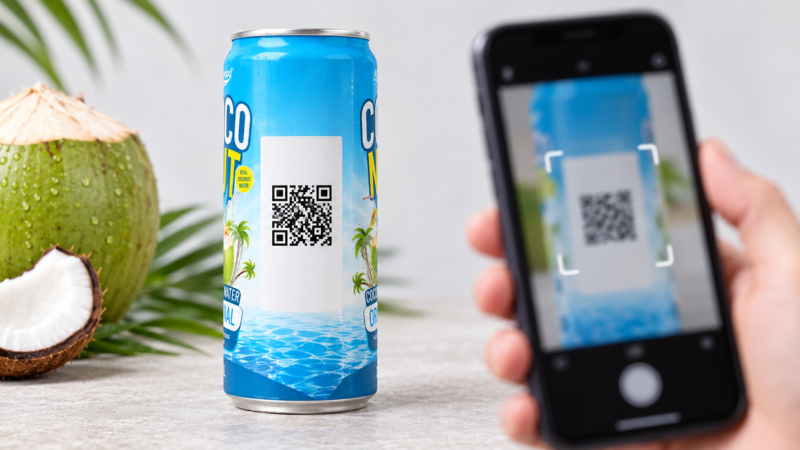
- Scan a live case label: confirm GTIN/lot/date decode correctly and link to the right batch in their system.
- Review retention samples and complaint/returns handling linked to batch IDs.
- Discuss rework policy, mass balance, and how co-manufacturing partners keep identifiers aligned.
If you are shortlisting partners, this sits alongside your broader criteria; see our guide on how to choose an overseas beverage manufacturer.
Limitations and common pitfalls
Even mature programs have blind spots. Knowing them helps you design controls before issues arise.
- Illegible or missing codes: Low contrast, smudging, or misplaced prints reduce usability.
- Duplicated codes: Manual code entry or reused patterns can collide across lines or dates.
- Rework tracking: Poorly documented rework breaks mass balance and confuses trace chains.
- System gaps: Paper/digital mismatches, unsynced clocks, or offline devices lose trace links.
- Partner variability: Co-packers using different formats without a master data standard.
- Export labeling: Destination rules on date formats and language not aligned with coder settings; see country-of-origin marking rules for related labeling nuances.
Information for beverage brands and importers: what to include in your product brief
Clear expectations up front reduce risk and audit friction. Include your traceability and coding requirements in the brief and vendor manual.
- Code standards: Human-readable format (examples), GS1 data elements for cases/pallets, code placement, and legibility targets.
- Dates and shelf life: Date format (region-specific), best-before/expiration rules, FEFO policy.
- Identifiers: Batch ID structure, line/shift markers, pallet SSCC requirement, and customer-specific label data.
- Documents to receive: Batch ticket, lab results, packaging reconciliation, pallet list, and dispatch documentation for each shipment.
- Digital sharing: EDI/ASN expectations, data file formats, and retention periods.
- Quality controls: In-process checks (e.g., Brix/pH), release criteria, and nonconformance handling.
- Mock recall: Frequency, scope, and reporting expectations for your brand.
As your label and claims evolve, align traceability with labeling specifics using our reference U.S. food label checklist and keep process controls consistent across SKUs.
FAQ
Is batch traceability legally required?
Requirements vary by market and product category. Many regulatory frameworks and retailer standards expect you to identify affected product quickly in the event of a withdrawal or recall. Designing batch traceability that supports rapid, targeted action is a practical way to meet those expectations.
What is the difference between a batch code and a serial number?
A batch code identifies a production run made under essentially the same conditions. A serial number uniquely identifies each individual unit. Most beverage programs rely on batch-level coding for traceability, with serial identifiers used on pallets (e.g., SSCC) or in specialized contexts.
Can a QR code replace a human-readable lot code?
Machine-readable symbols (QR, DataMatrix, GS1-128) enhance scanning and data capture, but buyers and auditors usually expect a clear human-readable lot/batch code as well. Many factories print both so staff and systems can trace effectively in all conditions.
How long should records be kept?
Record retention depends on destination regulations, customer policies, and product shelf life. Define retention in your document control SOPs, ensure secure storage, and confirm alignment with customer and market expectations.
Strong beverage production traceability minimizes risk, speeds investigations, and supports export. Build it into your formulation, labeling, and logistics plans, verify it with routine mock recalls, and keep evidence organized for audits. For process context and governance, review fruit juice processing methods and align your program with recognized certifications buyers expect. When selecting partners, include traceability demonstrations in your vendor qualification alongside technical capability and compliance.
Compliance and shipping at ACMFOOD
For the certificates and food safety systems buyers and customs ask us to produce, see certifications and food safety systems. For shipping terms, the document pack and container planning, see export and logistics. To discuss a specific market, request a quote.
Request a quote