









 Français
 Español
 العربية
 한국어
한국어“Shelf life on arrival” is the remaining shelf life that a product still has at the moment the buyer receives it. For imported beverages, this clause decides if goods are accepted, discounted, or rejected, so retailers and distributors often check it first.
This guide explains what shelf life on arrival means, how it is measured, where the risk sits in international shipments, and how to draft fair contract language. You will also find planning steps for formulation, packaging, production windows, and logistics so your beverages consistently meet retailers’ remaining shelf life requirements.
What does “shelf life on arrival” mean?
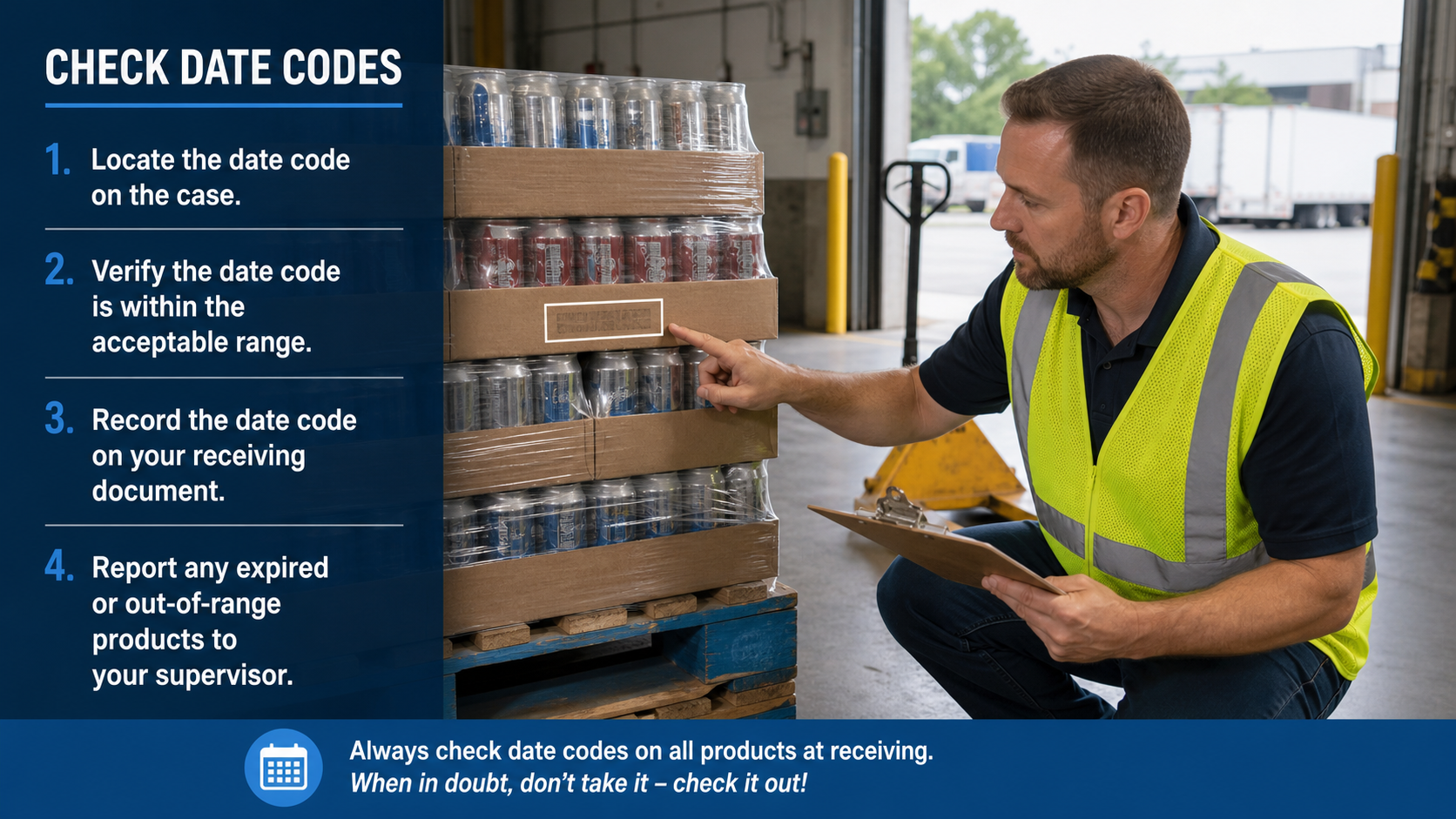
It is the time left between the date the buyer receives the goods and the end of the product’s labeled shelf life (for example, the best-before or use-by date). In short: arrival date to end-of-life date equals remaining shelf life.
Three points matter in practice:
- Which date defines the end of life? Typically the printed best-before or use-by date on each unit or case.
- Which event is “arrival”? Most contracts define arrival as the moment of delivery at the buyer’s designated point (e.g., port, distribution center receiving, or a named warehouse) after customs clearance when applicable.
- Which metric is enforced? Buyers commonly specify a minimum remaining shelf life as a fixed time (e.g., months) or a percentage of total shelf life; the contract should state the exact metric.
Related terms you will see include “remaining shelf life retail requirement,” “minimum shelf life (imported beverage),” and “shelf life clause (contract).” They all point to the same business need: protect store readiness, minimize waste, and preserve consumer trust.
Why do retailers check it first?
Because remaining shelf life determines whether the product can flow through inbound QC, storage, distribution, and store shelves with enough time to sell without markdowns or waste.
- Inventory rotation: Short-dated goods disrupt FIFO/FEFO and force out-of-plan promotions.
- Compliance exposure: Near-expiry or mis-coded dates create returns risk and potential regulatory issues.
- Retail execution: Buyers need sufficient time-in-store for planograms, launches, and campaigns.
- Waste & margin: Shrink from expired goods erodes category profitability and vendor scorecards.
How is shelf life on arrival calculated in beverage supply chains?
In most cases, you count from the buyer’s arrival date to the printed end-of-life date. If the product uses a production date code, the contract should specify the product’s total shelf life and how to calculate remaining time from that code.
To calculate consistently, align on:
- Which label date applies: Best-before vs. use-by (mandatory in some markets for certain categories).
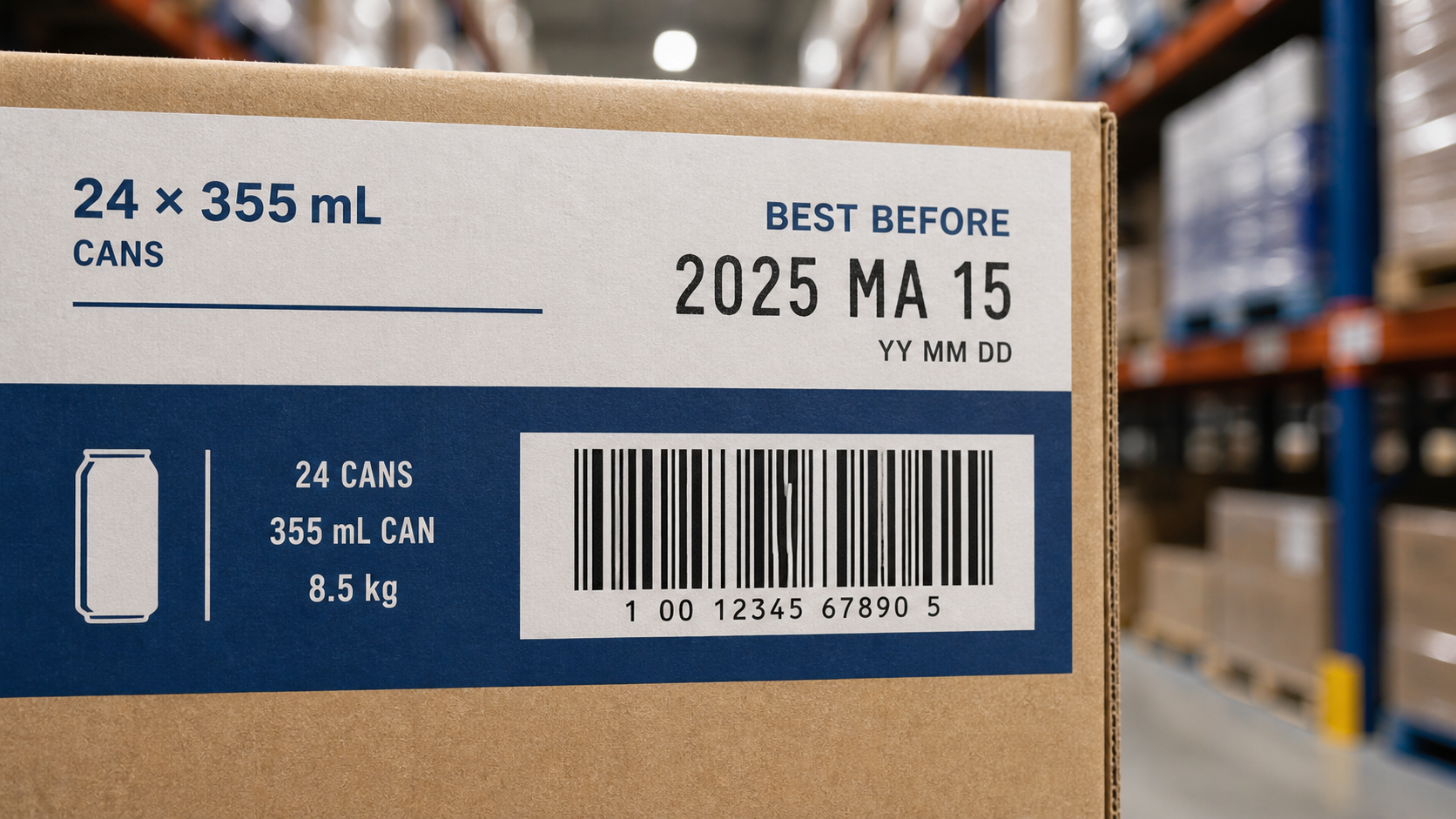
- Date code format: DD/MM/YYYY, MM/YYYY, YYYY-MM, or Julian codes; mismatches cause disputes.
- Time zone & event timestamp: Arrival determined by receiving system time; document it.
- Total shelf life basis: From manufacture, fill, pack-out, or QC release date—state which one.
- Case vs. unit: If case and unit dates differ, the stricter rule should prevail and be declared.
Beyond math, operational buffers matter: ocean transit variability, customs holds, holidays, DC backlogs, and QC sampling time. Aligning logistics with the clause is essential; see our Export & Logistics guide for end-to-end planning considerations.
Common requirement patterns (without numbers)
Each retailer or distributor sets their own bar, but patterns recur:
- Ambient beverages (shelf-stable): Buyers often require a substantial portion of shelf life remaining on arrival. They may apply either a percentage of the total shelf life or a fixed minimum time window.
- Chilled & short-life drinks: Requirements tend to be stricter because store sell-through windows are shorter, and cold-chain deviations tighten practical life.
- Private label vs. national brand: Private label programs commonly enforce more prescriptive rules and documentation.
- Discount formats: Some accept shorter-dated inventory at negotiated discounts, provided it is safe and compliant.
- Destination specifics: Long-haul markets often mandate longer buffers to absorb transit and clearance variability.
Rather than assume, ask the buyer to provide the exact phrase they use in their vendor manual. If the manual is silent, propose precise wording in the commercial contract.
Contract language examples you can adapt
Clear drafting prevents disputes. Use specific, testable wording and define both the measurement and the remedy if goods fall short.
- Definition of arrival: “Arrival means the date and local time the Goods are received into Buyer’s designated distribution center as recorded in Buyer’s receiving system.”
- Minimum remaining shelf life (percentage): “At Arrival the Goods shall have no less than [X%] of the labeled shelf life remaining.”
- Minimum remaining shelf life (fixed time): “At Arrival the Goods shall have no less than [N calendar months] remaining until the labeled best-before/use-by date.”
- Date basis and format: “Shelf life shall be calculated from the unit-level best-before/use-by date in [format], applied at pack-out on [basis: fill date/QC release].”
- Evidence: “Seller shall provide pre-shipment photos of unit and case codes, and a packing list that references batch/lot and corresponding date codes.”
- Non-conformance remedy: “If the Goods do not meet the minimum remaining shelf life at Arrival, Buyer may at its option (i) reject the Goods, (ii) accept with a price reduction of [X%], or (iii) accept a replacement shipment at Seller’s cost.”
- Exceptions: “Delays due to Force Majeure as defined in this Agreement are excluded only if Seller notified Buyer in writing within [N] days and provided reasonable mitigation steps.”
| Clause component | What it defines | Why it matters | Buyer duty | Seller duty | Notes |
|---|---|---|---|---|---|
| Arrival event | Exact time/place of receipt | Sets the clock for remaining life | Record receiving timestamp | Deliver to named point | Match Incoterms to this point |
| Minimum remaining life | Percentage or fixed time | Pass/fail acceptance rule | Apply consistently | Produce within window | State metric precisely |
| Date basis & format | Best-before/use-by and format | Avoid misreads & disputes | Train receivers | Print clear codes | Align language on labels |
| Evidence package | Photos, batch, pack list | Enables quick QC decisions | Review pre-shipment | Provide timely docs | Tie photos to lots |
| Remedies | Reject/discount/replace | Allocates commercial risk | Apply agreed remedy | Honor chosen remedy | Define timelines & credits |
| Exceptions | Force Majeure conditions | Explains carve-outs | Document delays | Notify & mitigate | Keep objective criteria |
Evidence and labeling practices that protect acceptance
Acceptance often hinges on clarity and documentation rather than the code itself. Make these part of the SOP:
- Legible, consistent coding: High-contrast, smudge-resistant inks; avoid printing across seams or curves that distort characters.
- Language clarity: Best-before/use-by terms translated as required by destination regulations; avoid ambiguous abbreviations.
- Case-level labels: Mirror unit codes on cases; include batch/lot and the same date logic.
- Pre-shipment photo set: Capture unit and case code close-ups for each lot, plus pallet labels; share before loading.
- COA & pack-out records: Tie certificates and QC release to the same lots referenced in labels and photos.
- Receiving support: Provide a one-page “how to read our date code” aide for the buyer’s QC team.
Consistent coding also complements flavor and quality expectations across runs; if you are coordinating multiple lots, align processes that impact repeatability. See how manufacturers approach it in maintaining consistent fruit juice taste between batches.
What happens if goods miss the minimum remaining shelf life?
Commercial remedies should follow the contract, but outcomes usually fall into a few paths.
- Refusal at receiving: Shipment is rejected and either reworked where lawful, returned, or disposed of per agreement.
- Conditional acceptance: Buyer accepts at a negotiated discount or allocates goods to limited channels.
- Replacement: Seller dispatches a replacement lot; costs and timelines are defined in the remedy clause.
- Shared mitigation: Parties agree on accelerated distribution or promotions if compliant and practical.

Designing shelf life into your plan
Meeting a shelf life on arrival clause is easier when formulation, processing, packaging, and logistics are planned as a single system.
- Formulation: Product pH, dissolved oxygen, and stability aids influence achievable shelf life; choose targets aligned with the intended distribution model.
- Processing: Thermal profiles (e.g., hot-fill, tunnel pasteurization) or aseptic approaches affect microbiological stability; validate with shelf-life studies appropriate for the category.
- Packaging: Use closures and barriers that manage oxygen/light ingress for the intended life and route; verify date code adhesion/legibility on actual substrates.
- Coding equipment: Specify print location, font size, contrast, and inspection; keep spares and inks in route-specific kits.
- Production windowing: Schedule pack-out dates tightly ahead of vessel cutoff to maximize remaining life at arrival. MOQs can influence how narrow this window can be—plan for it; see private label fruit juice MOQ.
- Route selection: Choose services with reliable transit and minimal dwell. For planning examples, see Shipping beverages from Vietnam to the United States and Shipping beverages from Vietnam to Australia.
- Customs & clearance buffers: Pre-file documents and coordinate inspections to protect your arrival window.
- Receiving appointment: Book DC slots ahead of ETA; demurrage or DC backlogs can eat into remaining life.
- Contingency stock: Stagger lots or hold a replenishment lot to cover unforeseen delays.
Buyer and seller checklist before signing
Use this concise checklist to reduce ambiguity and prevent claims:
- Define “Arrival” (place, system timestamp).
- State the minimum remaining shelf life (percentage or fixed time) and the product date basis.
- Specify the date code format and label language.
- Confirm unit-, case-, and pallet-level coding alignment.
- Attach a one-page “how to read our code” visual.
- Require pre-shipment photos mapped to batch/lot numbers.
- Align Incoterms with delivery point and responsibility hand-offs.
- Document transit plan, clearance method, and receiving appointment process.
- Fix the remedy matrix (reject, discount, replace) with timelines.
- Outline exceptions and notification timelines.
- Schedule production relative to vessel cutoff and ETA.
- Agree on who pays for relabeling or rework if permitted by law.
For U.S. buyers building overseas programs, the vendor selection process is critical to getting these basics right—see how to choose an overseas beverage manufacturer with the right quality and documentation discipline.
FAQ
Is “shelf life on arrival” the same as “remaining shelf life”?
Yes—both describe how much time is left between when the buyer receives goods and the end of their labeled shelf life. Contracts should still define the metric (percentage vs. fixed time) and the date basis explicitly.
Where is “arrival” measured—port, warehouse, or store?
It depends on your agreement. Many buyers set arrival at the distribution center receiving scan. Others use port out-turn or a named third-party warehouse. Define the exact place, event, and timestamp source in the contract.
Can we relabel with a later date if goods are short-dated?
Relabeling is only appropriate where regulations and product safety permit, and where the printed date reflects a valid, substantiated shelf-life basis. Get the buyer’s written approval and follow destination labeling rules before any relabel activity.
Do Incoterms decide shelf life on arrival responsibility?
Incoterms allocate transport, risk, and cost—not quality acceptance criteria. Your shelf life on arrival obligation applies regardless of Incoterms unless the contract states otherwise. Align the delivery point in both documents to avoid gaps.
Are transit delays Force Majeure for shelf life failures?
Only if your contract says so and you meet notice and mitigation requirements. Many buyers treat typical congestion, weather, and appointment backlogs as foreseeable risks; negotiate clear wording and build realistic buffers.
Conclusion
Retailers check shelf life on arrival first because it governs sell-through, compliance, and waste. You can consistently meet the remaining shelf life retail requirement by locking down date definitions, code formats, and remedies in the contract, then aligning production windows, transit plans, and receiving appointments around that target.
As you finalize your brief, synchronize the shelf life clause with Incoterms, QC documentation, and the logistics timeline. If you are new to cross-border beverage programs, start with structured planning—our Export & Logistics resources and destination-specific shipping guides can help you scope timelines and buffers before you commit to a purchase order.
Compliance and shipping at ACMFOOD
For the certificates and food safety systems buyers and customs ask us to produce, see certifications and food safety systems. For shipping terms, the document pack and container planning, see export and logistics. To discuss a specific market, request a quote.
Request a quote