


 Français
 Español
 العربية
 한국어
한국어Partially recycled PET is polyethylene terephthalate resin that contains a defined share of post-consumer recycled PET (rPET) blended with virgin PET to make packaging such as beverage bottles. In practice, the stated percentage (for example, 30% or 50% rPET) refers to the recycled content by mass within the specified plastic component.
This article explains what partially recycled PET means, how rPET percentage is determined and verified, what 30% and 50% rPET change for bottle design and operations, and how brands can brief suppliers effectively. Because terminology, measurement scope, and verification schemes vary by market and supplier, treat the guidance below as general; confirm details with your resin and packaging partners.
What is partially recycled PET?
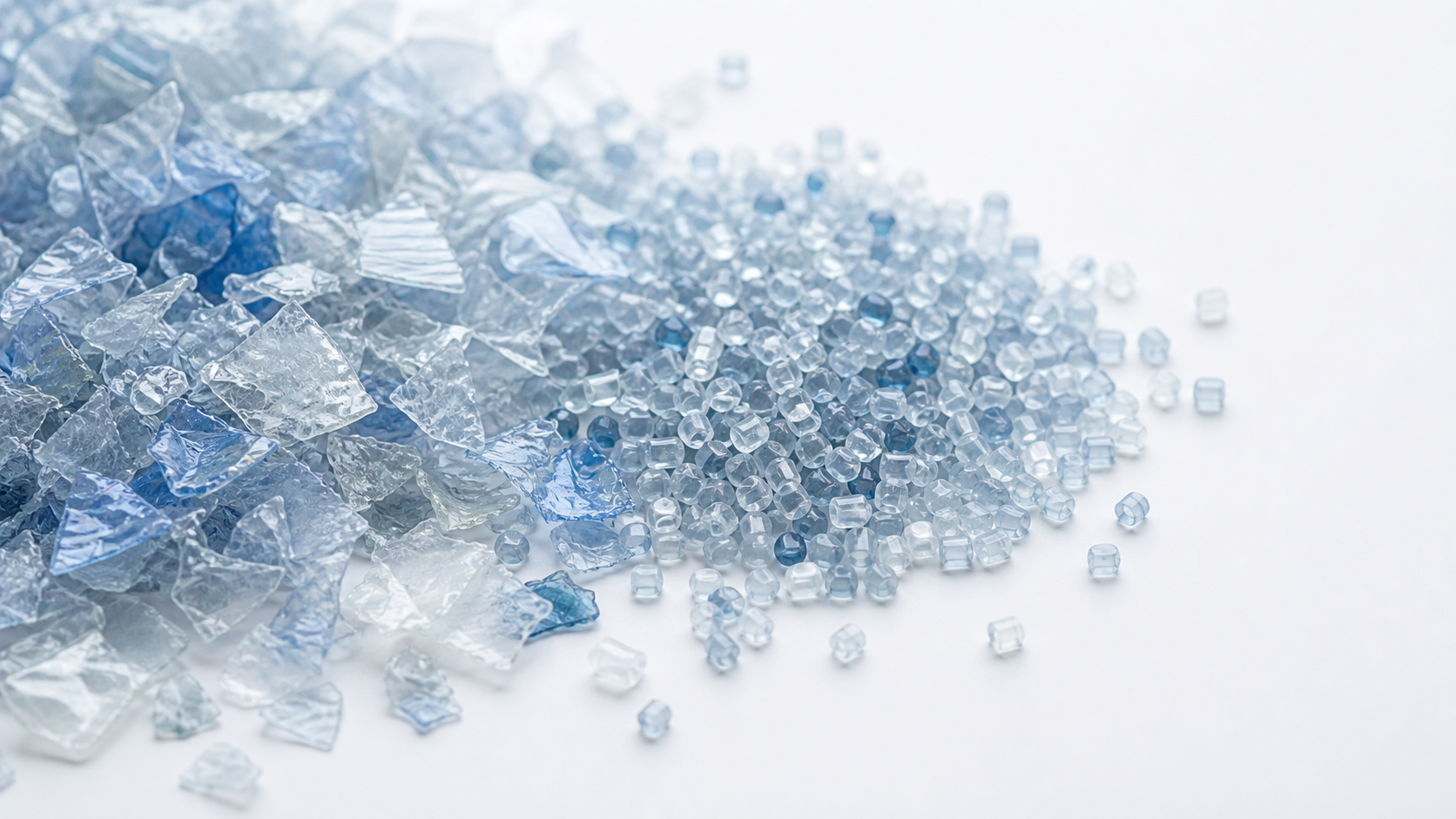
Partially recycled PET is PET material formulated by mixing virgin PET with a specified proportion of recycled PET (rPET). The figure such as 30% or 50% is typically the mass share of rPET in the resin or in the relevant packaging component (for example, the bottle body), averaged over a defined production period and lot.
rPET is most commonly derived from post-consumer PET packaging that has been collected, sorted, washed, and reprocessed into food-grade resin by approved technologies. The resulting pellets or preforms are then used in standard stretch blow molding lines to produce bottles that can meet beverage-quality requirements when the resin and process are well controlled.
Depending on the claim scope, partially recycled PET may refer only to the bottle body. Caps and closures are often made from HDPE or PP and labels from films such as OPS or PET; these components may or may not contain recycled content and may be outside the stated percentage unless specified.
How is rPET percentage defined and verified?
In most supply chains, rPET percentage is defined as the mass fraction of post-consumer recycled PET in the resin used to make the specified component over a given time window. Verification typically relies on supplier documentation, audited chain-of-custody records, and, where applicable, certification under recognized recycled-content standards.
Two practical concepts appear in the market:
- Physical recycled content: The resin pellets you purchase contain the stated percentage of rPET blended with virgin PET in that physical batch.
- Mass-balance allocation: Recycled input is introduced into a larger system and allocated to outputs using a bookkeeping method governed by a standard; the product is credited with a percentage, even if molecules are co-mingled upstream.
Brands should confirm how the percentage is calculated and what component it covers. Some claims apply to the bottle body only; others may cover the bottle and label together. Percentages are often reported as an average over a production run rather than guaranteed in each individual bottle.
When reviewing supplier paperwork, align on the following:
- Definition of recycled content (post-consumer vs. post-industrial) and the material scope (bottle body, cap, label, secondary packaging).
- Method of calculation (physical blend vs. mass balance) and the time boundary for averaging.
- Chain-of-custody or certification framework, if any, and the audit frequency.
- Origin and quality of feedstock, including sorting and decontamination technology for food-contact resin.
- Evidence required for market claims and labeling in your target countries.
- Change-control process if resin grade, source, or allocation method changes.
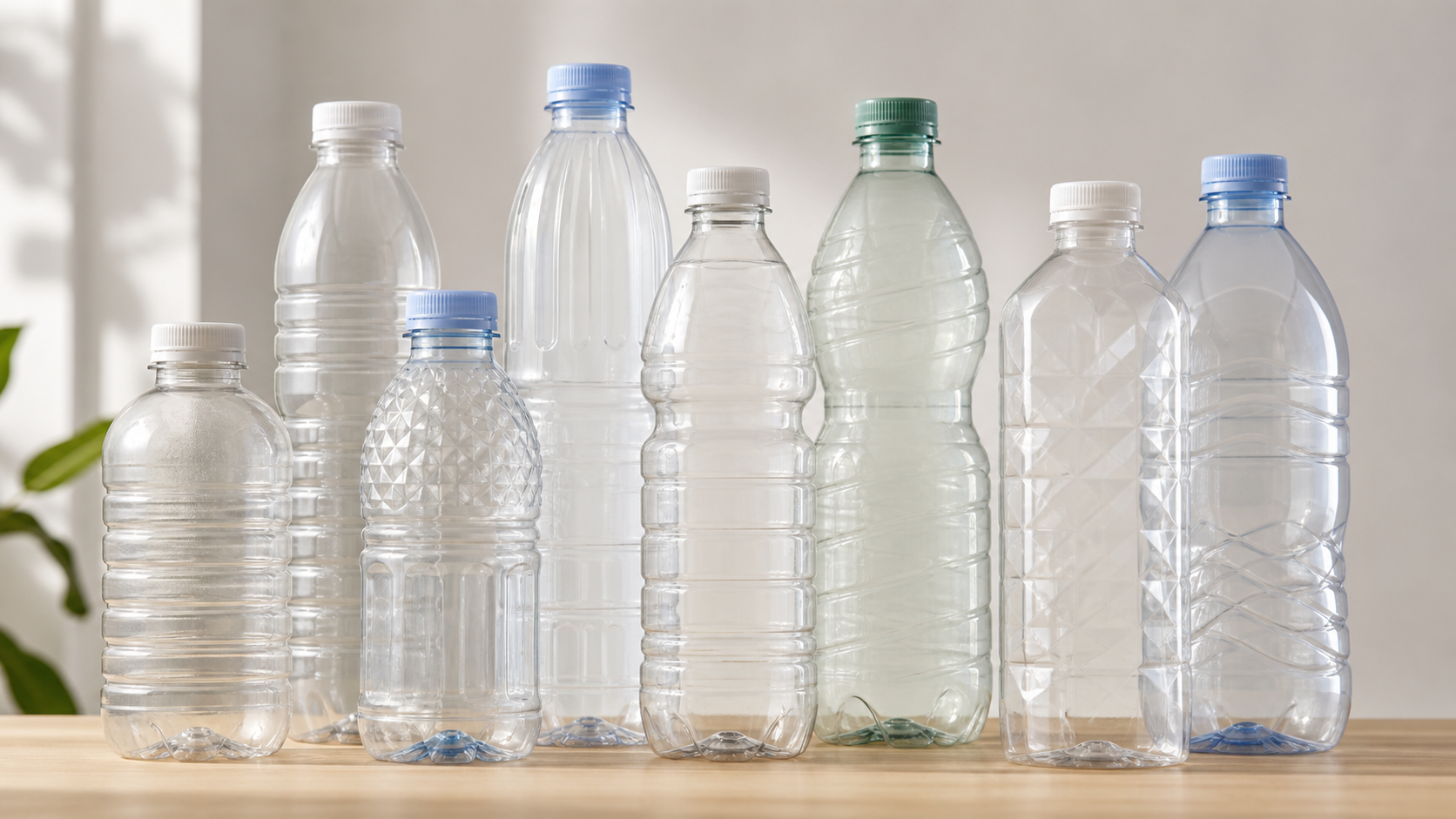
30% rPET vs 50% rPET: What changes?
Moving from 30% to 50% rPET generally increases the importance of resin selection and process control. Appearance can show a slightly stronger tint or haze at higher percentages, and supply dynamics may differ. With appropriate grades and good production settings, bottles at either level can meet typical mechanical and sensory requirements.
| Aspect | Virgin PET (0% rPET) | 30% rPET | 50% rPET |
|---|---|---|---|
| Appearance (tint) | Very clear, neutral | Usually clear; faint blue/gray/green tint possible | Clear with a more noticeable, still subtle tint |
| Haze/black specks risk | Low with quality resin | Low to moderate; resin screening important | Moderate; tighter incoming QC and filtration |
| Mechanical performance | Baseline | Comparable when IV and drying are on target | Comparable; process window may narrow slightly |
| Flavor/odor management | Baseline | Requires control of acetaldehyde; routine taste checks | Same controls, potentially more frequent checks |
| Barrier properties | Baseline for the grade | Similar when grade and process are optimized | Similar; validate for carbonation/hot-fill use |
| Supply availability | Generally high | Broad availability in many markets | Dependent on local rPET supply; plan ahead |
| Price dynamics | Tracks virgin PET | May include a recycled-content premium | Premium more likely; sensitive to feedstock |
| Environmental signal | No recycled content | Clear circularity step | Stronger circularity signal |
| Label and color options | Maximum flexibility | Very light tints recommended for crystal-clear look | Consider slightly tinted designs to harmonize appearance |
| Claim scope | Not applicable | State component and averaging method | State component and averaging method |
Differences are most visible in demanding aesthetics (ultra-crystal-clear, no tint) or extremely tight sensory specifications. Many successful products incorporate 30% or 50% rPET while meeting shelf appeal, carbonation, and handling requirements, provided that materials and processes are carefully tuned.
How is rPET made for beverage bottles?
Food-grade rPET for bottles is produced through mechanical recycling and, in some cases, chemical recycling. Mechanical routes dominate today for many markets: post-consumer PET is sorted, washed, turned into clean flake, then reprocessed into pellets with decontamination steps designed for food contact. Chemical routes depolymerize PET to building blocks and re-polymerize to PET, an emerging option in certain supply chains.
A simplified mechanical pathway:
- Collection and sorting of clear PET feedstock to reduce color and contaminant load.
- Intensive washing and drying to remove labels, adhesives, and residues.
- Melt filtration and pelletizing, often followed by solid-state polycondensation (SSP) for decontamination and to adjust intrinsic viscosity (IV).
- Pellets are blended with virgin PET at defined ratios for preform production, then blown into bottles.
Across both routes, decontamination and process controls are critical to manage acetaldehyde levels, off-odors, haze, and particulates so that the final resin meets food-contact requirements and brand sensory targets.
Does partially recycled PET affect bottle performance?
When you select the right resin grade, manage moisture and IV, and keep processing within target windows, bottles with 30% or 50% rPET can achieve comparable mechanical strength, drop resistance, and carbonation performance to virgin PET. The most common differences arise in appearance and the need for vigilant sensory and particulate control.
- Intrinsic viscosity: Keep IV within the same range you use for the application (still water, CSD, hot-fill). rPET pellets from reputable sources are formulated to hit these targets.
- Moisture management: Drying is critical; residual moisture can cause IV loss and haze. Use resin supplier parameters and verify with in-line sensors or routine checks.
- Acetaldehyde (AA): Monitor AA to meet taste requirements, especially in water and lightly flavored beverages. Resin choice, preform drying, and blow parameters all influence AA.
- Barrier and shelf life: For most still beverages, rPET content has minimal impact when using appropriate grades. For high-carbonation or oxygen-sensitive products, validate shelf life with your specific design and storage profile.
- Impact and top-load: Perform standard mechanical tests on bottles made with your target rPET percentage and wall-thickness profile. Differences are usually tied to processing rather than rPET alone.
Design and color considerations with rPET
Recycled content can introduce a faint gray, blue, or green tint and may slightly increase haze. These effects are typically subtle at 30% and noticeable but manageable at 50%. Design teams can preserve a premium look by aligning color, label coverage, and bottle geometry with the optical characteristics of rPET.
- Color strategy: Neutral or lightly cool tints complement the natural tone of rPET. Ultra-bright, warm tints can make subtle haze more apparent.
- Labeling: Partial sleeve coverage or paper labels can visually frame clarity while keeping recyclability in mind. Confirm label materials and adhesives remain compatible with recycling streams.
- Bottle geometry: Smooth panel transitions, controlled radii, and consistent wall thickness help manage optical artifacts and stress whitening.
- Decoration: Avoid heavy pigments or metallization on the bottle body if your goal is clear-stream recyclability; consider decorated closures or labels instead.
- Photography standards: Align on lighting used in e-commerce and advertising so product images reflect real-world appearance of rPET bottles.
Manufacturing and quality controls for 30–50% rPET
Higher rPET shares increase the importance of robust incoming inspection, melt filtration, and sensory checks. Most control plans mirror those for virgin PET, with added attention to appearance, particulates, and taste. Document your acceptance criteria and maintain traceability to resin lots and production dates.
- Inbound resin QC: Verify IV, moisture, pellet color (L*a*b*), black speck count, and supplier rPET percentage documentation. Keep retain samples.
- Preform controls: Monitor drying parameters, AA in preforms, visual defects, and weight consistency. Adjust reheat and stretch settings as needed.
- Bottle controls: Check wall distribution, haze and clarity, color uniformity, stress whitening, top-load, impact, and burst (for CSD). Record results by lot.
- Sensory: Run routine taste and odor panels on filled products, especially for water and delicate flavors. Correlate results with AA and processing data.
- Filtration and housekeeping: Maintain screens and filters to minimize gels and specks; enforce strict contamination controls in handling flake and pellets.
- Traceability and reporting: Implement batch-level records to support recycled-content claims and market-specific documentation requests.
Sustainability and regulatory context
Using partially recycled PET reduces demand for virgin fossil-based resin and supports circular collection and reprocessing systems. The magnitude of greenhouse-gas and resource benefits depends on many factors, including feedstock origin, transport distances, energy mix, and the efficiency of your recycling partners. Treat any quantitative impact as project-specific and subject to third-party methodology.
- Market requirements: Some regions set minimum recycled-content targets or define claim and labeling rules. Align claims with the component covered and the verification method your supplier uses.
- Recyclability: Design for easy sortation and recycling in your end markets. Minimize disruptive components, inks, and adhesives.
- Data quality: Support sustainability communications with supplier attestations and, where appropriate, independent audits of recycled-content accounting.
- End-of-life: Promote consumer disposal guidance consistent with local collection systems to help generate quality feedstock for future rPET.
How to brief suppliers for partially recycled PET bottles
A clear brief reduces iteration and ensures recycled-content claims are defensible. Specify targets, testing, and documentation needs up front, and confirm how results will be reported.
- Target rPET percentage and the component(s) it applies to (bottle body, label, closure), including the averaging window.
- Resin requirements: application (still, carbonated, hot-fill), IV target, AA limits, color and haze tolerances.
- Verification: acceptable documentation, any required certification scheme, and frequency of updates.
- Appearance: desired clarity and tint strategy; label coverage and materials; decoration limits.
- Performance: mechanical tests, shelf-life expectations, storage conditions, and transport stresses.
- Sampling and approvals: number of preform and bottle samples, filled product trials, and acceptance criteria.
- Traceability and change control: notification triggers if resin grade, supplier, or allocation method changes.
- Commercials: forecast volumes, lead times, contingency plans for rPET feedstock variability, and alternates.

For the full picture of recycled content in drinks packaging, see rPET in the beverage industry and sustainable beverage packaging.
Frequently asked questions
Is 30% rPET food safe for beverage bottles?
Food-contact suitability depends on the specific resin and decontamination process used by the supplier and on the regulations in your target market. Request supplier documentation that the resin is intended for food-contact applications and validate sensory performance on your product.
Can I use 50% rPET for carbonated soft drinks?
Many brands successfully use rPET in carbonated applications. With the right grade, preform design, and blow parameters, 50% rPET bottles can meet pressure and shelf-life needs. Run full validation, including burst, creep, and carbonation retention, on your exact bottle and fill conditions.
Does rPET change taste or smell?
Properly decontaminated food-grade rPET can achieve low acetaldehyde and neutral odor. Maintain drying and process controls, choose appropriate grades, and run routine taste panels on filled products, especially for water and lightly flavored drinks.
Can I claim 30% or 50% recycled content if only the bottle body has rPET?
Yes, if your market allows component-specific claims. Clearly state the scope (for example, “bottle made with 50% recycled PET”) and ensure your supplier documentation supports the claim and averaging method.
Is 100% rPET possible?
Some products use bottles made entirely from rPET. Feasibility depends on resin availability, appearance targets, and performance needs. If you consider 100%, pilot the grade and assess clarity, haze, and mechanical tests before committing to volume.
How is the rPET percentage measured in practice?
Percentages are typically determined by mass of recycled input to the resin or component over a defined timeframe, supported by supplier records and, where applicable, audited chain-of-custody systems. It is usually not measured on each individual bottle.
Conclusion
Partially recycled PET blends post-consumer rPET with virgin PET to deliver circularity benefits while preserving performance for mainstream beverages. At 30% and 50% rPET, the biggest shifts you will manage are appearance, vigilant QA, and reliable documentation. Define claim scope and verification with suppliers, validate on your bottle and product, and align design choices with the optical character of rPET. With a disciplined brief and testing plan, partially recycled PET can fit your sustainability roadmap without compromising consumer experience.