


 Français
 Español
 العربية
 한국어
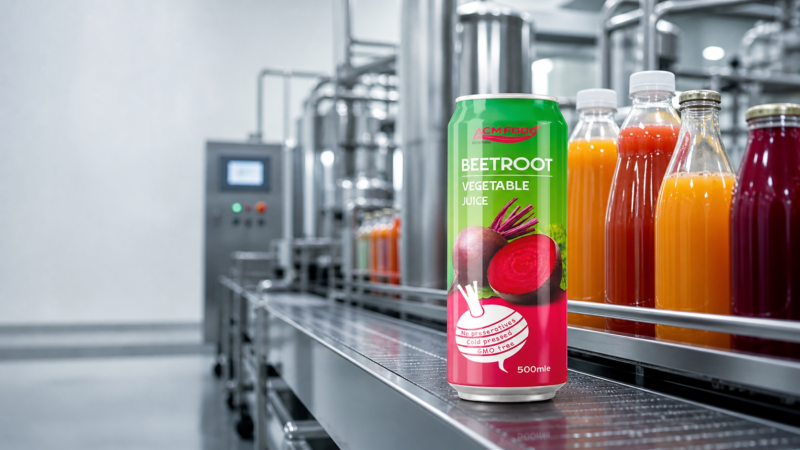
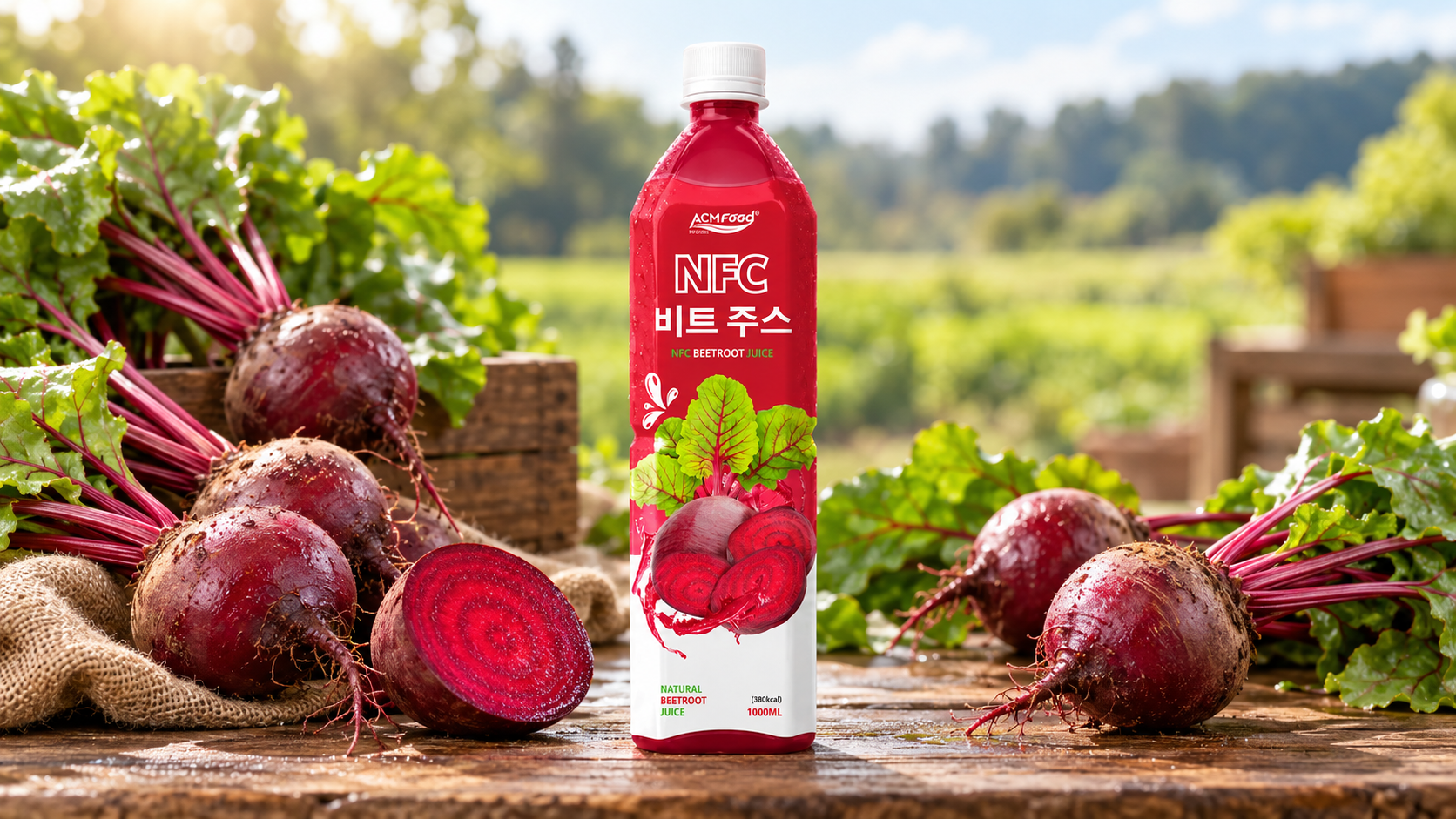
한국어Bottled beetroot juice is beetroot juice filled into PET or glass bottles and sealed with a closure, so it can be stored, shipped and sold as a ready-to-drink product. Its shelf life, colour and taste depend less on the beet itself than on the heat treatment, the bottle material and how much oxygen and light reach the juice after filling.
This guide explains how brand owners and buyers compare PET and glass for beetroot juice, how heat treatment links to shelf life, and what a product brief should contain before a project starts. ACMFOOD, a Vietnam beverage manufacturer, supplies finished drinks in cans and bottles only, so the notes below focus on those formats.
What is bottled beetroot juice and how does it differ from other formats?
Bottled beetroot juice is a finished, packaged drink sold in single-serve or family-size bottles. It differs from freshly pressed juice, which has to be kept cold and drunk within days, and from powders or blends sold as ingredients. Here the product is the sealed bottle, ready to open and drink.
Three variables define the final product:
- Juice content and recipe. Pure beetroot juice tastes strongly earthy and slightly sweet. Many brands blend it with apple, orange or carrot to soften the taste, or dilute it into a drink. The label must match the actual composition.
- Heat treatment. Pasteurisation, hot-fill or sterilisation decides whether the bottle can sit on an ambient shelf or must stay refrigerated.
- Packaging. The bottle material, closure liner and headspace control how fast colour and flavour change over time.
Because beetroot is a low-acid vegetable, these choices matter more than they do for a high-acid fruit juice such as orange or pineapple.
PET or glass: which bottle suits beetroot juice better?
Neither material is universally better. PET is lighter, shatter-resistant and cheaper to ship, while glass is a stronger barrier to oxygen and tolerates higher filling temperatures. The right choice depends on the sales channel, the target shelf life and the brand positioning.
Beetroot juice also has a special concern: its red pigments, called betalains, are sensitive to light and oxygen. A clear bottle shows off the colour on shelf but lets light in, so brands often add UV-blocking features or choose tinted material when the product will be displayed for months.
| Factor | PET bottle | Glass bottle |
|---|---|---|
| Weight and freight | Light, lower freight cost per litre | Heavy, higher freight and handling cost |
| Breakage risk | Low, suits e-commerce and foodservice | Higher, needs protective cartons |
| Oxygen barrier | Moderate, depends on wall and any barrier layer | Very high |
| Hot-fill tolerance | Needs heat-set PET designed for hot-fill | Tolerates hot-fill well |
| Light protection | Clear or tinted; additives possible | Clear, amber or green |
| Premium perception | Mainstream and everyday | Premium and gift-oriented |
| Typical sizes | Family and single-serve sizes | Smaller single-serve sizes |
For large-volume retail and distribution into warm or distant markets, PET is usually the practical default. Glass makes sense for a premium positioning where weight and breakage are acceptable trade-offs. ACMFOOD lists beetroot drinks in PET bottles and aluminium cans; a glass format would need to be agreed in the project brief.
How does heat treatment decide the shelf life of bottled beetroot juice?
Heat treatment decides whether the bottle can be stored at room temperature. Beetroot juice has a pH above 4.6, the usual boundary between acid and low-acid foods, so mild pasteurisation alone does not make it ambient-stable unless the recipe is acidified or the product is sterilised.
The common routes are:
- Acidified recipe plus hot-fill. Adding an acidulant or a high-acid juice such as apple or lemon lowers the pH. The juice is filled hot into bottles that tolerate the temperature, the closure is applied and the bottle is inverted or held so the hot juice sterilises the cap area.
- Tunnel pasteurisation. Bottles are filled, closed and then passed through a tunnel that heats them with sprays and cools them gradually. It suits acid or acidified products and is gentler on glass when the temperature steps are controlled.
- Aseptic filling. The juice is sterilised in a heat exchanger, cooled and filled into pre-sterilised bottles in a clean environment. This route can suit low-acid vegetable juices and keeps heat exposure short.
- Refrigerated or cold-chain products. Mild pasteurisation or other non-thermal processing gives a fresher taste but a short refrigerated life. This sits outside the ambient shelf-stable range and needs cold logistics.
The process route has to be chosen with a food-safety authority or the factory’s process validation, not copied from another drink. The shelf life printed on the label is the result of that validation plus storage tests, not a number a brand can choose freely.
Why do colour and taste change inside the bottle?
Colour and taste change because betalains, the red-violet pigments in beetroot, degrade with heat, oxygen and light, and because trace compounds develop new aromas over time. Good formulation and packaging slow these changes but cannot stop them completely.
Factors that matter most:
- Heat history. Longer or hotter treatment lowers pigment stability. Short, well-controlled heat steps protect colour better than long holding times.
- Oxygen in the headspace. Trapped air and oxygen passing through the bottle wall fade the colour. Low headspace, nitrogen flushing and good closure liners help.
- Light exposure. Retail lighting can bleach pigments in clear bottles over weeks. Tinted material or a label that covers more of the bottle reduces the effect.
- pH. Betanin, the main beet pigment, tends to hold colour best in a mildly acidic range, and drifts toward a brownish tone outside it. This is one reason acidified recipes are common.
- Antioxidants. Ascorbic acid is widely used in juice formulation to reduce oxidation, within the limits of the target market’s rules.
- Raw material. Beets contain geosmin, a compound associated with earthy aroma. Variety, harvest and storage change how strong that note is, so blending or flavour balancing is common.
Because the starting beets change by season, a brand should ask the manufacturer how colour is tracked from batch to batch, for example through measured colour values and retained samples.
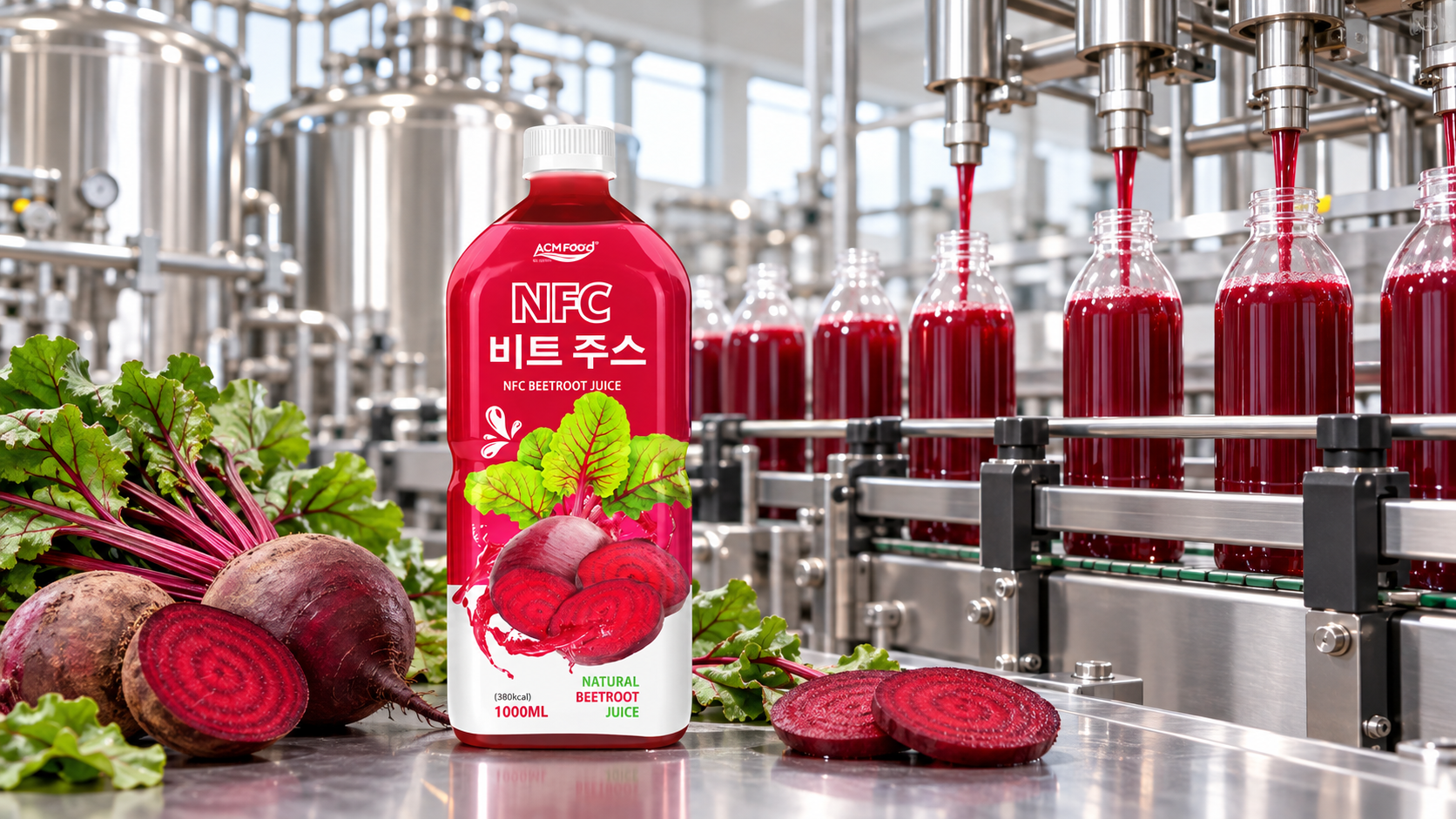
What should a bottled beetroot juice product brief include?
A product brief should state the juice content, taste target, bottle size and material, heat treatment route, closure type and the markets where the product will be sold. Clear inputs on day one reduce rounds of samples and avoid late changes to labels and packaging.
A practical checklist:
- Product type. Pure juice, blend or diluted drink, with intended juice percentage.
- Taste target. Earthy and bold, or softened with apple or citrus; sweetness level.
- Bottle. PET or glass, volume, neck finish, colour of the material.
- Closure. Tamper-evident cap, liner type and oxygen-scavenging needs.
- Process route. Hot-fill, tunnel pasteurisation or aseptic, confirmed by the factory.
- Shelf-life target. The storage conditions it must meet, such as ambient or refrigerated.
- Label and claims. Ingredient list, juice percentage wording and any claims, checked against the destination market.
- Quality documents. Certificates, specification sheets and test reports required by the buyer.
What does private label bottled beetroot juice involve?
Private label means the manufacturer produces the drink and the brand owner sells it under its own name and design. For beetroot juice, the manufacturer typically handles the recipe, process and filling, while the brand supplies label artwork, market requirements and sales channels.
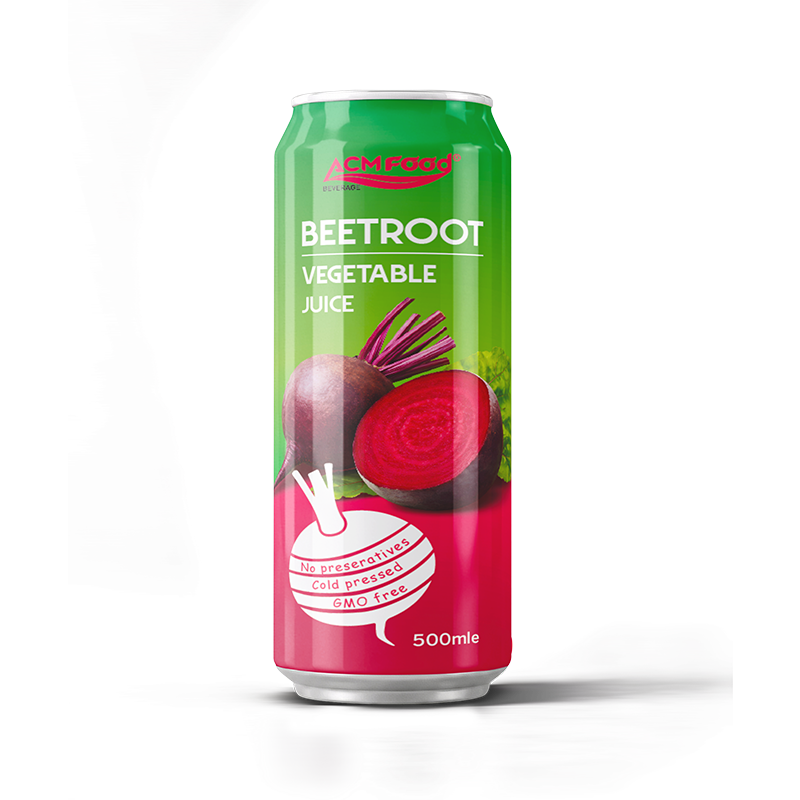
ACMFOOD produces beverages under OEM, ODM and private label arrangements, with HACCP, ISO 22000 and FSSC 22000 certifications published on its website. Its vegetable range includes beetroot drinks in PET bottles and aluminium cans, and the manufacturing approach is described in the beetroot juice OEM guide. Buyers who want to see current formats can browse the beetroot juice product category.
Points to settle early in a private label project include who owns the recipe, how batch codes and best-before dates are printed, and which language and legal wording the label needs for the destination market. These items affect timelines more than the juice itself.
How is the quality of bottled beetroot juice checked?
Quality is checked at three points: incoming beets, the juice before filling and the finished bottle. Each point has its own measurements, and the results are kept per batch so that any complaint can be traced back to a production run.
- Incoming beets. Variety, size, firmness, visible damage and soil residue are inspected, because a poor lot raises earthy notes and microbial load.
- Juice before filling. Brix, pH, colour and taste are tested against the specification. Brix shows soluble solids, pH shows whether the acidification step worked, and colour is compared with a reference sample.
- Filling and sealing. Fill level, headspace, cap torque and seal integrity are sampled across the run. A weak seal lets oxygen in and shortens the shelf life of the bottle.
- Finished product. Microbiological tests confirm that the heat treatment worked, and retained samples are stored so the colour and taste can be reviewed at the end of the declared shelf life.
A food safety system such as HACCP defines which of these checks are critical control points. For beetroot juice the heat step and the closing step are normally critical, since they decide whether spoilage organisms survive or re-enter the bottle.
Which bottle sizes and serving formats suit beetroot juice?
Beetroot juice has a strong taste, so many consumers prefer a moderate serving. Smaller bottles suit trial and on-the-go use, while larger bottles suit households and foodservice. The right size also depends on the juice percentage: a concentrated pure juice is often sold in smaller volumes than a diluted drink.
When choosing a size, buyers usually weigh four points: how the bottle fits retail shelves and chillers, how many servings it holds once opened, how quickly the content should be consumed after opening, and how the pack size affects freight per litre. A family-size bottle lowers the cost per serving but needs a closure that reseals reliably, since oxygen entering after opening speeds up colour loss.
Brands also test whether a bottle feels right in the hand and in the cup holder. Square or ribbed PET bottles can help grip, while smooth glass signals a premium positioning. These choices belong in the brief together with the target retail price tier of the destination market.
FAQ about bottled beetroot juice
Does PET keep beetroot colour as well as glass?
Not quite. Glass blocks oxygen almost completely, while PET lets a small amount through over time. Good headspace control, a quality closure liner and an appropriate shelf-life target let PET perform well for most retail uses, but glass has the edge for very long storage.
Can bottled beetroot juice be stored at room temperature?
Yes, if the process and recipe are designed for it. Ambient storage needs an acidified recipe with hot-fill or tunnel pasteurisation, or a sterilised aseptic process. Products made with mild pasteurisation only must be kept refrigerated.
How long does bottled beetroot juice last?
It depends on the process and packaging, so no single figure applies to every product. For reference, ACMFOOD lists a shelf life of 18 months for its 1L PET beetroot drink, and any other formula or bottle should be confirmed with the factory in writing.
Why does some beetroot juice taste like soil?
Beetroot naturally contains geosmin, which gives an earthy aroma. Brands soften it by blending with apple or citrus, adjusting sweetness or balancing acidity, depending on the target consumer.
Is clear PET a problem for beetroot juice?
A clear bottle shows the colour well but lets light reach the pigments. For products that sit under strong retail lighting for months, tinted PET, a larger label area or a UV-blocking design can reduce fading.
Bringing a bottled beetroot juice project to market
Bottled beetroot juice succeeds when the bottle, closure and heat treatment are designed together. PET offers lighter, safer logistics, glass offers a stronger barrier, and low-acid chemistry means the process route must be validated rather than assumed. Colour stability and an earthy taste profile are the two points buyers notice first.
Brands that want to develop a beetroot drink can send ACMFOOD a short product brief covering juice content, bottle size and material, target markets and quality documents. The team can then recommend a recipe and pack format from the cans and bottles it produces and share sample plans.