


 Français
 Español
 العربية
 한국어
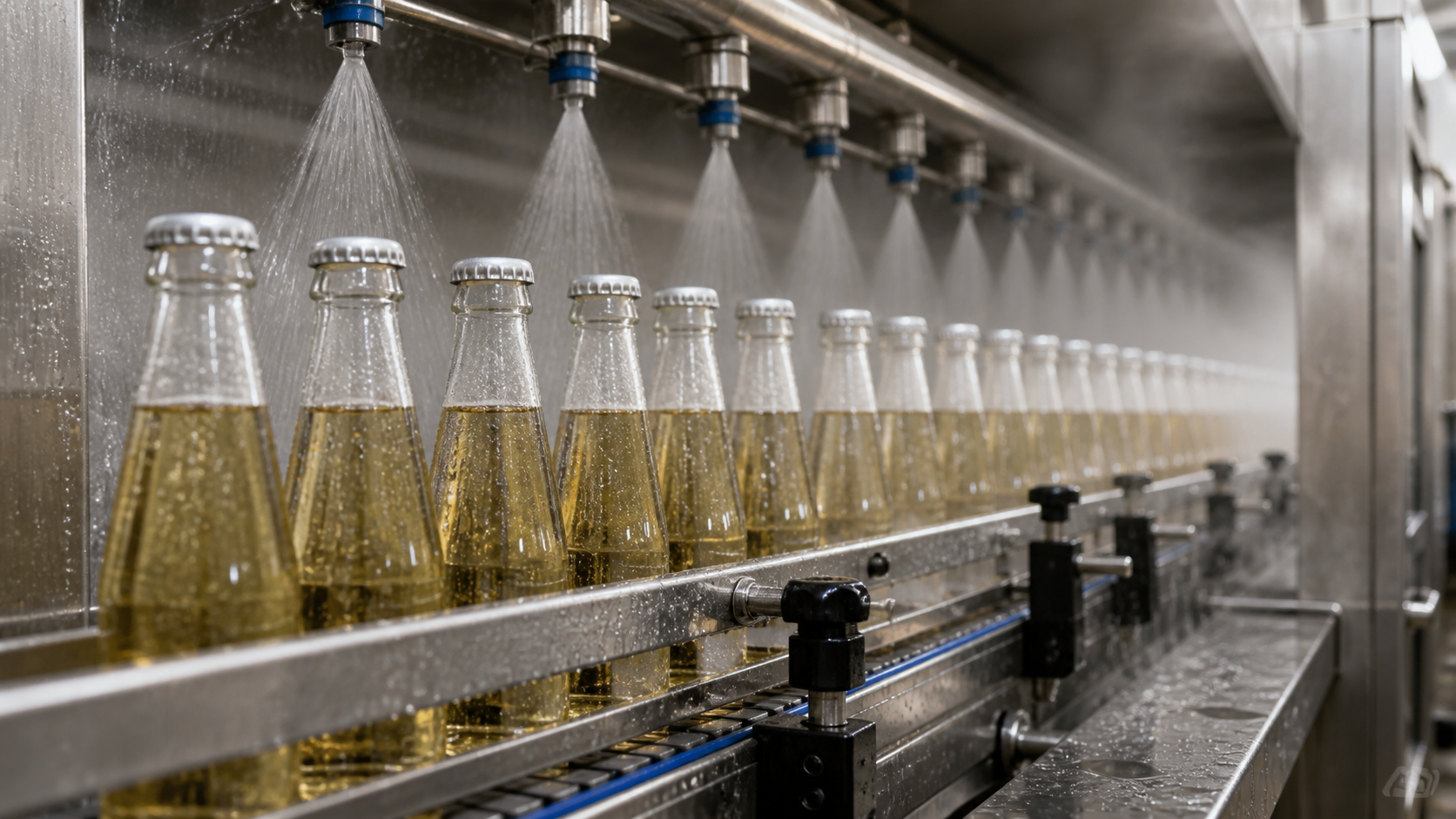
한국어Tunnel pasteurisation is a post-filling heat treatment in which sealed bottles or cans travel through a multi‑zone tunnel and are sprayed with controlled warm water to deliver a defined microbial kill while protecting product quality. It is widely used for shelf‑stable or extended shelf‑life packaged beverages where in‑package thermal assurance and closed‑container sterility are important.
This guide explains how tunnel pasteurisation works, what PU value means in practice, typical temperature profiles, packaging suitability for bottled drinks and cans, quality trade‑offs, and the decision points beverage teams should lock in before a commercial run. It is written for technical, operations and sourcing professionals comparing pasteurisation options within a modern beverage program.
What is tunnel pasteurisation?
Tunnel pasteurisation is a thermal process applied after filling and sealing. Packages pass through zones that gently raise product temperature, hold it for a validated period, and then cool it down, delivering a targeted lethality inside the closed container. It can increase safety and stability without opening or re‑handling the beverage after fill.
Because heat is applied to the finished, sealed pack, the process treats the actual beverage–package system the consumer will receive. This helps mitigate downstream contamination risk and makes the achieved thermal exposure directly relevant to the final product. It is commonly used across high‑acid drinks and many carbonated beverages where moderate thermal exposure is acceptable.
How does a beverage tunnel pasteuriser work?
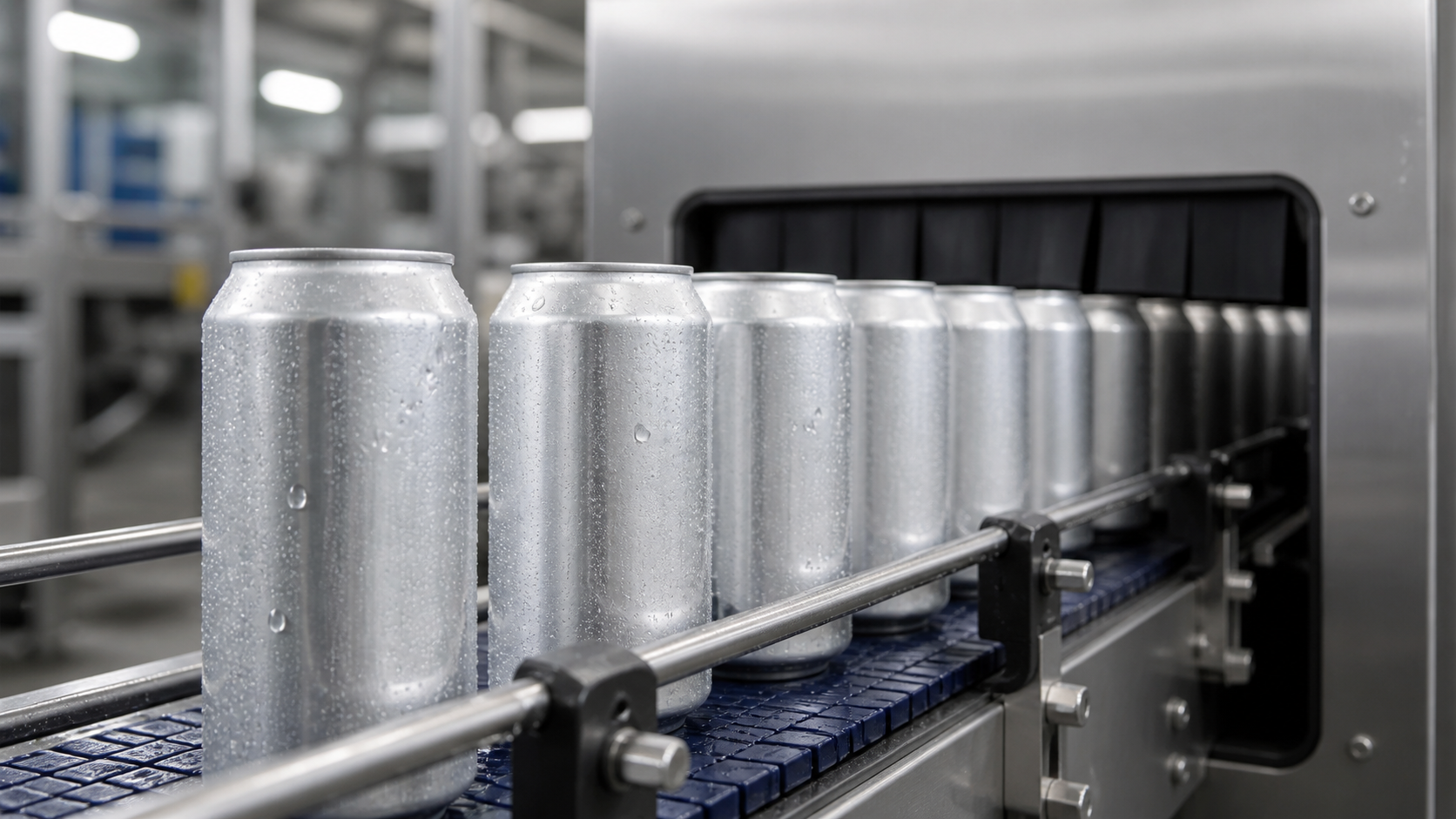
In a tunnel pasteuriser, packages move on a conveyor through sequential spray zones. Each zone circulates water at a controlled temperature to gradually warm, hold, and cool the beverage, while avoiding thermal shock to the container and its contents. The combined time–temperature exposure is measured and controlled against a specified target.
- Infeed: Sealed cans or bottles enter at ambient or line temperature.
- Pre‑heat zones: Progressive warm sprays raise internal product temperature gradually.
- Pasteurisation (hold) zone: Water sprays maintain target conditions to reach the required lethality.
- Cooling zones: Temperature is stepped down to near ambient to protect labels, closures and pack integrity.
- Outfeed & drying: Excess water is shed or blown off before downstream packaging.
Modern tunnels typically recirculate water by zone, often in counter‑current flows that recover heat from warmer sections to conserve energy. Controls manage spray temperatures, conveyor speed and zone integrity. Validation focuses on the actual product temperature profile inside representative containers, not just water temperatures.
What does PU value mean in tunnel pasteurisation?
PU value (Pasteurisation Units) expresses the cumulative thermal exposure that contributes to microbial inactivation inside the package. It integrates time and temperature above a defined reference threshold, letting teams compare different profiles that deliver comparable lethality. Processors set a target PU appropriate to the beverage and its microbiological objectives.
- PU is an integration of time–temperature, not just “minutes at a number.” Gentle warming over longer periods can equal a shorter, hotter hold if the cumulative effect matches the target.
- The reference temperature and kill model are chosen for the product and organisms of concern; PU targets differ by beverage type and risk profile.
- Under‑processing risks stability issues; chronic over‑processing can drive avoidable quality loss. The goal is a validated PU window with safety margin and minimal sensory impact.
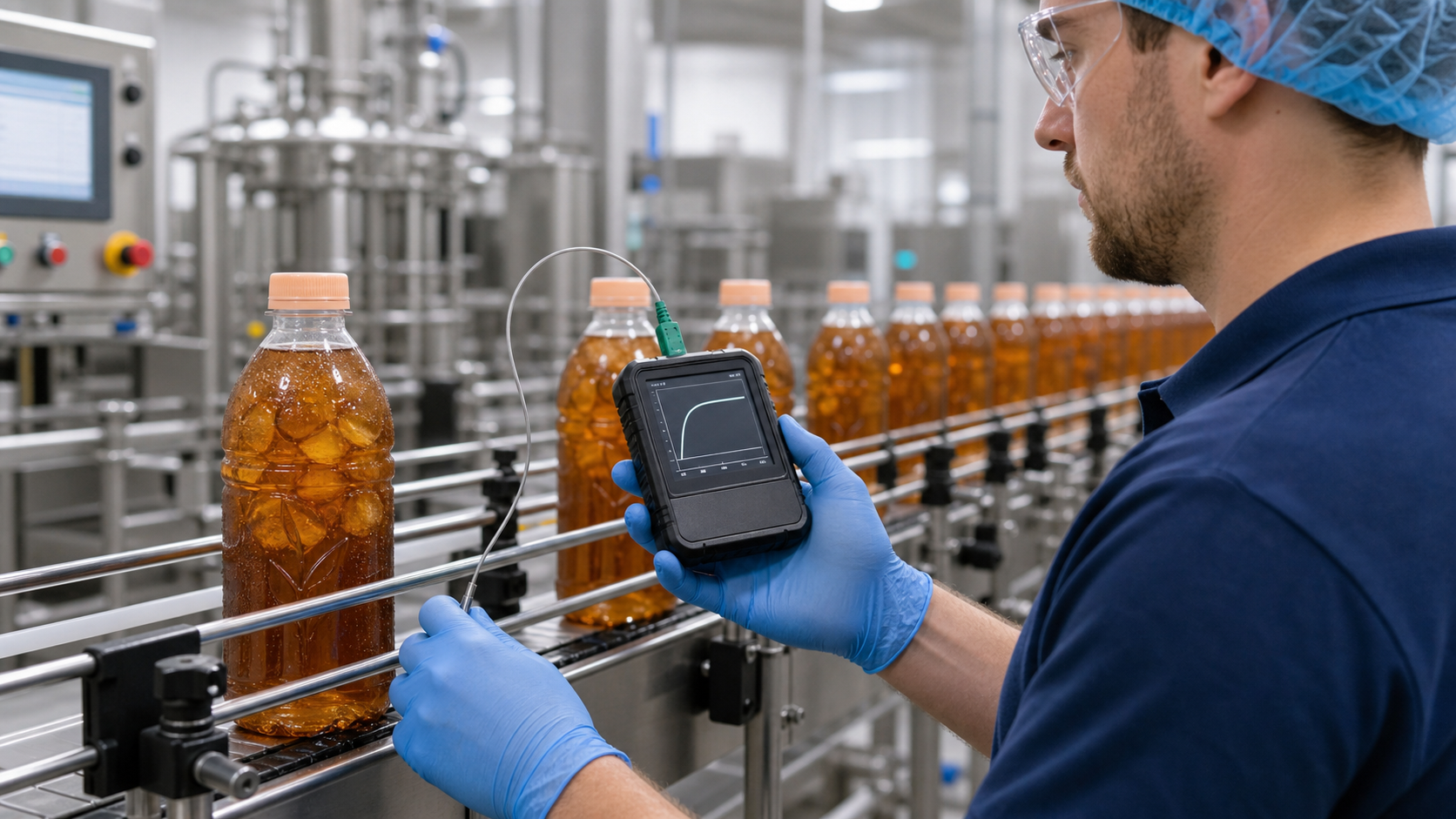
- Verification uses data‑logging devices (often thermocouples inside representative containers) to map the actual internal temperature curve across the tunnel path.
- Routine monitoring tracks both water spray temperatures and conveyor dwell time to keep delivered PU within the specified range.
Which bottled and canned drinks suit tunnel pasteurisation?
Tunnel pasteurisation is well‑suited to sealed, rigid or semi‑rigid packages and beverages that tolerate moderate heat. It is commonly applied to high‑acid or alcoholic drinks and some still beverages where in‑package lethality and closed‑container handling are desirable.
- Carbonated categories such as beer, cider and some soft drinks, where the sealed container helps retain carbonation during controlled heating and cooling.
- High‑acid still beverages (e.g., many juices, nectars, lemonades) where moderate heat supports stability goals.
- RTD teas, coffees and botanical drinks, provided the formulation tolerates the chosen thermal exposure.
- Certain functional drinks without highly heat‑sensitive actives, colors or flavors.
- Less suited to products requiring very low thermal load, heavy particulates with slow heat penetration, dairy‑based or low‑acid formulas not designed for pasteurisation. Alternative technologies may fit better in such cases.
What packaging works best for tunnel pasteurisation?
Glass bottles and aluminum cans are the most common formats due to their thermal robustness and dimensional stability. Some PET bottles and closures designed for elevated temperatures can also be tunnel‑processed, subject to validation. Labels, inks and adhesives must be water‑ and heat‑resistant for the selected profile.
- Glass bottles: Excellent heat tolerance; manage thermal gradients to avoid shock. Select closures (e.g., crowns, ROPP) with liners suitable for heat and moisture.
- Aluminum cans: Highly compatible; control external moisture and drying to protect secondary packaging downstream.
- Heat‑capable PET: Only specific designs and closures withstand the process; confirm deformation and vacuum/collapse behavior under the selected profile.
- Labels & sleeves: Choose face stocks, inks and adhesives rated for warm water exposure; shrinks may need perforations and tunnel‑friendly films.
- Secondary packaging: Ensure cartons and trays are specified with appropriate wet‑strength if they encounter residual moisture post‑tunnel.
For an overview of common bottle and can options and how they map to retail channels, see our beverage packaging options.
Typical temperature profile and dwell‑time considerations
Rather than a single “setpoint,” tunnel pasteurisation uses a staged profile: gentle pre‑heating, a controlled holding plateau, then stepwise cooling. The delivered PU depends on product properties, fill temperature, package size, zone temperatures and conveyor speed. The design aim is even heat penetration with minimal shock to the container and beverage.
- Gradual ramps: Step increases reduce stress on glass, closures and carbonation; they also help avoid localized overheating.
- Water vs. product temperature: Control focuses on internal liquid temperature; water sprays are the means, not the end. Data loggers inside representative packs confirm the true curve.
- Package geometry: Larger formats and thick‑walled containers heat and cool more slowly, affecting dwell time and target profile.
- Line speed: Throughput must balance with the required PU; speed changes without temperature adjustment can under‑ or over‑process.
- Energy & water loops: Heat recovery, counter‑current flows and insulation improve efficiency while maintaining zone separation.
Quality & sensory impacts to watch
All thermal processes create trade‑offs. With careful profiling, tunnel pasteurisation can deliver stability while preserving key attributes, but teams should monitor potential impacts and design guardrails in formulation and process.
- Flavor and aroma: Heat can affect delicate volatiles; choose profiles and flavors that tolerate the intended exposure.
- Color and haze: Teas, juices and botanicals may shift in color or clarity; pectin and protein stability may change with heat.
- Carbonation retention: Sealed containers help, yet CO2 may equilibrate differently at elevated temperatures; fill volumes and headspace should be validated.
- Oxygen management: Pre‑fill deaeration, low‑oxygen filling and quick cooling support oxidative stability.
- Closure integrity: Liner materials and torques must hold seal across the temperature cycle.
- Packaging aesthetics: Verify label adhesion, ink fastness and sleeve behavior; establish pass/fail criteria after tunnel and downstream handling.
Process control and validation in a tunnel pasteuriser
Robust control blends equipment capability with data‑driven validation. The objective is to consistently deliver the specified PU window across packages and across time.
- Temperature mapping: Use instrumented containers to capture internal curves at multiple conveyor lanes and loads, including worst‑case scenarios.
- PU verification: Apply a consistent calculation method aligned to your reference model; verify both trial and routine runs.
- Zone integrity: Confirm each spray zone maintains its temperature band and flow; alarms and interlocks should flag deviations.
- Conveyor dwell: Track and control conveyor speed to keep exposure in spec, especially after changeovers.
- Records & reviews: Log setpoints, actuals and PU outcomes; trend data to detect drift and trigger maintenance or retraining.
For broader context on unit operations and how pasteurisation fits into end‑to‑end scaling, explore our processing technology overview.
Tunnel pasteurisation vs other beverage heat treatments
Tunnel pasteurisation is one of several ways to achieve microbial stability. It excels when in‑package assurance, carbonated formats, and line integration with bottling/canning are priorities. Other methods may suit heat‑sensitive products, heavy particulates, or low‑acid systems designed for different thermal regimes.
| Method | Where it happens | Packaging fit | Thermal load on product | Typical use cases | Positioning & notes |
|---|---|---|---|---|---|
| Tunnel pasteurisation | After filling, inside sealed pack | Glass, cans, some heat‑capable PET | Moderate, controlled profile | Beer, cider, high‑acid still & sparkling, RTD tea/coffee | In‑package lethality; good for carbonated SKUs; validates PU in final pack |
| Flash pasteurisation + cold‑fill | Before filling, in a heat exchanger | Packages filled in clean/controlled environment | Short, higher‑temperature exposure | Heat‑sensitive still beverages compatible with cold‑fill | Requires hygienic filler; controls post‑pasteurisation contamination |
| Hot‑fill | Filled hot; package sterilised by contact | Heat‑resistant bottles and closures | Higher pack exposure; short in‑pack sterilising contact | High‑acid juices, sports drinks, teas | Package must tolerate hot‑fill; lightweighting constraints |
| Retort (in‑package sterilisation) | Batch or continuous pressure vessel | Cans, glass, retortable pouches | High thermal load | Low‑acid foods, soups, some beverages | Delivers commercial sterility for suitable formulations |
| Aseptic processing & filling | Sterilise product and package separately | Aseptic cartons, PET, HDPE | Very controlled, often gentle | Heat‑sensitive still beverages | Complex systems; strong on shelf stability with minimal heat pickup |
Project checklist for brands and buyers
Locking down the right technical and commercial inputs early will accelerate trials and reduce surprises at scale.
- Product brief: Beverage type, acidity/alcohol, particulates, target shelf‑life and channels.
- PU target & rationale: Reference model, validation plan, safety margins and quality guardrails.
- Fill conditions: Fill temperature, dissolved oxygen targets, carbonation volumes, headspace.
- Package & closure: Material, geometry, heat tolerance, liner/torque, expected deformation limits.
- Artwork & labels: Face stock, inks, varnish, adhesive and sleeve specs rated for warm water.
- Tunnel profile: Zone set‑up strategy, maximum allowable gradients, cooling endpoints.
- Secondary packaging: Wet‑strength cartons, tray wrap, pack pattern, post‑tunnel drying strategy.
- PU verification: Logger placements, lane mapping, worst‑case testing and acceptance criteria.
- Throughput & changeovers: Run length, format changes, speed windows and clean‑in‑place scheduling.
- Regulatory & claims: Ingredient and label compliance in target markets; ensure any functional positioning aligns with verified formulation and local rules.
- Cost & sustainability: Energy/water recovery expectations, scrap minimisation, packaging choices.
If you are comparing international partners, see how to choose an overseas manufacturer and what to expect when engaging a manufacturer for Australian brands. For brand owners exploring turnkey development, our private label beverages guide outlines typical engagement models.
Costs, throughput and sustainability trade‑offs
Tunnel pasteurisation adds capability and stability but introduces operating cost and complexity that must be balanced against alternatives. Water recirculation, heat recovery and insulation can materially reduce utilities per unit. Well‑designed drying and downstream packaging protect carton integrity, reducing waste and quality complaints.
- Throughput: The required PU and container size dictate conveyor speed; scheduling and format grouping help keep lines in the optimal window.
- Utilities: Heat recovery, zone separation, and preventive maintenance lower energy and water per case.
- Changeovers: Format and label changes may require different ramp strategies; plan trial matrices to avoid unproductive downtime.
- Quality yield: Validate labels and closures for the profile to avoid post‑tunnel rejects; small investments in materials can pay back in yield.
- Footprint & integration: Tunnels are sizeable; ensure upstream accumulation and downstream drying/inspection are engineered as a single system.
FAQs
Is tunnel pasteurisation the same as flash pasteurisation?
No. Tunnel pasteurisation heats the sealed, filled package through a multi‑zone spray tunnel, validating lethality inside the final container. Flash pasteurisation heats the beverage in a heat exchanger prior to filling; it then relies on hygienic cold‑fill controls to prevent recontamination.
Can tunnel pasteurisation handle carbonated beverages?
Yes, many carbonated drinks are tunnel‑processed successfully. The sealed package helps retain CO2; the key is a controlled temperature ramp, an appropriate PU target, closures that maintain seal under pressure changes, and validated cooling to protect package integrity.
How is PU measured on a live run?
Operators use instrumented containers with thermocouples or self‑contained data loggers to record internal temperature as packs travel through the tunnel. The PU is computed from the recorded time–temperature curve according to the chosen reference model, and compared with the specified target window.
Do labels and shrink sleeves survive the tunnel?
They can, provided materials are specified for warm water exposure and validated at the intended profile. Many teams test alternative adhesives, inks and sleeve perforation patterns to ensure clean appearance and adhesion after heating, cooling and downstream handling.
Conclusion
Tunnel pasteurisation gives beverage teams an in‑package route to validated lethality for bottled drinks and cans, with strong fit for high‑acid and many carbonated products. Success depends on a clear PU strategy, compatible packaging and materials, and disciplined validation of the time–temperature curve. Compared with other methods, it trades higher equipment footprint for robust final‑pack assurance and line integration. If tunnel pasteurisation is on your shortlist, align your brief, packaging and target profile early, then run instrumented trials to lock the process window before scale‑up.
For adjacent unit operations and alternatives to consider alongside tunnel processing, visit our processing technology overview. This will help place tunnel pasteurisation among the available options as you build out your beverage program.