


 Français
 Español
 العربية
 한국어
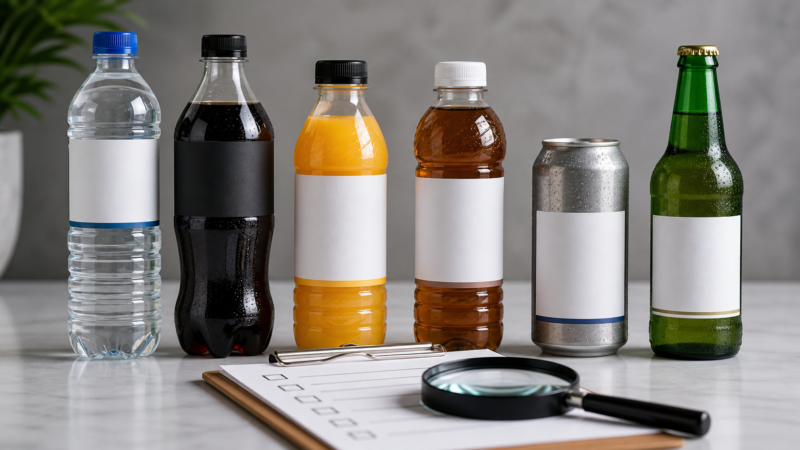
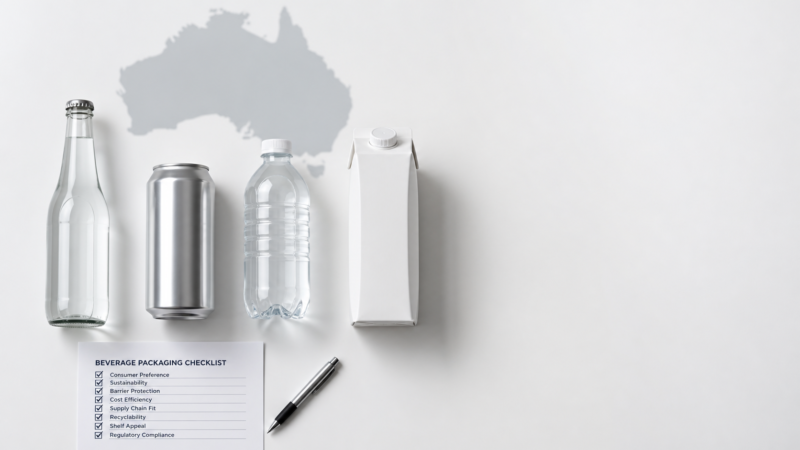
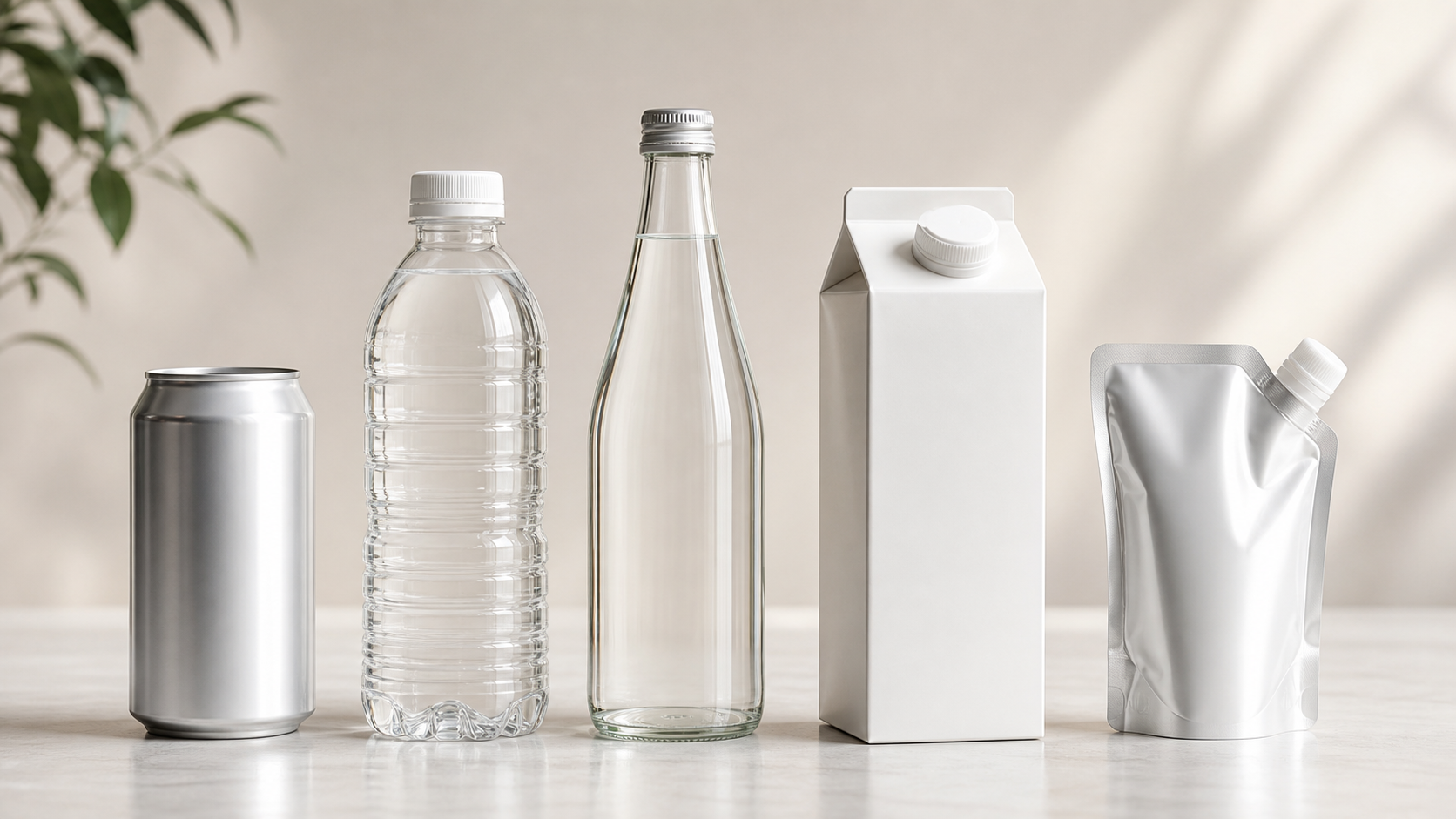
한국어Beverage packaging in Australia spans aluminium cans, PET and glass bottles, aseptic cartons, pouches, bag-in-box and kegs, each serving distinct product, channel and sustainability goals. If you are searching for beverage packaging Australia, this guide maps core formats to processing, shelf-life, recycling pathways and commercial trade-offs.
Use it to shortlist the right primary pack, closure and secondary packaging for your drink, then pressure-test choices against Australian logistics, retail conditions and labelling expectations. Specific requirements vary by product and supplier, so treat the following as a practical framework to brief partners, not a substitute for technical validation or regulatory advice.
What defines the right beverage packaging for Australia?
The best pack balances shelf-life, product safety, cost-to-serve, brand positioning, and end-of-life outcomes under Australian conditions. In practice, that means matching processing (e.g., pasteurised, hot-fill, aseptic, HPP) to a container with the right oxygen and light barrier, closure integrity, and recyclability that aligns with local programs.
Five drivers shape decisions across categories:
- Processing & shelf-life: Your thermal or non-thermal process dictates barrier needs, heat resistance and closure type.
- Channel & handling: Australia’s long-haul freight, ambient retail, on-premise, and e-commerce require robust packs and reliable palletisation.
- Sustainability & recyclability: Design for the Australasian Recycling Label (ARL) guidance and state container deposit schemes where relevant.
- Consumer cues: Glass telegraphs premium; cans signal refreshment; cartons suggest pantry-friendly; pouches feel portable.
- Total landed cost: Resin/metal prices, decoration, freight cube and damage rates matter more than unit price alone.
Aluminium can beverage packaging: where it fits
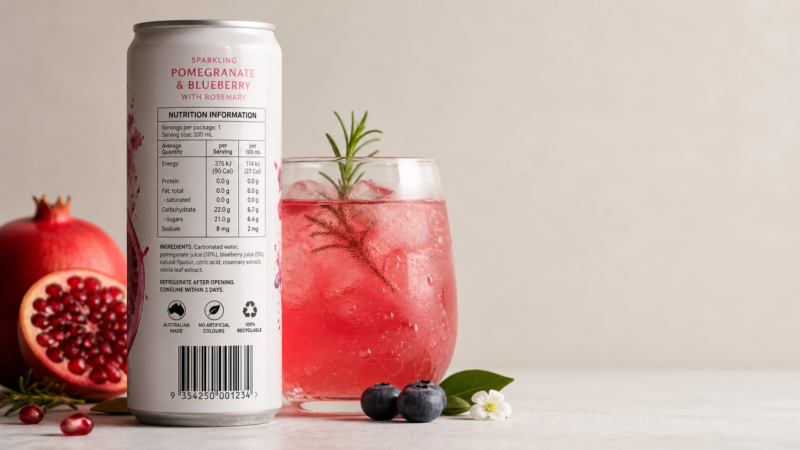
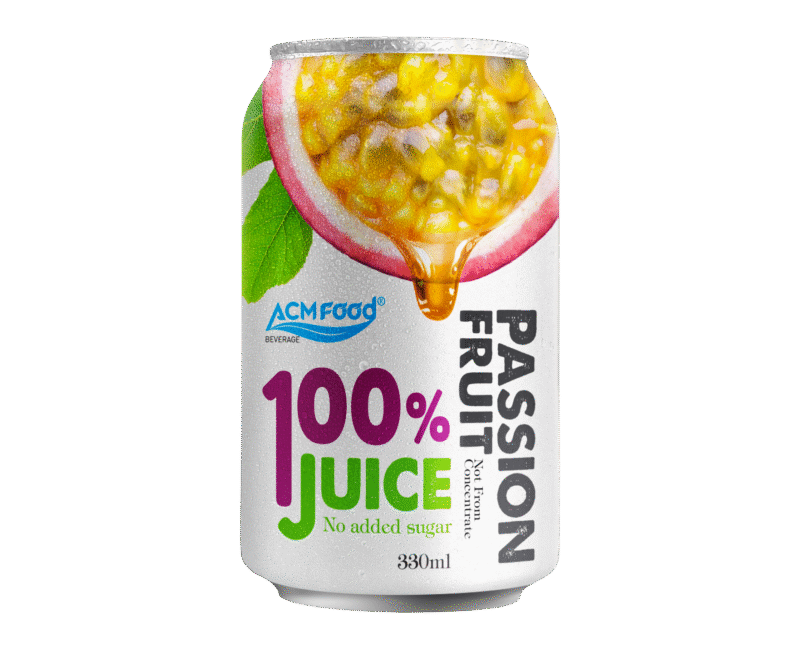
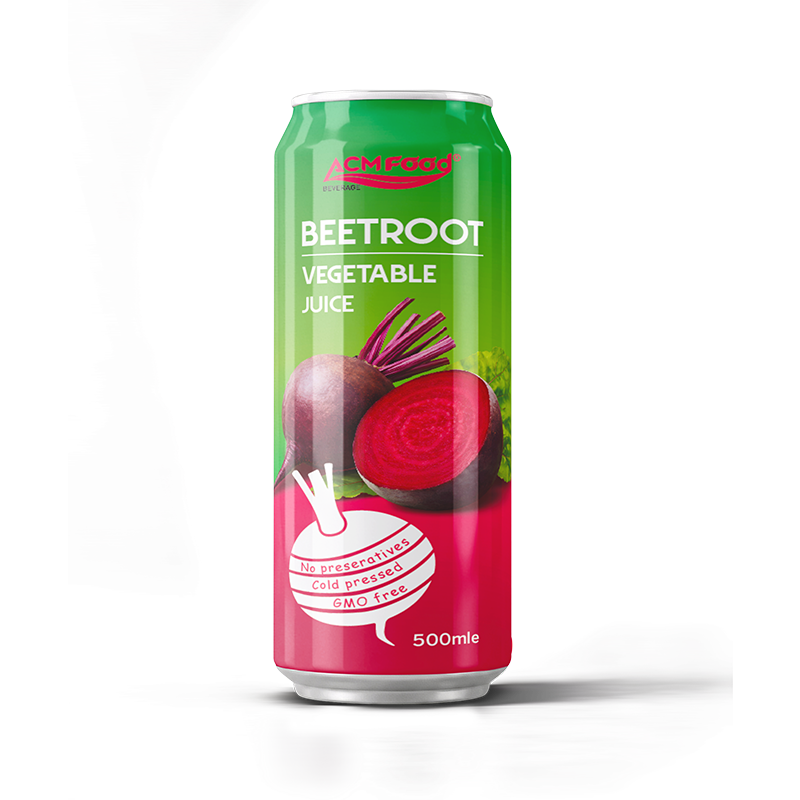
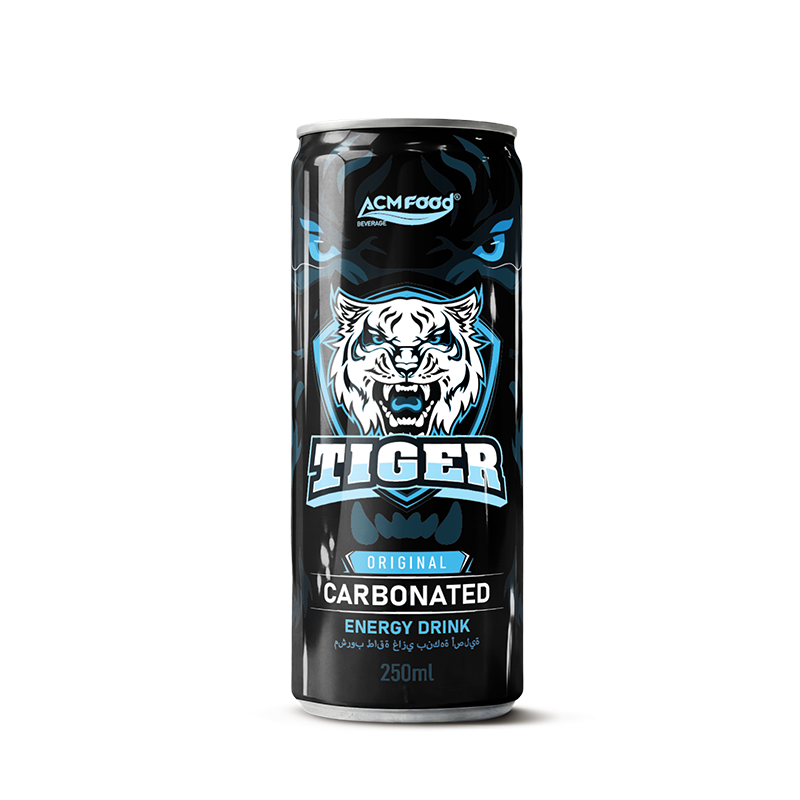
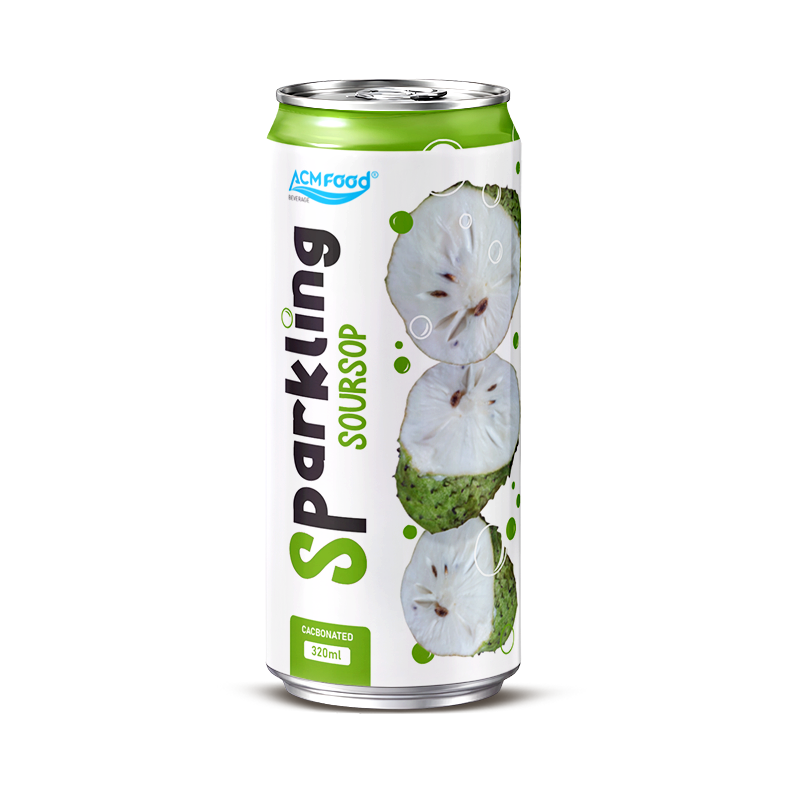
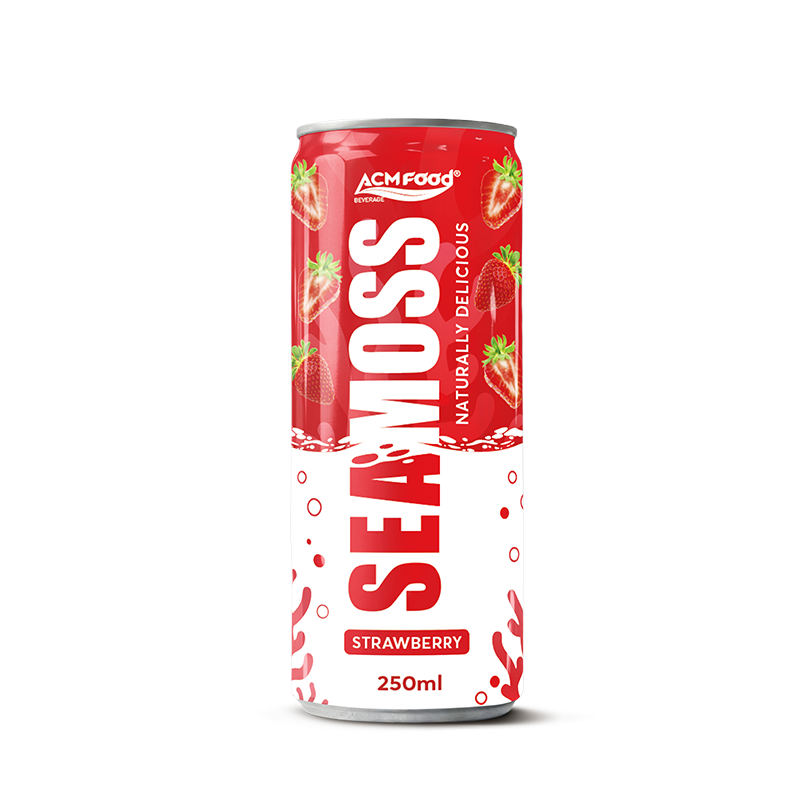
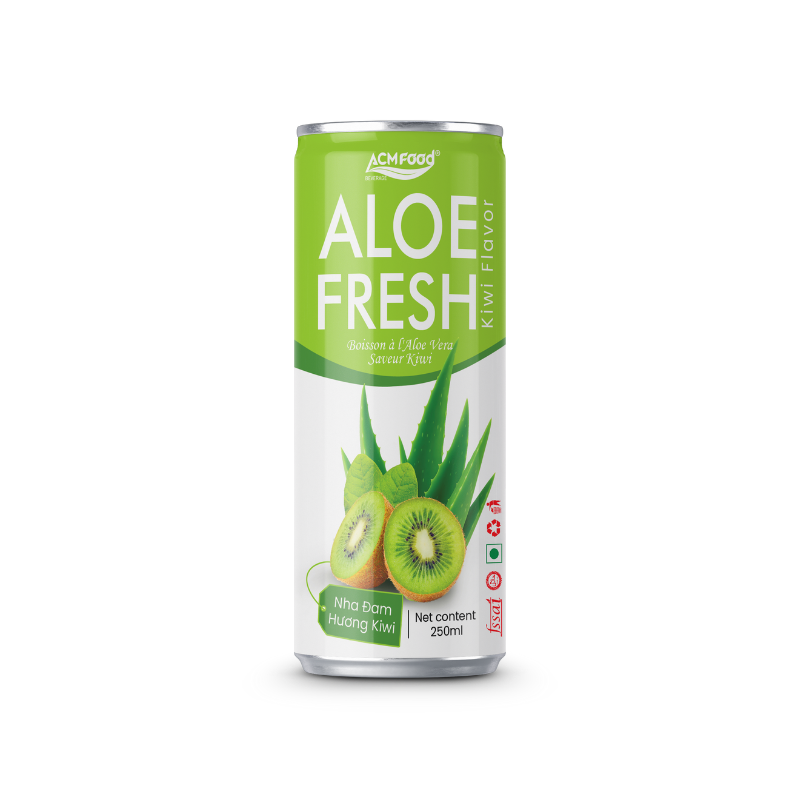
Aluminium cans suit carbonated soft drinks, seltzers, RTD tea/coffee, functional sodas and many still beverages processed for ambient stability, providing strong light protection and widely accepted recyclability in Australia.
Why cans work:
- Barrier: Excellent light barrier and, with appropriate lining and seams, good oxygen protection for typical carbonated and many still drinks.
- Format flexibility: Sleek or standard diameters in single-serve sizes; ends and tabs support easy opening.
- Decor: Full-wrap print offers billboard impact; shrink-sleeves enable short runs, though sleeves should be designed for removal where possible.
- Logistics: Lightweight with efficient pallet footprint; good for national distribution.
- Recycling familiarity: Aluminium has an established recycling pathway in Australia.
Points to assess:
- Lining & product contact: Validate compatibility (e.g., acidity, alcohol, juice content) with the chosen can liner and process.
- Filling method: Cold-fill for carbonated; hot-fill is uncommon for cans; nitrogen dosing can help still beverages.
- Minimum orders & print lead times: These vary by supplier and print method; plan early alongside artwork.
- Sleeves & labels: Prefer recyclable-friendly sleeve materials, perforations or minimal coverage to support local recycling.
PET beverage bottles in Australia: when to choose them
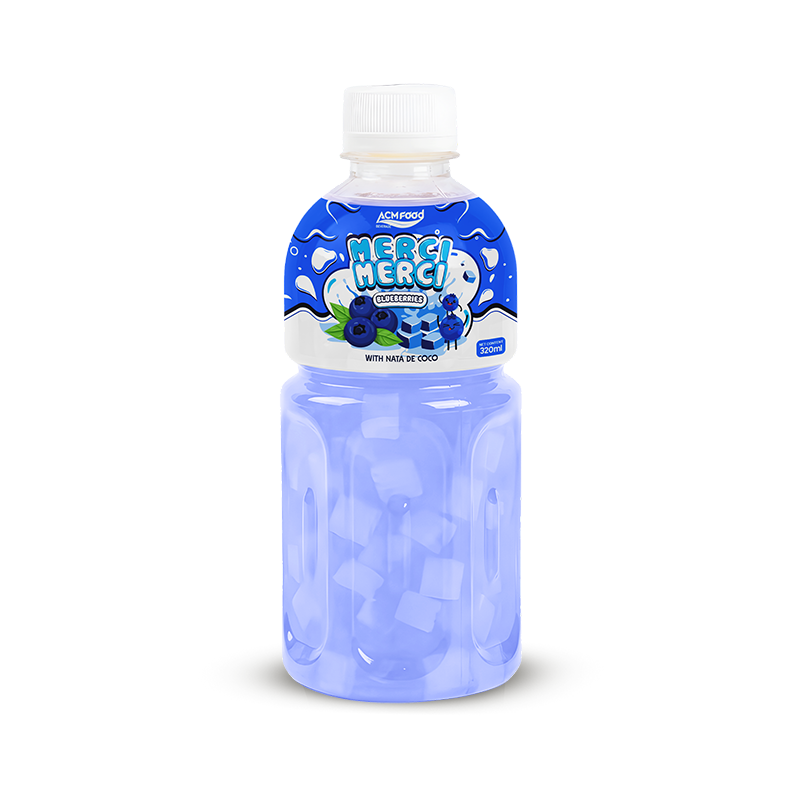
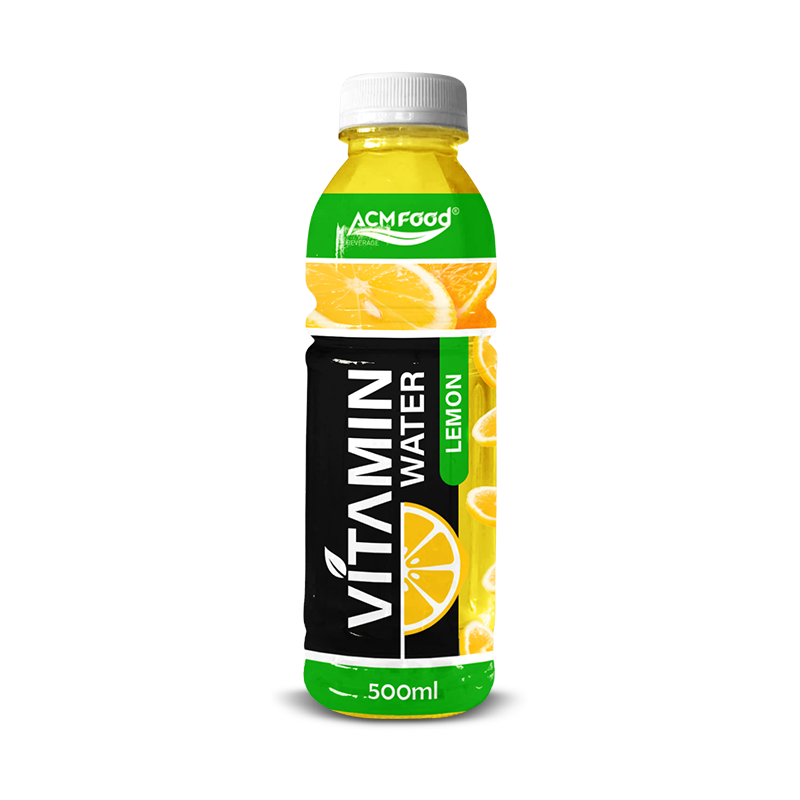
PET bottles are a strong fit for still or carbonated beverages that benefit from clear product visibility, lightweight shipping and high single-serve throughput, provided oxygen and light needs are engineered via resin, additives, preforms or secondary barriers.
Strengths of PET:
- Clarity & shape: Showcases color and particulates; custom molds can differentiate while remaining efficient.
- Weight & freight: Lower mass per unit helps national distribution and e-commerce.
- Process compatibility: Suitable for cold-fill; hot-fill PET exists for certain still beverages; carbonation requires appropriate preform and cap specs.
- Recyclability: Clear PET bottles are widely recyclable in Australia when labels and closures are compatible with guidance.
Watchouts:
- Light & oxygen: Tea, juice, botanicals and vitamins may need UV-blocking, oxygen scavengers or multilayer approaches. Validate with shelf-life testing.
- Decoration: Full-body shrink sleeves can hinder recycling unless designed for removal or compatible density; prefer clear, minimal labels.
- rPET supply: Recycled content availability can fluctuate; confirm feasibility before making on-pack claims.
Glass communicates purity and craftsmanship, offering an excellent oxygen and aroma barrier with high heat resistance for pasteurised or retorted products, while trading off weight and breakage risk in long-distance freight.
Benefits of glass:
- Perceived quality: Premium visual and tactile cues, ideal for mixers, juices, kombucha, cold-brew concentrates and premium sodas.
- Heat tolerance: Suitable for tunnel pasteurisation and hot-fill (validate closure system and headspace).
- Inertness: Low risk of interaction with acids, alcohol or aromas compared to some polymers.
Considerations:
- Weight & breakage: Affects freight costs and e-commerce damage rates; specify robust shippers and dividers.
- Closure selection: Crown, ROPP, lug or swing-top must align with carbonation, torque and seal needs.
- Recycling: Glass is recyclable; color streams may be handled differently by facilities.
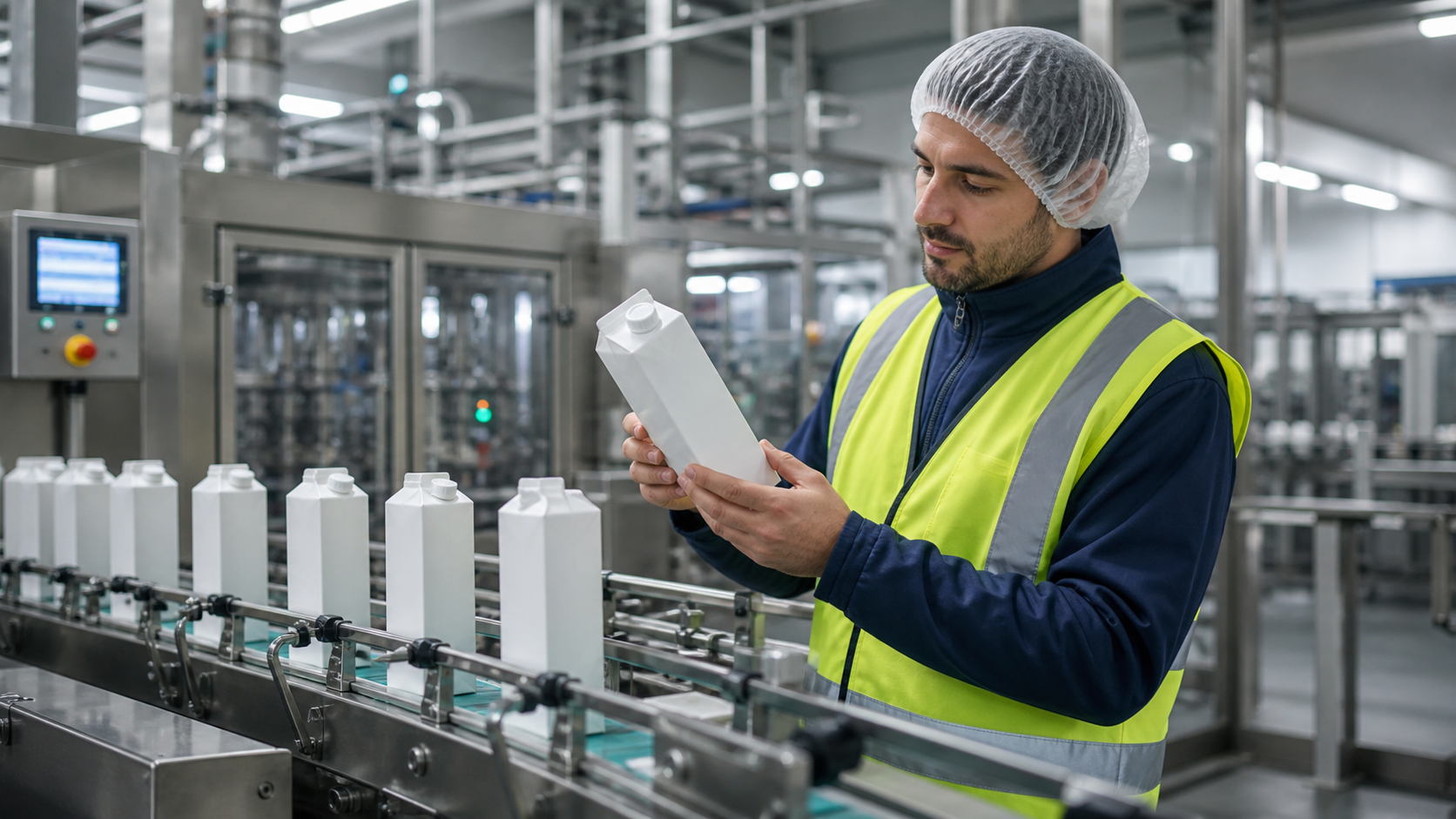
Aseptic carton drinks: ambient convenience
Aseptic cartons allow shelf-stable, ambient distribution of still beverages such as juices, plant milks, flavored milks, cold-brew coffees and functional waters processed under aseptic or UHT conditions.
Why cartons excel:
- Ambient shelf-life: Suits pantry placement and broad retail coverage without chillers.
- Light protection: Strong protection helps preserve sensitive flavors and colors.
- Format range: From small on-the-go boxes to 1 L pantry formats with straws or screw caps.
Considerations:
- Product scope: Best for still beverages; carbonation is not typical for cartons.
- Recyclability: Cartons are accepted in many Australian kerbside programs; facilities and outcomes can vary by area.
- Aseptic validation: Requires strict sterility and packaging integrity checks.
Pouches and spouted packs: on-the-go and kids
Pouches are lightweight, convenient and impact-resistant, well-suited to still beverages, purees and kids formats where portability and portion control are central.
Pros:
- Freight efficiency: Minimal weight and flexible cube.
- User-friendly: Spouts and caps support controlled pouring; kid-friendly ergonomics.
- Graphics: Full-panel printing enables bright branding.
Trade-offs:
- Barrier: Multilayer films are engineered for oxygen and light but require careful validation for target shelf-life.
- Recycling: Curbside pathways are limited for most multilayer pouches; check emerging programs and consider take-back schemes.
- Perception: Some consumers equate pouches with children’s products; design can offset this.
Bag-in-box and bulk: foodservice and e-commerce
Bag-in-box (BiB) delivers strong cost-per-litre for concentrates, still juices, cocktail bases and RTD coffee or tea for hospitality and e-commerce refills.
- Barrier & taps: Multilayer bags with oxygen barriers and tamper-evident taps protect product during extended use.
- Secondary packaging: Outer cartons resist compression and stack well on pallets.
- Use cases: Cafes, bars, catering, workplace hydration and top-up formats for home.
Secondary packaging, closures & tamper evidence
Primary packs only succeed when closures and secondary packaging protect quality through the Australian supply chain.
- Closures: Verify cap/closure material, liner and torque for carbonation or vacuum, plus compatibility with hot-fill or aseptic processing.
- Tamper evidence: Bands, shrink sleeves or breakaway rings communicate safety.
- Transit packaging: Use shippers, trays, pads and dividers specified for long-haul freight and high summer temperatures.
- Palletisation: Standard pallet sizes and wrap patterns reduce damage; confirm stacking limits and compression performance.
Sustainability and recycling in Australia: what matters to brands
Australian consumers and retailers expect clear disposal instructions and credible material choices. Many brands adopt the Australasian Recycling Label (ARL) to guide disposal and consider state-based container deposit schemes for eligible beverage containers.
Design-for-recycling principles commonly applied:
- Clear PET: Prefer clear over tinted; avoid full-body sleeves or use perforated, floatable sleeves.
- Aluminium cans: Uncoated, label-friendly designs generally recycle well; consider sleeve removability.
- Labels & adhesives: Choose inks, glues and label stocks aligned with recycling guidance.
- Caps & closures: Use compatible polymers and tethered designs where appropriate.
Regulatory expectations evolve. For an overview of labelling, claims and packaging intersections, see the Australian beverage regulations guide.
Shelf-life and barrier basics: matching process to pack
Start with your product’s sensitivity to oxygen, light, heat and microbial growth, then align the process with pack attributes.
- Carbonated drinks: Cans or PET with appropriate CO2 retention; closures and seams validated for pressure.
- Hot-filled still drinks: Hot-fill PET or glass; closures resistant to heat and vacuum; paneling control in PET.
- Aseptic/UHT: Cartons, some PET or HDPE systems; sterile closure and cap fit are critical.
- HPP (high pressure processing): Suitable for some chilled juices in flexible PET bottles or pouches designed for HPP parameters.
- Light-sensitive formulas: Opaque cans or cartons; UV-blocking PET/glass; secondary packaging that reduces exposure.
Logistics, climate and channel fit
Australia’s long distances, summer heat in transit and mixed retail footprint mean your pack must perform beyond a controlled test lab.
- Freight stress: Test for vibration, compression and thermal cycling; specify shippers and dividers accordingly.
- Retail handling: Multi-pack formats, tray configurations and shelf-ready packaging can reduce damage.
- E-commerce: Select leak-resistant closures, protective inserts and outer cartons rated for parcel networks.
- On-premise: For bars and venues, consider larger formats (BiB, kegs) and easy-pour closures.
Cost drivers and lead times you should plan for
Total cost and timelines reflect material markets, decoration methods and supply chain complexity. While specifics vary by supplier, these recurring levers help planning:
- Material volatility: Resin and metal prices can shift; build contingencies into forecasts.
- Decoration method: Direct print vs. labels vs. sleeves changes MOQs, prepress steps and timelines.
- Custom molds & tooling: Require design, qualification and capital; amortise over volume.
- Testing & compliance: Transit, shelf-life and compatibility testing add time but de-risk launches.
- Freight & cube: Pallet efficiency, container utilisation and damage rates influence landed cost.
Labeling and compliance considerations
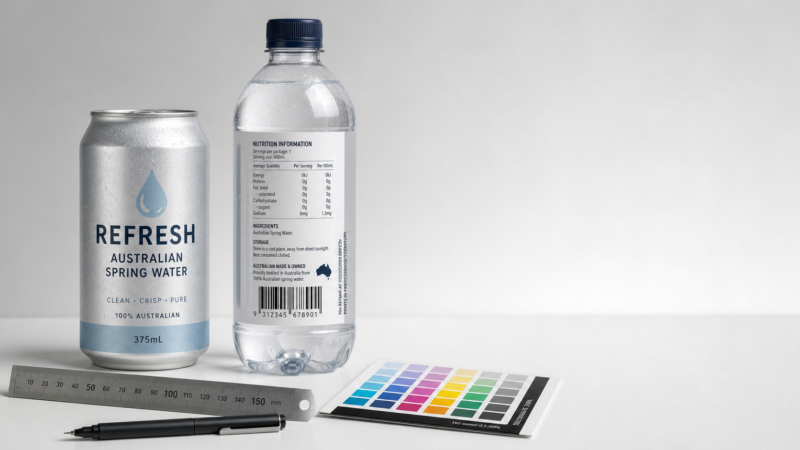
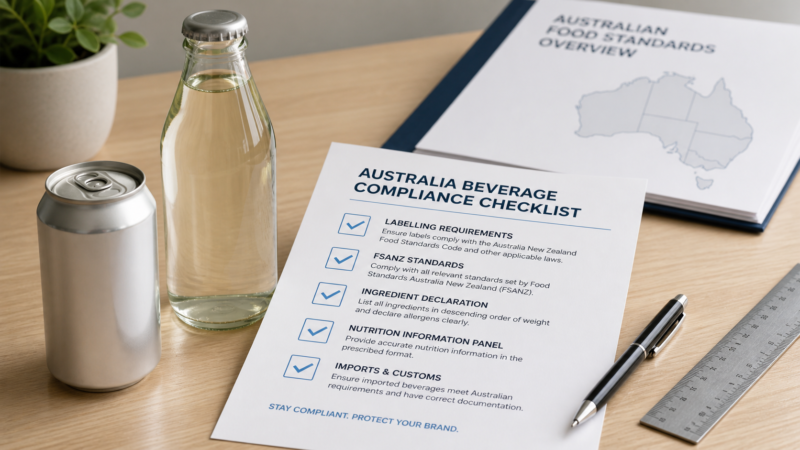
Packaging intersects with labelling, claims and safety information governed by Australian requirements. Depending on the product, elements can include ingredient lists, allergens, nutrition information, date coding, lot traceability, barcodes and Country of Origin statements. Container deposit markings may be relevant by state for eligible beverage containers.
Because rules evolve and differ by category, align early with your regulatory team or partners. For a structured overview, read Australian beverage regulations: a practical guide.
Format comparison at a glance
Use this qualitative table to narrow options before technical trials.
| Format | Shelf-life potential | Light/Oxygen barrier | Recyclability in Australia | Typical use cases | Positioning & notes |
|---|---|---|---|---|---|
| Aluminium can | Good for carbonated; suitable for many still drinks with correct process | Excellent light; good oxygen with proper lining | Widely recycled | Soft drinks, seltzers, RTD tea/coffee, functional sodas | Refreshment cues; efficient freight; strong billboard printing |
| PET bottle | Good; enhance with UV/oxygen solutions as needed | Moderate baseline; can be engineered higher | Clear PET widely recycled; sleeves/labels must be considered | Still and carbonated beverages, flavored waters, teas | Lightweight; product visibility; check sleeve design |
| Glass bottle | Strong with pasteurisation/retort | Excellent oxygen/aroma; transparent to light unless tinted | Recyclable; color streams may differ | Premium juices, mixers, kombucha, specialty sodas | Premium feel; heavier; breakage management needed |
| Aseptic carton | Very good ambient for still drinks | Strong light; engineered oxygen performance | Accepted in many kerbside programs; check locality | Juices, plant milks, flavored milks, cold-brew | Pantry-friendly; aseptic validation essential |
| Pouch/spouted pack | Good for still, shorter ambient or chilled | Engineered film barriers | Limited curbside pathways; emerging solutions | Kids drinks, on-the-go, purees | Ultra-lightweight; strong graphics; perception varies |
| Bag-in-box | Good for still; extended in-use with taps | Multilayer bag barriers | Outer box widely recycled; bag handling varies | Foodservice, concentrates, e-commerce refills | Great value per litre; space-efficient |
Decision framework: how to choose packaging for a new beverage
Move stepwise from product science to commercial fit, documenting each assumption in your product brief.
- Define product & process: Still vs. carbonated; acidity; particulates; thermal vs. HPP vs. aseptic.
- Set shelf-life targets: Retail and e-commerce realities, including open/close cycles.
- Select candidate formats: Pick two or three that plausibly meet barrier, cost and brand goals.
- Run packaging trials: Fill line compatibility, seam/cap torque, leak and drop tests, transit tests.
- Accelerated & real-time stability: Validate sensory, color, carbonation and micro over time.
- Design-for-recycling: Labels, inks, adhesives, sleeves and closures aligned with ARL guidance.
- Commercial model: Decoration method, artwork timelines, supply risk, pallet efficiency and damage rates.
- Compliance review: Labelling, date coding and container deposit considerations before artwork lock.
To cross-check category direction and innovation cues while you decide, review current beverage trends in Australia.
Information for beverage brands and importers
Whether you bottle domestically or import finished goods, confirm that pack, closure, labelling and secondary packaging match Australian requirements and retail expectations.
- Finished imports: Validate that materials, label content and container deposit markings (if relevant) align with destination-state expectations. For a process overview, see how to import beverages into Australia.
- Local filling vs. offshore: Balance freight savings on empty packs vs. line access and MOQs; confirm artwork lead times.
- Retailer onboarding: Confirm barcode specs, shelf-ready packaging and case counts per retailer.
- Supplier evaluation: Map quality controls, compatibility testing and change management. Explore our page for a supplier for Australian importers to understand typical buyer criteria.
- Product development: If you plan to formulate and pack under your own brand, see considerations on working with a manufacturer for Australian brands.
FAQ
This section answers common questions teams ask when shortlisting drink packaging Australia options.
Which beverage packaging is most recyclable in Australia?
Aluminium cans and clear PET bottles generally have well-established recycling pathways. Glass is also recyclable, with color handling varying by facility. Aseptic cartons are accepted in many kerbside programs, while multilayer pouches currently face more limited options. Always pair the pack with ARL-aligned labels, sleeves and adhesives.
Are aseptic cartons recyclable across all councils?
Acceptance and processing outcomes can vary by council and state. Many areas accept cartons in kerbside recycling, but capabilities differ. It is best to align artwork with ARL guidance and confirm local acceptance where your product will be sold.
Can I use recycled content in PET bottles?
rPET usage depends on supply, clarity targets and mechanical performance for your bottle design. Availability can change over time. If you plan recycled content, confirm feasibility with your packaging supplier and validate performance and claim language.
Do aluminium cans work for still beverages?
Yes—many still beverages can run in cans with appropriate formulation and processing, often with nitrogen dosing to protect headspace. Validate seam integrity, oxygen pickup and liner compatibility through trials and shelf-life testing.
What sizes suit e-commerce shipments?
Smaller single-serves reduce breakage risk, while multi-serve bottles or BiB can be efficient if outer packaging is engineered for parcel networks. Regardless of size, invest in inserts, dividers and leak-resistant closures tailored to your courier conditions.
Conclusion
There is no single “best” pack—only the best fit for your product, process, channel and sustainability goals. Aluminium cans deliver impact and recycling familiarity; PET balances clarity and weight; glass elevates premium cues; cartons enable ambient convenience; pouches offer portability; and BiB unlocks foodservice value. Keep decisions evidence-led with trials, transit tests and design-for-recycling choices appropriate to Australia.
If you are scoping beverage packaging Australia decisions now, align your short list with labelling and packaging expectations in our practical guide to Australian beverage regulations and, if importing, the steps in how to import beverages into Australia. Then validate shelf-life and logistics with your manufacturing partner and confirm artwork against ARL guidance before launch.
Manufacturing for Australian brands
If you are sourcing for the Australian market, start with the OEM route for how a specification becomes a shipped container, certifications and food safety systems for the evidence importers and retailers require, and export and logistics for shipping terms and documentation. To price a programme, request a quote.
Request a quoteWhere to go next
Planning an Australian launch? The Australia beverage market page covers the full OEM and private label programme for Australian brands and importers: MOQ 500 cartons per SKU, 15-30 day production, HACCP / ISO 22000 / FSSC 22000, and shipping from Ho Chi Minh City. Request a quote and we reply within 24 hours.