


 Français
 Español
 العربية
 한국어
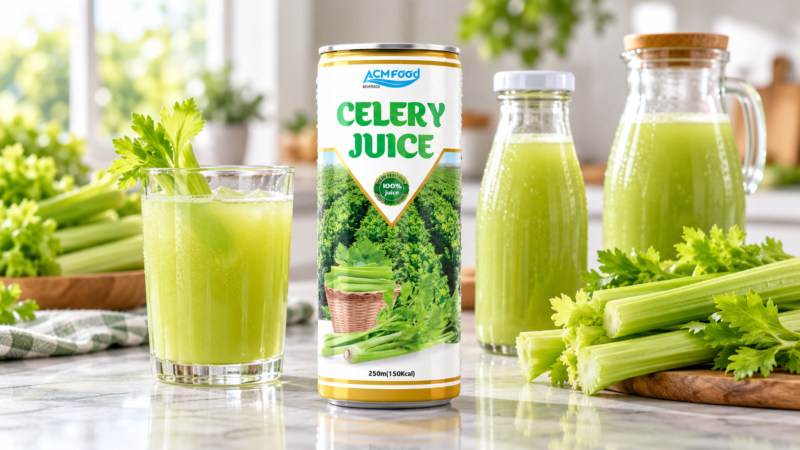
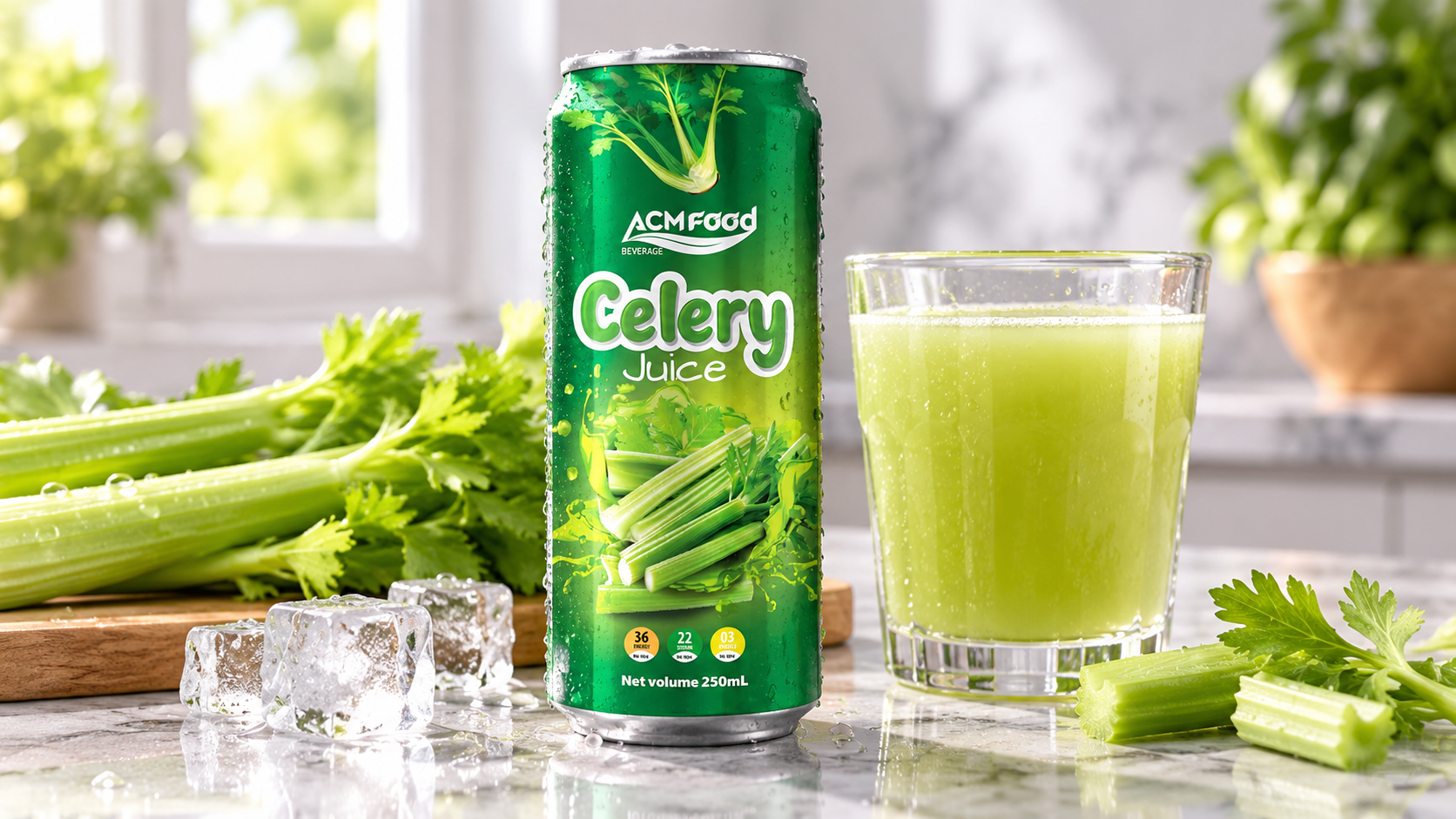
A celery juice drink in a can is a ready-to-drink beverage built on celery juice, usually softened with water, a little apple or cucumber juice and a balanced amount of acid. The can protects the delicate colour from light and oxygen, but the recipe still has to solve three problems: flavour balance, acidity for safety and a filling and heat route that suits a low-acid vegetable.
This guide covers how acid and taste are balanced in a celery drink, how colour is protected, how cans are filled and sealed and what to include in a brief. It focuses on aluminium cans, which is the main format for single-serve vegetable drinks. ACMFOOD, a Vietnam beverage manufacturer, supplies cans and bottles under OEM, ODM and private label arrangements.
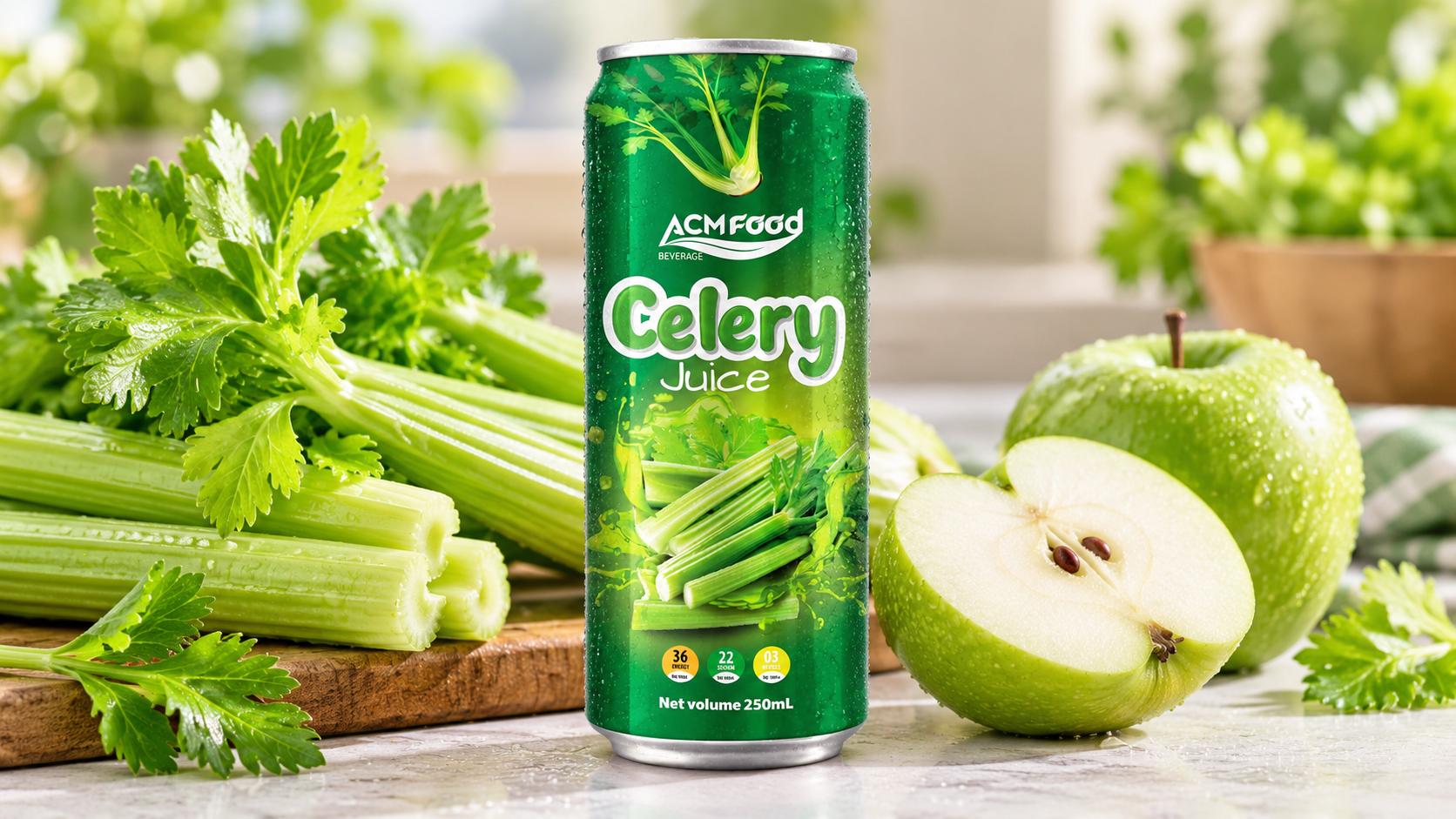
What is a celery juice drink?
A celery juice drink is a beverage in which celery juice is a main ingredient, but not the only one. Compared with pure celery juice, it contains water and other ingredients that soften the savoury, slightly bitter taste and make the drink easier to enjoy for consumers who find the pure juice intense.
Typical building blocks are:
- Celery juice. Provides the characteristic aroma and savoury note. Its share sets the strength of the drink.
- Complementary juices. Apple, cucumber or lemon add sweetness, freshness and acid.
- Water. Dilutes the intensity and adjusts the cost and the serving profile.
- Acidity regulators. Citric or malic acid balance the taste and set the pH for stability.
- Sweetener, if used. A small amount of sugar or an approved alternative rounds the flavour.
Naming and wording depend on the juice content and local rules, so the label should reflect the real composition. Wider guidance on vegetable drink development appears in the vegetable juice manufacturing guide.
How is acid balanced in a celery drink?
Acid is balanced by adding food-grade acids or acidic juices until the drink reaches a target pH that is both safe and pleasant. Celery juice has a pH above 4.6, so some acidification is necessary for any shelf-stable process that does not involve full sterilisation, and the level of acid shapes the taste.
Developers work in four steps:
- Set the pH target. The target comes from the process authority and depends on the heat route and the can.
- Choose the acid. Citric acid gives a clean sharp taste, malic acid a softer, rounder one, and lemon juice adds aroma along with acid.
- Balance with sweetness. A touch of apple juice or sugar offsets the acid so the drink does not taste sour.
- Taste after heat. Acid perception changes after heat treatment and storage, so the balance is confirmed on the finished, stored sample.
Acidification also affects colour: chlorophyll browns faster at lower pH, so the lowest acceptable acid level is not always the best choice. The final recipe is a compromise between safety, taste and appearance, validated by the factory.
How can the green colour of celery drink be protected?
The green colour is protected by limiting heat, acid and oxygen, and by choosing a pack that blocks light. Perfect green is not realistic after heat treatment, so the goal is a stable, natural olive-green that stays consistent through shelf life.
- Short heat exposure. A rapid heat step keeps chlorophyll closer to its original form.
- Deaeration. Removing oxygen from the juice before filling slows browning.
- Moderate pH. The recipe uses enough acid for safety without overshooting.
- Complementary juices. Cucumber or green apple can lift the colour of the blend.
- Can as a light barrier. Aluminium blocks light entirely, which is a clear benefit over clear bottles.
Colour should be measured with an instrument at set intervals during stability studies, with an agreed range stated in the specification.
How are cans filled and sealed?
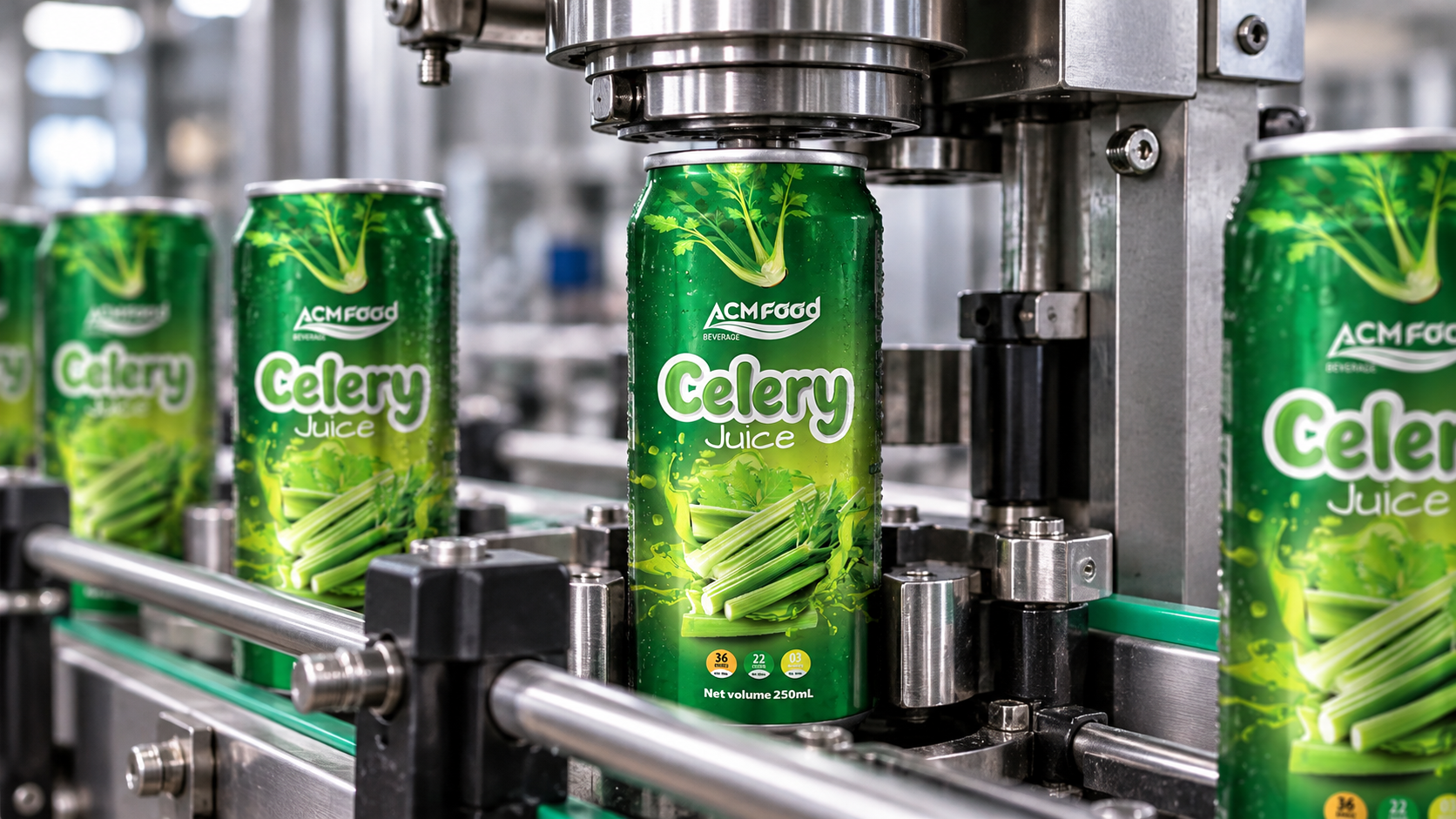
Cans are rinsed, filled with the drink at a set temperature, dosed with liquid nitrogen if needed, sealed with a double seam and then heat treated or cooled. The same steps apply to many drinks, but the choice of filling temperature and heat route depends on the recipe acidity.
- Can rinsing. Cans are inverted and rinsed to remove dust before filling.
- Filling. A filler dispenses a controlled volume. In hot-fill, the drink enters at high temperature, and in cold-fill, it enters near ambient temperature.
- Nitrogen dosing. For still drinks in thin cans, a drop of liquid nitrogen gives the sealed can some internal pressure that keeps it rigid.
- Seaming. The lid is double-seamed to the can body. Seam checks include thickness, hook length and overlap.
- Heat treatment. Tunnel pasteurisation or retort sterilisation, depending on the validated process.
- Cooling and drying. Cans are cooled to a safe handling temperature and dried before coding and packing.
Seam integrity is the primary mechanical control. Poor seams can let air and microbes in, which defeats the heat step. Seam teardown tests should be carried out regularly and recorded.
Which heat route is used for celery drink cans?
The route is either acidified filling followed by tunnel pasteurisation, or retort sterilisation of sealed cans. A recipe with a pH low enough for the first option keeps the taste fresher, while a retort option allows a milder recipe at the price of more cooked notes.
| Route | Recipe pH | Effect on taste and colour | Notes |
|---|---|---|---|
| Acidified fill and tunnel pasteurisation | Lower, within the validated limit | Fresher taste, mild acid note | Needs recipe built around acid |
| Retort sterilisation | Higher possible | More cooked flavour, stronger colour change | Aluminium cans need overpressure control in the retort |
The right choice depends on the target consumer. A drink built around bright acidity and citrus works with the first route, and a savoury, mild vegetable drink may favour retort. Both need validation by the factory or a process authority.
Why is the can lining important for celery drink?
The lining protects the drink from the metal and the metal from the drink. A celery drink contains organic acids and natural salts that can attack bare aluminium, so a sound lining prevents metallic taste, corrosion and leakage during shelf life.
Ask the supplier which lining system is used, whether it meets the food-contact requirements of the destination market and whether it has been tested with a similar low-pH vegetable drink. Also ask how lining coverage and scratches are checked, because the seam area and the lid are the most stressed parts of the can.
What defects appear in celery drinks and how are they prevented?
The common defects are brown colour, metallic or cooked taste, sediment and swollen or dented cans. Each has a known cause and a preventive control, so a short checklist during development avoids most of them.
- Brown or dull colour. Caused by long heat, low pH, oxygen or light. Prevented by short heat, deaeration, moderate acid and aluminium packaging.
- Metallic taste. Caused by a damaged lining or by acid attack on the metal. Prevented by quality can lining, careful handling and stability tests at warm temperatures.
- Cooked taste. Caused by strong sterilisation. Prevented by shorter heat, acidified recipes or a different route.
- Sediment and fibre. Caused by coarse filtration or unstable particles. Prevented by finer filtration and, where needed, homogenisation.
- Swollen or dented cans. Swelling indicates microbial or chemical gas production, and denting indicates low internal pressure or rough handling. Prevented by validated heat treatment, seam control, nitrogen dosing and good packing.
Any swollen can is a safety signal, and it should be withdrawn from sale. A supplier should have a written procedure for identifying and handling such cases, and a link between each can code and its production record.
How do consumers perceive the taste of celery drinks?
Consumers perceive celery drinks as fresh, savoury and slightly salty, with a green aroma. The same drink can taste refreshing to a wellness-minded drinker and too vegetal to a mainstream consumer, so the intensity should match the target audience.
Testing with small consumer groups from the destination market helps adjust three levers: the share of celery juice, the amount of sweet or fruit juice and the acid level. A lighter, fruitier version works as an entry product, and a more savoury, high-celery version serves buyers who already like the taste. Many brands launch both under one range to widen appeal, using the same can size and different colours on the label.
How should cans be stored and shipped?
Cans should be stored cool, dry and dark, and shipped in containers that limit heat and condensation. Aluminium protects the juice from light, but high temperature still speeds up colour change and flavour change inside the can, so storage conditions should be part of the shelf-life agreement.
Carton quality, pallet stability and first-in-first-out stock rotation are the three practical controls at the importer. A written complaint procedure and a recall plan tied to can codes make it possible to respond quickly if a problem appears, and they are standard expectations in retailer audits.
What should a celery drink brief include?
- Style and juice share. Celery content, complementary juices and the intended level of savoury character.
- Acid and sweetness targets. Target pH and a reference taste profile.
- Can specification. Size, printing method, lining and lid type.
- Heat route. Confirmed by the factory for the recipe.
- Colour reference. A measured range after storage.
- Shelf-life target. Duration and storage conditions.
- Market and label. Destination country, language and claim wording. For European markets, general rules are summarised in the EU beverage labelling guide.
- Documents. Specification, certificate of analysis and certificates such as HACCP, ISO 22000 and FSSC 22000.
A related example of how a vegetable drink is developed for a brand is given in the carrot juice OEM guide, and the same sequence applies to a celery drink. More on current vegetable formats is in the celery juice category.
FAQ about celery juice drinks in cans
Why do celery drinks often contain apple or cucumber juice?
These juices soften the savoury taste, add sweetness or freshness and help balance acidity. They also lift the colour of the blend.
Is a celery drink safe at room temperature?
Yes, when the recipe is acidified and processed or sterilised under a validated route and sealed in an intact can. Opened cans should be refrigerated and finished quickly.
Does the drink need nitrogen dosing?
For thin aluminium cans without carbonation, nitrogen dosing is common because it gives internal pressure and prevents denting. It is not needed for every line, and the factory will advise.
Why does the colour turn olive?
Heat and acid convert chlorophyll to a different pigment with an olive tone. The change is normal, and the aim is to keep it consistent across batches.
Can a celery drink be low in sodium?
Celery naturally contains sodium, so a low-sodium claim requires measurement of the finished drink and a recipe that limits celery content or adds other juices.
Is celery a labelled allergen?
In several markets, including the European Union, celery is on the list of allergens that must be declared, and a celery juice product may need a clear allergen statement. Brands should confirm the rule for each destination before the label is finalised.
Moving ahead with a celery drink in cans
A celery juice drink in cans works when acid balance, colour protection and the heat route are designed together. Aluminium protects against light and oxygen, the lining protects the can, and a validated process secures safety for a low-acid vegetable.
Brands that want to launch a celery drink can send ACMFOOD a brief with juice share, can specification, target markets and quality documents. The team can propose recipes, confirm the heat route and prepare samples.