


 Français
 Español
 العربية
 한국어
Heat-resistant spoilage in juice is caused by organisms whose spores or resistant structures survive normal pasteurisation, then grow in the packed product. The best-known examples are Alicyclobacillus bacteria and heat-resistant moulds such as Byssochlamys, and they are controlled mainly through raw materials and process choice.
This process-side article explains why some spores survive tunnel, flash and hot-fill treatment, which products are most at risk, what raw-material controls help and when a stronger route is justified. It does not describe the results of any specific plant.

What is the pasteurisation gap?
The pasteurisation gap is the difference between the heat that kills ordinary vegetative bacteria, yeasts and moulds and the heat needed to destroy spores. A process designed for typical juice pathogens and spoilage organisms can leave spores alive, and in the right conditions they grow later.
Most pasteurisation targets are set for organisms that cause common spoilage or public health risk in juice. Spores are built to survive heat, drying and acid, so a process that is entirely appropriate for its intended target can still leave them behind. Spoilage then shows up weeks or months after packing, which is why it is often a surprise, and why it is hard to trace back to a single production day.
What is Alicyclobacillus, and why does it matter in juice?
Alicyclobacillus is a group of acid-tolerant, spore-forming bacteria that can grow in acidic juices. Some species produce guaiacol, a compound with a smoky or medicinal off-flavour, in juice that may otherwise look and smell normal.
The organism is found in soil, so fruit that touches the ground or is poorly washed can carry it into the plant. Its spores can survive many pasteurisation conditions used for juice. Spoilage may not cause visible change or gas, so the first sign can be consumer complaints about taste. Because guaiacol taint is a quality problem rather than a recognised health problem, the risk is mostly commercial, but it can be serious for brands.
What are heat-resistant moulds, and what does Byssochlamys do?
Byssochlamys is a genus of heat-resistant mould that forms ascospores able to survive heat treatments that kill ordinary moulds. In juice it can grow with very little oxygen and may produce off-flavours and, for some species, mycotoxins.
The mould is associated with fruit that has contact with soil, which is why raw material hygiene is relevant. Its survival of heat treatment and ability to grow in low-oxygen conditions mean it can appear in sealed packs. Because some species can produce toxins, control is a safety and quality matter, and records of raw material testing and process validation are part of the defence.
Which products are most at risk?
Acidic fruit juices and juice-based drinks made from fruit with soil contact are most at risk, particularly where raw material handling is weak and the heat treatment targets only vegetative cells. Risk also depends on pH, sugar level, storage temperature and pack type.
- Apple, pear and stone fruit juices: raw materials with a history of contact with orchard soil.
- Tropical fruit juices: ingredient handling and storage differ by fruit and region, so risk should be assessed per fruit.
- Juice concentrates and purees: contamination can be carried through ingredients into finished drinks.
- Clear and filtered juices: a clean appearance can hide spoilage until flavour is checked.
Warm storage and warm distribution increase the chance that spores will germinate and grow. Our article on shelf-stable fruit juice manufacturing for export markets discusses how pack and climate shape stability.
Why can spores survive tunnel, flash and hot fill?
Spores survive because their structure resists heat, and common juice processes are tuned for less resistant organisms. A tunnel, flash or hot-fill process delivers a defined time and temperature, which may be adequate for the target but lower than spore destruction requires.
Each route has its own pattern. Flash treats the liquid in a short time, which protects flavour but may not inactivate spores if the temperature and time are set for vegetative cells. Hot fill relies on filling temperature and hold time, which gives limited exposure to heat. Tunnel pasteurisation heats the sealed pack for a longer time, but the target temperature is still chosen for the process objective, not for spore destruction. For the comparison, see tunnel pasteurisation for bottled and canned drinks.
How do the controls compare?
The most effective controls act before and around the heat step, not only within it. The table lists control points, what each one addresses and what a buyer can ask to see.
| Control point | What it addresses | What to ask to see |
|---|---|---|
| Fruit selection and washing | Soil-borne spores entering the plant | Supplier requirements, wash and sort procedures |
| Raw material testing | Spore load in juice, concentrate or puree | Test method, frequency, acceptance limit |
| Supplier approval | Contaminated ingredients | Approval criteria, audit or certificate records |
| Process validation | Whether heat treatment reaches the target organism | Validation study naming the organism |
| Plant hygiene and cleaning | Build-up in tanks, pipes and filters | Cleaning schedule, swab or verification results |
| Finished product checks | Spoilage in stored packs | Incubation test method and release rules |
What raw-material controls work best?
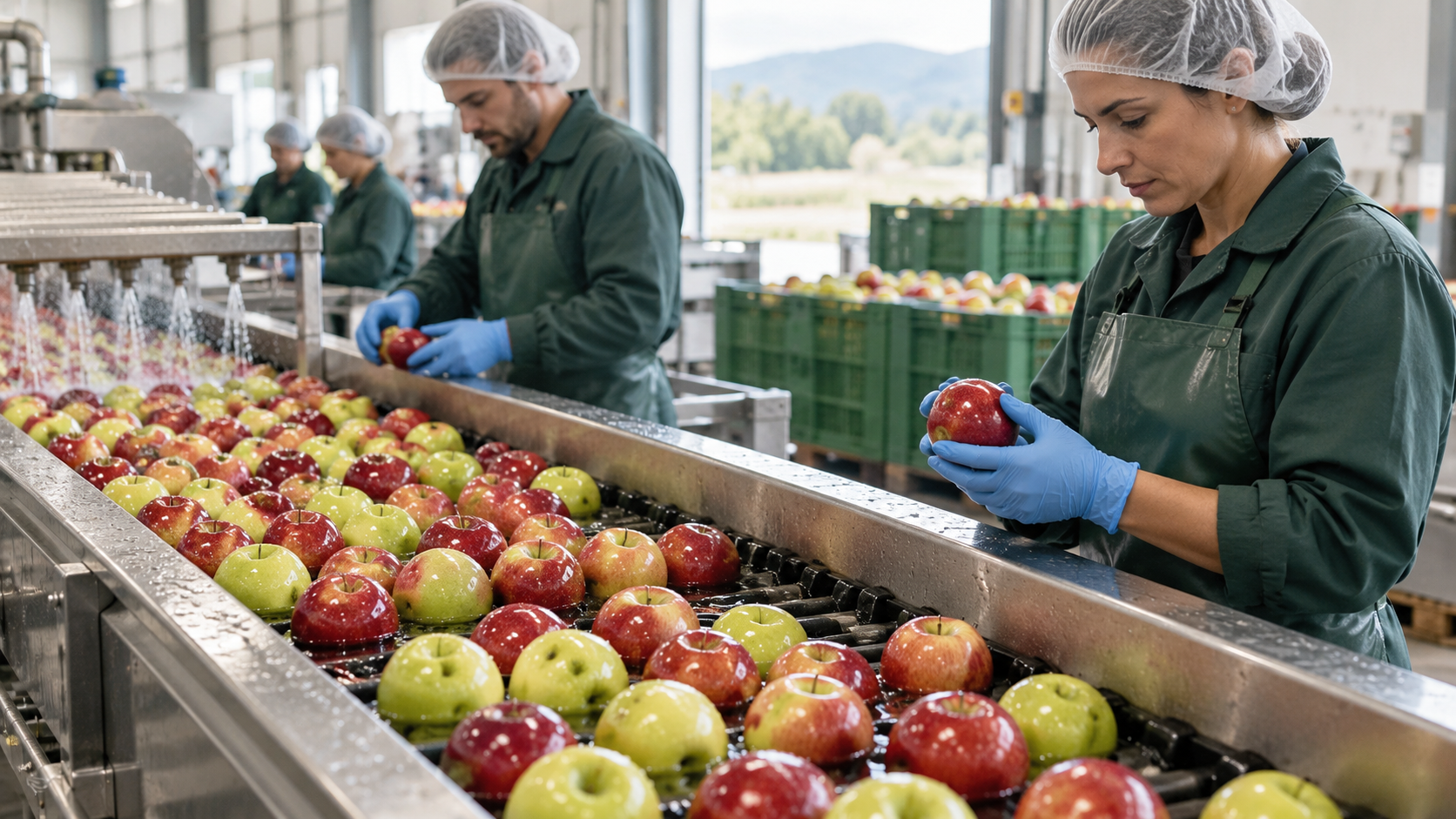
The most useful controls reduce the number of spores that enter the process, since removing them later is harder. These include rejecting ground-contact fruit where possible, thorough washing and sorting, approving suppliers and testing juice, concentrate or puree for target organisms.
- Supplier requirements: specify handling of fallen fruit and storage conditions.
- Intake testing: set limits for the organisms of concern, using methods suited to the organism.
- Segregation: keep suspect lots from entering production until released.
- Cleaning of equipment: pay particular attention to dead legs, filters and tanks where residues collect.
- Storage conditions: avoid warm holding of raw material and finished goods where possible.
The testing side is covered in microbiological testing for beverages: what gets tested and why.
When is a stronger route justified?
A stronger route is justified when the product is high-risk, the shelf life is long, the market is warm or complaints have occurred. Stronger routes include higher heat treatment, combined treatments, or other processes designed to inactivate spores in the final product.
Options include a more severe thermal step, which can affect flavour and colour, as well as changes in formulation such as pH adjustment where permitted. Another option is a shorter shelf life or chilled distribution to limit growth. None is free: each trades quality, cost or market reach. The decision should be based on risk assessment and trial data, not on a general rule, and should be reflected in the product brief and validation file. For products with higher pH, see the stability notes in low-acid and non-acidic beverages: OEM formulation and packaging options.
How can a processor test for these organisms?
Testing uses selective media and incubation conditions suited to the organism, for example specialised acidified media and elevated incubation temperatures for Alicyclobacillus, and heat-shock steps followed by incubation for heat-resistant moulds. Standard plate counts often miss them.
Because methods differ by organism, a laboratory must be told which organism is being sought. Results take time, with some methods needing several days, so testing is planned into the release schedule. Sampling is as important as the method: the sample should come from raw material, intermediate holding tanks and finished packs, so that the source of contamination can be located.
What happens if spoilage is found?
If spoilage is found, the first steps are to hold remaining stock, identify the affected lots and trace the source. Investigation moves back through finished product, process records and raw materials.
- Quarantine the lot and related lots made from the same raw material.
- Confirm the organism with a laboratory method.
- Review process records for deviations in temperature, time or cleaning.
- Test raw materials, tanks, filters and pipework.
- Decide whether to rework, downgrade, recall or destroy product, following the applicable rules.
- Update the control plan to prevent a repeat.
Documentation of this sequence is part of the quality system that buyers should expect from a supplier.
How should the risk be reflected in the product brief?
The brief should state the fruit, pH, target shelf life, storage temperature range and destination climate, because all of these change the risk. A juice sold through warm regions needs a stronger stability case than a chilled product.
It should also describe the raw material source and the controls the supplier applies. For planning, beverage sample costs and timelines outlines how trials are scheduled.
How do plant hygiene and equipment design affect the risk?
Plant hygiene affects the risk because spores can collect in tanks, filters, dead legs and valves, then seed later production. Equipment that cannot be cleaned thoroughly turns a one-off contamination into a recurring one.
Good practice includes designing pipework without dead legs, cleaning in place with validated cycles, and inspecting filters, gaskets and tank surfaces. Swab tests and rinse-water tests can check whether cleaning removes residues. Concentrate and puree storage deserves attention because those materials are held for long periods and can carry spores into many batches. Schedules for cleaning should be written, followed and recorded.
Seasonal patterns also matter. Fruit handled after rain or from soil-contact orchards can carry more spores, so some processors increase testing in those periods. A supplier that can describe such seasonal adjustments shows an understanding of where the risk comes from.
Keep the cost of testing in proportion to the risk: a high-risk juice for a warm market justifies more frequent checks than a chilled product with a short shelf life. Finally, agree on release rules in advance. If a lot is held for incubation before shipping, the buyer and supplier should know how long the hold lasts, what result releases it and who decides in a borderline case. Clear rules reduce disputes and keep the focus on the product rather than on blame.

Frequently asked questions
Is Alicyclobacillus dangerous to health?
It is mainly a spoilage concern, because it can create off-flavours rather than being a recognised cause of illness in juice. It still matters commercially, since affected product can be rejected by buyers.
Can spoilage be detected by looking at the bottle?
Not reliably. Some spoilage causes no gas, haze or colour change, so the first sign can be taste. Incubation tests and laboratory methods are used to check stability before release.
Does a higher pasteurisation temperature solve the problem?
It can reduce risk, but it may also affect flavour and colour, and it does not replace raw-material control. A balanced approach combines several controls.
Conclusion
Spoilage from heat-resistant organisms is a supply-chain problem as much as a heat problem. Control the fruit and ingredients, validate the process against the right organism, check finished packs, and add a stronger route only where the risk justifies the quality cost.
Next step: send us your spec and target market, and we confirm the route that fits your juice and its shelf life.