


 Français
 Español
 العربية
 한국어
한국어Shelf-stable fruit juice is juice that is processed and packaged to stay safe and high quality at ambient temperature until opened. In export programs, it is engineered to resist temperature swings, long transit times and retail display without refrigeration. This guide explains how shelf stable fruit juice is developed and manufactured for export markets—from process selection and oxygen control to packaging, QC and project planning.
Because juice types, target countries and label positions differ, there is no single formula. Success depends on choosing the right thermal process, hygienic design, packaging barrier and validation plan for your product brief and destination regulations.
What makes a fruit juice “shelf-stable” for export?
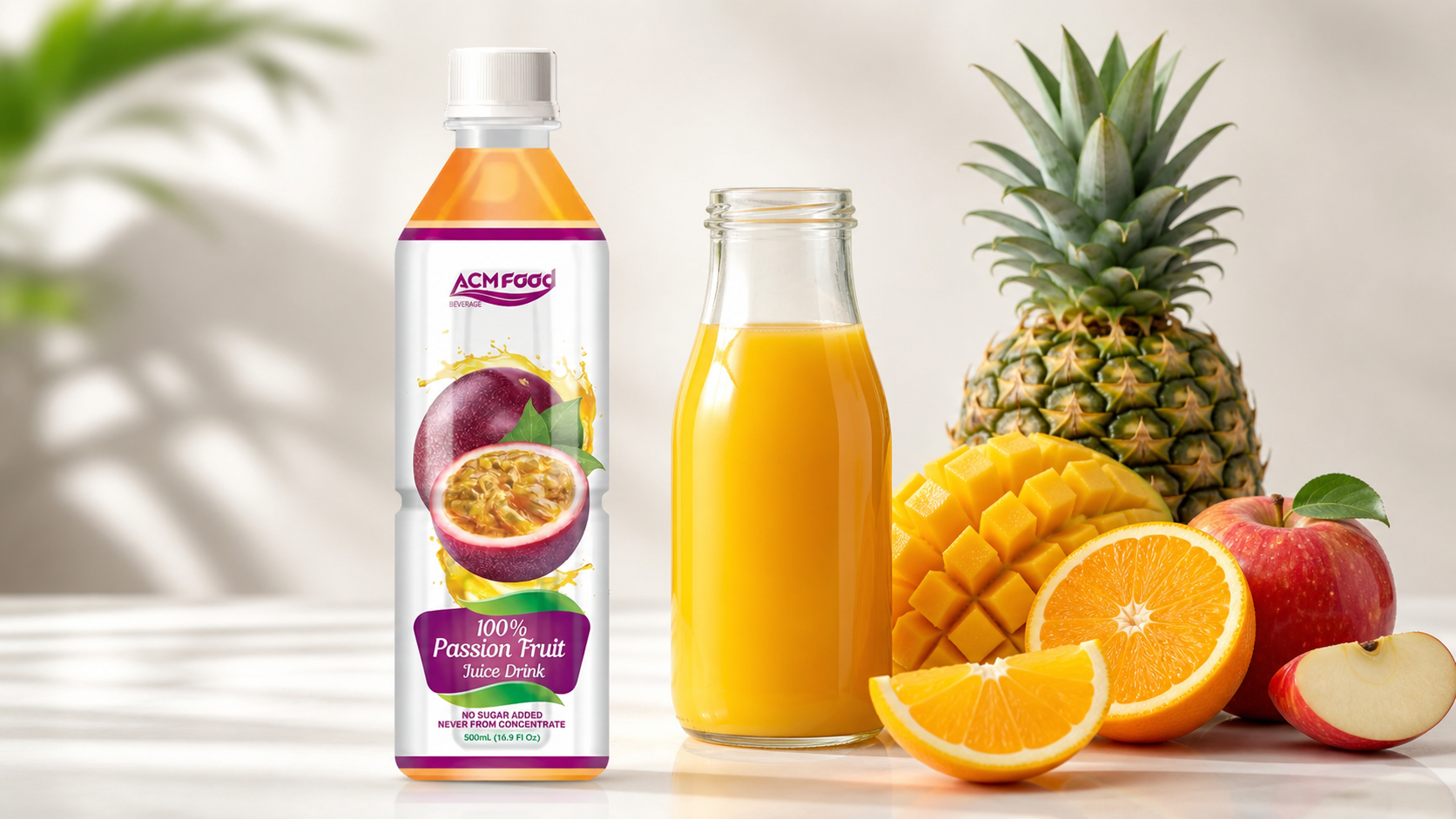
In practice, a shelf-stable juice achieves microbial stability and preserves acceptable flavor, color and aroma at room temperature through a validated heat treatment, controlled acidity, oxygen management, and a sealed, barrier package produced under hygienic conditions. Together, these hurdles create commercial sterility or equivalent stability for the intended shelf life.
Most fruit juices are naturally acidic, which helps inhibit many spoilage organisms. Even so, modern shelf stability relies on a combination of hurdles and process controls rather than acidity alone. Blended juices, vegetable mixes or low-acid fruits typically need higher thermal lethality and stricter aseptic handling.
- Validated heat step: Pasteurization, UHT or retort delivers the required microbial kill for the product category and pH.
- Oxygen management: Deaeration and headspace control slow down color fading, flavor oxidation and vitamin losses.
- Barrier packaging: Glass, multilayer PET, cans or aseptic cartons protect against oxygen and light ingress.
- Hygienic design: Clean-in-place (CIP), steam-in-place (SIP), and sterile zones reduce post-process contamination risk.
- Optional preservatives: Only where allowed and aligned with brand position; many export SKUs avoid them via aseptic or hot-fill processes.
Which processing methods deliver long shelf life juice?
Export-ready, long shelf life juice is commonly produced via hot-fill pasteurization, UHT with aseptic filling, or retort/tunnel pasteurization depending on acidity, packaging and brand goals. Each route has different impacts on flavor, color, energy use and packaging flexibility.
Hot-fill pasteurization
Hot-fill heats the juice to the validated temperature/time profile and fills it hot into containers that can tolerate heat (e.g., heat-set PET, glass). The hot juice sterilizes the container interior and closure contact surfaces before capping. It is widely used for high-acid juices and nectar-style drinks and can deliver robust ambient shelf life with careful control of oxygen and closures.
Advantages: Proven for high-acid juices, broad retail acceptance, attractive PET or glass options, no refrigerated chain before opening. Considerations: Requires heat-tolerant containers and closures, and careful control of oxygen pick-up to protect flavor and color.
Aseptic processing and UHT
In aseptic systems, juice is rapidly heated (often to higher temperatures for a shorter time), then cooled and filled into sterile containers within a controlled sterile zone. This approach is common for both clear and cloudy juices, blends and functional variants, and enables lightweight packaging such as aseptic carton packs or specialty PET preforms approved for aseptic filling.
Advantages: Excellent microbial safety margins when validated, flexible packaging, minimal heat contact time that can better protect sensitive aromas compared with some conventional profiles. Considerations: Requires rigorous sterility validation, trained operators, and continuous monitoring of critical control points.
Tunnel pasteurization and retort
Filled containers (glass bottles, cans) are conveyed through a controlled heat tunnel or processed in retort to achieve the thermal target after sealing. This is useful for certain juice drinks, mixed beverages and export formats that favor cans or heavier glass.
Advantages: Strong post-pack safety barrier, can-based export robustness. Considerations: Heat exposure happens on the finished package; recipe and container selection must protect sensory quality and closure integrity.
What about HPP?
High pressure processing (HPP) is popular for fresh-positioned, refrigerated juices. However, it typically does not create ambient shelf stability for export and requires a cold chain. It can be valuable for domestic cold-distributed SKUs, but for unrefrigerated international shipping, thermal/aseptic routes dominate.
What packaging supports shelf-stable fruit juice for export?
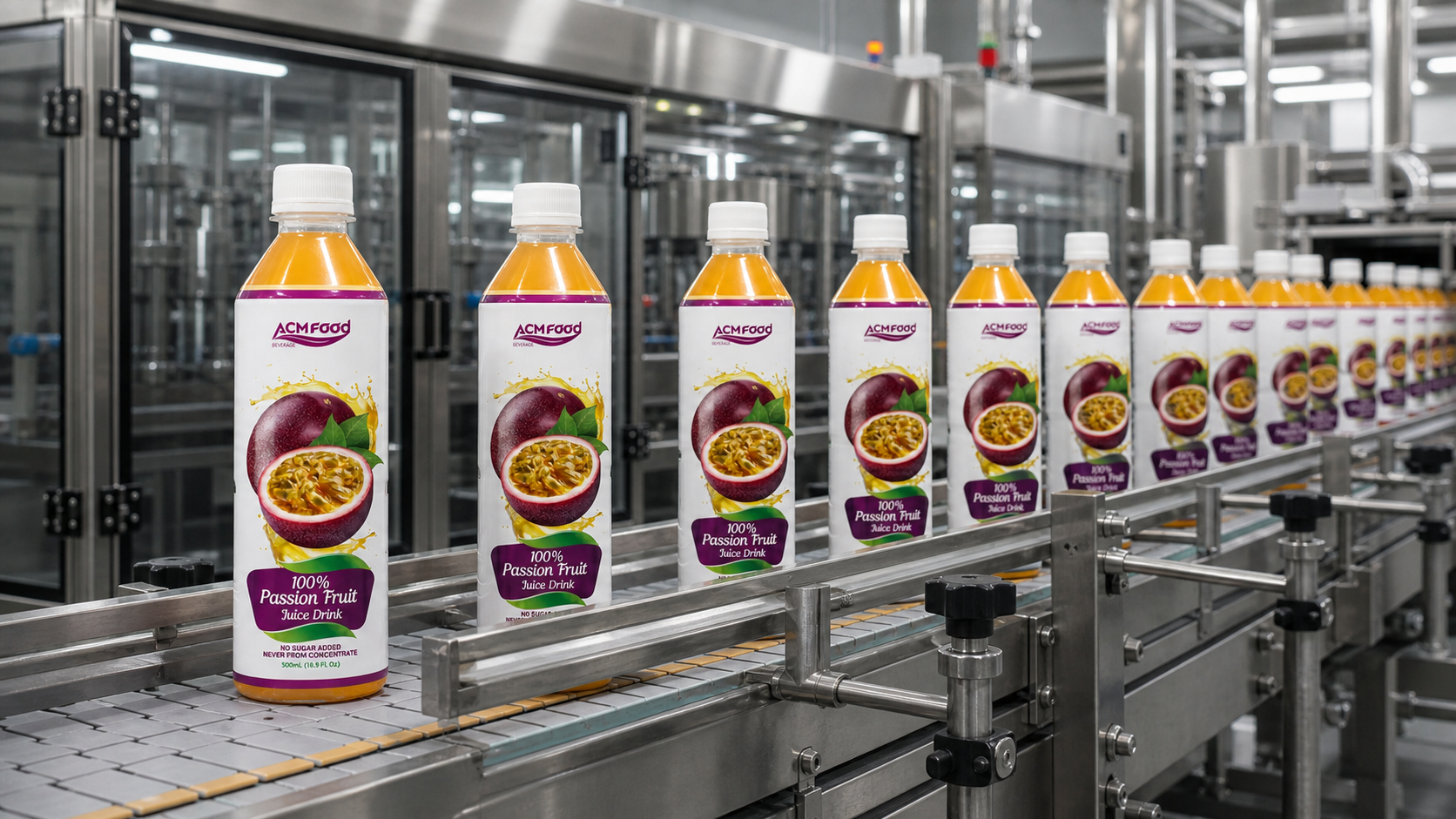
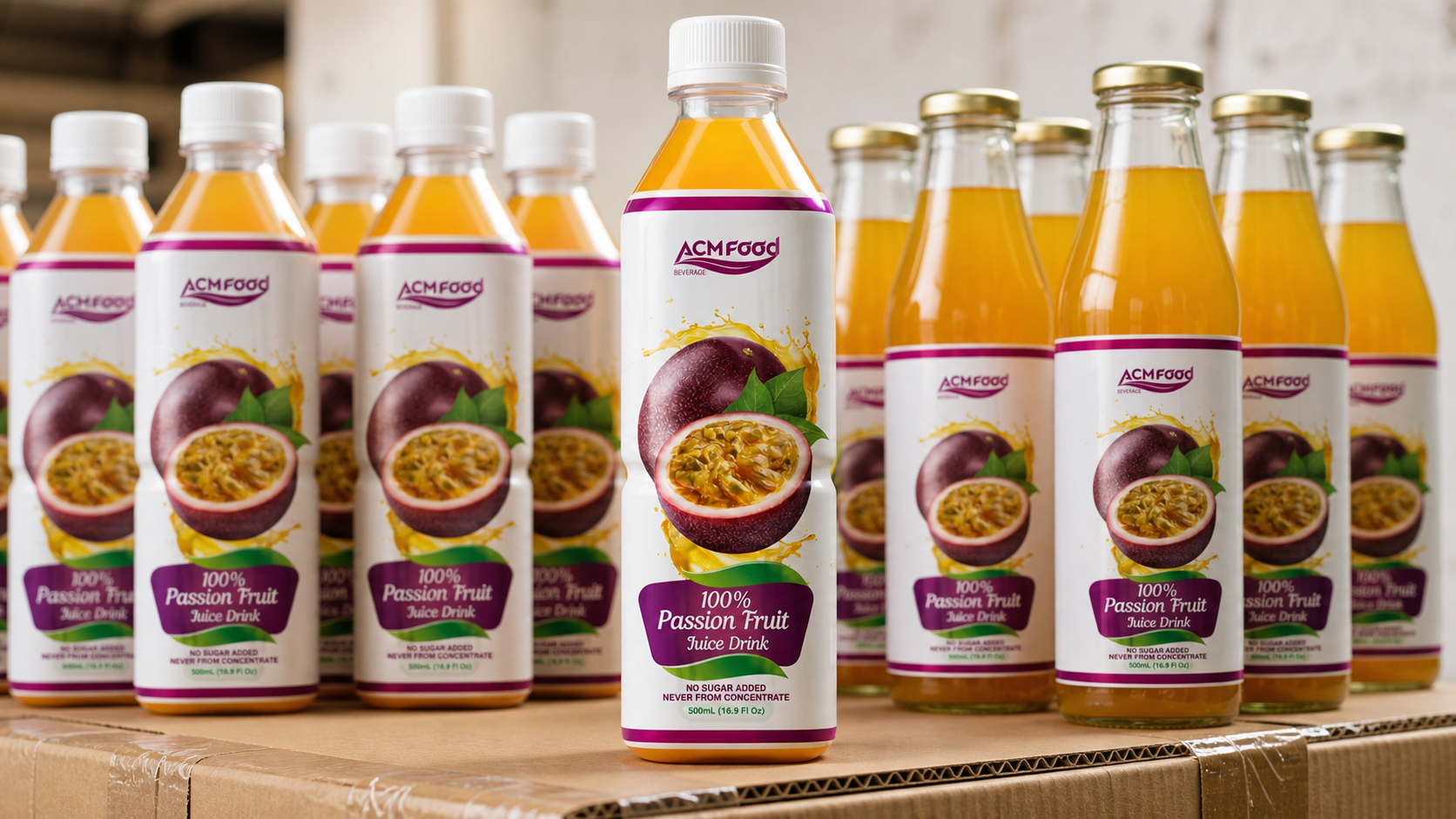
Shelf-stable juice relies on a closure and container that maintain a tight seal, limit oxygen ingress and (where relevant) protect from light. Common export formats include heat-set PET for hot-fill, glass bottles, aluminum cans, aseptic cartons and some pouches designed for ambient storage. Choice depends on process, route-to-market and brand positioning.
- PET for hot-fill: Heat-set designs resist paneling and maintain geometry after hot filling. Pair with closures rated for the process.
- Glass: Premium feel and strong barrier. Heavier, but excellent for color showcase and tunnel/retort compatibility.
- Cans: High protection from light and oxygen; great for long transit and high stacking. Often paired with tunnel or retort.
- Aseptic cartons: Lightweight, stackable and strong barrier when matched with UHT/aseptic processing.
- Specialty PET for aseptic: Enables clear, lightweight bottles with aseptic filling where permitted.
Oxygen control is crucial. Manufacturers combine in-line deaeration, optimized product flow, low-oxygen headspace and, if needed, inert gas dosing. These steps help protect sensitive aroma compounds and natural colors during the intended shelf life.
Process options at a glance
The table below summarizes common routes for shelf stable juice manufacturing and key trade-offs for export programs.
| Process | Typical packaging | Strengths | Considerations |
|---|---|---|---|
| Hot-fill pasteurization | Heat-set PET, glass | Proven for high-acid juices; strong ambient stability | Heat-tolerant containers; manage oxygen and closure performance |
| Aseptic (UHT + sterile fill) | Aseptic carton, aseptic PET | Short heat time, flexible formats | Requires validated sterility and strict hygienic zoning |
| Tunnel pasteurization | Glass, cans | Post-pack safety barrier | Recipe must protect sensory quality during tunnel heat |
| Retort processing | Cans, some glass | Rugged export-friendly packages | Higher thermal load on final package |
How do formulation choices affect shelf stability and labeling?
Formulation has a direct impact on shelf life, processing severity, sensory outcomes and the label position you can claim. The core decision is product type—100% juice vs nectar vs juice drink—because each category has different juice content, solids management and regulatory labeling in export markets.
Acidity and sweetness: Acidity supports microbial control and flavor brightness, while sweetness balances taste and mouthfeel. Many export brands seek options with no added sugar vs reduced sugar claims; feasibility depends on the base juice, sweeteners permitted in the target market and sensory targets.
Clarity and cloud: Clear juices (e.g., clarified apple) often run well in UHT and aseptic systems. Cloudy juices and pulpy nectars need special attention to viscosity, fiber particle size and homogenization to avoid separation and ensure consistent filling.
Antioxidants and color: Ascorbic acid and other permitted antioxidants can help manage oxidation, while natural colors and flavor extracts must be chosen for heat stability and light resistance. For brands prioritizing simpler ingredient lines, see clean label fruit juice guidance to balance simplicity with stability.
Fortification and function: Heat-sensitive vitamins, botanicals or minerals may degrade during thermal processing and storage. If you are exploring functional concepts, align target claims with the final, tested nutrient levels and market rules. For ideation pathways, browse functional fruit juice development.
What role does oxygen control play in long shelf life juice?
Even tiny amounts of oxygen can accelerate aroma loss, browning and color fading. Shelf-stable juice manufacturing typically combines mechanical deaeration (to reduce dissolved oxygen before heat treatment), gentle product handling to minimize entrained air, and headspace management—sometimes with nitrogen dosing—to protect product quality during months of ambient storage and shipment.
- Before heat: Deaerate to reduce dissolved oxygen and limit thermal oxidation reactions.
- During fill: Use controlled laminar flow and minimize splashing and turbulence.
- In headspace: Optimize fill levels and consider inert gas where permitted to limit oxygen exposure.
What quality control and validation are essential?
Export juice programs depend on rigorous food safety plans, validated thermal processes and ongoing verification. The goal is consistent commercial sterility (or equivalent stability for the product category) and intact packaging across the distribution chain.
- HACCP plan: Identify hazards and define critical control points (CCPs) for thermal treatment, sterile air/steam, and filling hygiene.
- Process validation: Confirm thermal lethality for the specific recipe, including worst-case conditions, container size and line speed.
- Environmental monitoring: Routine checks in sterile zones and filler enclosures where applicable.
- Micro testing: Finished product sampling plan for pathogens/spoilage organisms aligned with product category and destination requirements.
- Container integrity: Vacuum/pressure checks, torque and seal performance, leak detection, and drop/transport simulation if relevant.
- Sensory and stability: Ambient and accelerated studies to monitor flavor, color, aroma, cloud stability and sediment over time.
- Label verification: Ensure ingredients, allergens and nutrition are compliant with destination-market rules; re-verify after any formula or process change.
How to plan export juice manufacturing and logistics
Well-structured projects move from brief to validation in clear stages. Begin with a complete product brief covering target markets, legal category, processing preference, packaging, sensory benchmarks and shelf-life ambition. Use pilot samples and transit simulations to de-risk launches before full-scale production.
- Brief and samples: Share flavor targets, sweetness-acidity balance, pulp level, packaging preferences and route-to-market. See how fruit juice samples and formula approval typically run.
- Regulatory mapping: Confirm category, additives, sweeteners and fortification allowances for each destination country.
- Artwork and claims: Align front-of-pack messaging with tested composition and local rules; validate any nutrient-based claims with final product data.
- Transit readiness: Consider ship schedules, seasonal heat exposures, container ventilation and palletization patterns to protect closures and labels.
- Post-launch monitoring: Track quality metrics by batch and market to refine process parameters and replenishment cycles.
Buyer checklist for shelf stable juice manufacturing
When you prepare an RFQ or evaluate partners for shelf stable juice manufacturing, use this checklist to clarify requirements and speed up technical alignment:
- Product category: 100% juice, nectar or juice drink; expected Brix range or sweetness position.
- Base juices and flavors: Single fruit vs blends; clear vs cloudy; target sensory benchmarks.
- Processing route: Preference for hot-fill, aseptic, tunnel or retort—plus reasoning (label goals, packaging format, cost).
- Packaging: Bottle/carton/can size, closure type, color, light barrier needs, tamper evidence.
- Oxygen strategy: Deaeration targets, nitrogen dosing, acceptable headspace ranges (qualitative if early-stage).
- Ingredients policy: Clean label expectations, permitted acids, antioxidants, sweeteners, flavors and colors for target markets.
- Claims and compliance: Intended label statements to be verified by final lab results and local regulations.
- Shelf-life ambition: Ambient storage duration target (qualitative), display conditions, and transit profile assumptions.
- Testing plan: Micro, package integrity, stability and sensory checkpoints pre- and post-shipment.
- Documentation: Certificates and registrations required by the destination market.
For a structured template of what to send, use the Fruit juice RFQ guide to collect technical and commercial details before engaging manufacturers.
How do brand position and cost-to-serve shape decisions?
Export juice must balance taste, stability, pack appeal and delivered cost. Hot-fill PET often delivers a strong value equation for high-acid juices where lightweight bottles and broad retail acceptance matter. Aseptic cartons and aseptic PET enable premium flavor protection and sustainability narratives tied to logistics efficiency. Cans and glass can drive distinct category cues, durability and display impact.
Cost-to-serve is broader than the unit ex-works price. It includes scrap rates from oxygen or cap issues, freight density, pallet efficiency, and rework risks if labels or claims need correction in-market. Build these factors into early scenario planning to avoid avoidable downstream costs.
Common pitfalls and how to avoid them
- Underestimating oxygen: Even small oxygen ingress can mute flavors and fade colors. Plan deaeration and package barrier early, not as a late add-on.
- Copying a domestic recipe: Export shipping, heat exposure and shelf time are tougher; re-validate heat treatment, headspace and closure torque for export conditions.
- Unclear category rules: Category names and additive permissions vary by market. Confirm the regulatory status before artwork lock.
- Over-claiming: Claims depend on final, tested composition and serving size. Design first, then confirm with lab results and destination law.
- Skipping pilot transit tests: Simulate stacking, vibration and temperature profiles before the first large export batch.
Frequently asked questions about shelf stable fruit juice
FAQ
Can shelf-stable juice be made without preservatives?
Yes. Many shelf-stable juices are produced without added preservatives by using validated thermal processing (hot-fill, aseptic or retort), hygienic manufacturing and barrier packaging. Whether this fits your brand and target markets depends on juice acidity, packaging and the desired shelf life.
What is the difference between aseptic and hot-fill?
Hot-fill sterilizes both the product and the container using hot juice at fill. Aseptic sterilizes the product and the packaging separately and brings them together in a sterile zone. Aseptic can offer shorter heat exposure and broader packaging options; hot-fill is widely used for high-acid juices with heat-tolerant bottles.
Do heat steps destroy all vitamins?
Heat can reduce some heat-sensitive nutrients. Actual retention depends on the nutrient, the time/temperature profile, oxygen levels and storage conditions. Brands may adjust formulations to meet label targets and should verify final values with testing in line with destination-market rules.
Is HPP shelf-stable at ambient temperature?
Typically no. HPP juices are usually distributed under refrigeration. For ambient export programs, hot-fill, aseptic or retort routes are preferred.
Conclusion
Delivering shelf stable fruit juice for export is about the right combination of process, oxygen control and barrier packaging, validated against your formula and route-to-market. Choose a processing route (hot-fill, aseptic, tunnel or retort) that fits your juice type and label goals; align formulation with category rules; and confirm stability with structured testing. Build your brief, pilot and validation plan early to de-risk launch and protect flavor over long, ambient journeys.
To move from ideas to a production-ready brief, review clean label fruit juice, compare 100% juice vs nectar vs juice drink options, weigh no added sugar vs reduced sugar positions, and plan fruit juice samples and formula approval before sending a complete Fruit juice RFQ guide package to your chosen manufacturer.
Turning this into a product
For the formats, ingredients and processing routes the factory actually runs, see beverage product capabilities. For how a specification becomes a shipped container, see the OEM route; for launching under your own label, see private label beverages. Shipping terms and the document pack are covered in export and logistics. To discuss a specification, request a quote.
Request a quote