


 Français
 Español
 العربية
 한국어
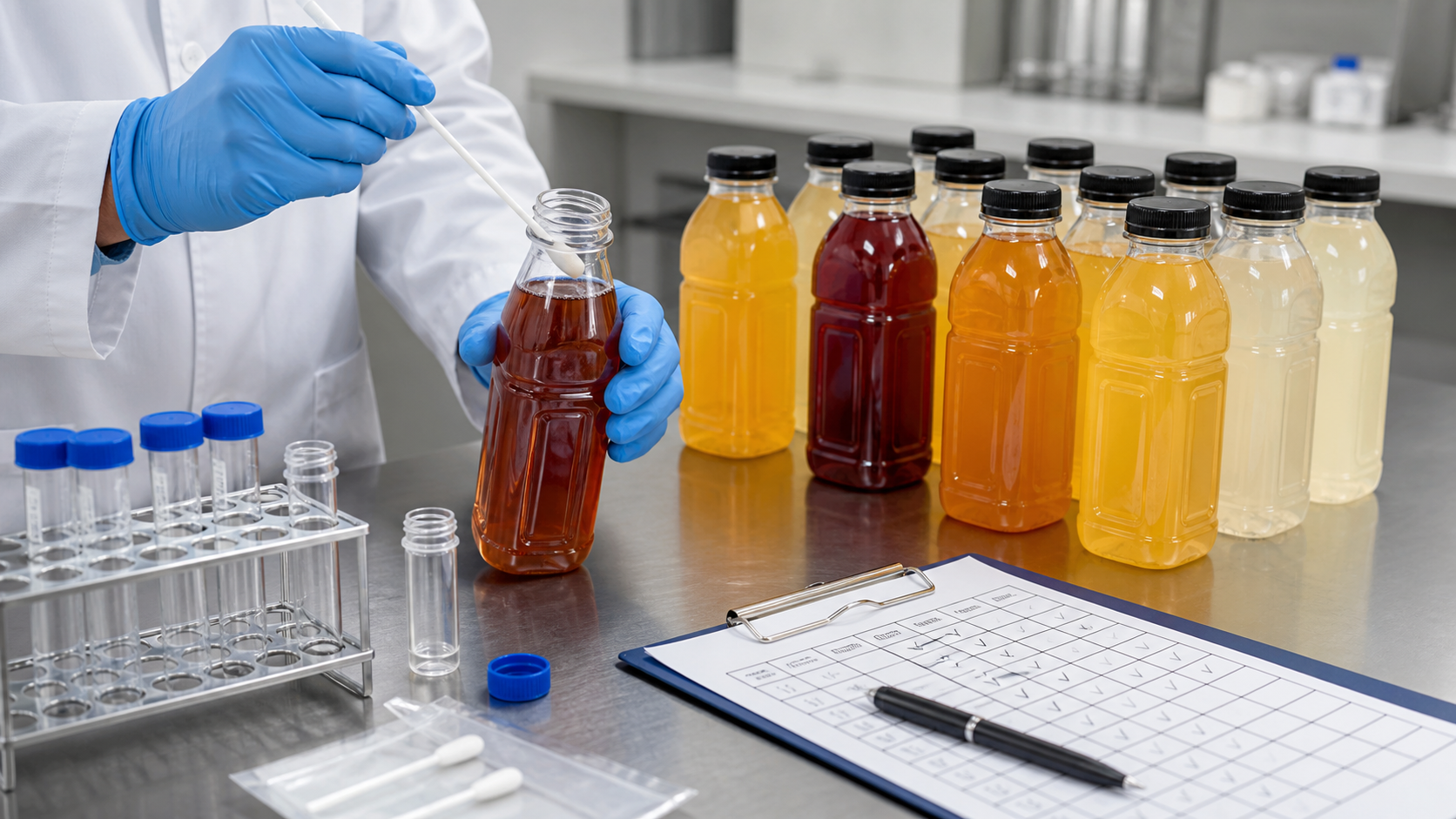
한국어Microbiological testing for beverages is the set of laboratory checks that identify and quantify microbes that could affect safety, shelf life, flavor, or regulatory compliance. In practice, a microbiological testing beverage program covers indicator counts, specific spoilage organisms, pathogens where relevant, and verification of commercial sterility for shelf‑stable products.
This guide explains what gets tested and why, outlines common methods with typical incubation times, and clarifies which samples are best handled by third‑party accredited labs. It is written for beverage brand owners, importers, and product developers who need practical, defensible micro test plans from pilot to full‑scale production.
What is microbiological testing in beverages?
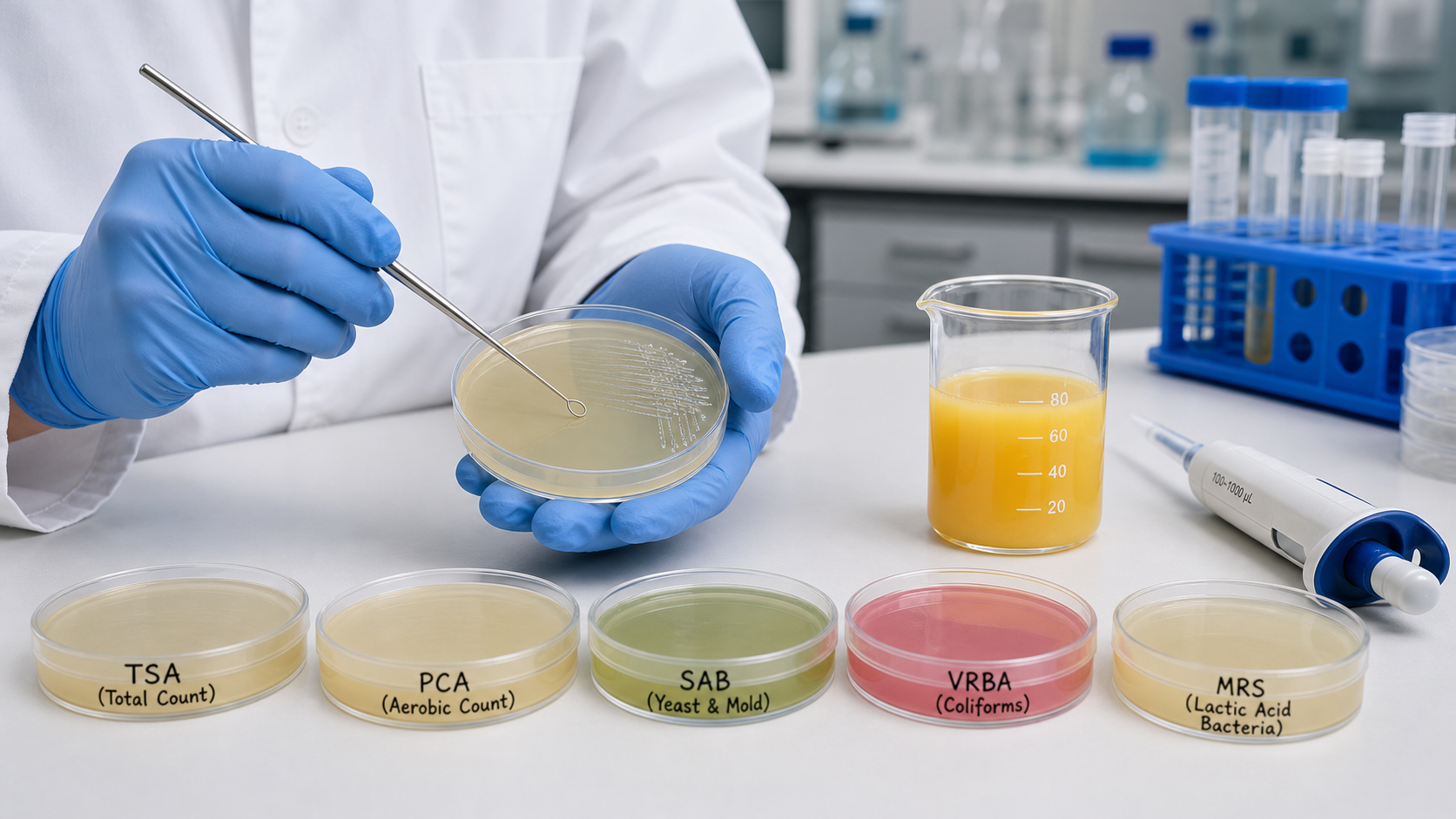
It is a structured set of laboratory analyses used to detect or enumerate microorganisms in ingredients, process water, work‑in‑process, and finished drinks. Results inform product release decisions, validate processes like pasteurization or hot‑fill, and support compliance with buyer, retailer, and market‑entry requirements.
In beverage operations, common objectives include: confirming low indicator counts after heat treatment, verifying absence of specified pathogens, screening for spoilage yeasts & moulds, and demonstrating commercial sterility for ambient shelf‑stable lines. The exact test list depends on formulation, pH/aw, packaging, thermal or nonthermal processing, intended shelf life, and target markets.
Which beverage samples get tested and when?
Sampling points span the supply chain. A robust plan typically includes:
- Incoming ingredients: juices/concentrates, pulps, purees, sugar syrups, botanicals, dairy analog bases, flavors, and additives.
- Process water: boiler feed, ingredient water, and CIP rinse water for microbiological suitability (e.g., heterotrophic plate count) and absence of coliform indicators. See how process water treatment in plants underpins consistent results.
- Work‑in‑process (WIP): blended syrup, pre‑fill product, post‑pasteurization hold samples.
- Finished product: retain samples per lot/batch for release and shelf‑life verification.
- Environmental monitoring: swabs of fillers, caps, contact surfaces, drains (risk‑based frequency).
- Packaging: closures, bottles, cans (as needed, often by supplier COA + periodic verification).
Timing aligns with HACCP/food safety plans: receiving (ingredients), at critical control points, and at finished‑goods release. Many brands operate a hold‑and‑release system where product ships only after key micro results meet specification.
Key beverage microbiology tests and why they matter
The following overview maps common tests to their purpose. Exact method codes and incubation conditions should follow your lab’s validated SOPs (e.g., ISO/AOAC/BAM equivalents) and buyer requirements.
| Test | What it detects | Method example | Typical incubation time | When to use | Reported as |
|---|---|---|---|---|---|
| TPC / APC (Total Plate Count) | General aerobic mesophilic bacteria (indicator of overall hygiene/process efficacy) | Pour/spread plate on nonselective agar | ~48–72 hours | Routine for ingredients, WIP, and finished goods; trend over time | CFU/mL or CFU/g (count) |
| Yeast and mould | Yeasts and filamentous fungi that drive spoilage (gas, off‑notes, turbidity) | Selective agar for fungi | ~3–5 days | Juice, nectar, kombucha, low‑alcohol, plant milks; high‑sugar matrices | CFU/mL (count), colony morphology notes |
| Coliforms / E. coli | Hygiene indicators associated with poor water or cross‑contamination | Selective/differential media or presence/absence | ~24–48 hours | Process water, low‑acid beverages, post‑process verification | CFU/mL or presence/absence |
| Lactic acid bacteria (LAB) | Spoilage organisms that sour or haze drinks (especially low‑alcohol, juices) | Selective agar with microaerophilic/anaerobic conditions | ~48–72 hours | Juices, smoothies, plant milks, functional drinks | CFU/mL, sometimes species confirmation |
| Alicyclobacillus spp. | Acidothermophilic sporeformers that spoil shelf‑stable juices | Enrichment + selective agar; optional PCR confirmation | ~3–7 days | Hot‑filled/aseptic juice, concentrates, pulpy products | Presence/absence or CFU/mL |
| Pathogens of concern | Regulated pathogens per product risk profile | Enrichment + selective confirmation; PCR where validated | Typically 1–3 days | Low‑acid, protein‑rich, or risk‑flagged products; market‑entry checks | Presence/absence (per unit) |
| Commercial sterility (sterility test) | Post‑process viability of organisms capable of growing in product | Incubation of sealed units at defined temperatures | ~7–14+ days depending on protocol | Ambient shelf‑stable hot‑fill/aseptic products | Pass/Fail with container exam |
| Heterotrophic plate count (HPC) | General heterotrophic bacteria in water | Membrane filtration or pour plate | ~48 hours | Process water suitability and trending | CFU/mL |
Note: acceptance criteria are product‑ and market‑specific. Many buyer specs expect absence of designated pathogens per test portion and low indicator counts appropriate to process capability and shelf life.
How are TPC, yeast & mould, and coliform tests performed?
All three are culture‑based “indicator” methods where samples are diluted and applied to agar plates or selective media, then incubated for a defined time and temperature so colonies can grow and be counted or characterized.
- TPC (Total Plate Count): Nonselective agar supports a broad set of aerobic bacteria. Typical incubation is on the order of two to three days before counting. Brands use TPC trending to verify that heat treatment and hygiene are controlling overall load.
- Yeast and mould: Selective agar and slightly cooler incubation help recover fungi. Results typically require several days. These organisms drive visible spoilage, gas production, off‑aromas, and package swelling in sweet or acidic beverages.
- Coliforms/E. coli: Differential media or presence/absence detects indicator organisms that point to water or post‑process contamination issues. Results are often available within one to two days.
Method selection, incubation conditions, and reporting should follow your lab’s validated SOPs. When you specify the test in a purchase order or COA template, name the method reference and the acceptance criteria to avoid ambiguity.
Do you need a sterility test or a commercial sterility check?
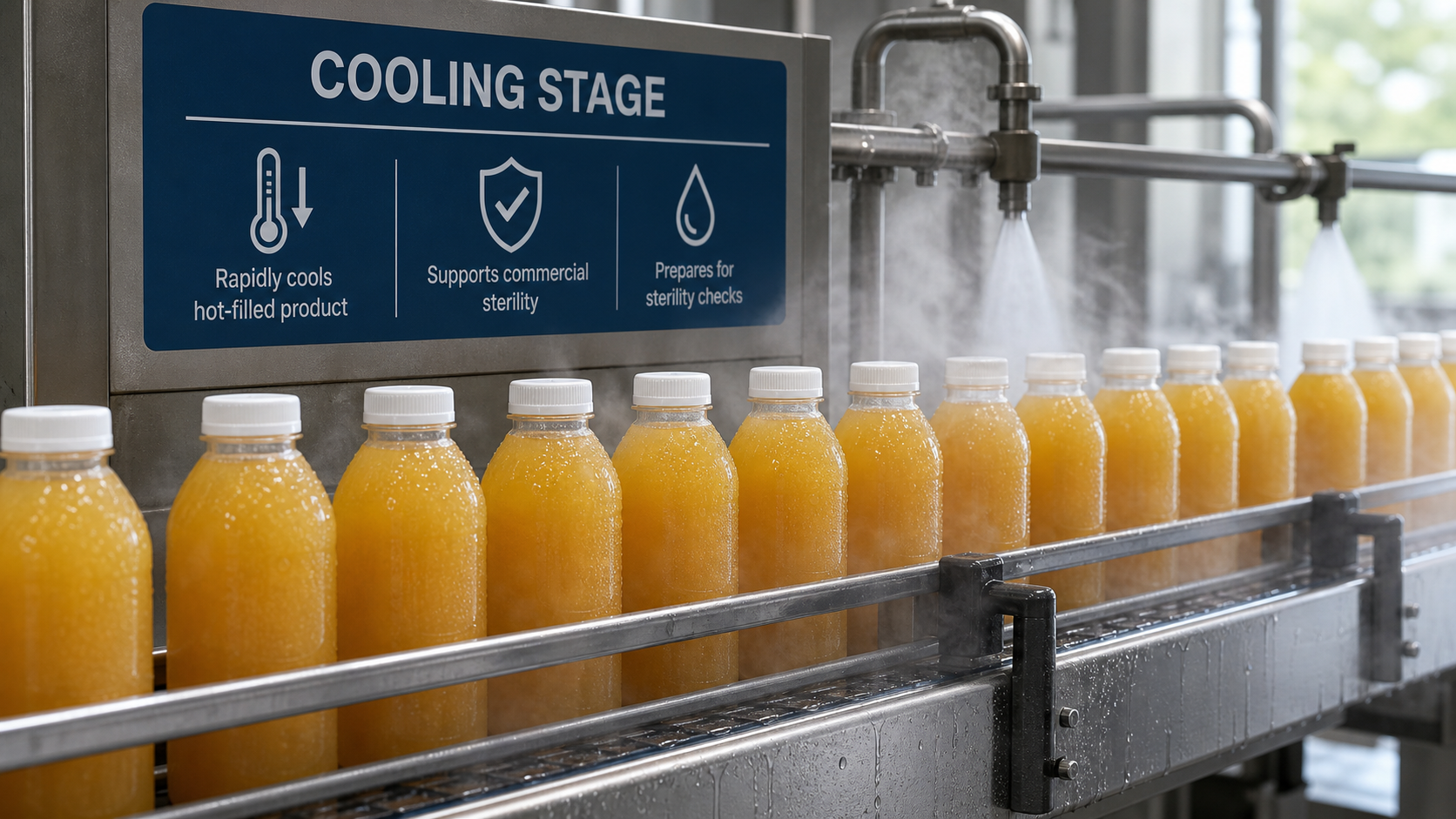
Yes—if your product is ambient shelf‑stable and relies on hot‑fill, retort, or aseptic processing, a commercial sterility test is a core release check. For chilled/HPP beverages that remain refrigerated and are not sterile by design, commercial sterility testing is generally not applicable; instead, focus on indicator counts and shelf‑life studies under refrigeration.
Commercial sterility protocols incubate sealed units at defined temperatures for a defined period, then examine for turbidity, gas, pH shift, or colony growth upon plating. Keep a documented sampling plan (e.g., per lot, per line start‑up/shift) aligned with your hazard analysis and buyer expectations.
Pathogens and special organisms that warrant third‑party labs
Independent, accredited laboratories are often preferred—or required—when results need to withstand importer, retailer, or regulatory scrutiny. Consider third‑party testing for:
- Regulated pathogens of concern (per your product risk profile). External labs provide chain‑of‑custody, validated methods, and impartiality.
- Alicyclobacillus screening/confirmation in juices and pulpy products, particularly for export or retailer acceptance.
- Commercial sterility validation for new lines (challenge conditions, incubation regimes, container integrity assessments).
- Shelf‑life verification combining micro, sensory, and chemistry across storage temperatures.
- Environmental mapping during commissioning, remediation, or root‑cause investigations.
Buyers request third‑party COAs because results are reproducible, traceable, and typically recognized by auditors. Third‑party reports can streamline approvals alongside your in‑house trending data and food safety documentation. For a broader view of retailer and importer expectations, see Quality & Food Safety.
Typical incubation times at a glance (method‑dependent)
Actual conditions must follow the chosen method. As general orientation:
- TPC/APC: colonies typically enumerated after about 48–72 hours at mesophilic conditions.
- Yeast & mould: often assessed after roughly 3–5 days at cooler conditions suited to fungi.
- Coliforms/E. coli: presence/absence or counts often determined within about 24–48 hours.
- Lactic acid bacteria (LAB): typically 48–72 hours under selective microaerophilic/anaerobic conditions.
- Alicyclobacillus: enrichment and recovery often require multiple days (commonly in the 3–7 day range), sometimes with molecular confirmation.
- Commercial sterility (sealed units): incubation windows commonly span one to two weeks depending on protocol.
Plan your production and logistics around these windows. Many teams run rapid indicators in‑house for fast decisions and send confirmatory or high‑stakes tests to third parties in parallel.
Sample collection, transport & acceptance criteria
Good sampling preserves the integrity of results:
- Define the plan: lot size, sampling frequency, number of units, and tests. Align with risk assessment and buyer specs.
- Use sterile technique: sanitized valves, sterile bottles/swabs, and aseptic transfer to prevent false positives.
- Label completely: product ID, lot, date/time, line, sampler, and requested method/limits.
- Control temperature: chilled transport/coolers if required by method; avoid freeze–thaw.
- Maintain chain of custody: document custody on internal or lab forms; keep retention samples.
- Hold‑and‑release: quarantine finished goods until key micro results meet specification.
Acceptance criteria should state the method reference and reporting unit. Typical language includes “absence in test portion” for specified pathogens/commercial sterility and product‑appropriate ranges for indicator counts. Where buyers specify “n.d.” (not detected), ensure the test portion size is explicit.
How buyers use micro results in approvals
Micro results are more than a checkbox; they anchor technical due diligence:
- COA for each lot: aligns with agreed specs and market entry paperwork.
- Specification compliance: methods and limits tied to process capability and shelf life.
- Shelf‑life justification: micro + sensory + chemistry across storage conditions.
- Importer/retailer onboarding: independent lab reports often accelerate approvals.
- Continuous improvement: trending TPC/yeast & mould pinpoints hygiene opportunities.
Selecting tests by beverage type
Use formulation, process, and packaging to tailor the panel:
- Hot‑filled/aseptic juices & nectars: commercial sterility (sealed units), Alicyclobacillus screen, yeast & mould, TPC, and indicators.
- Carbonated soft drinks/energy: lower micro risk from carbonation and acidity, but yeast & mould, TPC, and post‑fill hygiene indicators remain relevant.
- HPP/cold‑pressed juices: indicator counts, yeast & mould, and refrigerated shelf‑life studies; commercial sterility not applicable.
- Plant milks/protein beverages (low‑acid): broader panel informed by risk assessment; enrichment methods for pathogens of concern may be required.
- Kombucha/low‑alcohol ferments: yeast & mould, LAB, wild yeast differentiation; tight process control to prevent over‑fermentation.
- Coconut water: indicator counts, yeast & mould, and process verification are typical; see related manufacturing and QC context in coconut water QC systems.
In‑house vs third‑party: building a balanced program
A pragmatic approach is to keep rapid, routine indicators (e.g., TPC, yeast & mould screens) in‑house for quick feedback, while high‑stakes or specialized assays (pathogens, Alicyclobacillus confirmation, commercial sterility validation, challenge studies) go to accredited third‑party labs. This balances speed, cost, and impartiality.
For cross‑functional alignment on formulation and process decisions that influence the test plan—like pH targets, preservatives, and thermal profiles—coordinate early with R&D. Related considerations are outlined in Formulation & R&D.
Method references, reporting, and transparency
To make results decision‑ready for buyers and auditors:
- Name the method: list the validated reference used in the COA/spec sheet.
- Define units and limits: CFU/mL, presence/absence per test portion, or Pass/Fail for commercial sterility.
- Document incubation windows: include time/temperature ranges used by the lab.
- Record sample scope: number of units, lot coverage, and sampling points.
- Keep trends visible: control charts for indicators help defend shelf‑life claims and corrective actions.
Common pitfalls—and how to avoid them
- Unclear specs: stating “TPC low” without a defined limit or method invites disputes. Specify the method and acceptance criteria.
- Sampling bias: taking only line‑start samples misses mid‑run contamination. Use a risk‑based schedule.
- Transport delays: warm transit can distort counts. Use coolers and agreed hold times.
- Assuming “carbonation cures all”: yeasts can still spoil carbonated acidic drinks.
- Skipping water trending: process water stability is foundational; see process water treatment in plants.
Information for beverage brands and product developers
Product design choices shape the micro panel and the evidence buyers expect:
- Formulation levers: pH, water activity, sugars, alcohol, and preservatives determine likely spoilers and necessary tests.
- Processing: pasteurization profile, hot‑fill/aseptic, HPP, or cold chain drive whether commercial sterility applies.
- Packaging: closure integrity, oxygen ingress, and headspace management influence micro stability.
- Label & market claims: any claims tied to processing or shelf life require supporting data consistent with the destination market’s rules.
- Documentation: keep COAs, SOPs, and trending ready for importer and retailer onboarding; see expectations summarized in Quality & Food Safety.
For brands expanding to specific markets, coordinate micro evidence with broader market‑entry requirements. Regional buyer expectations can also differ—resources for U.S. or Australia‑bound brands highlight common documentation and QA workflows: beverage manufacturer for U.S. brands and beverage manufacturer for Australian brands.
FAQ: practical questions about beverage micro testing
Is TPC the same as APC?
They are often used interchangeably to describe a general aerobic plate count on nonselective agar. Always check the method details (medium, incubation) because different conditions can yield different numbers.
Is HPP juice sterile?
No. High‑pressure processing is a nonthermal preservation method used for chilled products. It reduces microbial load but does not create shelf‑stable commercial sterility. Verify with appropriate indicator tests and refrigerated shelf‑life studies.
How many units per lot should I test?
Sampling plans are risk‑based. Many teams test multiple units per lot per line or per time block, but the exact number should align with your hazard analysis, buyer specifications, and the variability of your process.
What does “n.d.” actually mean on a COA?
“Not detected” must be tied to a test portion (e.g., per mL or per unit) and a method with known detection capability. Without that context, “n.d.” is ambiguous. Ensure the COA lists method reference and test portion size.
Can carbonated or highly acidic drinks skip micro testing?
Lower pH and carbonation reduce certain risks but do not eliminate spoilage by acid‑tolerant yeasts & moulds. Keep an appropriate indicator panel and trend results over time.
Conclusion
A well‑designed microbiological testing program ties product design to the right panel of indicators, special organisms, and commercial sterility where applicable. Typical culture methods require hours to days of incubation, so build those windows into your hold‑and‑release. For high‑stakes assays—pathogens, Alicyclobacillus, commercial sterility validation—third‑party labs add impartiality and acceptance with buyers and auditors.
Whether you are launching a new line or scaling an existing SKU, align formulation, processing, and packaging choices with your micro test strategy and documentation. Use in‑house screens for speed, third‑party confirmation for defensibility, and keep process water, sanitation, and environmental monitoring in view. For adjacent considerations that influence your micro plan, explore Formulation & R&D and Quality & Food Safety. Building this evidence base strengthens every negotiation with buyers, importers, and retailers—and ensures your microbiological testing beverage approach supports safe, compliant, and consistent products.