


 Français
 Español
 العربية
 한국어
Aseptic bottle sterilisation is the step that makes a plastic bottle and its closure commercially sterile before sterile product is filled into it, so that the drink can be stored without refrigeration. The three main routes are wet sterilisation with peracetic acid, dry sterilisation with hydrogen peroxide on the preform, and electron-beam treatment.
This article explains how each method works, what residue limits apply, how sterilisation affects bottle weight and closures, and what buyers should ask for in validation documents before approving a cold aseptic line.
What does aseptic filling require from the bottle?
Aseptic filling requires three sterile elements meeting each other in a clean environment: the product, the container and the closure. If any one is not sterile, the others cannot protect the drink, so bottle sterilisation is a control point, not a formality.
The product is sterilised by heat, usually in a UHT or similar system, and cooled. The bottle must be sterilised separately because PET cannot be heated to the temperatures used for the liquid. The closure gets its own treatment, and the filling zone is kept clean with controlled air and surfaces. Once the cap is on, the pack is sealed against the outside world, which is why this route can deliver ambient shelf life for drinks that hot fill cannot handle, including many low-acid products. Our overview of low-acid and non-acidic beverages and their packaging options shows where this matters.
How does wet sterilisation with peracetic acid work?
Wet sterilisation rinses or sprays the inside of the bottle with a peracetic acid (PAA) solution, then rinses it with sterile water. It is a chemical process with contact time, concentration and temperature as the key controls.
The steps follow a fixed order: the bottle is inverted or gripped, the sterilant is applied to the inner surface, held for the contact time, then drained and rinsed with sterile water. Because rinsing is part of the process, wet systems depend on the quality of the rinse water and the thoroughness of drainage. Any remaining liquid could dilute the product or leave residue. Wet methods work on finished bottles, which is an advantage when preforms are blown elsewhere and shipped in.
How does dry sterilisation with hydrogen peroxide work?
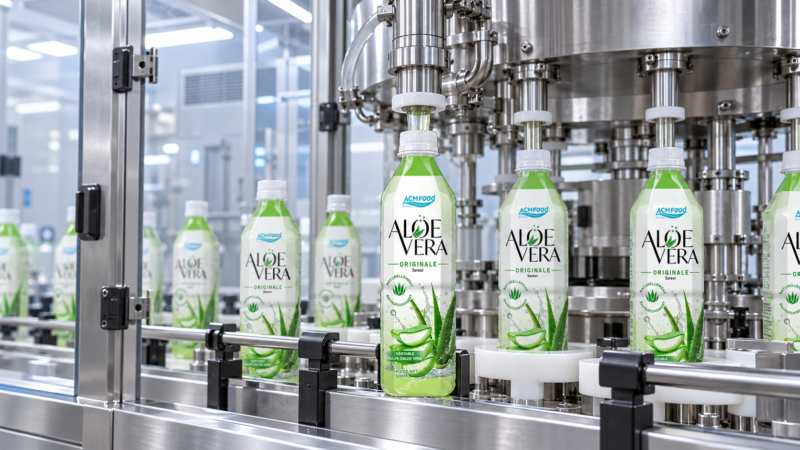
Dry sterilisation treats the preform, before blowing, with hydrogen peroxide vapour or a fine mist, then activates it with heat and removes it with hot sterile air. The preform is then blown into a bottle inside a sterile enclosure.
Treating the smaller preform surface is efficient, and the bottle is blown straight after sterilisation, so the interior has little time to be re-contaminated. No water rinse is needed, which is why this is called dry. The trade-off is residue control: the hydrogen peroxide must be driven off completely before filling, and it must be verified.
What is e-beam sterilisation?
Electron-beam (e-beam) sterilisation uses a stream of accelerated electrons to inactivate microorganisms on the surface of the preform or bottle. It leaves no chemical residue, but it needs shielding and specialist equipment.
E-beam is attractive where chemical residue is a concern, and the process is dry. Its constraints are the equipment footprint, radiation shielding, the geometry of what needs to be reached and the effect of radiation on the polymer, which must be checked with the resin supplier. Because it is less common than chemical methods, buyers should ask who has validated it for the specific bottle.
How do the three methods compare?
The comparison below reflects general principles. Actual performance depends on the machine builder, the bottle design and the validation work done for each pack.
| Method | What is treated | Agent | Residue concern | Main trade-off |
|---|---|---|---|---|
| Wet (PAA) | Finished bottle interior | Peracetic acid, then sterile water rinse | Rinse effectiveness and drainage | Needs sterile water and drain time |
| Dry (hydrogen peroxide) | Preform, then blown in sterile zone | Hydrogen peroxide vapour with hot air | Peroxide removal before filling | Residue testing and tight process control |
| E-beam | Preform or bottle surface | Accelerated electrons | No chemical residue | Shielding, equipment and polymer checks |
What are the hydrogen peroxide residue limits?
In the United States, the FDA regulation for hydrogen peroxide used to sterilise food packaging states that the use is not in compliance if more than 0.5 part per million of hydrogen peroxide can be determined in distilled water packaged under production conditions, with the assay performed immediately after packaging.
Three details matter when reading that limit:
- It is a test of packaged distilled water under production conditions, so it measures what the line actually leaves behind, not what the equipment is rated for.
- It applies to hydrogen peroxide sterilisation of food-contact packaging materials listed in the regulation.
- Other markets may apply different limits or approaches, so the destination country’s rules need to be checked separately.
A buyer should ask for residue test results from the actual line and bottle, and for the method used to measure them.
How does sterilisation affect bottle weight and design?
Sterilisation can change what bottle design is practical. Wet systems apply liquid to the inside of a finished bottle, while dry systems blow the bottle after treatment, so thin-walled lightweight bottles are often associated with preform-based routes.
Weight is also tied to filling pressure and handling. A thin bottle that is aseptically filled with a non-carbonated drink may not need the strength of a hot-fill bottle, because it does not face hot-fill vacuum stress. This is one reason cold aseptic packs can be lighter than hot-fill packs for similar volumes. The saving is not automatic, however, and depends on the filler, the bottle shape and the stacking and transport needs of the market.
What about closures and caps?
Caps are sterilised separately, usually with a chemical or e-beam step, and then applied in the sterile zone. A bottle that is sterile with a cap that is not still produces a non-sterile pack.
Ask which closure sterilisation method is used, whether it is validated for the specific cap and liner material, and how the cap is protected between sterilisation and application. Cap design also affects the seal under pressure and during shipping, which makes it a shared item between the bottle and filler suppliers.

What should buyers ask for in validation?
Buyers should ask for documented evidence that the line consistently produces sterile packs: challenge test results, residue results, and records showing the line was run and monitored under defined conditions. A sales brochure is not validation.
- Microbial challenge testing: data showing the reduction achieved on the bottle and cap, with the test organism named.
- Residue testing: results for hydrogen peroxide or PAA, with the method and conditions.
- Environmental controls: air filtration, pressure differentials and cleaning cycles in the filling zone.
- Process records: parameters that are recorded for each run, such as concentration, temperature and contact time.
- Incubation or stability results: evidence that filled packs stayed stable for the target shelf life.
- Change control: what triggers revalidation, such as a new bottle, cap or product.
For a view of the testing that supports these claims, see our guide to microbiological testing for beverages. The comparison with an in-pack heat step is covered in tunnel pasteurisation for bottled and canned drinks.
How does the sterile filling environment support the bottle?
The filling environment keeps sterile bottles, caps and product from being re-contaminated in the seconds between sterilisation and sealing. It uses filtered air, positive pressure and surfaces that can be cleaned and sanitised.
In most designs the filler sits in an enclosure fed by filtered air, kept at higher pressure than the surrounding room so that air flows out rather than in. Operators do not touch product contact surfaces, and cleaning and sterilisation cycles are run before production starts. The sterile zone is only as good as its weakest point, so buyers should ask how it is monitored, including air quality, pressure differentials and surface checks, and how often the environment is verified.
What can go wrong in aseptic bottle sterilisation?
The main failures are insufficient sterilant contact, incomplete removal of residue, damage to bottles and re-contamination between sterilisation and filling. Each shows up differently: spoilage, taste complaints or leaking packs.
- Concentration drift: a weak sterilant solution reduces the kill.
- Contact time shortened: line speed changes can reduce exposure unless controlled.
- Blocked nozzles or uneven coverage: parts of the bottle surface are missed.
- Residue left behind: incomplete rinsing or drying leaves chemical in the pack.
- Bottle deformation: heat or chemistry that is too aggressive can weaken the plastic.
Good plants monitor the critical parameters continuously and stop or reject product when a limit is missed.
How does this route compare with hot fill and retort?
Cold aseptic filling suits heat-sensitive and low-acid drinks that need ambient shelf life, while hot fill suits acidic drinks and retort suits drinks that are sterilised in the final pack. Each has a different cost, packaging and flavour profile.
Choosing among them starts with the product: its acidity, heat sensitivity and viscosity. Our overview of beverage processing technology sets the main routes side by side. The next factors are the container and the shelf life target. Heat-set bottles for hot fill are a separate packaging topic, and the choice between them and an aseptic bottle belongs in the same product brief.
How should a buyer compare aseptic quotations?
A fair comparison puts every quotation on the same basis: the same bottle, volume, closure, shelf life and market. Without that, price differences mostly reflect different assumptions rather than different value.
Ask each bidder to state which sterilisation method they use for bottle and cap, which validation data exist for the bottle, who performed the challenge testing, which residue limit they design to for the destination market and how often the line is revalidated. Also ask for the expected line efficiency and the typical rejection rate, because aseptic lines can lose output to cleaning and sterilisation cycles. A low unit price from a line that is down often is not a saving.
Finally, check the supplier’s response to change. New caps, bottle redesigns and recipe changes each require a documented assessment, and a partner that can describe that process clearly is more likely to protect the validation file.

Frequently asked questions
Is aseptic filling the same as hot fill?
No. Hot fill uses the heat of the product to treat the container, while aseptic filling sterilises product, container and closure separately and fills cold. They suit different products and bottle designs.
Which sterilisation method is best?
No single method is best for every pack. The right choice depends on the bottle design, the product, residue requirements in the target market and what the filler has been validated to run.
Does aseptic filling need preservatives?
It does not automatically need them, because sterility comes from the process. Whether a recipe uses preservatives is a formulation and labelling decision for the product and market.
Conclusion
Peroxide, peracetic acid and e-beam all aim for the same result, a commercially sterile bottle and closure, but they differ in residue risk, equipment and design freedom. The decisive factor is evidence: line-specific validation, not a method name.
Next step: send us your spec and target market, and we confirm the route, including whether cold aseptic is justified for your product.