


 Français
 Español
 العربية
 한국어
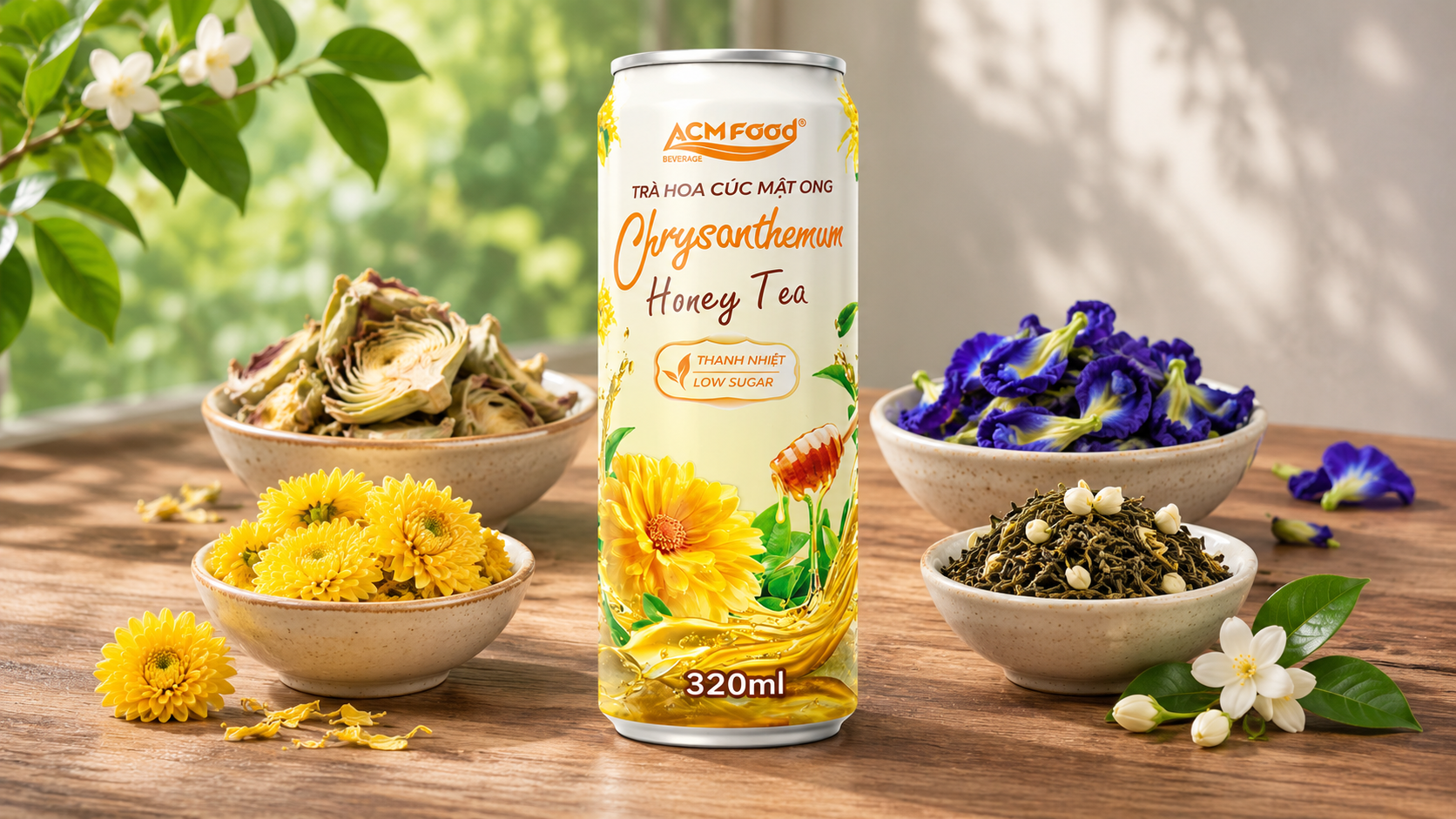
A Vietnamese herbal tea drink is a ready-to-drink beverage brewed from botanicals with a strong local identity, such as Da Lat artichoke, chrysanthemum flowers, butterfly pea flowers or jasmine-scented green tea, then sweetened lightly, filled and heat treated. For a private label brand, these ingredients offer an origin story that standard black or green tea cannot.
This guide covers the four botanicals most suited to a canned or bottled range, how extraction and colour behave in production, sugar options, and what buyers should specify. ACMFOOD produces tea drinks in 320ml sleek cans and other formats; the notes below reflect the decisions buyers make when building a Vietnamese herbal tea line.
What makes a herbal tea drink “Vietnamese”?
A herbal tea drink reads as Vietnamese when its main botanical is grown, used or traditionally brewed in Vietnam and when that link is visible in the flavour and the story. Artichoke from Da Lat, chrysanthemum, butterfly pea and jasmine green tea all have a place in everyday Vietnamese drinking culture, which gives a brand authentic origin material.
Strictly speaking, drinks made from flowers or leaves other than the tea plant Camellia sinensis are herbal infusions rather than tea. Jasmine green tea is the exception in this group: it is true tea scented with jasmine flowers. On the label, the product name and ingredient list must reflect what is actually in the drink, so the distinction matters when artwork is prepared.
Ginger, lemongrass and hibiscus are also popular herbal drinks in Vietnam. They are covered in separate articles, such as our piece on ginger lemongrass drinks and our introduction to hibiscus flower tea, so this page stays with the four botanicals below.
Which Vietnamese botanicals work best in a canned tea drink?
Four botanicals translate well into a shelf-stable drink: artichoke, chrysanthemum, butterfly pea and jasmine green tea. Each has a distinct flavour, colour and origin story, and each behaves differently during extraction and heat treatment.
Artichoke tea drink
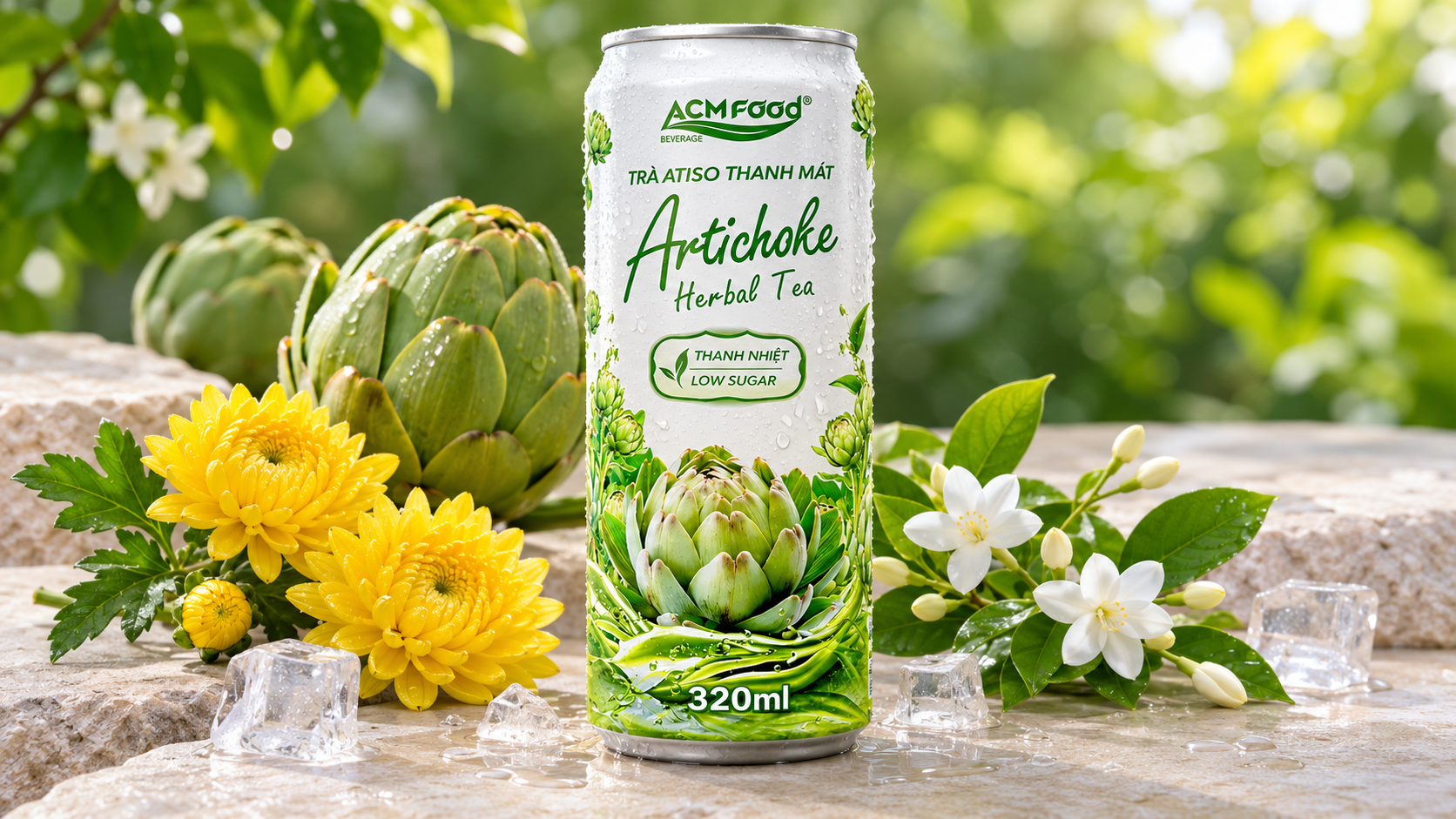
Artichoke tea, made from the leaves, stems, roots or flowers of Cynara scolymus, is closely associated with the Da Lat plateau in Vietnam’s Central Highlands. It has an earthy, slightly sweet and gently bitter taste, with a brown-amber colour. In a drink, the bitterness is usually softened with light sweetness, and some brands add a little monk fruit or other botanicals to round the finish.
Chrysanthemum tea drink
Chrysanthemum tea is brewed from dried chrysanthemum flowers and has a floral, mellow taste with a pale golden colour. It is familiar across East and Southeast Asia, which makes it an easy entry for Asian grocery channels. It pairs well with a touch of rock sugar flavour or goji notes for buyers who want a traditional profile.
Butterfly pea tea drink
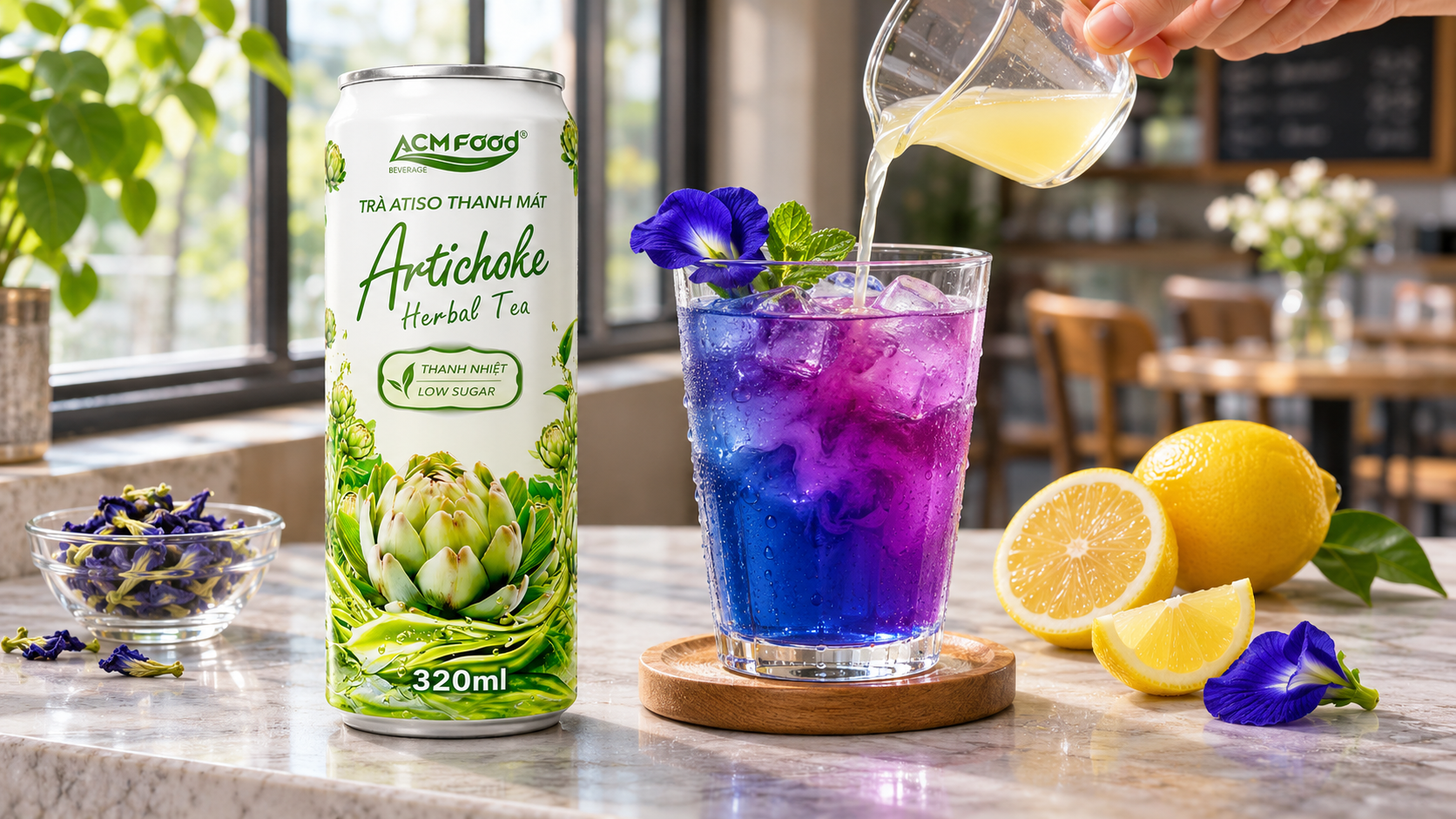
Butterfly pea flowers, from Clitoria ternatea, give an intense blue infusion with a mild, slightly woody taste. Their main appeal is visual: the colour comes from anthocyanins that shift from blue towards purple and pink when acid such as lemon juice is added. This makes butterfly pea one of the most photogenic herbal drinks, but also one of the most demanding to stabilise.
Jasmine green tea drink
Jasmine green tea is green tea scented with jasmine blossoms, giving a fresh, floral aroma over a light tea base. It is the most mainstream of the four and fits both Asian and Western retail. Because it contains real tea, it carries caffeine and tea polyphenols, which affect taste, colour and clarity in a ready-to-drink format.
How does extraction affect flavour and clarity?
Extraction sets the strength, bitterness and clarity of the finished drink. Water temperature, steeping time, leaf-to-water ratio and filtration all change which compounds move into the liquid. Longer or hotter extraction gives more body but also more bitterness and a higher risk of haze.
Key points by botanical:
- Artichoke releases bitter compounds quickly; extraction is tuned so the earthy note comes through without harsh bitterness.
- Chrysanthemum is delicate and can turn grassy or dull with over-extraction; gentle brewing keeps the floral top note.
- Butterfly pea gives colour easily; the target is a consistent shade from batch to batch rather than maximum intensity.
- Jasmine green tea needs controlled temperature to avoid a stewed, astringent taste and to protect the jasmine aroma.
Some producers brew from dried botanicals; others use prepared extracts. Both routes can work. What matters to the buyer is that the method is fixed in the specification so that taste does not drift between production runs. Our overview of RTD tea manufacturing explains the general process steps.
Why does tea haze appear, and how is it controlled?
Tea haze, sometimes called cream-down, is cloudiness that forms when tea polyphenols bind with caffeine and other compounds as the drink cools. It mainly affects drinks made with real tea, such as jasmine green tea. It is not a safety issue, but in a clear bottle it can look like a fault to consumers.
Manufacturers manage haze through several steps:
- Choosing tea material and extraction conditions that limit the compounds responsible for haze.
- Cooling and filtering the extract before blending, so particles that would form later are removed.
- Adjusting pH and formulation to keep the drink stable over shelf life.
- Selecting a pack that suits the product: in an aluminium can, slight haze is hidden from view.
Herbal infusions without tea, such as chrysanthemum or butterfly pea, can still show sediment from plant material. Filtration and storage testing confirm how the drink looks at the end of its shelf life.
How stable is butterfly pea colour in a shelf-stable drink?
Butterfly pea colour is sensitive to pH, heat and light. Its anthocyanins are blue in near-neutral conditions and shift to purple and pink as acidity rises, and they can fade during heat treatment and storage. A stable shelf-stable product needs a defined pH, a suitable heat process and a pack that limits light exposure.
This creates a real formulation choice:
| Target look | Formulation approach | Trade-off |
|---|---|---|
| Blue drink | Low added acid, near-neutral pH | Needs a heat process suited to low-acid drinks |
| Purple or pink drink | Lemon or other acid lowers the pH | Colour change happens before filling, not in the consumer’s glass |
| “Colour change” experience | Separate acid sachet or serve suggestion | Adds pack complexity; rarely practical for a single can |
For most canned products, buyers choose a fixed colour, usually purple or pink with lemon, because acidic drinks are easier to process and the colour holds better. The “blue to purple” effect works best as a serve suggestion in a café than as a feature of the canned product.
Specification table for a herbal tea drink range
The table below summarises what a buyer should define for each SKU. It is a template for a brief, not a fixed product list.
| Item | Artichoke | Chrysanthemum | Butterfly pea | Jasmine green tea |
|---|---|---|---|---|
| Flavour profile | Earthy, lightly bitter | Floral, mellow | Mild, woody; lemon often added | Fresh, floral tea |
| Colour | Amber-brown | Pale gold | Blue or purple-pink by pH | Light yellow-green |
| Main stability concern | Bitterness, sediment | Flavour fade | Colour loss with heat and light | Haze, browning |
| Contains caffeine | No | No | No | Yes |
| Suggested pack | 320ml sleek can | 320ml sleek can or PET | 320ml sleek can | 320ml sleek can or PET |
The 320ml sleek can is a common choice for this category because it looks modern and keeps light away from sensitive colours. Details of can shapes are in our guide to sleek, slim and standard can formats.
Sugar options for herbal tea drinks
Herbal tea drinks are usually positioned as lighter alternatives to soft drinks, so sugar level is part of the brand promise. Buyers commonly choose between a lightly sweetened version, a reduced-sugar version with a sweetener blend, and an unsweetened version. Unsweetened herbal drinks show the true taste of the botanical, which suits jasmine and chrysanthemum better than artichoke.
Sugar decisions should consider the sugar tax and labelling rules of the destination market, the taste of the botanical, and any claim the brand wants to make. Claims such as “no added sugar” must match the tested formula and follow local rules.
What should a herbal tea drink brief include?
A useful brief for a herbal tea drink states the botanical, the target taste and colour, the sweetness level, the pack and the destination market. With these five points fixed, the first samples are usually close enough to refine rather than restart.
- Botanical and origin wording: which botanical, and whether the brand wants to name Da Lat or Vietnam on the pack.
- Taste reference: a product already on the market, or a description such as “light floral, low bitterness”.
- Colour target: especially for butterfly pea, where blue, purple and pink need different formulas.
- Sweetness and claims: sugar level, any sweetener preference and claims the brand wants to make.
- Pack and market: can or bottle size, and the countries where the drink will be sold, so labels and ingredient rules are checked early.
Buyers who also plan a fruit tea or classic green tea range can brief them together, since shared formats simplify sampling and artwork.
Commercial terms for a private label herbal tea range
ACMFOOD’s terms for herbal tea drinks are a minimum order of 500 cartons per SKU and a production lead time of 15–30 days after samples and artwork are approved. Production runs under HACCP, ISO 22000 and FSSC 22000 systems, and the available packs are cans, PET bottles and glass bottles.
A practical launch plan is two or three botanicals in one can format, approved together so artwork and sampling share the same timeline. Prices depend on botanical, sweetener, pack and volume, and are quoted per project.
Frequently asked questions
Can a butterfly pea drink stay blue in a can?
It can, but only at a near-neutral pH, which requires a heat process suited to low-acid drinks. Most canned versions are formulated with lemon and sold as purple or pink drinks.
Does artichoke tea contain caffeine?
No. Artichoke tea is made from the artichoke plant, not the tea plant, so it does not naturally contain caffeine.
Why does my jasmine tea drink look cloudy when cold?
Cloudiness in cold tea drinks is usually tea haze, formed when tea polyphenols bind with caffeine as the drink cools. Extraction, filtration and formulation reduce it.
Can I mix two botanicals in one drink?
Yes. Blends such as jasmine with chrysanthemum are possible. Each blend is a separate SKU and is approved on its own samples.
Building a Vietnamese herbal tea range
A Vietnamese herbal tea drink gives a private label brand a clear origin story, but each botanical brings its own technical demands: bitterness in artichoke, delicate aroma in chrysanthemum, colour sensitivity in butterfly pea and haze in jasmine green tea. Defining extraction, colour target and sweetness in the brief makes sampling faster.
To start, send ACMFOOD the botanicals, pack format and sweetness level you have in mind. We will prepare samples and confirm the specification for your first production run.