


 Français
 Español
 العربية
 한국어
Vietnamese exotic fruit drinks are beverages built on tropical fruits grown in Vietnam that are still uncommon on export shelves, such as rambutan, longan, jackfruit and pomelo. For a brand looking for a flavour that competitors do not yet offer, these fruits are attractive; for a manufacturer, each one brings its own challenges in yield, colour, aroma and processing.
This article compares the four fruits as candidates for ODM development: how seasonality affects supply, how much usable pulp or juice each gives, how they brown, how their flavour survives processing, and which drink formats suit each one. It is written for brand owners and importers considering a new exotic flavour. These fruits are presented here as development options; any project starts with samples and a supply check rather than a catalogue item.
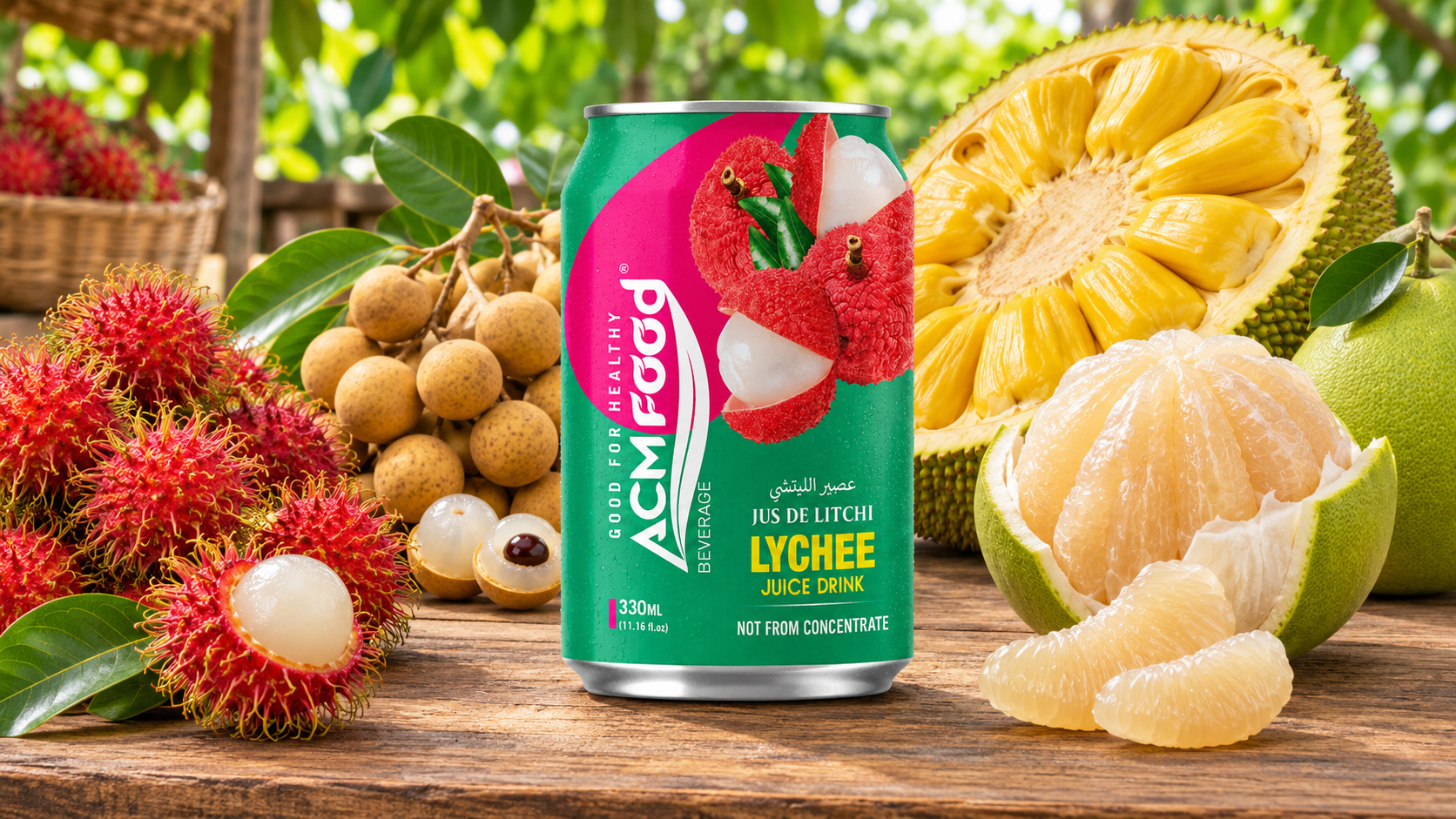
Why consider Vietnamese exotic fruits for a drink range?
Exotic fruits give a brand a point of difference that familiar flavours such as mango or passion fruit cannot. Rambutan, longan, jackfruit and pomelo are well known in Southeast Asia but rare in many export markets, so they offer novelty, an origin story and a natural link to Vietnam.
The trade-off is development effort. These fruits are less standardised as beverage ingredients than mango or pineapple, which means the manufacturer and buyer often need to work through raw material preparation, flavour stability and cost together. That is why they suit an ODM route, where the manufacturer develops the formula. The difference between ODM and other models is explained on our ODM beverage manufacturing page.
Vietnam’s better-known exotic fruit, dragon fruit, is already established in juice production and is covered in our article on dragon fruit from Vietnam’s farms to global juice production. The four fruits here are a step further from the mainstream.
How does seasonality affect supply?
Seasonality decides whether a fruit can be processed fresh all year or must be stored as frozen pulp, puree or concentrate to support continuous production. Rambutan and longan have concentrated harvest seasons, while jackfruit and pomelo are available over longer periods. A drink planned for year-round sale needs a supply plan that bridges the gaps.
Practical consequences for a project:
- Short-season fruits need processing and storage during the harvest window, which ties up working capital and freezer capacity.
- Longer-season fruits can often be processed fresh across more of the year, but quality still varies between peak and off-peak harvests.
- Weather and yield change from year to year, so a supply plan should allow for variation.
- Regional differences in Vietnam can extend the effective season for some fruits.
Our calendar of Vietnam fruit harvest seasons shows the typical timing for these and other fruits. Buyers should treat it as a planning guide and confirm current supply at the time of the project.
How do the four fruits compare as beverage ingredients?
The four fruits differ sharply in pulp yield, browning tendency, aroma and texture. Longan and rambutan have delicate, sweet, floral flavours and modest yields; jackfruit has a strong aroma and thick, fibrous flesh; pomelo gives juice from its segments but brings bitterness. These traits steer each fruit towards different formats.
| Fruit | Flavour | Usable yield | Main processing challenge | Formats that suit it |
|---|---|---|---|---|
| Rambutan | Sweet, juicy, lightly floral | Limited; flesh clings to seed and peel is discarded | Labour-intensive peeling and seed removal; delicate aroma | Juice drinks, drinks with fruit pieces, blends |
| Longan | Sweet, musky, floral | Moderate; small fruit with large seed | Browning and cooked flavour with heat | Juice drinks, tea blends, drinks with pieces |
| Jackfruit | Strong, sweet, tropical, banana-like | High flesh per fruit after separation | Fibrous texture, strong aroma, thick puree | Nectars, smoothies, milk drinks, blends |
| Pomelo | Mildly sweet, citrus, slightly bitter | Good juice from segments | Bitterness from peel, membrane and naturally bitter compounds | Juice drinks, sparkling drinks, citrus blends |
Rambutan: delicate flavour, demanding preparation
Rambutan has a sweet, juicy, lightly floral flesh that consumers often compare to lychee. In a drink, it gives a gentle, refreshing flavour. Preparation is the main hurdle: the hairy peel must be removed and the flesh separated from a seed it often clings to, which lowers yield and raises cost.
For these reasons, rambutan often works best as a flavour within a blend or in drinks with fruit pieces, where a modest amount of rambutan delivers its character. Its aroma is delicate, so processing should limit heat, and natural flavour may support the fruit note. Because rambutan is close to lychee in taste, buyers should decide whether they want a distinct rambutan identity or a broader “tropical” profile.
Longan: sweet aroma that is sensitive to heat
Longan has a sweet, musky and floral taste, and in Vietnam it is used fresh, dried and in sweet soups and drinks. Juice or pulp from longan can carry this aroma into a beverage, but heat tends to shift the flavour towards a cooked, caramel-like note, and the pulp can brown.
Developers often embrace part of this character. A longan drink with a light “dried longan” note can feel traditional and warm, especially when paired with tea or red dates. For a fresher profile, processing focuses on limiting heat exposure, controlling oxygen and keeping acidity in a range that protects colour. Longan’s natural sweetness means the drink may need less added sugar than sour fruits.
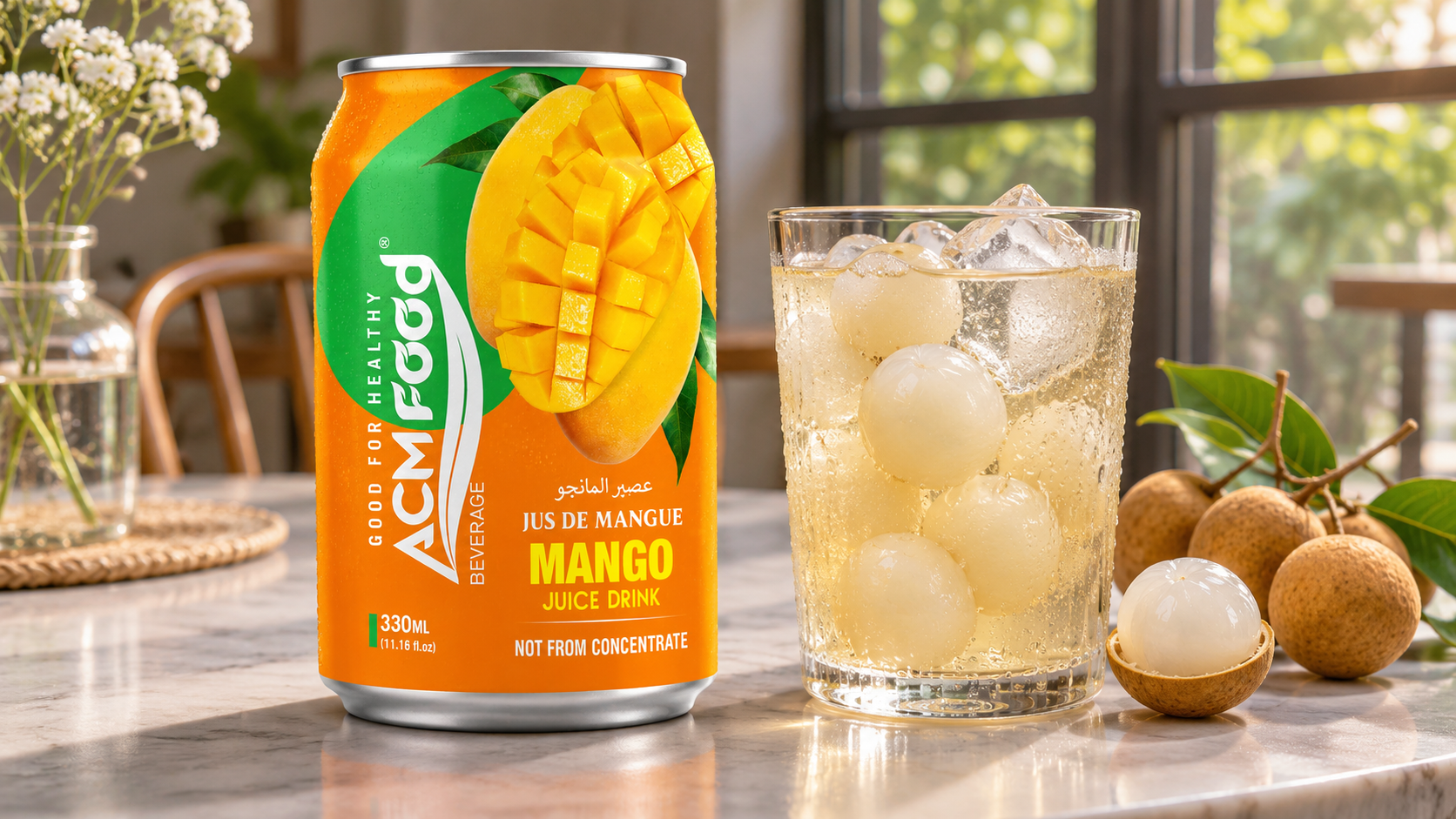
Jackfruit: strong aroma and thick texture
Jackfruit offers one of the most intense aromas of any tropical fruit, with sweet, banana-like and pineapple-like notes. Its flesh is thick and fibrous, so it is usually processed into a puree rather than a clear juice. That makes jackfruit better suited to nectars, smoothies and milk-based drinks than to light, clear beverages.
Processing points include separating the edible bulbs from the latex-rich core and rind, refining the puree to an acceptable texture, and managing viscosity so the drink flows well through filling and pours well from the pack. Jackfruit’s aroma can dominate a blend, so in combinations it is often used in smaller proportions. Our article on fruit puree in beverages explains how purees are handled in drinks.
Pomelo: juice yield with bitterness to manage
Pomelo is a large citrus fruit, related to grapefruit, with a mild, sweet and slightly bitter taste. Its segments give good juice, and Vietnam grows well-known varieties. The challenge is bitterness: compounds in the peel, membranes and juice can make the drink taste harsh if extraction is not controlled.
Bitterness management for pomelo follows citrus practice: careful peeling, limiting membrane and peel material in the juice, choosing suitable varieties and maturity, and balancing the drink with sweetness and acidity. Pomelo suits sparkling drinks and citrus blends, where a light bitter edge reads as refreshing, much as it does in grapefruit sodas. Pink-fleshed varieties can add a natural blush colour.
How is browning controlled in exotic fruit drinks?
Browning in exotic fruit drinks is controlled by fast handling after cutting, cool temperatures, oxygen control, suitable acidity and prompt heat treatment to inactivate browning enzymes. Longan and rambutan are the most sensitive of the four, while jackfruit puree and pomelo juice are more robust but still benefit from careful handling.
- Peel, cut and process fruit quickly to limit the time enzymes act.
- Keep raw materials and pulp chilled before processing.
- Use closed transfers and limit air contact.
- Adjust acidity, where the recipe allows, to slow enzymatic reactions.
- Store frozen pulp under controlled conditions for out-of-season production.
What does an ODM development project for an exotic fruit drink look like?
An ODM project for an exotic fruit drink starts with a feasibility check: confirming raw material supply, yield and cost, then developing samples in the chosen format. Because these fruits are less standardised, the first stage often includes small trials on preparation and processing before the buyer tastes formal samples.
- Concept. The buyer names the fruit, target market, format and price position.
- Feasibility. The manufacturer checks supply, preparation method and expected yield, and flags constraints.
- Samples. Prototypes are made in the chosen format, often in more than one sweetness or juice level.
- Stability check. Samples are stored to see how colour and flavour hold up.
- Approval and planning. Once approved, the supply plan for the fruit is set before production.
Ingredient sourcing is a significant part of the work for these fruits. Our page on ingredients sourcing explains how raw materials are selected and checked.
How should an exotic fruit drink be positioned and labelled?
Position an exotic fruit drink on taste, origin and discovery, and label it so a shopper who has never seen the fruit understands what to expect. Clear naming, a short flavour description and accurate juice content matter more for unfamiliar fruits than for mango or orange, because the consumer has no reference point.
- Name the fruit clearly and, where useful, add a familiar comparison such as “lychee-like” or “grapefruit-style” in the description, not in the legal name.
- Describe the taste in a few words, for example “sweet and floral” for longan or “citrus with a light bitter edge” for pomelo.
- Declare juice content where the market requires it, especially when fruit images appear on the pack.
- Use origin wording carefully. “Made in Vietnam” describes manufacture; wording about where the fruit was grown should match the actual raw material.
- Avoid health claims. Traditional uses of these fruits are not a basis for label claims in export markets.
A small first order across two exotic flavours, supported by tasting in store or online, is a practical way to learn which fruit resonates before expanding.
Commercial terms
Once a formula is approved, ACMFOOD’s standard terms apply: a minimum order of 500 cartons per SKU and a production lead time of 15–30 days after samples and artwork are approved. Production runs under HACCP, ISO 22000 and FSSC 22000 systems, with cans, PET bottles and glass bottles available. Development time for a new exotic fruit depends on the fruit and the season and is agreed project by project. Prices are quoted per project.
Frequently asked questions
Which of the four fruits is easiest to develop as a drink?
Pomelo is often the most straightforward because its segments give good juice and citrus processing methods apply. Jackfruit is practical for puree-based drinks. Rambutan and longan need more preparation work.
Can these fruits be supplied year-round?
Year-round production usually relies on frozen pulp, puree or concentrate made during the harvest season. Supply depends on the fruit and the year, so it is confirmed during feasibility.
Is rambutan juice similar to lychee juice?
Rambutan and lychee have similar sweet, floral flavours, though rambutan is often described as slightly milder. Brands should decide whether to emphasise the rambutan name or a broader tropical profile.
Why does longan drink taste different after heating?
Heat shifts longan’s fresh floral aroma towards a cooked, caramel-like note and can cause browning. Limiting heat and oxygen helps keep a fresher taste.
Choosing your exotic fruit
Vietnamese exotic fruit drinks offer brands real novelty, but each fruit asks for a different approach: rambutan and longan for delicate floral drinks with careful handling, jackfruit for rich puree-based drinks, and pomelo for refreshing citrus styles with bitterness control. A feasibility check on supply and processing is the right first step.
Send ACMFOOD the fruit you are interested in, your market and preferred format, and we will review feasibility and prepare development samples.