


 Français
 Español
 العربية
 한국어
A blueberry drink OEM project is the production of a blueberry-flavoured or blueberry juice drink by a manufacturer to the buyer’s specification, sold under the buyer’s brand. In a drink made in Vietnam, blueberry almost always arrives as imported concentrate or puree, so the project centres on how much blueberry to use, how to protect its colour, and which partners make it taste and sell best.
This guide covers juice content versus flavour, why blueberry colour fades with heat and light, how to choose packs that protect it, and how blueberry pairs with aloe, coconut, sparkling water and nata de coco. ACMFOOD produces blueberry variants across several drink lines, and the notes below reflect decisions buyers make when adding blueberry to a private label range.
Why is blueberry popular in private label drink ranges?
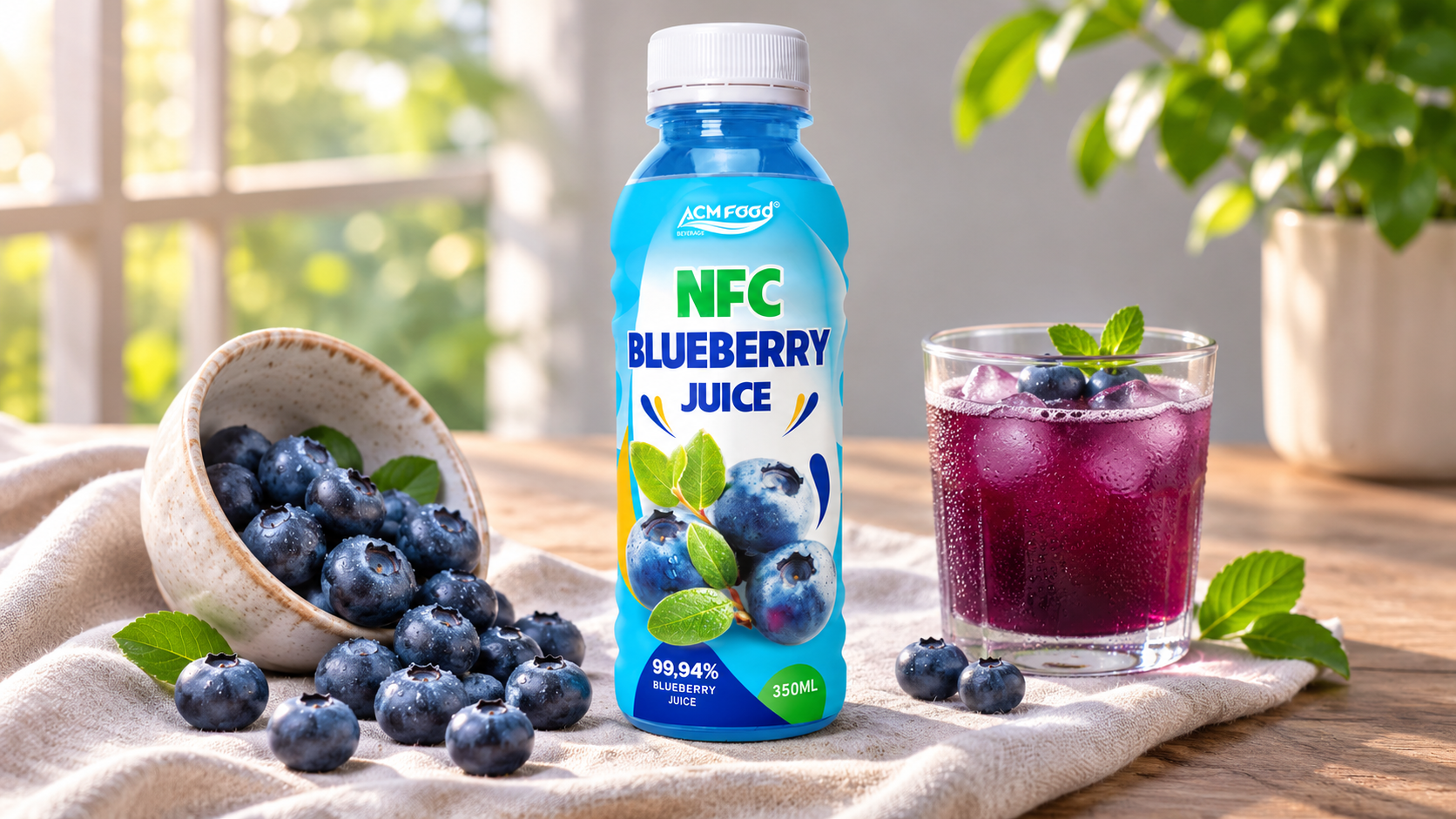
Blueberry is popular because it is a familiar, premium-sounding berry with a distinctive deep colour, and it works as both a main flavour and a partner flavour. It gives a range a dark-fruit option alongside tropical and citrus SKUs, and it blends easily with mild bases such as aloe and coconut water.
Blueberry also has a strong visual identity. Purple-blue colour on the pack and in the bottle signals the flavour immediately, which helps on crowded shelves. That same colour is the main technical challenge, because the natural pigments responsible for it are sensitive.
From a range-planning view, blueberry often sits as the “berry” SKU in a set of three or four flavours. It suits health-conscious positioning in juice drinks, playful positioning in nata de coco drinks, and refreshing positioning in sparkling drinks.
Should a blueberry drink use juice or flavour?
A blueberry drink can be built on real blueberry juice or puree, on blueberry flavour, or on a combination. Real juice gives authentic taste and natural colour but costs more and brings more stability work. Flavour is cheaper and more stable but needs colour from another source and may require different label wording.
| Approach | Taste | Colour | Cost and stability | Label note |
|---|---|---|---|---|
| Blueberry flavour only | Aromatic, light body | From added colour, if any | Lowest cost; stable aroma | Often described as “blueberry flavoured” |
| Low juice share plus flavour | Authentic note with aroma lift | Natural tint, sometimes boosted | Moderate cost; some colour care needed | Juice percentage often declared |
| Higher juice or puree share | Fuller berry taste and body | Deeper natural colour | Higher cost; more colour and sediment work | Naming rules depend on juice level |
| Blueberry in a blend | Berry note over another fruit base | Mixed, depends on partner | Cost spread across juices | Name reflects main ingredients |
A common approach is to combine a modest share of blueberry juice with blueberry flavour. The juice provides authenticity and body, and the flavour provides the aroma consumers expect. Blending with apple or white grape juice, which are neutral and sweet, can raise juice content without overwhelming the blueberry note.
Where does blueberry for a Vietnamese-made drink come from?
Blueberry for drinks made in Vietnam is mostly imported as concentrate, puree or juice from major berry-growing regions, because local growing is limited. Concentrate is shipped frozen or in drums and restored during production. Its origin, grade and colour intensity influence the finished drink.
When briefing a manufacturer, it helps to agree:
- The form of blueberry: concentrate, single-strength juice or puree.
- Quality parameters such as Brix, acidity and colour intensity.
- Whether the blueberry is cultivated (highbush) or wild (lowbush), if the label or brand story depends on it.
- How the manufacturer will manage changes in supplier or harvest year.
Because the fruit is imported, the Vietnamese manufacturer’s value lies in formulation, pairings with local ingredients, pack choices and export handling rather than in the berry itself.
Why does blueberry colour fade with heat and light?
Blueberry colour comes from anthocyanins, natural pigments that are sensitive to heat, light, oxygen and pH. Heat treatment can start colour loss, and exposure to light during storage continues it, so a drink that looks deep purple when filled can turn duller and browner over its shelf life, especially in clear bottles.
Several factors influence anthocyanin stability:
- pH. Anthocyanins are generally more stable and redder in acidic conditions, and bluer but less stable as pH rises.
- Heat. Longer or hotter processing increases pigment breakdown.
- Light. Shop lighting and sunlight speed up fading in transparent packs.
- Oxygen. Dissolved oxygen and headspace oxygen contribute to colour and flavour change.
- Ingredient interactions. Vitamin C and some other ingredients can interact with anthocyanins and affect colour.
Colour change is not a safety issue, but it affects how fresh the drink looks. Agreeing an acceptable colour range at filling and at the end of shelf life prevents disputes later.
How can colour be protected in a blueberry drink?
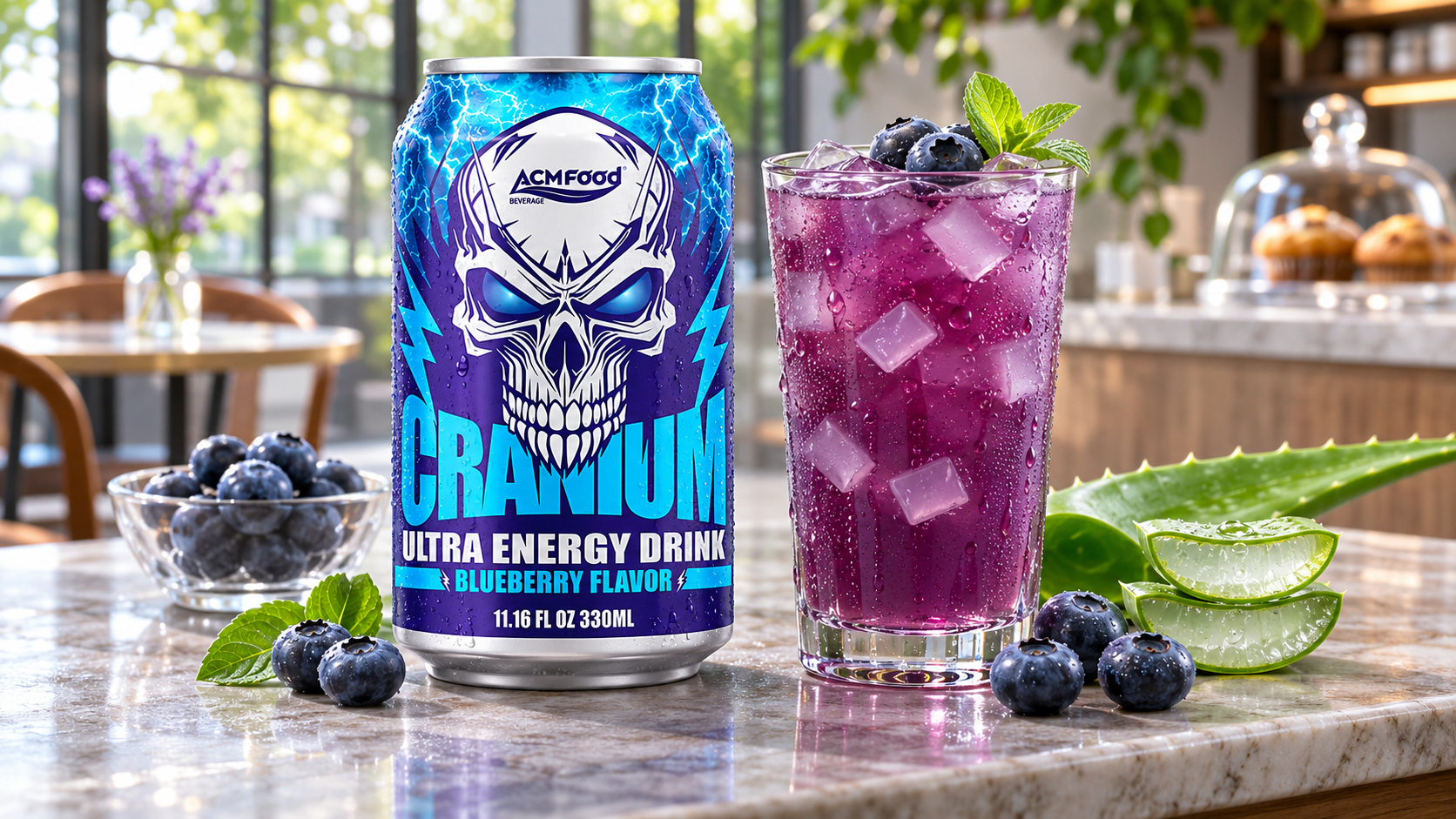
Colour is protected by keeping the drink acidic, limiting heat to what the process needs, reducing oxygen, and choosing packs that block light. Where a consistent look is essential, permitted colours from fruit or vegetable sources can support the natural blueberry colour, as long as the label reflects them correctly.
Practical options:
- Cans. Aluminium cans block light completely and are the most protective pack for blueberry colour.
- Sleeved or tinted PET. Full-body sleeves or tinted bottles reduce light exposure while keeping PET’s convenience.
- Glass with a sleeve. Premium positioning with added light protection.
- Process control. Efficient heat treatment and prompt cooling protect pigments.
- Colour support. Fruit and vegetable colouring foods or permitted colours keep shade consistent; rules on naming differ by market.
Which pairings work well with blueberry?
Blueberry pairs well with mild, slightly sweet bases that let its berry aroma show. Aloe vera, coconut water, sparkling water and nata de coco drinks are all good partners, and each gives the blueberry SKU a different shelf story and texture.
Blueberry and aloe vera
Aloe’s mild taste and soft gel cubes make it an easy partner for blueberry. The combination is popular in Asian grocery channels and gives a dark-coloured option in an aloe range.
Blueberry and coconut water
Coconut water adds natural sweetness and a light tropical background. Blueberry gives colour and a berry note, turning a familiar base into a flavoured variant.
Sparkling blueberry
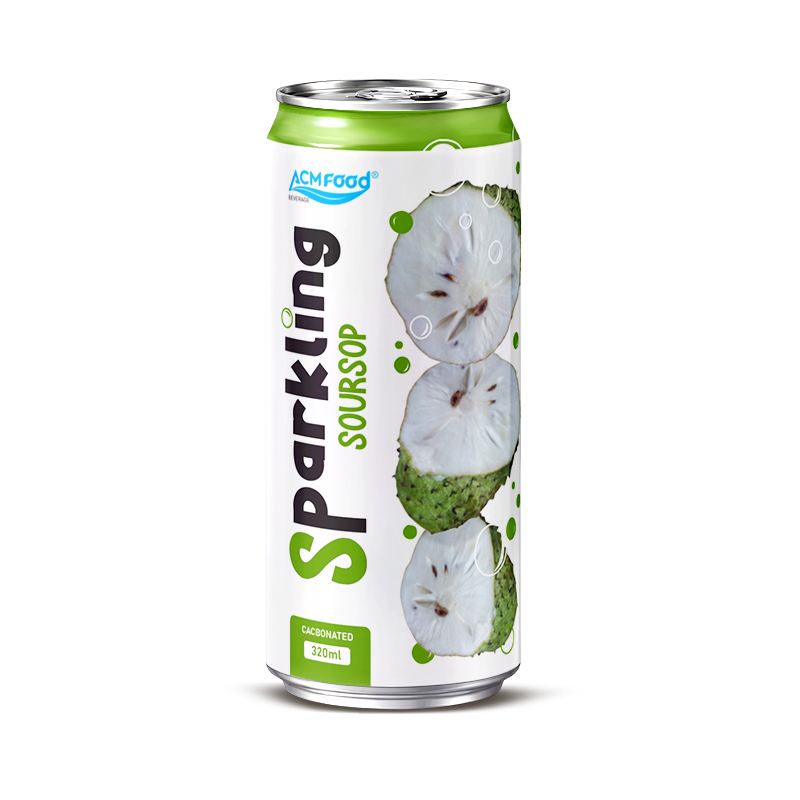
Carbonation lifts berry aroma and makes the drink feel lighter. Sparkling blueberry suits low-sugar and flavoured water positioning; the general sparkling process is explained in our page on sparkling beverage manufacturing.
Blueberry with nata de coco
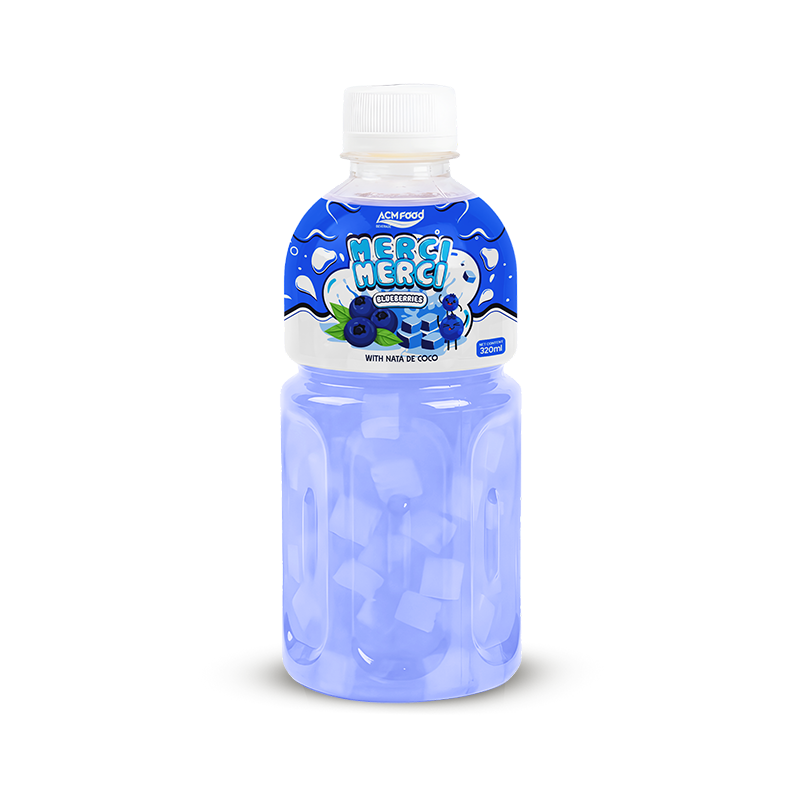
Nata de coco adds chewy coconut gel pieces to a blueberry drink, creating a fun, textured product popular with younger consumers. See our overview of drinks with nata de coco for how inclusion drinks are built.
Sweetness and positioning
Blueberry is less sweet and less acidic than many tropical fruits, so blueberry drinks usually need some added sweetness to taste full. Buyers choose between regular sweetened, reduced-sugar and lightly sweetened versions depending on market and sugar tax exposure. Pairing with naturally sweet juices, such as apple or white grape, can reduce the need for added sugar.
Positioning should stay within what the product delivers. Blueberries are often discussed in connection with antioxidants, but label claims about health effects follow strict rules in most markets and should not be added without regulatory review. Our article on functional fruit juice product development discusses how brands approach these topics responsibly, and our guide to clean label fruit juice covers ingredient-list choices.
Specification points for a blueberry OEM project
| Parameter | What to define |
|---|---|
| Blueberry form | Concentrate, juice, puree or flavour only |
| Juice content | Blueberry share and any partner juices |
| Colour | Target shade, colour support and acceptable range over shelf life |
| Sweetness and acidity | Brix target and acidity range |
| Base or pairing | Still drink, aloe, coconut water, sparkling or nata de coco |
| Pack | Can, PET or glass, with light protection where needed |
How is a blueberry drink sampled and approved?
A blueberry drink is approved through sample rounds that check taste, colour and texture against the brief. Because colour changes over time, it is good practice to review samples both fresh and after storage, and to view them in the intended pack under normal lighting. The approved sample then becomes the standard for production.
Specific feedback speeds up the process. Comments such as “deeper purple, a little less sweet, more fresh berry aroma” give the formulation team clear direction. Where several pairings are planned, tasting them together helps keep sweetness and flavour strength consistent across the range.
Which quality checks matter for blueberry drinks?
For blueberry drinks, the checks that matter most are colour, Brix, acidity, taste and, for inclusion drinks, the amount and appearance of aloe cubes or nata de coco pieces. Colour is measured or compared visually against the approved standard at filling, because it is the first thing consumers notice and the first thing to drift.
- Colour is checked against a reference sample under the same lighting, and retained samples are reviewed over shelf life.
- Brix and acidity confirm that blueberry concentrate, partner juices and sugar were dosed correctly.
- Sensory evaluation compares berry aroma and sweetness with the approved standard.
- Inclusion dosing checks that each bottle or can carries an even share of gel cubes or coconut pieces.
- Sediment is reviewed in higher-juice and puree-based drinks, where fine particles can settle.
These results are reported on a certificate of analysis for each shipment, giving the buyer a record that links the product in the market to its specification.
Commercial terms
ACMFOOD’s terms for blueberry drinks are a minimum order of 500 cartons per SKU and a production lead time of 15–30 days after samples and artwork are approved. Production runs under HACCP, ISO 22000 and FSSC 22000 systems, with aluminium cans, PET bottles and glass bottles available. Prices depend on blueberry content, pairing, pack and volume and are quoted per project.
Frequently asked questions
Why does my blueberry drink turn brown over time?
Blueberry colour comes from anthocyanins, which fade with heat, light, oxygen and higher pH. Acidity, careful processing, oxygen control and light-blocking packs slow the change.
Is a can or PET better for blueberry drinks?
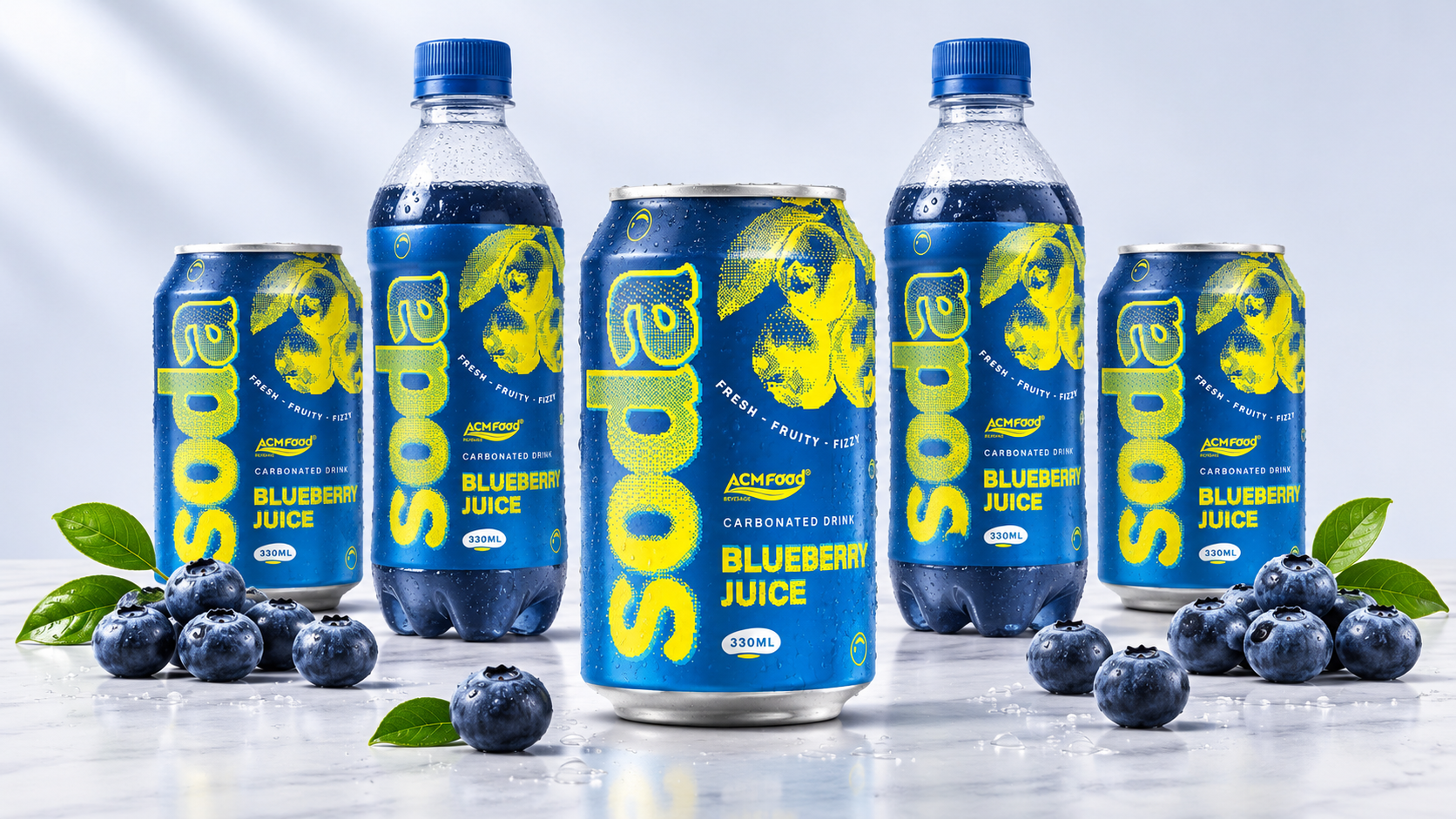
Cans protect colour best because they block light completely. PET works well with a full sleeve or tinted bottle if the buyer prefers a bottle format.
Can I make health claims for a blueberry drink?
Health claims follow the rules of each market and require approved wording and evidence. They should not be used without review by a regulatory advisor in the destination market.
Which partner flavour is easiest to start with?
Aloe and coconut water are easy starting points, because their mild taste lets the blueberry note stand out and they are familiar in many markets.
Building a blueberry SKU
A blueberry drink OEM project works best when juice content, colour protection and pairing are decided together. Real blueberry gives authenticity but needs care with heat, light and oxygen; flavour-led recipes are simpler but rely on supporting colour. Pairing with aloe, coconut, sparkling water or nata de coco gives blueberry a clear role in a wider range.
Send ACMFOOD your target market, preferred pairing and pack, and we will prepare blueberry samples and confirm the specification for your first order.