


 Français
 Español
 العربية
 한국어
한국어Beetroot juice is one of the most visually distinctive products a beverage brand can launch, and one of the least forgiving to produce. Its deep crimson colour comes from betalain pigments that are sensitive to heat and oxygen, and its flavour carries an earthy note that has to be managed rather than ignored. Both are solvable, but both need to be decided before the first production run.
This guide covers what makes beetroot different from fruit juices, how the colour and flavour are controlled, which formats suit the category, and what to bring to an OEM brief for a beetroot product.
What makes beetroot juice different from fruit juice?
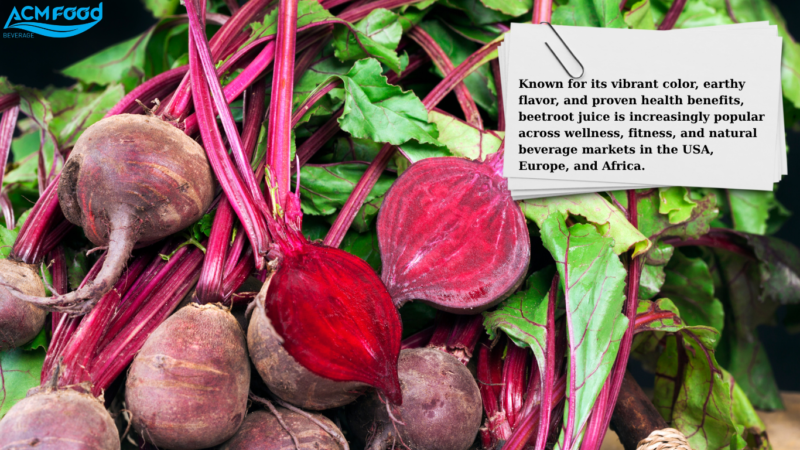
Three things: it is a root crop, it is low in acid, and its colour comes from a pigment class rarely found elsewhere in the drinks aisle.
- It grows underground. Root vegetables arrive with soil, and the washing and inspection load before processing is heavier than for tree fruit.
- It is low in acid. Like most vegetables, beetroot juice on its own sits above the pH 4.6 threshold, which changes the processing route.
- Its pigment is unusual. The colour comes from betalains rather than the anthocyanins found in red berries, and betalains respond differently to heat, pH and oxygen.
- It has an earthy note. A characteristic soil-like aroma is native to the crop and is the main reason beetroot is so often blended.
Why does beetroot juice lose its colour?
Betalain pigments degrade with heat and oxygen exposure, shifting the juice from bright crimson toward a duller brown-red. Since a shelf-stable product has to be heat-treated, some loss is unavoidable; the objective is to limit it enough that the product still looks right at the end of shelf life.
The practical levers are the severity of the thermal step, how much oxygen is picked up during filling, the pH of the finished formulation, and whether the packaging provides a light barrier. Of these, oxygen control at filling is the one most often underestimated.
| Variable | Effect on beetroot colour | Where it is controlled |
|---|---|---|
| Thermal severity | Higher heat and longer hold accelerate pigment loss | Process design |
| Oxygen at filling | Headspace oxygen continues degrading pigment on shelf | Filling and seaming |
| pH of the blend | Betalains are more stable in a moderately acidic range | Formulation |
| Light exposure | Clear packs under retail lighting fade faster | Packaging choice |
Managing the earthy flavour
The earthy character of beetroot is intrinsic to the crop and varies with variety and growing conditions. Rather than trying to remove it, most commercial products build around it. The usual approach is blending:
- Apple — adds sweetness and soluble solids without introducing a competing flavour; the most common partner.
- Carrot — reinforces the vegetable positioning and adds body.
- Citrus or lemon — lowers pH toward a more manageable processing range and lifts the aroma.
- Ginger — a strong top note that sits over the earthiness rather than masking it.
- Berry — reinforces the red colour, which helps if pigment loss is a concern.
The blend ratio is where most of the development time goes. Too little fruit and the product is a niche taste; too much and it stops reading as beetroot at all. Where beetroot sits within a wider vegetable range, see vegetable juice manufacturing for how the category is produced.
Why low acidity changes the process
Straight beetroot juice generally sits above pH 4.6, which classifies it as a low-acid food in most regulatory frameworks and calls for a more demanding thermal process than a simple hot-fill. Blending with apple or citrus is often enough to bring the finished formulation below that line, which is one reason blends are so common in this category — the fruit is doing process work as well as flavour work.
If the product must stay as pure beetroot, the alternative is a more severe process or a different preservation route, and that decision affects both cost and how much colour survives. See how filling technology is chosen by beverage pH.
Positioning: where beetroot products sell
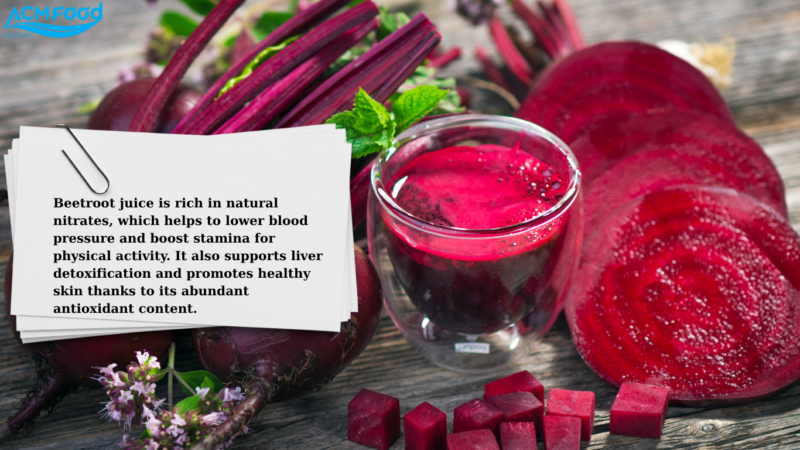
Beetroot has established itself in two distinct places on shelf. One is the vegetable and wellness juice segment, alongside carrot, celery and green blends, usually in larger formats and often cold-chain. The other is the sports and active nutrition segment, where it appears in small single-serve shots and is marketed on the strength of the ingredient’s reputation among endurance athletes.
The two positions carry different pack sizes, different price points and different distribution routes, so the choice should be made before the format is fixed rather than after. Any claim made in the second position has to be substantiated under the rules of the destination market, and the permitted wording varies considerably between markets.
Formats used for beetroot beverages
- Glass bottle — the standard for premium vegetable juice; shows the colour, at higher freight weight.
- Small shot bottle — 60–100ml single serve, the dominant format in sports positioning.
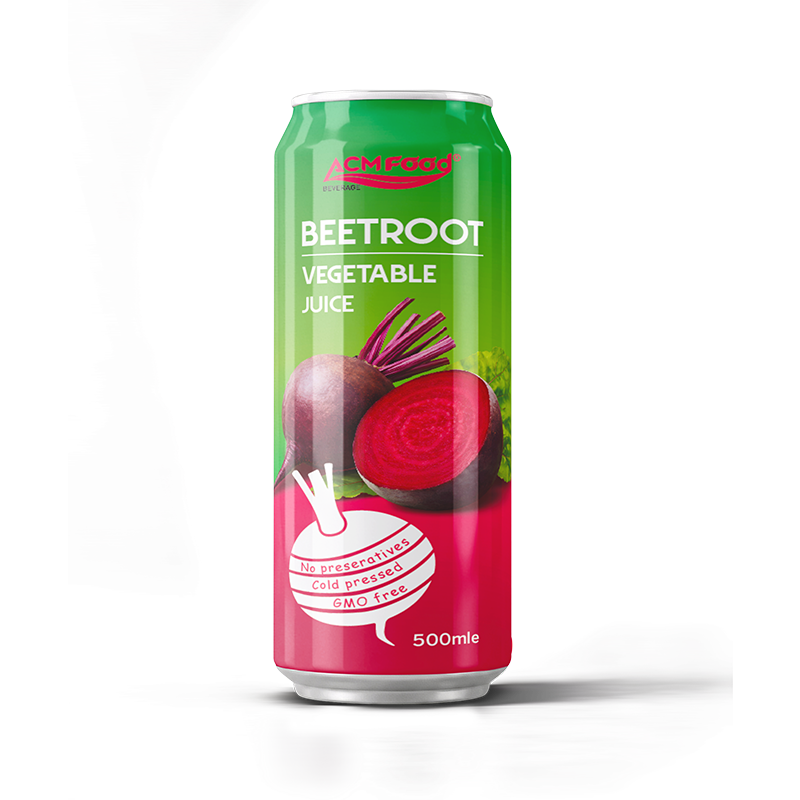
- Aluminium can — full light barrier and the best protection for the pigment, but hides the colour.
- Aseptic carton — ambient stable with a light barrier, suited to larger take-home sizes.
Raw material: fresh, concentrate or powder
Beetroot for beverage use is supplied as pressed juice, as concentrate, or as a powder. Concentrate is the most common commercial route because it ships and stores far more cheaply than single-strength juice and is available outside the harvest window. The trade-off is the same as in fruit juice: the label must declare that the product is made from concentrate, and some of the fresh character is lost.
Whichever form is used, the specification should cover pigment strength, since colour intensity varies between lots and is the parameter most visible to the end consumer.
What to bring to a beetroot OEM brief
- Whether the product is pure beetroot or a blend, and the intended blend ratio.
- The positioning — wellness juice or sports shot — since it decides the format.
- Target colour and the acceptable range at end of shelf life.
- Destination markets, so the claim set and label can be confirmed.
- Whether the product must be free from added sugar or added colour.
Frequently asked questions about beetroot juice production
Why is beetroot juice usually blended rather than sold pure?
For three reasons at once: blending softens the earthy flavour, adds sweetness the root does not have, and lowers pH toward a more manageable processing range. Pure beetroot products exist but are a narrower proposition.
Does beetroot juice keep its colour through shelf life?
Some colour change is normal, since betalain pigments degrade with heat and oxygen. How much depends on the thermal process, oxygen pickup at filling and whether the pack blocks light, so the acceptable range should be agreed in the specification.
Can beetroot juice be made shelf stable at ambient temperature?
Yes. The route depends on the finished pH: an acidified or fruit-blended formulation can often use a simpler process, while a pure beetroot juice above pH 4.6 needs a more demanding one.
What is the usual minimum order for a beetroot OEM product?
At ACMFOOD the minimum is 500 cartons per SKU. Where a custom pack format or bespoke artwork is involved, tooling and print lead times may set a practical minimum above that figure.
Information for beverage brands
Beetroot rewards brands that decide early. The blend ratio, the pack format and the colour tolerance between them determine most of the cost and nearly all of the risk, and all three are cheaper to settle at brief stage than after a trial run. ACMFOOD produces beetroot and vegetable juice blends in glass, can and carton formats under OEM and private label programmes.
Conclusion
A beetroot beverage is a colour product first and a flavour product second. Protect the pigment through process and packaging, use the blend to handle both the earthiness and the pH, and write the acceptable colour range into the specification before production rather than after the first complaint.