


 Français
 Español
 العربية
 한국어
한국어“Fresh” is the most-used and least-defined word in the coconut water category. Buyers ask for a fresh-tasting product, marketing teams want to put the word on the pack, and manufacturers know that the liquid inside a shelf-stable can has been through a process that no reasonable person would call fresh. This article closes that gap: what happens to coconut water in the hours after it leaves the nut, what each preservation route actually preserves, whether you can put the word on your label, and how to brief and test for freshness in a way that survives contact with reality.
For the commercial structure of a private label programme, see the coconut water private label guide. For the development workflow, see custom coconut water development. This page is about the freshness question specifically.
Three different things people mean by “fresh coconut water”
Most confused sourcing conversations trace back to the parties using one word for three different products.
- Water from a nut opened in front of you. Nothing added, nothing removed, no processing at all — and a usable life measured in hours. This is the sensory reference everyone is implicitly comparing against, and it is not a commercial export product.
- Minimally processed chilled product. Non-thermal or lightly thermal treatment, sold refrigerated, with a short dated life. Closest to the reference in taste, and dependent on cold chain from filler to fridge.
- Ambient shelf-stable product. Thermally processed and sealed so that it needs no refrigeration and survives ocean transit and months of retail. This is what the overwhelming majority of internationally distributed coconut water actually is.
Deciding which of the three you are building is the first real decision in the project, because it determines your processing route, your logistics cost, your addressable distribution and — as we will see — what you are allowed to say on the pack.
What happens to coconut water in the first hours
Coconut water inside an intact nut is essentially sterile. The moment the shell is breached, three things start working against you at once.
Enzymatic activity. Naturally present enzymes begin altering colour and aroma on contact with oxygen. This is the same family of reactions that browns a cut apple, and it is why untreated coconut water changes character within hours rather than days.
Microbial growth. Coconut water is a mildly acidic, sugar-containing liquid — a good growth medium. Ambient exposure after extraction starts a clock that no downstream process can rewind.
Aroma loss. The volatile compounds that make coconut water taste “fresh” are light and easily driven off by heat and time. Much of the perceived difference between a packaged product and a freshly opened nut lives here rather than in sugar content or minerals.
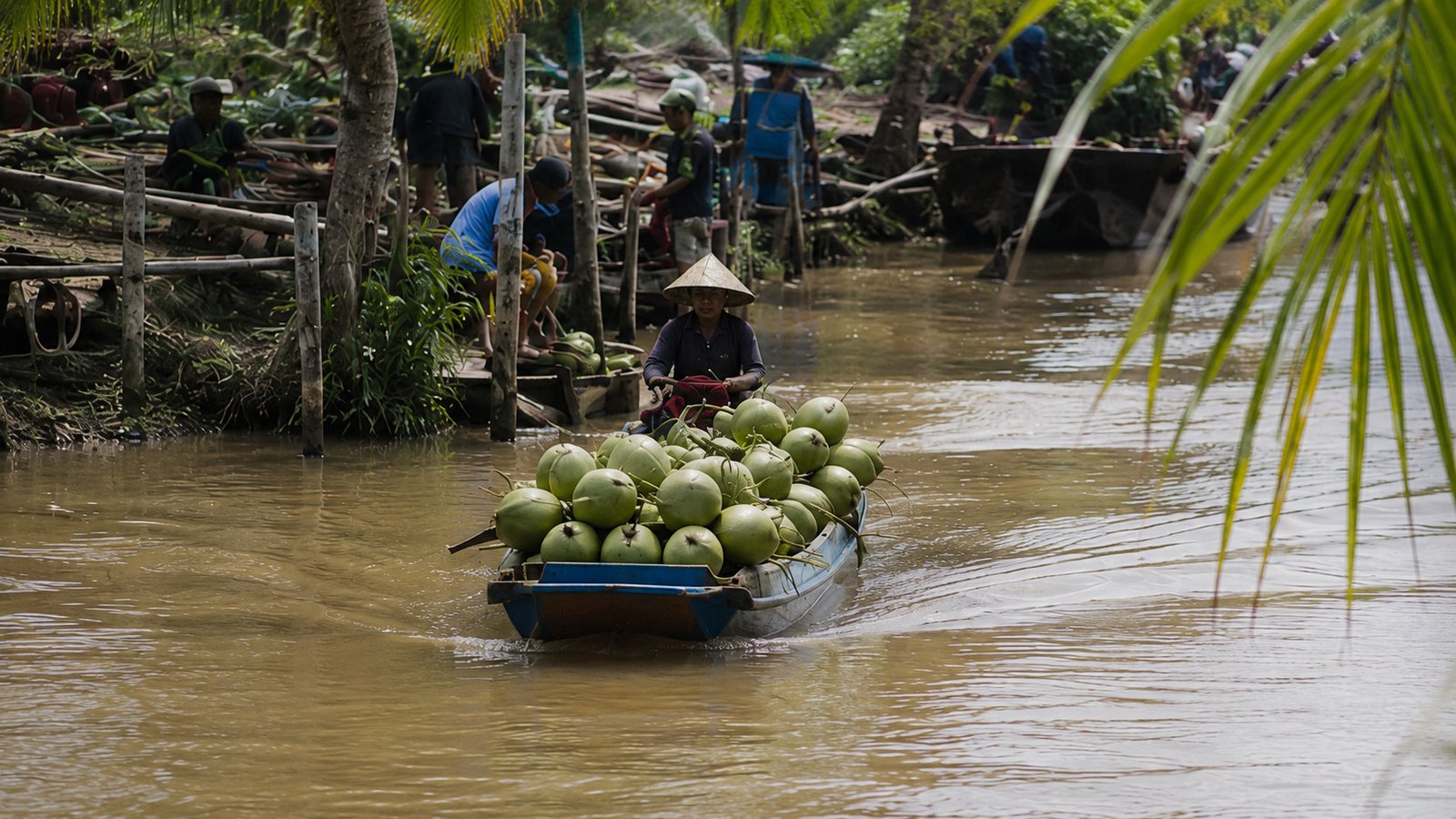
The practical consequence is that freshness is decided upstream. A factory hours from the plantation that processes same-day starts from a better liquid than one trucking nuts across a region, and no processing technology fully compensates for that difference.
The preservation ladder and what each rung costs you
Every preservation route trades sensory fidelity against stability and cost. There is no option that wins on all three, and a manufacturer who implies otherwise is selling rather than advising.
| Route | Sensory fidelity | Distribution | Main constraint |
|---|---|---|---|
| Untreated | Reference standard | Point of sale only | Hours of usable life; not exportable |
| High-pressure processing | Very high | Chilled | Cold chain end to end; short dated life; equipment cost |
| Micro-filtration | High | Chilled | Cold chain; technically demanding to run consistently |
| HTST pasteurisation | Moderate | Chilled or short ambient | Noticeable cooked note begins here |
| UHT with aseptic filling | Moderate | Ambient, long life | Aroma loss; the standard route for export |
| In-container thermal processing | Lower | Ambient, long life | Highest thermal load; most character lost |
For a brand exporting by sea into markets with inconsistent cold chain, the ambient routes are usually the only workable options. That is a legitimate choice — but it means the honest positioning is “tastes close to fresh”, not “is fresh”, and the product development brief should be written accordingly.
The colour question
Minimally processed coconut water sometimes develops a pink tint over its life. This is a naturally occurring reaction involving the phenolic compounds present in coconut water, not a fault or a sign of spoilage — and some premium chilled brands have successfully turned it into a signal of minimal processing.
It matters commercially in two ways. If your product is in clear packaging and your customers do not expect the change, it generates complaints. If it is in an aluminium can, nobody ever sees it. This is one of several quiet reasons canned formats are easier to commercialise across distant markets.
Can you put “fresh” on the label?
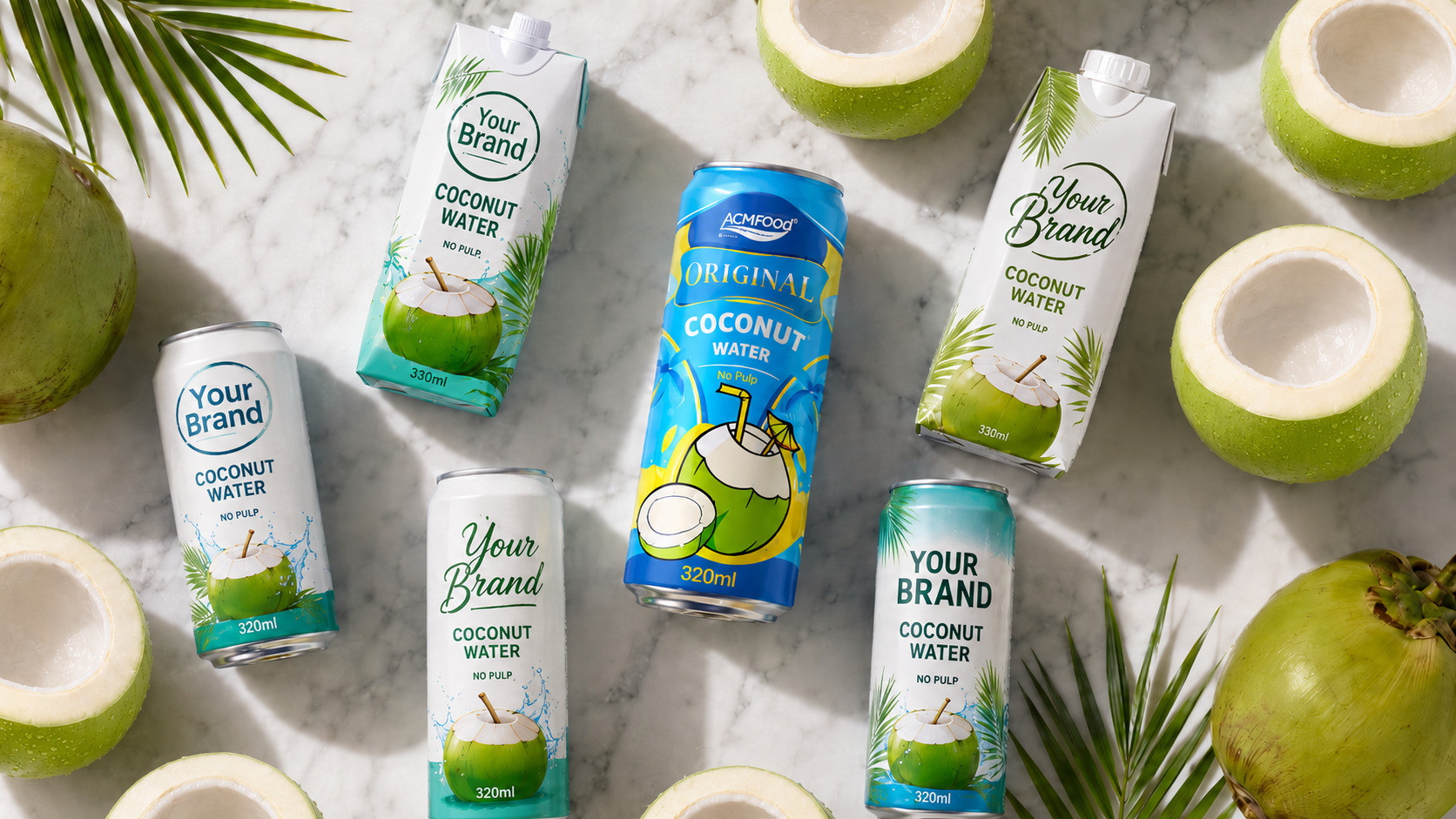
Treat this as a regulatory question, not a marketing one, and settle it before artwork. Many jurisdictions restrict or scrutinise “fresh” on a product that has been heat treated or preserved, on the basis that the word implies the absence of processing. Rules differ by market and change, so the only safe process is to have your label reviewed against the regulations of each destination before you commit to print — rework after plates are made is expensive and slow.
Where “fresh” is not defensible, these alternatives usually are, provided they are literally true of your product:
- “From fresh coconut water, not from concentrate” — accurate and meaningful if that is your raw material, and it draws the distinction shoppers actually care about.
- “Never from concentrate” — a factual process statement rather than a sensory claim.
- “No added sugar” — verifiable, and often the real purchase driver behind the word fresh.
- Origin and harvest statements — naming the growing region and young green coconuts communicates freshness without making a claim about processing.
- Time-to-process statements — if your factory genuinely processes within a stated window of harvest, saying so is specific, checkable and far more persuasive than an adjective.
What actually makes a packaged product taste fresh
If freshness is your positioning, these are the levers that move it — in roughly descending order of impact.
- Harvest maturity. Young green coconuts picked in the right window give the light, clean profile the category is judged against. Nuts harvested late taste flat and starchy, and nothing downstream fixes it.
- Time from harvest to processing. The single biggest variable, and the reason proximity between plantation and plant matters more than most equipment decisions.
- Thermal load. Not simply the peak temperature but the total heat exposure. Two products with the same nominal process can taste noticeably different depending on how the heat is delivered and how quickly it is removed.
- Oxygen management. Dissolved oxygen at filling and the barrier properties of the pack drive how much the product changes over its life.
- Packaging. Aluminium is a complete light and oxygen barrier, which is why canned product tends to hold its character better over a long ambient life than clear plastic.
How to test for freshness properly
Tasting one sample and saying “that tastes fresh” is not a test. Two protocols are worth insisting on before sign-off.
Reference comparison. Taste your candidate sample alongside water from a nut opened that day, and alongside the competitor products already on your target shelf. The question is not whether your sample is good in isolation but where it sits between the fresh reference and the incumbents.
End-of-life comparison. Repeat the exercise on product held at ambient temperature for most of its declared shelf life. Freshness claims are made at production and judged by consumers at month ten, and a product that holds its character late is worth far more than one that only impresses on the day it is filled.
Matching the claim to your channel
A chilled minimally processed product is a genuine premium proposition in markets with dependable refrigerated retail, and it is unsellable where that infrastructure is missing. An ambient canned product reaches convenience, food service, e-commerce and any store without chilled space — which in most export markets is the larger opportunity. Choose the claim your supply chain can actually support, then build the positioning around origin, harvest and ingredient simplicity rather than around a word that invites scrutiny.
How ACMFOOD approaches this
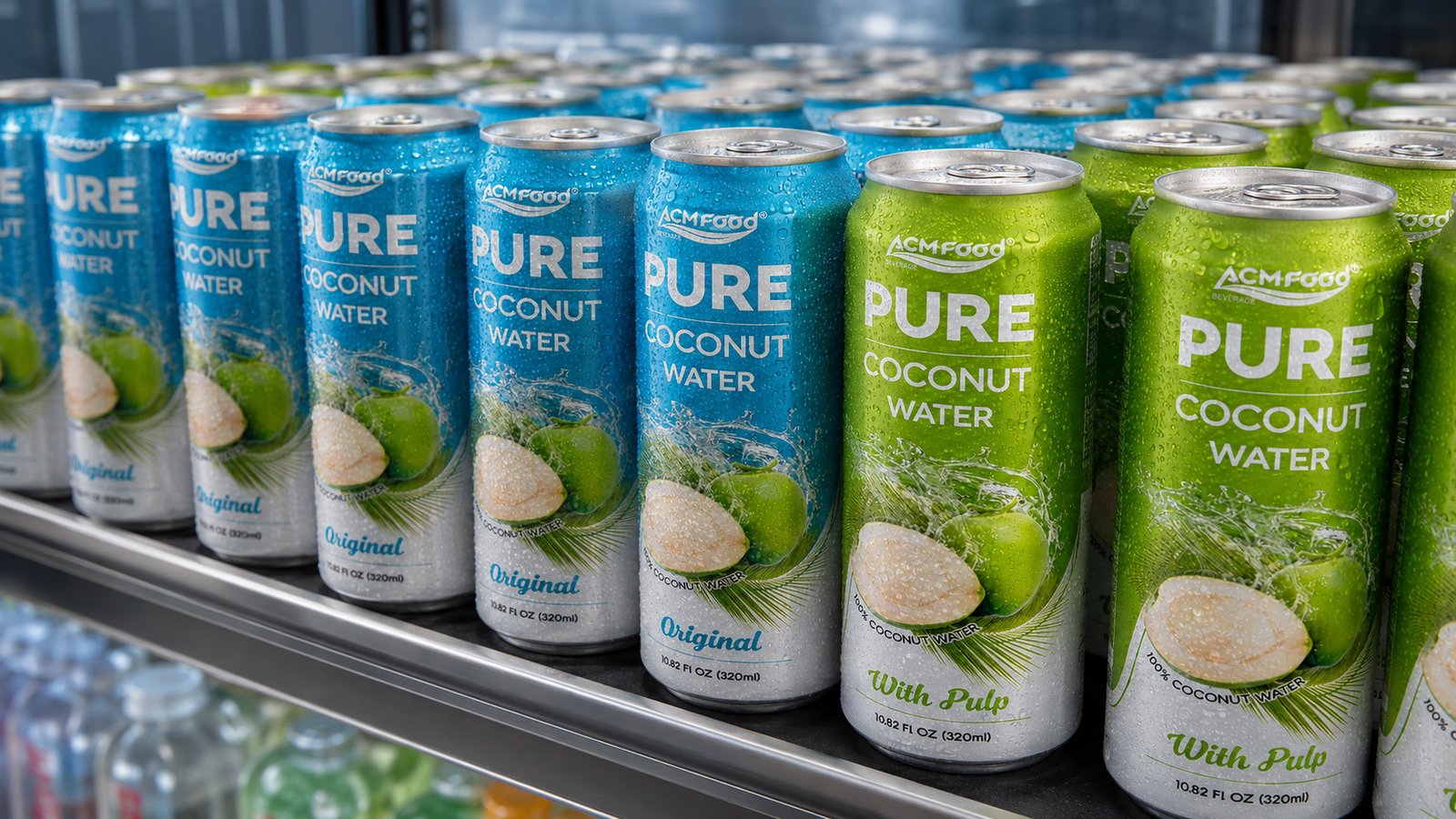
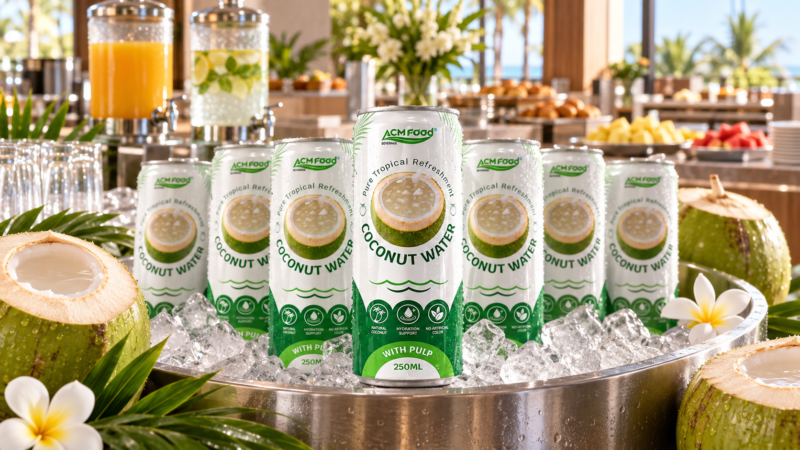
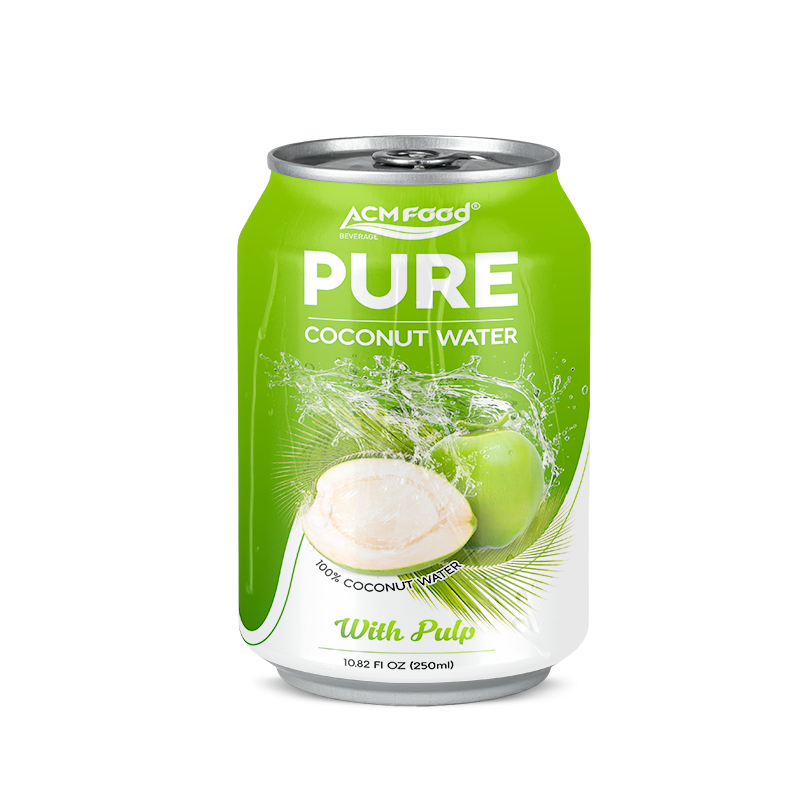
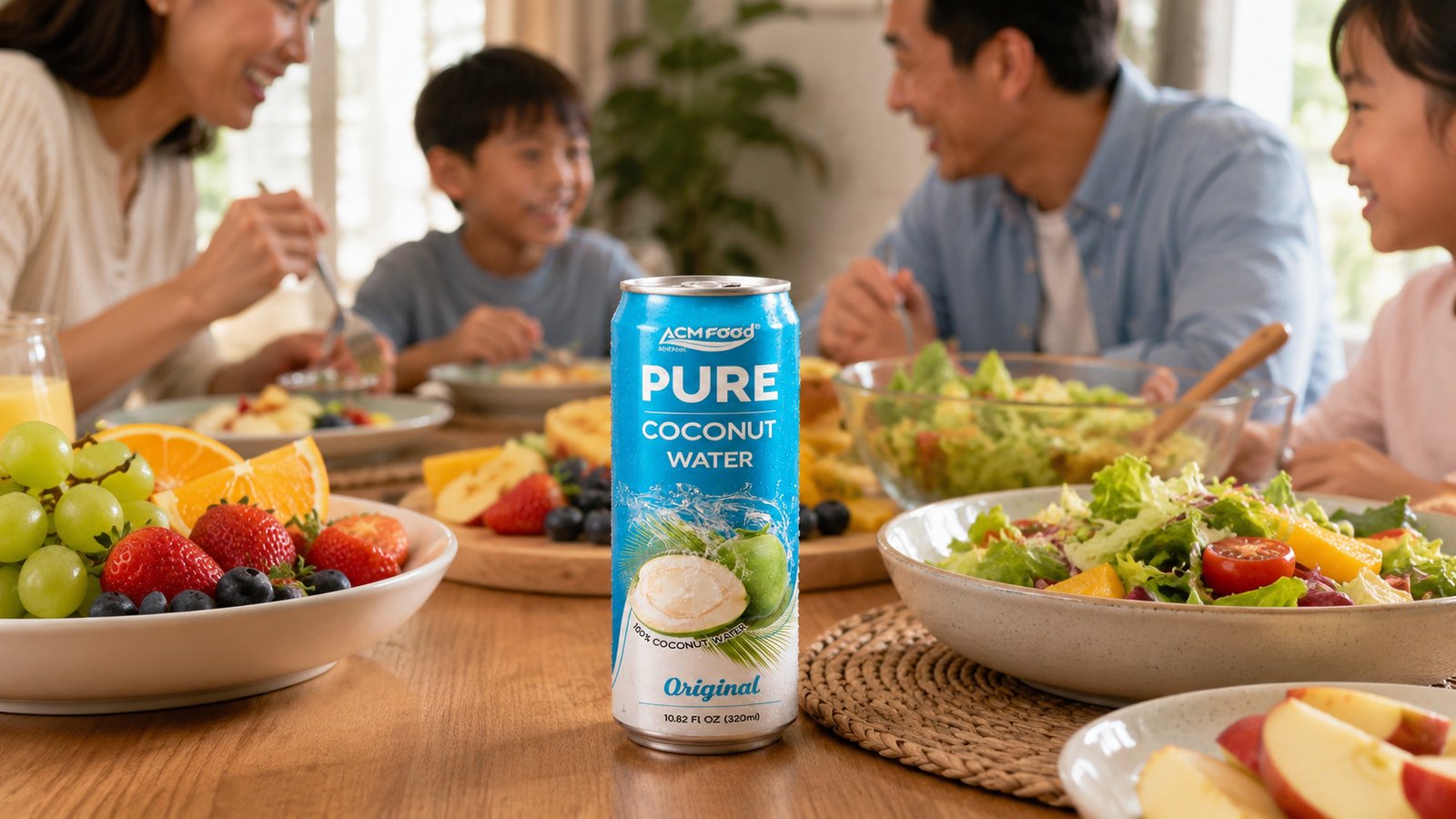
ACMFOOD Beverage Co., Ltd. produces canned coconut water in Vietnam for private label and OEM customers, sourcing young coconuts from the Mekong Delta growing region and filling into aluminium cans for ambient distribution.
The honest framing of that product is the one recommended above: it is a shelf-stable product built to hold its character over a long ambient life, not a substitute for a nut opened in front of you. What is worth evaluating is where it sits between the fresh reference and the products already on your shelf — which is why samples are best assessed side by side against both, and again after several months of ambient storage.
If freshness is central to your brand, bring that to the brief explicitly, along with the markets you intend to sell into so that claim wording can be considered before artwork rather than after.
Related capability pages
Preservation route determines what the finished product can honestly claim. For the processing options and formats available, see our beverage product capabilities; for how the process is run and controlled, see our production process. To brief a specification, request a quote.
Request a quote