


 Français
 Español
 العربية
 한국어
한국어pH and acidity targets in beverage formulation define how a drink tastes, how it is preserved, and which processing or filling route is viable. This guide explains beverage pH acidity, how it differs from titratable acidity (TA), and how to translate both into practical, testable targets for your product brief.
Brix (sugars) shapes sweetness and balances sourness, but this article focuses on acid and pH only. Because pH drives processing choices, we also connect formulation targets with filling technology and shelf-life strategy.
What do pH and titratable acidity mean in beverages?
pH captures the drink’s free acidity at a moment in time, while titratable acidity (TA) reflects the overall acid neutralization capacity to a defined endpoint. Both matter: pH influences microbial risk and process selection; TA aligns better with perceived sourness and flavor balance.
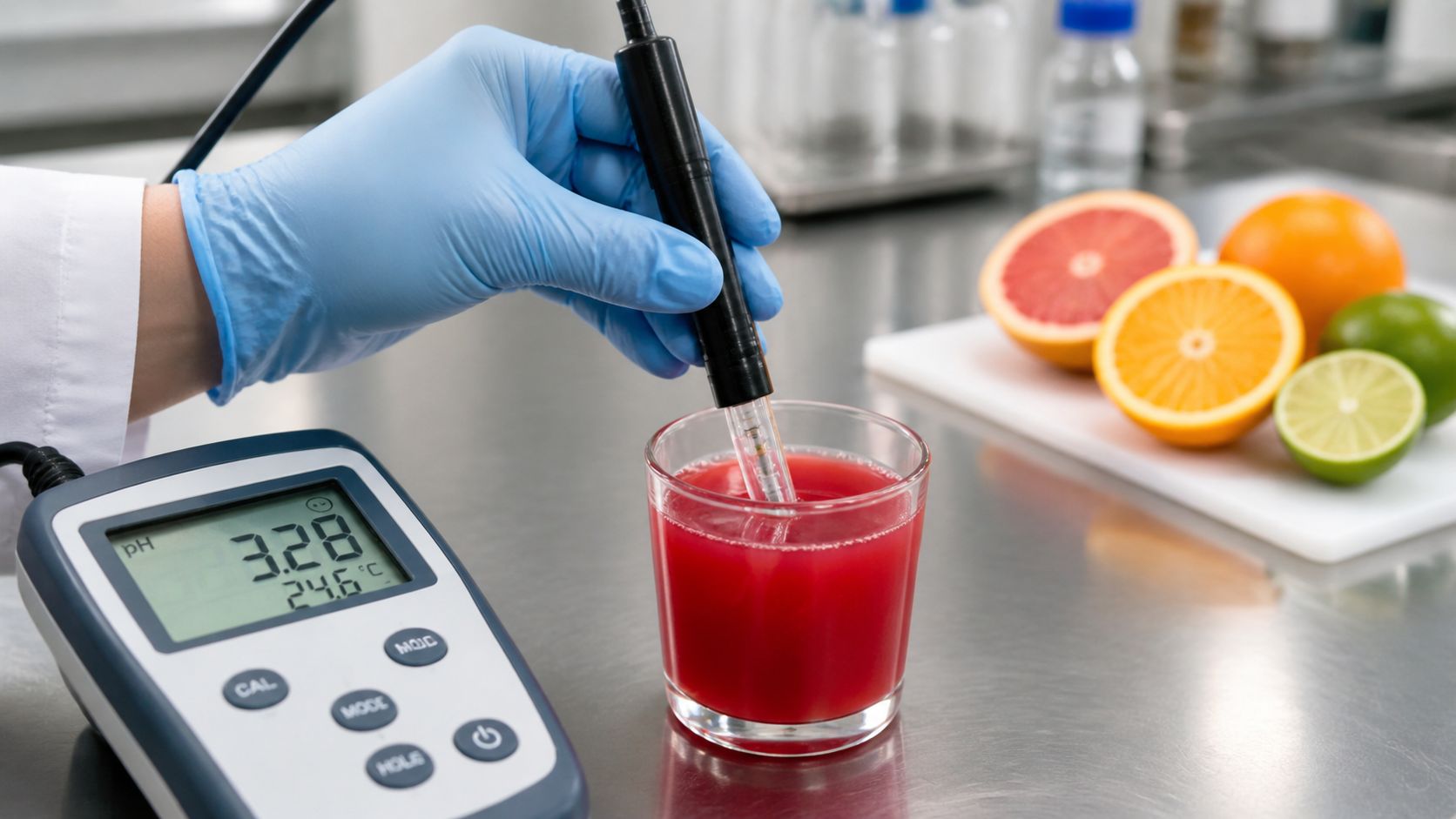
pH is the negative logarithm of hydrogen ion activity in solution. In practice, it is measured with a calibrated pH meter and temperature-compensated probe. Small changes in pH represent large shifts in acidity because the scale is logarithmic.
Titratable acidity (TA) is determined by titrating a known base (e.g., NaOH) into a measured volume of beverage to a specified endpoint pH (commonly 8.1 or a fixed color endpoint depending on method) and reporting the result as a percentage of an acid equivalent (e.g., “as citric”). TA tracks total acid species that contribute to sourness and buffering, not just the free hydrogen ions at the instant of measurement.
For formulation, remember: pH is not the same as TA. Two beverages with the same pH can taste very different if their TA and acid composition differ. Likewise, pH can drift with temperature or dilution without a proportional change in perceived sourness.
Why is beverage pH a critical control point?
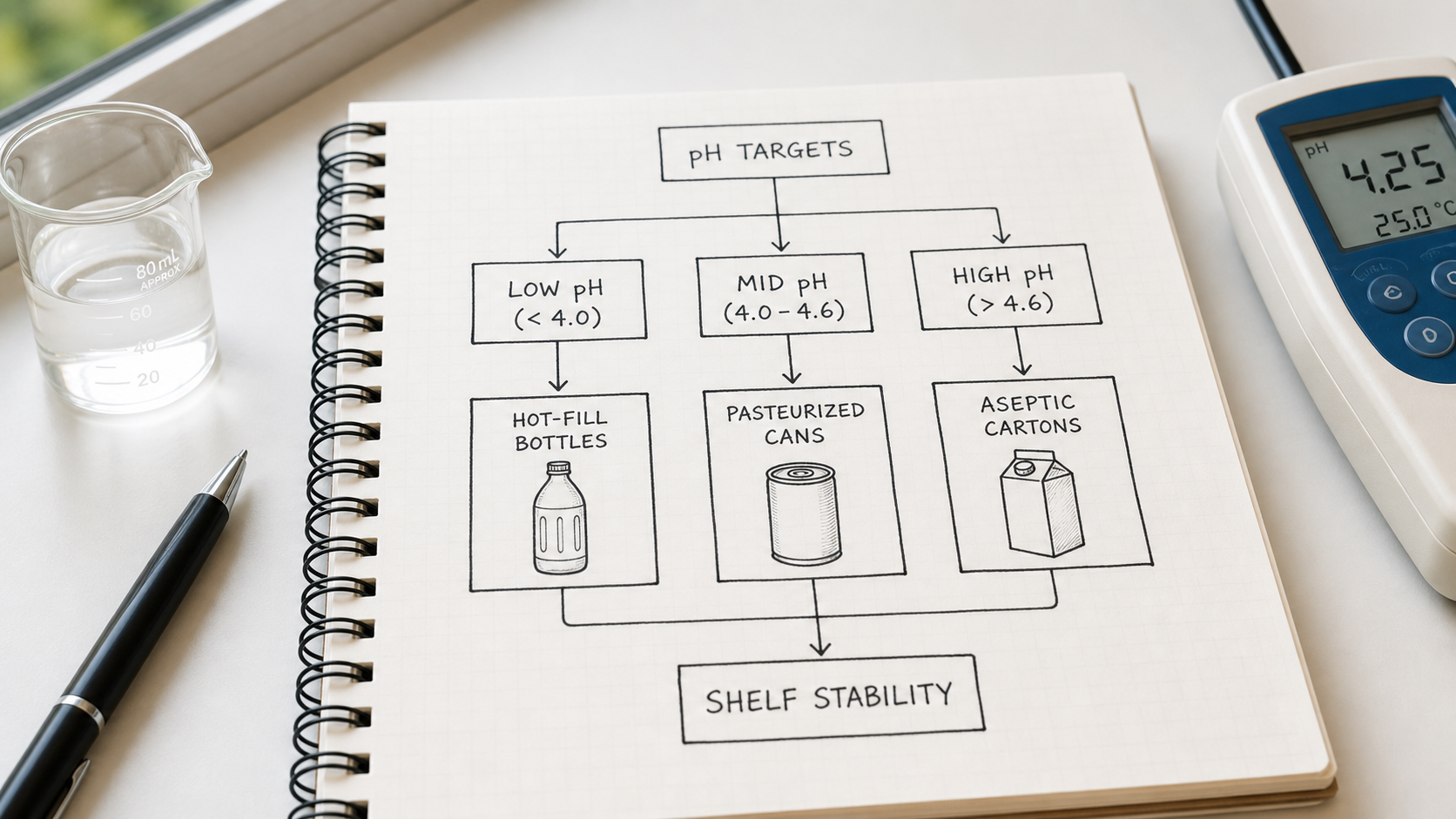
Because pH determines microbial risk class, preservative needs, and feasible filling routes. Many jurisdictions, including the U.S., treat approximately pH 4.6 at 25°C as a critical boundary separating acidified from low-acid foods, which strongly influences process validation and shelf-stability pathways.
Below that regulatory cut-off, acidification combined with an appropriate heat treatment (or aseptic) can achieve commercial sterility for shelf-stable beverages. Above it, more intense processes (e.g., retort/aseptic for true low-acid products) or chilled distribution are typically required. These are general principles; your exact process must be validated for your formula, packaging, and target markets.
From a sensory standpoint, pH also shapes flavor release and impacts color stability of certain natural pigments. From a technical standpoint, pH affects ingredient solubility, sweetener performance, and the compatibility of emulsions, minerals, and botanicals.
How do you set a practical pH target in beverage formulation?
Start with your category, shelf-life ambitions, and processing constraints; then tune flavor. A robust pH target is a numeric range tied to your ingredient system, processing method, and declared shelf-life, with a defined test method and tolerance at a specified temperature.
Use this stepwise approach:
- Define category & positioning: Sparkling soft drink, still juice blend, RTD tea, hydration drink, dairy alternative, electrolyte beverage, etc. Category norms influence acid type, sourness expectations, and processing norms.
- Map shelf-life & distribution: Ambient shelf-stable, tunnel-pasteurized, hot-fill, cold-chain only, or aseptic. Distribution temperature and duration narrow feasible pH/TA windows.
- Select your process & packaging: The pack (PET, glass, can, laminate, pouch) and process (hot-fill, pasteurization, aseptic) set guardrails for pH, preservatives, and oxygen management.
- Choose acid system early: Citric, malic, tartaric, phosphoric, lactic, or blends—pick for flavor fit and buffering behavior, then iterate with sweeteners and flavors.
- Draft a pH target & tolerance: Example: “pH 3.2± 0.10 at 20°C, measured with meter XYZ, 2-point calibration at pH 4.00 & 7.00 buffers.” Tailor the number to your process validation and tasting panels.
- Set a TA target & method: Specify the titration method, endpoint, and reporting basis (e.g., “TA as citric”). TA helps protect flavor consistency when fruit variability or dilution shifts occur.
- Pilot & validate: Confirm pH/TA targets through lab, pilot runs, and shelf-life or accelerated tests. Adjust for temperature dependence, syrup-to-water mixing order, and carbonation effects.
If you need structured help aligning targets to process and regulatory expectations, coordinate early with your Formulation & R&D partners to lock the ranges and test methods into your product brief.
Choosing acidulants and buffers for taste, stability, and labeling
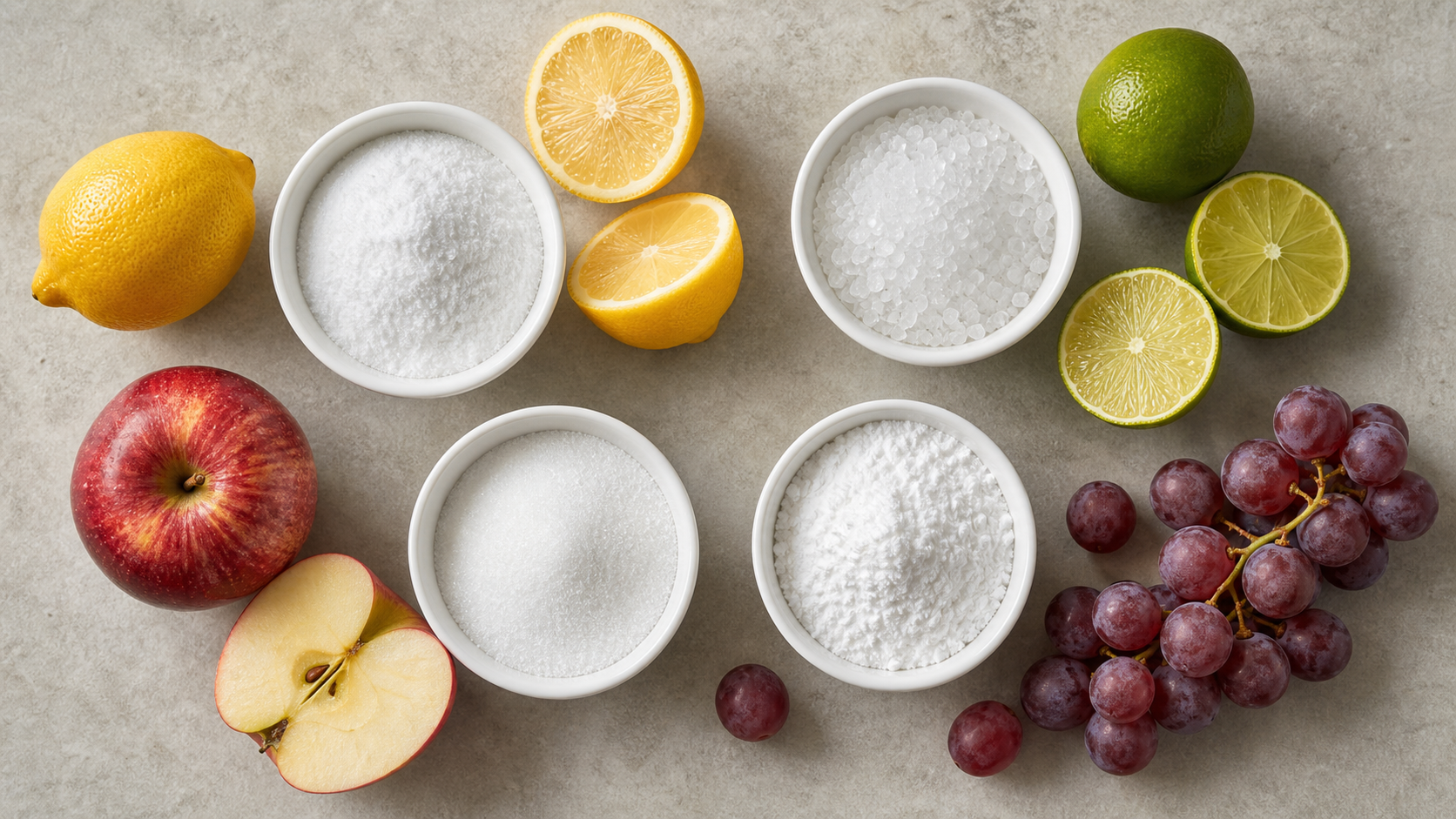
Pick acidulants for flavor first, then validate process compatibility and labeling. In citrus-forward drinks, citric or citric—malic blends are common. For apple or grape bases, malic can deliver a smoother, lingering acidity. Cola-type beverages frequently rely on phosphoric for a sharp, dry bite. Dairy alternatives and protein beverages may prefer lactic or buffered systems for gentler acidity and better protein stability.
Consider these factors when selecting an acid system:
- Flavor signature: “Bright and zesty” (citric), “rounded and persistent” (malic), “grape/wine-like” (tartaric), “dry bite” (phosphoric), “mellow, dairy-adjacent” (lactic).
- Buffering & drift: Citrate buffers can steady pH against small additions of flavor, minerals, or water. Without buffering, pH swings may occur during batching or over shelf life.
- Compatibility: Check with high-intensity sweeteners, caffeine, botanicals, colors, calcium/magnesium salts, and emulsions. Some combinations precipitate or haze at lower pH.
- Labelling & market fit: Some categories emphasize “fruit acids” (citric, malic, tartaric). Phosphoric can be appropriate in certain soft drinks but may not suit every clean-label brief.
| Acidulant | Flavor character | Typical applications | Positioning & notes |
|---|---|---|---|
| Citric acid | Bright, citrus-like, quick impact | Citrus drinks, juice blends, hydration drinks | Widely accepted; pairs well with fruit flavors; works with citrate buffers |
| Malic acid | Smooth, lingering, rounded sourness | Apple/berry profiles, isotonic drinks | Enhances body; can reduce perceived sharpness compared to citric |
| Tartaric acid | Wine-like, grape-forward | Grape beverages, specialty fruit blends | Strong character; use when grape authenticity is desired |
| Phosphoric acid | Dry, sharp bite | Cola-type soft drinks, some energy drinks | Non-fruit acid; evaluate label expectations and market norms |
| Lactic acid | Mild, dairy-adjacent, soft | Protein/dairy alternatives, kombucha-style beverages | Can aid smoother acidity in protein systems; check regulatory fit |
Titratable acidity and perceived sourness
TA often correlates more closely with the perceived intensity and quality of sourness than pH alone. Two formulas at the same pH can taste very different if one has higher TA, more malic than citric, or stronger buffering capacity. For flavor consistency across harvests or concentrate variability, a dual target (pH range + TA range) reduces the risk of sensory drift.
Balance TA with sweeteners and mouthfeel agents. As a rule of thumb, richer body from malic or lactic can allow slightly lower sweetness for a comparable taste experience, while sharper systems may need more sweetness to round edges. Validate this with trained panels and consumer tests.
Processing and filling implications by pH
pH steers you toward hot-fill, tunnel pasteurization, cold-fill with preservatives, or aseptic. Ambient shelf-stable acidified beverages typically pursue a combination of acidification and heat or aseptic, while higher-pH drinks require aseptic or chilled distribution. Always confirm with process authorities and your packaging supplier.
Key considerations by route:
- Hot-fill: Suits many acidified still beverages in compatible bottles; requires validated time—temperature and container/closure performance.
- Tunnel pasteurization: Common for carbonated beverages and some still drinks; needs heat pickup modeling and package heat resistance.
- Cold-fill + preservatives: May be feasible for certain acidified products; preservative efficacy depends on pH, water activity, and formulation matrix.
- Aseptic processing: Enables broader pH ranges and sensitive ingredients; requires rigorous validation and sterility assurance.
Because equipment choice, packaging, and validation are tied to acidity, review options on your Processing Technology pathway before freezing your formula.
Stability, packaging, and shelf-life alignment
Acidity interacts with oxygen, light, and temperature to shape shelf life. Lower pH can help with microbial control in acidified beverages, but it also influences color stability (e.g., anthocyanins), flavor fade, and corrosion risk in some packs.
- Color & flavor: Natural colors and top-notes may be more stable within certain pH bands; test across your intended temperature profile.
- Packaging interactions: Check can liners, closures, and barrier properties for your acid system. Validate for flavor scalping, CO₂ loss (for carbonated), and any corrosion or stress cracking risks.
- Oxygen management: Pair your acidity plan with oxygen control (deaeration, nitrogen dosing, scavengers) to slow oxidative changes.
- Thermal impacts: Heat steps can shift pH slightly and alter flavor; confirm post-process pH and make-up adjustments if permitted.
Measurement, calibration, and QA controls
Make pH and TA measurable, repeatable, and auditable. Write clear SOPs for sampling, meter calibration, temperature compensation, and titration endpoints. Train operators on probe care and hold times between readings.
- Calibration: Calibrate pH meters daily or per shift with at least two buffers bracketing your target. Record lot numbers and temperatures of buffers.
- Sampling: Define where (pre-mix, post-mix, post-pasteurization, finished pack) and at what temperature readings are taken. Standardize timing after carbonation or deaeration.
- TA methods: Lock the titration normality, endpoint pH, calculation basis (e.g., “as citric”), and sample prep for syrups vs RTD.
- Tolerances & actions: Document acceptable ranges and corrective steps (e.g., adjusters, re-blend) to avoid out-of-spec product.
Building these controls into your quality plan supports release decisions and audits. For a broader view of release and compliance programs, see Quality and Food Safety.
Regulatory and labeling touchpoints
Acidulants are declared ingredients and may have market-specific naming, category limits, or standard-of-identity implications. pH, TA, and preservative choices also interact with your shelf-life claims and processing declarations.
- Ingredient declaration: Ensure acidulant names, salts (e.g., sodium citrate), and preservatives are declared correctly for the destination market.
- Process claims: Hot-filled, pasteurized, or aseptic statements should be consistent with validated processes and local rules.
- Market entry: Imported products must align with each market’s labeling and formulation rules, especially around preservatives and acidulants.
For U.S.-bound products, cross-check your label pathway with the U.S. Food Label Checklist for Imported Beverages. For EU labelling and claims structure, review EU Beverage Labelling and Import Rules: The Shared Layer.
Information for beverage brands and buyers
Lock your acidity strategy into the product brief early. Clear ranges, methods, and decision criteria speed up trials and reduce rework during plant scale-up.
Include the following in your brief:
- pH target: Numeric range, test temperature, meter/probe type, calibration buffers.
- TA target: Titrant normality, endpoint pH, basis for reporting (e.g., “as citric”), sample volume, method reference.
- Acid system: Primary acid(s), any buffering salts, rationale for flavor fit.
- Process route: Intended filling method and critical control points impacting acidity.
- Packaging: Container type/size, closure, liner compatibility confirmations.
- Shelf-life plan: Intended duration/storage conditions and test protocol (real time and/or accelerated).
- Spec tolerances: Incoming concentrate/syrup standards, in-process checks, finished product release limits.
If you are still refining your approach or preparing for pilot, consult your development partners via Formulation & R&D to pressure-test ranges and measurement plans before committing to packaging and artwork.
FAQ
Is a lower pH always perceived as more sour?
No. pH and perceived sourness are related but not identical. TA, acid type (citric vs malic vs lactic), sweetness level, and flavors all shape how sour a beverage tastes at a given pH.
Can I simply match a competitor’s pH to copy their taste?
Not reliably. Matching pH ignores TA, acid composition, sweetener system, and flavor matrix. Use both pH and TA targets, then match by sensory evaluation rather than pH alone.
Does pH change over shelf life?
It can. Ingredients, CO₂ loss in carbonated drinks, temperature exposure, and oxygen pickup may shift pH slightly. That is why specifications define a range and validation checks the post-process and end-of-life points.
Should I prioritize pH or TA in my specification?
For safety and process choice, pH is the primary control. For taste consistency, TA (with a defined method) is often the better guide. Many briefs include both.
Conclusion
pH and titratable acidity are the paired foundations of beverage formulation: pH anchors safety and processing; TA anchors sensory and balance. Choose acidulants for flavor, confirm their compatibility with packaging and process, then lock measurable pH and TA targets with methods and tolerances. Keep in mind that sugar (Brix) interacts with acidity in the glass, but acidity decisions must lead your process selection. When you are ready to align formulation with equipment and validation, explore your options under Processing Technology and integrate measurement plans with Quality and Food Safety.